Friday, November 13, 2026
Home Blog Page 209

Leonard Peltier released from prison in Pine Ridge killings of FBI agents : NPR

0

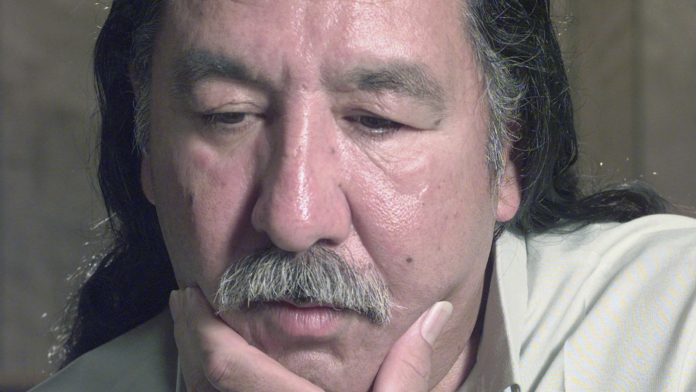
American Indian activist Leonard Peltier speaks during an interview at the U.S. Penitentiary at Leavenworth, Kan., April 29, 1999.

Joe Ledford/The Kansas City Star/AP


hide caption

toggle caption

Joe Ledford/The Kansas City Star/AP

Native American activist Leonard Peltier was released from a Florida prison on Tuesday, weeks after then-President Joe Biden angered law enforcement officials by commuting his life sentence to home confinement in the 1975 killings of two FBI agents.

Peltier, 80, left Coleman penitentiary in an SUV, according to a prison official. He didn’t stop to speak with reporters or the roughly two dozen supporters who gathered outside the gates to celebrate his release.

Peltier, a member of the Turtle Mountain Band of Chippewa Indians in North Dakota, was headed back to his reservation, where family and friends will celebrate his release with him on Wednesday and where the tribe arranged a house for him to live in while serving his home confinement.

Throughout his nearly half-century in prison, Peltier has maintained that he didn’t murder FBI agents Jack Coler and Ronald Williams during a confrontation that day on the Pine Ridge Indian Reservation in South Dakota. Native Americans widely believe he was a political prisoner who was wrongly convicted because he fought for tribal rights as a member of the American Indian Movement.

“He represents every person who’s been roughed up by a cop, profiled, had their children harassed at school,” said Nick Estes, a professor of American Indian Studies at the University of Minnesota and a member of the Lower Brule Sioux Tribe who advocated for Peltier’s release.

Biden did not pardon Peltier. But his Jan. 20 commutation of Peltier’s sentence to home confinement, noting Peltier had spent most of his life behind bars and was in poor health, prompted criticism from those who believe Peltier is guilty. Among them is former FBI Director Christopher Wray, who called Peltier “a remorseless killer” in a private letter to Biden obtained by The Associated Press.

One of his attorneys, Jenipher Jones, said Peltier was looking forward to going home.

“We’re so excited for this moment,” Jones said before his release. “He is in good spirits. He has the soul of a warrior.”

His supporters outside the prison, including some who waved flags saying “Free Leonard Peltier,” were elated.

“We never thought he would get out,” said Ray St. Clair, a member of the White Earth Band of the Minnesota Chippewa Tribe who traveled to Florida to be there for Peltier’s release. “It shows you should never give up hope. We can take this repairing the damage that was done. This is a start.”

Peltier was active in AIM, which formed in the 1960s and fought for Native American treaty rights and tribal self-determination.

Peltier’s conviction stemmed from a 1975 confrontation on the in Pine Ridge Indian Reservation in South Dakota in which the two FBI agents were killed. According to the FBI, Coler and Williams were there to serve arrest warrants for robbery and assault with a dangerous weapon.

Prosecutors maintained at trial that Peltier shot both agents in the head at point-blank range. Peltier acknowledged being present and firing a gun at a distance, but he said he fired in self-defense and that his shots weren’t the ones that killed the agents. A woman who claimed to have seen Peltier shoot the agents later recanted her testimony, saying it had been coerced.

He was convicted of two counts of first-degree murder and given two consecutive life sentences.

Two other AIM members, Robert Robideau and Dino Butler, were acquitted on the grounds of self-defense.

Peltier was denied parole as recently as July and was not eligible to be considered for it again until 2026.

Generations of Indigenous activists and leaders lobbied multiple presidents to pardon Peltier. Former Interior Secretary Deb Haaland, a member of the Pueblo of Laguna and the first Native American to hold the secretary’s position, praised Biden’s decision.

As a young child, Peltier was taken from his family and sent to a boarding school. Thousands of Indigenous children over decades faced the same fate, and were in many cases subjected to systemic physical, psychological and sexual abuse.

“He hasn’t really had a home since he was taken away to boarding school,” said Nick Tilsen, who has been advocating for Peltier’s release since he was a teen and is CEO of NDN Collective, an Indigenous-led advocacy group based in South Dakota. “So he is excited to be at home and paint and have grandkids running around.”
U.S. Marines Start to Leave Japan, Decades Behind Schedule

0

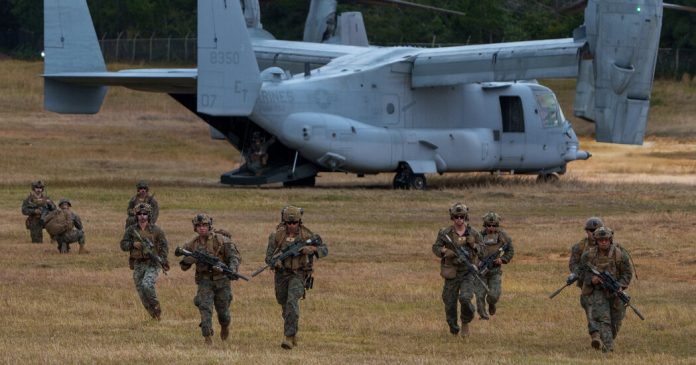
Before Christmas, a contingent of 105 U.S. Marines who would have been sent to Okinawa were redirected to a new base on the United States territory of Guam instead. The small reshuffling marked a major milestone: This was the first time the Marines cut their head count on Okinawa as part of a deal between Washington and Tokyo to shrink an oversized American military presence on the Pacific island that dates back to World War II.

Under the agreement, 9,000 Marines — just under half the force currently on the island — are eventually supposed to leave. But their departure is already two decades behind the original schedule and may not happen for more than a decade to come, until construction of replacement bases is completed.

Their redeployment was agreed to in a deal signed 12 years ago, the result of negotiations and renegotiations going back to 1995, when three U.S. servicemen raped an Okinawan schoolgirl. That crime touched off mass protests that forced the United States and Japan to agree on shrinking the American bases, which were built after the United States stormed Okinawa during a bloody battle in 1945.

The first iteration of the deal, agreed upon in 1996, was supposed to reduce the burden within five to seven years by building an air base on the northern end of the island to replace an existing one in a crowded city. A generation later, the old airfield remains in use and the new one is at least 12 years from completion.

While some islanders are growing impatient, this state of constant delay seems fine with the governments of both the United States and Japan, who have a big geopolitical reason — the rise of China — for wanting to keep the Marines in place.

“So a dozen years later, only a hundred Marines have moved,” said Christopher B. Johnstone, a former director of Northeast Asia in the Office of the Secretary of Defense who helped lead U.S. negotiations of the current 2013 deal. “Both sides know things aren’t moving forward, but neither side is incentivized to take action.”

The urgency to relocate the Marines has been undermined as China has increasingly made its presence felt with military exercises. Last week, Japan’s Defense Ministry reported tracking four Chinese warships sailing between Okinawa and a nearby island.

The growing Chinese presence is felt in Tokyo and Washington, but also in Naha, the Okinawan capital, where Chinese-speaking tourists crowd Kokusai Dori, the main shopping street. Recent mayoral elections across Okinawa have been swept by conservatives who take a more favorable view of the U.S. bases as a protective presence that also supply much-needed jobs.

While anti-base demonstrations still draw hundreds of shouting protesters, many show up with walking canes. Younger Okinawans are more likely to be found at shopping malls such as the American Village, where they mingle with U.S. personnel and their families.

There are still many Okinawans who are furious at the bases. They blame Tokyo as much as Washington, saying the American presence proves that Japan still views their island — which was an independent kingdom until the 19th century — as little more than an internal colony. The current governor, Denny Tamaki, has been a leading opponent of the bases, but he and his predecessor ended up slowing down the process of reducing the American presence by refusing permits and seeking court orders to block construction of the new airfield. Last month, Japan’s Supreme Court rejected his final lawsuit, clearing the way for building to proceed.

“Keeping the bases places an excessive burden on the people of Okinawa,” said Mr. Tamaki, a former social worker whose father was a U.S. Marine. “The pressure that they put on us, in the form of crime and noise and accidents, is a type of structural discrimination.”

Still, the thinking in the two nations’ capitals has clearly shifted. When the original deal was signed, the United States was unchallenged in the western Pacific. China’s military might now puts Okinawa within easy missile range, and North Korea has also built a nuclear arsenal.

Japan would be on the front line of any conflict in Taiwan, which lies within sight of the southernmost island in the Okinawan chain. In 2022, a Chinese military exercise meant to intimidate the self-ruling island also dropped missiles into waters near Japan.

“We all recognize that the world has changed since the 1990s,” said Kevin Maher, a former U.S. diplomat who was consul-general of Okinawa. “That makes people think, ‘Oh, do the Marines actually have to start moving?’”

Still, Mr. Maher and many other American officials say the current plan remains the best option. Recent incidents like four reported sexual assaults by American servicemen last year underscore the risk of renewed anger at the U.S. bases, and Tokyo has little stomach for reopening a tortuously negotiated deal.

Japan’s prime minister, Shigeru Ishiba, repeated his commitment to the current plan during a meeting last week with President Trump, according to Japan’s foreign ministry. Mr. Ishiba has previously said that the gap left by the departing Marines could be filled by Japanese forces or joint bases.

“We will continue to work on reducing the base burden,” Mr. Ishiba said last month during the equivalent of a state-of-the-union speech. But he added that “as the balance of power in the region undergoes a historic shift, we must continue to secure the United States’ regional commitments.”

Japan is not rushing to complete the relocation, whose centerpiece remains the new airfield at Camp Schwab, a U.S. installation an hour north of the existing air base that it will replace.

The coral-filled waters off Camp Schwab are now busy with big barges, which are creating an area of landfill five times larger than the Pentagon building. V-shaped runways here will one day host helicopters and Osprey rotating-rotor airplanes, relocated from the Marine Corps Air Station Futenma in the dense residential neighborhoods in the city of Ginowan.

During a visit to Okinawa in December to mark the relocation of the first Marines, Japan’s defense minister at the time said the airfield will not be ready for use until at least 2036 — 40 years after the first agreement to build it.

The slow progress reflects Japan’s overall lack of urgency, said Hiromori Maedomari, a professor at Okinawa International University who teaches about issues raised by the military bases. “Japan wants to keep the status quo of the Marines in place as long as possible, even if that means Okinawa is expendable,” he said.

Other parts of the relocation plan are only now entering full swing.

At Camp Foster on the southern half of the island, two dozen cranes are building a new headquarters, schools and housing, part of a plan to concentrate Americans on this base, allowing other bases to close.

“It’s finally happening,” said Col. Leroy Bryant Butler, a Marine managing the building projects. “We haven’t seen this level of construction here since the 1950s, when these bases were built.”

Marines will also move to bases in Okinawa’s north, away from crowded population centers. About two-thirds of the U.S. bases in the southern part of the island will eventually be vacated, including a logistics hub filled with warehouses, a seaport and the Futenma air base.

Japan’s cost for the construction is about $1.5 billion a year. That’s in addition to the $2.8 billion that Tokyo spent to build a new base on Guam, Camp Blaz, which opened last month and is supposed to house about half of the Marines who leave Okinawa.

However, the Marines have made no secret of their reluctance to reduce their forces, and decline to provide a timetable. If a conflict breaks out, infantry in Guam would likely have to fight their way back to Japan against a foe who can challenge American air and sea superiority.

“Japan is now in the weapons-engagement zone,” said Wallace Gregson, a retired Marine lieutenant general who commanded the Marine force on Okinawa. “We need to change the conversation to problems that are relevant in 2025.”

Kiuko Notoya contributed reporting.

Who is in charge of DOGE? Legally not Elon Musk : NPR

0

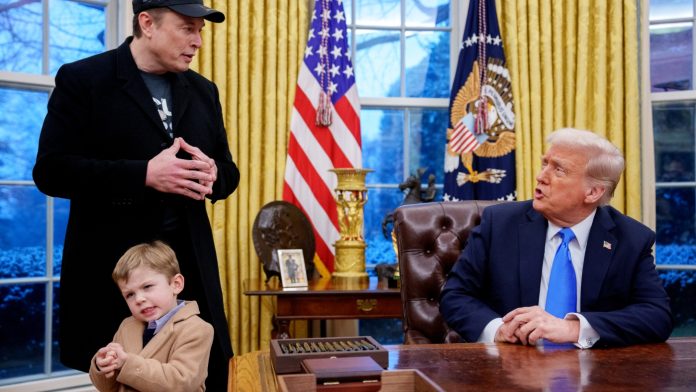
President Trump is joined by Tesla and SpaceX CEO Elon Musk, and his son, X Musk, during an executive order signing in the Oval Office at the White House on Feb. 11, 2025.

Andrew Harnik/Getty Images


hide caption

toggle caption

Andrew Harnik/Getty Images

When Elon Musk refers to actions taken by the Department of Government Efficiency as “we,” he is not actually involved as an employee or leader of the initiative, according to a White House court filing Monday.

In a declaration from Joshua Fisher, the director of the Office of Administration, Musk is described as a “Senior Advisor to the President” as a special government employee and is not an employee of the separate U.S. DOGE Service (USDS) or the U.S. DOGE Service Temporary Organization tasked with improving government technology and cutting spending or staffing.

“In his role as a Senior Advisor to the President, Mr. Musk has no greater authority than other senior White House advisors,” the filing reads. “Like other senior White House advisors, Mr. Musk has no actual or formal authority to make government decisions himself. Mr. Musk can only advise the President and communicate the President’s directives.”

The White House filing also says Musk is not the USDS administrator in charge of the DOGE effort, and did not mention who holds that position.

The revelation comes in a lawsuit filed by Democratic attorneys general from several states who allege among other things that Musk’s nebulous role in the administration is illegal and violates the separation of powers assigned by the U.S. Constitution. They argue that President Trump has “delegated virtually unchecked authority to Mr. Musk without proper legal authorization from Congress.”

At a brief hearing Monday in the case, U.S. District Judge Tanya Chutkan expressed skepticism at the sweeping request the plaintiffs made to halt DOGE work, but was also skeptical at the claim from government lawyers that Musk had no authority to make governmental decisions.

Musk not being the legal leader of DOGE is a legal and technical distinction that contradicts the public representations made by Musk, DOGE and President Trump about the billionaire’s position in the federal government, and continues to raise questions about the operations of an effort that Musk claimed to be “maximally transparent.”

When Trump first announced DOGE, it was pitched as an outside review of the government co-led by Musk and former GOP presidential candidate and tech entrepreneur Vivek Ramaswamy.

On Trump’s first day in office, one of his many executive actions was to make DOGE a government entity, renaming the United States Digital Service and moving that organization under the umbrella of the Executive Office of the President.

Just last week, Musk was in the Oval Office standing next to Trump answering questions about DOGE, referring to “our actions” taken to direct agencies to cancel contracts and make other changes.

NPR has reached out to the White House for clarification about Musk’s role and the leader of DOGE.

Have information you want to share about contracting, spending, DOGE or other restructuring changes across the federal government? Reach out to this author. Stephen Fowler is available through encrypted communications on Signal at stphnfwlr.25.

U.S. and Russian Officials Agree to Work on Ukraine War Settlement

0

After more than four hours of discussions in Saudi Arabia, both sides also agreed to work on normalizing bilateral relations and investments.

Steve Witkoff is involved in Middle East, Russia-Ukraine talks : NPR

0

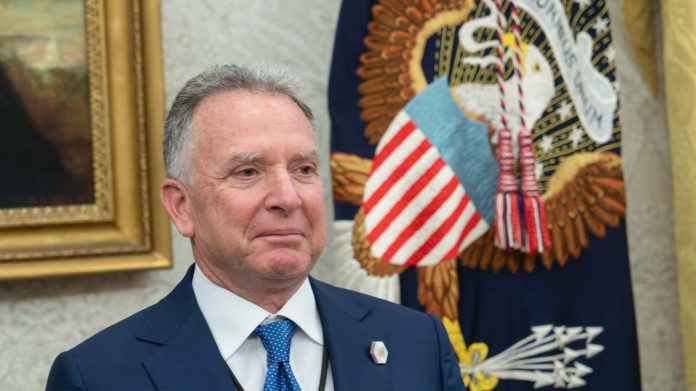
Steve Witkoff, U.S. special envoy to the Middle East, pictured in the Oval Office earlier this month. He has been involved in negotiations over the Israel-Hamas war and Russian-Ukraine war.

Chris Kleponis/CNP/Bloomberg via Getty Images


hide caption

toggle caption

Chris Kleponis/CNP/Bloomberg via Getty Images

When top-level U.S. and Russian officials met in Saudi Arabia on Tuesday to discuss the war in Ukraine, one of the American seats at the table was filled by Steve Witkoff.

A New York real estate mogul and longtime friend of President Trump, Witkoff had little formal diplomatic experience before Trump named him a special envoy to the Middle East ahead of his second term.

In recent weeks, Witkoff has been credited with playing “a key role” in brokering the Israel-Hamas ceasefire. He told Fox News’ Sunday Morning Futures that he had “very, very productive and constructive calls” with Israeli, Qatari and Egyptian officials over the weekend about the second phase of the deal.

At the same time, Witkoff’s focus appears to be expanding far beyond the Middle East.

Last week, Witkoff became the first known high-level U.S. official to travel to Russia since its 2022 invasion of Ukraine. He helped secure the release of American teacher Marc Fogel — who had spent three and a half years in Russian prison — and flew him back to the U.S. on his private jet. (In exchange, the U.S. released a convicted Russian money launderer.)

“What a dynamic man this guy is,” Fogel said of Witkoff, speaking at the White House after his release. “When I met him, the energy, the can-do attitude just exudes from his body.”

Here’s what else to know about him.

Witkoff made his fortune in real estate 

The Bronx-born Witkoff, 67, graduated from Hofstra University and practiced real estate law before founding the real estate development and investment firm the Witkoff Group in 1997. He remains its chairman.

“Since founding the firm, Mr. Witkoff has leveraged his extensive real estate expertise to successfully lead the financing, repositioning, and construction of over 70 properties in major business districts in the U.S. as well as abroad and with offices in New York, Los Angeles, and Miami,” his biography reads.

Forbes estimated Witkoff’s wealth at $1 billion in 2024.

Like Trump, Witkoff also brought his kids into his business: His son Alex is the Witkoff Group’s CEO, and his son Zach is the executive vice president of development. Zach welcomed a son in December 2024, naming him Don James after the president — another sign of the close ties between the families.

In a speech at the 2024 Republican National Convention, Witkoff called Trump “my dear friend” and extolled his compassion.

“I stand before you tonight not just as a speaker, not just as someone who came up as a builder with the president in the world of real estate, but as someone who has had the profound privilege of calling President Donald J. Trump a true and dear friend for many, many years, in good times and bad times,” he said.

One of those bad times, he said in his speech, was the 2011 death of his son Andrew from an opioid overdose — adding, “as usual, Donald Trump showed up.” Once in office, the president invited Witkoff to speak at a 2018 White House opioid summit to honor his son’s memory.

At that event, Trump called Witkoff a “tremendously successful man” and “one of my great friends over the years.”

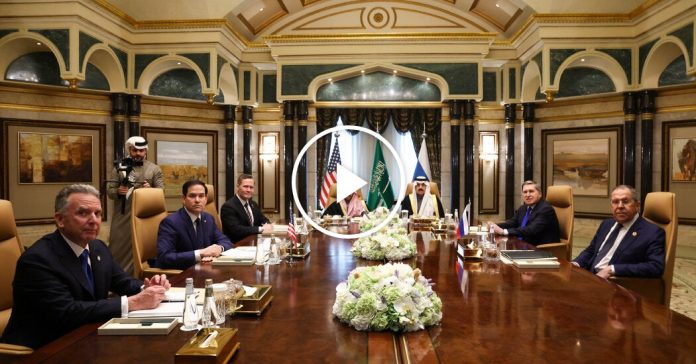
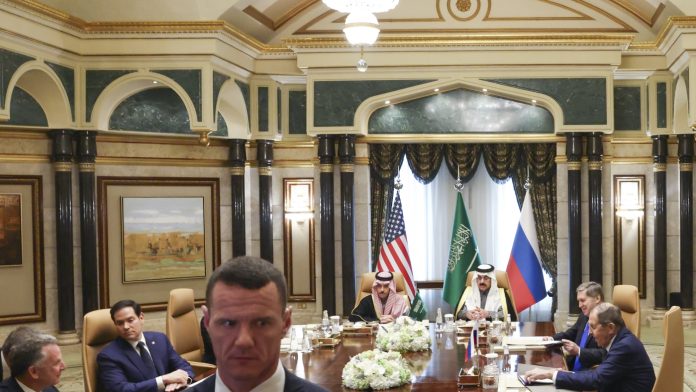
Russian and U.S. officials, including Steve Witkoff, sit at a table in Saudi Arabia.

U.S. Middle East envoy Steve Witkoff, far left, attends a meeting with dignitaries including U.S. Secretary of State Marco Rubio, Saudi Foreign Minister Prince Faisal bin Farhan Al Saud and Russian Foreign Minister Sergei Lavrov in Riyadh, Saudi Arabia on Tuesday.

Evelyn Hockstein/AP/Pool Reuters


hide caption

toggle caption

Evelyn Hockstein/AP/Pool Reuters

Witkoff and Trump are longtime golf buddies  

Witkoff and Trump became friends after working together on a deal in 1986, Witkoff recalled while testifying in Trump’s 2023 fraud trial.

The two went out to a New York City deli, but Trump didn’t have cash with him at the time.

“I ordered him a ham and Swiss,” Witkoff said, according to Courthouse News.

He said Trump remembered “the sandwich incident” when the two crossed paths again seven or eight years later, and have been friends ever since.

Witkoff is also an avid golfer, an interest he shares with the president. Sen. Lindsey Graham, R-S.C., told NBC News in January that he and Witkoff “would be the two guys who would play Trump and somebody else, and lose.”

Witkoff was golfing with Trump at his West Palm Beach, Fla., course at the time of the apparent assassination attempt against the then-presidential candidate, in September. Witkoff later told NBC News he doubted the incident would keep Trump away from the golf course, which he called his friend’s “happy place.”

Witkoff has supported Trump financially and politically

Witkoff contributed to Trump’s administration in tangible ways, even before he was officially a part of it.

ProPublica reported in 2021 that Witkoff had donated more than $2 million to Trump’s political action groups and during his first term served as an outside advisor on tax cuts, opioids and reopening businesses during the COVID-19 pandemic.

The Washington Post reported that the Trump campaign “frequently dispatched Witkoff to improve relations with Trump’s Republican rivals” — including Georgia Gov. Brian Kemp and former U.N. ambassador Nikki Haley — during the 2024 campaign.

Days after winning reelection in November, Trump announced his appointment of Witkoff to the role of special envoy to the Middle East.

“Steve is a Highly Respected Leader in Business and Philanthropy, who has made every project and community he has been involved with stronger and more prosperous,” Trump said. “Steve will be an unrelenting Voice for PEACE, and make us all proud.”

Presidents and secretaries of state can appoint special envoys as their personal representatives to deal with a high-priority issue or region. Special envoys are potentially subject to Senate confirmation as of 2023, though Witkoff did not go through that process.

Graham told NBC News that Trump made the appointment after Witkoff — who is Jewish — broached the idea of working on Middle East issues over lunch.

“That stunned me because I didn’t know he was that interested in the Mideast,” Graham said. “And Trump looked at me and said, ‘Well, a million people have tried. Let’s pick a nice guy who’s a smart guy.'”

C.I.A. Expands Secret Drone Flights Over Mexico

0

The United States has stepped up secret drone flights over Mexico to hunt for fentanyl labs, part of the Trump administration’s more aggressive campaign against drug cartels, according to U.S. officials.

The covert drone program, which has not been previously disclosed, began under the Biden administration, according to U.S. officials and others familiar with the program.

But President Trump and his C.I.A. director, John Ratcliffe, have repeatedly promised more intense action against Mexican drug cartels. Increasing the drone flights was a quick initial step.

The C.I.A. has not been authorized to use the drones to take lethal action, the officials said, adding that they do not envision using the drones to conduct airstrikes. For now, C.I.A. officers in Mexico pass information collected by the drones to Mexican officials.

The flights go “well into sovereign Mexico,” one U.S. official said.

The Mexican government has taken steps to address the Trump administration’s concerns about fentanyl, deploying 10,000 troops to the border this month to thwart smuggling. But the Trump administration wants Mexico to do more to destroy or dismantle fentanyl labs and to seize more of the drug.

The drones have proved adept at identifying labs, according to people with knowledge of the program. Fentanyl labs emit chemicals that make them easy to find from the air.

However, during the Biden administration, the Mexican government was slow to take action against labs identified by the Americans, although it did use the information to make arrests, according to two of the officials.

The officials all spoke on the condition their names not be used so they could discuss a classified intelligence program and sensitive diplomacy between Mexico and the United States.

The surveillance flights have already caused consternation in Mexico, which has long been wary of its northern neighbor after multiple U.S. invasions and land grabs.

In addition to the C.I.A.’s efforts, the U.S. military’s Northern Command is also expanding its surveillance of the border. But the U.S. military, unlike the spy agency, is not entering Mexican airspace.

So far, Northern Command has conducted more than two dozen surveillance flights over the southern border using a variety of surveillance aircraft including U-2s, RC-135 Rivet Joints, P-8s and drones, said a senior U.S. military official, who spoke on the condition of anonymity to discuss operational matters.

The military has also created a special intelligence task force of 140 analysts, located near the border, to analyze the information being collected by the surveillance flights and other sources, Northern Command said in a statement this month.

Gen. Gregory M. Guillot, the head of the Northern Command, told the Senate last week that analysts are providing intelligence that “gets after the cartel networks that drive the production and distribution of fentanyl and pushes it across the border.”

In response to questions from lawmakers, General Guillot said the intelligence was shared with Mexican officials to help them “address the cartel violence in terms of sending more troops.” General Guillot said his command had increased intelligence collection in order to make “rapid progress against this threat.”

Asked about General Guillot’s comments, President Claudia Sheinbaum of Mexico said that Mexican sovereignty was “not negotiable, and we will always coordinate without subordinating.”

Officials from the White House, the C.I.A. and the Pentagon all declined to comment on the secret intelligence program.

Mr. Trump signed an executive order on Jan. 20 calling for a crackdown on major cartels. This week, his administration plans to designate a half-dozen cartels and criminal groups in Mexico as foreign terrorist organizations.

The designation gives the U.S. government broad powers to impose economic sanctions on groups and entities linked to them. But the cartels are already under heavy sanctions by the U.S. government, and a foreign terrorist designation would provide no significant new tools to block their financial maneuvering, according to former American officials who have worked on these issues.

While the sanctions are not necessary for the stepped-up intelligence collection by the C.I.A., several former officials said the designation was an important symbolic step that could, eventually, be followed by expanded operations by the U.S. military or intelligence agencies.

The U.S. military’s Seventh Special Forces Group began a training exercise in Mexico this month. Maj. Russell Gordon, a spokesman for First Special Forces Command, said the training with the Mexican Marine Infantry was preplanned and part of “longstanding U.S.-Mexico defense cooperation.”

Still, former officials say they believe that the U.S. military and intelligence agencies are likely to increase training with Mexican authorities in the coming months.

Conducting an airstrike on fentanyl labs would probably cause catastrophic fatalities, as they are often inside homes in urban areas, a person familiar with the program said, most likely contributing to the reluctance to authorize lethal force.

The possibility for violence also exists if the Mexican military or police move against the lab.

But the purpose of providing the intelligence to Mexican authorities is not to kill cartel members, but instead to disable the labs, according to American officials briefed on the program.

If the cooperation and intelligence sharing do not lead to the destruction of the labs, the Trump administration has signaled it is considering alternative moves.

In a visit to the southwestern border this month, Defense Secretary Pete Hegseth did not rule out conducting cross-border raids to pursue cartels inside Mexico.

“All options are on the table,” Mr. Hegseth told reporters.

In the transition to the new Trump administration, a former senior U.S. official said incoming aides had made clear that they planned to use the full American counterterrorism apparatus — surveillance aircraft and satellites, intelligence analysts, as well as American personnel or military contractors — to go after the cartels inside Mexico.

Ms. Sheinbaum, Mexico’s president, has been grilled by reporters about the expanded military flights on the border, after they were detected on Jan. 31.

Last week Mexico’s defense secretary, Gen. Ricardo Trevilla Trejo, told reporters that the military had not received any request from the United States to fly in Mexican airspace and insisted that the surveillance flights had not violated international law as they flew above international waters.

Days later, as more surveillance flights were detected along the border, Ms. Sheinbaum said that the flights were not new, suggesting that they took place under Mr. Biden, but did not elaborate. She said the flights were “part of the dialogue, the coordination, that we have.”

Mr. Trump has announced a former C.I.A. paramilitary officer, Ronald Johnson, as his choice to serve as ambassador to Mexico. Former officials said they believed Mr. Johnson was tapped because of his experience working with both the spy agency and military Special Operations forces.

The president also announced this month that he would appoint Joe Kent, a former Army Green Beret and C.I.A. paramilitary officer, as director of the National Counterterrorism Center.

Mark Mazzetti contributed reporting from Washington, and Emiliano Rodríguez Mega from Mexico City.

USAID Climate Programs Fighting Extremism and Unrest Are Closing Down

0

Numerous programs aimed at averting violence, instability and extremism worsened by global warming are ensnared in the effort to dismantle the main American aid agency, U.S.A.I.D.

One such project helped communities manage water stations in Niger, a hotbed of Islamist extremist groups where conflicts over scarce water are common. Another helped repair water-treatment plants in the strategic port city of Basra, Iraq, where dry taps had caused violent anti-government protests. The aid group’s oldest program, the Famine Early Warning Systems Network, ran a forecasting system that allowed aid workers in places like war-torn South Sudan to prepare for catastrophic floods last year.

The fate of these programs remains uncertain. The Trump administration has essentially sought to shutter the agency. A federal court has issued a temporary restraining order. On the ground, much of the work has stopped.

“They were buying down future risk,” said Erin Sikorsky, director of the Center for Climate and Security and a former U.S. intelligence official. “Invest little today so we don’t have to spend a lot in the future when things metastasize.”

The German government this week released a report calling climate change “the greatest security threat of our day and age,” echoing a U.S. intelligence report from 2021, which described climate hazards as “threat multipliers.”

Some U.S.A.I.D. funding supported mediation programs to prevent local clashes over land or water. For instance, as the rains become erratic in the Sahel, clashes between farmers and cattle herders become more frequent.

Other U.S.A.I.D. funds supported job training to give young people alternatives to being recruited by terrorist organizations. One such program in Kenya offered motorcycle-repair training. Other programs funded research into crop seeds that could withstand disease and drought, including new varieties of coffee for the global market.

Climate change adds to the pressures facing vulnerable countries. The burning of fossil fuels has raised the average global temperature since the start of the industrial age, and it has supersized extreme weather events such as droughts, floods and storm surges worsened by rising seas. This has, in turn, intensified water shortages, hampered food production and led to increased competition for resources.

The U.S. National Intelligence Council concluded in 2021 that “climate change will increasingly exacerbate risks to U.S. national security interests as the physical impacts increase and geopolitical tensions mount about how to respond.”

The report identified specific flash points, including cross-border water tensions, and said some countries could experience instability, including from straining food and energy systems. It identified nearly a dozen particularly vulnerable countries, including Niger, Chad and Ethiopia. “Building resilience in these countries and regions would probably be especially helpful in mitigating future risks to U.S. interests,” it said.

That was increasingly the goal of several U.S.A.I.D. projects — to help people cope with climate shocks. .

In Kenya, amid six cycles between 2022 and 2024 of rains that failed to arrive on time, U.S.A.I.D. projects helped local farmer cooperatives get fast-growing seeds that could grow with little water: amaranth, beans, green gram. The orders to stop this work, aid workers said, would be felt immediately.

“People will be measurably less able to cope with climate shocks,” said one aid-agency staff member who asked not to be identified out of concern over retaliation against the aid group. “In some cases, people will die of hunger.”

When a drought was forecast in Ethiopia, U.S.A.I.D. projects helped vaccinate animals and encouraged pastoralist communities to sell their animals while they were still healthy. Several agricultural researchers in American universities received U.S.A.I.D. money to develop more nutritious, higher-yielding seeds that could better withstand heat and unpredictable rains.

Water programs were a big part of U.S.A.I.D.’s climate-resilience portfolio. In Basra, where anti-government riots broke out after contaminated water led to the hospitalization of more than 100,000 people, the agency funded the repair of water treatment plants. In Central Asia, the agency devoted $24.5 million to get five countries to cooperate on their shared water sources.

In southwestern Niger, the agency helped craft agreements on how cattle-grazing corridors and water wells could be managed peacefully. In Benin, a program brought together farmer and pastoralist communities to spread the word about looming dry spells because drought meant herders would sometimes bring their animals to graze on other people’s farms, and conflicts would get out of hand.

Ann Vaughn, a former deputy assistant administrator at U.S.A.I.D., said she was most worried about regions where water insecurity could drive unrest and prompt U.S. rivals to exploit the crisis. “With everything going on in the Middle East,” she said, “you add in things like taps not turning on and you don’t have the right seeds, that creates a lot of tension.”

Top aides to NYC Mayor Eric Adams resign after DOJ moves to drop corruption charges

0

Four of New York City Mayor Eric Adams’ top aides, including the city’s first deputy mayor, announced they’re resigning days after the Justice Department moved to drop corruption charges against him.

Hamas Says Remains of Israeli Captives Will Be Handed Over on Thursday

0

Khalil al-Hayya, Hamas’s chief negotiator, said in a speech on Tuesday that militants intend to hand over the remains of four Israeli hostages to Israel on Thursday in exchange for the release of Palestinian prisoners.

Mr. Hayya said members of the Bibas family would be among the four bodies handed over to Israel on Thursday. The three remaining members of the Bibas family in Gaza include Shiri Bibas and her two children.

Israeli officials said earlier on Tuesday that they expected the remains of Israeli hostages to be returned to Israel on Thursday, though they did not specify that members of the Bibas family would be among them.

Hamas will also increase the number of living hostages scheduled to be released on Saturday to six from three, Mr. al-Hayya said.

U.S. and Russia discuss ending Ukraine war, without Kyiv : NPR

0

U.S. Secretary of State Marco Rubio, second left, Saudi Foreign Minister Prince Faisal bin Farhan Al Saud, Saudi National Security Advisor Mosaad bin Mohammad Al-Aiban, Russian Foreign Minister Sergei Lavrov, right, and Russian President Vladimir Putin’s foreign policy advisor Yuri Ushakov, second right, attend their meeting at Diriyah Palace, in Riyadh, Saudi Arabia on Tuesday.

Evelyn Hockstein/AP/Pool Reuters


hide caption

toggle caption

Evelyn Hockstein/AP/Pool Reuters

Senior U.S. and Russian delegations gathered for talks in the Saudi Arabian capital of Riyadh on Tuesday as the two sides began an initial round of high-stakes negotiations aimed at ending the war in Ukraine.

The talks build on last week’s phone call between President Trump and Russian leader Vladimir Putin during which the two leaders agreed to work together towards a negotiated end to the war.

Secretary of State Marco Rubio headed the U.S. delegation with Moscow’s top diplomat, Foreign Minister Sergei Lavrov, leading the Russian mission.

The U.S. team also includes national security adviser Mike Waltz and, notably, White House special envoy Steve Witkoff. Witkoff met with Russian officials in Moscow as recently as last week to negotiate a prisoner exchange that freed American school teacher Mark Fogel.

Exiting the talks, Kremlin advisor Yuri Ushaskov was upbeat in noting the conversation had gone on for four and a half hours. 

“It was a very serious discussion on all questions that we wanted to touch on,” said Ushakov, adding both sides agreed better relations were in the interests of both Washington and Moscow. 

The sudden U.S.-Russian detente has stunned U.S. allies in Europe and Ukraine – with both expressing fear of being sidelined in talks that determine their collective futures.

Neither was invited to participate in the Saudi talks, and Ukrainian President Volodmyr Zelenskyy vowed Kyiv would not recognize any agreements made in its absence.

War Not Peace 

In advance of the talks, the Kremlin has embraced the moment as a diplomatic opening for a new era in dialogue.

“From now on, we will talk about peace, not war,” said Kremlin spokesman Dmitry Peskov in an interview that aired Sunday on state television.

Meanwhile, speaking on the eve of the Saudi meeting, Lavrov reminded that Trump and Putin in their phone call had agreed to end this “not normal period” when Moscow and Washington refused to talk to one another.

In a sign of the new spirit of cooperation, the Kremlin confirmed Monday it had approved the unilateral release of an American caught with a small amount of cannabis in his luggage at a Moscow airport earlier this month.

During the Biden years, several Americans – including basketball star Brittney Griner and the schoolteacher Fogel – had received lengthy prison sentences for similar charges. They were among several Americans jailed by Russia on dubious charges in what the Biden administration said was a pattern of Russian “hostage diplomacy” to promote prisoner swaps.

The Beginning of the End of the War

Going into the talks, Lavrov said his job was to “listen” to the American proposals and report back to the Kremlin.

State Department spokesperson Tammy Bruce similarly said the U.S. was there to determine how serious Moscow was about finding a negotiated settlement.

Yet Lavrov made clear in advance he would reject any notion of returning land annexed by Russia back to Ukraine.

“They say we should probably give territorial concessions — but what for?” said Lavrov. “So ethnic Russians who live there can be destroyed?” alluding to alleged atrocities by Ukrainian troops that have not been independently verified.

His comments come as the latest sign that, with Russian forces making gains on the battlefield, Moscow may be in little mood to compromise.

The U.S. negotiators’ work was further complicated by statements out of the White House even before the talks began.

President Trump has publicly said any peace rested on Ukraine ending its NATO ambitions and relinquishing territory seized by Moscow — in essence ceding to two key Russian demands.

Sergei Markov, a former Kremlin advisor, tells NPR he expects Trump’s America First agenda means the U.S. president has little interest in the specific terms of a settlement.

“Trump wants to end the war,” said Markov, adding that beyond that “the only thing which Trump is concerned about is his image. He has the image of a strong guy. He shouldn’t look like a loser.”

Putin has extended an invitation for Trump to visit Moscow in the near future. The gesture has caused speculation Trump could join Putin on Red Square this May – when Russia commemorates the 80th anniversary of its victory in another war: World War II.