Friday, November 13, 2026
Home Blog Page 211

Leonard Peltier to be released from prison following commutation : NPR

0

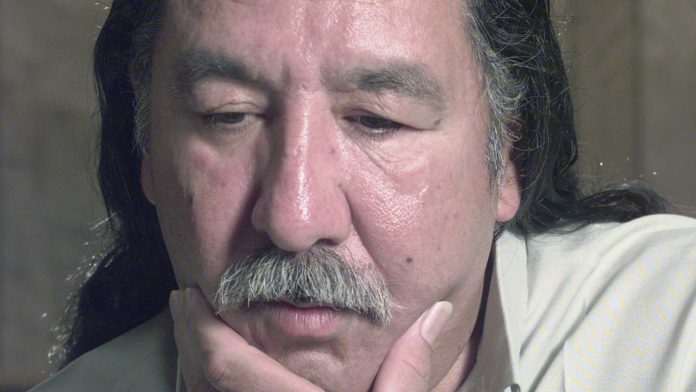
American Indian activist Leonard Peltier speaks during an interview at the U.S. Penitentiary at Leavenworth, Kan., April 29, 1999.

Joe Ledford/The Kansas City Star/AP


hide caption

toggle caption

Joe Ledford/The Kansas City Star/AP

Indigenous activist Leonard Peltier is set to be released from a Florida prison Tuesday based on former President Joe Biden having commuted his life sentence for the 1975 killings of two FBI agents, a decision that elated Peltier’s supporters while angering law enforcement officials who believe in his guilt.

For nearly half a century, Peltier’s imprisonment has symbolized systemic injustice for Native Americans across the country who believe in his innocence. The decision to release the 80-year-old to home confinement was celebrated by supporters.

“He represents every person who’s been roughed up by a cop, profiled, had their children harassed at school,” said Nick Estes, a professor of American Indian Studies at the University of Minnesota and a member of the Lower Brule Sioux Tribe who has advocated for Peltier’s release.

But the last-minute move as Biden was leaving office also prompted criticism from those who say Peltier is guilty, including former FBI Director Christopher Wray, who called him “a remorseless killer” in a private letter to Biden that was obtained by The Associated Press.

“Granting Peltier any relief from his conviction or sentence is wholly unjustified and would be an affront to the rule of law,” Wray wrote.

The commutation was not a pardon for crimes committed, something that Peltier’s advocates have hoped for since he has always maintained his innocence.

Peltier, an enrolled member of the Turtle Mountain Band of Chippewa in North Dakota, was active in the American Indian Movement, which beginning in the 1960s fought for Native American treaty rights and tribal self-determination.

The group grabbed headlines in 1969, when activists occupied the former prison island of Alcatraz in the San Francisco Bay, and again in 1972, when they presented presidential candidates with a list of demands including the restoration of tribal land. After they were ignored, they seized the headquarters of the Bureau of Indian Affairs.

From then on the group was subject to FBI surveillance and harassment under a covert program that sought to disrupt activism and was exposed in 1975.

Peltier’s conviction stemmed from a confrontation that same year on the Oglala Sioux Indian Reservation in Pine Ridge, South Dakota, in which FBI agents Jack Coler and Ronald Williams were killed. According to the FBI, the agents were there to serve arrest warrants for robbery and assault with a dangerous weapon.

Prosecutors maintained at trial that Peltier shot both agents in the head at point-blank range. Peltier acknowledged being present and firing a gun at a distance, but said he fired in self-defense. A woman who claimed to have seen Peltier shoot the agents later recanted her testimony, saying it had been coerced.

He was convicted of two counts of first-degree murder and given two consecutive life sentences.

Two other movement members, co-defendants Robert Robideau and Dino Butler, were acquitted on the grounds of self-defense.

Peltier was denied parole as recently as July and was not eligible to be considered for it again until 2026.

“Leonard Peltier’s release is the right thing to do given the serious and ongoing human rights concerns about the fairness of his trial, his nearly 50 years behind bars, his health and his age,” said Paul O’Brien, executive director with Amnesty International USA in a statement. “While we welcome his release from prison, he should not be restricted to home confinement.”

Prominent Native American groups like the National Congress of the American Indian have called for Peltier’s release for decades, and Amnesty International considered him a political prisoner. Prominent supporters included South African Archbishop Desmond Tutu, civil rights icon Coretta Scott King, actor and director Robert Redford and musicians Pete Seeger, Harry Belafonte and Jackson Browne.

Generations of Indigenous activists and leaders lobbied multiple presidents to pardon Peltier. Former Interior Secretary Deb Haaland, a member of the Pueblo of Laguna and the first Native American to hold the secretary’s position, praised Biden’s decision.

“I am grateful that Leonard can now go home to his family,” she said Jan. 20 in a post on the social platform X. “I applaud President Biden for this action and understanding what this means to Indian Country.”

As a young child, Peltier was taken from his family and sent to a boarding school. Thousands of Indigenous children over decades faced the same fate, and were in many cases subjected to systemic physical, psychological and sexual abuse.

“He hasn’t really had a home since he was taken away to boarding school,” said Nick Tilsen, who has been advocating for Peltier’s release since he was a teen and is CEO of NDN Collective, an Indigenous-led advocacy group based in South Dakota. “So he is excited to be at home and paint and have grandkids running around.”
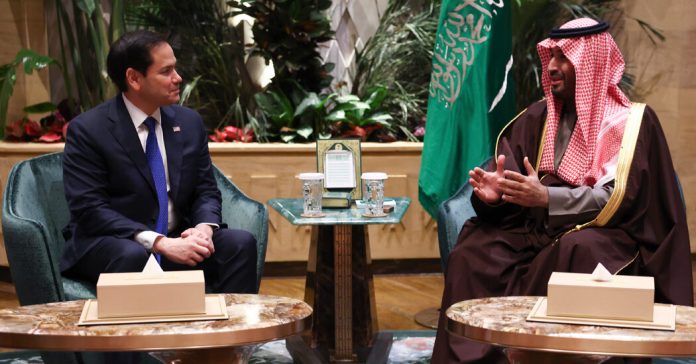

U.S., Russia Talks in Saudi Arabia Set to Go Beyond Ukraine

0

Senior American and Russian officials were set to meet in Saudi Arabia on Tuesday for the most extensive negotiations between the two countries in at least three years, as President Trump pushes to end the war in Ukraine and the Kremlin seeks warmer ties with Washington.

After arriving in Riyadh, the Saudi capital, Russian officials said they would seek “normalization” with the United States, even holding out the possibility that major American oil companies could return to Russia. Ukraine and Europe were watching from a distance with deep apprehension, amid fears that Mr. Trump could try to force a peace deal on Ukraine that would be favorable to Russia.

The meeting comes less than a week after Mr. Trump’s lengthy phone call with President Vladimir V. Putin of Russia. Mr. Trump said afterward that the two leaders spoke of “the great benefit” that the United States and Russia “will someday have in working together,” and that the two leaders had agreed to “start negotiations immediately” to end the war in Ukraine.

The U.S. delegation in Riyadh is led by Marco Rubio, the secretary of state; Michael Waltz, the national security adviser; and Steve Witkoff, Mr. Trump’s Middle East envoy and a longtime friend of the president. They were expected to meet Tuesday with Russian officials including Sergey V. Lavrov, the foreign minister; Yuri Ushakov, Mr. Putin’s foreign policy adviser; and Kirill Dmitriev, the head of Russia’s sovereign wealth fund.

Mr. Ushakov told reporters after landing in Riyadh that the goal of the talks would be “to start a real normalization of the relationship between us and Washington.”

Mr. Dmitriev, who worked with Mr. Witkoff to broker the release last week of an American schoolteacher jailed in Russia, said he would seek to restart economic cooperation with the United States in order to “rebuild communication, rebuild trust, rebuild success.”

“U.S. oil majors have had very successful business in Russia,” Mr. Dmitriev said in a brief interview on Tuesday before the talks began, offering an example of how the countries could rebuild business ties. “We believe at some point they will be coming back, because why would they forego these opportunities that Russia gave them to have access to Russian natural resources?”

Leading Western oil companies, including Exxon Mobil, left Russia after Mr. Putin’s full-scale invasion of Ukraine almost three years ago. Energy and economic ties were among the topics of the call between Mr. Putin and Mr. Trump last week, according to Mr. Trump and the Kremlin.

Tuesday’s discussions will be the first time since early 2022 that broad delegations of senior American and Russian officials are known to have met in person. The meeting is another step in Mr. Trump’s bid to end the diplomatic isolation of Russia that former President Joseph R. Biden Jr. sought to enforce since the start of the invasion — a step that the Trump administration says is necessary in order to stop the war.

“If there is going to be the possibility of progress here towards peace, we are going to need to talk to the Russians,” Mr. Rubio said on the CBS show “Face the Nation” on Sunday.

But in Europe and Ukraine, the news of Tuesday’s planned talks has been met with confusion and concern. While Mr. Rubio characterized the talks as preliminary, there was widespread criticism in Europe that Mr. Trump’s approach to Russia hadn’t been coordinated with allies of the United States. And Ukrainian officials insisted they would reject any agreement about their country that was negotiated without their involvement.

“We cannot recognize any agreements made about us without us,” President Volodymyr Zelensky of Ukraine said Monday.

Mr. Zelensky is also in the Gulf region this week, where several countries have sought to use their relationships with Moscow, Kyiv and the West to play roles as mediators in the Ukraine war. On Monday, Mr. Zelensky was in the United Arab Emirates to discuss prisoner exchanges and the return of Ukrainian children from Russia.

Ukrainian officials have also said that Mr. Zelensky will be in Saudi Arabia this week, but that Ukraine was not invited to the U.S.-Russia talks. Mr. Ushakov, the Kremlin foreign policy adviser, said there were no plans for a three-way meeting with the Ukrainians.

“We came here to hold negotiations with American colleagues,” he said.

Andrew E. Kramer contributed reporting from Kyiv, Ukraine.

Tuesday Briefing

0

Talks about Ukraine’s future.

What You Need to Know About the Major Plane Crashes of 2025

0

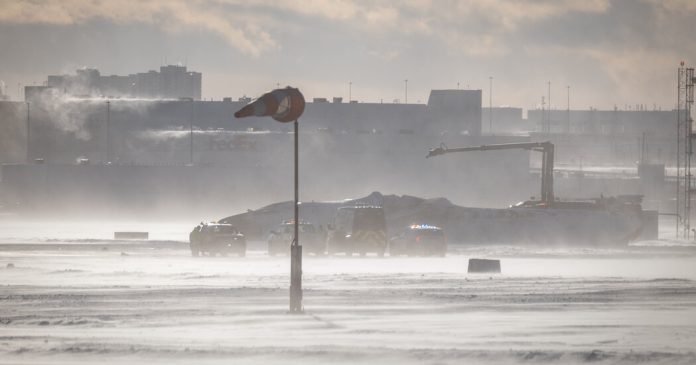
The Delta Air Lines crash at Toronto Pearson International Airport on Monday is the latest in a series of accidents this year that has spread anxiety among air travelers and prompted sharp criticism of American aviation regulators.

Here are the three major U.S. accidents so far in 2025:

On the night of Jan. 29, an American Airlines plane was approaching Washington’s Reagan National Airport when it collided with an Army helicopter that was on a training mission.

The collision set off a fireball and sent both aircraft and 67 people — 64 on the Bombardier CRJ700 and three on the UH-60 Black Hawk helicopter — crashing into the Potomac River. There were no survivors.

It was the deadliest air crash in the United States in 20 years. In the aftermath, questions emerged about the flight paths of the helicopter and the plane, and whether staffing at Reagan National’s air traffic control contributed to the collision. An investigation is ongoing.

A small medical plane slammed into the ground in northeast Philadelphia a minute after taking off on Jan. 31, bursting into fire and engulfing homes and vehicles in flames. All six people on board, and one person on the ground, were killed, the authorities said.

The Learjet 55 was transporting a child who had completed treatment in Philadelphia to her home in Mexico. She was accompanied by her mother, and there were also two pilots, a doctor and a paramedic on board, according to Jet Rescue Air Ambulance, which operated the plane.

A small passenger plane carrying 10 people vanished on Feb. 6 as it was flying to Nome, Alaska. Its disappearance set off a massive search operation, with Coast Guard and Air Force planes scanning a remote area along the western coast of Alaska.

The Cessna 208 Caravan was operated by Bering Air, a regional airline. Its wreckage, with the bodies of the pilot and nine passengers, was found the next day.

Before it crashed, its pilot had told air traffic control that he intended to enter a holding pattern while waiting for the runway in Nome to be cleared, according to the Nome fire department. But Alaska’s Transportation Department said the runway that the plane had been approaching had remained open throughout that day.

How Can the Russia-Ukraine War End? A Guide to a Possible Peace Deal

0

President Trump says he wants to “make a deal” to “STOP this ridiculous war” in Ukraine. His call with President Vladimir V. Putin, and a meeting expected this week between U.S. and Russian officials in Saudi Arabia, have raised expectations that negotiations could end three years of fighting.

But how would those talks actually work? Who would be involved? What could a deal look like?

The New York Times has been reporting on these questions since the early weeks of the war in 2022, when Ukraine and Russia held direct talks that failed to reach a peace agreement.

To sum up what we know at this point, here’s our guide to potential Ukraine peace talks.

Right now, Ukraine has few options for reversing Russia’s recent gains on the battlefield. That means that any deal is likely to involve painful concessions by Ukraine, which could be seen as Mr. Trump’s rewarding Mr. Putin’s aggression. It also means that Russia will almost certainly drive a hard bargain.

But Mr. Putin may have his own incentives for making a deal. Russia’s economy risks runaway inflation amid enormous spending on the war, while the military is suffering some 1,000 or more casualties a day. And a settlement over Ukraine could pave the way for a reduction of Western sanctions.

The talks would be exceedingly complicated. Many doubt that Mr. Putin will negotiate in good faith, while Europe and Ukraine fear that Mr. Trump will be tempted to strike a deal with the Kremlin over their heads.

Still, Russia and Ukraine did make headway toward striking a deal when they last negotiated directly, back in the spring of 2022. And some experts believe that an agreement is possible that would satisfy Mr. Putin while preserving some form of sovereignty and security for Ukraine.

The Biden administration sought to isolate Russia diplomatically and said any negotiations about Ukraine’s fate had to involve the Ukrainians. Mr. Trump broke from that approach on Feb. 12, when he discussed Ukraine in a lengthy call with Mr. Putin and then said he would “inform” Ukraine’s president, Volodymyr Zelensky, of the conversation.

Now it’s Ukraine that appears isolated. Mr. Zelensky said he was not invited to discussions this week between top aides to Mr. Trump and their Russian counterparts in Saudi Arabia.

European countries may also be cut out — even though Europe’s total aid to Ukraine since the start of the war, roughly $140 billion, is greater than what the United States has provided.

Mr. Trump said he would “probably” meet Mr. Putin in Saudi Arabia soon. Qatar, the United Arab Emirates and Turkey have already been mediating between Ukraine and Russia on matters like prisoner exchanges and navigation in the Black Sea.

Ukraine has said it will never recognize any change to its borders. Russia claims not just the roughly 20 percent of the country it already controls, but also a swath of Ukrainian-held land in four regions that it does not fully control.

A possible compromise: freeze the fighting.

Russia keeps control of the land it has already captured but stops fighting for more. Ukraine and the West don’t formally recognize Russia’s annexation, even as Russia retains its broader territorial claims. An agreement could stipulate that territorial disputes will be resolved peacefully at some point in the future — say, 10 or 15 years, as Ukrainian negotiators proposed for the status of Crimea in the 2022 peace talks.

And a wrinkle: Kursk.

Ukraine still holds around 200 square miles of territory in Russia’s Kursk region. Russia has rejected the idea that Ukraine could use that land as a bargaining chip in any future talks. But if talks start before Russia has managed to expel Ukrainian troops from there, Ukraine may still be able to find a way to trade a retreat from Kursk for concessions by Russia.

While Ukraine wants to reclaim the territory Russia has captured, it has also made clear that its future security is at least as important, meaning protection from renewed Russian aggression.

Ukraine describes NATO membership as the key to this protection. Russia describes the possibility of Ukraine joining the alliance as an existential threat to its own security.

The Trump administration has already made it clear that it expects Russia to get its way here.

Leaving open a path for Ukraine to join the European Union, but not NATO, could be presented as a compromise. Before the 2022 peace talks failed, Russian negotiators agreed to language in the draft treaty that said the deal would be “compatible with Ukraine’s possible membership in the European Union.”

Absent NATO membership, Mr. Zelensky has floated the deployment of 200,000 foreign troops to Ukraine to safeguard any cease-fire. Analysts say the West can’t produce such a large force. Keir Starmer, the British prime minister, said on Sunday that his country would be ready to commit an unspecified number of peacekeeping troops.

But Russia wants its own “security guarantees” to assure that Ukraine won’t try to rebuild its military capacity and recapture Russian-occupied land. It wants to cap the size of Ukraine’s military and ban foreign troops from the country.

Threading this needle is widely seen as the trickiest aspect of any negotiation. A team of experts led by Marc Weller, a Cambridge international law professor who specializes in peace negotiations, has drafted a potential agreement that envisions a compromise: deploying a small international force of 7,500 staffed by countries acceptable to both Russia and Ukraine to keep the peace at the front line.

The Weller proposal envisions immediate sanctions against either side if it restarts hostilities. It would allow Ukraine to hold limited joint exercises with other countries and cooperate with them on weapons production and military training.

There would be no permanent deployment of foreign troops, but Ukraine could host a small number of technical personnel. And Ukraine would agree to a ban on missiles with a range of more than 155 miles.

The durability of any peace could hinge on the nuts and bolts of a cease-fire agreement.

Thomas Greminger, a former Swiss diplomat who was involved in monitoring the cease-fire in eastern Ukraine after 2015, flags three key issues.

The first is agreeing on the “line of contact” separating Russian from Ukrainian-controlled territory. Next there would need to be a “disengagement zone,” or buffer, between opposing forces, to prevent stray gunfire or misunderstandings from flaring into combat. Third, he said, there will need to be some way to hold both sides to account for cease-fire violations.

The language in the agreements “could be very technical” on issues like the disengagement zone and cease-fire enforcement, said Mr. Greminger, now the director of the Geneva Center for Security Policy think tank. But, he said, that language could be “quite decisive over whether the cease-fire holds.”

Mr. Putin claims his war isn’t just about Ukraine, but about forcing the West to accept a new security architecture in Europe.

Weeks before the invasion, he presented an ultimatum demanding that NATO stop expanding eastward and withdraw from much of Europe. And in his Feb. 12 call with Mr. Trump, Mr. Putin warned of “the need to eliminate the root causes of the conflict,” the Kremlin said.

That means Russia is likely to make demands that go well beyond the fate of Ukraine itself.

America’s allies are likely to argue that a retreat of NATO in Europe will increase the risk of a Russian invasion for countries like Poland and the Baltics. But Mr. Trump might be amenable to such a deal, given his skepticism about American deployments abroad.

All this will make for an incredibly complicated negotiation. Mr. Greminger, who has been working with experts close to governments with a stake in the war to game out how the talks could go, sees at least three negotiating tracks: U.S.-Russian, Russian-Ukrainian and Russian-European.

“You have at least these three levels,” he says. “There are no shortcuts.”

Mr. Putin also has demands that go beyond territory and security. In the 2022 peace talks, Russian negotiators sought to strip away Ukrainian identity, demanding that the country make Russian an official language and ban naming places after Ukrainian independence fighters. Those issues are likely to come up again.

Mr. Putin could also try to leverage a Ukraine settlement to get other benefits from Mr. Trump, like sanctions relief. But it is his apparent desire for a grand bargain with Washington, some analysts believe, that could represent his greatest incentive to cut a deal.

“Putin would like to have a longer-term, productive relationship with this administration,” said Rose Gottemoeller, a former American under secretary of state with experience negotiating with the Russians. “He needs to be willing to make concessions.”

Andrew E. Kramer contributed reporting.

Palestinian Displacement in the West Bank Is Highest Since 1967, Experts Say

0

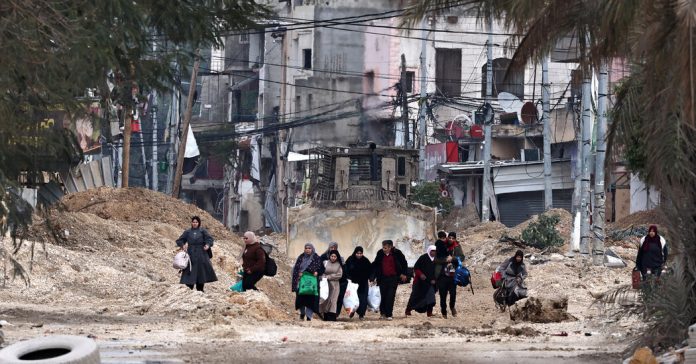
A weekslong Israeli military operation across several West Bank cities has displaced roughly 40,000 Palestinians from their homes, in what historians and researchers say is the biggest displacement of civilians in the territory since the Arab-Israeli war of 1967.

Israeli campaigns against armed Palestinian groups in three parts of the northern West Bank have forced thousands of residents to shelter with friends and relatives, or camp in wedding halls, schools, mosques, municipal buildings and even a farm shed.

The Israeli military says the operation is solely an attempt to stifle rising militancy in Jenin, Tulkarem and near Tubas, targeting gunmen who they say have carried out or are planning terrorist attacks on Israeli civilians. Palestinians fear it is a veiled attempt to permanently displace Palestinians from their homes and exert greater control over areas administered by the Palestinian Authority, a semiautonomous body that has also battled the militants in recent months.

Many of the displaced are the descendants of refugees who were expelled or fled from their homes during the wars surrounding the creation of the state of Israel in 1948, a period known in Arabic as the Nakba. The renewed displacement, even if temporary, raises painful memories of the central trauma in Palestinian history.

While roughly 3,000 have returned home, most remain homeless after more than three weeks — a bigger displacement than during a similar Israeli campaign in the West Bank in 2002, according to two Palestinian and two Israeli experts on the history of the West Bank. That year, troops raided several cities at the height of a Palestinian uprising, known as the second intifada, which began with protests before leading to a surge in Palestinian attacks on civilians in Israel.

The current numbers also dwarf the displacement during intra-Palestinian clashes earlier this year, when up to 1,000 residents of Jenin left their homes, according to a residents’ leadership council there.

As in 2002, some of those displaced during this new campaign will have no home to return to. The Israeli military has demolished scores of buildings in the areas it has invaded, ripping up roads, water pipes and power lines to destroy what it says are booby traps set by militants.

The United Nations office for the coordination of humanitarian affairs said that water and sanitation systems had been destroyed in four dense urban neighborhoods, known as refugee camps because they house people displaced in 1948 and their descendants. It added that some water infrastructure had been contaminated with sewage.

“We’ve reached a point where the refugee camps are out of order,” said Hakeem Abu Safiye, who oversees emergency services in Tulkarem camp. “They are uninhabitable. Even if the army pulls out, we are not sure what will be left to repair.”

The full scale of the damage is unclear because the military is still operating in most of the areas it has invaded, but the United Nations has already recorded severe damage to more than 150 homes in Jenin. By early February, the Israeli military had acknowledged blowing up at least 23 buildings, but it has declined to confirm the latest number of demolished structures.

“The soldiers are taking over one area after another, destroying homes, infrastructure and roads,” said Ramy Abu Siriye, 53, a barber forced to flee his home in Tulkarem on Jan. 27, the first day of the Israeli operation there.

“The Israelis have two objectives — first, to push refugees from the northern West Bank toward the central areas, aiming to erase the refugee camps entirely,” Mr. Abu Siriye said. “The second goal is to eliminate resistance and weaken the Palestinian Authority’s ability to govern,” Mr. Abu Siriye added.

A spokesman for the Israel Defense Forces, Lt. Col. Nadav Shoshani, said the military’s goal was to root out militant groups, including Hamas, that launch terrorist attacks on Israeli civilians.

“The purpose of the operations is to prevent terror from places a few kilometers from Jewish communities and to prevent a repeat of Oct. 7,” Colonel Shoshani said, referring to the Hamas-led attack on Israel in October 2023 that killed up to 1,200 people and led to the abduction of some 250 hostages.

Colonel Shoshani acknowledged that in some cases people had been ordered to leave specific buildings close to what he said were militant hideouts. But more generally, Colonel Shoshani denied any wider policy of “forced evacuation or displacement of Palestinians,” he said. “If people want to move around, they are obviously allowed to,” he added. Roughly 3,000 people have been able to return to al-Faraa camp, near Tubas.

But displaced Palestinians said that in both Jenin and Tulkarem they were instructed to leave by soldiers who used loudspeakers to make general evacuation orders.

“We had to leave the camp — the army threatened to shoot at us,” said Aws Khader, 29, a supermarket owner who fled Tulkarem on Jan. 27. “They used megaphones, ordering people to leave or be shot,” Mr. Khader added.

Asked for comment on this and similar incidents, the military repeated in a statement that no evacuation orders had been issued, but that all those who wished to leave had been provided with safe passage. The statement said that troops operated in Mr. Khader’s neighborhood because they had “uncovered terror infrastructure and weapons that terrorists had hidden in a bookstore.”

Palestinians dismiss the military’s explanations, citing calls by key ministers in Israel’s far-right government to encourage the flight of Palestinians from the West Bank, destroy the Palestinian Authority and annex the territory.

Israel captured the West Bank in 1967 from Jordan, expelling Palestinians from several villages close to Israel and prompting the flight of hundreds of thousands of others into Jordan. Since then, Israel has gradually entrenched its control, building hundreds of settlements, often on private Palestinian land, for hundreds of thousands of Israeli civilians, and building a two-tier legal structure that critics have described as an apartheid system. Israel strongly denies the charge.

Efforts to cement Israeli control over the territory accelerated after the current Israeli government entered office in 2022.

Bezalel Smotrich, a settler leader turned finance minister, was given authority over part of an influential military unit that controls Palestinian building projects in most of the territory.

His empowerment heightened suspicions about the government’s intentions: Mr. Smotrich published a lengthy plan in 2017 that proposed permanent Israeli control of the territory. Under the plan, Palestinians would be denied voting rights, at least initially, and those who did not accept Israeli control would be paid to emigrate, or killed if they resorted to violence.

The government has also placed growing restrictions on Palestinian movement in the West Bank; banned UNRWA, the United Nations agency that cares for Palestinian refugees and their descendants; and done little to curb efforts by far-right Israeli activists to force thousands of Palestinian herders from remote but strategic areas of the territory.

“What makes this moment unprecedented is not only the scale of the displacement but also the accompanying discourse, which increasingly normalizes the idea of permanent forced displacement,” said Maha Nassar, a Palestinian American historian at the University of Arizona.

“This represents a significant escalation in the longstanding conflict, one that threatens to fundamentally alter the political and demographic landscape of the region,” she added.

Hiba Yazbek contributed reporting from Jerusalem.

Federal health agencies including CDC, NIH, and FDA take stock of layoffs : Shots

0

Employees at the National Institute of Health are among those at several health agencies who received termination letters this past weekend as part of the Trump administration’s push to cut federal employees.

Alex Wong/Getty Images


hide caption

toggle caption

Alex Wong/Getty Images

Termination letters landed in the mailboxes of hundreds of employees at the Centers for Disease Control and Prevention, the Food and Drug Administration, and the National Institutes of Health over the weekend, as the Trump administration moved ahead with firings announced verbally Friday.

That’s according to reports from several current staffers who requested anonymity because they are not authorized to speak publicly and feared repercussions.

The number of employees who lost their jobs at the NIH and CDC was lower than initially expected. At CDC, current staff say they haven’t been told why and still fear that more cuts could be coming.

Among staff who were caught up in the first wave of layoffs and spoke to NPR: PhD-trained scientists tasked with helping local and state officials respond to outbreaks; employees that ensure medical devices for patients with cancer and diabetes are safe; and a public health worker stationed at an international airport who enforces regulations to prevent animals carrying rabies and other infectious diseases from entering the U.S.

Altogether, about 750 CDC employees received termination letters over the weekend, according to a current CDC staffer who was on a call with agency leadership and another who reviewed an internal memo.

On Friday, CDC leadership told staff that 10% of the agency’s workforce — about 1,300 employees — would be notified they’d be losing their jobs.

“I’m going to work tomorrow and I don’t know who’s employed,” said one of the CDC employees, who had yet to receive any official notification about exactly which employees in their division had lost their jobs.

At the National Institutes of Health, between 1,000 and 1,200 probationary employees received notification Saturday night that they were being cut, two staffers with knowledge of the situation told NPR. This is a few hundred less than employees told NPR they were expecting.

Officials were able to save some jobs because certain positions were deemed essential, such as people who work at the NIH’s clinical center, one person said. The NIH employs about 18,000 on the agency’s campus outside Washington, D.C.

Cuts at the FDA hit people who do research and approvals on the medical device side of the agency, according to fired FDA employees who were fearful of the consequences of speaking out.

Staffers that work on drug approvals were temporarily spared, according to a current FDA employee who was not authorized to speak.

HHS, CDC, FDA and NIH did not respond to NPR’s request for comment.

‘Performance’ cited as cause for cuts

NPR reviewed termination letters sent to staff at the CDC, NIH and FDA.

All of them used similar language and cited inadequate performance as the reason for their firing — yet the employees that NPR spoke with had records of stellar work.

“Unfortunately, the Agency finds you are not fit for continued employment because your ability, knowledge and skills do not fit the Agency’s current needs, and your performance has not been adequate to justify further employment at the Agency,” the letters from the Office of the Secretary of the Department of Health and Human Services, states.

The letters set a termination date effective March 14, 2025.

At all three agencies, most who lost their jobs were staff in their probationary periods — a prolonged trial period of one to two years for new employees or those who have moved to new positions within the agency — who have fewer legal worker protections.

Dr. Steve Monroe, a former senior CDC official, called the decision “extremely shortsighted,” because it sweeps up people “regardless of whether they were filling an important role in the organization or how well they were performing.”

Some employees were left on edge and confused about their employment status and what to expect in the coming days.

For example, some people who had been explicitly told they’d be terminated have yet to receive a letter, including fellows in the CDC’s high-profile Epidemic Intelligence Service, a premier training program for what are called “disease detectives,” staff who are dispatched to respond to outbreaks.

A current CDC staffer said they would love to know that cohort had been spared at the last minute, but they still weren’t “optimistic,” given the mass firings over the weekend.

What positions were lost

The job cuts dealt blows to some essential functions of the federal health agencies.

NPR heard from several FDA staff, who spoke anonymously because they fear retribution for speaking up, who worked on reviews for devices that do things like detect cancer and help people with diabetes. They say they have kept devices that don’t work or are dangerous off the market and fear that downsizing their ranks could be dangerous to consumers.

At NIH, offices involved in reviewing and administering grants to researchers outside the agency, such as at universities and medical centers, were hit hard, one staffer with knowledge of the situation said. The NIH spends most of the agency’s $48 billion annual budget on this kind of “extramural” research to find new cures for cancer, heart disease and other diseases.

“Our nation cannot afford to hollow out our research and public health assets,” Mary Woolley, president and CEO of Research!America, an advocacy group, said in a statement. “Patients are waiting; lives are at stake.”

At CDC, fellows who respond to disease outbreaks from at least two celebrated CDC training programs were cut. Twenty fellows in the Laboratory Leadership Service received termination letters on Saturday. They “help develop the tests for new and emerging diseases,” one fellow explains. The fellows have doctoral degrees, and are often co-deployed with fellows in the Epidemic Intelligence Service for outbreak responses.

Every person in the lab fellowship cohort had received a letter and a performance review a few weeks ago attesting to the high quality of their work, the fellow said: “We included that letter in the response email to show good standing and more than adequate performance.”

Monroe, the former CDC official worries that these cuts could “hobble” the nation’s ability to respond to disease outbreaks. “Losing them today means that there’s less capacity to assist states tomorrow if there’s a need for an outbreak investigation,” he says.

In the longer term, Monroe sees the cuts resulting in fewer people getting trained or choosing to work in public health. “A year from now, there won’t be the people that have a year and a half of experience because we cut them loose,” he says.

The ranks of the Public Health Associate Program were also decimated by the layoffs. The fellowship embeds recent college- and masters-level graduates in state and local health departments, and serves as a pathway for careers in public health, says a current CDC staffer familiar with the program.

A CDC employee who was charged with preventing the introduction of zoonotic diseases (those that jump from animals to humans), had assumed they’d be safe from layoffs because their work involved national security and border control. They’d recently received a CDC award of excellence for their work.

It’s also not clear how the firings will save the government money, says Patti Zettler, a law professor at Ohio State University who served as Deputy General Counsel to HHS, covering the FDA, until January.

For instance, FDA user fees, paid by drug and device makers, began in the 1990s to speed things like drug and device approvals. In exchange for the fees, the agency commits to hiring more staff and reviewing applications for new products more quickly.

“When we think about all of the layoffs across HHS, none of them are going to save the taxpayer money in the long run,” she says. “It is especially clear that laying off FDA staff who are funded by user fees will not save the taxpayers any money. The taxpayers are not paying for these employees.”

In response to a request for comment on the cuts when word of them came out Friday: Andrew Nixon, director of communications at HHS, wrote in an email to NPR: “HHS is following the Administration’s guidance and taking action to support the President’s broader efforts to restructure and streamline the federal government. This is to ensure that HHS better serves the American people at the highest and most efficient standard.”

Have information you want to share about the ongoing changes across the federal government? Reach out to these authors via encrypted communications: Will Stone @wstonereports.95, Pien Huang @pienhuang.88 and Rob Stein @robstein.22.

Rob Stein and Sydney Lupkin contributed to this report.

Trump’s Threats Against Canada Upend Conservative’s Playbook

0

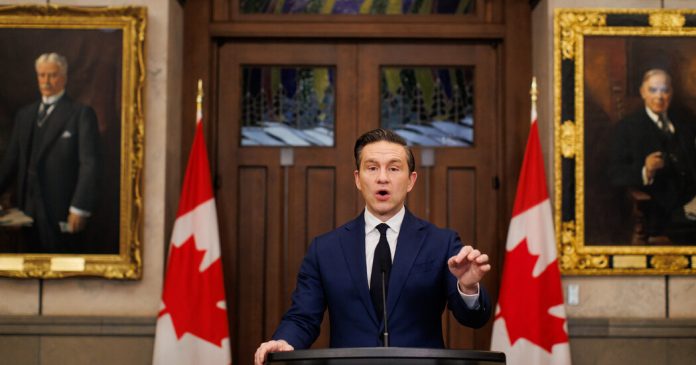
With his unapologetic conservatism, his vow to fix a “broken” nation, his “common sense” fight against elites and all things woke, his norm-shattering personal attacks against political rivals, his pugilistic use of demeaning nicknames and his open disdain of the news media, Pierre Poilievre, the front-runner to become Canada’s next leader, has become a darling of the American right.

Some of President Trump’s most prominent supporters have publicly showered Mr. Poilievre, the leader of the main opposition Conservative Party, with compliments — a remarkable feat given that Canadian opposition leaders tend to attract little attention in the United States, much less praise.

But when Elon Musk, the world’s richest man who is leading an aggressive campaign against the U.S. federal bureaucracy on behalf of Mr. Trump, recently endorsed Mr. Poilievre as Canada’s next leader, Mr. Poilievre found himself in an uncomfortable situation.

Asked at a news conference last month whether he accepted the endorsement, Mr. Poilievre said, “My three-year-old has just told me that he wants to go to Mars, so I guess then Mr. Musk would be the right guy to put him in touch with,” before adding that it would be great if Mr. Musk opened some Tesla factories in Canada.

Mr. Poilievre’s backing by people close to Mr. Trump was always a double-edged sword in Canada, where the U.S. president is popular among hardcore conservatives but not among mainstream voters.

But that support now risks becoming a liability as Canada confronts a once unimaginable threat: the president of the United States, Canada’s closest ally, repeatedly questioning Canada’s viability as a nation, threatening to annex it through economic force and denigrating its prime minister as a “governor.”

As patriotic feelings have surged in Canada, Mr. Poilievre’s lead has narrowed significantly in several polls. Until a month ago, Mr. Poilievre, 45, appeared to be a shoo-in to become Canada’s next leader after having built a double-digit lead in the polls by channeling national frustration and anger at the deeply unpopular prime minister, Justin Trudeau.

Mr. Trudeau is expected to step down next month as prime minister after his Liberal Party selects a successor, who will automatically become prime minister. A general election is then likely to be held a couple of months later.

“For Poilievre, the biggest challenge is that for the last two years the villain in his story was Justin Trudeau,” said David Coletto, the founder of Abacus Data, a polling firm. “But that villain is now leaving, and there’s a new, bigger, badder villain that is coming from outside the country — and that’s Donald Trump.”

“What Canadians are now trying to figure out is who’s the hero in that story, who’s going to save them and protect them against that threat,” Mr. Coletto added. “And the conclusion that more people are going to choose Pierre Poilievre is now up in the air.”

Mr. Poilievre has responded by toning down his attack-dog persona and by switching to a “Canada First” message that he emphasized at a rally in Ottawa over the weekend. Before hundreds of supporters, Mr. Poilievre spent much of his speech responding to the threat from the United States, vowing to “bear any burden and pay any price to protect our sovereignty and independence.’’

A spokesman for Mr. Poilievre did not respond to requests for an interview.

Mr. Poilievre’s supporters said he was simply adjusting to external developments and that he remained true to his long-held core conservative principles.

Ginny Roth, a partner at Crestview Strategy and a former communications director for Mr. Poilievre, said that Canada First was “a turning away from a naïve, international liberalism that saw global elites put the interests of their own business and, frankly, coupled with left-wing causes, ahead of the interests of regular working people.”

Ms. Roth attributed Mr. Poilievre and the Conservatives’ dip in the polls to a blip enjoyed by the Liberals after Mr. Trudeau’s resignation announcement, as well as a temporary “rally-around-the-flag” reaction among voters to Mr. Trump’s imposition of tariffs and his annexation threats.

No matter how the polls evolve, Mr. Poilievre’s situation shows how Mr. Trump’s aggressive foreign policy has upended the domestic politics of a major ally, experts said.

“With the Trump administration in power again, wreaking havoc in so many ways, including trade with Canada, it puts Mr. Poilievre in a very difficult position,” said Jonathan Malloy, an expert on Canadian politics at Carleton University. “I think he’s going to have to differentiate himself from Mr. Trump, much more than he was planning to. His opponents, of course, will accuse him of being Trump-lite.”

A career politician, Mr. Poilievre has been known for his combativeness since being elected to Parliament in 2004 at the age of 25. But it is in the last few years that he has embraced the tactics and messages used by Mr. Trump and others, portraying himself as an outsider fighting against a corrupt political, business, academic and media establishment.

He won the leadership of the Conservatives in 2022, after championing more than any other politician the truckers who took over and paralyzed Ottawa, the capital, for weeks to protest anti-COVID mandates. In the past two years, he pummeled Mr. Trudeau and other politicians with a constant barrage of personal insults and attacks that is new to Canadian politics.

Mr. Poilievre has given rivals insulting nicknames, including “Trust Fund Trudeau” to Mr. Trudeau, the son of a former prime minister, and “Sellout Singh” to the leader of the New Democrats, a smaller left-leaning party. Like Mr. Trump, he often says that problems can be solved with “common sense” — a term used by populists to pit ordinary people against a supposedly misguided and corrupt elite, said Emily Laxer, an expert on populism at York University.

While Mr. Poilievre’s policies are based on traditional conservative ideas of small government, free market and lower taxes, his populist tactics are a break from the past in Canada, Ms. Laxer said.

“There is evidence of a kind of mimicking of Trump’s messaging and strategy,” Ms. Laxer said. “And certainly, they both have benefited from the polarization of their societies, politically, and they’ve contributed to that polarization.”

Mr. Poilievre’s campaign against what he perceives as woke and the news media, vowing to get rid of the public broadcaster, CBC, has further endeared him to Fox News, Joe Rogan, Mr. Musk and other high-profile supporters of Mr. Trump, who tend to dislike Mr. Trudeau.

Mr. Musk described as a “masterpiece” a video in which Mr. Poilievre, while eating an apple, spars with a reporter questioning him about his use of populism. Bill Ackman, the hedge fund billionaire, posted that Mr. Poilievre was “extremely impressive” and “should be Canada’s next leader,” adding, “Make Canada Great Again.” Mr. Musk responded with a 100 percent emoji.

Fred Delorey, a former national campaign manager for the Conservative Party, said that Mr. Poilievre had elicited that kind of reaction because of the power of his message.

“I’ve never seen a Canadian conservative leader resonate outside the country like Poilievre does,” said Mr. Delorey, now chair of Northstar Public Affairs. “His style is direct to the point, and I think people appreciate that.”

Mr. Delorey said that the American right’s favorable comments about Mr. Poilievre would not have an effect on Canadian voters. Mr. Poilievre, he said, should stay focused on his message, “on what matters. Who cares if someone likes him or doesn’t like him.”

But Mr. Coletto, the pollster, said that these endorsements and Mr. Poilievre’s attitude toward the American president will be factors in a general election that has abruptly shifted from being about Mr. Trudeau to being about Mr. Trump.

“There is a subset of Conservative supporters who actually like Donald Trump, even today, despite everything he’s done,” Mr. Coletto said. “But Poilievre’s got an equally large part of his base that doesn’t.”

And during the upcoming general election campaign, Mr. Poilievre’s rivals are likely to seize on the endorsements, Mr. Coletto said, adding, “It’s common in campaigns to remind voters of who likes who.”

An Invisible Medical Shortage: Oxygen

0

At the height of the Covid-19 pandemic, millions of people in poor nations died literally gasping for breath, even in hospitals. What they lacked was medical oxygen, which is in short supply in much of the world.

On Monday, a panel of experts published a comprehensive report on the shortage. Each year, the report noted, more than 370 million people worldwide need oxygen as part of their medical care, but fewer than 1 in 3 receive it, jeopardizing the health and lives of those who do not. Access to safe and affordable medical oxygen is especially limited in low- and middle-income nations.

“The need is very urgent,” said Dr. Hamish Graham, a pediatrician and a lead author of the report. “We know that there’s more epidemics coming, and there’ll be another pandemic, probably like Covid, within the next 15 to 20 years.”

The report, published in The Lancet Global Health, comes just weeks after the Trump administration froze foreign aid programs, including some that could improve access to oxygen.

Boosting the availability of medical oxygen would require an investment of about $6.8 billion, the report noted. “Within the current climate, that’s obviously going to become a bit more of a challenge,” said Carina King, an infectious disease epidemiologist at the Karolinska Institute and a lead author of the report.

Still, she said, governments and funding organizations should prioritize medical oxygen because of its importance across health care. People of all ages may need oxygen for pneumonia and other respiratory conditions, for severe infections including malaria and sepsis, for surgeries and for chronic lung conditions.

“We’re not pitting oxygen against other priorities, but rather that it should be embedded within all of those programs and within those priorities,” Dr. King said. “It’s completely fundamental to a functioning health system.”

Medical oxygen has been used for more than 100 years, often for treating patients with pneumonia. But it was added to the World Health Organization’s Essential Medicines List only in 2017.

Early in the Covid-19 pandemic, Every Breath Counts, a coalition of more than 50 organizations, pushed for increased access to medical oxygen. By the end of 2022, an emergency task force had mobilized more than $1 billion worth of medical oxygen equipment and supplies to more than 100 countries.

One country that has made substantial investment in improving oxygen access is Nigeria, which had taken steps in that direction even before Covid.

Nigeria has set up about 20 cost-effective plants for generating oxygen on-site for hospitals, and is exploring liquid oxygen plants that can supply large swaths of urban areas, said Dr. Muhammad Ali Pate, the country’s minister of health and social welfare.

Many hospitals do not have systems that can deliver oxygen reliably, “so that is sort of a design and a legacy issue that we have to deal with,” he said. “There’s more that needs to be done.”

Modifying hospital systems to deliver oxygen can pose engineering and market issues, and delivering oxygen requires infrastructure that can transport heavy oxygen tanks for long distances.

Even once oxygen supply is assured, the equipment to deliver the oxygen directly to patients must be routinely maintained and cleaned, and spare parts may take months to be delivered. Health care workers must be trained to use the equipment effectively.

“We’ve seen so much investment in equipment, but very little investment in how to operationalize that equipment sustainably,” Dr. King said.

Health care facilities also require pulse oximeters to screen and monitor blood oxygen levels during treatment. But in low- and middle-income countries, pulse oximetry is used in fewer than 1 in 5 patients in general hospitals, and it’s almost never used at primary health care facilities, according to the report.

The panel included testimonials from patients, families and health care workers who have struggled with the oxygen shortage. In Sierra Leone, before the Covid-19 pandemic, only one public hospital in the entire country had a functioning oxygen plant, resulting in thousands of avoidable deaths. In Pakistan, a man with a chronic lung condition said that he stayed indoors and avoided stairs to prevent his lungs from rupturing under the strain. He had to borrow money from friends and family to pay the $18,000 cost of treatment at home.

In Ethiopia, a doctor was forced to take oxygen away from one patient to treat another who was more desperately ill. “It was very heartbreaking trying to decide who lives and who dies,” he said.

Consider This from NPR : NPR

0

A mural in Tel Aviv, Israel, supporting the return of Israeli hostages held by Hamas. January 21, 2025.

Chris McGrath/Getty Images


hide caption

toggle caption

Chris McGrath/Getty Images


A mural in Tel Aviv, Israel, supporting the return of Israeli hostages held by Hamas. January 21, 2025.

Chris McGrath/Getty Images

On Sunday, Israel’s Prime Minister, Benjamin Netanyahu, met with U.S. Secretary of State Marco Rubio in Jerusalem.

Netanyahu was enthusiastic about Israel’s relationship with the U.S., and said that he and President Trump are on the same page about the urgency of releasing the remaining Israeli hostages.

Today an Israeli delegation traveled to Cairo to hash out details for a second phase of the ceasefire between Israel and Hamas.

Under the first phase of the deal, Hamas agreed to release a total of 33 Israeli hostages – and Israel said it would free around 1,900 Palestinian prisoners and detainees. Some of the Palestinian prisoners released were convicted of serious crimes.

NPR’s Jerome Socolovsky looks at the politics and dilemmas behind prisoner swaps to bring back abducted citizens.

For sponsor-free episodes of Consider This, sign up for Consider This+ via Apple Podcasts or at plus.npr.org.

Email us at [email protected].

This episode was produced by Mia Venkat, Michael Levitt and Christine Arrasmith.

It was edited by James Hider, Nishant Dahyia, Jeanette Woods and Tommy Evans.

Our executive producer is Sami Yenigun