Friday, November 13, 2026
Home Blog Page 212

Canada as the 51st State? In Electoral Terms, Trump’s Idea Favors Democrats.

0

As President Trump looks north and repeatedly presses his case to absorb Canada as the “51st state,” politically minded Democrats who are otherwise outraged by almost everything else about his agenda find themselves contemplating a potential electoral boon should it ever happen.

Few in Washington take the prospect all that seriously, of course. Canada has made clear that it has no interest in joining the United States, and Mr. Trump seems unlikely to send in the 82nd Airborne Division to force the matter. But if the idea appeals to Mr. Trump’s grandiose sense of himself as an empire-building historic figure, it could also undercut his own party’s prospects.

Canada, a land of socialized health care, friendly immigration policies and a commitment to protecting the environment, is not exactly MAGA territory, after all. Making it a state, according to some early studies of popular opinion and voting patterns, would almost surely cost Republicans control of the House, trim their majority in the Senate and make it harder for them to win the White House in future elections.

“I can’t believe I’m saying this, but I strongly agree with Donald Trump,” said former Representative Steve Israel of New York, who headed the Democratic Congressional Campaign Committee. “Canada is largely left of center, and making it the 51st state means more Democrats in Congress and Electoral College votes, not to mention providing universal health care and combating climate change.”

Whether Mr. Trump understands that absorbing Canada might be self-destructive for the Republican Party is not clear. He has never been particularly engaged by party building, nor demonstrated much concern about what happens politically after he leaves office. During the campaign last year, he told Christian supporters that “you won’t have to vote anymore” after electing him in November.

“Of course if it were to happen, it would be a political boon for Democrats,” said Douglas Heye, a longtime Republican strategist. “But that’s not really even part of the discussion. Trump depends on the loud noises getting a reaction — and his batting record there is pretty high.”

Indeed, Mr. Trump’s talk of annexing Canada appears to be a way of trolling his northern neighbors as part of his pressure for trade and other concessions. It has succeeded in getting under their skin. Prime Minister Justin Trudeau of Canada told a group of business leaders in comments that leaked out that he did not consider it a joke but in fact “a real thing.”

All 13 of Canada’s provincial and territorial premiers traveled to Washington this past week as part of a joint mission to strengthen Canada-U.S. relations and defuse the trade war Mr. Trump has begun. After the meeting, James Blair, a deputy White House chief of staff, said online that when it comes to Mr. Trump’s comments on Canada becoming the 51st state, officials there should “take what he says at face value.”

But the notion of Canada as a state, however farcical and unlikely, has intrigued the political class and been the source of parlor games in Washington. With 40 million people and 3.8 million square miles, Canada would instantly become the largest and most populous state in the union, beating out all other 50 states combined in land mass and slightly topping California in population.

Canada would also be even bluer than California politically, judging by past trends. Nearly two-thirds of Canadians, or 64 percent, told pollsters that they would have voted for Kamala Harris while just 21 percent said they would have supported Mr. Trump, according to a survey by the polling firm Leger.

If Canada had 55 Electoral College votes based on its population, that would have boosted Ms. Harris’s total from 226 to 281. Mr. Trump would still have won with 312 Electoral College votes. But such a change would leave less margin for future Republicans who would start each race assuming an additional 55 Electoral College votes in the Democratic base.

The bigger impact would be on the House. John A. Tures, a professor of political science at LaGrange College in Georgia, analyzed what that would mean if the 10 Canadian provinces were collectively brought in while the three Canadian territories were treated by the United States as it treats its own territories like American Samoa, Guam, Puerto Rico and the U.S. Virgin Islands, which have no votes for president.

In that case, Republicans would lose their narrow majority in the House, according to Mr. Tures’s calculations, which were based on the assumption that the number of seats would be increased to accommodate the new population, as was done regularly during the 19th century.

Instead of winning 220 to 215, as they did in November, Republicans would have handed the gavel to Democrats, who would have a majority of 246 to 234. The numbers would be different if the current size of the House were maintained and its 435 seats simply redistributed based on population, as has been done over the past century, but the trend would be similar.

If Canada were admitted as a single state, as Mr. Trump seems to envision, then its two Senate seats would presumably go to the Democrats. The Republicans’ current 53 to 47 majority would be trimmed to 53 to 49, not enough to change control of the chamber but enough to make it harder for Mr. Trump to govern.

If each of the Canadian provinces were admitted as separate states, then Mr. Tures figured that five new Senate seats would go to Republicans from the most conservative parts of Canada (two from Alberta, two from Saskatchewan and one from Manitoba) and 15 from the other provinces would go to Democrats, flipping control.

His forecast, of course, is founded on the assumption that every Conservative Party vote in Canada would go to Mr. Trump’s Republicans and that the Democrats would be able to build a coalition of the several Canadian parties to the left of the Conservatives, both of which are logical if not certain inferences. But it gives a sense of how the political landscape would shift in the United States.

Mr. Tures, who wrote about an earlier version of his analysis, said he has gotten feedback since then from Canadians. “They aren’t happy with Trump’s tactics and threats, but some joked that they would appreciate the opportunity to take over our politics by giving votes to the Democratic Party to make us more them, politically,” he said.

It could, however, become even more complicated. Douglas B. Sosnik, a longtime Democratic strategist, said it was possible that Quebec, which has already come close to seceding from Canada over the past few decades, would be so disturbed at annexation by the United States that it would declare its independence at last.

“The Democrats would control Vancouver and Ontario province, but that’s it with the rest of what is left of Canada supporting the Republicans,” he said.

None of the provinces actually want to join the United States, though. Among all Canadian adults, just 15 percent support becoming part of their southern neighbor, while 77 percent oppose it, according to a YouGov survey. Even among Conservatives, just 23 percent favor the idea while 73 percent do not.

So based on that, at least, Mr. Trump should not get his hopes up — and neither should Democrats. But it does not mean that they cannot dream.

“Canada is blue,” Mr. Israel said. “We’ll take all the help President Trump wants to give us.”
Mexico’s President Sheinbaum threatens to take legal action over the Gulf name change : NPR

0

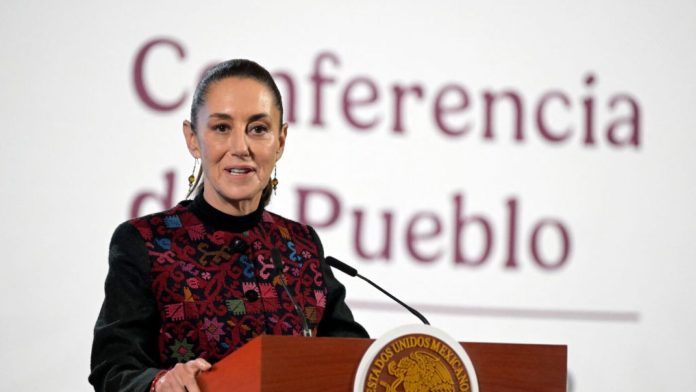
Mexico’s President Claudia Sheinbaum speaks during her daily conference at the National Palace in Mexico City on January 8, 2025.

ALFREDO ESTRELLA/AFP via Getty Images/AFP


hide caption

toggle caption

ALFREDO ESTRELLA/AFP via Getty Images/AFP

On Monday, Mexico’s President Claudia Sheinbaum outlined a letter she received from Google regarding the controversy over renaming the Gulf of Mexico.

Last week, the tech company updated Google Maps in the U.S. to reflect Trump’s preferred title of “Gulf of America.” Users in Mexico still see the body of water with its original name, while all other international users view it with both names listed.

Three things to know:

  1. An Executive Order signed on Trump’s first day in office aimed to rename it the “Gulf of America.” This decision sparked laughter and annoyance, as well as raised tensions between Mexico and the U.S.
  2. Earlier this month, Sheinbaum shared a letter she wrote to Google with reporters, arguing that the U.S. did not have the right to unilaterally rename the Gulf.
  3. Google responded to her letter, saying that they intended to comply with Trump’s order, and expressed willingness to meet with the Mexican government to discuss the issue further.

Listen to NPR’s State of the World podcast for a human perspective on global stories in just a few minutes, every weekday.

Mexico’s next move
In a press briefing Monday, Sheinbaum announced that her administration would wait for a response from Google before taking additional steps.

“If not,” she said, “we will proceed to court.”

NPR’s Rachel Treisman reported earlier this month that part of Sheinbaum’s argument against the name change is based the United Nations Convention on the Law of the Sea. This convention states that a country’s territorial sovereignty only extends 12 nautical miles from its coastline.

“If a country wants to change the designation of something in the sea, it would only apply up to 12 nautical miles. It cannot apply to the rest, in this case, the Gulf of Mexico,” Sheinbaum said. “This is what we explained in detail to Google.”

Dive deeper with NPR:

Tuesday Briefing: E.U. Discusses Security and Ukraine

0

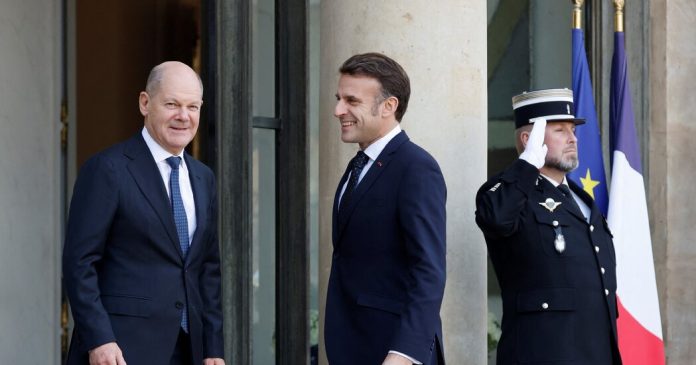
European leaders convened in Paris yesterday to discuss a coordinated response as the Trump administration prepared to start its own talks with Russia about ending the war in Ukraine. Leaders were also expected to discuss issues including military spending and how to guarantee Ukraine’s security once a permanent cease-fire or a peace deal was reached.

But what would an end to the war look like? Right now, Ukraine has few options for reversing Russia’s recent gains on the battlefield, and any deal is likely to involve Kyiv having to make painful territorial concessions.

Russia is suffering about 1,000 casualties a day, and its economy is hurting under runaway inflation amid enormous war spending. A settlement could pave the way for a reduction of Western sanctions. Here’s what the experts think could happen next.

Diplomacy: President Volodymyr Zelensky was in the United Arab Emirates yesterday for talks with Russia that are focused on prisoner exchanges and the return of Ukrainian children from Russia.

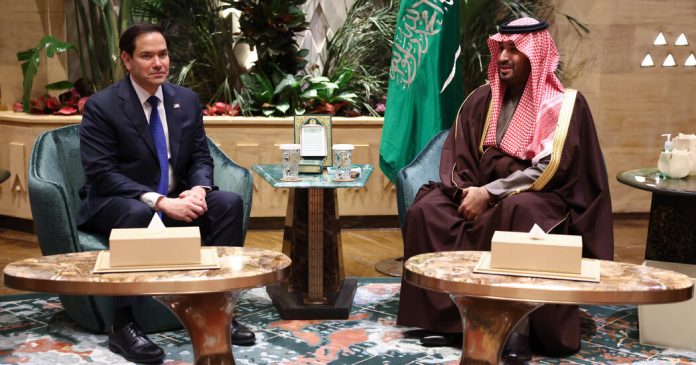
Secretary of State Marco Rubio, along with two other U.S. envoys, met yesterday in Saudi Arabia with the kingdom’s de facto leader, Crown Prince Mohammed bin Salman. Rubio and his colleagues were expected to press the Saudi leadership to propose a vision for postwar Gaza.

Few details were released about the meetings, except for a video in which the prince said he was glad to work with the Trump administration. Trump has been widely criticized for his idea to depopulate and occupy Gaza.

Cease-fire: Prime Minister Benjamin Netanyahu’s cabinet ministers were set to debate advancing negotiations on extending the truce with Hamas.

Xi Jinping, China’s president, met yesterday with his country’s business leaders in what was seen as a show of support for private enterprise. The Alibaba Group founder, Jack Ma, was there in his first public appearance with Xi since Beijing stopped the $34 billion initial public offering of Ma’s Ant Group in 2020, sending the message that no company was above the Chinese Communist Party.

Some executives saw the summit as a sign of a course correction after Xi sidelined the private sector in favor of state-owned enterprises. But it was not yet clear whether the meeting would result in positive change for companies or help address China’s broader economic woes.

Related: German automakers are losing the Chinese market to rivals that have shifted the definition of a high-end car to one that is electric, smart and affordable.


Fake-meat products, made from plants like soybeans and peas, seem to check the boxes for a healthier diet. But it’s not always better to eat your vegetables: Fake meat can be highly processed and contain large amounts of sodium. While the industry rapidly evolves and recipes are tweaked, studies on the benefits have yielded mixed results.

Here’s what we know, based on the science at hand.

Lives lived: Zakia Jafri, who waged a decades-long legal battle against government officials in India after her husband was killed during sectarian riots, died at 86.

Since “Paddington 2” was released in 2017 in the U.K., the film about a marmalade-loving bear has become an internet phenomenon. Piggybacking off that success is the third installment, “Paddington in Peru,” now in theaters. It has already passed $100 million in global ticket sales.

“Paddington 2” had modest box office success, but DVD and streaming releases sparked a devoted community of fans who fiercely adore the outsider bear. For a time, that movie was even the best-reviewed film ever on the site Rotten Tomatoes — that is, until one critic wrote a negative review, provoking what he said were doxxing and death threats.

Read more about what fans call “the greatest film ever made.”

4 top aides to NYC Mayor Eric Adams resign : NPR

0

Last week, the Trump administration’s Justice Department moved to drop corruption charges against New York City Mayor Eric Adams, who has since rebuffed calls for his resignation.

Spencer Platt/Getty Images


hide caption

toggle caption

Spencer Platt/Getty Images

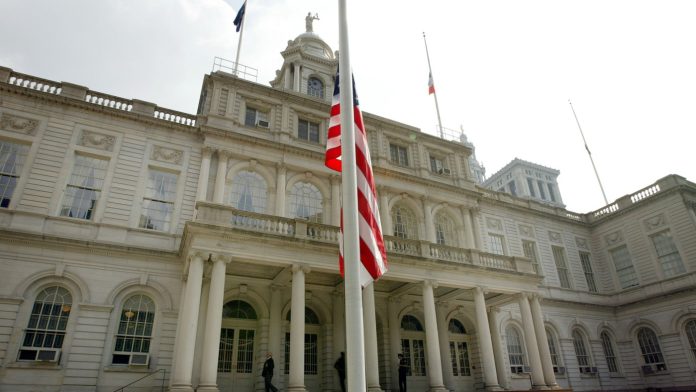
Controversy surrounding New York City Mayor Eric Adams deepened Monday as four of his top aides and deputy mayors announced they’re resigning. The news comes days after the Trump administration’s Justice Department moved to drop corruption charges against Adams.

Critics say the DOJ shelved its criminal corruption and bribery case against the Democratic mayor after he agreed to collaborate with President Trump’s immigration crackdown.

Adams faces growing calls from a growing number of New York state’s Democratic leaders to resign, and now four of his most senior aides say they’re leaving his administration.

First Deputy Mayor Maria Torres-Springer, Deputy Mayor for Health and Human Services Anne Williams-Isom, Deputy Mayor for Operations Meera Joshi and Deputy Mayor for Public Safety Chauncey Parker announced their departures.

In a joint statement, three of the officials pointed to the “extraordinary events” that have rocked Adams’ administration in recent weeks. “To stay faithful to the oaths we swore to New Yorkers … we have come to the difficult decision to step down from our roles,” they said.

In a separate statement, Parker said working for Adams has been an honor, adding that he is “confident that the administration will continue on our mission to deliver for the people of this city.”

This is only the latest shakeup to hit Adams’ team since it became clear he faced a criminal investigation by the DOJ. In December, Ingrid Lewis-Martin, one of his chief aides, stepped down shortly before she was indicted by local prosecutors in Manhattan on charges of bribery and conspiracy.

Speaking over the weekend, Adams rejected calls that he leave office. “The most sanctified among us are calling for me to step down,” Adams said during an appearance at a Baptist church. “I’m not going to step down, I’m going to step up.

In a statement sent to NPR on Monday, Adams said he’s “disappointed” by the latest resignations.

“But let me be crystal clear: New York City will keep moving forward, just as it does every day,” Adams said.

The DOJ’s move to shelve charges against Adams has also triggered a shakeup within the Justice Department itself.

At least seven prosecutors have resigned in New York and Washington, D.C. The list includes Danielle Sassoon, the acting U.S. attorney for the Southern District of New York, who said she was baffled by the idea of walking away from such a strong case when her office had been planning to add new charges against Adams.

Five lawyers tied to the public integrity unit in Washington, also resigned rather than carry out an order to abandon the Adams case.

Adams became mayor in January 2020. He was indicted in September 2024 on five federal charges, including bribery, fraud and soliciting illegal foreign campaign donations. Prosecutors in New York’s Southern District accused Adams of receiving illegal campaign donations and luxury travel benefits from Turkish citizens and companies. Adam’s phone was seized by FBI agents who entered the mayor’s official residence, Gracie Mansion.

The mayor has denied any wrongdoing.

The case against Adams was one of several federal investigations into the Democratic mayor and his administration. His police commissioner, schools chancellor and other key members of his team resigned last year.

Delta Plane Crashes at Toronto Airport While Landing

0

A Delta Air Lines flight arriving at Toronto Pearson Airport from Minneapolis appears to have overturned while landing on Monday afternoon, with photos across social media showing an airplane with its belly up on the tarmac.

The airport said on social media that all passengers and crew had been accounted for. In a statement, Federal Aviation Administration officials said that Delta Flight 4819 crashed while landing around 2:45 p.m. local time.

All 80 people onboard were evacuated. The Transportation Safety Board of Canada will lead the investigation, officials said.

Nine people were injured, including one in critical but non-life-threatening condition who was airlifted to a trauma center, said Lawrence Saindon, a supervisor with the Peel Regional Paramedic Services. One pediatric patient was also in critical but non-life-threatening condition.

The remaining seven who were injured were transported to hospitals with minor-to-moderate injuries.

The airport said earlier in the day that it was expecting “a busy day” as airlines caught up after back-to-back snowstorms, including a weekend snowstorm that dumped more than eight inches of snow.

The F.A.A. issued a ground stop order because of the emergency. Anita Anand, Canada’s transportation minister, said on social media that she was “closely following the serious incident.”

Temperatures in Toronto were expected to reach a high of only 20 degrees Fahrenheit.

The flight was operated by a Delta subsidiary, Endeavor Air, which typically runs smaller planes on shorter routes for its parent airline.

Endeavor’s fleet includes about 120 Bombardier CRJ-900s, the type of plane involved in the crash on Monday. Those aircraft are configured with 70 or 76 seats.

The aircraft is about 16 years old, according to Federal Aviation Administration records. With regular maintenance, such passenger jets are often operated for two to three decades, or more.

There are more than 380 CRJ-900s in use by airlines around the world, according to Cirium. The aircraft, which has been in operation for more than two decades, has a solid safety record, according to Cirium data.

This is a developing story.

Niraj Chokshi and Neil Vigdor contributed reporting.

Rubio Meets Saudi Crown Prince for Talks on Gaza and Ukraine

0

The de facto leader of Saudi Arabia, Crown Prince Mohammed bin Salman, met on Monday with three senior members of the Trump administration, including Secretary of State Marco Rubio, who were visiting the kingdom to discuss the future of both Gaza and Ukraine.

The visit of Mr. Rubio, National Security Adviser Mike Waltz and Steve Witkoff, Mr. Trump’s Mideast envoy, came amid criticism that the Trump administration was acting without consulting relevant foreign partners about the wars in both countries.

Mr. Rubio also met earlier in the day with Faisal bin Farhan, the Saudi foreign minister.

Little was released about the content of the meetings, except for a video of a brief exchange between the men in which the prince said he was glad to work with the Trump administration.

Mr. Rubio, who flew to Riyadh from Israel, and his colleagues were expected to press the Saudi leadership to propose a vision for postwar Gaza. President Trump’s idea to depopulate and occupy the territory has spurred widespread opposition in the Arab world, including in Saudi Arabia. That has led Mr. Rubio and other U.S. officials to encourage Arab leaders to suggest an alternative.

Following their meeting, the state department said Mr. Rubio and the crown prince discussed developments in Gaza, with the Mr. Rubio underscoring “the importance of an arrangement for Gaza that contributes to regional security,” according to Tammy Bruce, a State Department Spokeswoman.

The three U.S. envoys were also scheduled to meet in Riyadh on Tuesday with Russian officials to discuss the future of the Russia-Ukraine war.

In addition to angering Arab allies with his contentious proposal for Gaza, Mr. Trump frustrated partners in Europe when he spoke last week unilaterally with President Vladimir V. Putin of Russia about Ukraine’s future. His administration has also said that European governments will play no role in future talks, despite the conflict taking place within Europe’s borders.

The moves prompted concern in Ukraine and elsewhere in Europe, where leaders fear being sidelined from discussions that will dictate their countries’ futures. Volodymyr Zelensky, the Ukrainian president, reiterated in an interview that aired on Sunday that his country would “never” accept a peace deal struck by the United States and Russia if Ukraine was not involved in the talks.

Mr. Rubio’s visit comes amid swirling uncertainty about the future of the cease-fire between Israel and Hamas in Gaza, as well as the long-term governance of the territory.

Israeli officials were expected to meet in Cairo on Monday to iron out disagreements about sending humanitarian aid, including temporary housing, such as tents and trailers, to Gaza. But the Israeli government has yet to decide whether to advance negotiations to extend the truce, which will lapse in early March unless Hamas and Israel restart talks. Israeli cabinet ministers were set to gather on Monday evening to debate the issue, but it was not certain that they would vote on it.

The Israeli leadership wants to avoid prolonging the truce if it allows Hamas to survive the war as a military force. But Hamas, though indicating a willingness to share administrative control of the territory, appears unwilling to disarm its military wing.

Mr. Trump has suggested ending the impasse by depopulating Gaza and sending its residents to Egypt and Jordan — a move strongly opposed by those countries as well as Saudi Arabia. The forced expulsion of Palestinians would be ethnic cleansing and a war crime, international law experts say.

The Trump administration’s proposal has created a further obstacle to Israel’s long-sought goal of normalizing diplomatic ties with Saudi Arabia. The Saudi leadership has said that it will not recognize Israel if Palestinians are displaced from Gaza, or if Israel refuses to create a pathway to Palestinian sovereignty.

The discussion grew more fraught after Benjamin Netanyahu, the Israeli prime minister, suggested that Saudi Arabia host Palestinian refugees and create a Palestinian state on Saudi soil.

Saudi Arabia’s Foreign Ministry rejected Mr. Netanyahu’s statements as those of “an extremist, occupying mind-set” that fails to understand the historical and cultural significance of Palestinian land.

Here’s what else is happening in the region:

  • The Israeli military said on Monday that it had killed a senior Hamas operative, Muhammad Shaheen, in a strike in Lebanon. Hamas has long maintained a presence in Lebanon and has often acted there in coordination with its Lebanese ally, Hezbollah. The strike came a day before a cease-fire in Lebanon between Israel and Hezbollah is set to elapse. Officials hope to extend the truce, even though Israel is expected to keep troops in several positions inside the Lebanese border past the deadline.

Gabby Sobelman contributed reporting from Rehovot, Israel, and Edward Wong contributed reporting from Washington.

South African Imam and Gay Rights Advocate is Shot Dead

0

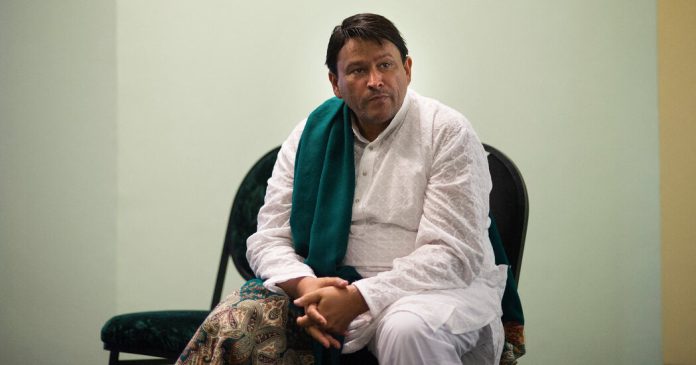
A South African imam who devoted his life to promoting gay rights and tolerance for L.G.B.T.Q. Muslims was shot and killed in the coastal city of Gqeberha on Saturday, the police said.

Muhsin Hendricks was credited by some as being the world’s first openly gay imam. In 2018, he founded the Al-Ghurbaah Foundation, a nonprofit that provided support services for Muslims discriminated against for their sexual orientation.

The organization worked to help Muslims around the world reconcile their faith with their sexual orientation and gender identity.

A statement from the South Africa Human Rights Commission condemned the killing. It cited footage circulated on social media in which a hooded man emerged from a pickup truck and fired shots through the windows of a car in a residential area before speeding away. The video has not been verified by The New York Times.

South Africa’s deputy justice minister, Andries Nel, said it was too early to say whether the shooting was a hate crime, but he said that the police were “hot on the heels of the suspects.”

Mr. Hendricks faced fierce criticism in the country, not least on social media.

In an interview on Monday with Newzroom Afrika, a South African digital channel, Mr. Nel said that though there are debates among Muslims in South Africa about gay rights, those debates acknowledge the primacy of the country’s constitutional protections.

“They have been unambiguous in reaffirming the values of our Constitution, the values of tolerance of plurality and of human respect,” he said.

Mr. Hendricks was a prominent supporter of gay people in South Africa, which in 1998 became the first country in Africa to decriminalize homosexuality, when the Johannesburg High Court ruled that existing sodomy laws violated the post-apartheid Constitution.

A survey in 2021 by the research network Afrobarometer rated South Africa as the second-most tolerant country on the continent when it came to same-sex relationships, after the island nation of Cabo Verde.

The International Lesbian, Gay, Bisexual, Trans and Intersex Association said that it was “deeply shocked” by the killing. Mr. Hendricks had mentored people in South Africa and around the world as they attempted to reconcile their faith and lives and was a “testament to the healing that solidarity across communities can bring,” Julia Ehrt, the group’s executive director, said in a statement.

South Africa is seen as an outlier on the continent for its approach to gay rights. More than 30 of Africa’s 54 countries criminalize same-sex couples, and in recent years at least six countries, including Ghana and Uganda, have taken steps toward harsher anti-gay laws.

Pope Francis Will Remain in Hospital for ‘Complex’ Clinical Issue

0

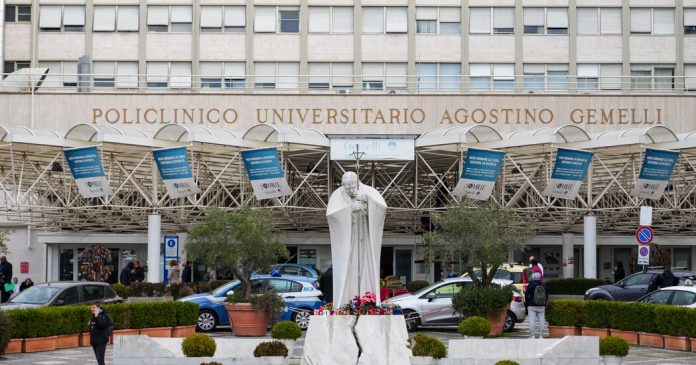
Pope Francis will remain in a Rome hospital after being admitted late last week following a series of tests that indicated a “complex clinical picture,” the Vatican said on Monday, raising fresh concerns about the 88-year-old pontiff’s health.

Diagnostic tests carried out after Francis was taken to Policlinico A. Gemelli on Friday presented “a polymicrobial respiratory tract infection,” and his doctors had changed treatment accordingly, the Vatican said in a statement.

The complex clinical picture “would require an appropriate medical stay,” it said, without elaborating.

Francis was hospitalized in 2023 with a respiratory infection, but was able to leave the hospital after three days.

Francis has had a busy schedule since New Year’s Eve, when he presided over the opening of the 2025 Jubilee, held every 25 years in the Roman Catholic Church.

The Vatican announced in early February that Francis had bronchitis, but he continued his activities, holding smaller audiences at the Casa Santa Marta, the Vatican guesthouse where he lives, but presiding over larger gatherings and Masses with thousands of pilgrims, including an outdoor Mass in St. Peter’s Square earlier this month.

The Vatican said that a general audience on Wednesday was canceled.

After he entered the hospital, doctors prescribed complete rest. Subsequent medical updates said he was in “stable” condition.

The pope, who had part of a lung removed as a young man, has a recent history of medical challenges. He has knee problems and sciatica that have caused a severe limp and, in recent years, often required him to use a wheelchair, walker or cane.

In 2021, he had colon surgery. After his bout with bronchitis in 2023, he was hospitalized again a few months later to undergo abdominal surgery for a hernia. Last year, he underwent diagnostic tests at the Gemelli hospital after a slight flu.

On Monday morning, Francis ate breakfast and read some newspapers after a restful night, said Matteo Bruni, a Vatican spokesman, adding that the pontiff was “in good spirits.” Mr. Bruni said a medical update would be issued later Monday.

The Land Ukraine Could Be Forced to Give Up to End the War

0

President Trump has promised to bring a quick end to the war in Ukraine, suggesting that Russia could keep at least some of the Ukrainian territory it had captured. Andrew Kramer, the New York Times bureau chief in Kyiv, explains how this would leave Ukraine divided in two: one side with its government in Kyiv, and the other a battered Russian satellite to the east.

Trump’s USAID Cuts Halt Agent Orange Victims Program in Vietnam

0

Nearly 40 years after she was born with a malformed spine and misshapen limbs — most likely because her father was exposed to Agent Orange, the toxic chemical that the American military used during the Vietnam War — Nguyen Thi Ngoc Diem finally got some help from the United States.

A project funded by U.S.A.I.D. gave her graphic design training in 2022 and helped her land a job. Even when the company closed a few months ago, she stayed hopeful: The same program for Agent Orange victims was due to deliver a new computer, or a small loan.

I was the first to tell her that the support may never come; that President Trump had frozen U.S.A.I.D. funding and planned to fire nearly everyone associated with the humanitarian agency.

“It makes no sense,” Ms. Diem told me, her tiny body curled into a wheelchair, below a crucifix on the wall. “Agent Orange came from the U.S. — it was used here, and that makes us victims,” she said. “A little support for people like us means a lot, but at the same time, it’s the U.S.’s responsibility.”

As Mr. Trump and Elon Musk gut U.S.A.I.D., this can now be added to the list of effects: Two months before the 50th anniversary of the Vietnam War’s end, with ceremonies already planned, they have demolished the main American outlet for making amends, shaking the foundation of a partnership meant to be a bulwark against China.

As many as three million Vietnamese have been affected by Agent Orange, including more than 150,000 children born with serious developmental problems.

Addressing the painful legacy of the chemical’s wartime use as a defoliant, along other issues tied to American military involvement in Vietnam, has offered the U.S. a chance to fuse past and present, soft power and hard power, in the service of courting a rising regional power.

That’s now halted. Bulldozers that were cleaning up contamination at a former American air base in southern Vietnam — which both countries might eventually want to use — have gone silent. Around 1,000 mine-removal workers in central Vietnam have been sent home.

And with the suspension of aid for Agent Orange victims, along with efforts to find and identify Vietnam’s missing war dead, Mr. Trump has essentially stalled 30 years of progress in bringing together former enemies, including two militaries still feeling out whether to trust one another.

While Vietnam’s leaders have tread carefully with the Trump administration, hoping to avoid its punitive tariffs, they have lamented the loss of war legacy programs. They have long viewed the work as a prerequisite for almost everything else.

American officials who spent a lifetime building bilateral bonds are especially furious, signing open letters of complaint and condemning what they see as a plainly misguided move.

“One thing I know about the Vietnamese is that they want to know they can depend on us; that we won’t lose interest and walk away,” said Tim Rieser, a former foreign policy aide to Senator Patrick J. Leahy, a Vermont Democrat who led legislative efforts on war legacy issues before retiring in 2023. “And that’s what the Trump administration is doing.”

American military commanders see Vietnam, with its strategic location, as vital for maintaining stability in Asia, especially as China has become more aggressive around the shipping lanes and islands off the Vietnamese coast.

U.S. Navy warships have made several port visits to Vietnam since 2018. More are expected. And in a sign of Pentagon support for aid as a tool of alliance-building, half of the funding that U.S.A.I.D. manages for Agent Orange cleanup comes from the Defense Department.

Perhaps some of that will survive. According to the official account of a call on Feb. 7 between Defense Secretary Pete Hegseth and Vietnam’s defense minister, Gen. Phan Van Giang, Mr. Hegseth “underscored the department’s support for ongoing efforts to collaborate on legacy of war issues.”

A federal judge on Thursday ordered the Trump administration to temporarily lift the U.S.A.I.D. funding freeze, setting a Tuesday deadline for evidence of compliance.

But as of Monday in Vietnam, the work stoppage was still in effect. Even if funding returns, in a year meant to mark recovery from the darkness of a cruel war, fundamental damage has already been done in ways that feel — for partners and victims in both countries — like a knife shoved into old wounds.

Combat veterans were the original reconcilers. At first, they partnered up at the squad level, to rid battlegrounds of unexploded ordnance. But once Washington and Hanoi got on board, bigger problems were tackled, starting with Da Nang Airport, a former American military base near the old dividing line between North and South Vietnam.

It had been a centerpiece of the campaign to clear vegetation with Agent Orange, named for the colored stripe on its barrels and notorious for containing 2,3,7,8-tetrachlorodibenzo-p-dioxin — one of the most noxious substances ever created.

At the start, no one knew if the airport’s poisoned land could be made safe. The projected cost of remediation tripled. But after seven years and more than $115 million in U.S. assistance, it was clean. So clean that Mr. Trump landed there with Air Force One in 2018.

Bien Hoa air base, about 20 miles outside Ho Chi Minh City, formerly Saigon, is a tougher challenge: a 10-year, $450 million project involving the treatment of enough contaminated earth to fill 200 Olympic-sized swimming pools. The United States has contributed more than $160 million so far, out of a pledge of $300 million under U.S.A.I.D. management.

Tetra Tech, an American engineering firm hired by U.S.A.I.D. for part of the project, did not respond to emails asking about its status.

When I visited the busy neighborhood around the base last week, a Vietnamese military officer confirmed that the cleanup had been halted, creating anxiety in the city. Many of the homes nearby had been inside the base’s perimeter, until its footprint was condensed.

Dinh Thi Lan, 56, told me that in 1991, she was one of the first to move onto a street that abutted the base and a contaminated lake. During seasonal floods, she said, fish would sometimes flop out.

“I ate the fish,” she said. “I’m worried.”

Behind her, in a back room, I could see a photo of a bright-eyed man with thick hair, above candles on a dark wood table.

“My husband,” she told me. “He died of stomach cancer in 2009. He was 39.”

During the war, Dong Nai Province, with Bien Hoa at its southeastern edge, became a logistics hub for North Vietnamese soldiers as they prepared to take Saigon.

Before that, the U.S. military had tried to strip the verdant landscape of food and cover.

Pilots usually flew 150 feet from the ground. They sprayed 56 percent of Dong Nai with nearly 1.8 million gallons of Agent Orange — more than in any other province in Vietnam.

Truong Thi Nguyet, 75, joined the guerrilla ranks in Dong Nai at 16. After the war, she founded one of Vietnam’s first rehabilitation centers for people with disabilities caused by Agent Orange, which the United States banned in 1971.

In remote villages, she found dozens of boys and girls with missing or malformed limbs, deafness, cerebral palsy, cognitive impairment and sometimes all of the above. One morning, she discovered a poor family so overwhelmed that they had put their severely disabled daughter in a cage outside.

“I never thought I would tell anyone this story,” Ms. Nguyet said when I visited her home in Dinh Quan township. “It was so painful, and I was so angry.”

“I tried to raise some money and convince the family to build a small room in the house,” she added. “After a while, with some financial support, they did.”

Most of the funding for the rehab center comes from the Vietnamese government. But a sign over the door declares that U.S.A.I.D. provided equipment in 2020: a few desks and a metal bed; a playroom with a climbing wall and a pool of candy-colored plastic balls.

Since 1991, according to the State Department, the U.S. government has contributed about $155 million to improve the lives of people with disabilities in areas affected by Agent Orange and leftover explosives.

The U.S.A.I.D. program that benefited Ms. Diem, the graphic designer, is limited in scope. Last year, just 45 Agent Orange victims in Dong Nai (out of 9,000) received no-interest loans of a little under $800. Some bought scooters, and others invested in goats, said Nguyen Van Thinh, 47, the leader of a club that has 260 members with disabilities.

Ms. Diem was among 11 women who were approved for smaller loans this year under a “social inclusion” program. Her commitment and grit are undeniable. After high school, she went to college away from home, persuading friends and strangers to carry her to class or the bathroom. She earned a degree in information technology.

Now, all she wants is a computer for doing her design work — support she was promised by the United States, which contaminated her country and gnarled her body.

“I want to feel connected with the world,” she told me. “I want to be less of a burden.”