

New York Times writer Charlie Savage discusses the scope of executive power as President Trump circumvents Congress, pushes legal boundaries and fires scores of federal workers, including at the FBI.
Israel Says It Will Keep Troops ‘Temporarily’ in 5 Points in Lebanon

The Israeli military said on Monday that it will keep forces in five locations in southern Lebanon after a deadline for its full withdrawal lapses on Tuesday. The announcement raised fears of a resurgence in violence in southern Lebanon between Israel and Hezbollah.
After more than a year of war, the two sides reached a cease-fire in late November that was contingent on both Israel and Hezbollah ceding control of southern Lebanon to the Lebanese military by the end of January. Hezbollah had long dominated the region, while Israel had captured large parts of it after invading Lebanon in September.
In late January, mediators announced a three-week extension to that agreement, giving Israel more time to complete its withdrawal. The truce has frequently been punctured by bursts of violence — including an Israeli airstrike on Monday that killed a Hamas leader in southern Lebanon — but neither side has reverted to full-scale war.
Now, the specter of renewed conflict looms once more after the Israeli military announced that it will keep some troops in Lebanon beyond the Feb. 18 deadline, potentially preventing some Lebanese civilians from returning home.
“We will leave small amounts of troops deployed temporarily in five strategic points along the border in Lebanon so we can continue to defend our residents and to make sure there’s no immediate threat,” said Lt. Col. Nadav Shoshani, a military spokesman, in a briefing for reporters on Monday afternoon.
Colonel Shoshani named several locations spread along most of the length of the 75-mile border, including places across the border from Israeli villages that were badly damaged by Hezbollah rocket fire during the war. He said that Hezbollah had not lived up to its own side of the November agreement and still posed a threat to Israeli residents in those areas. He declined to say how long the occupation would last. It is unclear to what extent Hezbollah has a presence in those areas.
Hezbollah’s leader, Naim Qassem, vehemently opposed the idea of Israel keeping troops inside Lebanon during a speech on Sunday. But he stopped short of pledging to resume attacks against Israel.
“Israel must withdraw completely on Feb. 18,” Mr. Qassem said. “This is the agreement.”
“Everyone knows how an occupation is dealt with,” he warned, without giving further details.
The war between Hezbollah and Israel broke out after the Lebanese militia started firing on Israeli military positions in solidarity with its ally Hamas, shortly after Hamas attacked Israel in October 2023.
The conflict remained largely contained to back-and-forth missile and rocket strikes, displacing thousands on either side of the border, until it erupted into a full frontal war and wide-scale Israeli bombardment of Lebanese cities in the second half of 2024.
Israel killed much of Hezbollah’s leadership in an aerial campaign and invaded large swaths of southern Lebanon, in moves that collectively displaced more than a million people in Lebanon.
Israel said its intention was to prevent Hezbollah from posing a threat to residents of northern Israel, some 60,000 of whom were forced to leave their homes because of Hezbollah rocket fire.
Gabby Sobelman contributed reporting.
Zakia Jafri, Who Sought Justice for Victims of Indian Riots, Dies at 86
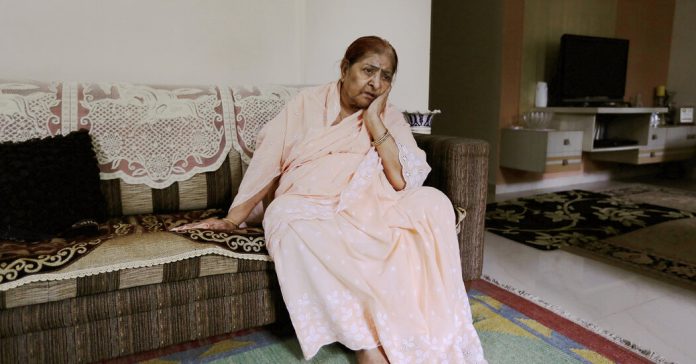
Zakia Jafri, who turned her personal loss into an uphill campaign for justice after her husband, Ehsan Jafri, was brutally murdered during sectarian riots in the state of Gujarat in 2002, died on Feb. 2 at her daughter’s home in Ahmedabad, India. She was 86.
Her death was confirmed by her son Tanveer Jafri.
More than 1,000 people, a majority of them Muslim, died in the riots that gripped Gujarat, on the western coast of India, in 2002. They began on Feb. 27, when a fire killed nearly 60 people on a train carrying Hindu pilgrims to Godhra, a town in Gujarat. The cause of the fire was disputed. However, as rumors spread that Muslims were responsible, mobs erupted across large parts of Gujarat, attacking Muslim homes and businesses, and killing people by hacking and burning them to death. Among those killed was Ms. Jafri’s husband, who was a union leader, a lawyer and a former member of Parliament.
In a legal battle that dragged on for nearly two decades, Ms. Jafri accused Narendra Modi, India’s current prime minister, who at the time was the leader of Gujarat, of “conspiracy and abetment” in the riots.
In all that time, “she remained stoic, despairing, yet hopeful,” Teesta Setalvad, a human-rights activist, said in an interview. “For me, for us, she was the mother of all the survivors of 2002, carrying the burden of her pain and loss with dignity and fortitude and always giving us strength.”
Zakia Naseem Fidahusain Bandookwala was born on Jan. 15, 1939, in Rustampur, a village in the central Indian state of Madhya Pradesh. She was one of six children of Fidahusain Fakhrali Bandukwala and Amtubai Fidahusain Bandukwala, wealthy farmers. She moved to Ahmedabad, in the western state of Gujarat, after marrying Mr. Jafri in 1962.
The couple’s home in Ahmedabad was burned down during riots in 1969. But instead of leaving the area, Mr. Jafri became involved in politics to fight for India’s secular traditions, and helped established the Gulberg Society, a Muslim housing complex in the majority Hindu area.
He was elected to Parliament as a member of the Indian National Congress Party in 1977 — something no other Muslim from Ahmedabad has ever achieved. Ms. Jafri was active in her husband’s public life, her son said, and often appeared with him at events. One black-and-white photograph that he still has, taken at a Congress Party meeting in the 1970s, shows Mr. Jafri at the microphone addressing a room full of men. Ms. Jafri is the only woman in the crowd.
She became a more prominent public face after her husband was killed.
During the riots, Gulberg became the site of intense carnage, leaving nearly 70 people dead. Mr. Jafri was hacked to death in his home as the rest of his family sought safety upstairs.
“Armed with swords, pipes, acid bottles, kerosene, petrol, hockey sticks, stones and tridents, the mob was unrestrained for six hours,” Human Rights Watch said in a report. In one interview, Ms. Jafri said that her husband had made more than 200 phone calls to government and police officials as the mob gathered, but had received no help.
In the years that followed, she accused Mr. Modi and Gujarat’s senior officials of conspiracy and abetting the riots.
Ms. Setalvad said she met Ms. Jafri in March 2002, just weeks after the violence. She aided Ms. Jafri and other Gulberg survivors by pressuring the government to open investigations into inaction by a police force that they asserted was under Mr. Modi’s control, and by protecting people who were being threatened not to testify as witnesses.
“I don’t have that much strength now. I cant even walk now,” Ms. Jafri, already in her 80s, said in one of her last television interviews. “But still I go to the court whenever it is required, whenever they call me. Twenty years have passed and I didn’t get justice. The power is in their hands; what justice will they give?”
The case was ultimately dismissed by India’s Supreme Court in 2022 after investigations failed to uncover concrete evidence incriminating Mr. Modi. The court had initially absolved him in 2019, and did so again when it dismissed Ms. Jafri’s appeal. It ruled that negligence, or breakdown of law and order, was not the same as conspiracy.
In addition to her son Tanveer, Ms. Jafri is survived by another son, Zuber; a daughter, Nishrin Hussian; and six grandchildren.
After the case was dismissed, the government arrested Ms. Setalvad, with lawyers telling the court that she had waged a “campaign of vengeance” to defame Gujarat and had used Ms. Jafri as a “tool” in the process.
Tanveer Jafri said his mother had been disappointed, not only by the lack of accountability but also by the way her fight for justice had been turned against people like Ms. Setalvad, who had dedicated herself to the cause.
“She took solace,” he said, “in the fact that future generations will have all these documents to unearth the facts.”
South Korea Bans Downloads of DeepSeek, the Chinese A.I. App

The South Korean government said on Monday that it had temporarily suspended new downloads of an artificial intelligence chatbot made by DeepSeek, the Chinese company that has sent shock waves through the tech world.
On Monday night, the app was not available in the Apple or Google app stores in South Korea, although DeepSeek was still accessible via a web browser. Regulators said the app service would resume after they had ensured it complied with South Korea’s laws on protecting personal information.
The Chinese chatbot has topped the charts of most downloaded apps around the world since its release last month. The app is powered by an A.I. system whose performance rivals top products made by American companies and was built, DeepSeek said, for a fraction of their cost.
DeepSeek’s claims that it built its technology with far fewer expensive computer chips than companies typically use sent U.S. tech stocks tumbling last month and provoked a debate over whether Washington has failed in its attempts to block China’s access to such chips.
DeepSeek’s success has thrust the little-known company, which is backed by a stock trading firm, into the spotlight. In China, DeepSeek has been heralded as a hero of the country’s tech industry. The company’s founder, Liang Wenfeng, met China’s top leader, Xi Jinping, along with other tech executives on Monday.
But outside China, the app’s popularity has worried regulators over DeepSeek’s security, censorship and management of sensitive data.
The app had become one of South Korea’s most popular downloads in the artificial intelligence category. Earlier this month, South Korea directed many government employees not to use DeepSeek products on official devices.
Government agencies in Taiwan and Australia have also told workers not to use DeepSeek’s products, over security concerns.
South Korea’s Personal Information Protection Commission said it had identified problems with how the app processes personal information, adding that it decided “it would inevitably take a considerable amount of time to correct” them. To address these concerns, DeepSeek had appointed an agent in South Korea last week, the regulator said.
The Chinese government has always required Chinese companies to conduct overseas operations in strict compliance with local laws and regulations, Guo Jiakun, a spokesman for China’s foreign ministry, said at a briefing on Monday.
“We also hope that relevant countries will avoid taking the approach of generalizing and politicizing economic, trade and technological issues,” Mr. Guo said.
Li You contributed research.
Up First from NPR : NPR

European leaders meet in Paris to discuss an emerging transatlantic chasm over security and the war in Ukraine. U.S. Secretary of State Marco Rubio is in the Middle East amplifying President Trump’s vision for Gaza. And a review of Trump’s first four weeks reshaping the U.S. government.
Want more comprehensive analysis of the most important news of the day, plus a little fun? Subscribe to the Up First newsletter.
Today’s episode of Up First was edited by Ryland Barton, Didi Schanche, Krishnadev Calamur Reena Advani and Adriana Gallardo. It was produced by Ziad Buchh, Nia Dumas and Christopher Thomas. We get engineering support from Arthur Laurent and our technical director is Carleigh Strange. Our Executive Producer is Kelley Dickens.
European Leaders Meet in Paris as U.S. Pushes Ahead With Ukraine Plan
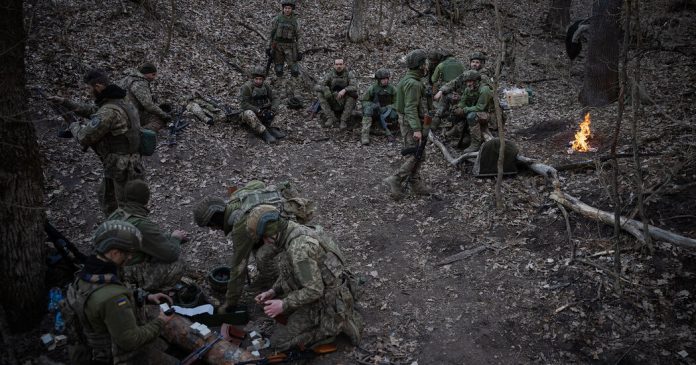
The leaders of many of Europe’s biggest countries on Monday will descend on Paris in an effort to forge a strategy for their own security as President Trump’s envoys prepared for talks with Russia over ending the war in Ukraine without them.
The meeting in Paris was pulled together rapidly, after Vice President JD Vance’s scathing speech in Munich criticizing Europe’s exclusion of far-right groups from power and the fast-emerging American plans to begin peace talks with Russia in Saudi Arabia this week, without the presence of Ukrainian or European leaders.
Expected in Paris are leaders from Germany, Britain, Italy, Poland, Spain, the Netherlands and Denmark, as well as the president of the European Council, the president of the European Commission and the secretary general of NATO.
On their agenda: what Europeans are willing to commit to secure any peace deal over the war in Ukraine in the short term, and in the long term, to secure the continent as it faces an aggressive, expansionist Russia and the predicted withdrawal of the assurance of American support.
The informal meeting was arranged by President Emmanuel Macron of France, who has made calls for increased European sovereignty and capacity for self-defense a hallmark of his presidency. It is expected to be the first of many such meetings between European leaders in the coming weeks, an adviser to Mr. Macron said.
“Europeans must do more, do better and work in a coherent manner towards our collective security,” the adviser, who insisted on anonymity in line with French political practice, said Sunday night.
The leaders are expected to talk about what forms European contributions to a peacekeeping force in Ukraine might take, including delivering weapons to Ukraine and the possible deployment of troops.
On Sunday, Prime Minister Keir Starmer of Britain said in an article published in The Daily Telegraph that he was “ready and willing to contribute to security guarantees to Ukraine by putting our own troops on the ground if necessary.”
“Securing a lasting peace in Ukraine that safeguards its sovereignty for the long term is essential if we are to deter Putin from further aggression in the future,” Mr. Starmer wrote, referring to President Vladimir V. Putin of Russia.
Mr. Macron has been speaking for months to European leaders about forming a cease-fire buffer force in Ukraine to ensure that any peace deal with Russia is maintained.
European leaders are also expected to discuss the acceleration of European defense capabilities, as many now believe that the United States will withdraw tens of thousands of American troops from Europe.
Just 23 of 32 NATO members now spend at least 2 percent of GDP on defense — more than a decade after vowing to do so in 2014. And NATO has made it clear that 2 percent must be “a floor not a ceiling,” and more must be spent.
The meeting comes the same day that Secretary of State Marco Rubio arrived in Riyadh, Saudi Arabia for planned meetings with Russian officials to discuss the future of the Russia-Ukraine war. European leaders and President Volodymyr Zelensky of Ukraine have expressed surprise and frustration at being sidelined from the talks.
Mr. Zelensky, who is expected to arrive in Saudi Arabia later this week, reiterated in an interview broadcast on Sunday that his country would “never” accept a peace deal struck by the United States and Russia if Ukraine was not involved in the talks.
Pritam Singh, Singapore Opposition Leader, Found Guilty of Lying Under Oath
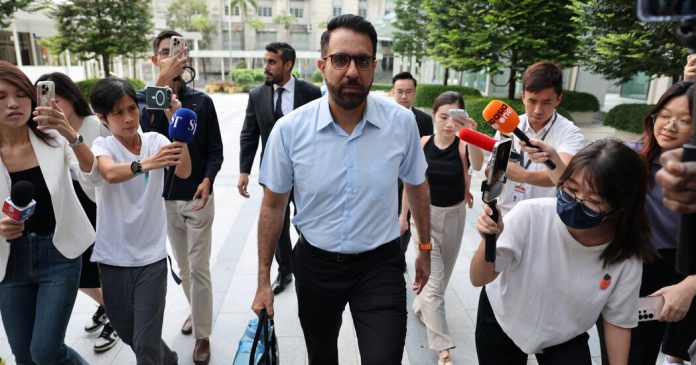
A Singapore court on Monday found the nation’s opposition leader guilty of lying under oath to Parliament, in a case that has riveted the country because it raised the prospect of disqualifying him from office.
Pritam Singh, a member of Parliament and the head of the main opposition party, the Worker’s Party, was convicted on two counts of lying to a parliamentary committee under oath and was fined 7,000 Singaporean dollars, about $5,220, for each count. He plans to appeal.
But Mr. Singh can stay in office and run in this year’s election. Under Singapore’s Constitution, members of Parliament are ineligible for office for five years if they are fined 10,000 Singaporean dollars or more for a single offense.
The case could tarnish the party’s reputation and credibility among undecided voters.
But Mr. Singh stressed his party is part of the “evolution towards a more balanced political system.”
Mr. Singh, 48, is the first opposition leader in Singapore to be formally designated as such. That was a result of the 2020 election, in which his party won a record 10 of 93 seats in Parliament. The legislature was still overwhelmingly controlled by the People’s Action Party, which has run Singapore for decades. But that year, the P.A.P. received one of the smallest vote shares in its history.
By law, this year’s election must be held by Nov. 23. It will be the first time the P.A.P. will face voters under its new leader, Lawrence Wong, who became prime minister in May. He succeeded Lee Hsien Loong, who held that post for more than two decades and is the son of Singapore’s founding father, Lee Kuan Yew.
Mr. Singh’s charges were related to his handling of another member of Parliament from his party, Raeesah Khan, who admitted that she had repeatedly lied to Parliament in August 2021 in a case involving a victim of sexual assault.
A parliamentary committee was convened in November 2021 to investigate the matter, with Mr. Singh questioned extensively. Lawmakers then referred his case to prosecutors, who charged him with making two false statements during the committee’s proceedings.
“The parliamentary committee was the right body to investigate this,” said PN Balji, a political analyst and former newspaper editor. “It held hearings and concluded that Pritam lied. Could it have ended there with a censure from Parliament, instead of going to the courts?”
Mr. Singh denied the charges, and a trial began last November. On Monday, Judge Luke Tan of the State Court found him guilty in an oral judgment. Prosecutors had sought the maximum fine of 7,000 Singaporean dollars for each charge.
Singapore, usually an oasis of stability, has been rocked by a series of political scandals in the past two years. In October, a former transport minister was jailed over graft charges. In July 2023, the Speaker of Parliament resigned over an extramarital affair with a fellow lawmaker. That year, the real estate dealings of two ministers, involving government bungalows, also stirred controversy.
Sui-Lee Wee contributed reporting.
A fired national park ranger lost his dream job. He says the public is losing more : NPR

Brian Gibbs, pictured with his son Oliver in front of the Effigy Mounds National Monument park sign, in July 2024.
Brian Gibbs
hide caption
toggle caption
Brian Gibbs
Brian Gibbs lost his job as a national park ranger on Friday.
He was working as an environmental educator at the Effigy Mounds National Monument in northeast Iowa. It was his “dream job,” he wrote in a widely shared post on Facebook. The monument is the site of mounds made of earth, built by ancient Native Americans, that form shapes of animals.
The 41-year-old father learned of his termination on Valentine’s Day. “I am absolutely heartbroken and completely devastated,” he wrote.
Gibbs is one of about 1,000 National Park Service employees who were fired this past week. Parks advocates say the layoffs could leave national parks understaffed going into a busy spring break.
The recent cuts to the federal workforce, which target probationary workers, are part of a plan by President Trump and his adviser Elon Musk to shrink federal spending.

In the federal government, a probationary worker is often a newly hired employee who is put on a “probationary” period — typically for one or two years — before they may be hired into full-time status. They are subject to higher scrutiny during that period. Probationary workers also include people who were recently moved or promoted into new positions.
Gibbs, who was eight months into a yearlong probationary period, said he was locked out of his work email before he could back up his government records, and before a formal termination letter hit his inbox.
Performance-wise, he said he’s only ever received high marks in supervisor evaluations of his work as a ranger at the Effigy Mounds.
The National Parks Conservation Association (NPCA), a nonpartisan advocacy group for the country’s national parks system, called the downsizing “reckless” and a decision that could have “serious public safety and health consequences” — for example, if the staff losses include wastewater treatment operators.
The NPS did not immediately respond to NPR’s questions about the decisions that went into the recent firings.
Effigy Mounds National Monument preserves remnants of ancient Native American culture

Little Bear Effigy Mound is pictured at the Effigy Mounds National Monument in 2004. The mound shows a four-legged animal and is outlined in small pebbles.
J. Stephen Conn/Flickr Creative Commons
hide caption
toggle caption
J. Stephen Conn/Flickr Creative Commons
The monument was designated in 1949 and protects and preserves over 200 sacred, prehistoric Native American ceremonial and burial mounds.
Human remains have been found in some mounds while others “also functioned as territory markers and as multi-purpose ceremonial places,” according to the NPS. They were built somewhere between the years 650 and 1200. Mounds have been found most commonly in the shapes of “birds, bear, deer, bison, lynx, turtle, panther or water spirit,” the NPS says.
Gibbs is grieving for the park — and what it and other parks may lose as a result of the staff cuts.

“You’re losing people that are keeping the bathrooms clean, the trails maintained. You’re losing people who are teaching youth the value of protecting and preserving these places for current and future generations,” Gibbs said. “I’m very scared that some of these smaller monuments may be forced to shut down their visitor centers or operate like there was a government shutdown, which would mean very, very few personnel.”
He worries about the potential for looting, destruction and littering.
As education technician with the park, Gibbs gave guided hikes, teaching visitors about climate change and how to interact with wildlife safely. He would also visit classrooms to teach students how to be good custodians of the parks. Because the park was already short-staffed before the recent cuts, he said, he wore many hats.
The park holds a lot of meaning for him in his personal life, as well.
“This has always been home for me, ever since my dad took me on a road trip to come explore this area of Iowa,” he said. “It’s the first place I told my spouse that I loved her. It’s the first park that I took my son to.”
He’s fearful that, for the second time in less than five years, he may have to uproot his family. A previous job at the University of Wisconsin Stevens Point was eliminated due to COVID-19 budget shortfalls and lack of program revenue. Both job losses have come while his wife was pregnant; this time it’s with their second child.
Gibbs said he’ll have to find another job to support his growing family, but jobs that involve teaching the public about the environment are limited. “I have a wide skill set but this is my passion,” he said.
But he said the public will ultimately be the ones who will lose the most from these layoffs — costing them “education and awareness and value of our public spaces that are so part of the democratic idea.”
European leaders scramble ahead of Trump’s Ukraine summit with Putin : NPR

Leaders from Italy, Poland, Spain, Ukraine, France, Germany and the EU pose for a group photo during a meeting on European defense and Ukraine, at the Quai d’Orsay in Paris Wednesday, Feb. 12.
Christophe Petit-Tesson/Pool EPA
hide caption
toggle caption
Christophe Petit-Tesson/Pool EPA
PARIS — As U.S. and Russian envoys prepare to begin talks in Saudi Arabia on ending the war in Ukraine, European leaders have called an emergency meeting in Paris after being cut out of the peace negotiations.

The gulf between the U.S. and Europe on the Ukraine war and security issues crystallized for Europeans this past weekend at the Munich Security Conference, says Elie Tenenbaum, a security expert at the French Institute for International Relations.
“Their worst nightmare has come true,” he says. “They see that the Trump administration is going to bypass them and try to strong-arm Ukraine in negotiating a deal with Russia to end the war.”
Tenenbaum says European leaders were hopeful that the U.S. and Europe could work together under the new Trump administration. But comments last week in Europe by several U.S. officials — Secretary of Defense Pete Hegseth in Brussels, Vice President JD Vance and special Russia-Ukraine envoy General Keith Kellogg in Munich, and by President Trump himself after an hour-and-a-half call with Russian President Vladimir Putin, have poured cold water on any such hopes.
“The Europeans now realize they are standing alone,” he says.

Ukrainian President Volodymir Zelensky pleaded in Munich for Europe to join Ukraine in building a European fighting force “So that Europe’s future depends only on Europeans, and decisions about Europe are made in Europe,” he said to resounding applause.
“Zelensky is saying this is our moment — where we either stand up and fight or we give up and let the Russians and the Americans draw the lines,” says Tenenbaum.
Monday’s meeting hosted by French President Emmanuel Macron, will be joined by the leaders of Britain, Italy, Poland, Spain, the Netherlands and Denmark.

In an op-ed in British newspaper The Daily Telegraph, U.K. Prime Minister Kier Starmer wrote that he is ready to send troops to Ukraine to guarantee a peace deal.
At least three big European powers will need to step up to create a real guarantor force, says Tenenbaum.
“What you need is for the UK and Poland to be on board along with France. And ideally a fourth country which could be Germany or Italy,” he says.
Tenenbaum says Europeans will have to fight for a place at the negotiating table “to be enough of a troublemaker that the U.S. and Russia realize the process may derail if they’re kept out of the room.”
Tenenbaum will be looking to see if the Europeans are willing to take some risks and be bold enough to earn a seat at the table.
South Korean Actress Kim Sae-ron Is Found Dead

South Korean actress Kim Sae-ron, a former child star whose promising career suffered a setback in recent years after a drunk-driving incident, was found dead in her home on Sunday afternoon, police said.
Ms. Kim, who was 24, was discovered by a friend who had visited her house, according to the Seongdong Police Station in Seoul. There were no signs of home intrusion or foul play, and the cause of death is under investigation, the police said.
One of South Korea’s most lauded young actors, Ms. Kim had not appeared in any shows since she faced public criticism after being convicted of driving under the influence of alcohol in 2022.
Her death marks the latest tragedy to strike South Korea’s booming but high-pressure entertainment industry, which has faced criticism for the toll it places on the mental health of its burgeoning stars. A celebrity’s popularity is often contingent on a spotless reputation, experts say.
Over the past few years, several young stars were ruled to have died by suicide, one after receiving hate messages for being outspoken and opinionated, and another after a legal battle put her romantic and sex life in the public domain.
Ms. Kim started her acting career by starring in “A Brand New Life,” a film about a girl abandoned in an orphanage, in 2009. She was 9 years old when the movie premiered and was invited to the Cannes Film Festival.
She continued to appear in both big- and small-screen productions, accumulating at least two dozen credits and receiving numerous South Korean acting awards.
In May 2022, Ms. Kim’s career suffered after she was caught driving under the influence. She crashed her car into a guardrail and transformer, cutting off electricity to dozens of nearby businesses for several hours, according to Yonhap News Agency, which reported that her alcohol levels exceeded 0.2 percent. Having an alcohol level over 0.03 percent while driving is considered a D.U.I. offense in South Korea.
Ms. Kim was fined 20 million won (around $14,000) and faced a fierce backlash on social media from the public and influencers, who criticized her behavior as reckless. The actress issued an apology on her Instagram account, saying “there is no excuse for this distasteful incident.”
At the time of the crash, Ms. Kim was filming a Netflix series called “Bloodhounds” that was released in 2023. Several of her scenes were edited out of the final cut, according to the entertainment-industry publication Variety, and she did not attend promotional events with the other members of the cast. Ms. Kim also stepped down from her role in another television drama by a local broadcaster.
After that, she mostly stayed out of the public eye. Local media has reported that the actress was attempting to return to the entertainment industry in small-budget projects and a stage play. Her last acting credit remains Netflix’s “Bloodhounds,” according to the industry website IMDb.
Fans of Ms. Kim took to social media to express their grief and pay tribute. Her former entertainment company, Gold Medalist, did not immediately respond to a request for comment.
If you are having thoughts of suicide, call or text 988 to reach the 988 Suicide and Crisis Lifeline or go to SpeakingOfSuicide.com/resources for a list of additional resources.
In South Korea, call 109 for the Health Ministry’s suicide prevention hotline, or go to the Korean-language site 129.go.kr/109.