


A diplomatic scramble over Ukraine.
Starmer Offers to Send U.K. Troops to Ukraine as Part of Peace Deal

Prime Minister Keir Starmer on Sunday offered British troops to help guarantee Ukraine’s security as part of any peace deal, as he and other European leaders rushed to coordinate a response to President Trump’s opening of talks with Russia about ending the war in Ukraine.
In an article published in The Daily Telegraph on Sunday, Mr. Starmer wrote that he was “ready and willing to contribute to security guarantees to Ukraine by putting our own troops on the ground if necessary.”
It was the first time Mr. Starmer had explicitly said that he was considering sending British troops to Ukraine. It came on the eve of an emergency meeting of European leaders in Paris on Monday, to formulate a response to Mr. Trump’s push for a settlement — one that appeared to leave Europe and Ukraine with no clear role in the process.
In the article, Mr. Starmer wrote that he was not committing British troops lightly. But “securing a lasting peace in Ukraine that safeguards its sovereignty for the long term is essential if we are to deter Putin from further aggression in the future,” he wrote, referring to President Vladimir V. Putin of Russia.
“The end of this war, when it comes, cannot merely become a temporary pause before Putin attacks again,” Mr. Starmer added.
American and Russian officials are expected to meet in Saudi Arabia this week for the start of talks aimed at ending the war. The discussions are said to be preliminary. Secretary of State Marco Rubio said on Sunday that if an opportunity presented itself for a “broader conversation,” it would include Ukraine and Europe.
But the talks underscore that Mr. Trump has an accelerated timetable for reaching a deal to end the war and that he appears determined to conduct negotiations with Russia bilaterally, at least for now. Ukraine confirmed on Sunday that it would not take part in the discussions in Saudi Arabia.
The meeting in Paris on Monday will include Mr. Starmer and the leaders of France, Germany, Italy, Poland, Spain, the Netherlands and Denmark, as well as top officials of the European Union and NATO. The leaders say they will discuss the war and European security.
Mr. Starmer wrote in his article that he would urge the other leaders to increase military spending and take on a greater role in NATO. He added that Ukraine’s path to joining NATO was “irreversible.”
Mr. Starmer, who is expected to meet with President Trump in the coming weeks, wrote that Europe and the United States must continue to work closely to secure a lasting peace deal. “A U.S. security guarantee is essential for a lasting peace, because only the U.S. can deter Putin from attacking again,” he wrote.
Government Accountability official says fraud does exist, but it’s not widespread : NPR
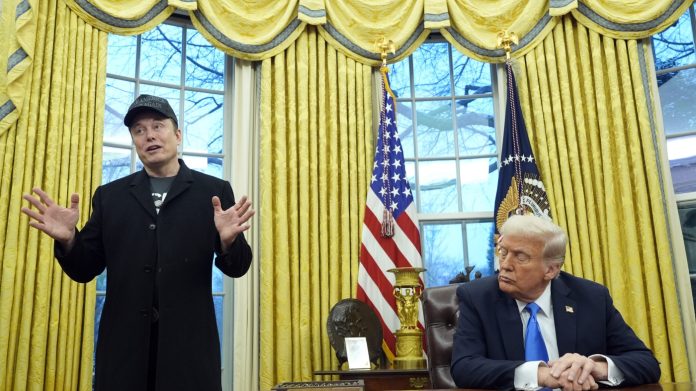
President Donald Trump listens as Elon Musk speaks in the Oval Office at the White House, Tuesday, Feb. 11, 2025, in Washington. (Photo/Alex Brandon)
Alex Brandon/AP/AP
hide caption
toggle caption
Alex Brandon/AP/AP
President Trump and Elon Musk have vowed to uncover and eliminate fraud in the federal government, and the White House has pointed to a recent Government Accountability Office (GAO) report as evidence and justification for their ongoing efforts to take over and dismantle federal agencies.
The GAO is an agency under Congress that provides lawmakers and executive agencies with information about how efficiently and effectively components of the federal government are conducting their work.
So far, the Trump administration has not shown clear evidence of fraud.
Instead, the DOGE X account and White House Press Secretary Karoline Leavitt have pointed to the elimination of DEI — diversity, equity and inclusion — contacts and other expenditures that don’t align with the administration’s political priorities.
In a memo Wednesday, the administration said that “Trump is determined to be a good steward of taxpayer dollars and put an end to fraudulent and wasteful spending” and attached the GAO’s report.
A co-author of that report, GAO Director Rebecca Shea, tells NPR that while government fraud and waste makes up an estimated 3% and 7% of federal spending, the overwhelming majority of federal spending isn’t fraudulent.
Shea also noted that the report defines fraud narrowly — and that definition doesn’t match up with Trump and Musk’s definition. “To call something fraud, you need to prove it in a criminal or civil case,” she said.
Shea added that finding fraud takes a long time and adjudicating it takes even longer — which fraudsters take advantage of. In her GAO report, Shea suggested Artificial Intelligence (AI) could help the government catch the fraud.
“It can evolve a lot more quickly than a human might looking at the data themselves,” Shea said. “AI does offer promise when we’re able to use the data systems. There are a fair number of actual structured data sets that I think could be more readily used for fraud detection with AI capabilities, predictive modeling.”
Musk’s DOGE is reportedly working on a custom AI chatbot called “GSAi” in their effort to cut spending, according to the magazine WIRED.
But Shea cautioned that government use of AI does create its own risks.
“The flip side of that is fraudsters are using AI already to defraud federal programs,” Shea said. “And they are not hampered by the same guidelines and laws that the U.S. government is when it comes to AI. Fraudsters aren’t hindered in the same way.”
People from “all walks of life” commit fraud, even those inside the government, Shea said.
“Like anywhere there are going to be insider threats,” Shea said. “There were some government officials that were in the mix. Civil servants, contractors were also among those who were charged by the Department of Justice.”
While defending DOGE and its efforts, Musk has called the United States a “bureaucracy” rather than a democracy.
“A second American revolution is needed to free the people from their oppression by the bureaucracy!” Musk posted.
“We are happy that people are using our report, finding our information useful in the debate to try and improve federal service,” Shea said. “We have a duty of care to the taxpayer and we can do better. And we’re hopeful that our report helps us move in that right direction.”
When asked directly about Musk and the Department of Government Efficiency (DOGE) unit, Shea didn’t comment.
“I will abstain from providing an opinion on that,” Shea said. “That’s outside of my wheelhouse.”
Shea said she hasn’t personally been contacted by or worked with Musk or DOGE, though she confirmed U.S. Comptroller General Gene Dodaro, who has overseen GAO since 2008, has made contact with the Trump administration following the inauguration — as is customary.
Overall, Shea said the government is a good steward of tax payer dollars and is hopeful it will improve.
“[Annual fraud] represents between 3% to 7% of annual federal budgets in that time period,” Shea said. “Yes, it’s a big number, but the vast majority of spending is not fraudulent.”
Government Accountability official says fraud does exist, but it’s not widespread : NPR

President Donald Trump listens as Elon Musk speaks in the Oval Office at the White House, Tuesday, Feb. 11, 2025, in Washington. (Photo/Alex Brandon)
Alex Brandon/AP/AP
hide caption
toggle caption
Alex Brandon/AP/AP
President Trump and Elon Musk have vowed to uncover and eliminate fraud in the federal government, and the White House has pointed to a recent Government Accountability Office (GAO) report as evidence and justification for their ongoing efforts to takeover and dismantle federal agencies.
The GAO is an agency under Congress that provides lawmakers and executive agencies with information about how efficiently and effectively components of the federal government are conducting their work.
So far, the Trump administration has not shown clear evidence of fraud.
Instead, the DOGE X account and White House Press Secretary Karoline Leavitt have pointed to the elimination of DEI — diversity, equity and inclusion — contacts and other expenditures that don’t align with the administration’s political priorities.
In a memo Wednesday, the administration said that “Trump is determined to be a good steward of taxpayer dollars and put an end to fraudulent and wasteful spending” and attached the GAO’s report.
A co-author of that report, GAO Director Rebecca Shea, tells NPR that while government fraud and waste makes up an estimated 3% and 7% of federal spending, the overwhelming majority of federal spending isn’t fraudulent.
Shea also noted that the report defines fraud narrowly — and that definition doesn’t match up with Trump and Musk’s definition. “To call something fraud, you need to prove it in a criminal or civil case,” she said.
Shea added that finding fraud takes a long time and adjudicating it takes even longer — which fraudsters take advantage of. In her GAO report, Shea suggested Artificial Intelligence (AI) could help the government catch the fraud.
“It can evolve a lot more quickly than a human might looking at the data themselves,” Shea said. “AI does offer promise when we’re able to use the data systems. There are a fair number of actual structured data sets that I think could be more readily used for fraud detection with AI capabilities, predictive modeling.”
Musk’s DOGE is reportedly working on a custom AI chatbot called “GSAi” in their effort to cut spending, according to the magazine WIRED.
But Shea cautioned that government use of AI does create its own risks.
“The flip side of that is fraudsters are using AI already to defraud federal programs,” Shea said. “And they are not hampered by the same guidelines and laws that the U.S. government is when it comes to AI. Fraudsters aren’t hindered in the same way.”
People from “all walks of life” commit fraud, even those inside the government, Shea said.
“Like anywhere there are going to be insider threats,” Shea said. “There were some government officials that were in the mix. Civil servants, contractors were also among those who were charged by the Department of Justice.”
While defending DOGE and it’s efforts, Musk has called the United States a “bureaucracy” rather than a democracy.
“A second American revolution is needed to free the people from their oppression by the bureaucracy!” Musk posted.
“We are happy that people are using our report, finding our information useful in the debate to try and improve federal service,” Shea said. “We have a duty of care to the taxpayer and we can do better. And we’re hopeful that our report helps us move in that right direction.”
When asked directly about Musk and the Department of Government Efficiency (DOGE) unit, Shea didn’t comment.
“I will abstain from providing an opinion on that,” Shea said. “That’s outside of my wheelhouse.”
Shea said she hasn’t personally been contacted by or worked with Musk or DOGE, though she confirmed U.S. Comptroller General Gene Dodaro, who has overseen GAO since 2008, has made contact with the Trump administration following the inauguration — as is customary.
Overall, Shea said the government is a good steward of tax payer dollars and is hopeful it will improve.
“[Annual fraud] represents between 3% to 7% of annual federal budgets in that time period,” Shea said. “Yes, it’s a big number, but the vast majority of spending is not fraudulent.”
Monday Briefing: E.U. Leaders Set to Meet on Ukraine

Cut out of Ukraine talks, E.U. leaders regroup
Europeans leaders are set to convene an emergency meeting in Paris today to discuss the war in Ukraine and European security, French officials said yesterday. The aim is to coordinate a response to the Trump administration’s opening of talks with Russia about ending the war with Ukraine, without an apparent role for Europe — or Kyiv — in the process.
President Volodymyr Zelensky of Ukraine reiterated in interviews over the weekend that his country would “never” accept a peace deal struck by the U.S. and Russia if Kyiv did not have a seat at the negotiations.
What’s next: Three of President Trump’s top foreign policy aides are set to meet with Russian officials in Saudi Arabia later this week to discuss a path to ending the war.
Security: Recent remarks by Vice President JD Vance and Defense Secretary Pete Hegseth have fueled concerns that the U.S. will move away from Europe and align with Moscow. Such a shift, analysts say, would give Putin a previously unthinkable victory far greater than any objectives in Ukraine.
No deal: Trump suggested that Ukraine sign over half its mineral resources in exchange for past and future U.S. support. Zelensky rejected such a deal, citing a lack of security guarantees.
More on Trump
Rubio traveled to Israel to discuss Gaza’s future
Secretary of State Marco Rubio met yesterday with Prime Minister Benjamin Netanyahu of Israel in Jerusalem, where they discussed Trump’s call to seize Gaza and force out its Palestinian residents.
Rubio is expected to head to Saudi Arabia and the United Arab Emirates in the coming days, where Arab leaders are almost certain to press him for more clarity about Trump’s Gaza plan.
What’s next: Steve Witkoff, Trump’s special envoy to the Middle East, said on Fox News yesterday that talks on phase two of the Gaza cease-fire deal would take place this week. Netanyahu’s office said that the Israeli leader would convene the security cabinet today to discuss the second phase of the agreement.
Hostages: Hamas freed three more Israeli hostages on Saturday, as Israel released 369 Palestinian prisoners.
The growing pains of Asia’s youngest nation
East Timor is Asia’s youngest country, and its poorest, having gained independence in 2002 after a brutal Indonesian occupation. The country’s economy relies heavily on oil and gas revenue, which is quickly evaporating, and more than 40 percent of the country’s 1.4 million people are estimated to live in poverty.
But by other measures, East Timor is a success. It has built a resilient young democracy and has held competitive elections with multiple transfers of power. East Timor ranks among the highest in Asia for press freedom. Life expectancy has risen, and the entire population now has access to electricity. Experts say that the country is a positive case study for young, post-conflict nations.
MORE TOP NEWS
An unofficial network of searchers are looking for thousands of missing Yazidi women and girls, members of a religious minority who were abducted, sexually enslaved and systematically murdered by the Islamic State. Many are likely dead, and official entities have largely forgotten them, but this ragtag army of activists and armchair detectives has not.
Lives lived: Edith Mathis, a Swiss soprano who was a favorite of several of the conducting giants who dominated mid-20th-century concert halls, died at 86.
Translating risk into reward
Tilted Axis, a tiny British press, is known for bucking trends to seek out subversive, groundbreaking literature in translation. In the process, the publisher has landed awards and critical acclaim for writers unknown to the Anglophone world. Now, Tilted Axis is heading to the U.S.
With only eight part-time employees, Tilted Axis has published 42 books translated from 18 languages, including Indonesian, Telugu, Tamil, Eastern Armenian, Kazakh, Kannada, Bengali and Uzbek. The press has left its mark, not only on the world of literature but on the field of translation. Read more here.
German Election Spotlight Turns to Trump

On Thursday morning, an Afghan refugee deliberately plowed a car into a crowd in Munich, motivated by what the police called an “Islamist orientation.” A 2-year-old girl and her mother were killed, and nearly 40 others were injured.
A day later — in a country where migration has been a major election issue — that attack was no longer the biggest news story in town.
German news media, and much of the country’s political leadership, immersed themselves to a larger degree in a blizzard of foreign-policy pronouncements from the Trump administration as Western leaders gathered at the Munich Security Conference.
The annual gathering, which ended on Sunday, left many Germans who attended fuming that the Trump team was trying to influence the vote in coming parliamentary elections by publicly lecturing German politicians about blocking a far-right party from government. .
German leaders left Munich profoundly worried about the country’s relationship with the United States as the Trump administration appeared to be icing Europe out of substantive discussions on a peace plan for Ukraine, at least for now.
The onslaught of news from the conference vaulted Mr. Trump and his policies squarely into the center of Germany’s final week of campaigning, diverting some of the attention from issues like the string of deadly attacks carried out by immigrants and refugees across the country over the last year.
The main article on the front page of Munich’s largest newspaper, Süddeutsche Zeitung, on Saturday featured a picture of Vice President JD Vance delivering a speech criticizing Europeans that stunned attendees at the conference. “Undiplomatic Announcement,” read the headline.
In the speech, Mr. Vance urged German leaders to allow the hard-right Alternative for Germany to enter the federal government, without mentioning any of the reasons mainstream parties have shunned governing with it, including that some its members have been convicted of using Nazi slogans.
The Süddeutsche Zeitung front page also included a picture from the attack site, but the accompanying article ran inside the paper. Other German news outlets were filled with stories on the fallout from Mr. Vance’s appearance and other Trump administration moves in Munich.
The coverage signaled a clear shift: Until this weekend, the American president was a preoccupation of many Germans. But he hadn’t really been an issue in the race for chancellor.
He is now.
It is unclear what party, if any, might benefit from the new focus on Mr. Trump. His administration’s actions gave platforms to several leading parties. Those include Alternative for Germany, known as the AfD, which received what German media called a “campaign gift” from Mr. Vance in his Friday speech.
But they also include the incumbent Social Democrats and Chancellor Olaf Scholz, who sit a distant third or fourth in the polls but suddenly had an opportunity to project diplomacy on a global and local stage. The same was true for the poll-leading Christian Democrats and their chancellor candidate, Friedrich Merz.
Both Mr. Merz and Mr. Scholz spent their time at the Munich conference publicly telling Mr. Trump and his team to stay out of German politics.
“There is an elephant in the room here, and the elephant is the trans-Atlantic relationship,” Mr. Merz said on Saturday in response to a Munich panel moderator’s question about plans for peace in Ukraine.
Germans respect America’s elections, he said, “and we expect the U.S. to do the same here.”
The reaction was so strong because of Germany’s “deep historical experiences with fascism,” said Steven E. Sokol, president of the American Council on Germany, who attended the conference. “Vance was a shock to the system,” he said.
But Mr. Sokol cautioned that “it remains to be seen if the speech has an impact on the results of the upcoming election.”
The German campaign has been relatively short, particularly by American standards. The early elections were called after the last governing coalition splintered in November. After a slow holiday start, the contest really roared to life only in January.
Until this weekend, candidates focused largely on migration and on Germany’s stagnant economy. The leading contenders for chancellor, including Mr. Merz and Mr. Scholz, have mostly sparred over government spending and borrowing, energy policy and how best to overhaul migration laws to manage the millions of asylum seekers who have entered Germany over the past decade.
The first big shake-up in the race came last month, when an Afghan immigrant who was scheduled to be deported — and who the police said suffered from mental illness — used a knife to kill a toddler in a Bavarian park and a bystander who tried to intervene. The killings came not long after a Saudi immigrant who was working as a doctor in Germany killed six people at a Christas market in Magdeburg by ramming his car into a crowd, and after other knife attacks last year.
Mr. Merz, breaking a decades-old taboo, quickly pushed a set of migration bills to a vote in Parliament, knowing they could pass only with votes from the AfD. Protests ensued across Germany against giving the AfD such an opening, but Mr. Merz emerged unscathed in polls.
Even before the shift in attention to Mr. Trump, the political race had stayed remarkably static. There is, however, potential for a dramatic swing in the final days. A third of Germans have told pollsters they could change their minds before Election Day — either switching parties or choosing not to vote at all.
The AfD sits in second place in polls with just over 20 percent support, well behind the Christian Democrats. It gained a few points of support in December, a trend that started before the Christmas market attack, but has largely flatlined in the new year. Recent polls showed it roughly back to the vote share it had a year ago, notwithstanding the high-profile endorsement it recently got from Elon Musk, Mr. Trump’s billionaire adviser.
It will take a few days for polls to take the first measure of effects from the latest attack in Munich and the outcry at the Munich conference.
Still, it was clear that the Trump news at the conference had spilled immediately into German politics. Top German political figures rewrote their speeches or panel remarks to include pointed rebuttal to Mr. Vance and Mr. Trump. The AfD’s candidate for chancellor, Alice Weidel, was alone in celebrating Mr. Vance’s remarks and the Trump administration.
Before diving into his plans for expanded government borrowing and military spending, Mr. Scholz rebuked Mr. Vance for telling Europeans “there is no room for firewalls” in their politics, a reference to mainstream parties shunning the AfD. “We will not accept outsiders intervening in our democracy,” the chancellor said.
He added: “That is not appropriate, especially not among friends and allies.”
The candidate currently leading the race, Mr. Merz, used his panel appearance on Saturday to defend German restrictions on hate speech in pushing back against Mr. Vance, who said it was time for Europeans to stop policing speech. He also went out of his way to ding Mr. Trump’s trade policies, including threats of new tariffs on Europe.
Mr. Merz tried to cast himself as a potential future counterweight to Mr. Trump in Europe, a message that seemed to be aimed as much at German voters as it was to the diplomats at the conference.
“I fully agree with all those who are demanding more leadership from Germany,” Mr. Merz said. “And I am willing to do that”
Steven Erlanger contributed reporting.
As Trump Targets Research, Scientists Share Grief and Resolve to Fight
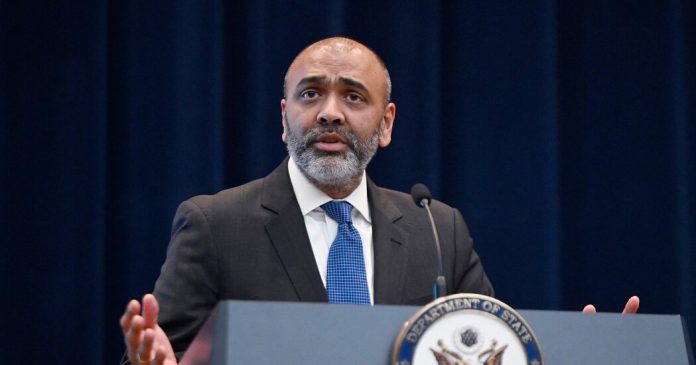
At the annual gathering in Boston this week of one of America’s oldest scientific societies, the discussions touched on threats to humankind: runaway artificial intelligence, toxic “forever chemicals,” the eventual end of the universe.
But the most urgent threats for many scientists were the ones aimed at them, as the Trump administration slashes the federal scientific work force and cuts back on billions of dollars in funding for research at universities.
“Angst and anxiety and, to a certain extent, grief,” is how Sudip Parikh, who leads the American Association for the Advancement of Science, the organization hosting the conference, summed up the mood on Saturday. News about layoffs at government agencies rippled across conference-goers’ phones.
“It’s like we’re getting hit from all sides,” said Roger Wakimoto, the vice chancellor for research at the University of California, Los Angeles.
Mere weeks into President Trump’s second term, his administration and Republicans in Congress have sent universities reeling with crackdowns on diversity initiatives, threats to endowments and potential deportations of undocumented students.
Scientists worry that the most far-reaching changes could still be to come, affecting the cornerstones of public research funding in the United States: the National Institutes of Health and the National Science Foundation. Together, the two agencies fund thousands of projects each year, supporting hundreds of thousands of researchers and other workers at institutions in every state. The agencies provide the financial backbone for American efforts to treat cancer, address rising sea levels, advance quantum computing and much more.
A federal judge has ordered the Trump administration to hold off on a plan to cut $4 billion in N.I.H. funding. But if the proposal moves ahead, or if the administration enacts similar changes across other agencies, university officials say that the effects on their institutions and their communities would be devastating.
At stake is the basic model that has underpinned America’s modern scientific leadership, said Holden Thorp, editor in chief of the journal Science. After World War II, officials understood the need to support fundamental research, the kind that doesn’t lead right away to marketable innovations. But such work is expensive. So universities and the federal government agreed to split the costs.
“Now you’re seeing the federal government potentially trying to walk away from that,” Dr. Thorp said. “And what worries me is that, in the long run, the universities will just decide to do less research.”
The Trump administration has said its plan for the N.I.H. would curb waste, not research. At the A.A.A.S. conference, Kelvin Droegemeier, an atmospheric scientist who advised President Trump during his first term, urged researchers to embrace what he described as a drive for efficiency. Scientists spend huge amounts of time trying to meet regulatory requirements instead of doing actual science, Dr. Droegemeier said.
“There are challenges right now, but there are also very significant opportunities to get greater efficiencies,” he said.
But pruning regulations on research wouldn’t be easy, Dr. Thorp said. And withholding funding overnight “is going to destabilize the system,” he said.
Among the 3,500 people who gathered inside a Boston convention center for the science conference, much of the talk drifted toward a simple question: What can I do about all this? Some of the answers involved first sorting out what the administration is and isn’t doing before trying to counteract it.
“The current administration, in my opinion, is not anti-science,” said Mary Woolley, the president of Research America, a nonprofit group that promotes medical research. Scientists can advance their goals with the administration by emphasizing, for instance, that strong science boosts America’s competitiveness in the world, she said.
To Kei Koizumi, who served in the White House Office of Science and Technology Policy during the Biden administration, scientific research has so far been “collateral damage” in the new administration’s crusade against universities. These actions, he said, have been driven not by animus toward science, but by the desire to root out what Trump officials deride as “woke” policies and cultures.
One discipline that has been targeted more specifically is climate science. President Trump has long downplayed the threats from human-caused global warming. At the National Oceanic and Atmospheric Administration, staff members have been ordered to comb their research awards for terms including “climate science,” “climate crisis,” “clean energy” and “pollution.”
Aurora Roth is finishing her doctoral studies at the Scripps Institution of Oceanography at the University of California, San Diego, and preparing to apply for jobs. Instead, she said, “I am wondering what institutions will even exist in a year.”
She and other scientists could figure out how to reword their funding applications to avoid mentioning climate change, Ms. Roth said. But “feeling attacked just on the basis of doing science in the world? That’s a hard thing to sit with,” she said.
One attendee at the Boston meeting, Kelly Cronin, an assistant professor of geology at Georgia State University’s Perimeter College, saw reasons for optimism. For instance, her former employer, Georgia Southern University, recently created a School of Earth, Environment and Sustainability.
“Georgia Southern is in Statesboro, Ga., solidly red,” Dr. Cronin said. “They pull most of their students from South Georgia,” she said. “And still, this was the decision they made.”
Left Out of Ukraine Talks, Europe Races to Organize a Response
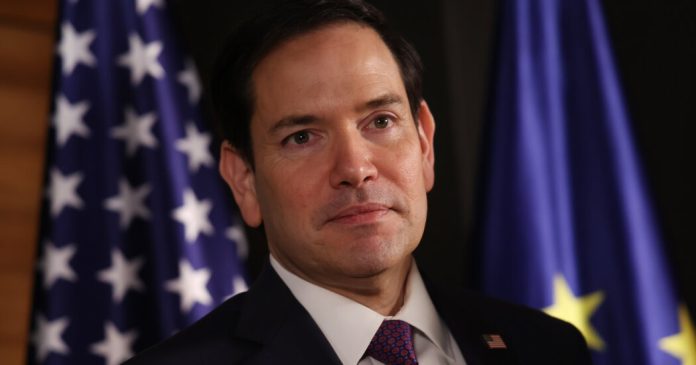
While American officials prepared on Sunday for the start of talks with Russia over ending the war in Ukraine, European leaders were moving to formulate a response to President Trump’s rapid push for a settlement that appeared to leave them and Ukrainian officials with no clear role in the process.
The Russian ambassador to Saudi Arabia, where the talks are to take place this week, met Sunday with the kingdom’s foreign minister. Two senior Trump administration officials — Mike Waltz, and the Middle East envoy, Steve Witkoff — will fly to Saudi Arabia to join Secretary of State Marco Rubio for the negotiations, Mr. Witkoff said Sunday in an interview with Fox News.
The preparations come after a flurry of diplomatic discussions over the past several days that included a conversation between Mr. Rubio and Russia’s foreign minister, Sergey V. Lavrov.
On Sunday, Mr. Rubio said in an interview from Jerusalem with CBS News that if an opportunity presented itself for a “broader conversation that would involve Ukraine and would involve the end of the war, and would involve our allies all over the world, particularly in Europe,” the United States would explore it.
He did not say which Russian officials would be in Riyadh this week, and noted that he had made plans earlier to be in Saudi Arabia anyway during this trip, his first to the Middle East as secretary of state. “Nothing’s been finalized yet,” he said.
The meeting with Russia, while preliminary, would signal the start of Mr. Trump’s accelerated timetable for a deal and his seeming determination to conduct negotiations with Russia alone, at least for now.
On Monday, the leaders of France, Britain, Germany, Italy, Poland, Spain the Netherlands and Denmark, and the top officials of the European Union and NATO, will convene in Paris in an emergency meeting on the war in Ukraine and European security, French officials said Sunday. The aim is to coordinate a response to the Trump administration’s opening of talks with Russia without European participation.
That follows a meeting Sunday of foreign ministers from the European Union, which as a bloc has provided more military support for Ukraine than the United States has.
It is unclear if President Volodymyr Zelensky of Ukraine will be in Saudi Arabia this week. He has said he would travel to the United Arab Emirates, Saudi Arabia and Turkey, but did not specify when.
But he has made clear he does not want to enter negotiations before determining what security guarantees Western nations are willing to offer to ensure any cease-fire is not violated. As of Saturday, he said he had no such assurances from the United States.
In an interview with NBC aired Sunday he reiterated that he would “never” accept a peace negotiation settled between Russia and the United States without Ukraine.
Asked if he feels he has a seat at the table right now, he did not answer directly. He said he counted on one. He said he told Mr. Trump that Putin “is a liar” who “doesn’t want any peace.”
Still, if Russian and Ukrainian delegations were to meet, it would be the first direct talks in nearly three years, raising the prospect of an end to the bloodiest war in Europe since World War II.
In Moscow, a spokeswoman for the Foreign Ministry did not respond to a request for comment. But Russian state television on Sunday released an interview with Dmitri S. Peskov, Mr. Putin’s spokesman, who reasserted Russia’s newfound optimism about negotiating with the United States after years of diplomatic isolation by the Biden administration.
“We’re now going to be talking about peace, not about war,” Mr. Peskov said. “Based on President Trump’s statements, we’re solving problems through dialogue.”
Edward Wong contributed reporting from Washington, and Anton Troianovski from Berlin.
M23 Rebels in Congo Say They Have Entered Bukavu

Rebels in the Democratic Republic of Congo on Sunday entered the vital trading hub of Bukavu in the east of the country, according to the fighters and videos circulated by local residents. If confirmed, Bukavu would be the latest city to fall in a sweeping offensive that has revealed the weakness of the crumbling Congolese Army.
The M23 rebels — who are supported and directed by Rwanda, Congo’s much smaller neighbor — appeared to meet no resistance, residents said, as they marched into Bukavu, a provincial capital that is a major center for gold trading and smuggling.
“We’re there, we’re there in Bukavu,” said Willy Ngoma, a M23 spokesman reached by telephone.
On Sunday, the rebels addressed a crowd of people in Bukavu’s main square after they entered the city in long, silent columns, according to three witnesses and videos shared on social media and verified by the Times. The witnesses requested anonymity for fear of retribution from the armed group.
Days earlier, Congolese soldiers had fled the city in similar columns, according to a dozen other residents, leaving Bukavu under no clear leadership and in the hands of looters who broke into warehouses and shops. The Congolese government has not spoken publicly about the situation in the city on Sunday, and the capture of Bukavu has not been independently confirmed.
The apparent fall of Bukavu would stand in sharp contrast to the protracted battle for the key city of Goma last month, in which nearly 3,000 people were killed, according to the United Nations.
With the capture of Bukavu, a city of more than a million people that sits on the edge of a crystalline lake, the M23 rebels would now control the two largest trading hubs in Congo’s mineral-rich east.
Experts say Bukavu’s capture threatens to draw more neighboring countries into the conflict. The city sits 20 miles from the border with Burundi, whose troops have been fighting alongside the Congolese Army.
“It will increase the risk of regional war, especially with Burundi,” Fred Bauma, the executive director of Ebuteli, a research group specializing on Congo, said about Bukavu’s fall.
Now, M23 is also more directly connected to its powerful backer, Rwanda. Bukavu and Goma, on the southern and northern edges of the sprawling Lake Kivu, both sit on the border with Rwanda, whose exports of minerals smuggled out of Congo have spiked in recent years, according to U.N. experts.
President Paul Kagame of Rwanda has acknowledged that Rwandan soldiers are present in eastern Congo but has denied backing M23.
The leaders of M23 have now vowed to march on Kinshasa, Congo’s capital and one of Africa’s largest cities. The Congolese government has refused to sit down with M23 leaders or Rwanda, and its military response on the ground has been limited.
M23 is the most powerful of the dozens of armed groups that have destabilized eastern Congo over nearly three decades. Since capturing Goma, the rebels have vowed to restore order and security — attempting to present the group as an administrative power qualified enough to govern large parts of one of Africa’s richest mining regions.
“It is important that we can work hand in hand for our country’s development,” Bernard Byamungu, a high-ranking M23 official, told Bukavu’s residents on Sunday, according to a video verified by The Times. “No development without work, but let’s not forget that peace remains fundamental for a stable nation.”
Mr. Byamungu then ordered residents to go back home so M23 could finish securing the city.
The group’s calls for peace have been at odds with M23’s bloody tactics on the ground. M23 has repeatedly violated cease-fires, including some that it had unilaterally declared. Mr. Byamungu, according to the United Nations, planned and directed the killings of civilians and the extrajudicial executions of soldiers.
Unlike Goma, the apparent capture of Bukavu was hardly a surprise: Schools there closed earlier this month and countless people fled in recent weeks in anticipation of the M23 offensive.
The M23 rebels entered Bukavu on Sunday days after they said they had captured a nearby airport that the Congolese Army had used as a key rear base to try to contain the group’s advance in the province of South Kivu.
The latest M23 offensive, which began in early January, has further destabilized eastern Congo, a mineral-rich region scarred by nearly three decades of conflict over access to land and gold, tin and cobalt, among other minerals.
More than 500,000 people were displaced last month, according to the United Nations. The number of rapes against children carried out by armed groups, already rampant in the region, has soared in recent weeks, according to UNICEF.
Ruth Maclean contributed reporting from Dakar.
She’s Trying to Stay Ahead of Alzheimer’s, in a Race to the Death

Soon, Irene Mekel will need to pick the day she dies.
She’s not in any hurry: She quite likes her life, in a trim, airy house in Castricum, a Dutch village by the sea. She has flowers growing in her back garden, and there is a street market nearby where vendors greet villagers by name. But if her life is going to end the way she wants, she will have to pick a date, sooner than she might like.
“It’s a tragedy,” she said.
Ms. Mekel, 82, has Alzheimer’s disease. It was diagnosed a year ago. She knows her cognitive function is slowly declining, and she knows what is coming. She spent years working as a nurse, and she cared for her sister, who had vascular dementia. For now, she is managing, with help from her three children and a big screen in the corner of the living room that they update remotely to remind her of the date and any appointments.
In the not-so-distant future, it will no longer be safe for her to stay at home alone. She had a bad fall and broke her elbow in August. She does not feel she can live with her children, who are busy with careers and children of their own. She is determined that she will never move to a nursing home, which she considers an intolerable loss of dignity. As a Dutch citizen, she is entitled by law to request that a doctor help her end her life when she reaches a point of unbearable suffering. And so she has applied for a medically assisted death.
In 2023, shortly before her diagnosis, Ms. Mekel joined a workshop organized by the Dutch Association for Voluntary End of Life. There, she learned how to draft an advance request document that would lay out her wishes, including the conditions under which she would request what is called euthanasia in the Netherlands. She decided it would be when she could not recognize her children and grandchildren, hold a conversation or live in her own home.
But when Ms. Mekel’s family doctor read the advance directive, she said that while she supported euthanasia, she could not provide it. She will not do it for someone who has by definition lost the capacity to consent.
A rapidly growing number of countries around the world, from Ecuador to Germany, are legalizing medical assistance in dying. But in most of those countries, the procedure is available only to people with terminal illness.
The Netherlands is one of just four countries (plus the Canadian province of Quebec) that permit medically assisted death by advance request for people with dementia. But the idea is gaining support in other countries, as populations age and medical interventions mean more people live long enough to experience cognitive decline.
The Dutch public strongly supports the right to an assisted death for people with dementia. Yet most Dutch doctors refuse to provide it. They find that the moral burden of ending the life of someone who no longer has the cognitive capacity to confirm their wishes is too weighty to bear.
Ms. Mekel’s doctor referred her to the Euthanasia Expertise Center, in The Hague, an organization that trains doctors and nurses to provide euthanasia within the parameters of Dutch law and connects patients with a medical team that will investigate a request and provide assisted death to eligible patients in cases where their own doctors won’t. But even these doctors are reluctant to act after a person has lost mental capacity.
Last year, a doctor and a nurse from the center came every three months to meet with Ms. Mekel over tea. Ostensibly, they came to discuss her wishes for the end of her life. But Ms. Mekel knew they were really monitoring how quickly her mental faculties had declined. It might seem like a tea party, she said, “but I see them watching me.”
Dr. Bert Keizer is alert for a very particular moment: It is known as “five to 12” — five minutes to midnight. Doctors, patients and their caregivers engage in a delicate negotiation to time death for the last moment before a person loses that capacity to clearly state a rational wish to die. He will fulfill Ms. Mekel’s request to end her life only while she still is fully aware of what she is asking.
They must act before dementia has tricked her, as it has so many of his other patients, into thinking her mind is just fine.
“This balance is something so hard to discover,” he said, “because you as a doctor and she as your patient, neither of you quite knows what the prognosis is, how things will develop — and so the harrowing aspect of this whole thing is looking for the right time for the horrible thing.”
Ms. Mekel finds this negotiation deeply frustrating: The process does not allow for the idea that simply having to accept care can be considered a form of suffering, that worrying about what lies ahead is suffering, that loss of dignity is suffering. Whose assessment should carry more weight, she asks: current Irene Mekel, who sees loss of autonomy as unbearable, or future Irene, with advanced dementia, who is no longer unhappy, or can no longer convey that she’s unhappy, if someone must feed and dress her.
More than 500,000 of the 18 million people in the Netherlands have advance request documents like hers on file with their family doctors, explicitly laying out their wishes for physician-assisted death should they decline cognitively to a point they identify as intolerable. Most assume that an advance request will allow them to progress into dementia and have their spouses, children or caregivers choose the moment when their lives should end.
Yet of the 9,000 physician-assisted deaths in the Netherlands each year, just six or seven are for people who have lost mental capacity. The overwhelming majority are for people with terminal illnesses, mostly cancer, with a smaller number for people who have other nonterminal conditions that cause acute suffering — such as neurodegenerative disease or intractable depression.
Physicians, who were the primary drivers of the creation of the Dutch assisted dying law — not Parliament, or a constitutional court case, as in most other countries where the procedure is legal — have strong views about what they will and will not do. “Five to 12” is the pragmatic compromise that has emerged in the 23 years since the criminal code was amended to permit physicians to end lives in situations of “unbearable and irremediable suffering.”
A Shock
Ms. Mekel, petite and brisk, had suspected for some time before she received a diagnosis that she had Alzheimer’s. There were small, disquieting signs, and then one big one, when she took a taxi home one day and could not recognize a single house on the street where she had lived for 45 years, could not identify her own front door.
At that point, she knew it was time to start making plans.
She and her best friend, Jean, talked often about how they dreaded the idea of a nursing home, of needing someone to dress them, get them out of bed in the morning, of having their worlds shrink to a sunroom at the end of a ward.
“When you lose your own will, and you are no longer independent — for me, that’s my nightmare,” she said. “I would kill myself, I think.”
She knows how cognition can slip away almost imperceptibly, like mist over a garden on a spring morning. But the news that she would need to ask Dr. Keizer to end her life before such losses happened came as a shock.
Her distress at the accelerated timeline is not an uncommon response.
Dr. Pieter Stigter, a geriatric specialist who works in nursing homes and also as a consultant for the Expertise Center, must frequently explain to startled patients that their carefully drawn-up advance directives are basically meaningless.
“The first thing I tell them is, ‘I’m sorry, that’s not going to happen,’” he said. “Assisted dying while mentally incompetent, it’s not going to happen. So now we’re going to talk about how we’re going to avoid getting there.”
Patients who have cared for their own parents with dementia may specify in their advance directive that they do not wish to reach the point of being bedridden, incontinent or unable to feed themselves. “But still then, if someone is accepting it, patiently smiling, it’s going to be very hard to be convinced in that moment that even though someone described it in an earlier stage, that in that moment it is unbearable suffering,” Dr. Stigter said.
The first line people write in a directive is always, “‘If I get to the point I do not recognize my children,’” he said. “But what is recognition? Is it knowing someone’s name, or is it having a big smile when someone enters your room?”
Five-to-12 makes the burden being placed on physicians morally tolerable.
“As a doctor, you are the one who has to do it,” said Dr. Stigter, a warm and wiry 44-year-old. “I’m the one doing it. It has to feel good for me.”
Conversations about advance requests for assisted death in the Netherlands are shadowed by what many people who work in this field refer to, with a wince, as “the coffee case.”
In 2016, a doctor who provided an assisted death to a 74-year-old woman with dementia was charged with violating the euthanasia law. The woman had written an advance directive four years earlier, saying she wished to die before she needed to enter a care home. On the day her family chose, her doctor gave her a sedative in coffee, and then injected a stronger dose. But during the administration of the medication that would stop her heart, the woman awoke and resisted. Her husband and children had to hold her down so the doctor could complete the procedure.
The doctor was acquitted in 2019. The judge said the patient’s advance request was sufficient basis for the doctor to act. But the public recoil at the idea of the woman’s family holding her down while she died redoubled the determination of Dutch doctors to avoid such a situation.
A Day Too Late
Dr. Stigter never takes on a case assuming he will provide an assisted death. Cognitive decline is a fluid thing, he said, and so is a person’s sense of what is tolerable.
“The goal is an outcome that reflects what the patient wants — that can evolve all the time,” he said. “Someone can say, ‘I want euthanasia in the future’, but actually when the moment is there, it’s different.”
Dr. Stigter found himself explaining this to Henk Zuidema a few years ago. Mr. Zuidema, a tile setter, had early-onset Alzheimer’s at 57. He was told he would no longer be permitted to drive, and so he would have to stop working and give up his main hobby, driving a vintage motocross bike with friends.
A gruff, stoic family man, Mr. Zuidema was appalled at the idea of no longer providing for his wife or caring for his family, and he told them he would seek a medically assisted death before the disease left him totally dependent.
His own family doctor was not willing to help him die, nor was anyone in her practice, and so his daughter Froukje Zuidema found the Expertise Center. Dr. Stigter was assigned to his case and began driving 30 minutes from his office in the city of Groningen every month to visit Mr. Zuidema at his home in the farming village of Boelenslaan.
“Pieter was very clear: ‘You have to tell me when,’” Ms. Zuidema said. “And that was very hard, because Dad had to make the decision.”
When he grasped that the disease might impair his judgment, and thus cause him to overestimate his mental competence, Mr. Zuidema quickly settled on a plan to die within months. His family was shocked, but for him the trade-off was clear: “Better a year too early than a day too late,” he would say.
Dr. Stigter pushed Mr. Zuidema to define what, exactly, his suffering would be. “He would say, ‘Why is it so bad to get old like that?’” Ms. Zuidema recalled. “‘Why is it so bad to go to a nursing home?’” She said the doctor would tell her father, “ ‘Your idea of suffering is not the same as mine, so help me understand why this is suffering, for you.’ “
Her reticent father struggled to explain, and finally put it in a letter: “I don’t want to lose my role as a husband and a father, I do not want to be unable to help people any longer … Suffering would be if I could no longer be alone with my grandchildren because people did not trust me any longer: even this thought makes me crazy … Do not be misled by a moment in which I look happy but instead look back at this moment when I am with my wife and children.’”
The progress of dementia is unpredictable, and Mr. Zuidema did not experience a rapid decline. In the end, Dr. Stigter visited each month for a year and a half, and the two men developed a relationship of trust, Ms. Zuidema said.
Dr. Stigter provided a medically assisted death in September 2022. Mr. Zuidema, then 59, was in a camp bed near the living room window, his wife and children at his side. His daughter said she sees Dr. Stigter “as a real hero.” She has no doubt her father would have died by suicide even sooner, had he not been confident he could receive an assisted death from his doctor.
Still, she is wistful about the time they didn’t have. If the advance directive had worked as defined in the law — if there had been no fear of missing the moment — her father might have had more months, more time sitting on the vast green lawn between their houses and watching his grandchildren kick a soccer ball, more time with his dog at his feet, more time sitting on a riverbank with his grandson and a lazy fishing line in the water.
“He would have stayed longer,” Ms. Zuidema said.
Her sense that her father’s death was rushed does not outweigh her gratitude that he had the death he wanted. And her feeling is widely shared among families, according to research by Dr. Agnes van der Heide, a professor of end-of-life care and decision making at Erasmus Medical College, University Medical Center Rotterdam.
“The large majority of the Dutch population feel safe in the hands of the doctor, with regards to euthanasia, and they very much appreciate that the doctor has a significant role there and independently judges whether or not they think that ending of life is justifiable,” she said.
For five to 12 to work, doctors should know their patients well and have time to track changes in their cognition. As the public health system in the Netherlands is increasingly strained, and short of family practitioners, that model of care is becoming less common.
Ms. Mekel’s physician, Dr. Keizer, said his lengthy visits to patients were possible only because he is mostly retired and not in a hurry. (In addition to his half-time practice, he writes regular op-eds for Dutch newspapers and comments on high-profile cases. He is a bit of an assisted-dying celebrity, and, Ms. Mekel confided, the other older women at the right-to-die workshops were envious when they learned that he had been assigned as her physician.)
Now that he is clear on her wishes, the tea parties are paused; he will resume the visits when her children tell him there has been a significant change in her awareness or ability to function — when they feel that five to 12 is close.
An Intolerable Price
Ms. Mekel is haunted by what happened to her best friend, Jean, who, she said, “missed the moment” for an assisted death.
Although Jean was determined to avoid moving to a nursing home, she lived in one for eight years. Ms. Mekel visited her there until Jean became unable to carry on a conversation. Ms. Mekel continued to call her and sent emails that Jean’s children read to her. Jean died in the nursing home in July, at 87.
Jean is the reason Ms. Mekel is willing to plan her death for sooner than she might like.
Yet Jean’s son, Jos Van Ommeren, is not sure that Ms. Mekel understands her friend’s fate correctly. He agrees that his mother dreaded the nursing home, but once she got there, she had some good years, he said. She was a voracious reader and devoured a book from the residence library each day. She had loved sunbathing all her life, and the staff made sure she could sit in the sun and read for hours.
Most of the last years were good years, Mr. Van Ommeren said, and to have those, it was worth the price of giving up the assisted death she had requested.
For Ms. Mekel, that price is intolerable.
Her youngest son, Melchior, asked her gently, not long ago, if a nursing home might be OK, if by the time she got there she wasn’t so aware of her lost independence.
Ms. Mekel shot him a look of affectionate disgust.
“No,” she said. “No. It wouldn’t.”
Veerle Schyns contributed reporting from Amsterdam.
Audio produced by Tally Abecassis.