Friday, November 13, 2026
Home Blog Page 216

A Pro-Ukraine Activist Is Accused by Slovakia’s Leader of Trying to Topple Him

0

Hostile to Russia ever since Soviet tanks appeared near her childhood home in 1968 in what was then Czechoslovakia, the now grandmother was delighted to have her photograph taken with a soldier who was fighting Russian invaders in Ukraine.

“He was a hero to me,” Lucia Stasselova, 66, said of the soldier, whom she met two years ago in Bratislava, the capital of what is now Slovakia. “Everyone wanted a picture with him. I was very happy to get one.”

The soldier, a commander of the Georgian Legion, a unit of volunteers fighting for Ukraine from the former Soviet republic of Georgia, was visiting Bratislava for a public discussion about the war in Ukraine.

The old picture of Ms. Stasselova, a retired charity worker, and the soldier, Mamuka Mamulashvili, has now put her in the firing line as an enemy of the state.

At a recent news conference, Prime Minister Robert Fico pointed to an enlarged copy of the photograph that Ms. Stasselova had posted on her Facebook page. He presented it as evidence that she was a ringleader in a coup plot aimed at toppling his government.

Ms. Stasselova — a mother of five with 13 grandchildren, a churchgoing Roman Catholic and a founder of the Foundation for the Children of Slovakia — may seem an unlikely coup plotter. But for Mr. Fico, she fits a sinister profile: She is anti-Russia and pro-Europe, and has a long record of involvement in nongovernmental organizations.

Mr. Fico, along with Prime Minister Viktor Orban in neighboring Hungary, President Vladimir V. Putin of Russia and other authoritarian leaders, has long been suspicious of such organizations, seeing them as agents of foreign powers, particularly the United States, meddling in their internal affairs.

For these leaders, the efforts of President Trump and his adviser Elon Musk to shut down the American foreign aid agency U.S.A.I.D., which has helped fund nonprofits abroad, have been a vindication of their long campaign against what they see as attempts to impose a liberal, globalist agenda on their countries.

In a Facebook post this past week, Mr. Fico congratulated Mr. Musk on his dismantling of U.S.A.I.D. He accused the agency of spending “several million dollars” to support nongovernmental organizations and media outlets in Slovakia “for political purposes to deform the political system and favor certain political parties.”

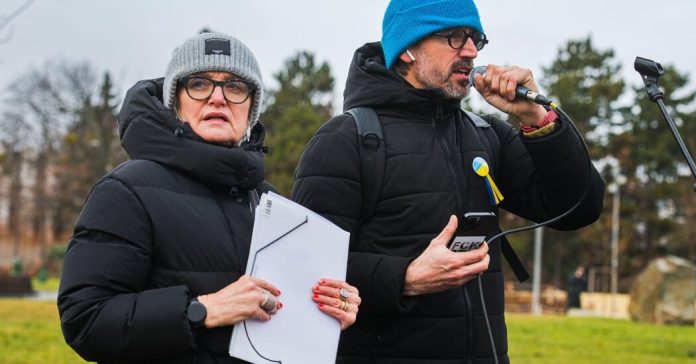
Ms. Stasselova said the picture of her with the Georgian commander was “the first and last time” she had met him. And she added that the children’s charity she co-founded and ran for more than a decade never received a penny from U.S.A.I.D., though it did get support from a private American group, the W.K. Kellogg Foundation. Nor, she continued, has there been any American funding for the organization she is currently active in, Peace for Ukraine, the organizer of recent rallies in Bratislava protesting Mr. Fico’s tilt toward Moscow.

“Why are NGOs the enemy? Because they have been fighting for democracy in this country for decades,” she said, speaking at her home in a village near Bratislava.

Michal Simecka, the leader of Slovakia’s biggest opposition party and, in Mr. Fico’s telling, a conspirator in the alleged coup plot, said the accusations were “utterly baffling.” He said he hoped to unseat Mr. Fico at the next election, but denied conspiring to topple him through violence.

“The whole narrative of a coup is made up to distract attention from real problems,” Mr. Simecka said, pointing to recent tax hikes, rising inflation and the shrinking majority in Parliament of Mr. Fico’s shaky coalition after the defection of several legislators.

Mr. Fico first warned of a coup in January after Mr. Simecka called for a no-confidence vote in Parliament. The motion was derailed after Mr. Fico demanded that legislators hold a closed-door session to discuss secret intelligence material exposing an imminent coup.

Mr. Simecka, who was shown the material, said that he was prohibited by law from revealing its contents, but added that “there is no evidence of anything” — only dark misrepresentation of humdrum NGO work as part of a big conspiracy to subvert the government.

“The prime minister sees NGOs as sinister actors manipulated by foreign powers,” he said. He added that, in the eyes of the government, U.S.A.I.D. had now replaced George Soros, the Hungarian-born American financier and philanthropist, as the master puppeteer in a purported global liberal conspiracy.

Michal Vasecka, the program director for the Bratislava Policy Institute, a research group funded by European donors, said funding from U.S.A.I.D. had played a major role in supporting independent media and nongovernmental groups immediately after the collapse of Communism in 1989. But, he said, this money had largely dried up across the region after Slovakia, the Czech Republic and six other formerly Communist countries joined the European Union in 2004.

“If the Americans want to save money, this is not the place to do it,” he said. “There is virtually none here from U.S.A.I.D.”

One of the biggest beneficiaries of American government money in recent years in Slovakia, according to official records, has been a Slovakian state agency that finances development projects abroad. Another recipient has been the Human Rights League, which received $300,000 for a project related to crimes committed during Russia’s invasion of Ukraine, which shares a border with Slovakia.

Grants from the U.S. Embassy in Bratislava went to research groups, anti-corruption activists and independent media outlets, but the sums involved were small — just a few thousand or tens of thousands of dollars.

Yet, Mr. Vasecka said, “Fico really believes that Slovak civil society is funded by the Americans and if this funding did not exist everything would be peaceful for him.”

Ms. Stasselova said Mr. Fico had been making increasingly wild accusations since an attempt to assassinate him last year. The government at the time attributed the attack to an unhinged “lone wolf,” a 71-year-old amateur poet with no fixed political views, but Mr. Fico has since blamed it on his political rivals.

The biggest change, however, has been Mr. Fico’s approach to Russia and its invasion of Ukraine. He vowed during an election campaign in 2023 to stop sending weapons to Ukraine from Slovak military stocks, but since eking out a narrow win at the polls, he has ramped up verbal assaults on President Volodymyr Zelensky and Europe’s support for the nation.

In December, he traveled to Moscow for a meeting with Mr. Putin, breaking with the European Union’s policy of trying to isolate the Russian leader.

“I was so shocked when I heard he had gone to Moscow,” Ms. Stasselova said.

It was then, she said, that her group Peace for Ukraine decided that “we had to do something.” The organization, which had previously focused on fund-raising for Ukraine, including $680,000 to buy an armored demining vehicle, started organizing protests.

An initial protest in December attracted only around 3,000 people, but subsequent rallies, held every other week since, have steadily grown in size. More than 40,000, an unusually large turnout in Bratislava, a small city, took part in a rally last week organized under the slogan, “Slovakia is Europe.”

Michala Novakova, 23, a student, held up a sign mocking Mr. Fico’s claims on a coup in the making: “Where is the coup?”

The event featured a mix of young people and veteran protesters who fear that Mr. Fico wanted to take Slovakia out of the European Union and revive the close ties to Moscow that had prevailed before 1989.

“I don’t want the years before 1989 to repeat themselves,” said Dalibor Vojta, 60, an electrician. He said he never liked Mr. Fico, a former Communist who morphed into a populist nationalist, but had not worried much about where he might take Slovakia until the prime minister went to see Mr. Putin.

Ms. Stasselova said that being cast as a coup plotter had resulted in her phone being flooded with abusive messages. But she was comforted by the fact that nobody she knew took the accusations seriously. “Everyone is laughing,” she said.

And sooner or later, she added, the storm will pass: “This week I am the person to attack. Next week it will be somebody else.”

Sara Cincurova contributed reporting.
East Timor’s Challenges Two Decades After Independence

0

Three decades ago, he was a scrappy campaigner roaming the world’s corridors of power with a dream to win independence for his tiny homeland. Today, at 75, José Ramos-Horta is both the president and a relentless salesman for East Timor.

He asked China’s president, Xi Jinping, to “help us resolve the problem of agriculture, food security and poverty.” He pleaded with Vietnam’s leaders to do the same. He pitched Sheikh Mohammed bin Zayed, the ruler of the United Arab Emirates, his dream of building student dormitories.

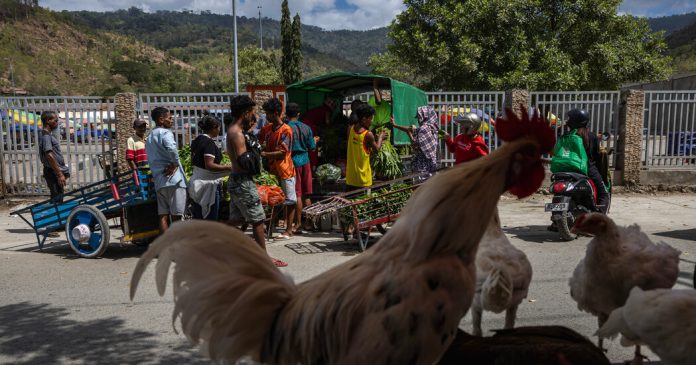
Mr. Ramos-Horta is under mounting pressure to sustain his nation — Asia’s youngest and one of its poorest. Home to about 1.4 million people, East Timor is one half of an island that lies near the northern tip of Australia; the other half is part of Indonesia. A Portuguese colony for centuries, it emerged as an independent state in 2002 after a brutal occupation by Indonesia. Its roughly $2 billion economy remains heavily reliant on oil and gas revenue, which is evaporating quickly, and more than 40 percent of its people are estimated to live in poverty.

“No country in Southeast Asia or in Africa began as we did, from ashes, from total destruction,” Mr. Ramos-Horta said. But, he added: “In 22 years, we should have resolved child poverty, child malnutrition, mother malnutrition and extreme poverty. So that has been a failure.”

Still, by other measures, East Timor, or Timor-Leste as it is known in Portuguese, is a success. It has strengthened its young democracy, holding competitive elections with multiple transfers of power. It ranks among the highest in Asia for press freedom. Life expectancy is around 70, up from around 64 in 2002. The entire population now has access to electricity.

While politically motivated violence followed independence, including an assassination attempt on Mr. Ramos-Horta in 2008, during his first term as president, the country is stable now.

East Timor is a positive case study for young post-conflict states, said Parker Novak, an Indo-Pacific expert at the Atlantic Council. “They’ve built a fairly resilient democracy. That’s something they’re very proud of, and rightfully so.”

In September, a visit by Pope Francis briefly put East Timor in the global spotlight. About 97 percent of the population identifies as Roman Catholic, a legacy of the Portuguese colonizers and, more recently, the pivotal role the church played in winning independence from Indonesia. Some clergy fought for independence, and bishops and nuns protected people from Indonesian forces.

In Dili, the capital, streets were scrubbed and walls freshly painted to primp for the papal trip. The prime minister, Xanana Gusmão, was out with a broom.

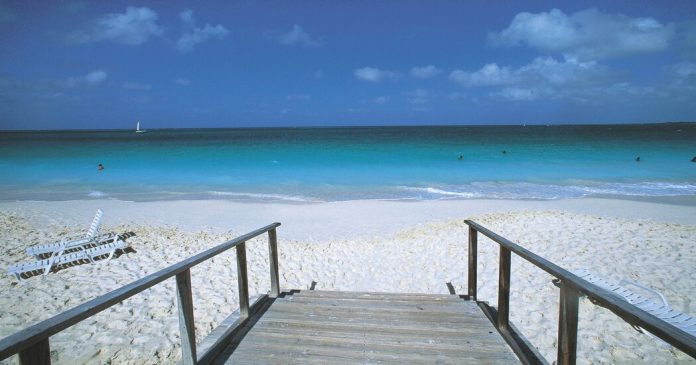
For one of the least visited countries in Asia, it was a major moment. Outside of Dili, the major population center, East Timor still feels like an untouched paradise. Tall, lush mountains are surrounded by wide expanses of azure seas. There are few people on its white sandy beaches.

Francis’ arrival also resurrected memories of a tainted past. Bishop Carlos Ximenes Belo, one of the heroes of the independence movement, was accused in 2022 of having sexually abused children decades ago.

Few Timorese speak up about Bishop Belo, who remains widely revered. Mr. Ramos-Horta, who was awarded a Nobel Peace Prize in 1996 along with Bishop Belo for their work to win independence, said the matter had “already been addressed years ago by the Vatican” and that any restitution had already been made between the church and the victims.

At the grounds of the presidential palace in Dili, members of the public stroll in freely and sit in the lush gardens.

It was all made possible by China.

Beijing gave nearly $7 million to build the palace, which opened in 2009. (The U.S. dollar is the official currency here.) Less than a mile away are the defense and foreign ministries, both also built by China.

Mr. Ramos-Horta recounted how he had asked the Chinese ambassador for help in providing clean water.

“Even before I went to China, Chinese engineers were coming to Timor already, to look at the water sources for irrigation and water supply to communities,” he said. “The Chinese, they deliver very fast.”

This reliance on China has triggered fears about Beijing’s intentions in East Timor, and what it could mean for the United States, which has stepped up its troop presence in the Australian port city of Darwin, just a few hundred miles from East Timor.

“When China looks at investing in another developing country, they do so with one eye, certainly on a viable business, but with the other eye, very much on a longer-term strategic interest,” said Damien Kingsbury, an emeritus professor at Deakin University in Australia.

As Mr. Ramos-Horta took me on a tour of the palace, he dismissed those fears, saying “China is not a threat to the world.”

He said Beijing was reluctant to help more, such as with building a police force, because it was aware of American and Australian sensitivities. He added that East Timor does not borrow money from China, and that the only military security arrangement it has is with Australia.

Mr. Ramos-Horta is fond of sharing anecdotes. One was about bumping into Indonesia’s president, Prabowo Subianto, in Singapore in July. Mr. Prabowo asked after Mr. Ramos-Horta’s younger brother, a close friend of his.

“That’s the level of the friendship we have with Indonesian leaders,” Mr. Ramos-Horta said.

The same Mr. Prabowo who led the feared Kopassus special forces unit that slaughtered hundreds in East Timor during the Indonesian occupation?

The Indonesian military moved in days after the Portuguese left in 1975, after the United States had greenlighted the invasion. They killed, according to some estimates, as many as 200,000 people before allowing a referendum in 1999. Mr. Ramos-Horta lost four siblings.

Still, in recognition of Indonesia honoring the results of the referendum, Mr. Ramos-Horta said he and Mr. Gusmão, the prime minister, decided that they would not allow “ourselves to be hostages of the past.”

“We honor the victims. We bury the dead, but we look forward.”

He recounted how when he and Mr. Gusmão first heard that Mr. Prabowo had been elected, Mr. Gusmão “was very happy” and gave him a thumbs up.

“Those who were here, during the difficult time, they have the greatest emotional connection” to East Timor, Mr. Ramos-Horta said, adding that such people would be more supportive of the country’s stability.

A quarter-century after the Indonesians left, many of East Timor’s independence heroes remain in government. While Mr. Gusmão fought in the jungles, Mr. Ramos-Horta spent decades in exile, lobbying for freedom. He has served as foreign minister, prime minister and is now in his second term as president.

“People feel obligated to them, they liberated the country from a horrendous military occupation,” said Charles Scheiner, a researcher at La’o Hamutuk, a local advocacy group. “Everybody in this country has family who was killed by the Indonesian military, and many of them are survivors of torture and rape.”

But winning sovereignty is different from running a country.

Analysts say that instead of using the revenues from oil and gas to improve decrepit schools and develop fishing and farming industries, officials channeled them into creating an inflated bureaucracy and paying those involved in the post-independence violence big pensions to “buy peace.” The World Bank has warned that East Timor is heading toward a “damaging fiscal cliff” by 2035.

“The underlying premise of the democracy is that it would lead to better policymaking,” said Guteriano Neves, an independent policy analyst based in Dili. “But it has not.”

Mr. Ramos-Horta is counting on developing an offshore gas field, called Greater Sunrise, to bring in much-needed revenue. While coffee remains a major export, Mr. Ramos-Horta speaks effusively of developing East Timor as an air cargo or pharmaceuticals hub. He also hopes to join the Association of Southeast Asian Nations to make regional trade easier.

The odds are long. Negotiations for the Greater Sunrise field are continuing, and it is expected to take at least five years of development before generating any revenue. Tourism remains untapped because of few commercial flights. Internet speeds still crawl.

About 25 minutes away from Dili, in the village of Ulmera, Alda Bisoi Correia, 74, recalled why she voted for independence. She was terrified of pro-Indonesia militias but said it was “our last opportunity” to take a stand. Today, she wonders what it was all for.

“Independence hasn’t made a difference to us,” she said.

Ms. Correia said the government does not supply water. Her family cannot afford a fridge. Her son is a security guard. His adopted daughter, Sandra Correia Lopes, 12, weighs just 12 kilograms, or 26 pounds, and falls sick frequently.

As dusk turned to night, Sandra sat down to dinner. It was a plate of rice and vegetables that her aunt had cooked over firewood. It will be nearly a month before her family can afford to serve meat.

Hitu Carvalho de Jesus contributed reporting.

Putin Has Long Wanted More Power in Europe. Trump Could Grant It.

0

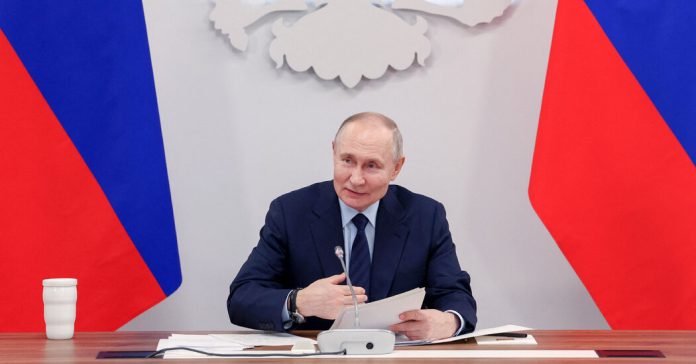
President Vladimir V. Putin of Russia shocked the audience at the annual security conference in Munich in 2007 by demanding the rollback of domineering American influence and a new balance of power in Europe more suitable to Moscow.

He didn’t get what he wanted — then.

Nearly two decades later, during the very same conference, top officials from President Trump’s cabinet made one thing clear: Mr. Putin has found an American administration that might help him realize his dream.

Comments by Defense Secretary Pete Hegseth and Vice President JD Vance raised fears among attendees that under the new administration the U.S. might align with Russia and either assail Europe or abandon it altogether.

Such a shift, analysts say, would give Mr. Putin a previously unthinkable victory far more momentous for him than any objectives in Ukraine.

“Since the dawn of the Cold War in the late 1940s, the Kremlin has dreamed of pushing America out of its role as the cornerstone of European security,” said Andrew S. Weiss, vice president for studies at the Carnegie Endowment for International Peace. “Putin surely is savvy enough to pounce on any openings provided by the new administration.”

The presence of American troops has been the underpinning of 80 years of peace in Western Europe since the end of World War II. But in a speech in Warsaw on Friday, before his arrival at the conference, Mr. Hegseth warned European leaders they shouldn’t assume that the U.S. will be there forever.

Later in the day, at the Munich conference, Mr. Vance delivered an even scarier message for many European attendees: The enemy he sees isn’t Russia or China, but Europe itself.

Mr. Vance set about attacking European nations for using what he called undemocratic methods to restrain far-right parties that in some cases have been backed by Russia. He argued that the continent needed to recognize the desires of its voters, stop attempting to moderate disinformation in undemocratic ways and instead allow such parties to thrive as the will of the people.

“If you’re running in fear of your own voters, there is nothing America can do for you,” Mr. Vance said. “Nor, for that matter, is there anything that you can do for the American people who elected me and elected President Trump.”

Mr. Vance hit out in particular at Romania, where the country’s constitutional court in December canceled a presidential election that an ultranationalist backed by an apparent Russian influence campaign looked poised to win. The election has been rescheduled for May.

“If your democracy can be destroyed with a few hundred thousand dollars of digital advertising from a foreign country, then it wasn’t very strong to begin with,” he said.

The Kremlin for years has sought to weaken Europe by boosting parties that Mr. Vance argued must be allowed to flourish. The same day as his remarks at the conference, Mr. Vance met with the leader of Germany’s extreme right movement, which is contesting national elections this month, boosting a party Russia has sought to legitimize.

Moscow has also sought to drive a wedge between the United States and Europe, realizing that a destruction of the longstanding Euro-Atlantic alliance from within will lead to a world where Moscow can wield far more power.

Nathalie Tocci, director of the Institute for International Affairs in Rome, watched Mr. Vance’s speech and interpreted the message as a direct threat by the United States to the European Union, which far-right Europeans and the Kremlin both seek to dismantle. She called it a plot twist by the United States.

“The plot is we are out there to destroy you,” Ms. Tocci said.

“The point is not even Ukraine,” she added. “The point is the deliberate weakening if not destruction of Europe, of which Ukraine is a part.”

Ms. Tocci described Mr. Vance’s remarks as an attack on European democracy that perversely twisted the language of democracy itself, the way Russia often does when seeking to sow division within Europe.

A dramatic reorganization of power in Europe seemed like a pipe dream for Mr. Putin back when he articulated his vision in 2007 at the Munich conference. Robert M. Gates, the American defense minister at the time, sat in the audience and later dismissed the remarks as a throwback to the Cold War.

The Russian leader, however, has stuck unbendingly to his vision, making it a central point of his argument in the months leading to the war: that the West must be willing to discuss not just Ukrainian sovereignty but the whole security apparatus of Europe, which he claimed omitted Moscow and put it at existential risk.

Mr. Putin has cast his invasion of Ukraine as a broader battle against the West and the woke values he portrays as anathema, some of the same arguments Mr. Trump and Europe’s extreme-right leaders have made to wrest power in their own countries.

Mr. Putin believed that ultimately the United States and Europe would bend to him, Alexander Baunov, a fellow at the Carnegie Russia Eurasia Center, wrote in a recent analysis.

The United States is changing, Mr. Baunov wrote, and the current Washington “is getting closer to Moscow not for the sake of Europe, but for its own sake — and even a little to spite Europe.”

The challenge to Europe comes as Germany and France, the European Union’s two biggest countries, both are suffering from crises of leadership, in part because of surging political movements brandishing the same rhetoric as Mr. Trump. In 2015, Germany and France took the lead in negotiating an end to Mr. Putin’s first invasion of Ukraine.

The United Kingdom, which left the European Union owing to a campaign Mr. Trump publicly backed, has seen its influence on the continent significantly weakened.

How far Mr. Trump’s deal-making with Mr. Putin will go is unclear, and the nascent rapprochement between Washington and Moscow could easily evaporate during negotiations over Ukraine.

But foreign leaders have managed to woo Mr. Trump into positions favorable to them before, and so far Russia is reaping benefits from the new administration.

The Kremlin has racked up a series of victories since Mr. Trump returned to the White House.

Less than a month into his second term, Mr. Trump has eviscerated U.S.A.I.D., the U.S. foreign aid agency long reviled by Moscow. He has pushed through Cabinet officials who regularly traffic in Kremlin talking points, including the new head of U.S. intelligence, Tulsi Gabbard. He has exacerbated the discord in relations with Europe, threatening Washington’s closest allies with a trade war. He has empowered and elevated Elon Musk, who spreads falsehoods beneficial to Moscow on X and publicly advocated in favor of Germany’s far-right movement.

Mr. Trump will now influence, possibly without European leaders present, how the biggest conflict on the continent since World War II gets resolved, with implications that could go beyond Ukraine itself to affect the broader security balance in Europe.

Europeans, who see insurgent right-wing populist movements as a threat to the European Union and freedom on the continent, are worried, particularly given the apparent alignment of Mr. Trump and Mr. Putin against them.

“This is the moment in which we are at our most vulnerable,” Ms. Tocci said.

“If ultimately what you are trying to do is destroy this project,” she added, referring to the E.U., “this is the moment to do it.”

Israeli Hostages and Palestinian Prisoners Released in Sixth Swap

0

new video loaded: Israeli Hostages and Palestinian Prisoners Released in Sixth Swap

transcript

transcript

Israeli Hostages and Palestinian Prisoners Released in Sixth Swap

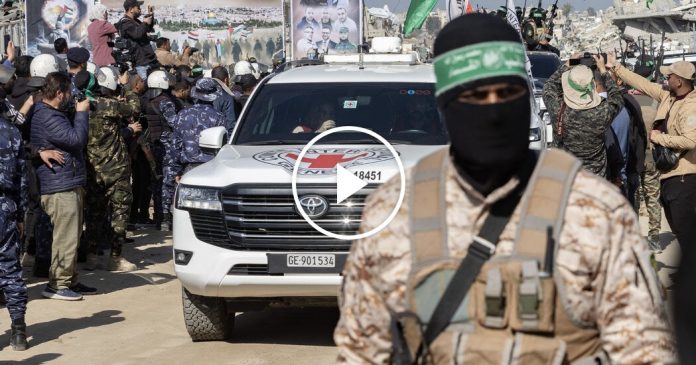
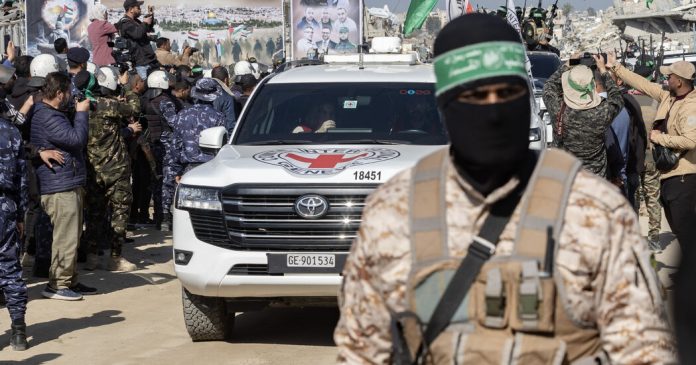
Hamas freed three Israelis, and Israel released 369 Palestinian prisoners in exchange, concluding the sixth hostage-for-prisoner swap under the cease-fire deal.

I know that it’s all bittersweet, and I know that Eitan is not home yet and maybe Iair has news about him — we don’t know. But, we just — I’m shaking and I’m really, really happy for them. It’s not nothing that one of them is back, even if the other one is still there.

Recent episodes in Middle East Crisis

Ukraine Rejects U.S. Demand for Half of Its Mineral Resources

0

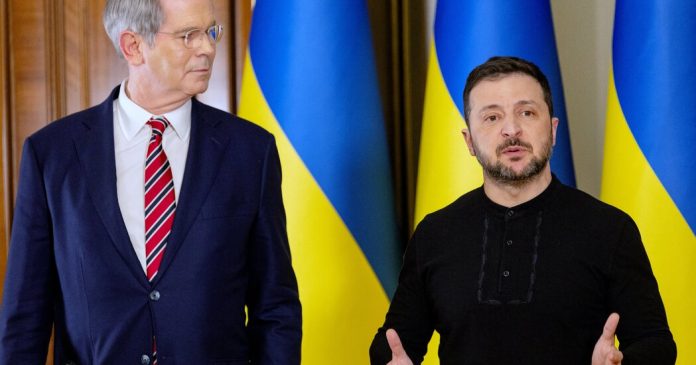
President Volodymyr Zelensky of Ukraine, during a closed-door meeting on Wednesday, rejected an offer by the Trump administration to relinquish half of the country’s mineral resources in exchange for U.S. support, according to five people briefed on the proposal or with direct knowledge of the talks.

The unusual deal would have granted the United States a 50 percent interest in all of Ukraine’s mineral resources, including graphite, lithium and uranium, as compensation for past and future support in Kyiv’s war effort against Russian invaders, according to two European officials. A Ukrainian official and an energy expert briefed on the proposal said that the Trump administration also sought Ukrainian energy resources.

Negotiations are continuing, according to another Ukrainian official, who, like the others, spoke on the condition of anonymity given the sensitivity of the talks. But the expansiveness of the proposal, and the tense negotiations around it, demonstrate the widening chasm between Kyiv and Washington over both continued U.S. support and a potential end to the war.

The request for half of Ukraine’s minerals was made on Wednesday, when the U.S. Treasury secretary, Scott Bessent, met with Mr. Zelensky in Kyiv, the first visit by a Trump administration official to Ukraine. The Treasury Department declined to comment about any negotiation.

After seeing the proposal, the Ukrainians decided to review the details and provide a counterproposal when Mr. Zelensky visited the Munich Security Conference on Friday and met with Vice President JD Vance, according to the official.

It is not clear if a counterproposal was presented.

Mr. Zelensky, speaking to reporters in Munich on Saturday, acknowledged he had rejected a proposal from the Trump administration. He did not specify what the terms of the deal were, other than to say that it had not included security guarantees from Washington.

“I don’t see this connection in the document,” he said. “In my opinion, it’s not ready to protect us, our interests.”

The security guarantee is key, because Ukrainians believe the United States and Britain have failed to live up to their obligations to protect the country under an agreement signed at the end of the Cold War, when Ukraine gave up the Russian nuclear weapons on its territory.

European diplomats had another objection. They complained that the negotiation reeked of colonialism, an era when Western countries exploited smaller or weaker nations for commodities.

In Munich, a gulf also appeared over the Trump administration’s plans to end the war between the United States and its European allies. Many of them said they were more confused than before they had arrived.

A Ukrainian official and an energy expert briefed on Mr. Bessent’s offer said it covered not just half of Ukraine’s minerals, but also other natural resources such as oil and gas. The official also said the proposal gave the United States a claim to half of Ukraine’s earnings from resource extraction and the sale of new extraction licenses.

Acceding to these demands would deprive the Ukrainian government of millions of dollars in revenue that are currently almost entirely invested in the country’s defense. In the first half of last year, Naftogaz, Ukraine’s state-owned oil and gas giant, reported a profit exceeding half a billion dollars.

The idea of leveraging Ukraine’s mineral resources began to take shape last summer. Mr. Zelensky’s government, trying to appeal to Mr. Trump’s business-minded approach and fearing he would follow through on his promises to cut off military and financial aid to Ukraine, decided to pitch a deal that would essentially trade Ukrainian critical minerals for American aid.

The Ukrainian president presented the idea to Mr. Trump during a September meeting in New York, and the proposal gained backing from influential political figures, including Senator Lindsey Graham, a Republican. It also came after U.S. businessmen — including as Ronald S. Lauder, a wealthy friend of Mr. Trump’s — showed interest in investing in Ukraine’s mineral resources.

Kyiv had always maintained that access to its natural resources would come in exchange for strong security guarantees from Washington. But one of the Ukrainian officials said that the proposal made no such commitment, instead framing the access to Ukraine’s resources as overdue payment for past American military and financial aid.

Ukraine has 109 significant mineral deposits, including those with ores of titanium, lithium and uranium, according to a list compiled by the Kyiv School of Economics, in addition to oil and natural gas fields. Some, though, are in territory already under Russian occupation or close to the front line.

Their value is uncertain. Apart from the risks of a repeat Russian invasion after a cease-fire — a risk a deal with the United States is intended to reduce — deeply entrenched problems in Ukraine’s business climate have hobbled investment for much of the country’s post-independence history.

These include arcane regulation and insider dealing by Ukrainian businessmen and politicians, which could limit any profits from the arrangement. Even before the war, few investors were takers on Ukrainian mining deals.

But there is precedent for Ukraine to mix security and business with the United States under Mr. Trump. In his first term, in 2017, he struck a deal for Ukraine to buy coal from Pennsylvania to replace coal from mines in Ukraine lost under Russian occupation after the 2014 invasion.

Kostiantyn Yelisieiev, a former diplomat and the deputy chief of staff under Ukraine’s president at the time the agreement was struck, recalled that the deal had allowed Mr. Trump to declare that he had saved jobs in Pennsylvania, a swing state. For Kyiv, the agreement opened the door for Mr. Trump to provide lethal military aid to Ukraine with the approval for sales of Javelin anti-tank missiles.

At the time, Ukrainian officials saw it as a success, Mr. Yelisieiev said. “It confirmed that Trump is not a person of values, but a person of interests and money,” and that Ukraine could find a way to work with him on security, he said.

But the deal under discussion now, he said, elevates the approach in ways that could hand Russia a propaganda win by casting the war as a battle for natural resources, not Ukrainian independence or democracy.

“It’s more important to say this is about protecting democracies and defeating Putin,” he said.

Israel and Hamas Make 6th Exchange, Keeping Cease-Fire Intact for Now

0

Hamas freed three more Israeli hostages on Saturday as Israel released 369 Palestinian prisoners, prolonging a fragile cease-fire in the Gaza Strip that appeared to be teetering only days ago.

The hostages — Alexander Troufanov, 29, known as Sasha; Iair Horn, 46; and Sagui Dekel-Chen, 36, one of the few Americans still held in Gaza — were noticeably thinner and paler after spending 16 months in captivity. They had been abducted from the Israeli border village of Nir Oz during the Hamas-led attack on Oct. 7, 2023, that ignited the war in Gaza.

But they did not appear as emaciated as the three hostages released last Saturday, whose condition prompted outrage and horror in Israel.

Palestinian militants once again used the exchange, the sixth carried out under the first phase of the cease-fire, to stage a show intended to demonstrate that they still dominate Gaza, despite Israel’s devastating bombardment and ground invasion in response to the 2023 attack.

Dozens of gun-toting fighters affiliated with Hamas and Palestinian Islamic Jihad forced Mr. Troufanov, Mr. Horn and Mr. Dekel-Chen to mount a stage in the southern Gaza city of Khan Younis and to give speeches in Hebrew, with portraits of Hamas leaders on the stage behind them.

On the stage, the militants also displayed photos of Matan Zangauker, an Israeli hostage still in captivity, and of his mother, Einav Zangauker, who has been campaigning for his freedom. They were shown alongside an hourglass and the words, “Time is running out.”

The militants, some carrying Israeli weapons, later gave the hourglass to Mr. Horn.

In a jab at President Trump’s recent call for Palestinians to leave Gaza en masse, a banner on the stage read “there is no migration except to Jerusalem.” Hamas — and much of the Arab world — have roundly rejected Mr. Trump’s proposal.

The exchange could sustain the cease-fire, at least for now. But the truce’s long-term future remains uncertain. The arrangement, which began in late January, is set to expire in early March unless Israel and Hamas agree to an extension.

The first phase of the truce took months of arduous negotiation to be agreed upon, and there has been little indication that Israel and Hamas have begun serious talks about the next stage, which is supposed to include an end to the war, the full withdrawal of Israeli forces from Gaza and the release of the remaining living hostages. More than 70 hostages — many of them presumed dead — remain in Gaza.

As the hostages were released on Saturday, hundreds of Israelis who had gathered in a square in Tel Aviv cheered, waved Israeli flags and shed tears of joy while they watched the handover on a large television screen.

The relief was a big change from the shock and fury that erupted in Israel last Saturday when Hamas released three gaunt and apparently malnourished hostages and forced them to thank their captors. This time, the captors did not prod the hostages to offer them thanks.

“Three pieces have returned to my heart,” said Doron Zexer, a prominent advocate for the hostages. “The joy now is a full one.”

Viki Cohen, the mother of an Israeli soldier still held captive in Gaza, said in an interview that the happiness of seeing more hostages released was tempered by anguish and uncertainty.

“We are on a crazy roller coaster,” Ms. Cohen said. Her son, Nimrod, is not among the hostages expected to be released in the first phase of the cease-fire. “We are doing everything in our power for him to return,” she said.

The Palestinian prisoners who were released included 36 serving life sentences for attacks on Israelis. They also included more than 300 Gazans detained since the war broke out. Most such detainees have not been formally charged with any crime and were often held incommunicado for extended periods.

Israeli prison officials made them wear sweatshirts that bore a phrase in Arabic: “We shall neither forget nor forgive.”

Israeli prison officers had also tied menacing messages around some of the prisoners’ wrists.

“The eternal nation will not forget,” read one message, an Arabic adaptation of a well-known Hebrew phrase. “I pursue my enemies and seize them.”

Without naming parties, the International Committee of the Red Cross raised objections about how the hostage and detainee releases were being carried out. The Red Cross has been acting as a neutral intermediary in the cease-fire transfers.

“Despite repeatedly calling for all transfers to be carried out in a dignified and private manner, more must be done by all sides, including the mediators, to improve future transfers,” it said in a statement.

When 10 of the freed Palestinian prisoners arrived in the city of Ramallah in the Israeli-occupied West Bank, they were handed jackets to cover the sweatshirts. Hassan Oweis, 47, a former member of the Palestinian security services, was one of those prisoners. His family had not seen him outside of prison since he was arrested in 2002, during an Israeli raid in the West Bank city of Jenin.

Mr. Oweis was later convicted of several counts of terrorism, including abetting two gunmen who killed two Israeli civilians and wounded scores in northern Israel in November 2001, according to Israeli court records. Mr. Oweis had denied the accusations, according to the records.

To celebrate his freedom, a crowd of well-wishers lifted Mr. Oweis onto their shoulders. “The first time we see him without bars,” said his son Shadi, 25, who was a toddler when Mr. Oweis was arrested. “The most precious moment,” said Mr. Oweis’s mother, Mariam.

But the mood also felt “painful and uneasy,” said Ms. Oweis, 75.

The Oweis family has been displaced from their home in Jenin, where the Israeli military has been mounting an extensive operation against what it says are militants planning attacks on Israelis. Thousands of Jenin residents have been forced from their homes as Israeli soldiers have battled Palestinian gunmen and demolished scores of buildings.

A few days ago, the cease-fire seemed at risk of crumbling when Hamas threatened to delay the hostage release. It accused Israel of violating the truce agreement, including by not sending sufficient tents and other aid into Gaza.

Israel threatened to resume the war if Hamas did not relent. Mr. Trump escalated the threat, warning that all of remaining hostages had to be freed by noon on Saturday or “all hell is going to break out.”

By Friday, Israel and Hamas signaled that the dispute had been resolved for now.

And Mr. Trump on Saturday appeared to distance himself from his ultimatum, posting on social media that, “Israel will now have to decide” how to handle the deadline. “The United States will back the decision they make!” he wrote.

Israeli leaders had not decisively embraced Mr. Trump’s ultimatum and have indicated that they are willing to continue following the terms of the first phase of the cease-fire.

Israel and Hamas were supposed to start negotiations on the second part of the deal last week. But a lull in talks has prompted serious worries about the future of the multistage deal.

Reaching the second phase would likely require painful concessions by one side or both. Israel has vowed not to end the war until the end of Hamas’s rule in Gaza. For Benjamin Netanyahu, the Israeli prime minister, there could also be a political price: His right-wing governing coalition could shatter if he breaks that vow.

For its part, Hamas has mostly refused to give up control of Gaza and to send its leaders into exile. The group also worries that handing over the hostages, its most valuable bargaining chips, would remove its best insurance against a renewed Israeli invasion.

To sustain the cease-fire, either Israel or Hamas would most likely have to blink. For now, neither has done so, leaving the future of the truce up in the air.

Patrick Kingsley, Lara Jakes and Michael Levenson contributed reporting.

Shark Bites Tourist Who Was Trying to Take Photo With It

0

A tourist trying to photograph a shark in shallow water at a beach in the Turks and Caicos Islands this month was bitten by it and flown off the island to receive medical care, the local government said.

The tourist was treated at a hospital before she left the island, Providenciales, a sandy, 38-square-mile magnet for snorkelers and sun seekers that is ringed by turquoise waters.

The shark was about six feet long, according to the Turks and Caicos government, but its species was unclear.

The tourist had “attempted to engage with the animal” in an effort to take pictures of it before she was bitten on Feb. 7, the Department of Environment and Coastal Resources in Turks and Caicos said in a statement.

Her identity was not immediately released, and officials did not describe the extent of her injuries.

The beach was closed but reopened on Feb. 9 after the shark was found to have moved into deeper water, according to the environment department. Turks and Caicos, an archipelago, is a British territory and one of the Caribbean’s fanciest tourist destinations.

Shark bites are extremely rare and are typically accidents, experts say. But sharks can cause severe wounds when they mistake humans for prey.

Across the world, there were 88 confirmed or potential shark bites logged last year by the International Shark Attack File at the University of Florida, an organization that tracks shark data.

Twenty-four were provoked, meaning that a human had initiated contact with the shark, according to the organization. Four people died from shark bites. One of last year’s recorded bites was in Turks and Caicos; it was not fatal.

The file’s director, Gavin Naylor, said on Saturday that it was too soon to say if this month’s bite in Turks and Caicos was provoked or unprovoked.

But Chris Stefanou, a New York fisherman and conservationist who tags sharks, said that photographing sharks can carry risks, and that the shark might have confused a phone for a fish.

“Sharks, or any predatory animal in the ocean, can confuse that as like a bait fish,” Mr. Stefanou said, referring to small, shiny fish that draw sharks to shore. “The shark didn’t just see a human: ‘Ooh, I’m hungry, I want to go take a bite.’ That did not happen.”

The episode was not the only reported shark bite in the Caribbean on Feb. 7. Two Americans were injured in what appeared to be a shark encounter in Bimini Bay in the northern Bahamas, according to the Royal Bahamas Police Force.

Mr. Naylor said two bites in one day in the region was unusual and made him “sit up a little.”

But it was not clear whether there was any trend. The number of confirmed unprovoked shark bites dropped to 47 last year, down from 69 the year before, according to the International Shark Attack File.

Unpacking Rep. Ro Khanna’s media strategy : NPR

0

Congressman Ro Khanna is one of the few Democrats who have made it a priority to appear on the YouTube podcast circuit. He talks about his approach to new media, and what he gets out of going on comedy shows that he doesn’t out of cable news.

Argentine Leader Draws Fire After Cratering of Crypto Coin He Promoted

0

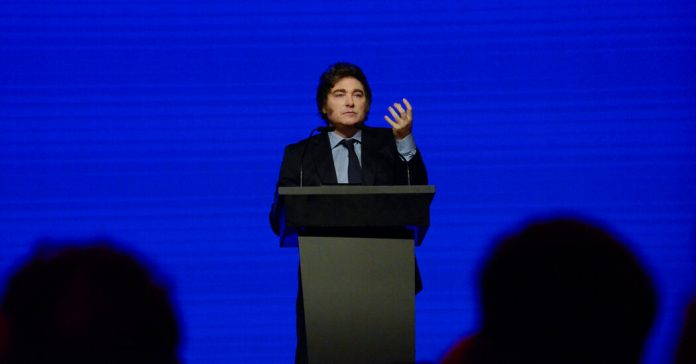
Argentina’s libertarian president, Javier Milei, has caused a political firestorm by promoting an unknown cryptocurrency token that shot up in value after his endorsement and then swiftly cratered.

In a post on social media on Friday night, Mr. Milei said that the coin, called $LIBRA, would stimulate the economy and help small businesses grow. While the sudden attention gave the token an initial boost, the huge gains were erased as fear quickly spread that the coin was a scam.

Mr. Milei deleted his social media post five hours later and attempted to distance himself from the venture.

“I was not familiar with the details of the project,” he wrote on X, “and after having informed myself I decided not to continue disseminating it (that is why I deleted the tweet).”

But Mr. Milei rapidly came under fire for his role in pushing people toward a risky investment. His dalliance with crypto also prompted comparisons with President Trump, who launched a memecoin, $Trump, last month. That token surged for a while and then crashed.

A center-left coalition that opposes Mr. Milei’s libertarian government called his crypto foray “a scandal without precedent.” Another political bloc said it was seeking to create a commission in Congress to investigate what occurred.

Former President Cristina Fernández de Kirchner, Mr. Milei’s main political nemesis, said that “thousands” who had trusted him lost millions of dollars in all, “while many made fortunes due to privileged information.”

Mr. Milei’s promotion of $LIBRA was only the latest in a series of moves he has made in parallel with Mr. Trump. Mr. Milei withdrew Argentina from the World Health Organization earlier this month, and his staff has said that the government is examining whether to withdraw from the Paris climate accord.

The coin promoted by Mr. Milei was presented as an investment tool that would be good for the country.

In his initial post on X, he said that $LIBRA — a name that carries echoes of his political party, La Libertad Avanza — would “incentivize the growth of the Argentine economy, funding small companies and Argentine ventures.”

“Liberal Argentina is growing!!!” Mr. Milei added, saying that “the world wants to invest in Argentina.”

Not long after, a community note on X warned users to be cautious with $LIBRA. It urged people to “verify before interacting with the project” because of behavior consistent “with a rug pull.” That term refers to scam offerings by developers who create a crypto token, attract investors and then suddenly disappear, withdrawing all their money.

Shortly after midnight, Mr. Milei deleted his post. He later said that he had no personal ties to the crypto token. He lashed out at his critics, who he said were trying to score political points.

“I want to say that every day they confirm how lowly politicians are,” he said.

Agustín Pantano, a 28-year-old lawyer and Milei supporter, said he had jumped on $LIBRA because of the president’s initial post on X. He said he wagered that Mr. Milei’s involvement could make him some quick money.

At 1 a.m., he checked his phone and saw that he had lost about 90 percent of the $150 he had put in.

“There were several red flags, and that’s why I only invested a little money,” Mr. Pantano said.

Is Elon Musk a threat to the MAGA base?

0

NPR’s Andrew Limbong speaks with Sohrab Ahmari, U.S. editor for the UnHerd, about his recent essay on that website entitled “Elon Musk is a danger to Trumpism.”