Friday, November 13, 2026
Home Blog Page 217

Armed Bandits in Brazil Pursue New Loot: Ozempic

0

Around 10:30 p.m. on a Friday in late January, David Fernando, a pharmacist, was working behind a counter at a drugstore in São Paulo when a man walked up to him and flashed a gun. “He asked for money from the register and medications from the refrigerator,” Mr. Fernando said.

These days, pharmacists in São Paulo — Brazil’s largest city — know exactly what thieves mean when they say “medications from the refrigerator.”

They’re after Ozempic, Wegovy and Saxenda, the injectable weight-loss drugs many Brazilians covet but that most can’t afford, in a country obsessed with body image but where obesity is on the rise.

The thief made off with five boxes, each of which typically holds a month’s supply and costs 700 to 1,100 Brazilian reais, or about $120 to $190, while the average monthly income is about $300.

Though the armed robbery unnerved Mr. Fernando, 36, it was not exactly a surprise. The same pharmacy was held up for the same drugs twice in late 2024, he said. Now a security guard is posted outside.

Four blocks north, another pharmacy has taken even greater precautions after a police officer interrupted an Ozempic robbery in August, resulting in a shootout that left an older woman injured.

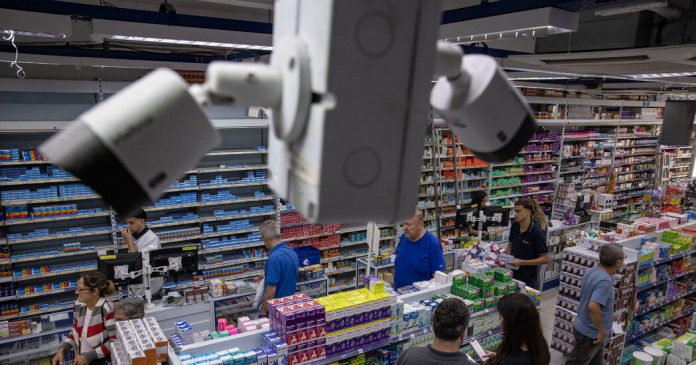
On a recent afternoon two armed guards stood watch, one inside the front door and the other near a back room where the refrigerated weight-loss drugs are kept.

While a smattering of media reports show thieves are after Ozempic elsewhere in the world — including late-night break-ins at pharmacies in Michigan, and in Santiago de Compostela, Spain — Brazil has become a prime global hot spot for criminals coveting the hugely popular weight-loss drugs.

São Paulo, in particular, has become a nexus because it is by some measures Brazil’s richest city with many wealthy neighborhoods where plenty of pharmacies stock the drugs because enough people can afford them. And these days thieves have little problem finding buyers on WhatsApp and Facebook groups.

The targeting of pharmacies has left workers fearful and has led some stores to reduce their supply of weight-loss drugs. The robberies are “definitely a growing trend,” said Pedro Ivo Corrêa dos Santos, a police chief in São Paulo State’s Department of Criminal Investigation.

Pharmacies are often easy targets, the police chief added. “Many operate 24/7, storing the product in a fridge with no real security, only protected by the pharmacist,” he said.

A New York Times analysis of a São Paulo State database found that robberies of pharmacies in which Ozempic, Wegovy or Saxenda were stolen jumped notably in the last three years, from a sole recorded episode in 2022 — four boxes of Ozempic taken from a single drugstore — to 18 robberies in 2023, and 39 last year.

The numbers are almost certainly undercounts, since about half the reported robberies did not specify the medications taken.

RD Saúde and Grupo DPS, two companies that own pharmacy chains in São Paulo where many of the robberies have taken place, declined to comment. Many independent pharmacies say they no longer keep the drugs in the store.

“Anyone who stocks Ozempic can’t work in peace,” said Wilson Martins, the manager of Farma O Imperador, an independent pharmacy in western São Paulo. “People ask ‘Do you have Ozempic?’” he added. “No, we don’t. And that way, we don’t get robbed.”

Customers who want one of the weight-loss drugs now must order it in person and make an appointment to pick it up. But for good measure, Mr. Martins, 72, still keeps a leather-sheathed machete behind the counter.

Some criminal gangs have been robbing trucks making wholesale Ozempic deliveries, Mr. Corrêa dos Santos said. One gang that the police dismantled last year included employees of a transport company.

Drug producers and distributors must report losses of medications resulting from crimes or other reasons to Anvisa, the Brazilian agency that regulates food and drugs. Its figures show that 4,770 Ozempic injection pens were stolen or lost in 2023 and surged to 8,220 pens in 2024.

The rash of robberies of weight-loss drugs comes amid soaring sales of the medication in a country where achieving a finely tuned body is revered and that, like many countries, is growing fatter.

The percentage of adults in its largest cities considered obese increased to about 24 percent in 2023 from nearly 12 percent in 2006, according to a Health Ministry study.

Several Brazilian celebrities have spoken publicly about using Ozempic or similar drugs, including singers Luiza Possi, Wesley Safadão and Jojo Todynho.

“The wave of thefts began when social media started openly discussing the drug, particularly as celebrities and influencers showcased dramatic weight loss,” said Renata Gonçalves, the head of a union of pharmacists for the state of São Paulo.

Even Rio de Janeiro’s mayor, Eduardo Paes, said during his campaign in 2024 that he “took a lot of Ozempic” and lost about 65 pounds, and pledged to make the drug available for free.

“Rio will be a city without chubby people anymore,’’ he said.

In Brazil, Ozempic sales grew from $27.5 million in 2019, to $621.6 million in 2023, the last year for which complete figures were available, according to IQVIA, a global provider of health care data. (The Brazilian market still pales in comparison to the United States, where sales totaled $30.3 billion in 2023.)

Rodrigo Lima, who has worked for pharmacy chains for two decades and is now head of operations for Ultrafarma, a São Paulo-based chain, said other high-cost pharmacy products have been targeted in the past.

But the high cost of Ozempic, he said, has “sparked a huge demand for these items, leading to specialized gangs with an eye on that slice of the market.”

While it’s fairly easy to sell and buy stolen weight-loss drugs on the web, criminals may not be able to ensure buyers about the quality of the drugs once they are taken out of cold storage. Several pharmacists in São Paulo repeatedly stressed that just a few hours at room temperature renders the medications useless.

“They take the medications out to the car in a trash bag,” said Andrea Lima, the manager of a branch of the Drogaria São Paulo chain where a policeman foiled an attempted robbery last May. “How long do they leave it in the trunk?”

Ultrafarma’s strategy, said Mr. Lima, has been to install better security cameras and reduce stock in company-owned stores.

One Ultrafarma store that was robbed in 2023 has gone even further, said Leandro Rodrigo Santos, the store’s manager. It no longer keeps Ozempic in stock so customers have to order it and have it delivered to their home.

But even that has risks.

Wellington Vieira, chief of a Rio de Janeiro police division that investigates consumer-related crimes, said the agency had received reports of groups who order multiple boxes of Ozempic to a home and then pull a switcheroo.

When a delivery worker arrives, two people answer the door. One tries multiple times to pay with an invalid credit card, while the other accepts the package and switches out the real Ozempic for a counterfeit version. When the purchase is eventually canceled, the delivery worker unknowingly returns to the pharmacy with the fake medication.

Ozempic bandits may soon confront a force more powerful than the police: economics. Novo Nordisk’s Brazilian patent for semaglutide, the active ingredient in Ozempic and Wegovy, expires in 2026, and pharmaceutical companies are racing to get approval to produce generic versions that will almost certainly cause prices to tumble.

For now, some pharmacists are turning to a higher power for protection. Elis Regina Peixoto manages a pharmacy in eastern São Paulo that has so far gone unscathed. “In the name of Jesus,” she said, “we will not be robbed.”
15 Hindu Pilgrims Reported Dead in Stampede at New Delhi Rail Station

0

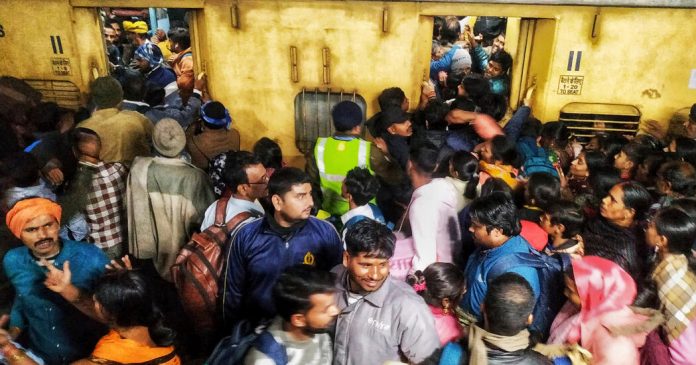
Fifteen people died in a stampede on Saturday at New Delhi’s main railway station as a crush of pilgrims were trying to make their way to a huge Hindu festival in northern India, an official said.

The caretaker chief minister of the Delhi region, Atishi, who uses one name, told reporters outside a hospital in the capital that 15 people had been injured in the stampede, in addition to the 15 killed, according to Indian media reports.

Prime Minister Narendra Modi expressed condolences for the dead in a statement on social media, adding that the authorities were “assisting all those who have been affected by this stampede.” Ashwini Vaishnaw, the country’s minister for railroads, said that an investigation had been ordered.

Before the stampede, crowds at the railway station had swelled because trains bound for the festival, the Kumbh Mela, had been delayed, according to local media reports. The Ministry of Railways said it later ran extra trains to alleviate the crush.

The Kumbh Mela, which began in mid-January and will end late this month, is the world’s largest religious gathering. It is expected to draw more than 400 million people over six weeks, according to government estimates.

The festival takes place every three years in one of four cities in India. This years’s event is being held in Prayagraj, in the state of Uttar Pradesh, where the Ganges and Yamuna Rivers meet. Hindus believe that a third, mythical river called the Saraswati joins the other two there in a sacred confluence. Devotees take baths in the holy waters in the belief that they wash away sins.

The event this year, which is being called a Maha Kumbh, or Great Kumbh, is larger than usual because it coincides with a celestial alignment that takes place once every 144 years.

Managing the huge crowds who attend the festival is a major challenge for the Indian government.

Last month, 30 pilgrims died in a stampede as they rushed to take their baths. In 2013, the last time that Prayagraj hosted the event, 42 people were killed in a stampede at the train station there. Ten years before that, in the western city of Nasik, 39 devotees were crushed in an alley.

In 1954, during the first Kumbh Mela since India’s independence seven years earlier, hundreds of pilgrims died in a stampede.

Germany’s Olaf Scholz slams JD Vance for suggesting more inclusion of far-right : NPR

0

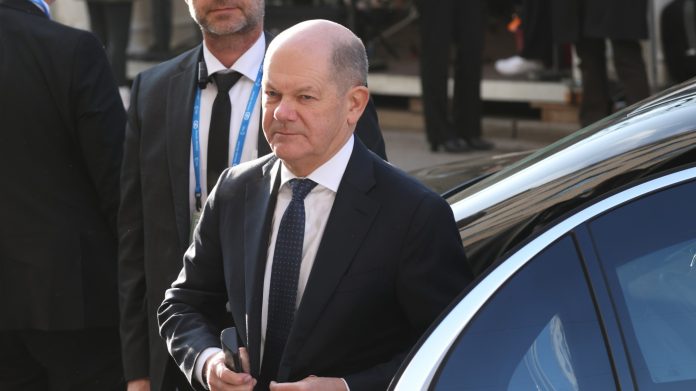
German Chancellor Olaf Scholz, pictured on Saturday at the Munich Security Conference in Munich, Germany, criticized the comments of U.S. Vice President JD Vance.

Sean Gallup/Getty Images


hide caption

toggle caption

Sean Gallup/Getty Images

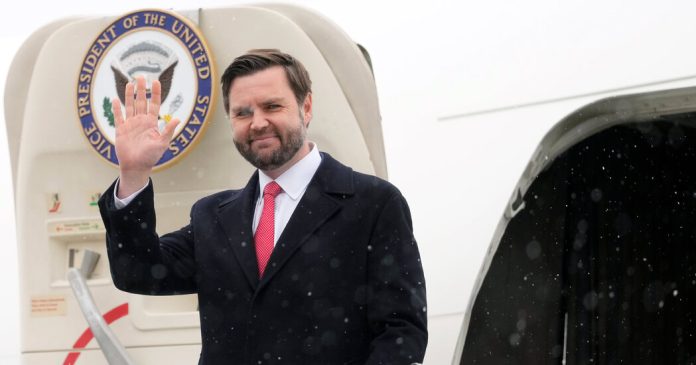
German Chancellor Olaf Scholz sharply rebuked U.S. Vice President JD Vance on Saturday, a day after Vance gave a speech saying European leaders should not shun far-right political parties.

At the second day of the Munich Security Conference, Scholz spoke about the atrocities of the Holocaust, pointing out that Vance recently visited the Dachau concentration camp and used the phrase “never again.”

Scholz emphasized that a commitment to “never again” also applies to political parties like Germany’s far-right Alternative for Germany party, also known as the AfD, which has downplayed the horrors of the Nazi regime.

He went on to say Germany will not accept outsiders intervening in the country’s elections, adding: “That is not done, certainly not among friends and allies.”

Both Scholz and Vance’s remarks come just over a week before Germany heads into a major election. The AfD — which has been endorsed by Trump adviser and billionaire Elon Musk — is polling in second place.

Founded in 2013, the AfD is a nationalist party whose political identity centers around blaming immigrants for many of Germany’s problems. Germany’s domestic intelligence agency has put the AfD under surveillance for suspected extremism, which the party denies.

Last year, the group became the first far-right party since the Nazis during the World War II era to receive the most votes in a state election. But it has yet to be part of a federal governing coalition as a result of a pact — also known as a “firewall” — by other parties to refuse to work with the AfD.

On Friday, Vance did not mention the AfD directly but said German parties should drop the “firewall” — much to the surprise and concern of European leaders in the room.

“Europeans, the people, have a voice,” Vance said in the speech. “You can embrace what your people tell you, even when it’s surprising, even when you don’t agree.”

Vance also met with AfD leader Alice Weidel on Friday. He separately met with German President Frank-Walter Steinmeier; Friedrich Merz, the head of the center-right Christian Democratic Union party; as well as Scholz this past week.

British Couple on World Motorcycle Tour Is Detained in Iran

0

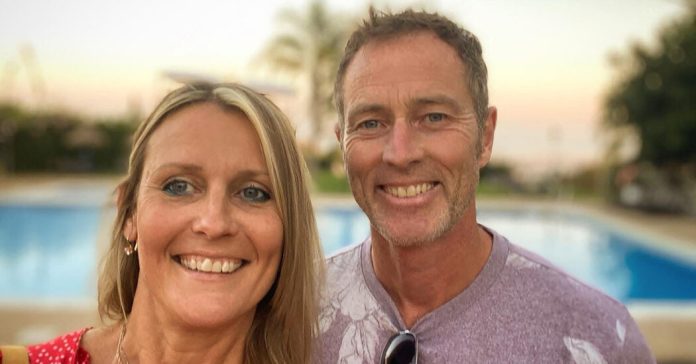
A British couple who had been on a motorcycle tour around the world were detained in Iran, Britain’s foreign office said on Saturday.

The couple, Craig and Lindsay Foreman, were last heard from on social media in early January. But this week, Iranian state media reported that two British nationals had been detained on suspicion of “security crimes.”

Britain’s foreign office confirmed their detention after the Iranian reports, and on Saturday issued a statement on behalf of the couple’s family.

“This unexpected turn of events has caused significant concern for our entire family, and we are deeply focused on ensuring their safety and well-being during this trying time,” the family said.

Mr. and Ms. Foreman, both in their mid-50s, were on a motorcycle tour to Australia, where Ms. Foreman, was set to deliver a paper at a conference on psychology. They reside in Spain, where Ms. Foreman worked as a psychologist and life coach and Mr. Foreman as a carpenter.

The couple’s detention first came to light when Iranian state media published a photograph of Britain’s ambassador to Iran, Hugo Shorter, meeting with two British citizens accused of “security crimes.”

Iranian state media blurred the couple’s faces in the image, taken at the office of the prosecutor in Kerman, a city more than 600 miles east of the capital, Tehran.

In its statement, the family said it was “actively engaging with the British government and relevant authorities, working diligently to navigate the complexities of this matter.”

It is unclear how long the couple has been held in Iran. Before their detention, the Foremans shared their travels on social media. They last posted on Jan. 3, saying they were in Iran.

“To put your minds at rest, we are having the most amazing time in Iran,” the couple said in a Facebook post, adding that they were traveling with a tour guide. On Instagram, Ms. Foreman posted a picture of herself meeting a theologian at a madrasa in Isfahan, where she wrote that “travel continues to teach me that humanity’s core is shared.”

The couple had crossed into Iran from Armenia, and were planning to head to Pakistan next, they had said.

“The UK government advises against all but essential travel to these areas, and the news paints a pretty grim picture,” they posted on Facebook on Dec. 30. “We want to find out for ourselves. That is why we are here.”

The post included two images side-by-side: one of the Foreign Office’s orange and yellow map of Iran, advising British citizens not to travel to Iran, and another of a photo of the green lawns of a mosque, an image whose location was pinned to Norduz, near Iran’s border with Armenia.

The foreign office advises against all travel to Iran, issuing a warning that “British and British-Iranian dual nationals are at significant risk of arrest, questioning or detention.”

Iran has repeatedly jailed foreigners and dual nationals over the last decade, including an Iranian-American citizen and an Italian journalist detained last year and a Swedish E.U. official arrested in 2023.

Several British-Iranian dual-citizens have been among those arrested, among them Nazanin Zaghari-Ratcliffe, who was held for six years; Aras Amiri, a 32-year-old art student; and Abbas Edalat, an academic and antiwar activist. Ms. Amiri, arrested while visiting her grandmother and accused of espionage, was released after three years in prison, and Mr. Edalat was released after several months.

Human rights groups have said many of these detentions are part of a deliberate policy to extract concessions from other countries, including prisoner swaps.

German Chancellor Accuses JD Vance of Election Interference

0

new video loaded: German Chancellor Accuses JD Vance of Election Interference

transcript

transcript

German Chancellor Accuses JD Vance of Election Interference

At the Munich Security Conference, German Chancellor Olaf Scholz rebuked U.S. Vice President JD Vance’s call for German leaders to allow the hard-right Alternative for Germany, or AfD, to enter their government.

Well, thank you and thanks to all the gathered delegates. We really reject any idea of cooperation between parties, other parties and these extreme right parties. It is not others to give us the advice to cooperate with these parties, which we are not working with for good reasons, especially when looking to the history of our country.

Recent episodes in International

International video coverage from The New York Times.

International video coverage from The New York Times.

Vance and Musk Attack German Consensus on Nazis and Speech

0

The American vice president visited a concentration camp on Thursday afternoon. He laid a wreath at the foot of a statue, made the sign of the cross and paused before a memorial wall where in multiple tongues, including German and English, the words “Never Again” were written.

JD Vance told reporters he had read about the Holocaust in books, but that its “unspeakable evil” was driven home by his trip to Dachau, where more than 30,000 people died at the hands of the Nazis. “It’s something that I’ll never forget, and I’m grateful to have been able to see it up close in person,” Mr. Vance said.

But after Mr. Vance spoke in Munich the next day, Germany’s leaders effectively questioned if he had understood what he had just seen.

Eighty years after American soldiers liberated Dachau, top German officials this weekend all-but accused Mr. Vance — and by extension, President Trump — of boosting a political party that many Germans consider to be dangerously descended from Nazism.

That party, called the Alternative for Germany, or AfD, is sitting second in the polls for next Sunday’s parliamentary elections, with about 20 percent of the public saying they support it. But no other German party is willing to govern with it. That’s because the AfD has at times downplayed Hitler’s atrocities. Some party members have reveled in Nazi slogans.

German intelligence agencies have classified parts of the AfD as extremist. Members have been arrested in connection with multiple plots to overthrow the government. Some reportedly attended last year a gathering that included discussions of deporting not only asylum seekers, but German citizens who immigrated to the country.

“A commitment to ‘never again’ is not reconcilable with support for the AfD,” Chancellor Olaf Scholz said in Munich on Saturday morning, as part of a lengthy rebuke of Mr. Vance.

“This ‘never again’ is the historical mission that Germany as a free democracy must and wants to continue to live up to every day,” he said. “Never again fascism, never again racism, never again war of aggression.”

Decades of German law and political practice have revolved around the belief that to prevent another Hitler from coming to power, the government must ban hate speech and shun political parties deemed extreme. The nation has an Office for the Protection of the Constitution, with intelligence tools to monitor extremists, and a constitutional court that in rare cases can ban parties entirely.

Mr. Vance, like another Trump administration official, Elon Musk, has parachuted into the country’s parliamentary elections, criticizing that approach. Both men say it is time for Germans to stop policing speech and to start treating the country’s hard-right flank as the avatars of disenfranchised voters who share Mr. Trump’s opposition to large-scale immigration.

Mr. Musk has publicly endorsed the AfD, telling party members last month that Germans have “too much of a focus on past guilt.”

The Musk and Vance prescriptions add up to perhaps the most verboten message in mainstream German politics — made all the more surprising coming from the country that Germans have long thanked for putting an end to a deeply shameful period in their history.

A writer for Der Spiegel, a leading German newspaper, declared on Saturday morning that Mr. Vance had given the AfD a “Wahlkampfgeschenk” — German for “campaign gift.”

Even before the speech, analysts at the Munich conference were warning that the administration’s worldview would upend alliances on both sides of the Atlantic.

“We have an American government that has different values, and a different vision of what the West should be,” Jana Puglierin, a senior policy fellow at the European Council on Foreign Relations in Berlin, said in a panel discussion on Friday.

In his speech, Mr. Vance called Europe’s restrictions on speech a greater threat than military attack by Russia or China, comparing them to those imposed by the Cold War Soviet Union.

“I look to Brussels,” Mr. Vance said, “where E.U. Commission commissars warn citizens that they intend to shut down social media during times of civil unrest the moment they spot what they judge to be ‘hateful content,’ or to this very country, where police have carried out raids against citizens suspected of posting anti-feminist comments online as part of ‘combating misogyny.’”

Intentionally or not, Mr. Vance’s speech landed in the midst of a pair of contentious political debates. Europe is currently struggling with questions of how to handle hard-right parties that have gained voter share. In some countries, like Austria and the Netherlands, those parties have joined federal governments. In others, like France and Germany, mainstream parties have blocked them — so far.

Even so, some lines are fuzzy: The leading candidate for chancellor, Friedrich Merz, drew condemnation last month for pushing a set of migration restrictions in Parliament that would need AfD votes to pass, a move long considered taboo. Mr. Merz defended the decision but said he would never allow the AfD to formally join a government with his Christian Democrats.

The White House did not immediately respond to a request for comment on the Germans’ criticism of Mr. Vance.

Germany has also had a long-running debate over the reach of its speech laws, most recently inflamed by the war in Gaza. The restrictions ban antisemitic speech, but some Germans — including in Berlin’s art community — have complained they are too broadly defined and that they effectively bar any criticism of Israel or its conduct in the war.

Two overlapping factors appear to be driving Mr. Musk and Mr. Vance in their German forays.

One is an attempt to forge new trans-Atlantic alliances between parties that share Mr. Trump’s core values, most notably a hard-line opposition to mass migration.

The other is an effort to sweep away laws and social norms in Europe against speech, online or otherwise, that governments deem hateful or “misinformation” but that conservatives say are meant to suppress their political opinions. Mr. Musk has denounced those restrictions as assaults on freedom. He has amplified such speech on his social media platform, X.

The AfD has climbed in the polls over the last decade on the strength of promising tough restrictions on the millions of asylum seekers who have flowed into Germany from the Middle East and elsewhere, including promised deportations. Its candidate for chancellor, Alice Weidel, has accused German and European Union officials of censorship. She met Mr. Vance on the sidelines in Munich.

Ms. Weidel has made similar complaints to those of Mr. Vance, paradoxically enough as part of an ongoing effort to distance the AfD from the Nazis, and to cast mainstream parties as the true threat to the country.

“What Adolf Hitler did,” she told Mr. Musk in an X interview last month, “the first thing — he switched off free speech. So he controls the media. Without that, he would have never been successful.”

Tilted Axis Press Took a Big Risk on Translated Literature. It Paid Off.

0

A few years ago, the translator Jeremy Tiang was browsing in a bookstore in Singapore when he came across an unusual book of stories.

Written in Chinese under a pen name, the book, “Delicious Hunger,” drew on the author Hai Fan’s 13 years fighting in the jungles of Malaysia and southern Thailand as a guerrilla soldier with the Malayan Communist Party.

Tiang knew it might be hard to land an English-language publisher for a story collection from a Singaporean author writing under a pseudonym. But there was one publisher, a small press in Britain called Tilted Axis, that was known for seeking out subversive, experimental works in translation. Tiang submitted a sample, and Tilted Axis snapped it up.

Tiang’s translation, released in Britain last fall, won an English PEN Translates Award, becoming the first book from Singapore to win the prize.

Publishing it in the United States proved more difficult. “Delicious Hunger” was submitted to 29 American publishers, but none made an offer.

So Tiang was elated when he learned that Tilted Axis is expanding its footprint to North America. “Delicious Hunger” will go on sale here this June, one of nearly 20 titles from the Tilted Axis catalog coming out in the United States this year. The first batch arrives this month.

“I don’t know that the book would have found its way into translation or into the U.S. or U.K. distribution without someone like Tilted Axis to give it a platform,” said Tiang, who has translated more than 30 books from Chinese into English. “All too often it’s small, scrappy presses that take these risks, and they pay off.”

Since its founding a decade ago, Tilted Axis has gained a reputation for bringing out a wide range of groundbreaking, genre-defying literature in translation. With only eight employees working part-time on a tight budget, it has published 42 books translated from 18 languages, including Indonesian, Thai, Vietnamese, Hindi, Telugu, Tamil, Eastern Armenian, Kazakh, Kannada, Bengali, Uzbek and Turkish.

Publishing works from languages, regions and subcultures that have long been overlooked, they face little competition from bigger houses, which tend to gravitate toward established trends and books with a proven market (see Scandinavian noir and Japanese healing fiction). Perhaps for that reason, Tilted Axis has carved out a unique literary niche, and has caught the attention of critics and prize juries, landing major awards and winning acclaim for writers who were unknown in the Anglophone world.

“There are so many different forms of literature that people don’t even know exist because we don’t have access to them,” said Kristen Vida Alfaro, Tilted Axis’ publisher. “Every translation from different parts of the world has the potential to give you not just a different perspective, but a window into an entirely different imagination.”

At a moment when nationalism and isolationism are rising in both Europe and the United States, the window that literature can provide into other cultures feels essential, Alfaro said.

“What we publish, and who we are and the community that we’ve created, it’s exactly what this climate is trying to eradicate,” she said.

With its emphasis on overlooked languages and narratives that often have a queer or feminist bent, Tilted Axis has helped to transform the landscape for translated fiction, which makes up just a small fraction of the work published in English, and remains heavily Eurocentric.

The number of translated titles released in the United States has hovered around just a few hundred titles a year for much of the past decade.

“Literature from Asia was generally ignored before specialist publishers like Tilted Axis,” said Anton Hur, whose translations include the Tilted Axis title “Love in the Big City,” Sang Young Park’s novel about a young gay man’s romantic escapades in Seoul.

Translators and authors say Tilted Axis is also helping to transform the field of translation — bucking longstanding conventions around not only what gets translated, but who gets to translate, and how.

For decades, the profession was dominated by white translators who came from academic backgrounds. Tilted Axis often hires translators from the global south, many of whom grew up steeped in the language and cultures of the books they are working on. Ten of their translators published their debut translations with the press, and several more first-time translators have books under contract.

Tilted Axis put translators’ names prominently on its covers from the start, well before it became more common. It also gives them a cut of royalties and sub-licensing deals, which is still not the standard. Its small staff includes several translators who collectively speak more than a half dozen languages.

To draw more people into the field, Tilted Axis has organized translation workshops, including two programs in London last year that focused on Vietnamese and Filipino literature. It published a book on the art of translation, which explores the way colonial legacies have shaped literary translation, and features essays from 24 writers and translators. The anthology, “Violent Phenomena,” is now taught at university translation programs in the United States and Britain.

“What translations get published, who gets to translate, all these issues are still a huge problem,” said Khairani Barokka, a writer who also translates from Bahasa Indonesia into English, and who contributed to the anthology.

The Chinese writer Yan Ge said she was surprised to find an English-language publisher for her novel, “Strange Beasts of China,” a surreal story about an amateur cryptozoologist who studies otherworldly creatures. Since its release in China in 2006, it had never drawn any offers from Western publishers.

When Tilted Axis released the translation by Jeremy Tiang in 2020, it drew admiring reviews and comparison to works by Jorge Luis Borges and Italo Calvino.

Tilted Axis embraced the novel’s weirdness, and helped her find “space where I can exist as a writer in the English language,” Yan said.

“They don’t try to shoehorn anything to fit into this imaginary English reader’s taste,” she said. “They respect how it’s done in its original language and how it relates to its own cultural values.”

The novelist and translator Thuận, who writes in Vietnamese and French and lives in Paris, had published seven translations of her books in France before any of her fiction made it into English. In 2022, Tilted Axis published her English-language debut, a translation by Nguyễn An Lý of her novel, “Chinatown,” which unfolds in a single unbroken paragraph and takes place on a stalled Metro in Paris, where a Vietnamese woman gets lost in her past.

Thuận, who was born in Hanoi during the Vietnam War, had long wanted to see her books in English — not only to reach more readers, but to counter stereotypes about Vietnam that persist in Western literature and film.

At an event held by Tilted Axis in London last September to celebrate “Elevator in Sài Gòn,” Thuận’s latest English-language release, a mostly young crowd packed into Libreria, a small bookstore near Brick Lane, occasionally posing questions in Vietnamese.

Speaking through an interpreter, Thuận described how having her work released in English has taken her fiction in new directions, and gave her an idea for her new novel, “B-52,” she said.

“When I learned that my books would be translated and published by Tilted Axis Press in English, I immediately had the idea for a war novel for Anglophone readers,” she said. “There’s still very little written from the perspective of North Vietnamese on the topic, and I believe the Americans still don’t understand the war if they don’t understand how North Vietnamese people experienced the war.”

From the start, Tilted Axis stood out for its unconventional taste and willingness to publish quirky, boundary-pushing work.

The press was co-founded in 2015 by the translator Deborah Smith, who made a name for herself when her translation of Han Kang’s novel, “The Vegetarian,” won the International Booker Prize. It was Smith’s first full-length translation, and the first English publication of a novel by Han, a Korean novelist who won the Nobel Prize for literature last year.

Its first books included Prabda Yoon’s surreal, postmodern short story collection “The Sad Part Was,” translated from Thai by Mui Poopoksakul, “Panty,” Sangeeta Bandyopadhyay’s erotic novel about a young woman’s sexual awakening in Kolkata, translated from Bengali by Arunava Sinha, and Hwang Jungeun’s fantastical novel “One Hundred Shadows,” about a rundown neighborhood in Seoul whose residents’ shadows detach from the ground and rise, translated from Korean by Jung Yewon.

Within a few years of its founding, the press caught the attention of prize committees and foreign publishers. In 2022, Tilted Axis had three of its books on the longlist for the International Booker Prize, and won with Daisy Rockwell’s translation of Geetanjali Shree’s “Tomb of Sand,” a formally daring Hindi novel about an elderly woman who won’t get out of bed.

Still, surviving as a small press has often been a struggle. To fund its translations, the press, a nonprofit, often relies on grants. The budget is so tight that its eight employees all have other jobs. Even its publisher, Alfaro, who took over when Smith left in 2022, works part-time at a publishing house specializing in art and children’s books.

Alfaro hopes the press’s fortunes will improve this year with Tilted Axis’ expansion into North America, which will give them access to a much larger market.

Until now, Tilted Axis has had to license its translations to American publishers to get its books into the United States, and just nine of its titles were acquired. Now that it can sell directly through American bookstores, Tilted Axis is bringing out a mix of new books and older works that never landed a U.S. publisher.

The first batch of 11 titles arriving this month offers a sampling of the press’s stylistic and geographic range, with works like “Again I Hear These Waters,” a collection featuring poetry by 21 Assamese writers, translated by Shalim M. Hussain; “I Belong to Nowhere,” a poetry collection by the Dalit feminist activist Kalyani Thakur Charal, translated from Bengali by Mrinmoy Pramanick and Sipra Mukherjee, and Hamid Ismailov’s novel “The Devils’ Dance,” translated from Uzbek by Donald Rayfield.

Ismailov, who fled Uzbekistan under threat of arrest in 1992 and settled in Britain, originally published “The Devils’ Dance” in Uzbek on Facebook, chapter by chapter, after finishing it in 2012. A sample translation caught the attention of Tilted Axis, which published it in 2018.

The novel — which interweaves the story of the Uzbek writer Abdulla Qodiriy, who was executed in 1938 during Stalin’s purges, and the historical novel that Qodiriy was unable to finish — became the first major literary work from Uzbekistan to be translated into English. Its success led to the translation of several more of his books.

Ismailov credits the press with “giving voice to the silenced, making the unheard heard, and supporting banished writers from all over the world,” he said in an email.

“To this day, I remain banned in Uzbekistan as a writer, as a name,” Ismailov said. “Tilted Axis was bold enough to publish my work.”

A Closer Look at the 3 Hostages Freed by Hamas

0

Hamas freed three more Israeli hostages on Saturday in a ceremony marked by some of the same provocative theatrics used by the Palestinian militants in previous releases.

It was the sixth round of a tense series of hostage-for-prisoner exchanges that are part of a 42-day cease-fire deal between Israel and Hamas, which went into effect last month. Overall, Hamas agreed to release 33 of the nearly 100 people who were captured on Oct. 7, 2023. In exchange, Israel agreed to free more than 1,000 Palestinians held in its jails and partially withdraw from Gaza.

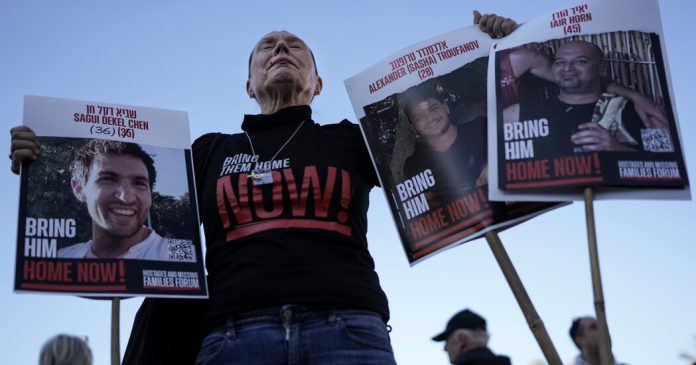
Here’s a closer look at the three civilian male hostages, including an Israeli American, who were released on Saturday:

Mr. Dekel-Chen, an Israeli American who had played for Israel’s national basketball team, was 35 when he was taken from Nir Oz, a kibbutz in southern Israel close to the Gaza border where militants abducted more than 70 people in the Hamas-led attack on Oct. 7, 2023.

He is a father of three; his youngest child was born during his captivity. Mr. Dekel-Chen worked as national coordinator for the British branch of the Jewish National Fund and with his wife, converted buses for new uses, such as for mobile classrooms.

Mr. Dekel-Chen’s family was active in advocating a cease-fire deal. His father, Jonathan Dekel-Chen, a history professor at Hebrew University in Jerusalem, wrote an opinion piece for The New York Times critical of the Israeli government for not bringing home the hostages.

In August, the professor told The Times that he and other members of the Nir Oz kibbutz would not participate in an official government ceremony then being planned to commemorate the Oct. 7 attack. He said they were “appalled by the idea of this government creating a ceremony that would distract from their culpability.”

Mr. Dekel-Chen’s mother, Neomit Dekel-Chen, and some neighbors were also captured in the Oct. 7 attack. She escaped from an electric cart that was heading toward Gaza when an Israeli military helicopter shot at the militants, according to an account she gave to Israeli news media.

Mr. Horn was 45 when he was abducted from Nir Oz along with one of his two brothers, Eitan, who was visiting for the weekend. Iair Horn worked in construction and his brother worked as a teacher.

Iair Horn was born in Israel and raised in Argentina. He returned to Israel as an adult along with his parents and siblings, according to their mother, Ruth Strom. They are part of a large Argentine community on the kibbutz, including other families awaiting the return of hostages.

Eitan Horn has not been slated for release in the first phase of the cease-fire deal, and Ms. Strom has said she was anxious that Iair would have to leave his brother behind.

Their father, Itzik Horn, said in December 2023, after the Israeli military mistakenly shot and killed three hostages who had fled their captors in Gaza, that Israel must reach a deal even if it means freeing prisoners designated as terrorists.

“The most important thing isn’t to defeat Hamas,” he said in an interview. “The only victory here is to bring back all the hostages.”

Mr. Troufanov, a Russian Israeli dual citizen who was 27 when he was captured, was visiting family in Nir Oz on Oct. 7. His father was killed, and his mother, grandmother and girlfriend were taken hostage but released during an earlier cease-fire, in November 2023.

Mr. Troufanov, who lived with his girlfriend in a Tel Aviv suburb and worked at a company owned by Amazon, was seen in a video released by Palestinian Islamic Jihad — the second most powerful militant group in Gaza after Hamas — in November of last year. He appeared weary, with an untrimmed beard and bags under his eyes, and spoke of a lack of food and water.

In October, Mousa Abu Marzouk, a senior Hamas official, told Russia Today that he had spoken to Islamic Jihad about Mr. Troufanov, and that Hamas would give priority to him in any exchange of hostages and Palestinian prisoners “in honor” of President Vladimir V. Putin of Russia.

EEOC seeks to drop a gender discrimination case, signaling a big shift in civil rights enforcement : NPR

0

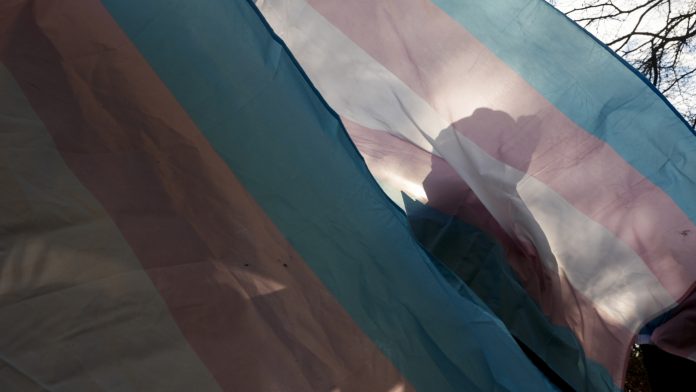
A protester is silhouetted against a trans pride flag during a pro-transgender rights protest outside of Seattle Children’s Hospital, in Seattle, on Feb. 9.

Lindsey Wasson/AP


hide caption

toggle caption

Lindsey Wasson/AP

The federal agency that enforces workplace anti-discrimination laws has moved to dismiss its own lawsuit on behalf of a worker allegedly fired for his sexual orientation and gender identity, arguing that the case now conflicts with President Donald Trump’s recent executive order, according to court documents.

The Equal Employment Opportunity Commission on Thursday filed a joint motion to dismiss its case against Harmony Hospitality LLC, which operates a Home2 Suites by Hilton hotel in Dothan, Alabama, just eight months after the agency sued the company over its firing of an employee who identifies as nonbinary male and gay.

The employee worked for Harmony Hospitality as a night auditor and “styled himself in conformity with male gender stereotypes” at work, according to the EEOC’s original lawsuit. But when he was called in for a meeting outside of working hours, he wore “capri-cut joggers, pink-painted nails, and box braids.”

Upon learning about the employee’s gender identity and sexual orientation, Harmony Hospitality’s co-owner said the employee needed to be “hidden” because of his appearance, and seven hours later, he was fired via text message, the lawsuit alleges.

The complaint accuses Harmony Hospitality of violating Title VII of the Civil Rights Act of 1964 by terminating the employee “because of his sex, sexual orientation, gender identity, and failure to adhere to male gender stereotypes.”

The EEOC’s request to now dismiss the case marks a major departure from its prior interpretation of civil rights law after the Trump administration declared that the government would recognize only two sexes: male and female.

That’s in stark contrast to a decade ago when the agency issued a landmark finding that a transgender civilian employee of the U.S. Army had been discriminated against because her employer refused to use her preferred pronouns or allow her to use bathrooms based on her gender identity.

Just last year, the EEOC updated its guidance to specify that deliberately using the wrong pronouns for an employee, or refusing them access to bathrooms corresponding with their gender identity, constituted a form of harassment. That followed a 2020 Supreme Court ruling that gay, lesbian and transgender people are protected from employment discrimination.

Former EEOC General Counsel and Professor and Co-Dean Emeritus at Rutgers Law School David Lopez, who served in the agency for more than 20 years, called the EEOC’s failure to defend the fired hotel worker “unprecedented” and “discriminatory.”

For an anti-discrimination agency “to discriminate against a group, and say, ‘We’re not going to enforce the law on their behalf’ itself is discrimination, in my view. It’s like a complete abdication of responsibility,” Lopez told The Associated Press in a phone interview.

The EEOC’s motion to dismiss the case, filed jointly with the defendants, comes just weeks after Trump dismissed two Democratic commissioners of the five-member EEOC before their terms expired, an unprecedented decision that removed what would have been a major obstacle to his administration efforts to upend interpretation of the nation’s civil rights laws. Had the commissioners been allowed to carry out their terms, the EEOC would have had a Democratic majority well into Trump’s term. The administration also fired Karla Gilbride as the EEOC’s general counsel, replacing her with Andrew Rogers as acting counsel.

Shortly after their dismissals, acting EEOC chair Andrea Lucas, a Republican, signaled her intent to put the agency’s resources behind enforcing Trump’s executive order on gender. She announced in a statement that one of her priorities would be “defending the biological and binary reality of sex and related rights.” Later, she ordered that the EEOC would continue accepting any and all discrimination charges filed by workers, although complaints that “implicate” Trump’s order should be elevated to headquarters for “review.”

“Biology is not bigotry. Biological sex is real, and it matters,” Lucas said in her statement. “Sex is binary (male and female) and immutable. It is not harassment to acknowledge these truths — or to use language like pronouns that flow from these realities, even repeatedly.” She removed the agency’s “pronoun app,” which allowed employees to display their pronouns in their Microsoft 365 profiles, among other changes.

Nearly all workplace discrimination charges must pass through the EEOC — at least initially — and the agency’s decision to drop the case against Harmony Hospitality raises serious questions about whether its protections will extend to LGBTQ+ and gender nonconforming people going forward.

Attorneys for Harmony Hospitality LLC did not immediately reply to emails seeking comment. In a court filing, the company denied the allegations of discrimination in the EEOC’s lawsuit and said the plaintiff was “separated from employment” based on “reasonable, legitimate factors,” though the company did not specify the reasons. The company also said the plaintiff’s gender played no role in any of the company’s actions.

Asked for comment on why it’s dropping the case, an EEOC spokesperson replied that the agency will not comment on litigation. But in its motion to dismiss, the EEOC cites compliance guidance from the Office of Personnel Management on Trump’s executive order titled “Defending Women from Gender Ideology Extremism and Restoring Biological Truth to the Federal Government” as the reason behind its decision.

“The EEOC’s continued litigation of the claims in this action may be inconsistent with the Order and the OPM Guidance,” the motion says.

Jocelyn Samuels, one of the Democratic EEOC commissioners who was fired last month, said via email of the decision: “I think it is truly regrettable and an illustration of the significant damage caused by the President’s executive order. The Administration’s efforts to erase trans people are deeply harmful to a vulnerable community and inconsistent with governing law. I hope that the EEOC will assist each of the individuals harmed by this withdrawal to find counsel who can represent them in vindicating their rights.”

Added Sarah Warbelow, vice president of legal at LGBTQ+ rights group Human Rights Campaign, in an emailed statement: “This is the inevitable outcome when the EEOC is weaponized to greenlight discrimination against American workers.

“Instead of standing up for the rights of everyone to a workplace free from discrimination, including harassment and bias, the Trump administration is making it abundantly clear they will not protect working people.”

In D.C. Visit, Canadian Leaders Face Trump’s Tariff Hawks

0

Another week, and another round of tariff threats and annexation suggestions from President Trump.

It began with the announcement of a policy imposing 25 percent tariffs on all steel and aluminum imports. In Canada’s case, those tariffs would be stacked on top of the previously introduced 25 percent tariffs on most Canadian exports, which are in a 30-day holding period. If Mr. Trump follows through on both, the rate on steel and aluminum will be a staggering 50 percent.

[Read: Nations Denounce Trump Tariff on Metals and Warn of Retaliation]

Next up, the president told his advisers to come up with new tariffs that take into account trade barriers and other economic approaches by U.S. trading partners that his administration deems unfair. It’s a sweeping approach that includes not just tariffs that other countries place on U.S. goods but taxes they charge on imported products, such as the G.S.T. in Canada; any subsidies they give industries; and their exchange rates.

“Canada’s been very bad to us on trade, but now Canada is going to have to start paying up,” Mr. Trump said while making the announcement. “Canada is going to be a very interesting situation because, you know, we just don’t need their product.”

Among the things that may be targeted, according to a fact sheet released by the White House, is the 3 percent tax Canada began applying last year to the Canadian revenues of large tech companies like Google, Amazon and Netflix. Again, any tariffs that emerge from this review will be added onto whatever else Mr. Trump has already threatened to impose on Canadian exports.

[Read: Trump Says He’ll Rework Global Trading Relations With ‘Reciprocal’ Tariffs]

A small number of U.S. business leaders have started to speak out against Mr. Trump’s tariff plans, if not directly speaking up for Canada.

Jim Farley, Ford’s chief executive, told an industry conference that “a 25 percent tariff across the Mexico and Canadian border will blow a hole in the U.S. industry that we have never seen.”

Speaking of Mr. Trump’s plan to revive American manufacturing through tariffs, he added, “So far what we’re seeing is a lot of costs and a lot of chaos.”

[Read: Ford Chief Executive Says Trump Policies May Lead to Layoffs]

Mr. Farley’s message echoes what Canadian officials have been telling anyone who will listen in Washington. This week, all 13 provincial and territorial leaders visited the U.S. capital to deliver that argument and others about the importance of trade between the countries and observations about the interlinked nature of their economies.

While 11 of the premiers did ultimately get a last-minute meeting at the White House, it was with Mr. Trump’s deputy chief of staff for legislative affairs and the president’s director of personnel.

“I don’t think the premiers met with people who are very significant,” Gary Mar, the president and chief executive of the Canada West Foundation, a public policy research group based in Calgary, told me.

Mr. Mar was Alberta’s official representative in Washington from 2007 to 2011. He said that Canada’s place in the United States had shifted substantially since then.

“I think our relationship with the United States has changed forever,” Mr. Mar said. “Donald Trump is not the reason for this. He is a symbol. The people who went to war with the United States — that generation is gone. And in the U.S., a culture of achievement has been replaced by a culture of grievance.”

Cultural shifts aside, Canadian politicians hoping to change minds in Washington may be delivering arguments that many people close to Mr. Trump flatly reject.

Many, if not most, of Mr. Trump’s tariff actions have closely tracked the ideas of Robert E. Lighthizer, the U.S. trade representative in the first Trump administration.

Mr. Lighthizer does not, to put it mildly, believe that the move toward more open trade over the last four decades has benefited the United States.

“The global trading system has failed our country,” Mr. Lighthizer, who led the U.S. side during the NAFTA renegotiation, wrote this month in a guest essay for the opinion section of The New York Times. “It has not faltered because free trade doesn’t work. It has failed because free trade doesn’t exist.”

[From Opinion: Want Free Trade? May I Introduce You to the Tariff.]

While Mr. Lighthizer does not specifically discuss trade with Canada in that essay, he has little good to say about it in his book, “No Trade Is Free: Changing Course, Taking On China, and Helping America’s Workers.”

“Canada is in reality a quite parochial — and at times quite protectionist — country,” he wrote. “For years Canada has operated a dairy supply chain management program that would make a Soviet commissar blush.”

Mr. Lighthizer, who like Mr. Trump abhors trade deficits, is proposing a new global trading order that would split the world’s economy in two. In one group, countries would generally charge one another lower tariffs. However, if one of the group’s members developed a trade surplus, the others would increase tariffs against its exports until that surplus disappeared. And this group of countries would charge high tariffs to countries outside it — “nondemocratic countries as well as those that insist on using beggar-thy-neighbor, aggressive industrial policies to run large surpluses,” he writes.

In a profile of Mr. Lighthizer, Elizabeth Williamson and Ana Swanson, my colleagues in Washington, write that when economists, like Canadian politicians, argue that high tariffs will only increase prices for Americans and might even cause a recession, “Mr. Lighthizer simply argues that the economists are wrong.”


This section was written by Vjosa Isai, a reporter-researcher based in Toronto.

  • Canadian scientists are working to solve a marine mystery after several dead sharks washed up on the east coast.

  • The Toronto rapper Drake collaborated with PartyNextDoor, a Mississauga-born R&B singer and producer, on a new album released on Valentine’s Day.

  • Chrystia Freeland, the former finance minister running to replace Prime Minister Justin Trudeau as the Liberal leader, writes in a guest essay that Mr. Trump is “once again upending the global trading order.”

  • Lorne Michaels, the proud Canadian who created “Saturday Night Live” — and who still wears his Order of Canada rosette on his lapel — reflects on the show’s legacy as it turns 50.

  • Alissa Wilkinson, a movie critic at The Times, reviews the satirical and surrealist comedy “Universal Language,” which takes place in Winnipeg.

  • Looking for a kid-friendly spring break destination? Try Montreal.

  • Igloo-brand coolers were recalled in Canada and the United States after customers reported serious injuries from using them.


Ian Austen reports on Canada for The Times and is based in Ottawa. Originally from Windsor, Ontario, he covers politics, culture and the people of Canada and has reported on the country for two decades. He can be reached at [email protected]. More about Ian Austen


How are we doing?
We’re eager to have your thoughts about this newsletter and events in Canada in general. Please send them to [email protected].

Like this email?
Forward it to your friends, and let them know they can sign up here.