Wednesday, November 11, 2026
Home Blog Page 22

The U.S. set the global order after WWII. Trump has other plans : NPR

0

President Harry Truman signs the Marshall Plan on April 3, 1948 in Washington. The plan played a key role in the reconstruction of Europe after World War II and was part of the wide-ranging moves by the U.S. to establish a new international order that still defines the world to this day.

AFP/Getty Images


hide caption

toggle caption

AFP/Getty Images

From the ashes of World War II, President Harry Truman presided over the creation of global institutions that have defined the international order for the past 80 years.

“It must be a policy of the United States to support free peoples who are resisting attempted subjugation by armed minorities or by outside pressure,” Truman said as he spelled out his doctrine in a 1947 speech to Congress.

In a few short years, the U.S. helped establish and lead the United Nations, NATO, the World Bank and the International Monetary Fund. The U.S. helped rebuild Europe with assistance funneled through the Marshall Plan, and also funded the reconstruction of Japan.

Democratic and Republican presidents supported these institutions for generations. They sometimes grumbled at the cost, yet believed they ultimately strengthened the U.S. as the world’s leading superpower.

But 100 days into his second term, Donald Trump is moving aggressively to scale back the U.S.’s role in the world, based on his “America First” agenda. Trump sees this web of alliances, treaties and soft power as expensive, outdated relics that restrain America’s ability to act decisively on its own.

“I’m not aligned with anybody. I’m aligned with the United States of America, and for the good of the world,” Trump said in February.

Trump says the U.S. should not be the world’s policeman and should not guarantee the security of its allies. Rather, he has attacked many of them and threatened to take control of territory ranging from Greenland to Canada to the Panama Canal to the Gaza Strip.

Hal Brands, a historian at the American Enterprise Institute, a conservative Washington think tank, puts it this way: “If I had to boil it all down, I would say Trump’s goal is to extract more privileges from the international order while bearing fewer responsibilities for upholding them.”

Trump scaled back U.S. global commitments in his first term. In his second term, he’s launched a much more ambitious effort.

“In the first term, I would say the defining characteristic of this foreign policy was chaos. This time he’s really taking a sledgehammer approach to U.S. foreign policy and the institutions around it,” said Kelly Grieco with the Stimson Center, a nonpartisan think tank.

Trump wants to do this on all major fronts — military, diplomatic and economic.

Scaling back military commitments

President Trump and Ukraine's President Volodymyr Zelenskyy held a contentious meeting at the White House on Feb. 28 over the Russia-Ukraine war. Trump opposes additional U.S. military aid to Ukraine, though the two countries on Wednesday signed an agreement to share future revenue from Ukraine's natural resources.

President Trump and Ukraine’s President Volodymyr Zelenskyy held a contentious meeting at the White House on Feb. 28 over the Russia-Ukraine war. Trump opposes additional U.S. military aid to Ukraine, though the two countries on Wednesday signed an agreement to share future revenue from Ukraine’s natural resources.

SAUL LOEB/AFP via Getty Images


hide caption

toggle caption

SAUL LOEB/AFP via Getty Images

With the U.S. military, Trump wants to end U.S. involvement in open-ended wars, like the Russia-Ukraine conflict.

His signature moment so far was the White House meeting two months ago where Trump and Vice President Vance berated Volodymyr Zelenskyy, saying the Ukrainian president had not shown enough gratitude for U.S. aid and was overestimating Ukraine’s military capabilities.

“You’re not in a good position. You don’t have the cards right now,” an agitated Trump said to Zelenskyy. “You’re gambling with the lives of millions of people. You’re gambling with World War III.”

The president opposes further U.S. military assistance for Ukraine and wants a permanent ceasefire. However, this is proving elusive as the fighting grinds on, with Russian leader Vladimir Putin launching some of its largest aerial assaults of the war in recent weeks.

“He’s underestimating, often, his adversaries,” Stewart Patrick, with the nonpartisan Carnegie Endowment for International Peace, said of Trump. “He seems to believe that Vladimir Putin is going to be satisfied with only 20% of Ukraine. This is the appetizer course as far as Vladimir Putin is concerned. He wants the entire meal.”

A ceasefire would give Trump some cover to pull back in Ukraine, where the U.S. does not have troops, though it has led the international effort to support that country since Russia’s full-scale invasion in 2022.

But if the war carries on and Russia makes further gains, Trump could look weak, unable to stand up to Russia.

This would raise even more questions about NATO’s future and the U.S. willingness to defend Europe.

“I think that NATO will survive a second Trump presidency,” said Brands. “But I don’t think that any European country will want to be as dependent on the United States in the future as they were in the past.”

Diplomatic negotiations, but no breakthroughs

Vice President Vance tours the US military's Pituffik Space Base in Greenland on March 28. The Trump administration has called for the U.S. to take control of Greenland, which is a semiautonomous territory that's part of Denmark, a NATO ally of the U.S.

Vice President Vance tours the US military’s Pituffik Space Base in Greenland on March 28. The Trump administration has called for the U.S. to take control of Greenland, which is a semiautonomous territory that’s part of Denmark, a NATO ally of the U.S.

Pool/Getty Images Europe


hide caption

toggle caption

Pool/Getty Images Europe

On the diplomatic front, Trump is pursuing several high-stakes deals.

It’s still early in his second term, though so far he’s had no major successes. An Israel-Hamas ceasefire, reached as Trump entered office in January, has collapsed.

Talks with Iran on a nuclear agreement are ongoing.

Kelly Grieco applauds the diplomatic efforts, but is critical about Trump’s approach. He believes that these complex negotiations can be done quickly and with little or no input from allies.

“In many ways he overestimates American power,” said Grieco. “This leads him to this more bullying approach, because he thinks the United States is so powerful that our allies and our adversaries will have to give way.”

This unilateral approach to diplomacy is also evident in Trump’s trade policy. His actual or threatened tariffs against virtually every country have destabilized the global economy, and many economists say this was a significant factor at home as well, where the U.S. economy shrank 0.3% in the first three months of this year.

Trump thinks U.S. economic clout will give him the leverage to win much better terms in one-on-one deals. His main target is China, yet his go-it-alone approach led him to antagonize friendly countries that could help in a collective effort to isolate China.

“If you’re going to be trying to press China on a number of different fronts, you would want to do it with allies,” said Patrick.

Eighty years after the U.S. established the modern global order, foreign policy analysts wage nonstop debates about how it should be updated. The discussion often centers on whether the U.S. is still able and willing to shoulder the burden it has since World War II. But, Hal Brands said, if the U.S. abandons that role, no other country can replace it.

“If the United States says that it’s going to stop being a global public goods provider and simply take benefits out of the system, I don’t know how long that system is going to last,” Brands said.

Trump seems determined to find out.
Haitian woman dies in ICE detention in Florida : NPR

0

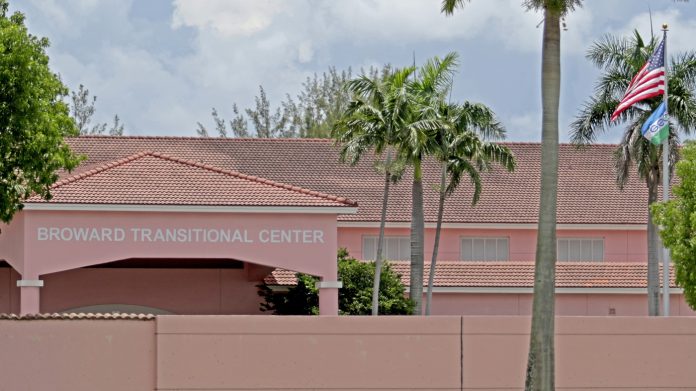
The Broward Transitional Center in Pompano Beach, where ICE says Marie Ange Blaise was declared dead on Friday evening.

John McCall/South Florida Sun-Sentinel/Tribune News Service


hide caption

toggle caption

John McCall/South Florida Sun-Sentinel/Tribune News Service

A woman from Haiti died after spending over two months in U.S. Immigration and Customs Enforcement (ICE) custody, the agency announced on Tuesday.

Marie Ange Blaise, 44, was pronounced dead on Friday night at the Broward Transitional Center in Pompano Beach, Fla. ICE says her cause of death is under investigation.

Speaking on the House floor Wednesday, Rep. Sheila Cherfilus-McCormick, D-Fla., suggested that Blaise had not been provided adequate medical care.

“Marie had been complaining about chest pain for hours,” said Cherfilus-McCormick, who is the only Haitian-American in Congress. “They gave her some pills and told her to go lie down. Unfortunately, Marie never woke up.”

NPR has reached out to ICE for more information. In its Tuesday notice, the agency said that “at no time during detention” is a detainee “denied emergent care.”

“All people in ICE custody receive medical, dental and mental health screening and 24-hour emergency care at each detention facility,” it said.

Congress requires ICE to make public all reports about in-custody deaths within 90 days. In the meantime, Cherfilus-McCormick plans to visit the Pompano Beach facility and is calling for a “full, independent investigation” into Blaise’s death.

“Her loved ones deserve answers,” she said. “They deserve accountability — like so many immigrant families who have their loved ones missing and who are hurt.”

Another South Florida Democrat, Rep. Frederica Wilson, said in a tweet that she was “heartbroken and furious” to learn of Blaise’s death. She called on members of Congress to visit ICE facilities for themselves to increase oversight of the Trump administration’s immigration policies.

“How many more stories do we have to hear of immigrants being mistreated at these black hole detention centers?” she wrote. “When are we going to get answers?”

Blaise was transferred between multiple facilities 

ICE says Blaise entered the U.S. without admission or parole “on an unknown date and place.”

According to the agency, U.S. Customs and Border Protection (CBP) encountered her on Feb. 12 at the international airport in Saint Croix, U.S. Virgin Islands, attempting to board a flight to Charlotte, N.C.

“On the same date, CBP issued Blaise a Notice of Expedited Removal, charging inadmissibility as an immigrant without a valid immigrant visa,” it said.

Two days later, CBP transferred her to ICE custody in San Juan, Puerto Rico. She was sent to Louisiana the following week, where she spent over a month detained at the Richwood Correctional Center. On April 5, she was transferred to the detention center in Pompano Beach, Fla. She died there nearly three weeks later.

Six other people have died in ICE custody since the start of the 2025 fiscal year, according to agency data, with half of those deaths occurring since January.

The Trump administration touts its immigration crackdown

News of Blaise’s death comes as the Trump administration ramps up its aggressive campaign of raids, detentions and deportations.

On Wednesday, ICE announced it had arrested 66,463 people without legal status — and deported 65,682 of them — in Trump’s first 100 days in office.

Tricia McLaughlin, the Department of Homeland Security’s assistant secretary of public affairs, told NPR’s Morning Edition that there will be more deportations ahead.

“What we’re doing is a change in the culture this first hundred days, and we are seeing success,” McLaughlin said. “But we’re going to see those numbers increase in the next hundred days.”

Trump’s immigration crackdown has not only rattled immigrant communities but sparked massive protests, numerous court challenges and broader concerns of a constitutional crisis.

An NPR/PBS News/Marist poll released this week found that just 44% of Americans approve of how Trump is handling immigration so far. But the partisan differences are stark: 87% of Republicans approve of his approach, compared to just 11% of Democrats.

Trump admin stops grant funding for school mental health : NPR

0

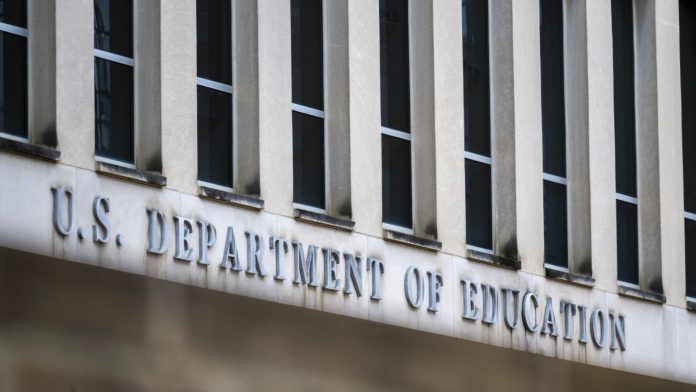
The U.S. Department of Education is telling impacted districts that the Biden administration, in awarding the grants, violated “the letter or purpose of Federal civil rights law.”

Jim Watson/Getty Images


hide caption

toggle caption

Jim Watson/Getty Images

The Trump administration says it will stop paying out $1 billion in federal grants that school districts across the country have been using to hire mental health professionals, including counselors and social workers.

The U.S. Department of Education is telling impacted districts that the Biden administration, in awarding the grants, violated “the letter or purpose of Federal civil rights law.”

The grants were part of the 2022 Bipartisan Safer Communities Act – a bill passed in the aftermath of the school shooting in Uvalde, Texas, in which a teen gunman killed 19 elementary school students, two adults and injured 17 people. The bill, among other things, poured federal dollars into schools to address rising concerns about a student mental health crisis.

Those dollars helped Superintendent Derek Fialkiewicz, in Corbett, Ore., more than triple the number of school mental health professionals in his largely rural district of 1,100 students east of Portland. Before the grants, Fialkiewicz says his district had just two counselors, “and we realized, that’s just not sustainable for our students and especially coming out of COVID.”

In early 2023, thanks to the Bipartisan Safer Communities Act, the district received a federal grant that fully covered the salaries and benefits of five new, trained social workers.

“It’s been amazing,” says Fialkiewicz of the difference that federal money – and the social workers it paid for – have made in his school community.

He says he was shocked when he heard the Trump administration was putting an end to this federal support. Just Tuesday, a U.S. Department of Education employee who oversees their grant had given his district the go-ahead to add a telehealth texting service for students. An hour later, Fialkiewicz says, he got an email that the grant would be discontinued.

Republicans supported these mental health grants

The Bipartisan Safer Communities Act, and the mental health funding that accompanied it, enjoyed considerable Republican support even in the years after it passed.

“Too often, adolescents with untreated mental health conditions become the very same perpetrators who commit acts of violence,” wrote three of the law’s Republican supporters – Sens. John Cornyn of Texas, Susan Collins of Maine and Thom Tillis of North Carolina – in a 2024 opinion piece. “For this reason, we crafted our law to ensure teachers and administrators are equipped with the tools to recognize when a student is experiencing a mental health crisis and, more importantly, connect them with the care they need before it’s too late.”

The endgame was “to prepare and place 14,000 mental health professionals in schools,” says Mary Wall, who oversaw K-12 policy and budget for the U.S. Department of Education during the Biden administration.

Wall says about 260 school districts in nearly every state received a portion of the $1 billion – in the form of five-year grants, which were paid out in installments.

Now, it appears those districts will have to find a way to do without the money they had planned for but will not receive.

“The preparation of new mental health professionals, as well as those who are already in service, is at risk,” says Wall.

In Corbett, Fialkiewicz says he’s been told his grant money, which was supposed to last until December of 2027, will instead stop this December, two years early. Once it does, he says, “we’re gonna end up going back to having two counselors in our district.”

The superintendent says he feels “disgusted” by the idea of having to lay off those federally-funded social workers.

“To be able to provide those [mental health] services and then have it ripped away for something that is completely out of our control, it’s horrible,” Fialkiewicz says. “I feel for our students more than anything because they’re not gonna get the services that they need.”

An August 2024 poll from the American Psychiatric Association found that “84% of Americans believe school staff play a crucial role in identifying signs of mental health issues in students.”

Why the department says it cut the grants 

In a statement to NPR, Madi Biedermann, deputy assistant secretary for communications at the Department of Education, explained the decision to discontinue the grants:

“Recipients used the funding to implement race-based actions like recruiting quotas in ways that have nothing to do with mental health and could hurt the very students the grants are supposed to help. We owe it to American families to ensure that tax-payer dollars are supporting evidence-based practices that are truly focused on improving students’ mental health.”

But the 2022 federal grant notice told schools explicitly: The services to be provided must be “evidence-based.”

Wall also disputes the department’s characterization, telling NPR “the focus of these grants was absolutely on providing evidence-based mental health support to students. Any suggestion that this is a DEI program is a distraction from the real issue.”

The Trump administration and the Education Department have been applying a new interpretation of federal civil rights law to a wide range of federal programs. Last month, the department threatened to revoke K-12 schools’ federal funding if they don’t stop all DEI programming and teaching that the department might consider discriminatory.

In response to a request from NPR to further explain why the department believes these mental health grants had somehow run afoul of Trump’s anti-DEI policy, it offered a few brief excerpts from districts’ grant applications, in which one grantee wrote that school counselors must be trained “to recognize and challenge systemic injustices, antiracism, and the pervasiveness of white supremacy to ethically support diverse communities.”

The initial federal request for grant applications suggested districts prioritize “increasing the number of school-based mental health services providers in high-need [districts], increasing the number of services providers from diverse backgrounds or from the communities they serve, and ensuring that all services providers are trained in inclusive practices.”

In the email Fialkiewicz received, notifying him of the grant’s end, the department wrote that the efforts funded by the grant violate Federal civil rights law, “conflict with the Department’s policy of prioritizing merit, fairness, and excellence in education; undermine the well-being of the students these programs are intended to help; or constitute an inappropriate use of federal funds.”

When asked if diversity played any role in his district’s grant application, Fialkiewicz replied:

“Yes, in our application, we did state, because it was part of the requirements, that we would use equitable hiring practices. And that’s exactly what we did. And to me, equitable hiring practices means you hire the best person for the job. That’s equitable.”

And now, those social workers he hired might lose their jobs.

Judges would be accountable for abuse even if they retired or resigned, under new bill : NPR

0

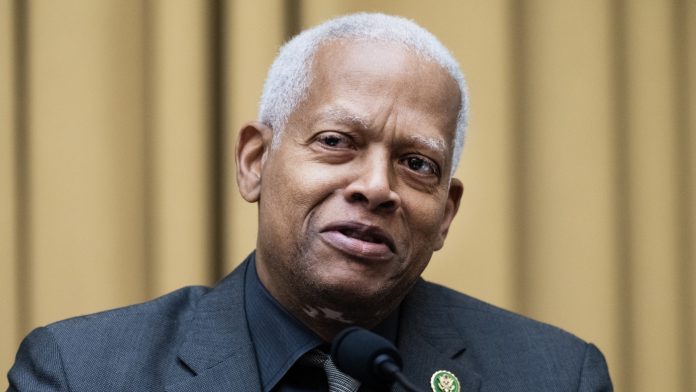
Rep. Hank Johnson speaks during a House Judiciary Committee hearing in 2023.

Tom Williams/CQ-Roll Call Inc. via Getty Images


hide caption

toggle caption

Tom Williams/CQ-Roll Call Inc. via Getty Images

A top lawmaker is introducing legislation that aims to increase accountability for federal judges accused of misconduct and abuse.

The new bill from Rep. Hank Johnson, D-Ga., would ensure that pending investigations into judicial misconduct would continue, even if the judges under review retire or resign.

Johnson is trying to close a loophole that federal judges have used to collect pension benefits despite facing credible accusations of wrongdoing by employees.

“Judges and courts should not be allowed to sweep bad behavior under the rug,” said Johnson, the top Democrat on the House Judiciary Committee’s panel on the courts. “This is a necessary first step in ensuring that our courts are places of integrity and safe for judiciary employees.”

His legislation, called the Transparency and Responsibility in Upholding Standards in the Judiciary Act (TRUST), follows an NPR investigation that uncovered serious problems with the federal judiciary’s system for reporting problems in the workplace.

It’s unclear if the legislation would go anywhere in a GOP-controlled Congress. But it highlights ongoing issues in the federal court system.

Two judges featured in NPR’s reporting, José Antonio Fusté in Puerto Rico and Judge Alex Kozinski in California, retired with full benefits while under internal investigation.

“The proper functioning of our courts depends on an accountable judiciary,” said Debra Perlin, vice president for policy at Citizens for Responsibility and Ethics in Washington (CREW). “The judiciary must investigate potential breaches of the public trust, and we urge Congress to pass this important legislation to require it to do just that.”

Some 30,000 people work for the judicial branch, including in judges’ chambers, clerks’ offices and in public defenders and probation offices.

The federal courts are exempt from Title VII of the Civil Rights Act of 1964, complicating a path for law clerks and other judicial employees to seek justice when they face abuse from judges. The courts say they have made significant changes to their internal system for reporting since the #MeToo movement emerged seven years ago.

“We believe that the changes put in place over the past seven years have had a positive impact on the Judiciary workplace, a belief that was validated by two independent studies,” a spokesperson for the Administrative Office of the U.S. Courts told NPR in a written statement earlier this year. “We continue to make improvements as part of our efforts to foster an exemplary workplace for our employees.”

In March, the courts released the results of a national workplace study, where almost two-thirds of respondents reported they had not experienced inappropriate behavior at work.

But the findings also raised questions about whether workers feel secure using the courts’ own tools for reporting abuse. Only 42% of the anonymous respondents said they would report misconduct at work. And others who used the reporting system said they were not satisfied with it.

The courts are considering more changes to their system, including giving employees a way to recover legal fees and damages.

Heritage Foundation’s Kevin Roberts on Trump’s first 100 days : NPR

0

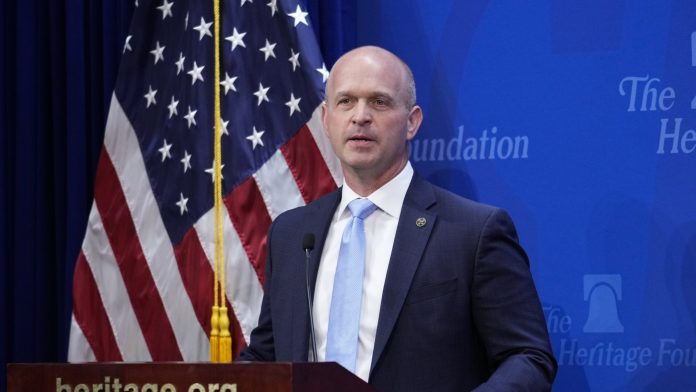
Kevin Roberts, president of the Heritage Foundation, in April 2023.

J. Scott Applewhite/AP


hide caption

toggle caption

J. Scott Applewhite/AP

The first 100 days of President Trump’s second administration have been a whirlwind.

He has signed dozens of executive orders and actions, aggressively implemented tariffs, carried out deportations, erased delivery, equity and inclusion efforts and created a government-slashing informal department (DOGE).

Trump’s playbook appears similar to what was laid out in Project 2025, the Heritage Foundation’s “blueprint” for a new Republican administration. Though, worth noting, candidate Trump distanced himself from this plan.

“If the Heritage Foundation … (has) a tiny role in providing some ideas and some of the people to help that happen … then we’re very happy about that,” Kevin Roberts, president of the foundation, told NPR. “But not for us, instead for the American people.”

In a conversation with All Things Considered host Juana Summers, Roberts defended many of Trump’s actions. Tap play above to listen to the full interview.

Here are some key points.

Roberts defends the Trump administration’s record on deportations.

Trump came into office with a promise to overhaul immigration and border security. One way he is attempting to do that is by mass deportations — a key agenda item in Project 2025.

On whether the administration should be allowing due process to every person deported under the Alien Enemies Act, Roberts said that all undocumented citizens are “owed one process and that’s an immigration court hearing.”

This is also at the heart of the case involving a Maryland man the White House concedes was mistakenly deported in March to a mega-prison in El Salvador — despite a 2019 court order barring his removal.

When pressed on reports that Kilmar Abrego Garcia was deported despite a court order, Roberts accused his lawyers — without evidence — of lying and that they are “well paid by the radical left.”

Roberts also said he is “not worried” about Trump’s comments suggesting that he is considering deporting American citizens who are convicted of crimes to El Salvador.

“I don’t think they’ll go too far,” he said.

Roberts praises DOGE for its work to reduce the federal workforce.

Project 2025 did not spell out the creation of DOGE, but many of the actions that advisor Elon Musk has made were previously foreshadowed.

Project 2025 called for a rehauling of USAID, ending of the Consumer Finance Protection Bureau and outlined how to empower the Office of Personnel and Management to overhaul the federal workforce.

And in doing so, Roberts claims DOGE identified $160 billion in savings and is on track to save a trillion dollars by the end of the year. (NPR has reported that their tracker is plagued with inaccuracies, errors, omissions and overstatements.)

“The problem is that the federal government has become far too bloated,” Roberts said. “No longer is the question, ‘Can we, in fact, save money?'”

Roberts is pleased with how Trump is rolling out reciprocal tariffs. 

Even though the U.S. economy is not looking so great, Roberts is certain it “will be fine.”

“It’s too early to say that the economy will go into a recession … The market was going to be choppy anyway,” he added.

But if the economy tips into a recession, Roberts suggested that Trump would still have the support he needs.

“I think you’re going to see the economy actually take off and be very positive the rest of the year.”

This story was adapted for the web by Jeffrey Pierre and edited by Karen Zamora.

Former VP Harris slams president in first major speech since Trump took office

0

In San Francisco Wednesday night, former Vice President Kamala Harris gave a forceful critique of President Trump’s first 100 days in office. It came as she considers a run for governor of California.

Thousands of veterans face foreclosure after Trump’s VA ends key mortgage program : NPR

0

A plaque with the Department of Veterans Affairs’ seal is displayed outside the department’s headquarters in Washington, D.C., on March 6.

Chip Somodevilla/Getty Images


hide caption

toggle caption

Chip Somodevilla/Getty Images

The U.S. Department of Veterans Affairs, as of Thursday, has ended a new mortgage-rescue program that so far has helped about 20,000 veterans avoid foreclosure and keep their homes.

The move leaves millions of military veterans with far worse options than most other American homeowners if they run into trouble paying their home loans. And it comes at a time when nearly 90,000 VA loans are seriously past due, with 33,000 of those already in the foreclosure process, according to the data and analytics firm ICE.

At issue is the VA Servicing Purchase program, or VASP. It was put in place during the Biden administration after missteps by the VA left homeowners with no affordable way to catch up on their VA-backed home loans if they fell behind. VASP rolls the homeowners’ missed payments into a new, low-interest rate loan that the VA then owns outright. With today’s higher mortgage rates of around 7%, it is often the only affordable option for homeowners with VA loans.

But Republicans in Congress have been critical of the VASP program, saying it puts too much taxpayer money at risk. In a statement this week to NPR, the VA said, “[As of May 1st,] the program, which was unilaterally created by the Biden Administration and lacks congressional authority, will stop accepting new enrollees.”

Mortgage industry groups, housing advocates and veterans organizations have been warning the VA that shutting down VASP without replacing it with something else first would result in large numbers of vets losing their homes, many of whom are in this financial peril because of the VA’s own mistakes.

“With the expiration of VASP, tens of thousands of Veterans and their families are now at significant risk of losing their homes,” said Mike Calhoun, president of the nonprofit Center for Responsible Lending, a non-partisan organization that advocates for the financial rights of underserved communities, including veterans.

His group is urging Congress to quickly pass legislation to create a new program to fill the gap, and he said, “VA should extend VASP until this program is up and running.”

Thousands of vets left stranded, again

Thousands of veterans were left facing foreclosure two years ago after the VA abruptly cancelled a key part of a pandemic-era mortgage relief program that allowed vets to skip mortgage payments if they had trouble paying. When an NPR investigation first uncovered the VA’s move in late 2023, there were about 40,000 vets in danger of losing their homes.

Kevin Conlon is one of them.

Conlon and his wife Jenny live in upstate New York, not far from where he was stationed with the Army at Fort Drum. After his two combat tours in Iraq, about 12 years ago the couple had a young kid and were struggling to pay rent and save money. Getting a VA loan meant that they could buy a house with no down payment. And they’ve been there ever since.

“That’s the longest I’ve been in one place,” said Conlon. “Without the VA loan, there was no way that we could have afforded to buy a house,” his wife added.

Kevin and Jenny Conlon in front of their home.

Kevin Conlon and his wife Jenny at their home in upstate New York. The couple have owned the house for 12 years and don’t know where they would go if they lose it.

Cindy Schultz for NPR


hide caption

toggle caption

Cindy Schultz for NPR

The VA home loan has long been a bedrock benefit of the G.I. Bill, giving vets a leg up into the middle class.

But all that came unraveled for tens of thousands of vets like Conlon who were on what’s known as a mortgage forbearance. It was supposed to help them during a time of financial hardship by pausing their monthly payments and then giving them an affordable way to start paying again and get current. After NPR reported that the VA had shut-down the only affordable option for veterans to do that, the VA responded by halting foreclosures for a full year while it rolled out its’ VASP rescue plan.

While they’ve been waiting to get into VASP, the Conlons have been told not to make payments, so they’ve been falling farther and farther behind, and they say their family has nowhere to go if they lose this house.

“I joined right after September 11th,” said Conlon, who grew up in Queens, N.Y., and was in Manhattan the day of the attacks.

Conlon’s wounds from his time in Iraq aren’t visible, but they’ve taken years to heal. During his two combat tours, roadside bombs hit his convoys repeatedly and left him with traumatic brain injuries. On the second tour his best friend died when he hugged a suicide bomber to the ground, giving his life to protect his friends. The trauma and survivors’ guilt wounded Conlon, he says, as bad as the blast injuries. He struggled with PTSD and thoughts of suicide for more than a decade before finally getting to a stable, healthy place.

“I was willing to die for what I believed in. And for someone [to]… take away the home that my family lives in? Like we’ve paid enough, we’ve really paid enough,” he said.

Referring to the VA winding down VASP, VA spokesman Pete Kasperowicz told NPR, “This change is necessary because VA is not set up or intended to be a mortgage loan restructuring service.”

Republicans have their own plan, but it’s not in place yet 

Republican critics in Congress don’t like that VASP buys the rescued loans from the mortgage industry, and then holds the loans on the VA’s own books. They say the VA would lose too much money if the homeowners fall behind again.

“The Trump administration rightfully put an end to VA’s VASP program,” said a joint statement from Rep. Mike Bost, an Illinois Republican and chairman of the House Committee on Veterans’ Affairs, and Rep. Derrick Van Orden, a Wisconsin Republican, when VA announced its plan to end VASP.

Van Orden has sponsored a bill to replace VASP with what’s known as a “partial claim” program that experts say would help vets struggling to keep their homes by moving their missed payments to the back of their loan term so they would pay them back down the road.

But between VASP ending and Van Orden’s bill possibly becoming law is a chasm that could swallow thousands of VA home loans.

Republican Rep. Derrick Van Orden of Wisconsin arrives at the U.S. Capitol in 2023.

Republican Rep. Derrick Van Orden of Wisconsin arrives at the U.S. Capitol in 2023.

Chip Somodevilla/Getty Images


hide caption

toggle caption

Chip Somodevilla/Getty Images

“Veteran borrowers will face otherwise preventable foreclosures, which harm the government through increased payouts as well as harm Veteran homeowners,” warned the non-profit National Consumer Law Center and the Center for Responsible lending in a letter to Congress last month.

“Without VASP or immediate access to alternative policy tools that provide relief … many of these homeowners will be forced to sell their homes and move or face foreclosure,” the letter said.

In the wake of the move by the VA, Democrats and Republicans in Congress both say they want to pass legislation to give veterans with VA loans better options for avoiding foreclosure. But it’s unclear how long that will take.

In the meantime, veterans behind on their mortgages have far worse options than most other Americans who have loans backed by Fannie Mae, Freddie Mac or the Federal Housing Administration. Those entities all have loss mitigation options that allow homeowners to catch up on missed payments without being forced into a new modified loan at today’s high interest rates.

Vets left in limbo and disbelief

For their part, veterans interviewed by NPR feel like the VA has now repeatedly stranded them by first offering them a life-line and then cutting the rope once they grabbed hold.

“I feel let down and deceived,” said Samuel McCrary, a Marine Corps vet with three young kids in Loganville, Georgia. The new VASP program looked like it was going to save his house, but now the VA has ended new enrollments in it and he says his mortgage company can only tell him his application for VASP is “pending.”

“I believe that we are going to lose the house,” McCrary said. “Losing my house and having to go rent — it makes me sick to my stomach to think about.”

Even veterans who have made it into the VASP program aren’t sure if they’ll be OK either. That’s because many of those vets are in a VASP three-month trial payment period. The VA says vets who have entered that process can continue it through August, “subject to VA’s determination that funds remain available for VASP.”

VA did not respond to NPR’s request for information about how much funding is available or how many more vets in these trial periods will in fact be placed into affordable VASP loans.

Vets also tell NPR they feel like they’re scapegoated and paying the price for the VA’s mistakes.

At a recent House Veterans’ Affairs Subcommittee hearing, Rep. Van Orden criticized the VASP program this way:

“I understand the whole developmental process of this, and it was moronic,” Van Orden said, “It gets rid of a bum loan, and it passes it off to the American taxpayers.”

That comment did not sit well with fellow Iraq veteran Conlon and his wife Jenny.

“That’s a hell of a thing to say about his brothers and sisters,” said Conlon.

Kevin Conlon sits with his service dog Nova at home in Upstate New York.

Iraq war veteran Kevin Conlon is among tens of thousands of veterans left facing foreclosure because of a debacle in the VA home loan program.

Cindy Schultz for NPR


hide caption

toggle caption

Cindy Schultz for NPR

“That was so hurtful because these are not bum loans, and they’re making the veterans and their families out to sound like irresponsible people,” his wife added.

The couple says Kevin took the forbearance so he could get treatment for PTSD.  “That’s why we needed it, so he could go inpatient at a veterans program,” Jenny said.

The Conlons say they followed the VA’s instructions and then got stuck when the VA shut off part of its forbearance program in 2022. Then they followed the VA’s instructions again by applying for the new rescue program, VASP. And VA now says it’s shutting that off. Their mortgage company tells them they are enrolled in the VASP trial payment plan, but it’s unclear whether VA will determine it has funding to help all the veterans on those trial plans with permanent new VASP loans.

“The level of just mistrust I have — I mean, I get they’re trying to cut spending and all that, but it’s like, how do you justify cutting something that is to help the vets who were basically put in this position because of you?” Conlon said.

NPR asked the VA if it’s concerned about veterans losing their homes after it shuts down VASP with no replacement ready yet. A VA spokesman has not answered that question but at one point referred our reporters to Congress.

NPR asked the Republican House VA committee leadership the same question; that office referred our reporters back to the VA.

Republicans say they will still push education based on legal status : NPR

0

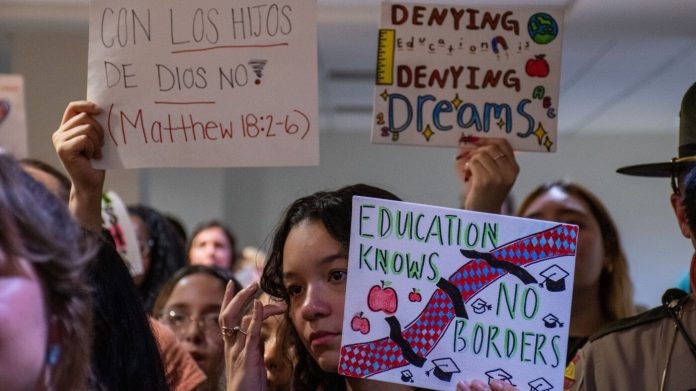
Demonstrators protesting a bill that would’ve allowed schools to deny students based on immigration status at the Tennessee Capitol in Nashville.

Marianna Bacallao/WPLN


hide caption

toggle caption

Marianna Bacallao/WPLN

NASHVILLE, Tenn. — After weeks of protests and strained debate, Tennessee’s Republican supermajority hit pause on a bill that would have let public K-12 schools deny enrollment to children without legal immigration status. But the lawmakers pushing the measure say they aren’t done.

Republicans across the country had hoped to trigger a lawsuit challenging the law that would bring the issue back to the U.S. Supreme Court, similar to how a state law in Mississippi led to the court overturning federal abortion rights in 2022.

The Supreme Court established the right to an education for all students, regardless of immigration status in a 1982 ruling in Plyler v. Doe.

A nationwide plan

The Heritage Foundation, the conservative think tank that wrote the blueprint for the Trump administration’s Project 2025 policies, called on states last year to pass bills challenging Plyler v. Doe.

“Unchecked illegal migration over the past three years has possibly cost the public education system billions of dollars,” The Heritage Foundation wrote in a 2024 brief. “Large influxes of non-English-speaking children also has a negative effect on the classroom.”

Similar arguments concerning the cost of education have played out in state legislatures across the country. While states don’t collect data on the number of students without legal status in the classroom, Republicans have pointed to the rising number of English learners in public schools, although estimates from the advocacy group EdTrust show that the majority of those students are citizens.

Despite the multi-state effort, attempts this year to retry Plyler have all failed. Bills in Texas, Indiana and New Jersey stalled. Oklahoma’s Republican state superintendent put a similar measure before the state legislature, but Republican Gov. Kevin Stitt vowed to block it.

Tennessee’s version came the closest to becoming law. In April, the bill narrowly passed the Senate. Republican state Sen. Bo Watson, who co-sponsored the legislation, argued on the Senate floor that it addressed a financial issue.

“We have been mandated or forced to pay that additional cost without consideration,” Watson said. “[Plyler] was the voice of the court being imposed on the people. This, my friends — this is the voice of the people being exercised through their elected representatives.”

But the bill could have a chilling effect on the state’s economy, too, said Phillip Lovell of the non-profit All for Ed, a national organization that advocates for equal access to education.

“There are estimates that the undocumented community in your state contributes $350 million in taxes. They have a purchasing power of $3.5 billion,” Lovell said, testifying in committee. “The more someone learns, the more they earn and the more taxes they pay. Your spending on education is not just spending, it’s an investment.”

A sudden death

What ultimately held the bill back this year was its own potential financial impact. The Tennessee House was set to vote on the measure when its sponsor, Republican Rep. William Lamberth, pulled it from consideration after a state review found it could have jeopardized more than $1 billion in federal education funding for violating the Civil Rights Act of 1964.

At Lamberth’s request, the state sent a letter to U.S. Secretary of Education Linda McMahon, asking how much of the potential $1.1 billion in federal funding would be at risk, but the state did not receive a response by the end of session.

A protester holds up a sign to demonstrate against a bill in Tennessee that would have allowed public schools to prevent undocumented students from attending.

A protester holds up a sign to demonstrate against a bill in Tennessee that would have allowed public schools to prevent students without legal status from attending.

Marianna Bacallao/WPLN


hide caption

toggle caption

Marianna Bacallao/WPLN

Immigrant rights activists are taking the move as a win.

“To all the children, parents, educators, faith leaders, business owners and everyday Tennesseans who spoke out — your calls, your emails and your presence at the Capitol worked,” said Lisa Sherman Luna, the executive director of the Tennessee Immigrant and Refugee Rights Coalition.

The group helped plan several protests and marches over the course of the legislative session. Every time the bill was heard during session, protesters filled hearing rooms and spilled out into the hallways, carrying signs that read “Education for all” or “I stand with immigrants.”

What’s next for the measure 

The bill isn’t entirely dead. Tennessee Republicans have plans to bring it back next year, depending on how receptive the federal government is to the legislation.

If the measure does make it before the U.S. Supreme Court, advocates worry the outcome could be different from the 1982 decision.

Stella Yarbrough, the legal director of Tennessee’s ACLU, said the court’s conservative majority has a history of reversing court precedent.

“I think that they’re reading the tea leaves correctly,” Yarbrough said. “I think that they are correct that they are going to get a second bite at the apple.”

Despite the nationwide risk, Yarbrough said the ACLU would still pursue a legal challenge if a law like this one passes.

“Even if you think you’re going to lose in the long run, putting off that loss—even for a day, a week, a year—can be meaningful,” Yarbrough said.

Tennessee went before the U.S. Supreme Court in December to defend its ban on gender-affirming care for minors. When that ruling is made, as expected this summer, state Republicans will see if their strategy works with the court’s current makeup.

New congressional district gives voice to Alabama Black voters : NPR

0

Shalela Dowdy is one of the Black voters who sued Alabama to get a more accurate representation in Congress. She was photographed in Mobile in 2024.

Emily Kask for NPR


hide caption

toggle caption

Emily Kask for NPR

MOBILE, Ala. — Shalela Dowdy is one of the Black voters who successfully sued Alabama to have a bigger voice in Congress.

“It’s about fair representation,” she says sitting on a park bench beneath a sprawling canopy of live oak trees in downtown Mobile’s historic Bienville Square.

“It’s about just making sure you have someone that cares about your community,” Dowdy says. “Just being willing to go in the community and talk to the people.”

The lawsuit, Allen v. Milligan, made it to the U.S. Supreme Court, which agreed that Alabama’s congressional map discriminated against Black voters, in a state where African Americans make up about a quarter of the population.

When the Republican-controlled state legislature failed to create a new district that would give Black voters an opportunity to elect a candidate of their choice, a federal court drew one with a Black voting age population of 48.7%. It stretches across Alabama, and includes much of the majority Black cities of Mobile, on the Gulf Coast, and Montgomery, the state capital.

The new lines resulted in the election of a Black Democrat — Rep. Shomari Figures. So Alabama now has two Black members of Congress, out of its seven seats in the U.S. House.

Democratic Rep.-elect Shomari Figures of Alabama, stands at the U.S. Capitol after freshman members of Congress posed for their class photo on November 15, 2024. (Bill Clark/CQ-Roll Call, Inc via Getty Images)

Democratic Rep.-elect Shomari Figures of Alabama, stands at the U.S. Capitol after freshman members of Congress posed for their class photo on Nov. 15, 2024.

Bill Clark/CQ-Roll Call, Inc. via Getty Images


hide caption

toggle caption

Bill Clark/CQ-Roll Call, Inc. via Getty Images

Dowdy says it’s made a difference. She’s already had a face-to-face meeting with the newly elected Figures, and feels like she has a seat at the table for the first time.

What she wants to talk about is what’s happening in the Department of Defense. She’s an Army veteran and a West Point graduate upset that her alma mater has disbanded certain cultural clubs, including the National Society of Black Engineers and the Society of Women Engineers.

“We had a majority African American club that was kind of like our Black student union, but we call it contemporary affairs seminar — no longer able to operate,” she says. “So if three or more Black students are gathered, it can look suspicious.”

Dowdy, who still serves in the Army Reserves, says those groups provided a safe space when she was a student, and helped cadets excel.

The U.S. Military Academy disbanded the groups to comply with President Trump’s executive order to remove race and sex-based preferences across the federal government, and to combat diversity, equity and inclusion programs in the private sector. Trump’s order revokes President Lyndon Johnson’s historic 1965 Equal Employment Opportunity directive.

Trump says federal laws already protect Americans from discrimination, and that DEI policies undermine national unity, and the traditional American values of hard work and individual achievement.

Dowdy sees it differently.

“It’s the good old boy system — someone has a problem with people of color excelling,” she says. “I feel like it’s all about making America white again.”

It’s a reminder, she says, that when there’s progress, there’s pushback.

The new congressional district stretches across Alabama, and includes much of the majority Black cities of Mobile, on the Gulf Coast, and Montgomery, the state capitol. Downtown Mobile photographed in 2024.

Alabama’s second congressional district now stretches across the state, and includes much of the mostly Black cities of Mobile, on the Gulf Coast, and Montgomery, the state capitol. Downtown Mobile photographed in 2024.

Emily Kask for NPR


hide caption

toggle caption

Emily Kask for NPR

Historically, Alabama systematically disenfranchised Black voters. It wasn’t until well after the Civil Rights Era, in 1992, that the state elected its first Black representative to Congress since Reconstruction.

The new congressional district is energizing to Jamorrey Gosha, a senior at Alabama State, a historically Black university in Montgomery.

“I think that it’s an awesome opportunity for our voice here in this newly drawn district to be heard there in Washington, D.C.,” he says.

Jamorrey Gosha is a senior at Alabama State and he runs a faith-based non-profit in east Alabama that offers minority scholarships, and is funded partly by federal grants.

Jamorrey Gosha is a senior at Alabama State University. He says the newly drawn congressional district is an opportunity for young voters like him to have a voice.

Debbie Elliott/NPR


hide caption

toggle caption

Debbie Elliott/NPR

Gosha hopes having a 39-year-old Black man in Congress might show other younger voters that participation matters.

“Sometimes when I talk to some of my peers, it seems as if they feel as if their vote does not matter and choose not to exercise their right, feeling as if they have no power,” Gosha says.

Gosha runs a faith-based non-profit in east Alabama that offers minority scholarships, and is funded partly by federal grants. Grants, he fears, could be in jeopardy as the Trump administration slashes government spending. Gosha says the future is uncertain and nerve-wracking.

“It seems like the ultimate goal is to make the rich richer and the poor poorer,” he says. “I feel like that’s an attack on the freedoms of people who are often marginalized.”

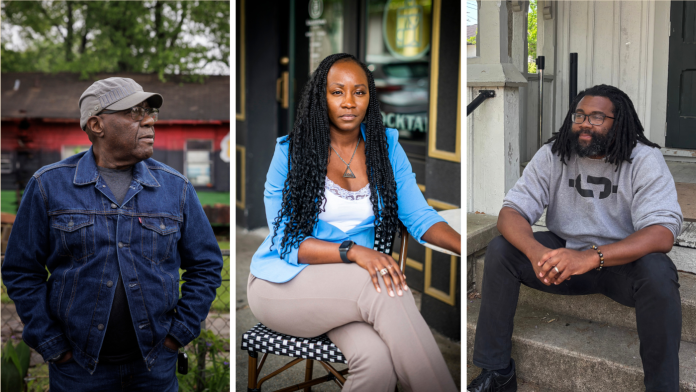
“A single vote in the House of Representatives can really impact the outcome of what a four-year cycle looks like for families,” says Evan Milligan, the named plaintiff in the redistricting lawsuit.

He says having another congressional seat that gives Black voters an opportunity to elect a candidate of their choice is promising. But he is also realistic about the potential for political influence given the current climate.

Evan Milligan, the named plaintiff in the redistricting lawsuit, sits the porch of a community center he runs in a former church in Montgomery.

Evan Milligan, the named plaintiff in the redistricting lawsuit, sits on the porch of a community center he runs in a former church near downtown Montgomery.

Debbie Elliott/NPR


hide caption

toggle caption

Debbie Elliott/NPR

“It represents an opportunity, but it comes at a time where there’s a lot of things in the air — what looks to be an administrative coup,” Milligan says. “You know the importance of having more representation at a time when the idea of representation is being undermined, that’s a really important thing.”

And the litigation is not over. A three-judge federal panel held a trial in February that will determine what congressional map will be used for the rest of the decade, until the 2030 Census.

Sitting on the porch of a community center he runs in a former church, he reflects on how Montgomery has long been at the center of the struggle for racial equality.

“The development of civil rights in this country and civil liberties is a big part of who we are in this district.”

The history is all around. The former slave market near the Alabama River; the steps of the state capitol where Jefferson Davis took his oath as president of the Confederacy; the spot where Rosa Parks refused to yield her bus seat; and the streets where civil rights marchers led by the Rev. Martin Luther King Jr. demanded the right to vote.

“Our ancestors spilled a lot of blood to make sure we understood, hey, however small this seems, don’t abandon this,” Milligan says. “We have to believe in ourselves and believe that collectively we actually not only can resist, but, over time, transcend the direction that some are pulling this country in right now. That’s a very difficult thing to do. But it starts with the hope.”

Back in Mobile, two retired women are trying to get more people active in the democratic process. They’ve invited NPR to a street corner on the north side of town where traffic whizzes past a vacant lot, a couple of convenience stores, and a boarded-up beauty salon.

Blake Jones for NPR

Beverly Cooper (left) and Amelia Bacon walking in the historic Africatown community. They’re co-founders of the voter advocacy group Stand Up Mobile.

Blake Jones for NPR


hide caption

toggle caption

Blake Jones for NPR

“What we’re looking at is, I think, a community that has a great need,” says Beverly Cooper. She and Amelia Bacon are co-founders of Stand Up Mobile, a voter advocacy organization that grew out of conversations in the aftermath of the Jan. 6, 2021, attack on the U.S. Capitol.

Their mission is to show people that voting can bring about change to neighborhoods like this.

“We are encouraging those that have been excluded, didn’t feel that they were part or could contribute their voice to what was going on in their community,” Bacon says.

The women say the work is vital as they worry the federal guardrails and safety nets erected to protect African Americans are being dismantled. For instance, the Justice Department’s Civil Rights Division.

“Once you start removing those things that people have relied on for since the 60s, you’re dealing with some territory that’s really frightening to Black folks,” says Bacon.

“If I could just say, ‘all right, folks are going to be fair,’ then fine we don’t need all of these levels of protection,” Cooper says. “That’s not the case.”

Bacon and Cooper are in their 70s, old enough says Bacon, to remember pre-civil rights America. “Let’s face it, there is a playbook. We’ve been down this road before.”

The women say it feels like a generation of racial progress is at stake.

That’s unsettling for Mobile native Darron Patterson.

Darron Patterson grew up here in historic Africatown, the community founded by West Africans illegally smuggled into Mobile on the Clotilda, the last documented slave ship brought to America.

Blake Jones for NPR


hide caption

toggle caption

Blake Jones for NPR

“That scares me because we are not going back,” he says. “Nothing will ever allow Black people in this country to go back.”

Patterson takes it personally, as a descendant of one of the enslaved people brought to Mobile on the last documented slave ship to arrive in America, the Clotilda. He grew up in Africatown, the community they founded after emancipation.

He’s angry that the Trump administration is trying to change the narrative about difficult racial history.

Signage at the yet-to-be built Africatown Welcome Center.

Blake Jones for NPR


hide caption

toggle caption

Blake Jones for NPR

“America is so arrogant, it chooses to use a broom, sweeping things under a rug instead of extending the olive branch to say, ‘Let’s work together,'” Patterson says. “If we work together, this country would be incredible. But there are people hell bent on saying the white race is the right race.”

Patterson says a lesson he takes from the Clotilda survivors is never to underestimate the resolve of people who have been oppressed.

This story is part of American Voices, an occasional NPR National Desk series that explores how President Trump’s policies are playing out across America.

Kamala Harris slams Trump tariffs as ‘absolute chaos’ : NPR

0

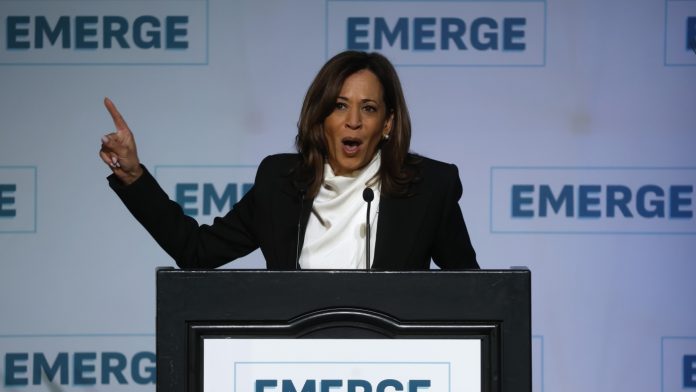
Former Vice President Kamala Harris delivers a keynote address at a gala for Emerge America on April 30, 2025 in San Francisco.

Justin Sullivan/Getty Images


hide caption

toggle caption

Justin Sullivan/Getty Images

Former Vice President Kamala Harris, in her first major public remarks since leaving the White House, criticized President Trump’s tariff policies as “reckless,” saying they pose the risk of taking the country into recession.

“Some people are describing what’s been happening in recent months as absolute chaos. And of course I understand why. It’s certainly true of those tariffs. Tariffs that — as I predicted — are clearly inviting a recession,” Harris said.

She called it the “greatest man-made economic crisis in modern presidential history” and applauded Americans who are rallying against the tariffs, saying they will increase everyday costs and impact retirement accounts and small businesses.

The former vice president who failed in her race against Trump last year was speaking in San Francisco at a gala event for the organization Emerge America, which helps women run for office. Her comments come as Trump hits the 100-day mark of his second term, and as reports show the U.S. economy is contracting.

Harris had made her closing argument in the 2024 campaign about the danger of returning Trump to office. On Wednesday, she criticized her formal rival for more than his economic policy, describing his agenda as “a narrow, self-serving vision of America where they punish truth-tellers, favor loyalists, cash in on their power, and leave everyone else to fend for themselves.”

She warned that if the system of checks and balances in the government falls apart, the country would face a constitutional crisis.

“That is a crisis that will eventually impact everyone, because it would mean that the rules that protect our fundamental rights and freedoms, that ensure each of us has a say about how our government works, will no longer matter,” Harris said.

Harris praised people standing up to the Trump administration

Since leaving Washington in January, Harris has largely remained out of the public eye. She has made brief remarks at events like the NAACP Image awards, and her name has frequently appeared on Democratic fundraising emails, but her speech in San Francisco was the first time she’s spoken directly about Trump.

In her remarks, Harris said she was “inspired” by the courage she’s seen since the start of Trump’s second term from people speaking out about deportations without due process, and judges upholding the rule of law.

She praised Maryland Sen. Chris Van Hollen who traveled to El Salvador to highlight the case of Kilmar Abrego Garcia, who was deported in error by the Trump administration.

Harris also named Sen. Cory Booker, D-N.J., who spoke on the Senate floor for 25 hours, calling out Trump’s policies, and Rep. Alexandria Ocasio Cortez, D-N.Y., and Sen. Bernie Sanders, I-Vt., who have rallied massive crowds in red states.

Harris, who moved to Los Angeles after leaving office, could still have a future in politics. Those close to her said she is weighing a run for governor of California, or potentially another run for the presidency in 2028 — an election that will include a crowded field of Democrats vying for the nomination.

Ending her remarks, Harris left the crowd with a warning: “things are probably going to get worse before they get better.”

“But we are ready for it,” she said.