Friday, November 13, 2026
Home Blog Page 220

HUD is about to face ‘drastic’ cuts, staffers say : NPR

0

The U.S. Department of Housing and Urban Development so far has not publicly announced any plan for broad cuts, and the timing for any reductions is not clear.

Alastair Pike/AFP via Getty Images


hide caption

toggle caption

Alastair Pike/AFP via Getty Images

As layoffs ramped up across the federal government this week, Housing Secretary Scott Turner said he had launched his own “DOGE” task force with HUD employees to review every dollar the Department of Housing and Urban Development spends.

“We are no longer in a business-as-usual posture and the DOGE task force will play a critical role in helping to identify and eliminate waste, fraud and abuse and ultimately better serve the American people,” Turner said in a statement. On Friday afternoon, the Elon Musk-led Department of Government Efficiency posted on X, the social media platform Musk owns, that “$1.9 billion of HUD money was just recovered after being misplaced during the Biden administration due to a broken process.”

Musk has said that a string of such actions are saving taxpayers money, but there’s been few details and little transparency around them.

Agency officials looked visibly distraught at the size of the cuts

The Trump administration also aims to lay off half of HUD’s staff, according to an agency worker with direct knowledge of the plans and a union leader who has spoken with other HUD employees.

Agency officials said some areas could face less-severe cuts, specifically citing the Federal Housing Administration, which insures mortgages and generates much of its own funding through premiums. But other areas could face even higher targets – around 75% of staff reduction, according to the union leader.

Agency officials looked visibly distraught and described these targets as “drastic” and “shocking,” according to one HUD staffer. They spoke to NPR on condition they not be named for fear of retribution in their job.

Housing Secretary Scott Turner, pictured at a confirmation hearing last month, says he has launched a DOGE task force to review every dollar the Department of Housing and Urban Development spends.

Housing Secretary Scott Turner, pictured at a confirmation hearing last month, says he has launched a DOGE task force to review every dollar the Department of Housing and Urban Development spends.

Kevin Dietsch/Getty Images


hide caption

toggle caption

Kevin Dietsch/Getty Images

So far, HUD has not publicly announced any plan for broader cuts and the timing for any reductions is not clear. The agency did not respond to a request for comment for this story.

Antonio Gaines, president of HUD Council 222 of the American Federation of Government Employees, learned about these targets from three officials with direct knowledge of them, who also declined to be named for fear of retribution.

Gaines said the union reached out to the Trump administration multiple times to negotiate the downsizing, as its contract requires, but had been rebuffed. He said the union is considering whether to file grievances.

Gaines said one HUD office that could lose most of its employees manages programs on homelessness, affordable housing and disaster recovery. Another enforces civil rights laws, and a third provides research on housing issues and HUD programs.

Gaines said his understanding was that any programs not required by congressional statute are especially vulnerable. He noted that the chapter about HUD in Project 2025, written by Trump’s first HUD secretary, Ben Carson, calls for transferring some of the agency’s functions to other federal agencies, states or cities.

A program for affordable-housing properties may be on the chopping block

But one program created and funded by Congress appears to have been targeted for outright cancellation: the Green and Resilient Retrofit Program. Another HUD staffer with direct knowledge of that project said they’ve been informed that the Trump administration is terminating it.

The program was created by the 2022 Inflation Reduction Act. It has awarded more than $1 billion to private companies to help them upgrade apartment buildings for HUD-subsidized tenants, making them more energy efficient.

“This [program] is an extremely efficient and effective use of government funds,” said Julia Gordon, an assistant secretary for housing under the Biden administration. “This helps property owners reinvest in their properties. And not only does it make them less expensive to operate, but it makes them more resilient to natural disasters.”

She also expressed confusion about why the administration would target the program in the midst of an affordable housing crisis.

The companies who’ve been awarded the upgrade money have not spent most of it yet, because real estate deals take years. The HUD staffer told of the cancellation said that means thousands of construction and other jobs the program generates might now be lost.

Gaines, with the AFGE union, said the Trump administration targets also include the closure of half of HUD’s field offices nationwide. He calls this “arbitrary and capricious,” and worries about the ripple effects across the country, both for the people HUD serves and the staffers doing that work.

“Federal employees are homeowners, too,” he said, and many may now face their own risk of foreclosure.

“Record high housing costs are putting the squeeze on families in every part of this country,” said former HUD Secretary Shaun Donovan, who now heads Enterprise Community Partners. He said arbitrary cuts to staff and funding “will only serve to destabilize our housing system and drive up costs for both renters and owners.”


Zelensky Says Ukraine Is Unlikely to Survive the War Without U.S. Support

0

President Volodymyr Zelensky said in an excerpt from an NBC interview published Friday night that Ukraine had a low chance of surviving Russia’s assault without U.S. support.

In the excerpt from “Meet the Press with Kristen Welker,” Mr. Zelensky said: “Probably it will be very, very, very difficult. And of course, in all the difficult situations, you have a chance. But we will have low chance — low chance to survive without support of the United States.”

The full interview is set to be broadcast on Sunday, according to NBC.

His comments were aired on the first day of the Munich Security Conference, where hundreds of anxious European diplomats and others gathered expecting to hear Vice President JD Vance speak about President Trump’s strategy to broker peace negotiations with Russia to end the war in Ukraine.

But Mr. Vance mentioned Ukraine only in passing and offered no road map for negotiations or even any strategic vision of what Europe should look like after the most devastating ground war being waged on the continent in 80 years. Instead, he urged European nations to stop isolating their far-right parties, saying the biggest security threat was the suppression of free speech.

Earlier in the week, Pete Hegseth, Mr. Trump’s defense secretary, jolted Kyiv and European allies of Ukraine by saying in a meeting with NATO and Ukrainian defense ministers in Brussels that the United States did not support Ukraine’s desire to join NATO as part of a peace plan. He also described a return to Ukraine’s borders before 2014 — when Russia annexed Crimea — as “unrealistic.”

Mr. Trump has repeatedly suggested trading U.S. aid for Ukraine’s critical minerals, telling Fox News earlier this month that he wanted “the equivalent of like $500 billion worth of rare earths,” a group of minerals crucial for many high-tech products, in exchange for American aid. Ukraine had “essentially agreed to do that,” he said.

In Munich, the Ukrainian president did get to make his case while sitting across a table on Friday from Mr. Vance, Secretary of State Marco Rubio and Keith Kellogg, the retired general who is Trump’s envoy for Ukraine and Russia.

Mr. Zelensky asked for “security guarantees.” Mr. Vance stressed the importance of beginning conversations about ending the war in Ukraine but declined to discuss specifics, he said, to preserve negotiators’ options.

“Fundamentally the goal is, as President Trump outlined it, we want the war to come to a close, we want the killing to stop,” Mr. Vance said. “But we want to achieve a durable, lasting peace.”

Later, Mr. Zelensky expressed thanks for American support but said there was much work to be done “to prepare the plan to stop Putin.”

In a social media post, he said, “We addressed many key issues and look forward to welcoming General Kellogg to Ukraine for further meetings and a deeper assessment of the situation on the ground.” He added, “We are ready to move as quickly as possible towards a real and guaranteed peace.”

Reporting was contributed by Jim Tankersley, David E. Sanger, Steven Erlanger and Maria Varenikova.

Trump firings cause chaos at agency responsible for America’s nuclear weapons : NPR

0

Members of the Nuclear Emergency Support Team training for a radiological contamination scenario.

National Nuclear Security Administration


hide caption

toggle caption

National Nuclear Security Administration

Scenes of confusion and chaos unfolded over the last two days at the civilian agency that oversees the nation’s nuclear weapons stockpile, as the Trump administration mass firings were carried out before being “paused” on Friday.

This account of firings at the National Nuclear Security Administration (NNSA) is based on interviews with several current and former NNSA employees who asked to remain anonymous, fearing retribution from the Trump administration.

Officials were given hours to fire hundreds of employees, and workers were shut out of email as termination notices arrived. The dismissals part of a broader group of dismissals at the Department of Energy, where reportedly more than a thousand federal workers were terminated. It was all a result of Elon Musk’s Department of Government Efficiency (DOGE) initiative to slash the federal workforce and what Musk and President Trump characterize as excessive government spending.

The NNSA is a semi-autonomous agency within the Department of Energy that oversees the U.S. stockpile of thousands of nuclear weapons. Despite having the words “National” and “Security” in its title, it was not getting an exemption for national security managers at the agency were told last Friday, according to an employee at NNSA who asked not to be named, fearing retribution from the Trump administration. Just days before, officials in leadership had scrambled to write descriptions for the roughly 300 probationary employees at the agency who had joined the federal workforce less than two years ago.

Managers were given just 200 characters to explain why the jobs these workers did mattered.

It was a tall order for the relatively obscure civilian agency that conducts a wide variety of nuclear security missions, including servicing the nation’s nuclear weapons when they’re not on missiles and bombers, and making extensive safety and security upgrades of the warheads. Some workers were responsible for making sure emergency response plans were in place at sites like a giant facility in Texas, where thousands of dismantled warheads are stored. Others worked to prevent terrorists and rogue nations from acquiring weapons-grade plutonium or uranium. Many had “Q” clearances, the highest level security clearance at the Department of Energy.

The Department of Energy’s press office did not respond to repeated requests by NPR for comment.

In the final days leading up to the firings, managers drew up lists of essential workers and pleaded to keep them.

In the end, it didn’t matter. On Thursday, officials were told that the vast majority of the exemptions they had asked for were denied by the Trump administration. Multiple current and former employees at the agency told NPR that scores of people were notified verbally they were fired. Many had to clear out their desks on the spot. “It broke my heart,” says one employee who was among those who left the agency’s Washington, D.C., headquarters.

Two employees from the National Nuclear Security Administration use gamma detectors to test the outside of a container of highly-enriched uranium for surface contamination at the Charleston Weapons Station near Goose Creek, S.C. on March 19, 2010.

Two employees from the National Nuclear Security Administration use gamma detectors to test the outside of a container of highly-enriched uranium for surface contamination at the Charleston Weapons Station near Goose Creek, S.C. on March 19, 2010.

Mic Smith/AP


hide caption

toggle caption

Mic Smith/AP

But what followed was even more confusing. Employees were told they would receive a letter confirming their termination.

Some did, a letter seen by NPR came late at night, and minutes later their work email ceased to function. “Per OPM [Office of Personnel Management] instructions, DOE finds that your further employment would not be in the public interest,” it read in part. The text matched other letters seen by NPR that were sent to employees throughout the Department of Energy. The NNSA termination letter did not appear to make any specific reference to the highly-classified nuclear mission conducted by the agency.

But others at the agency who were told they were terminated never received written notification.

Amid the confusion, employees reached by NPR on Friday were unsure whether they still worked at the agency. “Nobody knows if they’re fired or not,” said an employee. Two employees still had work laptops and equipment. The laptops did not contain any classified information.

On Friday, an employee still at NNSA told NPR that the firings are now “paused,” in part because of the chaotic way in which they unfolded. Another employee had been contacted and told that their termination had been “rescinded.” But some worried the damage had already been done. Nuclear security is highly specialized, high-pressure work, but it’s not particularly well paid, one employee told NPR. Given what’s unfolded over the past 24 hours, “why would anybody want to take these jobs?” they asked.

Diplomats in Munich Fear Trump Is Giving Up Leverage to Putin Before Talks With Ukraine

0

The top foreign policy official for the European Union had a blunt assessment on Friday of the Trump administration’s apparent willingness to give Russia’s leader, Vladimir V. Putin, much of what he wants in Ukraine, even before negotiations to end the three-year war begin.

“It’s appeasement,” the official, Kaja Kallas, declared at the Munich Security Conference. “It has never worked.”

Ms. Kallas, a former prime minister of Estonia, was hardly the only European diplomat uttering the word “appeasement,” with all its historical resonance, though she was one of the few willing to do so on the record.

It was an almost-universal description of the Trump administration’s disorganized and often publicly contradictory approach to the questions seizing the continent: What kind of peace deal does President Trump have in mind? And will it be done with Mr. Putin over the heads of both the Ukrainians and the Europeans, whom Mr. Trump apparently expects to bear the burden of Ukraine’s future security?

After days of speeches and private meetings in Munich, many officials said they were more confused than before they had arrived. Statements made by the U.S. defense secretary, Pete Hegseth, in his first effort at international diplomacy ran counter to statements made by Vice President JD Vance, also on his first international venture since his inauguration.

And European officials said they had tried, unsuccessfully, to extract from Mr. Trump’s national security team any plan for making sure that Mr. Putin did not simply use a cease-fire to rebuild his decimated military and, in a few years, return to take the rest of Ukraine.

They also said they were astounded that Mr. Trump, who revels in his negotiating skills in the real estate business, was willing to give up so much leverage before entering negotiations over the fate of 233,000 square miles of some of Europe’s most valuable farmland and a hotbed of technological innovation.

Hundreds of participants in the conference jammed into a hotel hall on Friday afternoon to hear Mr. Vance, expecting him to take these issues up in a long-awaited address. But to the astonishment of the policymakers and defense and intelligence officials who had crowded in, he mentioned Ukraine once, only in passing, while lecturing European leaders for suppressing the speech of right-wing, MAGA-like political movements in their country.

He offered no road map for negotiations or even any strategic vision of what Europe should look like after the most devastating war on the continent in 80 years. Nor did he promise that Europe or Kyiv would be central to the negotiations about Ukraine’s borders and its survival as an independent state.

Later in the day, at the end of a meeting with President Volodymyr Zelensky of Ukraine just before boarding Air Force Two to return to Washington, Mr. Vance offered just a little bit more, the vaguest of objectives for the coming talks with Russia.

“We want the war to come to a close, we want the killing to stop, but we want to achieve a durable, lasting peace, not the kind of peace that is going to have Eastern Europe in conflict just a couple of years down the road,” he said.

The last phrase was critical, because many European leaders here said they fear that Mr. Trump wanted a deal so badly — and perhaps the Nobel Peace Prize he has said he deserves — that he would agree to terms that would leave Ukraine out in the cold and allow Russia to rebuild its devastated forces and attack Ukraine anew — and perhaps, later, Moldova, too, and even to test NATO in the Baltic nations.

But Mr. Vance deflected all questions about whether Russia would be able to retain land that it had illegally invaded or how to reach an agreement if Mr. Zelensky was not yet prepared to meet with Mr. Putin, who has maintained that Ukraine is not even a real country.

“I want to preserve the optionality here for the negotiators,” Mr. Vance said.

He said nothing about a timeline for negotiations or whether he had reviewed with Mr. Zelensky, as expected, a Ukrainian plan for giving the United States access to some of the country’s rare-earth minerals. That has been one of Mr. Trump’s demands for continued support.

Mr. Vance may have said so little because Mr. Hegseth, the defense secretary, seemed to have given away so much, then backtracked, and then, on Friday, blamed the news media for misinterpreting him.

On Wednesday, Mr. Hegseth said that Ukrainians needed to understand that they were going to lose a large part of their country to Russia as part of any settlement. He added that if a deal was struck, no American troops would take part in a peacekeeping force in Ukrainian territory. It would be up the Europeans to police any cease-fire or formal armistice — with a special, non-NATO force. That status would assure that if it were attacked, the United States would not be drawn into a war to defend its NATO allies.

When his comments were derided across Europe and denounced by Mr. Zelensky, he declared that he had given away nothing and that only Mr. Trump had the power to decide what would and would not be surrendered. He never talked about what Russia might have to give up in a negotiation — if anything.

Last week, one NATO foreign minister said, allies were told that all options for Ukraine were on the table and that the White House was open to discussions. Now, matters are less clear, especially after Mr. Trump’s phone conversation with Mr. Putin earlier this week.

The problem, the minister said, is that the normal machinery of foreign-policy construction has been deliberately broken, with various officials appealing to Mr. Trump from different points of view. Allies do not have a clear picture of how the decisions are made, the minister said, a change from the past 20 years.

And if there is no machine, allies cannot plan and have a strategy, said the minister, who insisted on anonymity because of diplomatic practice and the sensitivity of the issue.

Germany’s foreign minister, Annalena Baerbock, said Mr. Trump’s call with Mr. Putin, breaking his isolation, was a surprise to allies. “This is not how others do foreign policy, but this is now the reality,” she told German public radio.

There is also a growing consensus that Europe should make a strong counteroffer to Mr. Trump, especially on support for Ukraine.

“Ukraine has agency, and it is resisting aggression,” said Radoslaw Sikorski, the foreign minister of Poland. “It has allies that will support it come what may. So it must be included in any negotiation that concerns it.”

Ukraine has a low chance of surviving Russia’s assault without U.S. support, Mr. Zelensky said in an interview with NBC’s “Meet the Press with Kristen Welker.”

“In all the difficult situations, you have a chance. But we will have low chance — low chance to survive without support of the United States,” he said in an excerpt released on Friday. The full interview will be broadcast on Sunday.

Foreign ministers and officials from several European countries — including Britain, France and Germany — met in Paris on Wednesday night and issued a statement pledging further support for Ukraine.

“We are looking forward to discussing the way ahead together with our American allies,” it said. “Ukraine and Europe must be part of any negotiations. Ukraine should be provided with strong security guarantees.”

Eric Adams case roils the Justice Department : NPR

0

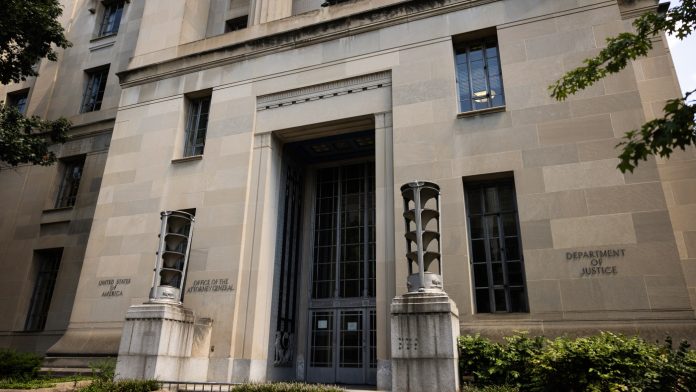
The Department of Justice is in turmoil after career prosecutors resigned rather than drop the corruption case against New York City Mayor Eric Adams.

Tierney L. Cross/Getty Images


hide caption

toggle caption

Tierney L. Cross/Getty Images

The U.S. Justice Department formally moved to dismiss corruption charges against New York City Mayor Eric Adams Friday night, capping days of uncertainty and chaos that led to the biggest mass resignation at the agency in recent memory.

The motion, filed in federal court in New York, was signed by acting Deputy Attorney General Emil Bove, Antoinette Bacon, a supervisor in the criminal division, and Edward Sullivan, a senior litigation counsel in the public integrity section.

Bove, who most recently served as a defense lawyer for Donald Trump, had ordered the U.S. Attorney’s office in Manhattan to drop the case. His order backfired and prompted the resignations of seven experienced prosecutors who quit rather than obey what they cast as an ill-advised and even unlawful directive.

Earlier in the day Friday, Bove held a meeting with attorneys in the public integrity section, where he pressed to find a career lawyer to participate in the Adams case. Eventually, Sullivan complied. He previously drew national attention amid the fallout from the DOJ’s failed prosecution against late Alaska Senator Ted Stevens.
 
At least seven prosecutors resigned in New York and Washington. The list includes Danielle Sassoon, the acting U.S. attorney for the Southern District of New York, who said she was baffled by the idea of walking away from such a strong case when her office had been planning to add new charges against Adams. Five lawyers tied to the public integrity unit in Washington, D.C., also resigned rather than carry out an order to abandon the Adams case.

This was followed by a resignation letter that sent shockwaves through the legal community: Prosecutor Hagan Scotten, who earned two Bronze medals for his military service and who clerked for Chief Justice John Roberts, wrote he does not have negative views about the Trump administration. But he said any prosecutor knows the laws and tradition would not allow using the enormous power of the Justice Department to lean on elected officials.

“I expect you will eventually find someone who is enough of a fool or enough of a coward to file your motion,” Scotten wrote in his letter. “But it was never going to be me.”

Former Justice officials stunned

Former Justice Department veterans, including Republicans, are aghast at the developments.

They are furious with Emil Bove, the No. 2 at the department who used to be Trump’s defense attorney, for being heavy handed with the prosecutors in New York and Washington. One former official said the scandal was worse than Watergate.

Another former official asked: “What kinds of political appointees would go work for this Justice Department now?”

The man at the heart of the fallout

Adams, the man at the center of the fallout, was indicted last year on corruption charges, with a trial scheduled for April. He was charged with conspiracy, bribery, wire fraud and soliciting contributions from foreign nationals. He’s pleaded not guilty.

Adams’ lawyer has flatly rejected the idea the mayor has a deal with the Justice Department where Adams would go along with tough immigration tactics and the Justice Department would drop the case against him for now.

But since the election, Adams has worked to cozy up to President Trump and on Friday he pledged to cooperate with the Trump administration’s tough immigration enforcement strategy. Adams appeared on Fox and Friends Friday morning with Trump’s border czar, Tom Homan, who appeared to talk about an agreement, which the prosecutors in New York flagged as an enormous legal and ethical problem.

“If he doesn’t come through, I’ll be back in New York city, and we won’t be sitting on the couch, ‘I’ll be in his office, up his butt, saying, ‘Where the hell is the agreement we came to?'” Homan said.

Adams responded: “We’re going to deliver for the safety of the people of this city.”

Ultimately it’s not up to the Department of Justice to dismiss the case against Adams. That’s something Judge Dale Ho will have to do. The judge may want to hold a hearing first where he could put some of these Justice Department officials on the spot about what kind of deal they may have had with Adams.

Vance Shocks Europe With Support for Far Right, in Message Familiar to U.S.

0

Vice President JD Vance’s defense of a divisive far-right political party in Germany was the latest jarring example of his willingness to embrace a provocative political issue and showed how hard-line immigration policy has emerged as the thread tightly knitting together a global patchwork of populist movements.

The thrust of Mr. Vance’s speech on Friday in Munich was a call for European leaders to broaden their tolerance for alternative viewpoints. But his address from inside a Bavarian hotel was certain to resonate back home among conservative and libertarian movements that have long seized on free speech battles in Europe to warn of dangers that could be looming for anti-immigration and anti-abortion activists in the United States.

Mr. Vance did not mention the far-right party, Alternative for Germany, by name, but the context was clear as he criticized a decision to bar certain political parties from the Munich Security Conference just over a week before Germany’s national election.

Although elements of the party, also known by its German initials, AfD, have been classified as extremist by German intelligence, it appears to be on track for its strongest showing yet in a parliamentary election amid anger over immigration and rising prices.

Later in his speech, while castigating leaders in Europe broadly and Germany specifically for dismissing the opinions of some voters, Mr. Vance said, “There is no room for firewalls.” That was a direct reference to how German party leaders have colloquially referred to building a “firewall” around the AfD with the aim of blunting the party’s move into the mainstream.

Mr. Vance also met with the party’s leader, Alice Weidel, during his visit to Germany, a spokesman for Mr. Vance said.

Mr. Vance had offered tacit support for the party in December when he waded into the social media backlash to a comment from Elon Musk, who posted, “Only the AfD can save Germany.” In his own post, Mr. Vance used his sharp-tongued online persona to mock criticism that Mr. Musk was promoting a dangerous group.

“It’s so dangerous for people to control their borders,” he wrote. “So, so dangerous. The dangerous level is off the charts.”

On Friday, Mr. Vance’s embrace of the far-right party was quickly rebuked by the Anti-Defamation League, which said in a statement that it was “deeply concerning” that Mr. Vance appeared to openly welcome a group with “an extremist agenda and a history that includes antisemitic, anti-Muslim, anti-democratic and xenophobic rhetoric.”

Carl Bildt, a former prime minister of Sweden and now a co-chairman of the European Council of Foreign Relations, described Mr. Vance’s speech as a disappointment.

“At best it was totally irrelevant to European or global security concerns,” Mr. Bildt posted on social media. “At worst it was blatant interference in the election campaign in favor of far-right AfD.”

The combativeness Mr. Vance brought to the international stage in Munich was familiar to conservative activists and others in the United States. His first days as a vice-presidential candidate were consumed by his criticism of “childless cat ladies.” He drew headlines for weeks by promoting baseless claims that Haitian migrants were eating their neighbors’ pets.

Mr. Vance also spent much of the 2024 campaign casting conservatives — and Mr. Trump in particular — as victims of censorship. He cited censorship as his reason for refusing to acknowledge Mr. Trump’s election defeat in 2020, and blamed censorship of conservatives from liberals after the assassination attempts on Mr. Trump.

In Munich, Mr. Vance picked up on that theme, saying the biggest security threat to Europe was not Russia or China, but their own suppression of free speech as he urged leaders to embrace the rise of anti-establishment politics.

“There is nothing more urgent than mass migration,” Mr. Vance said in Munich. He noted that roughly one in five people living in Germany moved to the country from elsewhere, and that the United States’ population also has a significant share of immigrants.

Peter B. Doran, an adjunct senior fellow at the nonpartisan Foundation for Defense of Democracies, said that Mr. Vance was “planting his flag” in Europe on issues that “make good political sense for him back in the States.”

“President Trump was elected on the promise that he would actively address the immigration crisis, and many Europeans are having buyer’s remorse over the open immigration policies they have had for many years,” Mr. Doran said. “Vance is bringing that gospel to the Europeans.”

How much power does the minority really have? Dems face pressure to fight Trump agenda

0

Congressional Democrats are navigating being in the minority with very little leverage against the Trump administration’s agenda.

High Above Chernobyl, Workers Grapple With Ice, Fire and Nuclear Fears

0

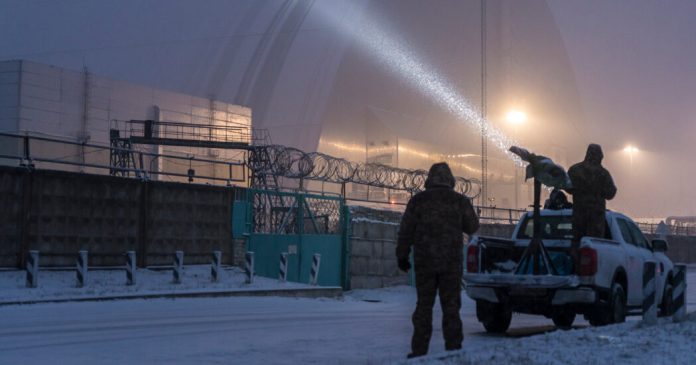
Five technicians secured by wires worked near the curved top of an arched steel structure that loomed the equivalent of 40 stories high, trying to extinguish the last bits of smoldering insulation left by a drone strike. It was snowing; the temperature was below freezing; the steel was covered with ice.

The hole from the strike was quite large, about 540 square feet, and dangerous for many reasons — primarily because it jeopardized the safety of the protective shell covering Reactor No. 4 at the Chernobyl nuclear power plant, the site of the worst nuclear disaster in history.

The breach was also deliberate, Ukrainian officials said, punched through at 1:59 a.m. on Friday by a Russian drone with a high-explosive warhead. Nuclear experts called it one of the most potentially dangerous attacks since Russia invaded Ukraine almost three years ago.

Despite the strike, radiation levels at Chernobyl remained normal on Friday. Far below that arched hood, the concrete-and-steel “sarcophagus” encasing the reactor and highly radioactive debris held. No one was injured or killed.

Still, Ukrainian authorities described the strike as audacious, hitting a nuclear power plant on the eve of a gathering of world leaders in Munich and risking a disaster.

The Kremlin denied that Russia’s military had struck the plant. Its spokesman, Dmitri S. Peskov, implied that the breach was some kind of fraud by the Ukrainians. “The Russian military does not do this,” he said.

Workers extinguished the fire early Friday, but insulation still burned as of the late afternoon, said Andriy Danyk, the head of the State Emergency Service of Ukraine, as he stood in the median of a parking lot in front of Reactor No. 4. But the hole will take months to fix, he added, and it’s not yet clear all the work that has to be done for it to be sealed.

“You have an amazing, terrible situation, because that’s not supposed to happen,” said Shaun Burnie, a senior nuclear specialist at Greenpeace who has monitored nuclear power plants in Ukraine since 2022 and who visited Chernobyl on Friday. “It was never designed for a deliberate military attack. We’ve been investigating Russian war crimes, and this looks like another one.”

On Friday, Ukrainian officials showed journalists bits of the drone they say hit the plant — a Shahed, typically deployed by Russia and stamped with the code of 15480. They displayed it near a radioactivity warning sign, as if to prove the seriousness of the attack.

An initial analysis by McKenzie Intelligence Services, a British consulting company, that was commissioned Friday by Greenpeace, said video footage showed some minor internal damage to the facility. The analysis also said that drone engine debris “is almost certainly” the remains of a piston engine that powers the Shahed drone, supplied by Iran to the Russians.

The analysis also said that the drone’s system is guided by preset coordinates for an intended target. “This would indicate the almost certain deliberate targeting” of the plant by the Russians, the analysis added.

President Volodymyr Zelensky of Ukraine told journalists at the Munich Security Conference in Germany that the drone was flying at an altitude of about 278 feet, which is undetectable by radar.

“It wasn’t a case of the drone changing course or anything like that,” Mr. Zelensky said.

The $1.7 billion protective shell that was damaged was completed in 2019, built with the help of 45 countries to make sure that a nuclear accident like the one that occurred in 1986 would not happen here again.

The structure was an engineering feat, designed to seal in vast quantities of radioactive isotopes from the fire and meltdown in 1986 at Reactor No. 4. The hastily built sarcophagus was deteriorating, but the arched steel shell was intended to last generations. It was brought in on railway tracks, Mr. Burnie said, and at about 40,000 tons, is the largest movable structure ever built.

Outside the entry checkpoint for Chernobyl, a yellow sign advertises the “Large Construction” program of Mr. Zelensky, proclaiming “Chernobyl — from the exclusion zone to the renaissance zone.”

More than a disaster area, much of the 1,000-square-mile Chernobyl exclusion zone, where access is strictly limited, resembles a storybook forest, with snowcapped pine trees and small villages. But the homes are abandoned; most are marked with signs saying how many people used to live there.

On Friday, military and police checkpoints stopped cars every few miles. A convoy of military trucks moved toward the plant. Two fire engines drove toward the exit.

At the plant itself, an unfinished reactor resembled an abandoned giant erector set. A billboard near Reactor No. 4 portrayed a large fire and urged people to call Ukraine’s 101 emergency number in case of a disaster.

Snow made it difficult to see much of anything at the plant. Fire trucks were parked in the lot near Reactor No. 4. Mr. Danyk said snow and icy surfaces made the emergency work much more dangerous, but workers hoped to fully extinguish the insulation by Friday night.

He added that the Ukrainian Hydrometeorological Center was monitoring radiation levels nationwide. They remained normal.

“Our team is rotating constantly to ensure no one is exposed to radiation,” he said.

Oleksandr Tytarchuk, the chief engineer at the plant, said his team and other specialists plan to do a “preliminary analysis and temporarily seal the opening,” to prevent more moisture from entering the structure, which can speed corrosion. But this would not be a radiation-proof seal, meaning the shell would no longer serve the function it had before the strike.

“We understand that snow is falling, rain is expected and water used during fire suppression has also become radioactive waste,” Mr. Tytarchuk said. “That said, I must emphasize that the radiation levels have not increased and remain under control.”

Workers will then have to figure out a more permanent solution — one that didn’t appear obvious on Friday afternoon.

Oleksandra Mykolyshyn contributed reporting.

Layoffs accelerate at federal agencies with more cuts coming : NPR

0

The U.S. Department of Agriculture building in a 2019 file photo. Workers around the sprawling federal agency were told Friday that their jobs had been eliminated as part of sweeping layoffs from the new Trump Administration.

Alastair Pike/AFP via Getty Images


hide caption

toggle caption

Alastair Pike/AFP via Getty Images

Federal agencies are accelerating layoffs and planning for even more cuts as the Trump administration moves quickly to slash the government workforce.

The Pentagon and the Department of Housing and Urban Development are gearing up for budget cuts and staff reductions, while layoffs hit employees at the Department of Agriculture, the Centers for Disease Control and Prevention, and the Environmental Protection Agency on Friday, multiple sources told NPR, speaking on condition of anonymity.

A sweeping wave of terminations has already affected thousands of employees at agencies including the Veterans Affairs, Energy, and Education Departments. This week President Trump signed an executive order directing agencies to prepare for “large-scale” reductions in force.

Many of the first to be cut are those still in a probationary period because they were recently hired or are long-serving employees who were moved or promoted into a new position. In many cases they have fewer job protections.

“The probationary period is a continuation of the job application process, not an entitlement for permanent employment,” a spokesperson for the federal Office of Personnel Management said in a statement. “Agencies are taking independent action in light of the recent hiring freeze and in support of the President’s broader efforts to restructure and streamline the federal government to better serve the American people at the highest possible standard.”

Laid-off federal workers have begun sharing their stories on LinkedIn, as they changed their status to #OpenToWork.

“I was a ‘consumer protection cop’ thrown off the beat by DOGE,” wrote Taylor Sonne, who worked as a compliance examiner with the Consumer Financial Protection Bureau for 11 months before being fired on Tuesday, one month before his probation would have ended.

Based in Houston, Sonne traveled the country in search of unfair, deceptive or abusive practices at financial institutions.

“I feel like it is such an important agency for every single American,” he told NPR. “It truly is a nonpartisan mission, which is unfortunate that it’s been so heavily politicized.”

HUD aims to slash half of staff

Officials at the Department of Housing and Urban Development have set a target of laying off half the agency’s staff, according to one HUD staffer with direct knowledge of the plans and a union leader who has spoken with others.

Agency officials said some areas would be spared, while others could face even higher targets of cutting around 75% of staff. One HUD staffer said when officials first learned these numbers they looked visibly distraught, and described them as “drastic” and “shocking.” The staffer was later told of the targets in a meeting. They spoke to NPR on condition they not be named for fear of retribution in their job.

Antonio Gaines, president of HUD Council 222 of the American Federation of Government Employees, was told of these targets by three officials with direct knowledge of them, but who also declined to be named for fear of retribution. He said the union had reached out to the Trump administration multiple times to negotiate the downsizing, as its contract requires, but had been rebuffed.

HUD did not immediately respond to a request for comment.

Department of Defense targets a big budget cut

The Pentagon is targeting an 8% cut to its more than $800 billion budget next year, including staff reductions, according to officials who were not authorized to speak publicly and provided details on condition of anonymity.

Targets will likely include the workforce, which Defense Secretary Pete Hegseth already said has grown too much.

EPA terminates 497 probationary workers

Probationary employees at the Environmental Protection Agency received emails Friday afternoon notifying them that were being fired as of 5 p.m. ET.

The EPA said in a statement to NPR that the agency fired 497 probationary employees after reviewing “agency functions in accordance with President Trump’s executive orders.”

“President Trump was elected with a mandate to create a more effective and efficient federal government that serves all Americans, and we are doing just that,” the EPA said.

There are about 1,100 probationary EPA employees nationwide, according to Nicole Cantello, a union president representing EPA employees in the Midwest.

One termination notice Cantello shared with NPR said the employee was being fired because the EPA found that they “failed to demonstrate fully your qualifications for continued employment.”

Cantello said the firings will leave fewer people at EPA to respond to emergencies around the country.”

“We come in in every major disaster in the nation,” Cantello said, including the Los Angeles wildfires, flooding in North Carolina last year from Hurricane Helene and the train derailment in East Palestine, Ohio, in 2023.

USDA supervisor given no notice of layoffs

At the Department of Agriculture, layoffs hit employees working in areas including animal and plant health inspection, farmland conservation, and agricultural research, according to three USDA employees who spoke to NPR anonymously because they’re not authorized to speak for the agency and fear retaliation.

Those terminated include PhD scientists and technicians working in rural parts of the country to bring innovation to U.S. agriculture. While most federal employees have a one-year probationary period, career scientists must complete three years of probation. Some of those terminated this week were only months away from completing their probation when they were fired.

Some longer-serving staff on fixed contracts were also terminated, the USDA sources said.

A USDA supervisor said they only learned that staffers they oversaw were being terminated when the staffers told they they received notices late on Thursday.

“I received nothing, no notifications, no messages from HR,” the supervisor said.

A termination notice sent to one of the supervisor’s probationary employees and seen by NPR said: “The Agency finds, based on your performance, that you have not demonstrated that your further employment at the Agency would be in the public interest.”

A 2021 file photo of the Centers for Disease Control and Prevention (CDC) in Atlanta. The agency is laying of 10% of its workforce.

A 2021 file photo of the Centers for Disease Control and Prevention (CDC) in Atlanta. The agency is laying of 10% of its workforce.

Eric Baradat/AFP via Getty Images


hide caption

toggle caption

Eric Baradat/AFP via Getty Images

“I don’t know how they can say that when their supervisors were never consulted,” the supervisor said.

The USDA didn’t respond to a request for comment. In a speech on Friday, newly appointed Agriculture Secretary Brooke Rollins said the agency would work with the White House and Congress to “focus USDA on its core missions of supporting American farming, ranching, and forestry.”

10% of CDC staff cut

About 1,300 workers were being cut on Friday at the Centers for Disease Control and Prevention, amounting to 10% of its total staff, according to two agency employees who requested anonymity because they weren’t authorized to speak for the agency

As at other agencies, the CDC layoffs are targeting probationary employees — a broad category that includes recent hires and long-time staffers who were recently moved to a new position at the agency.

Andrew Nixon, director of communications at the Department of Health and Human Services, wrote in an email to NPR: “HHS is following the Administration’s guidance and taking action to support the President’s broader efforts to restructure and streamline the federal government. This is to ensure that HHS better serves the American people at the highest and most efficient standard.”

More cuts at CFPB

Some 70-100 employees at the Consumer Financial Protection Bureau were laid off Thursday evening, according to three current employees with knowledge of the situation who did not want to be identified for fear of also being fired. They follow another 73 employees who were terminated earlier in the week.

The National Treasury Employees Union, which represents CFPB staff, filed for an administrative stay and a temporary restraining order on Friday. In the filing, attorneys for the union argue that the dismantling of CFPB is illegal.

“Neither the President nor his appointees have the constitutional authority to eliminate an agency created by statute,” they write, pointing to the numerous mandatory duties imposed on the agency by Congress. “Only Congress—not the Executive Branch—has the power to eliminate those duties or dissolve the agency created to perform them.”

Have information you want to share about the ongoing changes across the federal government? Reach out to these authors: Shannon Bond is available through encrypted communications on Signal at shannonbond.01 and Andrea Hsu is on Signal at andreahsu.08

NPR’s Tom Bowman, Will Stone, and Pien Huang contributed reporting

Tensions Mount in Lebanon as Deadline Nears for Israeli Withdrawal

0

A U.S. official overseeing the cease-fire between Israel and Hezbollah indicated on Friday that Israel would by next week withdraw from occupied towns in southern Lebanon. But his comments added to the uncertainty over whether Israel would remain in a handful of strategic points within Lebanese territory.

In a statement released by U.S. Central Command, Maj. Gen. Jasper Jeffers — who chairs the U.S.-led cease-fire committee in Lebanon — said he was confident that Lebanon’s military would control “all population centers” in the country’s south once the deadline elapses for Israeli troops to withdraw next Tuesday.

But Mr. Jeffers’s phrasing left the window open for the continued presence of Israeli troops at five key points along the border. The Israeli plan was reportedly relayed to the Lebanese government this week by U.S. officials.

The speaker of Lebanon’s Parliament, Nabih Berri, said on Thursday that U.S. officials had told him that Israel intended to remain in five areas inside Lebanese territory, a plan that Mr. Berri said the Lebanese government had firmly rejected. Lebanon’s government has repeatedly said that Israel must completely withdraw from the country when the deadline for its pullout elapses on Feb. 18.

Under the terms of a 60-day cease-fire deal signed in November that ended the deadliest war between Israel and Hezbollah in decades, Israeli troops were supposed to withdraw last month from Lebanon.

But they have not done so, and thousands of Lebanese still cannot return to border towns in the country’s south that are still occupied by the Israeli military. More than two dozen people were killed by Israeli forces last month when they tried to enter their southern towns and villages, according to the Lebanese government.

With the truce deal now extended until Feb. 18, many in Lebanon fear the prospect of another prolonged Israeli occupation.

Israel’s strategic affairs minister, Ron Dermer, a close confidant of Prime Minister Benjamin Netanyahu, told Bloomberg this week that Israel planned to hold the five strategic high points until Lebanon complies with its cease-fire commitments.

Under the terms of the truce deal, Hezbollah must also withdraw from southern Lebanon and the Lebanese military must deploy there in force. But Israeli officials have repeatedly accused them of not upholding their end of the bargain.

The Lebanese military has deployed into several towns in southern Lebanon, but only after Israel’s military withdrew from them. Lebanon’s military has accused Israel of adopting a scorched-earth policy, including demolishing and setting fire to homes as it pulled out of towns and villages.

On Friday, the Lebanese military said on social media that it was contending with protests and an attack on its forces near the airport in the area of the capital, Beirut, with protesters trying to shut down the road to the airport.

The protests, which began on Thursday after an Iranian flight was barred from landing at the airport in Beirut, are a reminder of the continued influence of Hezbollah and its patrons in Tehran and the fragility of the truce that the Lebanese Army and international peacekeepers are tasked with overseeing.

The military warned citizens to avoid inflaming internal tensions at a critical time for the country and promised to arrest and punish rioting. It noted that there had also been attacks on peacekeepers.

The United Nations Interim Force in Lebanon, UNIFIL, is responsible for monitoring the cease-fire. The mission noted in a statement on Friday night that a UNIFIL convoy taking peacekeepers to Beirut airport had been “violently attacked, and a vehicle was set on fire.” UNIFIL’s outgoing Deputy Force Commander, who was returning home after ending his mission, was injured, UNIFIL said.

“We are shocked by this outrageous attack on peacekeepers who have been serving to restore security and stability to south Lebanon during a difficult time,” the mission said.

Ephrat Livni contributed reporting from Washington.