Friday, November 13, 2026
Home Blog Page 228

Austrian Coalition Talks Collapse, Averting, for Now, a Far-Right Chancellor

0

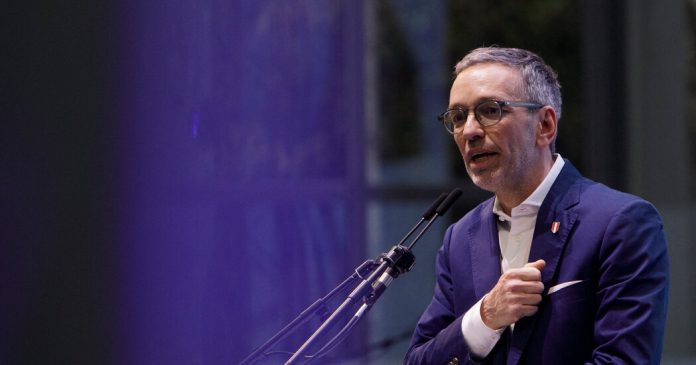
An effort by the head of Austria’s Freedom Party to form a coalition government collapsed on Wednesday, ending, for now, his chances of leading the country’s first far-right national government since World War II.

The Freedom Party’s leader, Herbert Kickl, and the conservative Austrian People’s Party failed to reach an agreement on forming a coalition, leaving the country without a government or a clear answer about what happens next.

Mr. Kickl’s party won 29 percent of the vote when Austrians went to the polls in September. But four months after that vote and numerous rounds of negotiations, Austrian politicians have been unable to form a government.

Initially, three centrist parties tried to form a coalition that would have kept the far-right Freedom Party out of government. That effort failed earlier this year, when liberal and conservative parties, including the People’s Party, could not make a deal.

The most recent talks between the People’s Party and the Freedom Party collapsed on Wednesday over policy disagreements on migration and national security. Mr. Kickl’s party sought to control the Interior Ministry to help push its anti-immigrant agenda. But the People’s Party balked, fearing that foreign intelligence agencies would cease cooperating with the ministry, which also controls Austria’s intelligence agency, if it was seen to be too far right.

“Herbert Kickl got the most votes, but that doesn’t justify his taking all the power,” said Christian Stocker, the chair of the People’s Party, after the talks collapsed.

It remains unclear what will come next. Austria’s president, Alexander Van der Bellen, said on Wednesday that he would speak with political leaders to seek a way forward.

“Liberal democracy thrives on compromise, on balancing different interests,” Mr. Van der Bellen said. “This is the only way a society can remain stable and be successful in the long term.”

Two smaller parties — the liberal NEOS and SPÖ, a social democrat party, which were part of earlier talks — have signaled their willingness to try to create a government with the conservatives, but Mr. Van der Bellen could also decide to try to form a caretaker government to lead the country until early elections are held.

That option would benefit Mr. Kickl and the Freedom Party, whose popularity has increased since last year’s election, according to polls.


State of the World from NPR : NPR

0

President Trump had separate phone calls with the leaders of Russia and Ukraine on the same day. Following the calls, Trump posted on social media that both leaders want peace and he said that he wanted negotiations on ending the war between Russia and Ukraine to begin immediately. We hear about what this could mean from NPR’s White House correspondent. We also hear about how the U.S. relationship with NATO is expected to change under Trump.

Czech Dam Project Was Stalled by Bureaucracy. Beavers Built Their Own.

0

For years, officials in the Czech Republic had pushed a dam project to protect a river south of Prague, and the critically endangered species living in it. But the project, hamstrung by land negotiations, stalled.

In the meantime, a group of chisel-toothed mammals — renowned for their engineering skills and work ethic, and unencumbered by bureaucracy — decided to take on the task. The beavers of Prague simply built dams themselves.

The rodents’ fast work saved the local authorities some 1.2 million euros, according to a news release from the Nature Conservation Agency of the Czech Republic, a government agency responsible for conservation across the country. “Nature took its course,” Bohumil Fišer, the head of the Brdy Protected Landscape Area, where the revitalization project was planned, said in the statement. The beavers, he added, had created the ideal environmental conditions “practically overnight.”

The project, on a former army site on the Klabava, a river about 40 miles southwest of Prague, the Czech capital, was drafted in 2018 and had a building permit, but had been delayed for years by negotiations over the land, which had been used as a military training grounds, Agence France-Presse reported on Tuesday. Officials had hoped to build a barrier to protect the river and its population of critically endangered crayfish from sediment and acidic water spilling over from two nearby ponds, A.F.P. reported.

The beavers began working before the excavators could even break ground. It was not immediately clear specifically when the dams were built and how long it took to build them.

The new wetland created by the dams covers nearly five acres, the conservation group said. It is twice as large as the area that the humans had planned, Agence France-Presse reported. “It’s full service,” Mr. Fišer told A.F.P. “Beavers are absolutely fantastic and when they are in an area where they can’t cause damage, they do a brilliant job.”

Despite their remarkable ability to construct dams, beavers often draw the ire of landowners and farmers for destroying trees, eating crops and flooding roads and fields. But in thinning a tree canopy, the rodents can often help to diversify an ecosystem by allowing in sunlight in so that other plant species can thrive, said Emily Fairfax, an assistant professor of ecology at the University of Minnesota.

“They’re fundamentally changing the way water and life moves through that landscape,” she said.

To build a dam, the beavers, whose weight as adults can range from about 40 to 80 pounds, begin by piling small stones across a river or stream, packing those stones in with mud, and repeating the process to construct a pond, which they then expand to become a wetland, Dr. Fairfax said.

They are motivated by their fear of predators: Beavers are adept swimmers and can hold their breath underwater for 15 minutes. On land, their ungainly waddle makes them easy prey. “They’re basically a big chicken nugget for predators,” which include bears, mountain lions and wolves, she said.

The Czech dam is not the first time the rodents have assisted in building a wetland. Beavers in California have helped to restore a floodplain about 30 miles northeast of Sacramento. In that case, the beavers’ work also helped local officials save money. “All they had to do was let the beavers be there,” Dr. Fairfax said. In other cases, beavers often did work that went unacknowledged. “We sort of have a blindness for beavers,” she said, noting that they were often considered a nuisance because of their alarming size and capacity to rapidly change the landscape.

“They’re powerful, they’re big, and they’re elusive,” Dr. Fairfax said, noting that, despite the beavers’ engineering prowess, they presented a challenge for conservation groups when planning restoration projects.

“Oftentimes we don’t want to allow the beavers to make the choices, because it’s hard to plan around that uncertainty; it’s hard to turn over control to a giant water rodent,” she said. “But that’s when beavers are at their best.”

Consider This from NPR : NPR

0

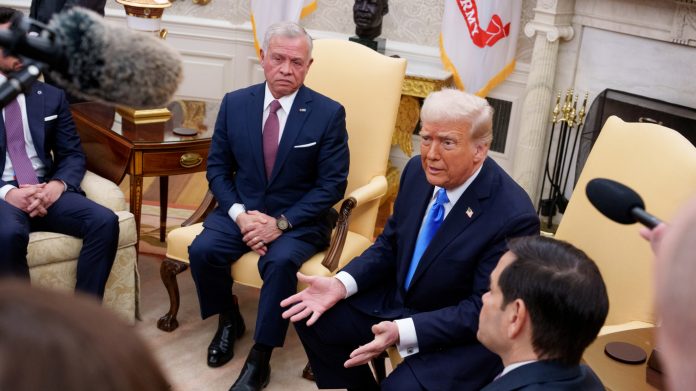
U.S. President Donald Trump speaks during a meeting with Jordan’s King Abdullah II bin Al-Hussein (L) in the Oval Office. The meeting comes as Trump has proposed that the United States take an ownership position of Gaza.

Andrew Harnik/Getty Images


hide caption

toggle caption

Andrew Harnik/Getty Images


U.S. President Donald Trump speaks during a meeting with Jordan’s King Abdullah II bin Al-Hussein (L) in the Oval Office. The meeting comes as Trump has proposed that the United States take an ownership position of Gaza.

Andrew Harnik/Getty Images

The Gaza Strip – ground zero of Israel’s war with Hamas – is only about twice the size of Washington, DC. It has about 25 miles of coastline along the Mediterranean Sea, with a population of about 2 million people.

Last week, President Trump proposed relocating those people to other countries in the region, like Egypt and Jordan.

Trump has said the Palestinians would not be allowed to return: UN officials and others say Trump’s plan would amount to ethnic cleansing. Despite domestic and international concerns that the U.S. is empire building, Trump continues to double down on his plans for the U.S. to “own” Gaza.

Trump says the U.S. is going to take over Gaza, though he offers few specifics. What could the proposal mean for Palestinians and the broader Middle East?

For sponsor-free episodes of Consider This, sign up for Consider This+ via Apple Podcasts or at plus.npr.org

Email us at [email protected]

This episode was produced by Mia Venkat.
It was edited by Courtney Dorning, James Hider and Nadia Lancy.

Our executive producer is Sami Yenigun.

Thursday Briefing: Trump and Putin Discuss an End to Ukraine War

0

President Trump said yesterday that he had a “highly productive” call with President Vladimir Putin of Russia, characterizing it as the beginning of a negotiation to end the war in Ukraine.

Afterward, Trump said he spoke with President Volodymyr Zelensky of Ukraine. For Putin, the talk was a major milestone, marking the collapse of Western efforts to isolate him diplomatically over the invasion of Ukraine.

Trump did not say how Ukraine’s interests would factor into the negotiations. But hours before the phone call, Secretary of Defense Pete Hegseth said at a NATO meeting in Brussels that it was “unrealistic” for Ukraine to expect a peace deal that would restore its pre-2014 borders. Trump, he added, does not support Ukraine’s membership in NATO as part of a realistic peace plan.

Background: Russia annexed Crimea in 2014 and backed a pro-Russian insurgency in eastern Ukraine before carrying out a full-scale invasion in 2022. Russia now occupies about 20 percent of Ukraine.

Prime Minister Narendra Modi is expected to try to ease any potential friction between the U.S. and India when he meets with President Trump today in Washington. Modi has spoken of a warm relationship with the president, but Trump can be a fickle friend.

A pair of glaring issues could complicate Modi’s goals: trade and immigration. Modi “will be trying to show Trump that he is cooperating on his fixation on tariffs and illegal immigration,” Mujib Mashal, our South Asia bureau chief, told me. “Trump has singled out India as one of the main abusers of tariffs that enjoys a trade deficit with the U.S., mentioning India in the same breath as China.”

India’s trade surplus with the U.S. is growing, and Modi could offer lower duties on U.S. goods like bourbon and pecans, which are produced mainly in Republican states.

Deportations: India is also the largest source of illegal immigration to the U.S. outside of Latin America. Modi’s government has made clear it will cooperate with Trump’s deportation effort, even as it caused an uproar in India last week.


In northeast Colombia, 54,000 people fled their homes, and at least 80 people died in a matter of days this month, as two rebel groups fought for territory.

The violence has its roots in disputes over land and drug money, but diplomats, analysts and Colombia’s president say there is a new factor at play. One of the rebel groups, the National Liberation Army, or ELN, has found refuge in neighboring Venezuela, which is being used as a base to unleash a new wave of destruction in Colombia.


The new season of “The White Lotus,” a series about wealthy tourists in a skewed paradise, takes place on the resort island of Koh Samui in Thailand. Crowds have flocked to the locations of seasons past, and this year is no different: With a wave of visitors set to arrive, the roughly 68,000 residents of the island are about to get familiar with the “White Lotus” effect.

For Valentine’s Day, the “Modern Love” podcast asked readers to share the moments they knew they were falling in love. Their stories spanned decades and regions.

The team also revisited one of the most iconic stories they have ever published: Mandy Len Catron’s piece about the 36 questions that can help us fall in love. Mandy joined the podcast to provide an update on her romance and to read her essay, which starts on a bridge at midnight, “staring into a man’s eyes for exactly four minutes.”

Listen to the podcast and read Mandy’s original essay here.

Judge declines to block Trump’s resignation offer to federal employees : NPR

0

A protester holds a fork during a rally against billionaire Elon Musk and his Department of Government Efficiency (DOGE) on Feb. 7 in Washington, D.C.

Kayla Bartkowski/Getty Images North America


hide caption

toggle caption

Kayla Bartkowski/Getty Images North America

After issuing two stays, U.S. District Judge George O’Toole has declined to block the Trump administration’s deferred resignation program for federal employees.

The ruling comes more than two weeks after the U.S. Office of Personnel Management (OPM) sent an email to more than 2 million civilian employees of the federal government with the subject line “Fork in the Road.”

The email presented government workers with a choice: They could resign now, in exchange for pay or benefits through the end of September. Or they could remain in their positions, with the caveat that their jobs are not guaranteed.

Moreover, those who stayed would face “significant” reforms, including layoffs, a return to working in the office and an expectation that they be “loyal,” the email said.

The legal group Democracy Forward filed a lawsuit on Feb. 4 on behalf of labor unions representing more than 800,000 civil servants. It alleges that the Trump administration’s resignation offer is unlawful, as well as “arbitrary and capricious in numerous respects.”

In his ruling, O’Toole wrote that the plaintiffs — the labor unions— lack standing to challenge the directive, because they are not directly impacted by the “Fork” directive.

“Instead, they allege that the directive subjects them to upstream effects including a diversion of resources to answer members’ questions about the directive, a potential loss of membership, and possible reputational harm,” O’Toole wrote in his decision. “This is not sufficient.”

O’Toole also stated that the Court lacks subject matter jurisdiction and that the complaints raised should have been taken first to the federal government’s internal system for administrative and judicial review.

Today’s ruling dissolves O’Toole’s stay on the “Fork” deadline, though it’s not clear if a new deadline will be set.

More than 65,000 federal employees, roughly 3% of the federal workforce, had agreed to resign as of Tuesday morning, according to a spokesperson at OPM.

Earlier this week, President Trump said he was confident his administration would prevail. 

“I got elected on making government better, more efficient and smaller, and that’s what we’re doing, and I think it was a very generous buyout actually,” he said, speaking in the Oval Office.

Have information you want to share about the ‘Fork in the Road’ offer or ongoing changes across the federal government? Reach out to the author. Andrea Hsu is available through encrypted communications on Signal at andreahsu.08.

California’s Scary Product Warning Labels Might Be Working, Study Says

0

The warnings, on thousands of products sold in California, are stark.

“Use of the following products,” one label says, “will expose you to chemicals known to the State of California to cause cancer, birth defects or other reproductive harm.”

Now, new research shows the warnings may be working.

A study published Wednesday in the journal Environmental Science & Technology found that California’s right-to-know law, which requires companies to warn people about harmful chemicals in their products, has swayed many companies to stop using those chemicals altogether.

As it turns out, companies don’t want to sell a product that carries a big cancer warning label, said Dr. Megan Schwarzman, a physician and environmental-health scientist at the University of California, Berkeley School of Public Health and an author of the study.

Combine that with the threat of lawsuits and reputational costs, as well as companies just wanting to do the right thing for health, and “it becomes a great motivator for change,” she said.

California maintains a list of about 900 chemicals known to cause cancer and other health effects. Under the 1986 right-to-know law, also known as Prop 65, products that could expose people to harmful amounts of those chemicals must carry warning labels.

Critics had long mocked the measure, saying the warnings were so ubiquitous — affixed to cookware, faux leather jackets, even baked goods — that they had become largely meaningless in the eyes of shoppers. But the latest study found that companies, more than consumers, may be most influenced by the warnings.

To assess the law’s effect, researchers carried out interviews at 32 global manufacturers and retailers that sell clothing, personal-care, cleaning, and a range of home products. Almost 80 percent of interviewees said Prop 65 had prompted them to reformulate their products.

Companies can avoid the warning labels if they reduce the level of any Prop 65 chemicals below a “safe harbor” threshold.

A similar share of companies said they looked to Prop 65 to determine which chemicals to avoid. And 63 percent said the law had prompted them to also reformulate products they sold outside California.

The American Chemistry Council, which represents chemical manufacturers, did not immediately respond to a request for comment on the study.

No other state has a law quite like Prop. 65, requiring warnings on such a wide range of products about cancer or reproductive harm. New York enacted a more limited law in 2020 that requires manufacturers to disclose certain chemicals in children’s products and that bans the use of certain chemicals by 2023. Other states have laws geared toward disclosure of ingredients on labels.

California, meanwhile, is pushing ahead. A 2018 change to Prop 65 has meant products are starting to carry even more specific labels. Some food and beverage cans, for example, may carry labels that warn that they “have linings containing bisphenol A (BPA), a chemical known to the State of California to cause harm to the female reproductive system.”

The latest research is part of a larger effort to analyze Prop 65’s effect on people’s exposure to toxic chemicals. In a study published last year, researchers at the Silent Spring Institute and UC Berkeley found that in the years after certain chemicals were listed under the law, levels of those chemicals in people’s bodies decreased both in California and nationwide.

That research came with a caveat, however. In some examples where levels of a listed chemical decreased, a close substitute to that chemical, potentially with similar harmful effects, increased. Prop 65 has no mechanism to check the safety of alternative chemicals.

It suggested that stronger policies were needed at both the federal and state levels to study and regulate the thousands of chemicals on the market, Dr. Schwarzman said. “This is so much bigger than the individual consumer and what we choose off-the-shelf,” she said.

President Trump elected chair of Kennedy Center by new board : NPR

0

Education Artist-In-Residence Mo Willems supervised a 2019 rehearsal at the Kennedy Center in Washington, DC.

Chip Somodevilla/Getty Images North America

hide caption

toggle caption

Chip Somodevilla/Getty Images North America

President Trump is the new chair of the John F. Kennedy Center for the Performing Arts, following through on a promise the president made last week. He posted the following on the social media platform Truth Social on Wednesday afternoon.

“President Donald J. Trump was just unanimously elected Chairman of the Board of the prestigious Kennedy Center in Washington, D.C. The President stated, “It is a Great Honor to be Chairman of The Kennedy Center, especially with this amazing Board of Trustees. We will make The Kennedy Center a very special and exciting place!”

Trump was elected by a board that excluded the 18 Democratic appointees purged by the president last week. New board members, according to a statement from the Kennedy Center, include the Vice President’s wife, Usha Vance as well as Susie Wiles, Dan Scavino, Allison Lutnick, Lynda Lomangino, Mindy Levine, Pamela Gross, John Falconetti, Cheri Summerall, Sergio Gor, Emilia May Fanjul, Patricia Duggan and Dana Blumberg.

In a statement sent to NPR marking her departure, former Kennedy Center president Deborah Rutter said, in part:

“The goal of the Kennedy Center has been to live up to our namesake, serving as a beacon for the world and ensuring our work reflects America. I depart my position proud of all we accomplished to meet that ambition. From the art on our stages to the students we have impacted in classrooms across America, everything we have done at the Kennedy Center has been about uplifting the human spirit in service of strengthening the culture of our great nation.

“I have been motivated my whole life by the fundamental values of America – freedom, equality, and a deep belief in the American dream. Core to our American experience is also artistic expression. Artists showcase the range of life’s emotions – the loftiest heights of joy and the depths of grievous despair. They hold a mirror up to the world – reflecting who we are and echoing our stories. The work of artists doesn’t always make us feel comfortable, but it sheds light on the truth.

“Much like our democracy itself, artistic expression must be nurtured, fostered, prioritized, and protected. It is not a passive endeavor; indeed, there is no clearer sign of American democracy at work than our artists, the work they produce, and audiences’ unalienable right to actively participate.”

Trump has boasted about never attending a performance at the country’s national cultural center. He skipped the Kennedy Center Honors in 2018, traditionally attended by sitting presidents. A few of that year’s honorees had vocally criticized his leadership and politics, including the singer Cher and theater artist Lin-Manuel Miranda.

On Monday, a longtime ally, Richard Grenell, was named interim executive director. 

For more than a decade, the Kennedy Center’s board was led by philanthropist David M. Rubenstein, who had deferred retirement until next year and told the New York Times that he believed he was on friendly terms with the president. Until recently, the 36-member board was notably bipartisan, with members split equally between Republicans and Democrats. Several had been appointed by President Biden shortly before he stepped down; they included former White House press secretary Karine Jean-Pierre and his longtime aide and advisor, Mike Donilon.

Board members are appointed to six-year terms, and typically, those terms are fulfilled. The Kennedy Center’s leadership addressed the legality of Trump’s actions in a statement on Friday.

“Per the Center’s governance established by Congress in 1958, the chair of the board of trustees is appointed by the center’s board members,” it said. “There is nothing in the center’s statute that would prevent a new administration from replacing board members; however, this would be the first time such action has been taken with the Kennedy Center’s board.”

Australian Health Workers Suspended After Threatening Israeli Patients

0

Two Australian medical workers caught on video making threats against Israeli patients have set off an uproar in a country where there has been a spate of antisemitic attacks in recent weeks.

“I won’t treat them,” one of the workers, wearing medical scrubs and a hijab, is heard saying in the video. “I’ll kill them.”

Discussing Israeli patients who had come to the hospital near Sydney, a co-worker, also dressed in scrubs, can be seen ominously running a finger across his neck

The workers appeared to be speaking from inside a medical facility. Neither has been identified publicly by officials.

Australian officials have been quick to denounce the comments captured on the video, which went viral after a pro-Israel content creator posted it online.

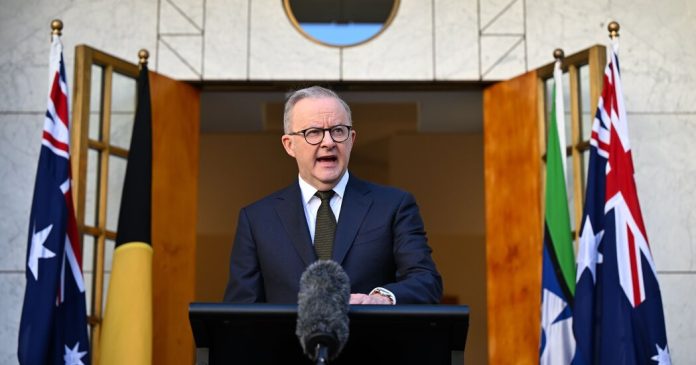
Prime Minister Anthony Albanese on Tuesday called the threats “sickening and shameful.” He said the two workers, identified as employees of Bankstown Hospital, had been suspended. He also said in a statement that they had been referred to the police for a criminal investigation.

That the country’s prime minister felt it necessary to comment on the video speaks to the high-level concern set off by a recent explosion in antisemitic speech and attacks. Australia has been hit with a rash of antisemitic attacks in recent weeks, including incidents where a synagogue was defaced with red swastikas and a day care facility was set ablaze.

There have been no reports of major casualties, but the violence represents a dramatic escalation of tensions reverberating from the war in Gaza, which has also spurred Islamophobic episodes in Australia.

In November, the Executive Council of Australian Jewry, an umbrella organization that has been tracking and documenting reports of antisemitism since 1990, reported a 316 percent increase in the number of incidents from October 2023 — when the war in Gaza began — to September 2024, compared with the previous twelve months.

The video of the two hospital workers, which was viewed by The New York Times, was recorded by Max Veifer and uploaded to his social media accounts, where other posts consist of videos of people discussing their views on Israel.

The video of the two workers had been edited, and used emojis to bleep out words.

Although one of the workers appears in the video to suggest that he may have harmed patients, health officials said that an examination of the hospital’s records had so far turned up nothing suspicious.

“We have already taken steps to review the safety of the hospital concerned in this matter, and we have identified nothing that indicates the hospital is unsafe,” the New South Wales health secretary, Susan Pearce, said in her own video.

Ryan Park, the state’s health minister, called the workers’ comments “an act of bastardry” and said “those people, subject to that investigation, will not ever be working for New South Wales Health again,”

Mr. Park and Ms. Pearce both offered apologies.

“I want to assure the Jewish community today that they have my utmost sorrow,” Mr. Park said, “but more importantly, my utmost energy, dedication and time, along with the secretary, to reassure them that our hospitals will continue to provide them high quality, safe care every time and anytime they present.”

As judges nix broad actions, White House says courts causing constitutional crisis : NPR

0

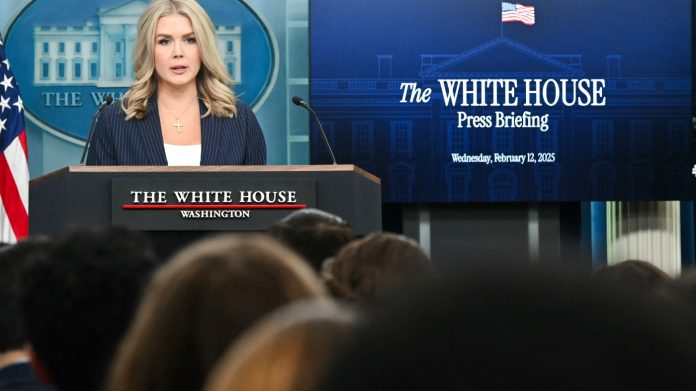
White House Press Secretary Karoline Leavitt speaks during the daily briefing in the Brady Briefing Room of the White House on Wednesday. Leavitt said judges blocking the Trump administration’s actions were causing a constitutional crisis.

Andrew Caballero-Reynolds/AFP via Getty Images


hide caption

toggle caption

Andrew Caballero-Reynolds/AFP via Getty Images

Since President Trump’s return to office last month, federal judges have notably halted several moves geared at drastically reforming parts of the federal government and U.S. immigration policy through a number of preliminary rulings and injunctions.

At least one federal judge has said the administration has failed to fully comply with a temporary restraining order in a case challenging the administration’s attempts to freeze payments for grants and other programs.

Critics of the administration have pointed to the various rulings as clear evidence that the president is overstepping his authority and thrusting the nation into a constitutional crisis.

But the White House is firing back, arguing that the real danger is coming from judges who have ruled against him.

“The real constitutional crisis is taking place within our judicial branch, where district court judges and liberal districts across the country are abusing their power to unilaterally block President Trump’s basic executive authority,” White House press secretary Karoline Leavitt told reporters during a briefing on Wednesday.

Leavitt called the orders that federal judges have made against the administration’s agenda a “continuation of the weaponization of justice” against Trump.

During Wednesday’s press briefing, Leavitt addressed what she characterized as “an extremely dishonest narrative” that the administration was causing a crisis with its actions and criticized the news media for “fear-mongering” on the topic.

Her comments came one day after Trump spoke about some of the legal challenges during remarks from the Oval Office, where he alleged that judges were seeking to thwart the administration’s agenda.

“We want to weed out the corruption, and it seems hard to believe that a judge could say, ‘we don’t want you to do that.’ So maybe we have to look at the judges, because that’s very serious. I think it’s a very serious violation,” Trump said.

President Trump, accompanied by Tesla and SpaceX CEO Elon Musk and his son X Musk, speaks during an executive order signing in the Oval Office on Tuesday. Trump complained that a judge wants the administration to stop looking for waste, fraud and abuse, but said he would comply with the courts and appeal rulings he disagrees with.

President Trump, accompanied by Tesla and SpaceX CEO Elon Musk and his son X Musk, speaks during an executive order signing in the Oval Office on Tuesday. Trump complained that a judge wants the administration to stop looking for waste, fraud and abuse, but said he would comply with the courts and appeal rulings he disagrees with.

Andrew Harnik/Getty Images


hide caption

toggle caption

Andrew Harnik/Getty Images

Trump clarified that while he will comply with court rulings, the White House will also file appeals.

Leavitt acknowledged that while courts have the power to issue nationwide injunctions, “these judges have no basis in the law and have no grounds,” adding that Trump’s actions are constitutional and that the White House would be vindicated on appeal.