Friday, November 13, 2026
Home Blog Page 229

Belarus Frees an American and 2 Others as It Tries to Thaw Relations

0

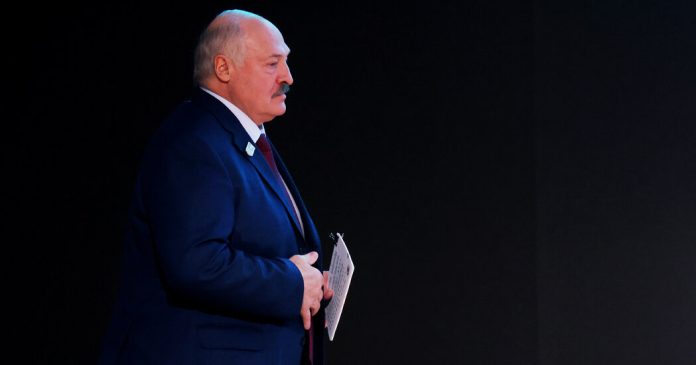
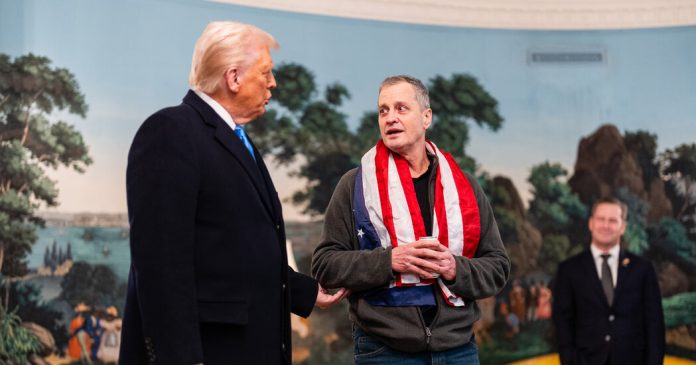
Belarus, Russia’s closest ally, has released an American prisoner and two others from jail, an exiled opposition group said on Wednesday, in the latest sign that the autocratic Belarusian president, Aleksandr G. Lukashenko, was looking for ways to improve frozen relations with the West.

The releases, announced by an opposition group led by Svetlana Tikhanovskaya in Lithuania, a neighbor of Belarus, followed what Western diplomats said was a secret visit on Wednesday to Minsk, the Belarusian capital, by a U.S. deputy assistant secretary of state, Christopher W. Smith. The group did not identify the American who was freed.

The State Department did not respond to messages seeking comment on whether Mr. Smith had traveled to Minsk, in what would be the highest-level visit to Belarus by an American official since Mike Pompeo, a secretary of state during President Trump’s first administration, went there in 2020 seeking to “normalize” ties.

Mr. Smith, a holdover from the Biden administration, last month helped secure the release of another American citizen held in Belarus, Anastassia Nuhfer.

Franak Viacorka, chief of staff to Ms. Tikhanovskaya, said in a video posted on Telegram that he had visited the U.S. Embassy in Vilnius, Lithuania, and picked up one of the people he said had been released, Alena Movshuk, whom he described as an activist.

He did not name the freed American but said the third person set free was Andrey Kuznechyk, a journalist with the Belarus service of Radio Free Europe, an American-funded news organization.

Lithuanian government officials said that an American citizen had on Wednesday entered that Baltic nation from Belarus. They did not give a name, either. They said that Mr. Smith was now in Vilnius and would hold meetings there on Thursday with European diplomats.

Since Mr. Pompeo’s trip to Minsk in February 2020, relations between Belarus and the West have gone from bad to worse, poisoned by Mr. Lukashenko’s brutal crackdown on nationwide street protests following what his opponents and Western governments say was a rigged presidential election in August 2020.

Russia’s full-scale invasion of Ukraine in February 2022, which was launched in part from Belarusian territory, frayed relations further. The United States shut its embassy in Minsk soon after the start of the invasion.

In recent months, however, a slow but steady stream of prisoners, mostly people jailed for involvement in the 2020 protests, have been released in what analysts and opposition activists see as an effort by Mr. Lukashenko to get his country in from the cold.

Mr. Lukashenko, long wary of becoming too dependent on Russia for economic and security support, has a long history of maneuvering between East and West, a game that ended abruptly after the post-election crackdown in 2020 but which he now appears eager to revive.

An early opponent in the 2020 race was Sergei Tikhanovsky, but he was arrested shortly after announcing his candidacy and later sentenced to 18 years in prison, where he remains. Ms. Tikhanovskaya, his wife, became a candidate in his place, but she fled the country shortly after the election and was sentenced in absentia to 15 years.

With all of his prominent critics either driven into exile or jailed, and all potential rivals kept off the ballot in a presidential election last month, Mr. Lukashenko cruised to yet another landslide victory, his seventh in a row, with 87 percent of the vote — even more than the 81 percent he claimed in the disputed 2020 election.

Disappearing data at the Census Bureau raises concerns : NPR

0

Public access to many U.S. Census Bureau data tables and research reports was cut off for days after President Trump released an executive order targeting gender identity.

Zeybart/Getty Images/iStockphoto


hide caption

toggle caption

Zeybart/Getty Images/iStockphoto

An apparent attempt by the U.S. Census Bureau to follow an executive order by President Trump targeting gender identity led to the public losing access for days to certain key statistics.

Close to two weeks after users first noticed many parts of the bureau’s website — like those of other agencies — had gone dark, the federal government’s largest statistical agency has yet to make any public statement about the disappearing data and research, at least some of which now appears to be restored.

The lack of an official explanation from the bureau — known for producing closely monitored indicators about the U.S. population and economy — is raising concerns among data users about threats to public trust in the agency and its independence from political interference, as Elon Musk’s team within the Trump administration known as the Department of Government Efficiency seek data access at multiple agencies, including the Bureau of Labor Statistics.

How “data censorship” came to the Census Bureau

Before coming back, the bureau’s homepage went offline on Jan. 31.

But even prior to that, an NPR analysis found at least four webpages related to the bureau’s efforts to produce data on people’s gender identity and sexual orientation were inaccessible as of Jan. 30, the day after the Office of Personnel Management put out guidance on how agencies should carry out Trump’s Jan. 20 executive order.

The bureau has for years been researching and testing how to generate more comprehensive statistics about LGBTQ+ people that could be used to fight against discrimination, including when enforcing civil rights laws.

Still, OPM’s instructions included taking down “all outward facing media (websites, social media accounts, etc.),” as well as any “final or pending documents, directives, orders, regulations, materials, forms, communications, statements, and plans,” that promote “gender ideology” — a phrase often used by opponents of transgender rights to claim that people cannot identify with a gender that doesn’t match the sex they were assigned at birth.

For days after the Jan. 31 deadline to comply with the OPM guidance, data users trying to access one of the bureau’s main data-sharing platforms — which also contains statistics not related to gender identity — were met with an error message saying they had no “permission to access” the data.

Inside the bureau, employees in multiple directorates, including the one tasked with preparing for the next national head count in 2030, could not access an internal platform for sharing files and information over multiple days last week, according to two employees who asked not to be named out of fear of retaliation. The lockout left many workers with no choice but to put regular assignments on pause.

The bureau’s public information office has not responded to NPR’s multiple requests for comment.

The disruptions to data access have drawn public outcries from organizations that rely on government statistics.

On Tuesday, more than 230 groups led by the Council of Professional Associations on Federal Statistics, the American Statistical Association and the Population Association of America released a letter calling on Congress to “demand the complete restoration of any federal data that have been removed” and work with the Trump administration to “prevent any future purge or removal of data from federal agency websites and portals.”

“Removing access to taxpayer funded public data from the public domain is unethical and contrary to the principle that these data are for the public and public good,” the Association of Public Data Users said in a separate statement. “It also sets a dangerous precedent that any administration could withhold public data for any reason.”

It can also be considered as a kind of censorship, says Karthick Ramakrishnan, the founder and executive director of AAPI Data, a research and policy organization focused on producing data that better reflects Asian American, Native Hawaiian and Pacific Islander communities.

“If we resist government censorship when it comes to speech, and these surveys represent the voices of Americans at the time when the data were collected, then why are we censoring the voices of Americans?” says Ramakrishnan, who is also one of the bureau’s advisory committee members whose bios were recently removed from the agency’s website. “I think that’s something that we need to sit with pretty deeply — with what it means to live in a period of data censorship.”

The dangers of deleted data, including those for protecting transgender rights

It’s not clear if any data tables ended up getting permanently deleted in the bureau’s scramble to get in line with Trump’s executive order targeting gender identity.

That’s a possibility that federal employees would want to avoid, warns Richard Painter, a law professor at the University of Minnesota, who served as chief White House ethics lawyer under former President George W. Bush.

“Which records are publicized, which records are not — there’s a lot of administrative discretion on that. But the idea of just simply going in and deleting a record, it’s just not a good road to go down,” Painter explains. That’s because, he says, “in a large range of circumstances, destruction of a government record can be a criminal offense.”

Many data users and transgender rights advocates are particularly concerned about any deletion or ending of public access to the gender identity data produced by the Census Bureau and other federal agencies.

In a public letter, Democratic Reps. Mark Takano of California, Jamie Raskin of Maryland and Gerry Connolly of Virginia called for OPM’s acting director to “immediately cease implementation” of Trump’s Executive Order 14168, which says the federal government no longer recognizes gender identity.

The lawmakers say that if the government cannot acknowledge that transgender people exist, “it is impossible for the federal government to adequately address and collect data on hate crimes against the transgender community, pursuant to the Matthew Shepard and James Byrd, Jr. Hate Crimes Prevention Act.”

OPM’s communications office has not responded to a request for comment.

In response to the bureau and other agencies cutting off public access to government statistics, some researchers, librarians and other volunteers have stepped up efforts to preserve the disappearing data on non-government servers.

“I’ve been heartened to see the response of researchers and others that have sort of jumped into action to try to meet the moment and save these kinds of data sets and webpages,” says Caroline Medina, policy director for the Whitman-Walker Institute, which focuses on health care for LGBTQ+ people and people living with HIV. “I know there is a broader effort to sort of identify what has been removed and to figure out creative ways for eventually rehosting.”

Still, Nancy Bates, a former senior researcher for survey methodology who retired from the bureau in 2020, says any pause on the bureau’s efforts to come up with better ways of asking about people’s gender identity would be devastating to science.

“I would see it as basically erasing decades — and I mean that literally — decades of work,” says Bates, who is currently the vice chair of the bureau’s 2030 Census Advisory Committee. “The federal workforce was very slow to embrace measuring, first of all, sexual orientation and then more recently, gender identity. And so great strides have been made in coming up with very tested and reliable, valid measures for this construct. So this executive order, at least in terms of gender identity, basically wipes out that research.”

The first Trump administration put up earlier obstacles to this research when it stalled plans to add questions about gender identity, as well as sexual orientation, to an annual bureau survey, which helps guide trillions in federal funding and is used to produce population estimates for communities across the country.

“If you don’t measure that, then it basically just becomes unknowable and the population is basically erased,” Bates says.

Have information you want to share about the Census Bureau or across the federal government? Hansi Lo Wang is available via the encrypted messaging app Signal (hansi.01). 

Edited by Benjamin Swasey

How Ukraine Pitched Trump on a Deal for Critical Minerals

0

To Ukraine, they are a chit to play in an ongoing appeal to President Trump for more financial and military support. To Mr. Trump, they should be overdue payment for billions of dollars committed to Kyiv’s war effort.

Either way, Ukraine’s vast and valuable mineral resources have suddenly become a prominent component in the maneuvering over the country’s future.

Over the past week, Mr. Trump has repeatedly pushed the idea of trading U.S. aid for Ukraine’s critical minerals. He told Fox News on Monday that he wanted “the equivalent of like $500 billion worth of rare earths,” a group of minerals crucial for many high-tech products, in exchange for American aid. Ukraine had “essentially agreed to do that,” he said.

For Ukraine, it is a hopeful sign that Mr. Trump, a longtime skeptic of American aid to Kyiv, might find a path to maintaining support that he finds palatable. But it’s still possible that the famously mercurial president will change his mind, and even his statements about a deal have been ambiguous about whether he wants Ukraine’s minerals for past or future aid — or a combination of both.

Mr. Trump’s proposal followed a campaign launched by Kyiv in the fall to appeal to the U.S. president’s business-oriented mind-set by discussing lucrative energy deals and emphasizing that defending Ukraine aligned with American economic interests.

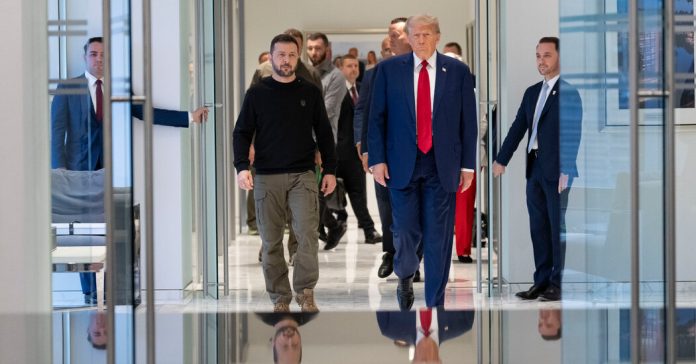
The campaign included a meeting between Mr. Trump and President Volodymyr Zelensky and trips to the United States by Ukrainian officials to pitch deals for exploiting deposits of lithium and titanium — vital for producing technologies like electric batteries. It also involved getting backing from influential political figures like the Republican senator Lindsey Graham.

The campaign was launched after politically connected U.S. investors started showing interest in Ukraine’s underground wealth in late 2023, despite the war that has been raging since 2022. A consortium including TechMet, an energy investment firm partly owned by the U.S. government, and Ronald S. Lauder, a wealthy friend of Mr. Trump, has engaged with Kyiv to bid on a Ukrainian lithium field, according to a letter to Mr. Zelensky reviewed by The New York Times.

Mr. Lauder, a cosmetics heir who planted the idea in Mr. Trump’s mind of buying resource-rich Greenland, said through a spokesman that he had not discussed Ukrainian minerals with Mr. Trump directly, but had “raised the issue with stakeholders in the U.S. and Ukraine for many years up to the present day.”

As Mr. Trump pushes for peace talks between Russia and Ukraine, Kyiv’s campaign around critical minerals has underscored Mr. Zelensky’s evolving strategy for retaining American support. Moving away from the moral appeals he used with the Biden administration, he has embraced a more transactional approach closer to Mr. Trump’s style. Mr. Zelensky recently said that he would also be interested in purchasing American liquefied natural gas.

On Wednesday, the U.S. Treasury secretary, Scott Bessent, met with Mr. Zelensky in Kyiv to discuss what a deal for Ukraine’s minerals might look like, marking the first visit by a Trump administration official to Ukraine. Mr. Bessent presented Mr. Zelensky a draft of an economic cooperation agreement, adding that “in exchange for this agreement, the U.S. will continue to provide material support for Ukraine.”

Mr. Zelensky said he hoped to finalize a deal at the Munich Security Conference later this week. “We will do everything so that our teams can quickly agree and sign this document,” he told reporters at a news conference alongside Mr. Bessent on Wednesday evening.

The idea of leveraging Ukraine’s mineral resources took shape last summer. Kyiv was crafting its “Victory Plan,” a strategy aimed at ending the war on terms favorable to Ukraine, and wanted to convince its allies to sustain their support despite rising war fatigue.

Ukrainian officials were particularly concerned about a potential return to power of Mr. Trump, who had vowed to cut off military and financial aid to Ukraine, according to Ukrainian officials and lawmakers.

Their attention was drawn to an argument voiced by a Trump ally: Mr. Graham, who was making the case that Ukraine was “sitting on a gold mine” of critical minerals. “If we help Ukraine now, they could become the best business partner we’ve ever dreamed of,” he said last June. He reinforced his message in a video with Mr. Zelensky in September.

Ukrainian authorities say the country holds deposits of nearly half the 50 minerals the United States has identified as critical for its economy and national security. The Kyiv School of Economics says Ukraine holds the largest titanium reserves in Europe and a third of the continent’s lithium reserves.

Groups like SecDev, a Canadian firm, have valued the reserves at several trillion dollars. But some deposits are inaccessible because they are in Russian-occupied land. And experts caution that exploiting mineral reserves could be a costly and prolonged process, with new surveys needed to accurately assess their potential.

In a November 2023 letter to Mr. Zelensky, Brian Menell, head of TechMet, sought assistance for launching a bid to exploit a state-owned lithium field in central Ukraine. The letter named Mr. Lauder, the Texas-based investment firm Privateer Capital and other U.S. and international investors as associates.

Mr. Menell and other energy executives met Mr. Zelensky in New York in September. It is unclear whether they discussed the bid, which has yet to be launched. “TechMet, together with our partners, is available to move forward with further work if the U.S. and Ukrainian governments instruct us to do so,” Mr. Menell said in a statement.

During Mr. Trump’s first term, when Kremlin-backed troops were already waging war in eastern Ukraine, Kyiv won support from him, including for weapons supplies, by buying coal from an important swing state, Pennsylvania.

Part of Ukraine’s argument now is to emphasize that should it lose the war, its mineral resources would fall into the hands of Russia and its allies like China, which already dominates the global market for such materials.

John E. Herbst, a former U.S. ambassador to Ukraine and now senior director of the Atlantic Council’s Eurasia Center, said Ukraine’s pitch was an obvious sell for Mr. Trump.

“It involves vast energy resources, economically valuable assets which are not abundant in the Western world, and it’s a way to strip other competitors, including China, of their leverage over the United States,” Mr. Herbst said. “It’s a no-brainer.”

Last fall, work was underway to finalize and sign an agreement with the Biden administration to cooperate on extracting and processing minerals. But Ukrainian authorities decided to postpone the signing of the deal and offer it to Mr. Trump instead so that he could claim credit for it.

A Ukrainian delegation led by Yulia Svyrydenko, the economy minister, then traveled to New York and Washington in December for meetings with U.S. officials and business representatives, with critical minerals as a central topic.

Ms. Svyrydenko outlined potential energy deals, including the acquisition of production licenses for critical minerals. A presentation, seen by The Times, emphasized that Ukraine was “capable of building the entire value chain to meet U.S. and E.U. metallic titanium demand for 25 years.”

Matthew Murray, chairman of the advisory board of Velta, a Ukrainian titanium extraction company, said Ms. Svyrydenko had asked him and other U.S. business representatives for their help in making Ukraine’s case to the Trump administration.

“We spent a good deal of this meeting talking about critical raw materials,” Mr. Murray said. He added that the exploitation of these resources could become a new pillar of the U.S.-Ukraine relationship.

What shape this pillar may take remains to be seen.

A draft of the agreement that Kyiv postponed, and which was reviewed by The Times, included only pledges to share information and expertise on potential partnerships. It contained no financial commitments and was nonbinding. It is unclear whether Kyiv and Washington will amend the agreement to align it with Mr. Trump’s latest proposals.

Mr. Murray, a former Obama administration official, said one idea circulating in Washington was to offer Ukraine a loan to purchase U.S. weaponry, with access to critical minerals as collateral. This proposal could align with Mr. Trump’s vision, who has talked of obtaining a “guarantee” for continued American assistance.

“There are many steps yet to be taken, but the concept is very viable,” he said.

Marian Prysiazhniuk contributed reporting.

Trump’s Greenland push inspires proposals in Denmark, Congress : NPR

0

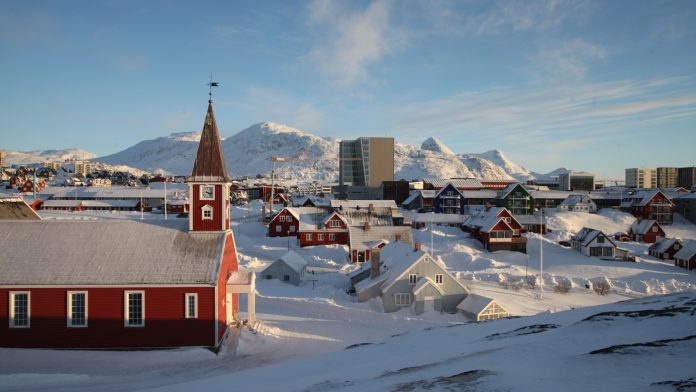
A view of the city center of the Greenlandic capital Nuuk. Trump’s renewed interest in acquiring the island hasn’t gone over well with Greenland or Denmark.

Steffen Trumpf/picture alliance via Getty Images


hide caption

toggle caption

Steffen Trumpf/picture alliance via Getty Images

President Trump’s repeated talk of buying Greenland has inspired a number of related proposals — both serious and satirical — from those who either endorse or oppose the idea.

Trump first spoke of purchasing the massive Arctic island from Denmark in 2019 and has strongly reiterated his interest in the early weeks of his second term, part of a “manifest destiny” push that has also included talk of “taking back” the Panama Canal, making Canada the 51st state and taking over Gaza.

Trump has said buying Greenland is essential for American economic security, and “National Security and Freedom throughout the World.” Experts say the island holds value geopolitically and geographically: It’s home to rare earth minerals that the U.S. largely relies on China to get.

Trump’s idea has been welcomed by congressional Republicans, who have introduced supportive bills with tongue-in-cheek names like “Make Greenland Great Again” and the “Red, White and Blueland Act.”

But the leaders of Denmark and Greenland rejected it, saying the island is “not for sale.” (Trump has declined to rule out military or economic coercion to take control of it.)

A January poll found that 85% of Greenlanders do not want to be part of the U.S. And, as NPR has reported, most Danes “have gone from shock, confusion to just plain bemused” by Trump’s proposal.

Some Danes are now flipping the script, suggesting their leaders buy California and turn it into “New Denmark.” More than 220,000 people had signed the satirical petition as of Wednesday morning.

The push to “Danify California” 

The petition aims to gather 500,000 signatures and raise “$1 trillion (give or take a few billion)” in support of what it calls “Denmark’s Next Big Adventure.”

“Have you ever looked at a map and thought, ‘You know what Denmark needs? More sunshine, palm trees, and roller skates.’ Well, we have a once-in-a-lifetime opportunity to make that dream a reality,” its website says. “Let’s buy California from Donald Trump!”

Why California? The petition lists a few reasons, including its year-round sunshine, tech dominance, avocado supply (“avocado toast forever”) and Disneyland (“we’ll rename it Hans Christian Andersenland”).

And it jokes that Trump might be willing to part with it for the right price.

Trump has had no shortage of critical words for California, which voted against him three times. He has accused Democrats of destroying the state, even calling it “Paradise Lost” on the campaign trail.

He has long feuded with its Democratic governor, Gavin Newsom, most recently blaming him for the scale of the wildfires that devastated Los Angeles in January and threatening to tie federal aid to voter ID. Newsom, in turn, signed two laws last week setting aside $50 million for legal battles against the second Trump administration.

The petition borrows some language from Trump, like calling its plan “tremendous,” including “bigly” in its email address and brandishing the slogan “Måke Califørnia Great Ægain.” It says it is in Denmark’s national interest to promote its heritage by turning California into New Denmark and L.A. into Løs Ångeles.

“We’ll bring hygge to Hollywood, bike lanes to Beverly Hills, and organic smørrebrød to every street corner,” it says. “Rule of law, universal health care and fact based politics might apply.”

The website includes fake testimonials of support from celebrities — like Danish-born Metallica drummer Lars Ulrich and Danish-American actor Viggo Mortensen — and imaginary people, including Sven the Viking and Karen from Accounting.

It’s not clear who the organizers of the petition are. Their website, Denmarkification.com, cheekily says they are located “somewhere on Earth, for strategic and economic reasons.” And they are upfront about it being satire, with a disclaimer reading “This campaign is 100% real… in our dreams.”

A bill to rename Greenland 

Meanwhile, in Congress, some Republican lawmakers are throwing their legislative support behind Trump’s efforts.

On Tuesday, Rep. Buddy Carter of Georgia introduced a bill that would authorize Trump to enter into negotiations with Denmark to acquire Greenland and, if successful, rename it “Red, White, and Blueland.”

“Any reference in a law, map, regulation, document, paper, or other record of the United States to Greenland shall be deemed to be a reference to ‘Red, White, and Blueland,” it reads.

The bill directs the Secretary of the Interior to oversee its implementation on federal documents through the Board of Geographic Names — which is effectively how Trump renamed the Gulf of Mexico to the Gulf of America.

“America is back and will soon be bigger than ever with the addition of Red, White, and Blueland,” Carter said in a statement. “President Trump has correctly identified the purchase of what is now Greenland as a national security priority, and we will proudly welcome its people to join the freest nation to ever exist when our Negotiator-in-Chief inks this monumental deal.”

Carter’s bill has been referred to the committees on Foreign Affairs and Natural Resources for further consideration. It’s the second of its kind — a dozen House Republicans introduced the “Make Greenland Great Again Act” in mid-January, before Trump was even sworn in.

The bill authorizes the president to seek to enter into negotiations with Denmark over Greenland. It requires any agreement they may reach to be submitted to the House and Senate Foreign Relations committees within five days and gives Congress 60 days to review it.

Does Trump need Congress’ support? 

Article II, Section 2 of the Constitution gives a president the power to make treaties “with the Advice and Consent of the Senate” and “provided two thirds of the Senators present concur.”

But in the decades after World War II, according to the Senate, presidents have entered the U.S. into a growing number of international agreements without the Senate’s approval.

“Since 1990, only about 6 percent of international agreements have been made through formal treaties submitted to the Senate for advice and consent,” it says.

Those executive agreements, as they are called, are still considered binding under international law.

While Trump’s push for Greenland gains steam among Republicans, support among Democrats appears to be lacking. House Minority Leader Hakeem Jeffries said in January that “House Democrats believe that we are not sent to Washington to invade Greenland.”

Trump Says Call With Putin Is Beginning of Ukraine Peace Negotiations

0

President Trump said on Wednesday that he had a “lengthy and highly productive phone call” with President Vladimir V. Putin of Russia, characterizing it as the beginning of a negotiation to end the war in Ukraine.

It was the first confirmed conversation between the two men during Mr. Trump’s second term, coming as Mr. Trump has made clear to advisers that finding a U.S.-backed end to war that Russia began is a priority for his administration.

“We discussed Ukraine, the Middle East, Energy, Artificial Intelligence, the power of the Dollar, and various other subjects,” Mr. Trump wrote in a social media post.

“We each talked about the strengths of our respective Nations, and the great benefit that we will someday have in working together,” Mr. Trump added. “But first, as we both agreed, we want to stop the millions of deaths taking place in the War with Russia/Ukraine.” (An estimated several hundred thousand deaths have occurred in the conflict, not millions.)

The U.S. president said he planned to inform President Volodymyr Zelensky of Ukraine that both countries planned to “have our respective teams start negotiations immediately.” Mr. Zelensky’s office later said that the Ukrainian president spoke with Mr. Trump for an hour.

However, Mr. Trump did not say in his social media post how Mr. Zelensky would factor into the negotiations that he and Mr. Putin were setting in motion. Mr. Trump has long been skeptical of Ukraine and has never warmed to Mr. Zelensky.

The Kremlin’s spokesman, Dmitri S. Peskov, told reporters that Mr. Putin’s call with Mr. Trump lasted almost an hour and a half.

He said that the two men agreed to hold a personal meeting and that Mr. Putin invited Mr. Trump to visit Moscow, something that Mr. Trump also alluded to in his social media post. Mr. Putin agreed with Mr. Trump that “the time has come for our countries to work together,” Mr. Peskov said.

On Ukraine, Mr. Putin told Mr. Trump of “the need to eliminate the root causes of the conflict,” Mr. Peskov said. That was a sign that Mr. Putin would not accept a simple cease-fire in Ukraine and would seek broader concessions from Ukraine and the West before he stops fighting.

The Ukrainians appear to be facing an effort in which they have little leverage. The call between Mr. Putin and Mr. Trump came on the same day that the U.S. secretary of defense, Pete Hegseth, speaking at the NATO headquarters in Brussels, said that it was an “unrealistic” objective for Ukraine to restore its borders as they were before 2014, when Russia annexed Crimea. Mr. Hegseth added that the U.S. does not support Ukraine’s desire to join NATO as part of a realistic peace plan.

He also suggested that Europe needed to assume a greater role in its own defense, echoing a point that Mr. Trump has made for many years.

For Mr. Putin, the call was a major milestone, marking the collapse of Western efforts to isolate him diplomatically after he invaded Ukraine nearly three years ago. Ever since Mr. Trump’s re-election in November, the Russian president has heaped praise on Mr. Trump, underlining the Kremlin’s hope that the new American leader could reshape Moscow’s relationship with Washington and back away from supporting Ukraine.

In response to news of the conversation between Mr. Trump and Mr. Putin, the United Nations said Wednesday that it welcomed any efforts leading to peace talks between Russia and Ukraine.

“We would appreciate any efforts to resolve the war in Ukraine that would involve the Russian and Ukrainian sides, so obviously if both of them are willing to be involved in the process, that would be a welcome development,” said U.N. spokesman Farhan Haq.

Mr. Trump wrote in his social media post that the U.S. negotiating team would include Secretary of State Marco Rubio; John Ratcliffe, the C.I.A. director; his national security adviser, Michael Waltz, and his Mideast envoy, Steve Witkoff. Mr. Witkoff was in Moscow this week and retrieved the American schoolteacher Marc Fogel, who was imprisoned for more than three years in Russia.

Mr. Trump did not mention Keith Kellogg, the retired general named by Mr. Trump as his envoy for Russia and Ukraine. Mr. Kellogg has generally taken a more aggressive posture toward Russia than some of Mr. Trump’s informal advisers, and he recently suggested that Mr. Trump could increase sanctions against Russia to force them toward a peace deal.

Mr. Trump has repeatedly refused to say whether he’s spoken to Mr. Putin before Wednesday, although individuals who would know of such a call in the U.S. government were not aware of one, according to people briefed on the president’s conversations.

Mr. Trump has often made admiring remarks about the Russian president, whom he called a “genius” after the invasion of Ukraine in 2022. But in the first week of Mr. Trump’s second term, he was more critical, saying the Russian president should not have invaded Ukraine.

“He can’t be thrilled, he’s not doing so well,” Mr. Trump told reporters in the Oval Office hours after he was inaugurated. “Russia is bigger, they have more soldiers to lose, but that’s no way to run a country.”

Farnaz Fassihi and Julian E. Barnes contributed reporting.

Tulsi Gabbard confirmed as director of national intelligence, overcoming skepticism : NPR

0

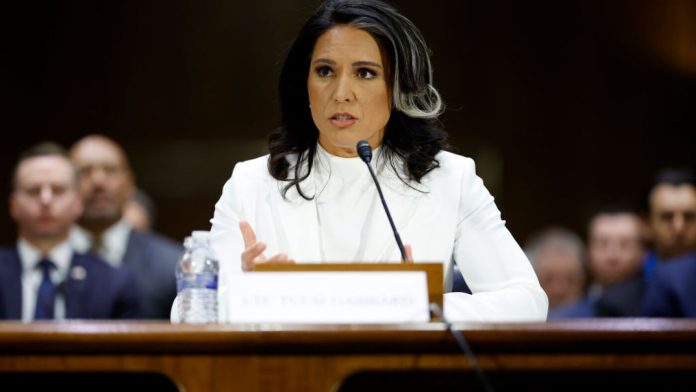
Tulsi Gabbard testifies during her confirmation hearing before the Senate Intelligence Committee on Jan. 30.

Kevin Dietsch/Getty Images


hide caption

toggle caption

Kevin Dietsch/Getty Images

The U.S. Senate has confirmed former Hawaii Rep. Tulsi Gabbard to lead the intelligence community as director of national intelligence, despite initial skepticism.

Gabbard was confirmed 52-48 on Wednesday after gaining broad support from Republicans during the confirmation process.

In addition to criticism about her lack of experience in intelligence, Gabbard fought back against concerns about her past statements about autocratic leaders, such as Syria’s ousted President Bashar al-Assad and Russian President Vladimir Putin. She deflected questions about her past defense of Edward Snowden, who leaked NSA secrets in 2013.

Sen. Mitch McConnell, R-Ky., maintained his opposition to Gabbard and issued a statement after the vote saying that she “failed to demonstrate that she is prepared to assume this national trust.”

“The nation should not have to worry that the intelligence assessments the President receives are tainted by a Director of National Intelligence with a history of alarming lapses in judgment,” he added. McConnell was the sole Republican vote against her confirmation.

Gabbard, a 43-year-old U.S. Army Reservist who unsuccessfully ran for president as a Democrat in 2020, will be responsible for leading 18 intelligence agencies and managing billions of dollars in budget.

Senate Majority Leader John Thune, R-S.D., called Gabbard a “patriot” who is “motivated by service” on the chamber floor on Tuesday.

“The intelligence community needs to refocus on its core mission, collecting intelligence and providing unbiased analysis of that information. That’s what Tulsi Gabbard is committed to ensuring,” he said.

U.S. Is Releasing Russian Cybercriminal to Moscow, Officials Say

0

The Trump administration is preparing to release a Russian cybercriminal as part of a prisoner exchange that led to the release of an American schoolteacher from a Russian prison, three U.S. officials said on Wednesday.

Officials were preparing to release Alexander Vinnik, who pleaded guilty to money laundering in 2024, to Russia as part of a swap for Marc Fogel, according to the three officials. Mr. Vinnik is a nonviolent offender and is forfeiting tens of millions of dollars in assets in the exchange, one of the officials said.

The officials spoke on condition of anonymity to discuss private diplomatic negotiations.

In a post on his website Truth Social, President Trump said late Wednesday morning that he had just had a “highly productive” call with President Vladimir V. Putin of Russia to begin working toward a peace deal between Russia and Ukraine.

Mr. Trump told reporters on Tuesday, as he awaited Mr. Fogel’s arrival back in the United States, that his administration had traded for “not much” — suggesting he had gotten the better of the deal — and later described it as a “very fair” exchange.

But they did see the exchange as an effort to establish good will as the administration looks for ways to bring about a peace settlement in the war in Ukraine that Russia began almost three years ago.

Mr. Fogel’s release was negotiated by Steve Witkoff, Mr. Trump’s decades-long friend and his Mideast envoy, whose portfolio has expanded to helping find a way to end the war in Ukraine. Mr. Witkoff flew to Russia on his private jet, then brought Mr. Fogel home on that plane, and to the White House to meet with Mr. Trump.

“I think they had a great friendship,” Mr. Witkoff said outside the White House on Wednesday, referring to Mr. Putin and Mr. Trump. “I think now it’s going to continue, and I think it’s a really good thing for the world.”

Mr. Witkoff’s visit to Russia was the first by a senior American official since before Russia’s February 2022 invasion of Ukraine. The trip, according to two people with knowledge of the events, was part of a new outreach by the Trump administration to the Kremlin, one that could result in the rebuilding of a channel for communication between the White House and Mr. Putin.

The Fox News host Sean Hannity, who is a close friend of both Mr. Trump and Mr. Witkoff, reported on Tuesday that Mr. Witkoff held a meeting with Mr. Putin that lasted more than three hours. Mr. Witkoff declined to address that in a separate interview with Fox News on Wednesday morning, but he credited several Trump administration officials with helping work toward the exchange, including the White House chief of staff Susie Wiles and the C.I.A. director John Ratcliffe.

Mr. Trump has appointed Keith Kellogg, a retired three-star general, to be his special envoy for Ukraine and Russia. But he has also assigned Mr. Witkoff a role in trying to work the Russian side of the peace deal. Mr. Witkoff has discussed the conflict with some of his contacts in Qatar and Saudi Arabia, people with knowledge of the matter said.

Mr. Witkoff told reporters that Mohammed bin Salman, the Saudi crown prince, as well as a “gentleman from Russia, his name is Kirill” were key to securing Mr. Fogel’s release. Mr. Witkoff appeared to be referring to Kirill Dmitriev, the head of Russia’s sovereign wealth fund, who is a close associate of Mr. Putin, has long fostered ties with Mr. bin Salman, and sought a back channel to Mr. Trump during his first term.

Mr. Trump has promised to end the war in Ukraine with talks between the two sides and has said he wants to stop the loss of life by both sides and stem the huge amount of money the United States has spent supporting Ukraine’s defense.

The positive energy between Moscow and Washington comes at a particularly inopportune time for President Volodymyr Zelensky of Ukraine, who has struggled to overcome Mr. Trump’s skeptical view of his country. Mr. Trump has privately described the Ukrainian government as being “corrupt” and has complained that Mr. Zelensky has taken advantage of the United States.

Mr. Zelensky is preparing for key meetings with senior American officials at a major security conference in Germany later this week.

Mr. Vinnik was being prepared to travel to Russia early Wednesday, according to one of the U.S. officials. Mr. Vinnik was charged in 2017 with overseeing a black market Bitcoin exchange, known as BTC-E, that laundered money. Federal prosecutors said the exchange facilitated ransomware attacks, identity theft and other crimes.

Mr. Vinnik was arrested in Greece in July 2017, and the indictment against him said he had directed the operations of the exchange.

At the time of the arrest, the Justice Department said the Bitcoin exchange had laundered more than $4 billion and was used by more than 700,000 people. The arrest of Mr. Vinnik led to the exchange, one of the largest at the time, being shut down.

Mr. Vinnik pleaded guilty to conspiracy to commit money laundering last May. Justice Department officials said Mr. Vinnik ran the exchange with the intent to promote cybercrime.

He had earlier, in December 2020, been convicted by a French court and sentenced to five years in prison. He was extradited to the United States in 2024 and was then held in U.S. prisons.

Dmitri S. Peskov, the Kremlin’s spokesman, said earlier Wednesday that intense talks between the United States and Russia had led to “both the release of Fogel as well as one of the citizens of the Russian Federation currently held in detention facilities in the United States.” He said Russia would not identify the prisoner until after his release.

Mr. Fogel, who had spent more than three years in a Russian prison,

was greeted at the White House Tuesday night by Mr. Trump, whom he praised and thanked for arranging his release.

Mr. Fogel, 63, had worked at the Anglo-American School of Moscow for almost 10 years before being arrested at a Moscow airport in August 2021. He was found to have been traveling with cannabis, which his lawyer has said was intended to alleviate back pain. Mr. Fogel was convicted in June 2022 for what the Russian authorities said was engaging in “large-scale drug smuggling” and sentenced to 14 years in a high-security prison.

The U.S. State Department publicly declared Mr. Fogel “wrongfully detained” in December. The designation — described by his family as long overdue — meant that Mr. Fogel’s case shifted to a special State Department office focusing on the release of hostages held abroad.

Mr. Fogel’s family said in December that he had endured “unimaginable hardship” in prison while other Americans held in Russia were brought home in three different prisoner swaps.

Mr. Vinnik’s expected release in exchange for Mr. Fogel marks a striking departure from the tight choreography of prisoner swaps between Moscow and Washington during the Biden administration.

In high-profile deals like the ones that freed the basketball star Brittney Griner in 2022 and the journalist Evan Gershkovich in 2024, the Americans were flown to airports in a third country, where they were exchanged for Russians on the tarmac.

The delayed approach allowed Mr. Trump to claim an unalloyed win on Tuesday without discussing what the United States gave up in return for Mr. Fogel.

Mr. Trump said that “we were treated very nicely by Russia,” and that the deal could pave the way to an end to the war in Ukraine. He added, “I hope that’s the beginning of a relationship where we can end that war.”

Mr. Trump’s warm words toward Russia after Mr. Fogel’s release were shown extensively on Russian state television on Wednesday. Russian commentators praised Mr. Fogel’s release as a clever step by Mr. Putin to give Mr. Trump the political cover he needs to move forward with policies favorable to Russia.

Sergei Markov, a pro-Kremlin political analyst in Moscow, said in a telephone interview that by winning Mr. Fogel’s release, “Trump got the right to do something good for Russia.”

Mr. Markov suggested that Mr. Trump could start lifting sanctions against Russia and push for a Ukraine peace deal on Russia’s terms — or simply stop delivering weapons to Ukraine.

How did Elon Musk became so powerful in the Trump administration?

0

New York Times journalist Eric Lipton explains how Musk’s companies are benefiting as he cuts federal jobs and agencies, and reporter Teddy Schleifer explains how Musk’s political views turned right.

‘Ultrahigh Energy’ Neutrino Found With a Telescope Under the Sea

0

Deep in the waters of the Mediterranean Sea, physicists have uncovered evidence of a ghostly subatomic particle catapulting through space at a speed they once could only dream of.

“What we have discovered is, we think, the most energetic neutrino ever recorded on Earth,” said Paul de Jong, a physicist at the University of Amsterdam and current spokesperson for the global collaboration of roughly 350 scientists who were involved in the discovery.

The team announced its “ultrahigh energy” neutrino on Wednesday, in a paper published in the journal Nature. The finding brings physicists and astronomers one step closer to understanding just what, exactly, is out there thrusting particles to such unfathomable speeds.

At a news conference on Tuesday, researchers described the discovery as a peek into what the universe looks like at its most extreme. “We’ve just opened a completely new window,” said Paschal Coyle, an astroparticle physicist at the Center for Particle Physics of Marseille in France. “It’s really a very exciting first glimpse into this energy regime.”

Neutrinos are notoriously antisocial. Unlike most other particles, they are nearly weightless and carry no electrical charge, so they do not regularly collide, repel or otherwise interact with matter. They flow through nearly everything — the innards of stars, the churning dust of galaxies, ordinary people — without a trace.

Thus unimpeded, neutrinos point straight back to their origins, making them excellent guides to the natural, yet-unknown “cosmic accelerators” that created them. They are also spectacularly elusive, and for decades scientists have worked to trap them with instruments deep in the mountains, beneath frozen lakes and buried in Antarctic ice.

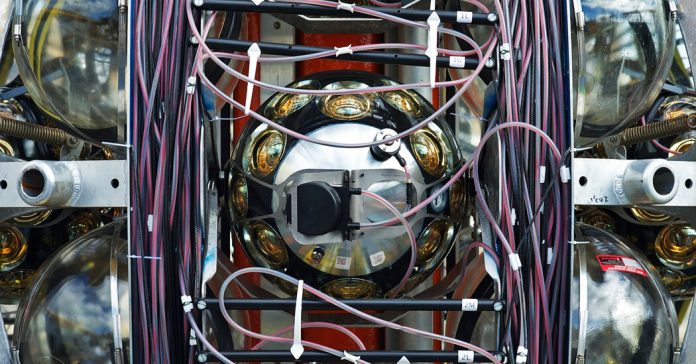
But no neutrino captured previously has resembled anything quite like this one. Scientists found the ultrahigh energy neutrino using the Kilometer Cube Neutrino Telescope, or KM3NeT, which is still under construction but already operating. The instrument consists of a pair of detectors a couple of miles beneath the surface of the Mediterranean, off the coasts of France and Sicily.

One detector — made up of strings of light-catching orbs, spaced about the length of a football field apart and anchored to the seabed — was only 10 percent built when one-third of its sensors lit up with the characteristic flash of a neutrino observation.

The detector did not see the neutrino directly. Rather, it picked up traces of a different subatomic particle, known as a muon, created when the neutrino bumped into rock or seawater nearby.

That muon zipped through KM3NeT at lightning-fast speed, leaving a trail of bright blue photons in the otherwise dark abyss of the sea. Using the pattern of light, as well as the time of its arrival at different parts of the grid, the team deduced the direction of the original neutrino. They also estimated that the neutrino carried 220 million billion electronvolts of energy.

That’s no greater than the energy of a falling Ping-Pong ball. But the energy of a Ping-Pong ball is spread over a thousand billion billion particles. Here, squeezed into one of the tiniest flecks of matter in our universe, that energy amounted to tens of thousands of times more than what can be achieved by the world’s premier particle accelerator, the Large Hadron Collider at CERN.

The telescope recorded the ultrahigh energy neutrino in February 2023. But researchers needed two years to interpret and analyze the data, during which time they swung between elation and skepticism.

It “took a while to sink in, to be honest,” Aart Heijboer, a neutrino astronomer at the National Institute for Subatomic Physics in the Netherlands, said at Tuesday’s news conference. Another scientist said that the particle’s energy was so extreme that its total data crashed his computer.

Before the discovery, the highest-energy neutrino ever detected was around 10 million billion electronvolts. That then-impressive record was set in 2014 by the IceCube Neutrino Observatory, an even bigger grid of light sensors embedded in the Antarctic ice.

It is rare for an instrument like KM3NeT to detect such an extraordinary neutrino so early in its lifetime, which added to skepticism of the result. Erik Blaufuss, an IceCube physicist at the University of Maryland who wrote a corresponding comment in Nature on Wednesday, said he first heard hints of the discovery at conferences last summer. “I think there was a lot of disbelief that this could be real,” Dr. Blaufuss said. “In a decade of observations, we haven’t seen anything quite like this.”

KM3NeT got lucky, according to Naoko Kurahashi Neilson, an astrophysicist at Drexel University who is not formally on the telescope’s team but has observer status. “It’s amazing proof that their detector works well,” she said, adding that the detection of one neutrino alone “raises many more questions than it answers.”

One big question is what sort of cosmic accelerator might have generated such energetic particles. Perhaps a supermassive black hole voraciously devouring the gas and dust surrounding it. Or maybe a cataclysmic burst of gamma rays, the highest energy form of light, which occurs when the heart of a star caves in on itself.

Such processes emit charged particles that may smash into nearby matter, generating a flurry of neutrinos that race through the cosmos and, sometimes, into telescopes on Earth. Another theory is that those charged particles interact with the light left over from the Big Bang, creating “cosmogenic” neutrinos that may carry secrets about the evolution of the universe.

The KM3NeT team will work to nail down the direction of the neutrino more precisely, to better pinpoint the particle’s origin. And as the telescope approaches completion in 2028, scientists hope that more neutrinos of comparable pep might reveal themselves.

To Dr. de Jong, the discovery underscored the importance of trying new types of detection, like acoustic and radio sensing, that may be better able to catch neutrinos at ultrahigh energies.

“Now, we know these neutrinos are not just predicted,” he said. “They’re there. They’re real.”

Hegseth Says Return to Ukraine’s Pre-War Borders Is ‘Unrealistic’

0

A return to Ukraine’s pre-2014 borders is “an unrealistic objective” and an “illusionary goal” in the peace settlement between Ukraine and Russia that President Trump wants to accomplish, the U.S. Defense Secretary, Pete Hegseth, said on Wednesday at a NATO meeting in Brussels.

In his first meeting with NATO and Ukrainian defense ministers, Mr. Hegseth told them that Mr. Trump “intends to end this war by diplomacy and bringing both Russia and Ukraine to the table.”

But for Ukraine to try to regain all of the territory Russia has seized since 2014, as it insists it must do, “will only prolong the war and cause more suffering,” Mr. Hegseth said.

“We will only end this devastating war and establish a durable peace by coupling allied strength with a realistic assessment of the battlefield,” he said.

Mr. Hegseth also told the meeting that Mr. Trump expected Europe to bear more financial and military responsibility for Ukraine’s defense.

Europe, he said, must take more responsibility for its conventional defense and spend more money on its armed forces, up to 5 percent of national output, as the United States deals with its own security risks and the challenge of China.

Mr. Trump, he added, does not support Ukraine’s membership in NATO as part of a realistic peace plan.

After a settlement, “a durable peace for Ukraine must include robust security guarantees to ensure that the war will not begin again,” but that would be the responsibility, he said, of European and non-European troops in a “non-NATO mission” unprotected by NATO’s Article Five commitment to collective defense.

No American troops will be deployed to Ukraine, he said, and Europe should provide “the overwhelming share of future lethal and nonlethal aid to Ukraine.”

European and alliance leaders have been anxiously waiting to hear what Mr. Trump’s goals for a Ukraine settlement might be. Mr. Hegseth’s comments, at the opening of a large grouping of nations that support Ukraine, will not come as a great surprise, but they mark a major change from former President Biden’s policy on Ukraine, which was to support Kyiv in its effort to drive Russian forces out of the entirety of sovereign Ukraine.

NATO has promised that Ukraine will one day become a member of NATO, but without specifying a date. Mr. Hegseth’s comments would appear to put that date very far into the unforeseeable future, if it arrives at all.

Mr. Hegseth’s remarks will create political difficulties for President Volodymyr Zelensky of Ukraine and are likely to please President Vladimir V. Putin of Russia, who since 2014, and especially with his all-out invasion three years ago, has occupied about 20 percent of the country.

Mr. Putin has also demanded that Russia keep its occupied territories, that Ukraine not join NATO, that its military capacity be limited and that NATO enlargement should halt. He has said he is willing to join negotiations on a settlement with Ukraine, but only on his terms.

To help bring Mr. Putin to the negotiating table, Mr. Hegseth urged lower energy prices, “coupled with more effective enforcement of energy sanctions.”

The United States “remains committed to the NATO alliance and to the defense partnership with Europe, full stop, but the United States will no longer tolerate an imbalanced relationship which encourages dependency,” Mr. Hegseth said.

So Europe must step up to take responsibility for its own conventional defense, he said, while implying that the American nuclear umbrella that helps protect NATO and Europe would remain in place.

He urged Europeans to keep their commitments on military spending and increase them. “We challenge your countries and your citizens to double down and recommit yourselves not only to Ukraine’s immediate security needs, but to Europe’s long term defense and deterrence goals,” he said.

Mr. Hegseth took no questions.