Thursday, November 12, 2026
Home Blog Page 30

Florida Gov. Ron DeSantis on the defensive in a brewing scandal : NPR

0

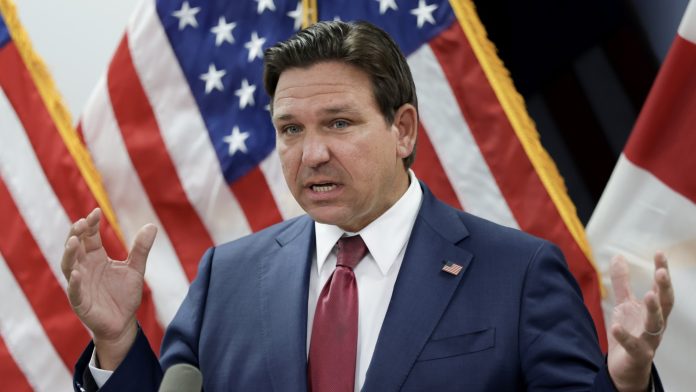
Republican lawmakers in Florida are investigating how $10 million in state money was diverted for use in a political campaign with ties to the wife of Gov. Ron DeSantis.

Joe Raedle/Getty Images


hide caption

toggle caption

Joe Raedle/Getty Images

MIAMI — Fla. Republican Gov. Ron DeSantis is on the defensive over questions about how $10 million in state money came to be used to fund a political campaign.

In two terms as governor, DeSantis has enjoyed strong support from the Republican-controlled legislature. But now, Republicans in the state House of Representatives say the alleged misuse of funds may warrant a criminal investigation.

The allegations involve $10 million that was paid to Florida by Centene, a company that provides managed care to Medicaid recipients. The money was part of a $67 million settlement by the company after it was charged with overbilling taxpayers for medications. Ten million dollars of the settlement was paid directly to a non-profit group, Hope Florida. That’s a charity founded by Gov. DeSantis’ wife, Casey, to help people move off government assistance into community-based programs.

An investigation by state lawmakers found that after receiving it, Hope Florida transferred the $10 million to two “dark money” political groups — groups that aren’t required to disclose their donors. The two groups then sent some $8.5 million to a political committee that was campaigning against an amendment to legalize recreational marijuana in the state. It was a group controlled by DeSantis’ then-chief of staff, now Florida Attorney General James Uthmeier.

Republican lawmakers, including Rep. Alex Andrade, say they believe that transaction was illegal.

At a hearing of the Health Care Subcommittee in Florida’s House of Representatives, Andrade said, “There’s no question that these were Medicaid funds, steered by the Governor’s chief of staff through secret and clandestine actions to his own political committee.”

The investigation in the Florida House didn’t target DeSantis directly. But the political campaign to defeat the marijuana initiative — which successfully scuttled the amendment — was led by DeSantis. Since these allegations, DeSantis has denied any wrongdoing by his administration. He’s fought back in a series of news conferences where he’s attacked the news media and Republican lawmakers.

“The whole thing that the House leadership is doing is a manufactured fraud,” DeSantis said at a recent appearance in Fort Myers. “This is a hoax. They are trying to smear one of the most successful programs anywhere in the country.”

Among the many issues lawmakers are angry about is that the DeSantis administration didn’t tell Florida’s Legislature about the $67 million settlement or about the $10 million that went directly to a charity overseen by DeSantis’ wife. “The investigation is the most visible indication of a growing rift between DeSantis and Republican leaders in the legislature. State House Speaker Daniel Perez recently responded to the governor’s attack, calling it “a temper tantrum,” saying “the House will not be bullied.”

The other state official at the center of these allegations is Florida’s attorney general, James Uthmeier.

According to the House investigation, Uthmeier was the person who initiated the plan to divert some of the settlement money to groups campaigning against the marijuana referendum. At the time, he was DeSantis’ chief of staff. In February, months after these events occurred, DeSantis appointed Uthmeier attorney general to replace Ashley Moody. DeSantis named Moody to the U.S. Senate to fill out Marco Rubio’s term after Rubio was appointed Secretary of State by President Trump.

Uthmeier denies the allegations that he was the mastermind behind the deal. “I was not involved in the settlement negotiations related to the Hope Florida contribution,” he says. “Looking at it, everything looks legal.”

Casey DeSantis, the wife of Florida Gov. Ron DeSantis, founded a non-profit charity in 2021 to help people move from government assistance into community-based programs. The charity, Hope Florida, received $10 million through a state settlement with Florida's largest Medicaid contractor. More TK TK

Casey DeSantis, the wife of Fla. Gov. Ron DeSantis, founded a non-profit charity in 2021 to help people move from government assistance into community-based programs. The charity, Hope Florida, received $10 million through a state settlement with Florida’s largest Medicaid contractor.

Joe Raedle/Getty Images


hide caption

toggle caption

Joe Raedle/Getty Images

Uthmeier says the $10 million that went to the “dark money” groups wasn’t Medicaid money. He’s called it a “sweetener” — money added by Centene on top of the larger Medicaid settlement. Representative Andrade says that’s a legalistic argument and he isn’t buying it. “Ten million dollars is a lot of money,” he says. “In the real world, if someone defrauded the state or a charity of ten million dollars, they would go to prison.”

Andrade says he’s concluded his investigation and it’s up to federal prosecutors to decide whether to pursue criminal charges. He’s says he’s spoken to the Department of Justice. The U.S. Attorney in Florida’s Northern District declined to comment.

Even if there are no criminal charges, one person marked by this investigation is Casey DeSantis. She’s been making appearances around the state with her husband and appears to be preparing her own bid to run for governor. President Trump has already endorsed a candidate in the race, Republican Congressman Byron Donalds.

Artists wanted for Trump’s National Garden of American Heroes  : NPR

0

Ronald Reagan, Amelia Earhart, Kobe Bryant and Albert Einstein will be among those honored in the National Garden of American Heroes.

Getty Images


hide caption

toggle caption

Getty Images

The National Endowment for the Humanities (NEH) is issuing a call for artists interested in creating statues for President Trump’s National Garden of American Heroes.

The federal agency says the grant is part of “the preparation for the nation’s celebration of the 250th anniversary of the Declaration of Independence in 2026” and will include “life-size statues of 250 great individuals from America’s past who have contributed to our cultural, scientific, economic, and political heritage.”

Which American heroes?

The list includes presidents, scientists, artists, athletes and other notable figures who’ve shaped American history and culture including Ronald Reagan, John F. Kennedy, Albert Einstein, Sally Ride, Sacagawea, Sitting Bull, John Singer Sargent, Duke Ellington, Bessie Smith, Lauren Bacall, Amelia Earhart, Babe Ruth and Kobe Bryant. (Full list is here.)

How much money? 

The grant notice says awards will be “up to $600,000” with a “per-unit limit of $200,000 per statue, and applicants are limited to three statues.” The total price tag for the garden is $34 million, with $30 million set aside for the statues.

Where will the garden be?

No site has been chosen for the garden yet, but in March, South Dakota Gov. Larry Rhoden wrote a letter to Trump offering  land in the Black Hills that he says is within sight of Mount Rushmore.

Why is this happening?

Trump has taken an aggressive approach towards reshaping cultural institutions since taking office three months ago. He took over the Kennedy Center, issued an executive order that said, in part, the Smithsonian Institution had “come under the influence of a divisive, race-centered ideology” and has allowed DOGE (the Department of Government Efficiency) to cancel hundreds of National Endowment for the Humanities grants to organizations across the country.

DOGE also put the staff of the Institute of Museum and Library Services (IMLS) on paid leave, putting most of the federal agency’s grants in limbo. Grants from the IMLS support museums and libraries across the United States.

Jennifer Vanasco edited the digital version of this story. Virginia Lozano created the photo montage.

Democrats demand NLRB respond to whistleblower report about DOGE : NPR

0

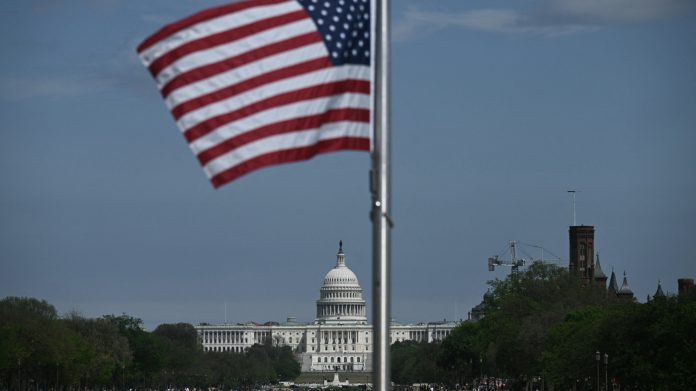
The U.S. Capitol on April 21, 2025. Democratic lawmakers are asking the National Labor Relations Board to respond to a recent whistleblower disclosure that documents concerns that officials with the Department of Government Efficiency team may have taken sensitive information about workers.

Brendan Smialowski/AFP via Getty Images


hide caption

toggle caption

Brendan Smialowski/AFP via Getty Images

Over fifty Democratic lawmakers have signed a letter demanding answers from senior U.S. government officials about a recent potential exposure of sensitive data about American workers.

The letter is addressed to the acting General Counsel of the National Labor Relations Board, William Cowen. The independent agency is in charge of investigating and adjudicating complaints about unfair labor practices and protecting U.S. workers’ rights to form unions.

The lawmakers, who are part of the Congressional Labor Caucus, wrote the letter in light of news first reported by NPR, that a whistleblower inside the IT Department of the NLRB says DOGE may have removed sensitive labor data and exposed NLRB systems to being compromised.

“These revelations from the whistleblower report are highly concerning for a number of reasons,” the lawmakers wrote in the letter to Cowen. “If true, these revelations describe a reckless approach to the handling of sensitive personal information of workers, which could leave these workers exposed to retaliation for engaging in legally protected union activity.”

The letter refers to an official whistleblower disclosure made by Daniel Berulis, a cloud administrator in the IT department of the NLRB, who also spoke to NPR in multiple interviews.

In his disclosure, Berulis shared that he initially became concerned in March when members of President Donald Trump’s Department of Government Efficiency initiative arrived at the agency and demanded high-level access to the systems without their activities being logged. Those fears escalated after he tracked a large chunk of data leaving the agency at the same time as many security controls and auditing tools were turned off, the disclosure continues.

Ultimately, Berulis became concerned that DOGE, which is effectively led by Trump adviser and billionaire CEO Elon Musk, could have accessed sensitive internal information about ongoing investigations into U.S. companies, witness affidavits and even corporate secrets. The alleged insecure practices and removal of data could also create vulnerabilities for criminal hackers or foreign adversaries to exploit, Berulis explained in his official disclosure.

It’s unclear how that data would be relevant to DOGE, whose stated mission is to make the government more efficient and slash federal spending. One of the lawmakers’ central questions was about why DOGE would have needed access to internal NLRB systems to reduce government spending.

“Given DOGE’s desire to access sensitive information at other federal agencies with a focus on payment information, it is unclear why DOGE would be interested in NLRB data that has nothing to do with federal payments,” the lawmakers wrote.

The lawmakers were also concerned about the potential conflicts of interest for DOGE leaders like Musk who might benefit from having access to sensitive labor data at a time when the NLRB has ongoing cases involving Musk’s companies including SpaceX and Tesla. “Furthermore, Elon Musk, who Donald Trump has repeatedly said is ‘in charge’ of DOGE, has a number of cases before the Board and is also pursuing several lawsuits to challenge the constitutionality of the Board itself,” they wrote.

The members urged NLRB leadership to take immediate action to answer questions about DOGE’s alleged access, given the fact that “DOGE officials were again recently present at NLRB headquarters” and will be detailed part-time at the agency over the next couple of months, according to a letter sent to NLRB employees last week.

The NLRB told NPR that they have no records of DOGE’s early March visit, did not grant DOGE official access to its systems, and never received an official request from DOGE to access the systems. Meanwhile, the NLRB said there was an internal review of a potential breach inside the agency after Berulis raised his concerns, and that NLRB officials ruled out a breach. However, Berulis has argued that the forensic evidence he has presented warrants further investigation by agencies with additional investigative resources.

The revelations from Berulis come at a time when there are over a dozen court cases alleging that DOGE staffers mishandled sensitive government data across different agencies, ranging from the Treasury Department to the Social Security Administration.

Rep. Gerry Connolly pushes for answers on layoffs of FOIA staff at CDC : Shots

0

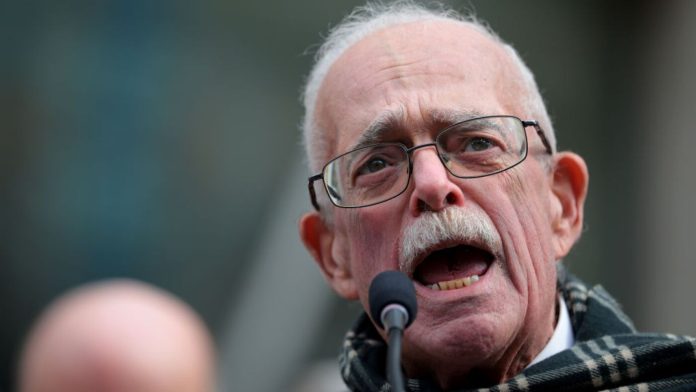
U.S. Rep. Gerry Connolly, D-VA is pushing for CDC’s FOIA team to be restored, after the jobs were eliminated in the recent HHS layoffs.

Kayla Bartkowski/Getty Images


hide caption

toggle caption

Kayla Bartkowski/Getty Images

The top Democrat on the House Committee on Oversight and Accountability wants answers from the Centers for Disease Control and Prevention about why its public records staff was gutted on April 1, when thousands of federal health agency workers were fired.

Rep. Gerry Connolly, a Democrat from Virginia, sent a letter to CDC’s acting director Dr. Susan Monarez on Thursday, expressing “concern” about the 22 staffers who handled and fulfilled public records requests being placed on administrative leave until their jobs are eliminated on June 2. Their work has been mandated by Congress since the 1960s under the Freedom of Information Act, or FOIA.

“As a result, there are currently zero personnel available to process FOIA requests received by CDC,” Connolly writes. “The elimination of staff responsible for facilitating FOIA strongly implies an effort by the Administration to prevent the public from obtaining information about their government that they are entitled to request.”

NPR asked CDC for comment but didn’t get an immediate response.

NPR reported earlier this month that FOIA officers at the Food and Drug Administration, the National Institutes of Health and other agencies within the Department of Health and Human Services were also let go, making it harder for the public to access information about the government.

In the letter, Connolly asked how the agency would continue to comply with public records laws. He also asked for information on outstanding requests and communications between the Trump administration and CDC officials.

Connolly also pointed out that there were several ongoing outbreaks of infectious disease in the U.S. “Now more than ever, maintaining transparency about the operations of the broader HHS —and CDC in particular — is crucial to understanding the government’s capacity to respond to such crises.”

During a press conference Tuesday, HHS Secretary Robert F. Kennedy Jr. said he was “restoring all the FOIA offices,” though it wasn’t immediately clear whether he would be replacing or rehiring terminated FOIA staffers. He said it would be “much easier” to get information from HHS, and that his agency would aim to post documents to its website “as much as we can.”

“The papers that we produce in this agency do not belong to us,” he said. “They belong to the American people, and we need to be honest with them.”

Kennedy used to chair an anti-vaccine advocacy group called Children’s Health Defense, which sued the FDA for COVID-19 vaccine records under FOIA in 2023. As part of the latest federal court order on April 9, Judge Randolph D. Moss expressed “concern” about the FOIA staff layoffs and the agency’s ability to produce required records.

“In short, the agency stands forewarned that the Court expects it to comply with its obligations under FOIA and that it may not evade those obligations by dismissing or failing to replace the FOIA staff that is needed to do so,” the order read.

Greta Pittenger contributed to this report.

You can reach Sydney Lupkin at [email protected] or on Signal at sydneylupkin.36.

GOP strategist discusses political implications of legal challenges to administration

0

The Trump administration is facing legal challenges to two of his top issues: immigration and tariffs. NPR’s Michel Martin talks through the political implications with GOP strategist Alex Conant.

Small U.S. town grew a big company. Now it’s in a tariff storm : NPR

0

DigiKey is one of the world’s largest marketplaces for electronic components, shipping global orders from a single warehouse in Thief River Falls, Minn.

Dan Koeck for NPR


hide caption

toggle caption

Dan Koeck for NPR

THIEF RIVER FALLS, Minn. — Every few nights, Teri Ivaniszyn jolts awake, her mind racing. She never expected to be a tariff expert, but here she is, keeping a notepad by her bedside for groggy 2 a.m. math on how her company can stay in business.

“I wake up in cold sweats about tariffs,” Ivaniszyn says. It’s a new thing, and she laughs about it.

Her employer is the biggest tech giant you’ve likely never heard of. DigiKey is a bit like Amazon, but for millions of electronic parts shipped to engineers worldwide — all from a single warehouse here in rural Minnesota.

The warehouse sprawls under the vast northern sky among miles of rain-soaked grain fields striped with shelterbelts of spruces and poplars to shield the soil from wind. DigiKey started out by hiring farmers’ wives, offering pay stability and health benefits, and it has grown to 3,800 U.S. jobs employing half the county’s workforce.

“We’re kind of a contrarian, in that we ship around the globe,” says DigiKey President Dave Doherty. “But every additional shipment into China, or into Germany, or into Japan, or Taiwan, or Bangladesh creates jobs in Thief River Falls.”

In this photo, a young woman wearing a black T-shirt attaches a label to a cardboard box. Near her is a conveyor belt.

A DigiKey employee prepares an order of electronic components for shipment.

Dan Koeck for NPR


hide caption

toggle caption

Dan Koeck for NPR

But first, the things DigiKey sells have to come to Thief River Falls, and that means tariffs.

About a quarter of DigiKey’s wares come from China. Since 2018, the firm has spent half a billion dollars on tariffs from President Trump’s first term in office. There have been ways to recoup some of that money, but now those rules keep changing. Everything is changing.

“What’s coming next? How are we going to handle it?” — Ivaniszyn, who handles DigiKey’s trade compliance, runs through these questions when she can’t sleep. “The yo-yo effect that we’re having: It’s on, it’s off, this is in, this is out.”

This photo shows Teri Ivaniszyn, DigiKey’s vice president of operational excellence and trade compliance. Photographed from about the waist up, she's wearing a buttoned shirt with alternating white and dark vertical stripes, as well as a dark cardigan over it.

Teri Ivaniszyn is DigiKey’s vice president of operational excellence and trade compliance.

Dan Koeck for NPR


hide caption

toggle caption

Dan Koeck for NPR

So far this year, a 10% tariff on Chinese goods was followed by another 10% — and then other levies on steel and aluminum. The White House tariffed all the world’s imports — then put most of those tariffs on pause, but not the tariffs on China, which soared to 145%. Electronics got excluded. Semiconductors were put on watch.

DigiKey gets products from manufacturers with elaborate supply chains. They might fabricate silicon for semiconductors in the U.S. but ship the wafers to China to be assembled, tested and packaged. Things might make a pit stop in Malaysia or Taiwan. At U.S. Customs, the supplier gets the tariff bill — and, often, sends it along to DigiKey.

“It’s so complex,” Ivaniszyn says, and then throws her hands up. “Just trying to explain some of it, it’s like — give me one more different way to do it.”

A homegrown giant grows the town

The reason DigiKey sprang up in a town of 8,800 people is Ron Stordahl. A ham radio enthusiast, Stordahl in the late 1960s sold an invention called a “Digi-Keyer” for transmitting Morse code. He had to get components traditionally packed in bulk and meant for manufacturers, not individual people.

Selling his leftover parts, Stordahl found an untapped market of engineers, students and hobbyists who wanted to buy just a handful of capacitors or circuits from what could be a reel of 1,000 or 5,000. His new Digi-Key Corp. would purchase these reels, break the pack and sell parts in small quantities, first through a mail-order catalog several inches thick and then online.

This photo shows the outside of DigiKey’s 2.2 million square-foot warehouse. The building has a long rectangular shape and has red accents near an entrance area.

DigiKey’s Minnesota warehouse ships an average of 25,000 orders a day, domestically and abroad.

Dan Koeck for NPR


hide caption

toggle caption

Dan Koeck for NPR

“You know, you go to Walmart and they offer a case of soda and you can’t decide — ‘I really only need seven cans,'” Doherty says. “With DigiKey, you can get the seven cans.”

Every day, DigiKey ships an average of 25,000 orders from Stordahl’s hometown to a million customers in nearly every country. These days, customers include labs or firms that are as large as they get: medical, industrial, telecom and aerospace.

As DigiKey expanded, Thief River Falls got a cargo hangar at the airport and a longer runway for larger planes. It now has seven hotels and daily passenger flights to Minneapolis. While many rural communities are shrinking, the surrounding Pennington County has been growing. Locals who leave often return.

It helps that DigiKey’s next-door neighbor is a snowmobile factory, run by Arctic Cat. But snowmobiles aren’t selling like they used to: Winters are snowless; inflation and interest rates are high. The factory is slated to shut down in May, unless the parent company finds a buyer for its powersports business.

“So you have a community that just lost one of its top two employers, and now you have the surviving employer heavily hamstrung by these tariffs,” says Tim Carroll, DigiKey’s vice president of digital business. “So we’re trying to figure out: How do you make sure you’re doing right by the community that grew DigiKey up?”

This photo shows a chartered cargo plane inside a hangar at the airport in Thief River Falls. The plane is white and has only one window along the side.

DigiKey ships orders same day using cargo planes like this one, at the Thief River Falls airport, for FedEx and UPS deliveries.

Dan Koeck for NPR


hide caption

toggle caption

Dan Koeck for NPR

Among the fields and two rivers, a foreign trade zone

The roads approaching DigiKey are dotted with severe signage from U.S. Customs and Border Protection: “WARNING: Vehicle is subject to search.” That’s because the company’s warehouse is considered a foreign trade zone (FTZ), under federal watch.

This FTZ designation means some foreign products can come here duty-free, as if they never entered U.S. soil. DigiKey pays the tariff only when it ships that imported thing to a U.S. shopper. If the shopper lives abroad, DigiKey is off the tariff hook altogether.

It’s a tariff-avoidance tactic long used by big importers. But for DigiKey, this was a gambit in response to Trump’s 2018 tariffs.

“Honestly, we didn’t know whether we’d get our bang for our buck,” says Ivaniszyn.

Setting it up was a yearlong, paperwork-heavy affair. Running it is even more so. And only a fraction of DigiKey’s imports can ship to its FTZ, because suppliers must satisfy all the very particular requirements of the process.

This photo shows Dave Doherty, president of DigiKey, at the company’s headquarters. Photographed from about the waist up, he's wearing gray slacks and a long-sleeved, white button-down shirt with a light blue grid pattern on it.

Dave Doherty is the president of DigiKey, which has stayed in Thief River Falls since its founding in 1972.

Dan Koeck for NPR


hide caption

toggle caption

Dan Koeck for NPR

But it has become a necessity, Doherty says. It saves tens of millions of dollars a year, not just in tariffs but related fees. DigiKey wants to almost triple its FTZ-supplier ranks this year. And lately, more companies are asking Ivaniszyn about the process, thinking of opening an FTZ of their own.

A tariff to-do list for you, and you, and you

Ivaniszyn unfolds a sheet she has pulled from her pocket. In blue ink, she has hand-sketched a spreadsheet of just this week’s tariff changes, one column wedged in on a hurried slant.

Tariff chaos is pulling dozens of DigiKey employees off their usual tasks. The online team has built a toggle for the website that lets shoppers see only nontariffed options. Customer service reps are trained to answer tariff-related questions. Pricing, accounting and inventory-planning teams are crunching tariff-altered numbers. Ivaniszyn’s tariff team has doubled in size. Fatigue is building.

“Nobody wakes up in the morning thinking, ‘Yeah, I’m gonna have a great day today updating systems to charge customers tariffs,'” says Carroll.

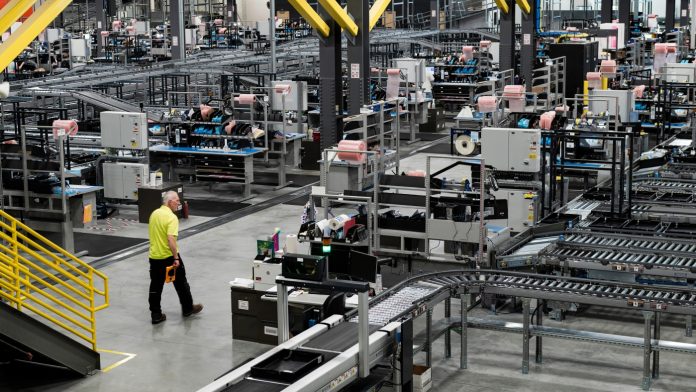
This photo shows the inside of DigiKey's warehouse, where employees fill orders for electronic components using an automated storage and retrieval system. The warehouse is filled with long conveyors and multiple workstations.

Tariff chaos is pulling dozens of DigiKey employees off their usual tasks.

Dan Koeck for NPR


hide caption

toggle caption

Dan Koeck for NPR

People are also having to intervene in once-automated tasks. Thousands of orders that used to auto-flow directly to the warehouse floor for same-day shipping now often miscalculate tariff costs. The systems break. Phone calls and emails ensue.

And sometimes, DigiKey is left holding the bag.

“Customers, or some of them, are just not paying the tariff,” says Ivaniszyn. “And then you have customers who can’t receive the tariff into their systems — their systems don’t take the tariff. It’s an accounting nightmare.”

Could it be time to move?

Today, a supplier of power components is visiting DigiKey from New Jersey, and Ivaniszyn is rolling out her tariff slides. One item on the agenda: duty drawbacks.

It’s another way that DigiKey has been recouping tariff expenses. (“Duty” as in tariffs; “drawbacks” as in refunds.) Companies whose shipments simply pass through the U.S. on the way from one foreign place to another can ask the government for a tariff reimbursement.

Half of DigiKey’s sales are international, and these rebates help. Since 2018, the firm has recouped about 60% of its $500 million spent on tariffs, either this way or by charging U.S. customers a portion of the tariff paid for their goods.

But many of the newest White House tariffs no longer allow duty drawbacks. And that’s becoming DigiKey’s biggest disadvantage against European or Asian rivals. Will foreign customers simply shop locally if DigiKey starts charging them for U.S. tariffs? Will domestic customers — say, companies building energy or medical devices — move operations abroad to do their shopping overseas?

In this photo, a woman at a workstation packs two small cardboard boxes into a large transparent bag.

A DigiKey worker packs an order at the company’s warehouse, which operates a foreign trade zone that allows some imports to be stored as if they hadn’t entered U.S. soil.

Dan Koeck for NPR


hide caption

toggle caption

Dan Koeck for NPR

One seemingly obvious idea could be for DigiKey to press its suppliers to carry more of the tariff burden. But that’s a nonstarter.

“There is no tariff that any manufacturer could truly absorb,” says Tom Wichert, the New Jersey supplier visiting from TDK-Lambda Americas, which manufactures in the U.S. and abroad. “I mean, we cannot absorb it. There is not a profit margin in our industry to absorb tariffs, absolutely not.”

And so DigiKey faces its own existential dilemma: Any bigwig consulting firm would likely tell DigiKey to open warehouses in Europe and Asia, to bypass the United States.

“You have to ask yourself questions,” Doherty says. Plenty of his peers have done it. DigiKey hasn’t, yet. “We’re the lifeblood of northwest Minnesota,” he says.

The warehouse in the eye of an economic storm

This photo shows Thief River Falls' City Hall, which used to be the Soo Line Railroad Depot. The two-story building is made of brown bricks and has a dark green metal roof. The right side of the frame shows a train track that leads to a grain elevator back in the distance.

Built in 1914, the historical Soo Line Railroad Depot in Thief River Falls was renovated by the town in the 1990s to serve as City Hall. Along the train track is also the town’s grain elevator.

Dan Koeck for NPR


hide caption

toggle caption

Dan Koeck for NPR

The DigiKey warehouse is not the town’s tallest building — that’s the grain elevator by the train track, with flocks of pigeons kiting overhead — but it is the largest.

The tour guide cannot say how many football fields would fit in its 2.2 million square feet. But he says the first floor could accommodate 61 regulation-size hockey rinks. Everyone in town knows someone at DigiKey.

“If you’re not working here, your family member is working here,” says Mike Lorenson, an IT manager at DigiKey and the town’s recently elected mayor. A recently retired woman set the record with 41 extended family members among the employees.

Mike Lorenson, who is both the mayor of Thief River Falls and an IT manager at DigiKey, poses for a photo at City Hall. He's standing behind a desk that has a gavel on it, as well as a nameplate that has Lorenson's name on it. He's wearing glasses and a long-sleeved, button-down shirt with a white, burgundy and dark green plaid-like pattern on it.

Mike Lorenson is both the mayor of Thief River Falls and an IT manager at DigiKey.

Dan Koeck for NPR


hide caption

toggle caption

Dan Koeck for NPR

Inside, black crates whiz by on conveyors like the hectic interchanges of a futuristic metropolis. People who pack orders wear grounding strips around their shoes to protect static-sensitive components. They wield tweezers and magnifying glasses, rolling out and measuring semiconductors spooled on reels like ribbon at a fabric store.

Trump’s key argument in favor of tariffs is that they’d force more manufacturers to return to the United States. That’s a big question of money — but also time. Wichert, the supplier, says he has seen a few industry peers open American plants after the 2018 tariffs; it has taken three years, five years or more. The new tariffs are instant.

This close-up photo shows a reel around which is spooled individual electronic components, each of which is a small gold-colored rectangle attached along a clear ribbon. One hand is holding the reel, and another is unspooling the ribbon.

A DigiKey employee unspools a reel of individual electronic components.

Dan Koeck for NPR


hide caption

toggle caption

Dan Koeck for NPR

Wichert’s boss, in a letter to staff, offered an analogy for navigating the trade war:

“Imagine you’re in a football game and it’s blizzard-like conditions,” Wichert says, summarizing it. “The winner of the game is the one who can manage through the conditions the best. Right now, we’re in blizzard-like conditions.”

The way Lorenson sees it: If anyone is used to weathering blizzards, it’s northern Minnesotans.

This photo shows the automated storage and retrieval system in DigiKey’s product distribution center, which is four stories high. The space has tall, long rows of metal shelves. A worker walks up a staircase with yellow handrails.

A worker walks through the four-story-tall automated storage and retrieval system in DigiKey’s distribution center.

Dan Koeck for NPR


hide caption

toggle caption

Dan Koeck for NPR

Oil companies wanted a boom under Trump. Now they’re worried : NPR

0

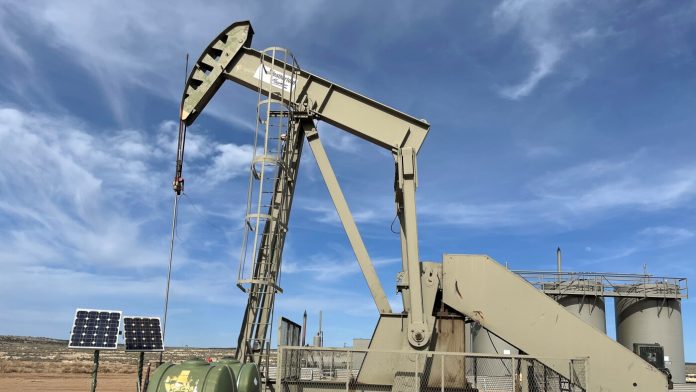
A pump jack in New Mexico’s San Juan Basin. This is one of the country’s oldest federal lands drilling areas. Many oil company executives celebrated Donald Trump’s return to the White House. But now expectations of higher profits are fading amid fears of a recession.

Kirk Siegler/NPR


hide caption

toggle caption

Kirk Siegler/NPR

FARMINGTON, N.M. — The San Juan Basin, in the northwestern part of the state, is one of the oldest federal lands drilling areas in the U.S. It’s a huge swath of barren, brown high desert that first started booming in the 1950s.

Today, some 40,000 wells pockmark the rolling hills of the Four Corners region, several thousand of them still reliably pump up light sweet crude oil and natural gas through the old iconic pumpjacks.

But this historic and remote drilling region has struggled for the last decade or more.

“It used to be an epicenter,” says Sean Dugan, the third-generation president of Dugan Production, a family drilling business in the boom-and-bust town of Farmington. “When the majors left, they took all their rigs with them.”

He’s talking about the major international companies like Chevron and BP that started pulling out of the basin after the 2008 financial crisis, namely when natural gas prices slumped.

Many left for shale drilling areas like the Bakken in North Dakota or the Permian Basin in southern New Mexico and Texas where drilling on private land was more productive, lucrative and economical.

Today it’s only the smaller independents like Dugan still hanging on. But he sees potential for another boom out here.

“Oh yeah, we’ve got a lot of tricks up our sleeves,” says the cheerful and charismatic Dugan. “The basin has a lot to give. We’ve barely begun to tap its potential.”

Sean Dugan’s family drilling company has been a steady local employer for decades in New Mexico.

Sean Dugan’s family drilling company has been a steady local employer for decades in New Mexico.

Kirk Siegler/NPR


hide caption

toggle caption

Kirk Siegler/NPR

Local drillers say more than half the natural gas reserves in this region have yet to be tapped. And the hope is all the new computer data centers being built in places like Phoenix will want cheaper gas-powered electricity.

But watching a group of roughnecks on a rig in grubby overalls moving huge, long steel pipes, Dugan’s smile begins to fade to a smirk.

“Your polypipe, which is what these pipelines are made out of now. That all comes from the Asian markets,” Dugan says.

Dugan says the cost of doing business out here was already expensive and President Trump’s trade war is making it worse.

Trump’s trade war is causing anxiety in the oil patch

Many oil and gas company executives, particularly the larger ones, initially celebrated Trump’s return to the White House. But lately, that optimism for higher oil company profits appears to have faded amid growing fears of a recession.

“You know, drill baby drill and lower oil prices are not simpatico,” says George Sharpe, investment manager for Merrion Oil and Gas, one of the San Juan Basin’s oldest drillers.

In other words, Sharpe says, if Trump tanks the economy and oil prices hover at or below the cost of production, you can remove all the regulatory barriers you want, but companies will be wary of drilling new wells.

“I think the whole tariff thing is going to backfire on Trump,” Sharpe says.

President Donald Trump speaks with reporters at the White House on Wednesday in Washington. (AP Photo/Alex Brandon)

President Donald Trump speaks with reporters at the White House on Wednesday in Washington. Many oil and gas company executives, particularly the larger ones, initially celebrated Trump’s return as president. But lately, that optimism for higher oil company profits appears to have faded amid growing fears of a recession.

Alex Brandon/AP


hide caption

toggle caption

Alex Brandon/AP

Dugan says he wakes up every morning and checks the news on tariffs. He used to spend about $80,000 on a load of pipes that come from South Korea. Now, he figures it could be up to $120,000. His company was one of the few locally to avoid mass layoffs at the start of the pandemic in 2020 when oil prices tanked.

Today Dugan says he wants to plan for ten years out. But he doesn’t even know what’s going to happen tomorrow.

“It just kneecaps ya when all this uncertainty and volatility is in the air,” Dugan says.

President Trump lost New Mexico handily in the presidential election last year, but he did rack up big wins in rural counties like this. In interviews with local industry and community leaders, it’s clear there is still plenty of hope that the Trump administration’s newer, revised slogan of “build baby build” will make it easier to get a new gas pipeline built between the San Juan Basin and Mexico.

“There is optimism in the air. Our workers welcome energy policies that put American energy first,” Farmington Mayor Nate Duckett said, noting in an email that his town was built on top of one of the richest gas and coal fields in the U.S.

Boom and bust energy towns are in limbo

On the day President Trump issued four new executive orders to revive America’s coal industry, local environmentalist Dave Fosdeck was driving his four-wheel drive truck to the top of a hogback for what turned out to be a bit of an apocalyptic view.

“Here we are up on top,” Fosdeck said, hopping out for a 360 view. “Four Corners power plant about 11 o’clock there, and San Juan Generating station up to our left at 9 o’clock.”

Most of the oil and gas jobs in New Mexico's San Juan Basin today are servicing or decommissioning wells like these.

Most of the oil and gas jobs in New Mexico’s San Juan Basin today are servicing or decommissioning wells like these.

Kirk Siegler/NPR


hide caption

toggle caption

Kirk Siegler/NPR

There was the enormous San Juan coal plant — currently being dismantled — a hulking gash of twisted metal and steel glaring in the desert sun. The Four Corners plant on the Navajo Nation is supposed to be decommissioned in 2031, but Trump has promised to stop coal plants from closing.

“It’s about supply and demand and also the cost of producing in this remote region compared to like, Texas or Louisiana,” Fosdeck says.

But people here are tired of seeing Farmington in the headlines as a town that’s losing population.

“There’s opportunity, but, ugh, it’s hard,” Fosdeck says. “It’s hard to find an area like this that has been so dependent on oil and gas trying to transition to something else.”

Farmington has tried to diversify by promoting tourism and outdoor recreation on all the federal public lands in the region. But those jobs don’t pay nearly as much. With virtually no new drilling here for now, most of the oilfield work is in servicing existing wells, or decommissioning them, to prevent the leaking of methane.

Alex Prieto is supervising a crew that’s laying production pipe into a shuttered well, before they’ll pump cement and cap it.

He’s grateful for the job in a time when so much feels uncertain.

“I love it, just keeping my head busy,” Prieto says. “I provide for my family which is the most important thing.”

It also means he doesn’t have to travel to other oil patches out of state for work.

“As long as we’re working we’re happy. The oil field is the main thing out here,” Prieto says.

But no one seems to be preparing for a lot of new hiring here at this point, despite promises of a new oil and gas boom on federal land.

This is the latest report in an occasional NPR National Desk series examining how President Trump’s early actions are playing out across America.

Looking back at Speaker Mike Johnson's first 100 days trying to enact Trump's agenda

0

Lawmakers face the daunting task of crafting a sweeping plan to turn the heart of President Trump’s domestic agenda into law. It will be a crucial test for House Speaker Mike Johnson.

In Georgia, battle over transgender legislation highlights national trends

0

A look at this spring in Georgia’s Legislature show how Republicans continue filing bills to put limits on transgender people and how Democrats have tried to respond.

State of the World from NPR : NPR

0

America’s neighbor to the north has seen wide ranging impacts from the tariffs on goods sent to the U.S.— from Canadian identity to the country’s politics and of course the economy. Even small businesses are feeling the change. We go to the Atlantic province of Nova Scotia to see how tariffs are playing out.

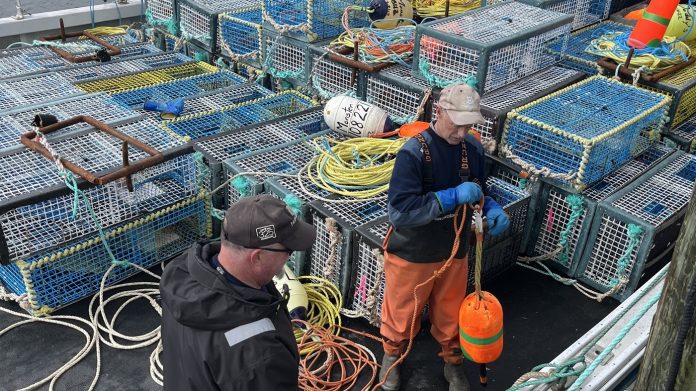
Fisherman in Clark’s Harbour in southwestern Nova Scotia, Canada.

Jackie Northam/NPR


hide caption

toggle caption

Jackie Northam/NPR


Fisherman in Clark’s Harbour in southwestern Nova Scotia, Canada.

Jackie Northam/NPR