Thursday, November 12, 2026
Home Blog Page 330

Did Ukraine Kill Its Own by Downing a Russian Plane? A Year Later, It Hasn’t Said.

0

One year has passed since Moscow accused Kyiv of shooting down a Russian military plane carrying dozens of Ukrainian prisoners of war. Ukraine opened an investigation, but has yet to release its findings, leaving questions about who was killed, and why.

The crash of the IL-76 transport plane in the Belgorod region of Russia, near the border with Ukraine, set off a series of recriminations at a delicate moment for Kyiv, as it lobbied for Western aid to build up its depleted weapons stocks.

Russian officials called it a “terrorist” act and convened an emergency meeting of the U.N. Security Council. Ukrainian officials did not admit or deny shooting down the aircraft, and said they could not confirm that Ukrainian prisoners were onboard.

American officials later assessed that Ukrainian forces had used a U.S.-made Patriot missile to shoot it down, thinking the plane carried Russian missiles and munitions.

“We have many questions about the situation,” Sofia Sobolyeva, who believes her father was on the plane, said in a recent interview.

With the families of the prisoners still awaiting answers, here’s what we know about the crash one year on.

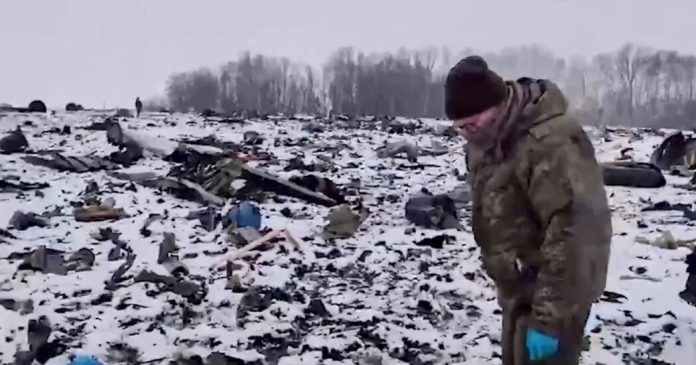
Russia’s Defense Ministry said on Jan. 24, 2024, that one of its military transports had been shot down while en route to Belgorod for a prisoner swap. It said that the plane was carrying 65 Ukrainian prisoners of war and that no one survived the crash.

Initially, Ukraine asserted its right to target Russian military transport planes in the border area, which had been a staging ground for the 2022 invasion and was used to mount attacks after that.

At the time of the crash, deadly Russian missile strikes had been pounding Kharkiv, just across the border in Ukraine, and Kyiv stressed the need to hinder those attacks.

Soon, though, Ukraine’s military intelligence agency hinted at the possibility of a tragic mistake, not directly acknowledging that Ukraine had downed the plane but offering explanations for how it might have happened.

One Ukrainian official said the IL-76, often used to carry freight, had previously been used to deliver ammunition and missiles, suggesting that it was a legitimate target.

The agency acknowledged a prisoner swap had been planned for Jan. 24 — but said Russia had not warned Ukraine that prisoners were being flown to Belgorod’s airport, as was the case in previous exchanges. Russian officials disputed that account, saying Ukraine’s military had been notified.

The diverging claims illustrated the persistent lack of clarity that has become a defining feature of the war. Both sides have pushed their preferred narratives over nearly three years of fighting, and have been reluctant to disclose or acknowledge setbacks.

Investigators have found DNA matches for more than 50 of the 65 bodies Russia said were on board, but it still was not possible to say whether they were the same bodies said to have been found at the site of the crash, according to a report published on Friday by the Media Initiative for Human Rights, a Ukrainian group investigating war crimes.

It has spent the better part of the past year trying to provide some clarity amid the dearth of official information.

President Volodymyr Zelensky of Ukraine called for his country’s intelligence agency to determine what had happened and for an international investigation into the crash. He accused Russia of “playing with the lives of Ukrainian prisoners, the feelings of their loved ones and the emotions of our society.”

Ukraine’s domestic intelligence agency opened an investigation into the incident.

Russian officials said the plane had crashed in a snowy field near a settlement in the Korochansky district. No independent groups were able to visit the crash site; Ukraine requested that the Red Cross and United Nations be granted access.

Satellite images and unverified Russian video captured what appeared to be the crash site and debris of a plane in the area Russia described, but it was not possible to identify passengers from the imagery.

Ukrainian officials asked for patience from citizens while they investigated Moscow’s claims.

Prisoner exchanges have occurred regularly throughout the war, even amid bitter fighting. But the Ukrainian authorities typically do not disclose, even to families, the names of those set to be released before exchanges.

The Russian authorities did not identify the victims of the crash when they announced it. But the names of 65 prisoners of war allegedly onboard were shared on social media by the editor in chief of RT, the Russian state media broadcaster,

A few days later, the Ukrainian government agency that oversees prisoners of war confirmed that the names on the list matched those who were set to be exchanged on the day of the crash. But the agency said it did not have evidence to confirm that those prisoners were aboard the plane, or even that they were dead.

That was around the time, Sofia Sobolyeva said, that her family received a phone call from the military requesting a meeting. Ms. Sobolyeva’s father had been in Russian captivity since March 2022 — shortly after the start of the war — and his name was on the list.

“They gathered us and explained the situation but did not answer any questions,” she said. The authorities pledged to investigate “quickly,” she said, and asked relatives to submit DNA.

The case dropped from the headlines for months. An exchange of remains in early November was the first sign of a potential break.

The International Committee of the Red Cross confirmed that it was present for a Nov. 8 transfer of remains. Russia said the transfer included the remains of 65 killed in the downing of the IL-76, but that claim could not be independently verified.

“I.C.R.C. did not take part in the identification process,” the agency said this week in response to questions, adding that it stood ready to assist the authorities with technical support.

Ms. Sobolyeva said that the families of the 65, who had formed a WhatsApp group, learned about the transfer and were told by the Ukrainian authorities that “time was needed for DNA expertise.”

Ukraine’s general prosecutor and security service did not respond to questions from The New York Times about the status of the investigation or whether any remains had been identified.

But there appears to be little dispute over who downed the plane.

Russia’s defense ministry had accused Ukrainian forces of launching missiles from the nearby Kharkiv region of Ukraine that struck the aircraft. American officials briefed on the incident later said that Ukraine used a Patriot air defense missile to down the plane.

Some relatives of those believed to have been on the plane attended the presentation of the report on Friday. Some women came with children and others were holding portraits of their loved ones. Many of them cried as they listened.

The Media Initiative for Human Rights conducted its own investigation because relatives were “drowning in the number of requests they send out” to Ukrainian officials, said Tetyana Katrychenko, the head of the group.

“We are left alone with our tragedy because there is no organization in our country that would take care of us,” said Oksana Lozytska, whose 25-year old son at the time Roman could have been on the plane.

While Ukraine has not formally accepted responsibility, Ms. Sobolyeva said that’s beside the point now.

“Logically, we understand that Ukraine shot it down,” she said, even though “officially we have nothing.

What she’s less sure about is whether the families will ever have answers to their other questions — like how it happened, and why.

She described her father as a kind man with “golden hands” — able to fix anything that broke — who loved gardening.

“There was a lot of stress and tears, but I still can’t understand what happened,” Ms. Sobolyeva said one recent evening.

“Now,” she added, “I just wear his black hat, so I feel warmer — both mentally and physically.”

Taking stock of President Trump’s busy first week in office : NPR

0

In his first week back in office, President Donald Trump took action on things from immigration and the economy to health, foreign policy and many pardons.


PIEN HUANG, HOST:

The first week of Trump’s second presidency is over, and what a week it has been. So far, his cabinet is taking shape the way he planned. Kristi Noem is the new head of Homeland Security, and Pete Hegseth now runs the Department of Defense. And Trump has followed through on some campaign promises, issuing big sweeping orders on everything from immigration to the economy to foreign policy and lots of pardons, too. Here to round up what’s happened in the past six days and talk through its potential impacts is NPR senior political editor and correspondent Domenico Montanaro. Hey, Domenico.

DOMENICO MONTANARO, BYLINE: Hey, great to be with you.

HUANG: Hey, thanks for coming. So it’s been a dizzying week. Dozens of executive orders signed. What do you make of how it was all done?

MONTANARO: It definitely was dizzying. It’s a lot of what Trump was promising to do during the campaign, though, I mean, coming out of the gate with really a fire hose of action, you know? Some things are going to have an effect really quickly, like rooting out people in the federal workforce, for example, who had been working on diversity, equity and inclusion efforts or the halting of meetings and travel at the National Institutes of Health. Plus, there were executive orders on immigration, rolling back regulations to promote oil and gas drilling and, of course, those January 6 pardons.

More than 1,500 people who were convicted of committing crimes that day were granted clemency, including those who were violent. Doing that was something that more than 6 in 10 people in our latest NPR/PBS News/Marist poll said that they would be against. But Trump did it anyway because loyalty really matters to Trump, and January 6 happened in his name by his supporters.

HUANG: Yeah. Now, that is a lot, so let’s dig in a little bit on some of the more specific things, like immigration. So with immigration, he declared a national emergency at the southern border. What does that entail?

MONTANARO: Yeah. I mean, the order sends military personnel to the border. How many or what exactly they’re going to be doing there is unclear. It also directs agencies to finish the border wall. But at this point, there isn’t additional funding for that. In coming months, we’re going to see what Congress winds up funding or not.

Trump is also aiming to increase detentions and deportations at the border. He signed an order trying to eliminate birthright citizenship for those born to parents without permanent legal status. But birthright citizenship has been something that is written into the 14th Amendment of the Constitution. That’s already facing court challenges.

HUANG: Yeah. And while immigration was definitely one of the big issues of the campaign, the biggest for a lot of people was definitely the economy. So what did Trump do in his first week to try and address those high prices and interest rates that he promised to bring down?

MONTANARO: Yeah, I mean, he released an executive order telling agencies to deliver, quote, “emergency price relief.” I mean, that’s pretty vague, but we got some idea of what he wants to focus on in that, including reducing regulations on things like housing, cars and home appliances – everything from stoves to light bulbs to showerheads – not clear what impact, if any, that’s going to have on prices.

But a throughline we’ve seen in so many of these orders that we’re potentially looking at a far less regulated society. For many businesses and many on the right, that’s music to their ears. But those regulations, of course, were put in place for things like safety, air and water quality and trying to address climate change. Of course, that was also a major Trump target here. He pulled the U.S. out of the Paris Climate Accord, as he did in his first term. He also said that there would be no electric vehicle mandates and wants to get rid of anything that limits the sales of gas-powered vehicles.

Also, even though the U.S. is producing plenty of oil and gas – the top oil and gas producer in the world – Trump declared a national energy emergency. And again, he’s seeking to roll back regulations and make it easier to lease lands for drilling, to refine and transport oil and gas, including in places like Alaska. For Trump, this is all about how to make the most money as possible. Environmental costs are very much off the stove, never mind the back burner, and it’s definitely still a gas stove.

HUANG: OK. But what about tariffs? So that was something we heard a lot about in the run-up to the election. I mean, didn’t Trump promise to enact tariffs on Day 1?

MONTANARO: Yes, but he essentially punted on what he said would be 25% tariffs on Canada and Mexico for goods coming into the U.S., and that was intended, he said, to stop the flow of migrants and drugs. But he said this week, I think we’ll do them February 1, he said. That doesn’t mean it will definitely happen February 1, even. It sounds like Trump is doing what Trump does, giving himself some space to negotiate.

HUANG: The rest of the world is watching the U.S. with a lot of interest right now. What indications is President Trump giving about foreign policy?

MONTANARO: Yeah, I always say foreign policy and judges are the two major things that presidents have more direct control over than almost anything else. And Trump has used tariff threats against allies, you know, seeking leverage, whether that’s wanting them to take more American goods or trying to strong-arm Denmark and Panama to give up things like Greenland or the Panama Canal. It was notable, though that Trump’s first call as president was with MBS, Mohammed bin Salman of Saudi Arabia. Trump really wants Saudi Arabia and Israel to make a deal because he believes Saudi Arabia is a key to peace in the Middle East.

HUANG: OK. One of the many executive orders that Trump signed was one suspending all foreign aid for three months as it’s getting reviewed. So how could that affect the war in Ukraine?

MONTANARO: It could affect a host of allies, including Ukraine, which, of course, has been fighting off Russia’s invasion for nearly three years now. The U.S. and NATO allies have helped them significantly, but there are lots of people on the right who do not want to continue funding foreign countries.

HUANG: That’s NPR senior political editor and correspondent, Domenico Montanaro. Domenico, thanks so much for joining us.

MONTANARO: You’re welcome.

Copyright © 2025 NPR. All rights reserved. Visit our website terms of use and permissions pages at www.npr.org for further information.

NPR transcripts are created on a rush deadline by an NPR contractor. This text may not be in its final form and may be updated or revised in the future. Accuracy and availability may vary. The authoritative record of NPR’s programming is the audio record.

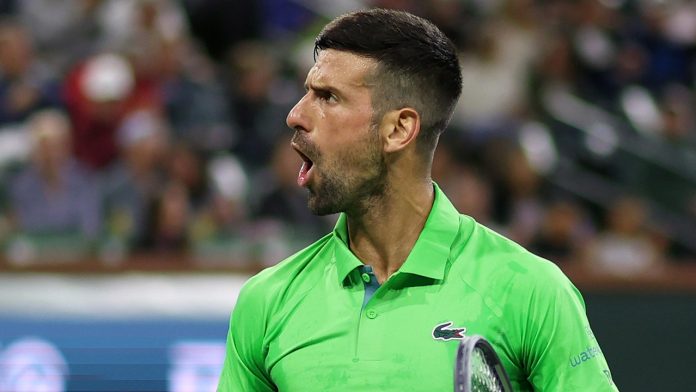
Novak Djokovic posts image of MRI showing hamstring injury after fans boo him for leaving match

0

Novak Djokovic put it all out there.

The Serbian tennis star posted a scan of his injured left hamstring on social media early Sunday after being booed at the Australian Open when he quit playing one set into his semifinal. He said at his news conference that he had a torn muscle, but faced criticism from fans on soecial media who questioned how serious the injury was. 

Djokovic seemingly let the backlash get to him, as he posted the picture of the MRI taken Saturday on X to prove the doubters wrong.  

“Thought I’d leave this here for all the sports injury ‘experts’ out there,” he wrote. 

CLICK HERE FOR MORE SPORTS COVERAGE ON FOXNEWS.COM

The veteran tennis star did not offer any additional information, such as the exact diagnosis he might have received or any timeline for his recovery.

The 37-year-old Djokovic stopped his match against Alexander Zverev after dropping the opening set in a tiebreaker on Friday. After shaking hands with Zverev and the chair umpire, Djokovic gathered his equipment and started walking toward the locker room.

Some of the spectators in Rod Laver Arena jeered him. Djokovic put both of his thumbs up before leaving.

AMERICAN TENNIS STAR BEN SHELTON PUTS AUSTRALIAN OPEN TV INTERVIEWERS ON BLAST OVER TREATMENT OF PLAYERS

Novak Djokovic of Serbia plays a backhand return to Carlos Alcaraz of Spain during their quarterfinal match at the Australian Open tennis championship in Melbourne, Australia, Tuesday, Jan. 21, 2025.  (AP Photo/Ng Han Guan)

During his on-court interview, Zverev chastised those who booed Djokovic.

“I know that everybody paid for tickets and everybody wants to see hopefully a great five-set match,” Zverev said. “But you’ve got to understand — Novak Djokovic is somebody that has given this sport, for the past 20 years, absolutely everything of his life.”

Djokovic had been hurt late in the first set of his previous match, a four-set victory against Carlos Alcaraz in the quarterfinals on Tuesday night.

Djokovic finished that match with tape on his upper left leg and had a similar wrap at the start against Zverev.

CLICK HERE TO GET THE FOX NEWS APP

Novak Djokovic gestures to the crowd

Novak Djokovic of Serbia gestures to the crowd during his third round match against Tomas Martin Etcheverry of Argentina at the Australian Open tennis championships at Melbourne Park, Melbourne, Australia, Friday, Jan. 19, 2024. (AP Photo/Asanka Brendon Ratnayake)

“I did everything I possibly can to basically manage the muscle tear that I had,” Djokovic said at his news conference Friday.

“Towards the end of that first set, I just started feeling more and more pain,” he said. “It was too much, I guess, to handle for me at the moment. Unfortunate ending, but I tried.”

The Associated Press contributed to this report.

Follow Fox News Digital’s sports coverage on X, and subscribe to the Fox News Sports Huddle newsletter.
 

Israel Appears Poised to Keep Its Troops in Lebanon Beyond Deadline

0

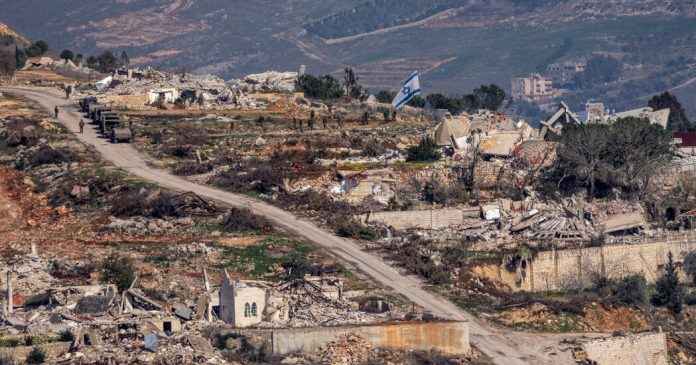
Israel is set to occupy parts of southern Lebanon after a deadline for its full military withdrawal lapses on Sunday, the Israeli government implied in a statement on Friday, amid Israeli concerns that Hezbollah remains active there and doubts about the Lebanese Army’s ability to stymie the militia’s resurgence.

Under the terms of a truce between Israel and Hezbollah in late November, Israeli troops were supposed to withdraw within 60 days from areas of Lebanon that they had recently wrested from the group’s control. Hezbollah was also required to withdraw from the region, allowing the Lebanese military to assert its control over an area where Hezbollah, an Iran-backed Shiite force and political movement, had long dominated.

Less than two days before the deadline, the office of Benjamin Netanyahu, the Israeli prime minister, announced that Israel’s withdrawal was dependent on the Lebanese Army asserting its full control over the area, adding that the timeline was flexible and implying that Israeli troops would remain in Lebanon beyond the cutoff.

“Since the cease-fire agreement has not yet been fully enforced by Lebanon, the gradual withdrawal process will continue under full cooperation with the United States,” the statement from the Israeli prime minister’s office said.

Asked for clarification, the prime minister’s office declined to say if this meant that Israeli troops would definitely remain in Lebanon after the deadline. But Israeli leaders have told American and French mediators that they want to keep some soldiers in southern Lebanon beyond Sunday, according to three officials briefed on the negotiations.

There was no immediate response from the Lebanese government. In a brief message, Hezbollah’s media office said it was awaiting reaction from the countries overseeing the cease-fire, the United States and France. In a longer statement released on Thursday, Hezbollah said that any “breach” of the deal would not be tolerated, because it would be “a blatant violation of the agreement, an attack on Lebanese sovereignty and the beginning of a new chapter of occupation.”

Hezbollah officials did not respond to accusations that Hezbollah had failed to live up to its commitments and that the Lebanese military had not yet taken control of the territory in question. Its media relations office said the group was “committed” to the terms of the cease-fire deal but would not go into further detail.

Hezbollah has called on the Lebanese government and international monitors not to allow “any pretexts or excuses for prolonging the occupation,” but did not say what action it would take if Israeli troops remained.

After two months mostly without conflict, despite occasional violations, the specter of renewed fighting looms again, even if Hezbollah, battered and exhausted, no longer poses the same threat to Israel as it did at the start of the war nearly 16 months ago.

If Israeli troops do remain beyond the weekend without Lebanon’s blessing, Hezbollah will have to choose between accepting the status quo and losing face — or resuming battle and risking a large Israeli counterattack that would further damage both its decimated ranks and Lebanese civilian infrastructure. Should fighting restart, Israel’s defense minister, Israel Katz, has warned that Israeli strikes would no longer differentiate between Hezbollah and the Lebanese state.

“It’s a serious dilemma for Hezbollah,” said Nicholas Blanford, a Beirut-based analyst for the Atlantic Council, an American research group. “They are damned if they resist and damned if they don’t. Hezbollah’s supporters will not thank the party for resuming war when they are trying to return to their homes and begin rebuilding.”

Since November, Israel has transferred more than 100 military installations and villages to the Lebanese authorities, but still occupies roughly 70 percent of the areas that it captured after invading Lebanon last fall, according to Andrea Tenenti, a spokesman for UNIFIL, the United Nations peacekeeping force in southern Lebanon.

Israeli officials say that the Lebanese Army has yet to signal its willingness to fill the void in those areas, all which are south of the Litani River. Mr. Tenenti said that the Lebanese military stood ready to do so but could not enter places that the Israeli military had yet to vacate.

Asked for comment, the Lebanese military referred to a public statement in which it said that it “maintains readiness to complete its deployment in the area south of the Litani River immediately after the Israeli enemy withdraws from it.”

In recent days, Israeli troops did not appear to be preparing for a complete evacuation, according to an official and an Israeli military officer who also spoke on the condition of anonymity to speak more freely.

The deadline poses an early quandary for President Trump, who strongly backs Israel but campaigned on a promise of peace for Lebanon.

It is also a test for Lebanon’s new leaders. President Joseph Aoun and Prime Minister-designate Nawaf Salam, both selected this month, need a peaceful environment to rebuild Lebanon after years of war, political chaos and economic catastrophe.

The new Lebanese leadership “has yet to demonstrate adequately that it can be a confident leader in managing Hezbollah — a weakness that, of course, Israel is going to continue to exploit as justification for staying past the deadline,” said Sanam Vakil, the director of the Middle East program at Chatham House, a London-based foreign affairs research group.

The current conflict began after Hezbollah’s ally Hamas attacked Israel on Oct. 7, 2023, killing about 1,200 people and taking some 250 hostages. The next day, Hezbollah began firing rockets at Israeli military positions in solidarity with Hamas, and Israel fired back, leading to daily exchanges that displaced hundreds of thousands of Israeli and Lebanese civilians and damaged towns on either side of the border.

The fighting escalated last summer, after a rocket from Lebanon killed a group of children and teenagers in an Israeli-controlled town. Israel assassinated most of Hezbollah’s top leadership, sharply increased its bombardment of Hezbollah strongholds and then launched a ground invasion into southern Lebanon.

The Israeli offensive destroyed whole neighborhoods, displaced more than a million people and killed several thousand, including many civilians.

The war also led to direct confrontations between Israel and Iran, Hezbollah’s main backer.

Bruised and distracted, Hezbollah and Iran were both powerless to prevent the collapse of a third member of their alliance, the Syrian government. President Bashar al-Assad of Syria was toppled by rebels in December, making it almost impossible for Iran to send arms to Hezbollah through Syrian territory. Within Lebanon, Hezbollah’s strength was diminished, leading to the rise of Mr. Aoun and Mr. Salam, who both promised to restore the cohesion and authority of the Lebanese state.

Israeli leaders privately say that a stronger Lebanese government is in Israel’s interests, because it could further curb the influence of Hezbollah, which opposes Israel’s existence. Hezbollah was founded in the 1980s, partly in response to a previous Israeli occupation of southern Lebanon, which lasted until 2000. The militia’s weaponry gave it outsize influence over Lebanese affairs, with some comparing it to a state within a state. Now, the group is at its weakest ebb in decades.

But Israel is prepared to stay within Lebanon, denting the new Lebanese leadership’s authority, with its officials arguing that Hezbollah still retains the resources and the ambition to pose a threat to Israeli villages along the border.

The Lebanese Army has deployed to major towns and villages in southern Lebanon in recent weeks, mostly in places close to the Mediterranean Sea, in the southwest of the country. It has also deployed specialized units to remove rubble, dispose of unexploded ordinance and reconstruct roads that were destroyed. Army officials say they have operated in coordination with the international committee supervising the cease-fire.

But Lebanese soldiers have yet to take charge of the borderlands further to the east, with the exception of the area around Khiam, a town in southeast Lebanon that was the site of fierce fighting during the war.

An Israeli military officer, speaking on the condition of anonymity to speak more freely, said the Israeli Army had made no attempt to dismantle roughly half a dozen military bases built in recent months along a narrow strip, less than a mile wide, north of the Israel-Lebanon border.

The expectation among soldiers at the front, the officer said, was that they would remain in place for the foreseeable future to prevent Hezbollah’s return there.

Dayana Iwaza contributed reporting from Beirut, Lebanon; Johnatan Reiss from Tel Aviv; and Christina Goldbaum from Damascus, Syria.

After January 6th pardons, DA Larry Krasner looks to state charges

0

District Attorney Larry Krasner is looking to file state charges against Pennsylvanians who were pardoned after participating in the January 6th riot. He explains his efforts to NPR’s Pien Huang.

Bills offensive coordinator Joe Brady withdraws Saints head coaching candidacy: report

0

The New Orleans Saints parted ways with Dennis Allen in November following a seven-game losing skid. Special teams coordinator Darren Rizzi then received the interim coaching tag.

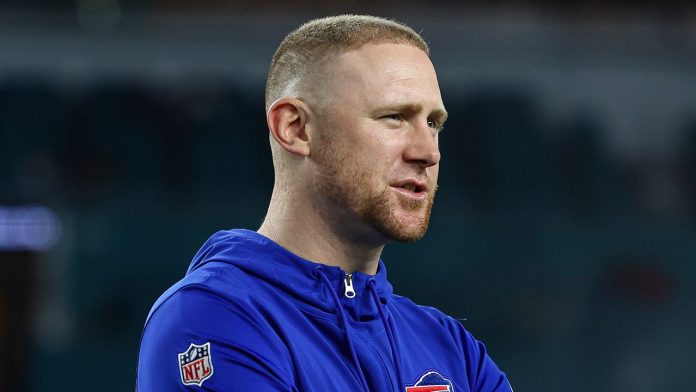
The NFL franchise’s search for its next head coach remains active, but the team now knows at least one person who will not land the job. Buffalo Bills offensive coordinator Joe Brady has withdrawn his name from consideration for the role, per a report from NFL Media.

Brady prefers to continue guiding the Bills offense, despite New Orleans wanting “to interview Brady a second time,” NFL Network Insider Ian Rapoport reported. Brady’s name had also been linked with other head coaching openings during the ongoing hiring cycle.

CLICK HERE FOR MORE SPORTS COVERAGE ON FOXNEWS.COM

Buffalo Bills coach Joe Brady looks on from the field prior to an NFL football game against the Miami Dolphins at Hard Rock Stadium on January 7, 2024 in Miami Gardens, Florida. (Perry Knotts/Getty Images)

New Orleans’ 2024 season got off to a promising start, with the team winning its first two games by 37 and 25 points respectively. But, the ensuing losing streak prompted Saints ownership to make an in-season coaching change.

PETE CARROLL SET TO BECOME RAIDERS HEAD COACH: REPORTS

“Dennis has been part of our organization for many years,” team owner Gayle Benson said in a statement shortly after the franchise announced Allen’s firing. “He is highly regarded within the NFL. He has been extremely loyal and professional and most importantly an excellent football coach for us. All of this makes today very tough for me and our organization. However, this decision is something that I felt we needed to make at this time. I wish nothing but the best in the future for Dennis and his family. He will always be considered in the highest regard by me and everyone within our organization.”

Saints logo

General view of the New Orleans Saints logo as the midfield logo fleur-de-lis after the game between the New Orleans Saints and the Las Vegas Raiders at Caesars Superdome.  (Stephen Lew-USA TODAY Sports)

Allen ended his head coaching tenure in New Orleans with an 18-25 record. Allen spent seven seasons as New Orleans’ defensive coordinator before succeeding Sean Payton as the franchise’s head coach. Allen is now a top candidate for the Chicago Bears defensive coordinator role, ESPN reported.

Payton, who guided the Saints to the franchise’s lone Super Bowl title, turned to broadcasting in 2022 after stepping down from his head coaching position. He returned to the sideline in 2023 when he was named the next head coach of the Denver Broncos.

Joe Brady stands next to Josh Allen

Offensive coordinator Joe Brady stands with Josh Allen #17 of the Buffalo Bills before the game against the Seattle Seahawks at Lumen Field on October 27, 2024 in Seattle, Washington.  (Steph Chambers/Getty Images)

Rizzi, along with New York Giants defensive coordinator Mike Kafka and Miami Dolphins defensive coordinator Anthony Weaver have all completed interviews with the Saints amid the wide-ranging head coaching search. Philadelphia Eagles offensive coordinator Kellan Moore participated in a virtual interview last week, the team announced.

In his second season as the Bills playcaller, Brady helped star quarterback Josh Allen have arguably the best season of his career. Allen, who was recently named an NFL MVP finalist, threw 28 touchdowns against just 6 interceptions during the regular season. He did not throw an interception in the two postseason games he’s played in thus far.

CLICK HERE TO GET THE FOX NEWS APP

The Kansas City Chiefs will host the Bills on Sunday for the AFC Championship game. On the NFC side, the Eagles will welcome the Washington Commanders to Lincoln Financial Field. The winner of those games will meet in New Orleans for Super Bowl LIX.

Follow Fox News Digital’s sports coverage on X, and subscribe to the Fox News Sports Huddle newsletter.

Gunfire and Bandits Make School an Impossible Dream for Haitian Children

0

The last time Faida Pierre, 10, went to school, her mother found her stranded on the roof of the school’s building, barefoot and crying, while a gang stormed the surrounding downtown Port-au-Prince neighborhood.

The principal and teachers had called parents to pick up their children as the sound of gunfire grew louder and armed men approached. Then everyone ran for their lives. Faida ended up alone.

“There was a panic,” Faida recalled, “and people were running out of the building. People were saying that the bandits had attacked the neighborhood, so kids were trying to reach the rooftop.”

That was a year ago, and, like some 300,000 other children across Haiti, Faida, who was in third grade, stopped going to school.

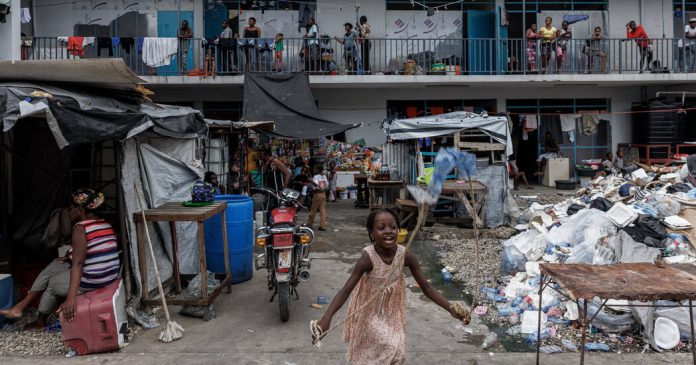
Robbed of their education and their prospects for the future, legions of Haitian children are the overlooked victims of the gang violence that has crippled the country: homeless, hungry and often targeted for recruitment by the armed groups they fled.

Many schools remain shuttered because they are in gang-occupied areas. Others have become de facto shelters, as more than one million people — roughly 10 percent of the country’s population — have abandoned their homes during gang takeovers of their communities.

After a surge of violence crippled Port-au-Prince, the capital, last February, nearly 15,000 households descended on government and school buildings for protection, according to UNICEF, the United Nations’ children’s advocacy organization, which has also tracked the number of children not attending school.

Even families whose schools remained open said they had not been able to enroll their children because they lacked money for school fees, uniforms and supplies. Most children in Haiti attend private schools, but public schools also charge modest fees that many families whose homes and businesses were burned to the ground can no longer afford.

At the same time, tens of thousands of children have abandoned Port-au-Prince for safer places elsewhere in Haiti, overwhelming schools in several communities.

Schools have also had to cope with a plunge in the numbers of teachers and staff, many of whom either were killed or left the country. Haiti’s schools have lost about one-fourth of their teachers, according to government officials.

Besides educational losses, being out of school makes them vulnerable to joining the very armed groups wreaking havoc on their lives. Experts estimate that up to half of gang members are minors.

In the province that includes Port-au-Prince, 77,000 ninth graders showed up for the statewide final exam at the end of the 2023-24 school year, a drop of 10,000 from the previous year, the Education Ministry said. As a result, officials estimate that some 130,000 students in the capital region withdrew from the school system’s 13 grades last academic year.

Officials said they had been unable to make a full assessment of how many students dropped out this year.

Faida may not go to school, but she lives in one. Faida’s father was killed in a gang attack, her mother said, so she and Faida joined the nearly 5,000 people living at the Lycée Marie Jeanne school in Port-au-Prince.

When a New York Times reporter and photographer visited the school in the fall, Faida and her mother, Faroline Parice, were sleeping outdoors in a courtyard awash in mosquitoes and rainwater.

“At night, sometimes she wakes up, and she’s crying,” Ms. Parice said. “She asks when she will go back to school.”

Wudley Beauge, 17, and his 15-year-old sister, Sadora Damus, were also there and have missed more than a year of school.

Sadora dreams of becoming a police chief, but would need to pass the ninth-grade exams to enter the police academy, and she left school after eighth grade. Wudley, who missed 10th grade, wants to be an auto mechanic.

They sleep on a classroom floor with about a dozen other people.

“My first priority would be to go back to school because when I’m sharing my goals with people who are older than I am, they say, ‘If you want to be a mechanic, you must go back to school,’” Wudley said. “My family doesn’t have money to send me to mechanic school.”

His mother, Soirilia Elpenord, 38, wants her children in school, but with her cosmetics shop and home set ablaze by gang members, the mother of four said finding shelter ranked higher than learning.

“School? That’s not a priority,” she said. “My priority is to survive. The main priority for all parents in Haiti right now is how to survive.”

UNICEF has worked with the Haitian government to provide cash assistance to needy families, but prioritizes those whose children are enrolled in school, and many parents said they did not qualify for aid.

Bruno Maes, who recently left as head of UNICEF in Haiti, acknowledged that there was not enough funding to help all families, but said that more children would drop out of school without assistance.

The education situation was complicated by the more than 100,000 students, primarily from the capital, who moved to the south, where life is relatively calm.

But schools had no seats for them. Many students fled with only the clothing on their backs and showed up without birth certificates, school transcripts or any other documentation proving what grade they were in.

“You have a lack of documents, you have the impact of the violence obliging them to flee, and then you have no seat in schools, and then you have no money and cannot pay,” Mr. Maes said. “The scope of the issues affecting the majority of children is huge.”

The stakes are high: UNICEF said the number of children recruited by gangs last year increased by 70 percent. It is common to see 7-year-olds working as gang lookouts, experts say.

Janine Morna, who researches children in armed conflict for Amnesty International, said young gang members in Haiti whom she had interviewed for an upcoming report told her they had joined either under threat or out of financial desperation. The gangs often provide either a small monthly payment or allow younger members to keep the change after running errands, she said.

None of the minors she interviewed were in school.

“We know schools can prevent recruitment by keeping children active and engaged,” Ms. Morna said. “Children we spoke to were left idle — sometimes they were confined to their homes or displacement sites without the opportunity for enrichment and play.”

“The prospect of joining a gang,” she added, “becomes more attractive the longer you are out of school.”

Haitian officials said they were committed to improving the education system as a key step in stabilizing the country. The goal is to make schools more affordable by ensuring that early grades are free and providing families with stipends and books.

The government also rented buildings to accommodate students whose schools had become de facto shelters.

“Haiti has invested a lot in education,” said the country’s education minister, Augustin Antoine.

Some schools in the West Department, which includes Port-au-Prince, reopened in the fall, but with fewer students, said Etienne Louisseul France, the Education Ministry official who oversees schools in that region.

Haiti has been in turmoil since 2021, when its last elected president was assassinated. Last year, gangs banded together in coordinated attacks on police stations, hospitals and entire neighborhoods. With its police department depleted — many officers took advantage of U.S. humanitarian parole visas — the government has struggled to contain the violence.

The Port-au-Prince airport has been closed since November after gang members shot at U.S. commercial aircraft. An international force, financed by the Biden administration and made up mostly of Kenyan police officers, has done little to loosen the gangs’ grip on the capital.

The U.N. said at least 5,600 people were killed in 2024, up nearly 25 percent from the year before.

“Now the situation is that many schools had to shut down, even private schools,” Mr. France said, adding that officials have to “think of a Plan B.”

Ms. Elpenord’s backup plan is to eventually send her son to live with family away from their neighborhood so he can attend school. Her daughter tried going back to school a few weeks ago, but gang skirmishes kept her out.

“I feel this is destroying me,” said her son, Wudley, who is still hoping to start 10th grade. “And it makes me sad.”

André Paultre contributed reporting from Port-au-Prince, Haiti.

President Donald Trump is shaping Canada's race to find a leader

0

Canada’s ruling party leadership race is being shaped by President Trumps threat to impose tariffs – with every candidate pitching themselves as the leader who can face him down.

Missouri man sentenced in attempted White House attack with U-Haul truck

0

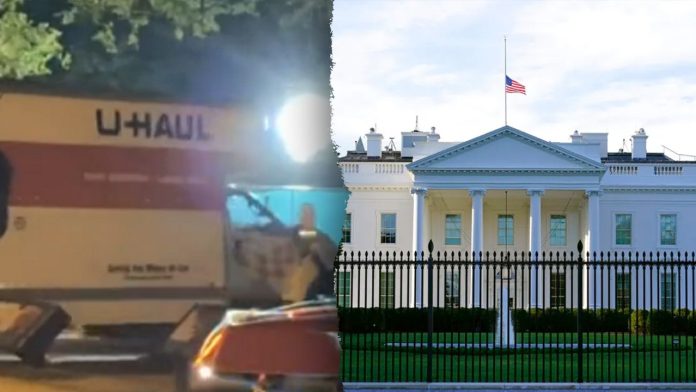
A Missouri man is facing nearly a decade of jail time after attempting a 2023 attack on the White House with a rented box truck.

Sai Varshith Kandula, 20, of St. Louis, was sentenced Jan. 16 in U.S. District Court to eight years in federal prison for an attempted attack on the White House with a rented U-Haul truck May 22, 2023.

The attack “aimed to overthrow the democratically elected government of the United States in order to replace it with a dictatorship fueled by Nazi ideology,” according to a statement from the U.S. attorney’s office in Washington, D.C.

Sai Varshith Kandula was arrested and charged after hitting a barrier in Lafayette Square in May 2023. (Chris Zaboji/Locla News X/TMX)

CHARGES FILED AGAINST DRIVER OF U-HAUL TRUCK THAT CRASHED NEAR WHITE HOUSE 

Kandula pleaded guilty May 13, 2024, to a charge of willful injury or depredation of property of the United States before U.S. District Court Judge Dabney L. Friedrich. In addition to the prison term, Friedrich ordered Kandula to serve three years of supervised release.

Kandula is an Indian national, according to authorities. At the time of the incident, he was a lawful permanent resident of the U.S. with a green card.

According to court documents, Kandula flew on a commercial flight from St. Louis to Washington, D.C., May 22, 2023, connecting through another airport on a one-way airline ticket. 

The outside of the White House

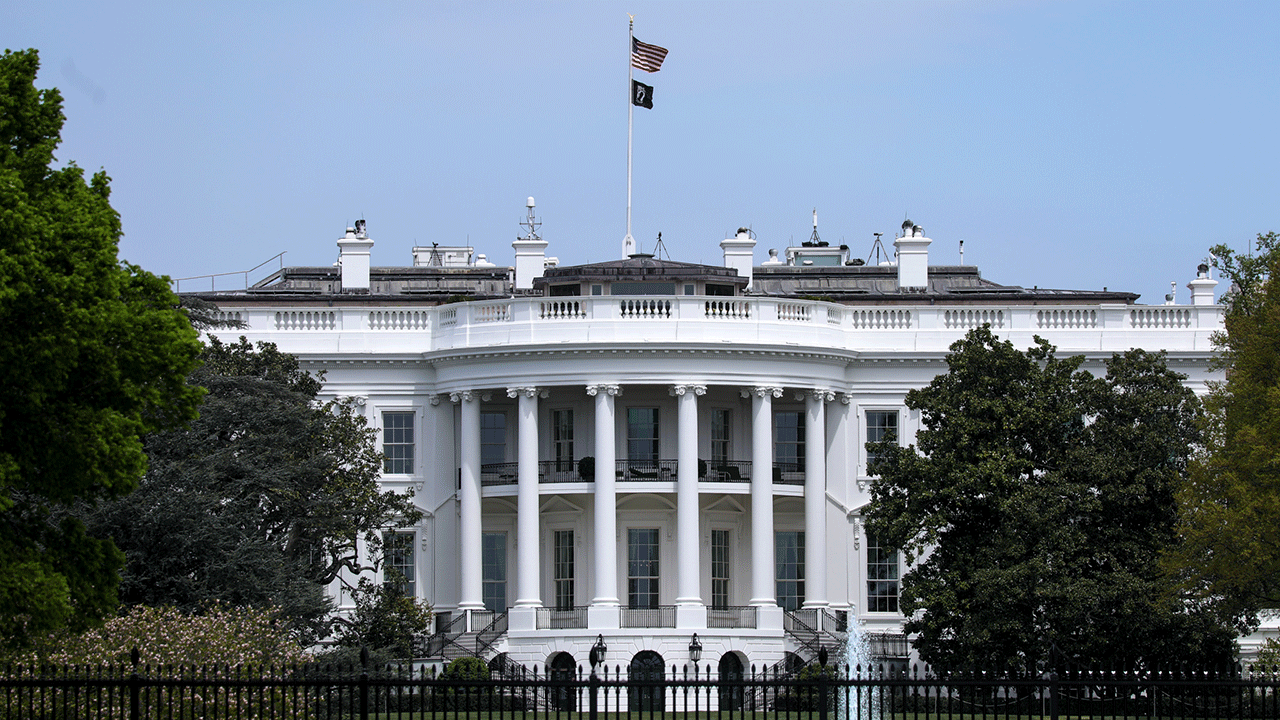
The White House in Washington, D.C. (Yasin Ozturk/Anadolu Agency via Getty Images)

Kandula arrived at Dulles International Airport just before 5:30 p.m., rented a truck at 6:30 p.m. and drove to Washington, D.C., where he crashed into the barriers protecting the White House and President’s Park.

The crash happened just after 9:30 p.m. at the intersection of H Street, Northwest and 16th Street, Northwest.

He drove onto the sidewalk, sending pedestrians scurrying, according to authorities. After striking the barriers, the truck backed up, then lurched forward, striking the metal barriers a second time.

The second impact disabled the truck, which began smoking from the engine compartment and leaking fluid, officials said. He got out, went to the back of the truck and pulled out a large red and white flag with a swastika in the center and started waving it.

U-HAUL TRUCK CRASHES INTO BARRIERS NEAR WHITE HOUSE, SUSPECT IN CUSTODY, OFFICIALS SAY

U.S. Park Police and Secret Service officers arrested Kandula, according to the attorney’s office.

At the time of the crash, he was attempting to gain access to the White House to seize political power, according to the plea agreement. 

“Kandula’s intent was to replace the democratically elected government with a dictatorship fueled by [the] ideology of Nazi Germany and for himself to be put in charge of the United States,” according to the statement. 

police car lights

U.S. Park Police and Secret Service officers arrested Kandula. (iStock)

Kandula planned the attack for several weeks, according to authorities. Prior to renting the truck and crashing it on White House grounds, he made several attempts to gain access to vehicles or armed security guards. 

On April 22, 2023, Kandula unsuccessfully requested 25 armed guards and an armored convoy from a Virginia security company, according to the U.S. Attorney’s Office. Weeks later, on May 4, 2023, he attempted to contact several other companies in an attempt to rent a large commercial tractor-trailer truck, a dump truck or another large truck.

“Kandula had attempted to arrange for the services of these security guards and the use of large vehicles in order to carry out his offense against the U.S. government,” officials said. “His actions were calculated to influence or affect the conduct of government by intimidation or coercion.”

Joe Biden Jill Biden

Kandula told investigators he would have arranged for the killing of former President Joe Biden. (Associated Press, File)

He admitted to investigators that he would have arranged for the killing of former President Joe Biden and others, if necessary, to achieve his objective, authorities noted.

CLICK HERE TO GET THE FOX NEWS APP 

The crash caused $4,322 in damage to the National Park Service, according to prosecutors. The total cost included repairing the metal bollard barriers to their original condition and ensuring structural soundness, oil and chemical removal, spill cleanup and disposal of fluids from the crashed U-Haul.

The case was investigated by the Secret Service, the FBI’s Washington field office, the U.S. Park Police and the Metropolitan Police Department of the District of Columbia.

His Opponents Sidelined, Lukashenko Is Set for a 7th Term in Belarus

0

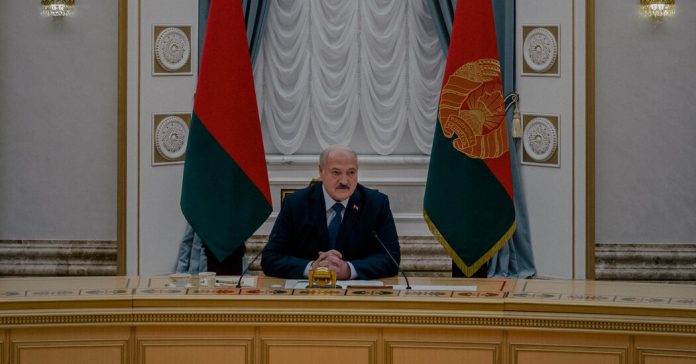
When Aleksandr G. Lukashenko last ran for president of Belarus, the former Soviet republic he has led since 1994, he faced an unusual phenomenon: rival candidates who actually tried to win. His eventual victory in that election, in 2020, widely regarded as fraudulent, was met with nationwide protests, a subsequent brutal crackdown supported by Russia and then Western penalties.

This time, in a presidential election set for Sunday, Mr. Lukashenko’s all-but-certain victory — his seventh in a row — is likely to be smoother. He has allowed four other, state-approved candidates to run, but they compete only in showering praise on him. Candidates who could pose a threat to his rule have all been jailed or forced into exile. He controls the media and all levers of power in his country.

“There is no genuine choice — all we have is this farcical facade of the candidates who all come from pro-government parties,” said Katia Glod, a nonresident fellow at the Center for European Policy Analysis in Washington who is originally from Belarus.

“It is like in Russia now: There are no candidates who can represent an alternative view,” she said.

Mr. Lukashenko is so confident of winning another term that he has eschewed campaigning, saying he was too busy with tasks like testing a new Belarusian-made ax. State media on Thursday showed him chopping wood.

Two decades after the United States declared Belarus “the last remaining true dictatorship in the heart of Europe,” Mr. Lukashenko is determined to put the 2020 election behind him and prove to his country — and to Russia — that his grip is firm.

His continued rule will do little to shift the dynamics of a region disrupted by Russia’s invasion of Ukraine. Belarus was a staging ground for Moscow’s attack, and Mr. Lukashenko remains an ardent ally of President Vladimir V. Putin of Russia.

But Mr. Lukashenko has also shown signs of reaching out to the West by issuing a wave of presidential pardons for people jailed during the 2020 protests, apparently in a bid to reduce the sanctions that have punished his country for years.

None of the leaders of the opposition in 2020 have been freed, however, and Mr. Lukashenko has locked up large numbers of opposition sympathizers before Sunday’s election.

So it is unclear where Mr. Lukashenko’s attempt to maneuver between East and West, a game he has played ruthlessly in the past, will leave Belarus.

Mr. Lukashenko remains an important ally of Russia; he said recently that Belarus had Russian nuclear weapons on its soil and would host what Moscow has called its new hypersonic ballistic missile if it is deployed. But he also does not want to be drawn further into the war in Ukraine and has pushed back against requests from Russia to send troops.

A relaxation of Western penalties would lift the economy. Belarus has been battered by the sanctions, particularly those against potash, a fertilizer ingredient that is one of the pillars of the economy.

But so far, there has been no indication from Washington or Brussels that the strategy of releasing some prisoners is working. Some analysts say he will be closely watching for the West’s response to the elections.

“If the regime sees that the West is taking a more or less neutral stance on the election, maybe it will decide to release some high-profile prisoners to bring tensions with the West one notch down,” Ms. Glod said. “If not, maybe they will stop altogether.”

None of Mr. Lukashenko’s opponents in the election have even pretended that the outcome is a question.

Wrapping up a TV debate with three other candidates (Mr. Lukashenko did not participate), the Communist Party candidate Sergei Syrankov said Monday that he wanted to be “honest,” and that the only point of the vote was to see who came in second. “Everyone in this studio knows that Aleksandr Lukashenko is going to win,” he said.

The electoral landscape this year is vastly different from the political awakening that took place in 2020, when hundreds of thousands of people turned out to support candidates speaking out against Mr. Lukashenko.

A former boss of a collective farm in Soviet times, Mr. Lukashenko won his first presidential election, a relatively fair contest, in 1994 as an anti-establishment candidate promising to root out corruption and give a voice to ordinary people.

Six elections since have been widely dismissed as shams that concealed rising discontent. Before the 2020 election, even supporters began to wonder whether it might be time for a change when Mr. Lukashenko responded to the Covid-19 pandemic by telling people to protect their health by riding tractors, drinking vodka and taking saunas.

He jailed the two main presidential hopefuls in 2020 — Viktor Babariko and Sergei Tikhanovsky. Mr. Tikhanovsky’s wife, Svetlana Tikhanovskaya, a political novice, emerged as an accidental leader of the opposition.

Ms. Tikhanovskaya galvanized opponents to Mr. Lukashenko with a highly popular campaign. But the president’s party machine orchestrated widely documented fraud on election night, which led to months of protests.

Mr. Lukashenko eventually cracked down, throwing thousands of opposition supporters into jail. All independent media outlets were shut down, their editors and reporters jailed or pushed into exile. Opposition figures who did not flee were imprisoned.

Five years later, those opposition leaders in exile are telling Belarusians to ignore the election or to vote for “none of the above.”

“We’re calling on Belarusians to show their opposition to the regime in any form: refuse to cooperate with the regime, ignore the elections — and voting for ‘none of the above’ is also a way of protest,” Ms. Tikhanovskaya, who is based in Lithuania, said in emailed comments.

“This is a farce, not an election,” she said. “There is no room and there can’t be any room for transparency, fair procedures or opposition candidates there.”

As in previous elections, Mr. Lukashenko has presented himself as the only safeguard against chaos and strife. He said recently that he “does not cling to power” and that he would “do my best to hand over power to a new generation.”

But he did not indicate he would step down any time soon, and has sent the message that he is ready to crack down again if needed.

Belarusian TV recently broadcast slickly produced footage of riot police in full gear tackling crowds making trouble outside a mock polling station.

Mr. Lukashenko has also banned remote voting, disenfranchising hundreds of thousands of Belarusians abroad.

Kiryl Kalbasnikau, 33, a theater technician who fled the country in 2021, said by phone from London that he “would love to go and vote for ‘none of the above’” if he could.

Like many Belarusian exiles, Mr. Kalbasnikau, who until recently belonged to the banned Free Belarus Theater, once thought the regime was on its last legs. Now, he said, he may be looking at 10 more years of rule by Mr. Lukashenko — and of his own exile.

“It would be a miracle to see my mom and two brothers — I miss them so much,” said Mr. Kalbasnikau, who has not seen them for nearly four years.

Many Belarusians say that the pardons Mr. Lukashenko has been issuing are at least one bright spot.

But Ms. Tikhanovskaya, whose husband has been in jail in Belarus for over four years, has no trust in Mr. Lukashenko’s good will.

“Repressions are likely to go on after Jan. 26: Lukashenko knows he cannot stay in power unless he keeps people in fear,” she said, dismissing the pardons as “manipulation, not a policy change.”

Andrew Higgins contributed reporting.