Thursday, November 12, 2026
Home Blog Page 38

Parents say federal cuts have slowed civil rights investigations : NPR

0

Amy Cupp hugs her daughter, G, for a portrait in her home in northern Indiana. G is 12 and has multiple disabilities. Cupp has filed a federal complaint over G’s treatment in school but says the process stalled after President Trump’s cuts to the U.S. Education Department.

Kaiti Sullivan for NPR


hide caption

toggle caption

Kaiti Sullivan for NPR

There are a lot of things 12-year-old G likes about school. She likes gym class; she likes to help other students; she likes to craft with her teacher.

But when you ask what she doesn’t like, G doesn’t hesitate.

“The blue room,” she says, sitting in her home outside Fort Wayne, Ind.

That’s a padded room G’s family says school staff sometimes lock her in.

“It feels like close spaces, and it’s like — it’s, like, scary in there.”

Her mother, Amy Cupp, says G has disabilities, and because of them, she sometimes has tantrums at school — lying on the floor; refusing to follow instructions; and trying to leave the room. Sometimes when this happens, school staff seclude her.

Cupp keeps track of every time educators put G in a room alone, based on reports and emails from the school. So far this school year, she’s counted more than a dozen incidents, according to a lawsuit Cupp recently joined.

“As soon as they go to lock the doors, she freaks out,” Cupp says. “It’s beyond sickening.”

Twelve-year-old G does a word association exercise with her mom, Amy Cupp. Cupp says G’s favorite hobby is making slime. “If she could make slime every day, she would be happy.”

Twelve-year-old G does a word association exercise with her mom, Amy Cupp. Cupp says G’s favorite hobby is making slime. “If she could make slime every day, she would be happy.”

Kaiti Sullivan for NPR


hide caption

toggle caption

Kaiti Sullivan for NPR

G has fetal alcohol syndrome, autism, ADHD and a mild intellectual disability. Cupp and her husband adopted G as a toddler, and Cupp asked that NPR use only G’s first initial because this story describes the symptoms of G’s disabilities and her school’s response.

Cupp says that after weeks of trying to get G’s school to change the way it handled her daughter’s behavior, she filed a complaint with the U.S. Education Department’s Office for Civil Rights, or OCR, which investigates discrimination in schools.

That office recently lost more than 40% of its staff after the Trump administration launched a massive downsizing of the department.

Now, Cupp and other parents say their civil rights complaints aren’t being investigated. Last week, Cupp joined a lawsuit that aims to force the federal government to act on complaints like hers. The lawsuit claims the layoffs have undermined OCR’s “ability to fulfill its statutory and regulatory mandate to enforce civil rights laws in schools.”

“I just can’t fathom that anybody would cut something so vital,” says Cupp, a devout Christian. She says she voted for President Trump and thought he shared her beliefs. “But I can’t understand why they’re doing what they’re doing, because that is not what God would intend.”

The White House referred NPR’s request for comment to the Education Department. In a statement, the department said, “The Office for Civil Rights is working vigorously to protect all Americans – and especially our most vulnerable – from unlawful discrimination.”

It said OCR has been actively processing disability discrimination complaints for weeks, and pointed to a recently opened investigation into D.C. Public Schools.

“The Department’s committed staff will continue to prioritize the educational needs of those with disabilities,” the statement continued.

Why OCR investigations are different

OCR attorneys review all kinds of allegations of discrimination in schools – based on race, sex, disability and more. In the short time Trump has been back in office, OCR has pursued high-profile investigations into universities it accuses of using “race-exclusionary practices” and into Maine’s policy allowing transgender women and girls to compete on women’s and girls’ sports teams.

But the majority of the complaints OCR receives have historically been about disability discrimination.

“The loss of a functioning OCR is a huge hit to the disability rights community,” says Rachel Perera, a fellow at the Brookings Institution.

OCR lost at least 240 staffers in the recent cuts, and it closed seven of its 12 regional offices, including the Chicago branch that handled Indiana cases.

Even before the cuts, OCR was overwhelmed with a growing number of complaints, with investigations sometimes lasting months. Perera says the Trump administration’s changes will likely exacerbate those delays and undermine civil rights protections.

Amy Cupp keeps track of every time educators put G in a room alone, based on reports and emails from the school.

Amy Cupp keeps track of every time educators put G in a room alone, based on reports and emails from the school.

Kaiti Sullivan for NPR


hide caption

toggle caption

Kaiti Sullivan for NPR

“Children get one shot in education, right? You don’t get to do fourth grade over. And so if it takes a year or two years for a state government or federal government to intervene, then you have serious missed education opportunities and a lot to make up for,” Perera says.

Parents of children with disabilities have some options if they believe their children are not receiving the education they are entitled to under federal law. But special education advocates say nothing quite compares to an OCR investigation: OCR can examine whether there is a larger pattern of discrimination at a particular school or district, while states often focus on whether schools are meeting the needs of individual students with disabilities. And unlike lawsuits, families can file OCR complaints without legal assistance.

But some people question whether the Education Department should even be handling civil rights complaints.

Jonathan Butcher is a fellow with the Heritage Foundation who helped shape the education sections of the conservative policy playbook Project 2025. He says the federal government should protect the rights of students with disabilities, but OCR’s backlog, among other problems, has been getting in the way of that. He believes civil rights investigations would be better handled by the U.S. Justice Department.

“We should be interested in making sure this is done effectively. It wasn’t done well before and so now we’re looking for a way to do it better,” Butcher says.

The Trump administration hasn’t yet pursued such a move, but it has made other education policy changes laid out in Project 2025.

“Change is difficult and that’s why it doesn’t happen very often at the federal level, but this is an opportunity to streamline federal processes,” Butcher says.

Nowhere else to turn for help

For Amy Cupp, filing a federal complaint with OCR was a last resort. She says she had tried suggesting other ways the school could handle her daughter’s behavior. And she sought help from special education advocates outside her district.

At one point, Indiana’s Department of Child Services investigated whether G had been abused at school. A report the agency issued later says the state could not substantiate the allegations of abuse, but the document, which Cupp shared with NPR, describes bruising under G’s arm and says “it is believed” the bruising came from being restrained at school. The bruising allegations were also included in the lawsuit Cupp joined.

Cupp filed a federal complaint to try to change how G’s school handled her behavior. Federal data shows over 100,000 U.S. public school students were secluded or restrained during the 2017-2018 school year.

Cupp filed a federal complaint to try to change how G’s school handled her behavior. Federal data shows that over 100,000 U.S. public school students were secluded or restrained during the 2017-2018 school year.

Kaiti Sullivan for NPR


hide caption

toggle caption

Kaiti Sullivan for NPR

“I felt lost,” Cupp says. “I just could not believe there was nothing I could do.”

Part of the challenge is that restraint and seclusion are common, if controversial, practices in schools.

Over 100,000 U.S. public school students were secluded or restrained during the 2017-2018 school year, according to federal data. Most of those students had disabilities.

In the past, the U.S. Education Department has pushed schools to limit the use of restraint and seclusion. Federal guidance published in 2012 says “physical restraint or seclusion should not be used except in situations where the child’s behavior poses imminent danger of serious physical harm to self or others.”

In 2016, OCR said that in some circumstances, restraining and secluding students with disabilities could be a violation of federal civil rights law.

By Amy Cupp’s count, G’s school has secluded her 14 times and restrained her 15 times this academic year, according to the lawsuit she joined. Cupp shared records with NPR documenting some of those incidents, but the district did not report all of them as seclusion and restraint.

G’s district, Norwell Community Schools, told NPR in a statement that it “implements reasonable and appropriate safety procedures on school property in order to maintain safety for all students, faculty, and staff.”

Cupp, a licensed social worker, understands that schools use restraint and seclusion in crisis. But she believes her daughter has been subjected to those practices at times when she does not pose a risk.

Spending less time at school to avoid seclusion and restraint

When Cupp filed an OCR complaint late last year, she says she felt like she had finally found help. OCR investigations can lead to agreements that require schools to change how they educate children. Earlier this year, an OCR attorney told Cupp the office planned to open an investigation into her school district.

Cupp says G likes to help her classmates and other children at church. “She is a sweet, sweet girl. She really is. I mean, she has such a tender heart,” says Cupp.

Cupp says G likes to help her classmates and other children at church. “She is a sweet, sweet girl. She really is. I mean, she has such a tender heart,” says Cupp.

Kaiti Sullivan for NPR


hide caption

toggle caption

Kaiti Sullivan for NPR

But the attorney looking into Cupp’s case was laid off in March, as part of the Education Department’s downsizing.

Cupp says she hasn’t received any updates since. The Education Department told NPR, while it is currently processing disability discrimination cases, it could not confirm the status of individual complaints.

As she waits for the federal government to step in, Cupp says she has cut the amount of time G spends at school to just two hours a day.

She hopes that if G is there less, she’ll be secluded and restrained less.

Reporting contributed by Lee V. Gaines
Edited by Nicole Cohen
Visual design and development by Mhari Shaw

Dismantling Democracy in Hungary

0

In his fifteen years as prime minister of Hungary, Viktor Orban has steadily chipped away at his country’s democratic freedoms. We go to Budapest to see what the erosion of democracy looks like and we find that may of Orban’s strategies are being studied by politicians elsewhere.

(Image credit: ATTILA KISBENEDEK)

80 years after President Franklin Roosevelt's death, Trump cuts threaten his legacy

0

Descendants of FDR and others reflect on the unfinished business of the New Deal, Roosevelt’s program to pull the U.S. out of the Great Depression, as the Trump administration slashes the government.

U.S. Army libraries target books with a focus on DEI or ‘gender ideology’ for removal : NPR

0

Army Corp of Cadets march on the field before the Army/Navy game on Dec. 14, 2024 in Landover, Md.

Patrick Smith/Getty Images


hide caption

toggle caption

Patrick Smith/Getty Images

A senior Army official ordered Army libraries, including West Point, to remove all books “with the explicit and sole purpose of directly and overtly promoting DEI, gender ideology, and critical race theory in a manner that subverts meritocracy and unity,” according to a memo sent last week by acting Assistant Secretary of the Army Derrick Anderson. It says the list of documents should be provided to the Army’s chief librarian by April 16th. The memo, dated April 9th, was viewed by NPR.

The memo was sent to the Army’s Training and Doctrine Command, U.S. Army Special Operations Command, the Army’s Judge Advocate General’s Legal Center and School, the U.S. Military Academy and the Army War College.

“West Point is completing the directed review with the utmost professionalism and efficiency,” West Point spokesman Col. Terence Kelley said in an email to NPR.

Since the memo was sent by Assistant Secretary Anderson, however, all Army libraries were told this week to only “flag” rather than remove any books, said a U.S. official not authorized to speak publicly, adding that a final decision for removing books will be made by top Army officials. The official said at this point no books have been removed from the West Point library, and the “flag” order extends to all Army libraries.

The move by West Point comes after the U.S. Naval Academy removed nearly 400 books from the Nimitz Library over similar concerns from Trump Administration officials. The books included Maya Angelou’s I Know Why the Caged Bird Sings, White Supremacy Groups, edited by Mitchell Young and The Second Coming of the KKK: The Ku Klux Klan of the 1920s and the American Political Tradition by Linda Gordon. Also, the works included Police Violence and Race: The effects of Racial Focusing Events on Attitudes About Race Relations,” written in 2016 by Midshipman Gavin D. Jernigan.

Five days before the memo was sent out by the Army, two lawmakers said they had “grave concern” about the books removed from the Naval Academy in a letter to Army Secretary Dan Driscoll.

“We are interested in understanding if similar actions are occurring at West Point,” wrote Rep. Adam Smith, the ranking Democrat on the House Armed Services Committee and Rep. Chrissy Houlahan, the top Democrat on the Military Personnel Subcommittee. “Moreover, this reported book ban — or any similar efforts that may be ongoing at the United States Military Academy — displays an alarming return to McCarthy era censorship.”

Another letter about the book removals was sent to Defense Secretary Pete Hegseth, who has vowed to remove DEI material from the Pentagon, saying at a Pentagon town hall meeting in February that the term “diversity is our strength,” is “the single dumbest phrase in military history.”

“The decision of the Naval Academy to strip the Nimitz Library of diverse voices and viewpoints, especially those written by and/or about Black and LGBTQ people, constitutes unconstitutional censorship of politically disfavored ideas in direct conflict with a functioning democracy” wrote Jin Hee Lee, with the Legal Defense Fund, and Jennifer C. Pizer with the Lamda Legal Defense Fund in a letter sent Tuesday to Hegseth and Naval Academy superintendent Yvette M. Davids. “Such censorship is especially dangerous in an educational setting, where critical inquiry, intellectual diversity, and exposure to a wide array of perspectives are necessary to educate future citizen-leaders. While the Naval Academy is tasked with educating and cultivating cadets to be leaders of a pluralistic nation, it has done a disservice to cadets by preventing access to critical information.”

The White House is starting the process to eliminate funding for public media

0

The White House is proposing that virtually all federal funding for public media—that’s NPR and PBS—be eliminated, starting a process that will reach Congress later in April.

Judge demands to know if White House is helping return wrongly deported Maryland man : NPR

0

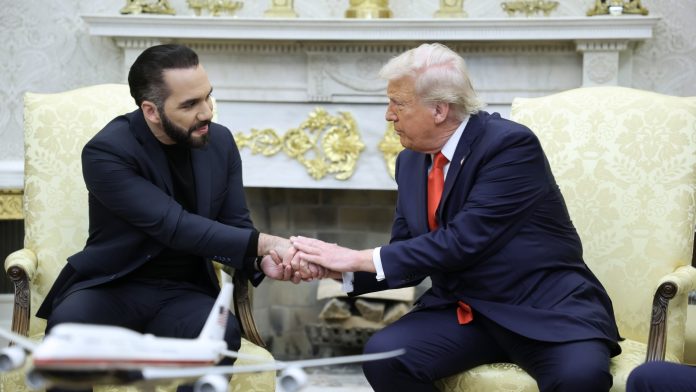
President Trump meets with President Nayib Bukele of El Salvador in the Oval Office on April 14.

Win McNamee/Getty Images


hide caption

toggle caption

Win McNamee/Getty Images

A Maryland federal judge wants to find out if government officials are acting in “bad faith” in the case of Kilmar Armando Abrego Garcia, who was mistakenly sent to a notorious Salvadoran prison.

Judge Paula Xinis on Tuesday called for a two-week process of “expedited discovery,” including questioning government officials under oath, to learn whether the government is doing enough to try to bring him back.

Abrego Garcia, a Salvadoran citizen, had lived in Maryland for about 15 years before he was deported to El Salvador last month, despite being granted protections by an U.S. immigration judge. He is in custody in Salvadoran President Nayib Bukele’s mega-prison, known as CECOT. The Supreme Court said the Trump administration should facilitate his return.

“It is a fact now, of this record: every day he is detained in CECOT is a day of irreparable harm,” Xinis said from the bench on Tuesday. “We have to give process to both sides but we are going to move. No tolerance for gamesmanship and grandstanding.”

Lawyers for the Justice Department and those representing Abrego Garcia have one week to conduct depositions of Joseph Mazzara, the acting general counsel at the Department of Homeland Security, as well as of acting Immigration and Customs Enforcement field office director Robert Cerna, and of other officials who have filed declarations before the court.

The hearing is the first courtroom appearance about Abrego Garcia’s case since Bukele met with President Trump in the Oval Office on Monday, and told reporters that he is not going to “smuggle a terrorist into the United States.”

The U.S. government has accused Abrego Garcia of being a member of the MS-13 gang, which the Trump administration has since designated a Foreign Terrorist Organization. Abrego Garcia’s lawyers dispute that he is a member of the gang, and say he doesn’t have a criminal record.

In a court filing ahead of the hearing, Abrego Garcia’s lawyers argued “the Government should at least be required to request the release of Abrego Garcia” — and that to date it has not done so.

The Department of Homeland Security said it “prepared to facilitate Abrego Garcia’s presence in the United States in accordance with those processes if he presents at a port of entry,” Mazzara said in a declaration filed minutes before the hearing began.

However, Mazarra said that if Abrego Garcia does appear at a port of entry to the U.S., he would be detained by DHS and either removed to a third country, or the government would go through a judicial process to try to send him back to El Salvador.

Oval Office meeting as evidence

The DOJ also filed a transcript of Monday’s press conference in the Oval Office. Drew Ensign, a lawyer for the Justice Department, presented the transcript, arguing that the issue of Abrego Garcia was “raised at the highest level” and provided proof the government was trying to “facilitate” his return.

But Judge Xinis called references to the comments made at the White House “nonresponsive” in court about whether the administration is working to release Abrego Garcia from CECOT and ensure that his case is handled as it would have been in the U.S., were he not improperly sent abroad.

White House Deputy Chief of Staff Stephen Miller speaks as Vice President JD Vance, Secretary of State Marco Rubio and Pam Bondi, U.S. Attorney General, sit nearby as President Trump meets with President Nayib Bukele of El Salvador in the Oval Office on April 14.

White House Deputy Chief of Staff Stephen Miller speaks as Vice President JD Vance, Secretary of State Marco Rubio and Pam Bondi, U.S. Attorney General, sit nearby as President Trump meets with President Nayib Bukele of El Salvador in the Oval Office on April 14.

Win McNamee/Getty Images


hide caption

toggle caption

Win McNamee/Getty Images

“If you were removing domestic barriers then there would be no smuggling, right?” Xinis said, referencing Bukele’s “smuggling terrorists” remark.

“If I make a finding of contempt it will be based on the record before me,” she added. “No, I don’t consider the transcript you gave me to be answering the question.”

The White House has argued its actions align with the court’s orders.

“We’re very confident that every action taken by this administration is within the confines of the law, and we continue to comply with the court’s orders,” White House Press Secretary Karoline Leavitt said on Tuesday.

El Salvador’s Bukele says he lacks power to bring him back

The U.S. Supreme Court last week in an unsigned decision upheld Xinis’ order that the federal government must “facilitate” Abrego Garcia’s release from custody in El Salvador and “to ensure his case is handled as it would have been had he not been improperly sent to El Salvador.”

However, the Supreme Court also said the judge should clarify her decision “with due regard for the deference owed to the Executive Branch in the conduct of foreign affairs.”

Focusing on that line of “deference” over foreign policy, several administration officials have argued it’s up to Bukele whether Abrego Garcia is returned.

“If they [El Salvador] wanted to return him, we would facilitate it – meaning provide a plane,” Attorney General Pam Bondi said during the Oval Office press conference.

But in that same press conference, Bukele said he does not have the power to send Abrego Garcia back to the U.S.

Immigration and Customs Enforcement, as well as White House officials, admitted that an administrative error resulted in Abrego Garcia’s deportation.

An immigration judge granted Abrego Garcia a withholding of removal in 2019, meaning that although he did enter the country illegally, the U.S. could not deport him to El Salvador.

His attorney told NPR he had applied and had been granted a work permit, which had been regularly renewed since then.

Consider This from NPR : NPR

0

The DOGE team may have taken data related to union organizing and labor complaints and hid its tracks, according to a whistleblower.

Charlotte Gomez for NPR/NPR


hide caption

toggle caption

Charlotte Gomez for NPR/NPR


The DOGE team may have taken data related to union organizing and labor complaints and hid its tracks, according to a whistleblower.

Charlotte Gomez for NPR/NPR

President Trump’s Department of Government Efficiency team, or DOGE, appears to be grabbing sensitive data from all over the government.

A whistleblower has come forward by filing an official disclosure to Congress about concerning activity on the systems at one independent federal agency, the National Labor Relations Board.

Elon Musk says DOGE is searching for savings throughout the government. But is the data being accessed valuable?

For sponsor-free episodes of Consider This, sign up for Consider This+ via Apple Podcasts or at plus.npr.org.

Email us at [email protected].

That was NPR’s Jenna McLaughlin

This episode was produced by Audrey Ngyen and Alejandra Marquez Janse. It was edited by Brett Neely.

Our executive producer is Sami Yenigun.

Democrat calls for probe of DOGE’s work at NLRB after NPR story : NPR

0

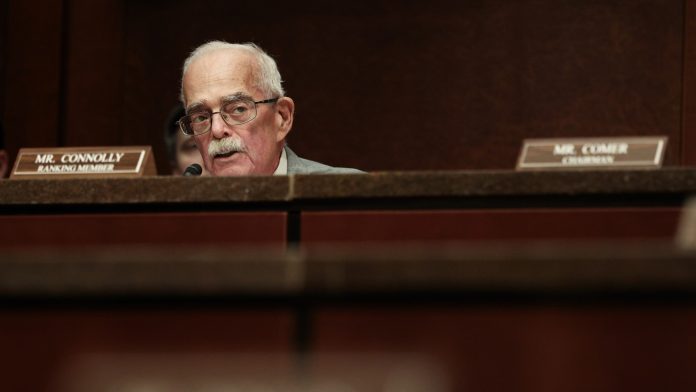
Rep. Gerald Connolly (D-Va.) speaks during the House Oversight Committee meeting at the U.S. Capitol on March 25, 2025.

Kayla Bartkowski/Getty Images


hide caption

toggle caption

Kayla Bartkowski/Getty Images

The top Democrat on the House Oversight Committee is calling for an investigation into DOGE’s access to the National Labor Relations Board following exclusive NPR reporting on sensitive data being removed from the agency.

Ranking Member Gerry Connolly (D-Va.) sent a letter Tuesday to Acting Inspector General at the Department of Labor Luiz A. Santos and Ruth Blevins, Inspector General at the NLRB, expressing concern that DOGE “may be engaged in technological malfeasance and illegal activity.”

“According to NPR and whistleblower disclosures obtained by Committee Democrats, individuals associated with DOGE have attempted to exfiltrate and alter data while also using high-level systems access to remove sensitive information—quite possibly including corporate secrets and details of union activities,” Connolly wrote in a letter first shared with NPR. “I also understand that these individuals have attempted to conceal their activities, obstruct oversight, and shield themselves from accountability.”

According to an official whistleblower disclosure shared with NPR, interviews with the whistleblower and records of internal communications, technical staff members at the NLRB were alarmed about what DOGE engineers did when they were granted access, particularly when those staffers noticed a spike in data leaving the agency.

Daniel Berulis started working at the NRLB six months before President Trump started his second term.

Daniel Berulis started working at the NRLB six months before President Trump started his second term.

Grace Raver/NPR


hide caption

toggle caption

Grace Raver/NPR

“I can’t attest to what their end goal was or what they’re doing with the data,” the whistleblower, Daniel Berulis, said in an interview with NPR. “But I can tell you that the bits of the puzzle that I can quantify are scary. … This is a very bad picture we’re looking at.”

Connolly shared similar concerns in his letter, highlighting the fact that billionaire businessman and DOGE leader Elon Musk’s companies like SpaceX, Tesla and X have cases pending before the NLRB and the Department of Labor.

Berulis saw around 10 gigabytes of data leave NLRB’s network — or the equivalent of a full stack of encyclopedias if someone printed them. Much of that data came from a system that houses information about pending cases, proprietary data from corporate competitors, personal information about union members or employees voting to join a union, and witness testimony. Access to that data is protected by numerous federal laws, including the Privacy Act.

The letter asks the inspectors general to answer a number of questions regarding ways DOGE may have potentially violated federal law, including any NLRB networks DOGE staffers had access to and what records of DOGE’s work within NLRB systems exist.

NPR reported DOGE staffers demanded “tenant owner level” access, which offers essentially unrestricted permission to read, copy and alter data, according to the whistleblower disclosure to Congress. The disclosure also noted that controls to prevent insecure or unauthorized mobile devices from logging on to the system without the proper security settings were disabled, an interface was exposed to the public internet and internal alerting and monitoring systems were found to be manually turned off, among other things.

Someone with an IP address in Russia tried to log in with the username and password of a newly-created DOGE account just minutes after its creation, the disclosure reads.

In over a dozen lawsuits in federal courts around the United States, judges have demanded that DOGE explain why it needs such expansive access to sensitive data on Americans, from Social Security records to private medical records and tax information. But the Trump administration has been unable to give consistent and clear answers, largely dismissing cybersecurity and privacy concerns.

Trump moves to speed up asylum cases without court hearings : NPR

0

An asylum seeker reacts while waiting for news on her appointment with U.S. authorities before crossing through El Chaparral port in Tijuana, Baja California state, Mexico, on Jan. 20, 2025.

Guillermo Arias/AFP via Getty Images


hide caption

toggle caption

Guillermo Arias/AFP via Getty Images

The Trump administration is moving to fast-track cases in immigration court by allowing judges to drop “legally deficient asylum cases without a hearing.”

The change in policy was laid out in an April 11 memo sent to staff at the Executive Office for Immigration Review, a part of the Justice Department that decides who can be deported from the U.S.

The directive could result in immigration judges determining someone is not eligible for asylum without a hearing, based solely on what is filed on a lengthy and complex asylum request form.

The memo comes as the Trump administration is seeking to arrest and deport more people without permanent legal status in the U.S. But the immigration court system has faced a growing backlog of cases, and experts argue it has gone underfunded and under-resourced for years.

“EOIR adjudicators have the duty to efficiently manage their dockets,” according to the memo, sent by acting Director Sirce Owen. “It is clear from the almost 4 million pending cases on EOIR’s docket, that has not been happening.”

The Executive Office for Immigration Review had more than 4 million pending cases in the last quarter of 2024, including 1.5 pending asylum cases.

“One way to look at this is, the pendulum is swinging back toward the moves of the first Trump administration,” Kathleen Bush-Joseph, a lawyer and immigration policy analyst at the Migration Policy Institute, said about the memo.

Under President Trump’s first term in the White House, immigration officials issued directives limiting asylum approvals and imposed quotas for judges that pressured them to quickly decide cases.

The policy memo “makes clear that adjudicators are not prohibited from taking—and, in fact, should take—all appropriate action to immediately resolve cases on their dockets that do not have viable legal paths for relief or protection from removal.”

Prior to the memo, judges might have granted a hearing for people seeking asylum, and taken more time to gather the necessary information for applications that lacked key details.

The directive effectively aims to increase the number of deportation orders issued before people can have what is considered a “merits hearing” that allows them to make their case in court.

The push to clear more cases from the docket also comes after the administration laid off over 100 EOIR personnel, including judges, lawyers and interpreters.

Fast-tracking asylum cases could hurt those without legal aid

Trump already suspended asylum applications for those entering the U.S. through the southern border, through an executive order he signed in January. But the order didn’t apply to asylum applications already filed, or those seeking asylum from other countries or the northern border.

Asylum has been part of U.S. law since 1980, allowing those who fear for their safety to seek refuge in the U.S. as long as they can show a credible fear of persecution in their home country.

But asylum is a confusing concept, said Ben Johnson, executive director of the American Immigration Lawyers Association.

“Historically, decisions on those applications are based on the application, as well as questioning of the person who’s applying, submitting evidence and reviewing all the facts and circumstances, including the application — but not limited to the application,” Johnson said, adding that he now expects to see a fast rate of termination of cases.

The EOIR did not respond to a request for comment.

Johnson and Bush-Joseph said that most people don’t have lawyers, meaning many asylum applications might not be as strong as they could be due to language barriers and issues understanding the complicated legal process.

“When people are not represented, they don’t necessarily know they have certain rights and options to continue to pursue their claims,” Bush-Joseph said. “It’s incredibly difficult to navigate these legal questions quickly, whether or not you’re an attorney.”

Asylum cases can be some of the lengthiest claims in immigration court — both to put together and to adjudicate. The American Immigration Lawyers Association estimated in 2023 that it takes an experienced attorney an estimated 50 to 75 hours to prepare an asylum application.

People awaiting decisions on such cases typically have to wait just over 4 years for a decision, according to 2023 data collected by the Transactional Records Access Clearinghouse. The latest data collected by the group shows that the asylum backlog rose by about 8% in the first two months of the year, even as the overall court backlog decreased.

Johnson said the stakes of poorly-argued cases could not be higher.

“When you’re applying for asylum, it literally is a matter of life and death,” he said. “If you get it wrong and you send somebody back home who is actually facing persecution, then that person will be persecuted.”

Trump to halt federal funds for NPR, PBS, other public media : NPR

0

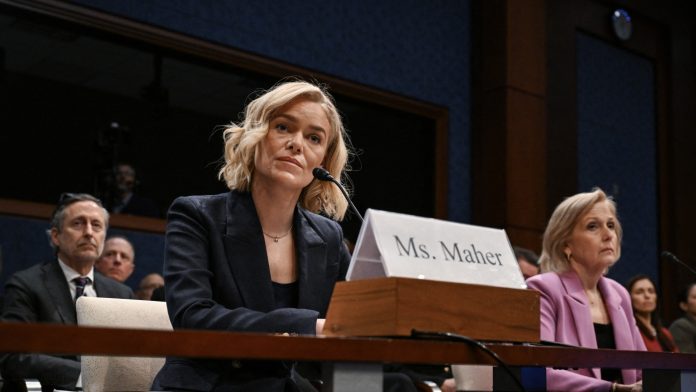
President Trump has ordered all federal funding of public media cease. In March, NPR CEO Katherine Maher and PBS CEO Paula Kerger testified such cutbacks would hurt local member stations that serve as a free source of news, education, entertainment, and disaster preparedness information for areas poorly served by corporately owned media.

DREW ANGERER/AFP via Getty Images/AFP


hide caption

toggle caption

DREW ANGERER/AFP via Getty Images/AFP

The Trump administration has drafted a memo to Congress outlining its intent to end nearly all federal funding for public media, which includes NPR and PBS, according to a White House official who spoke to NPR.

The memo, which the administration plans to send to Congress when it reconvenes from recess on April 28, will open a 45-day window in which the House and Senate can either approve the rescission or allow the money to be restored.

The official, who spoke to NPR on condition of anonymity, confirmed the existence of the draft.

In a statement on Monday that did not refer to the memo, the White House said: “For years, American taxpayers have been on the hook for subsidizing National Public Radio (NPR) and the Public Broadcasting Service (PBS), which spread radical, woke propaganda disguised as ‘news.'” The statement includes examples of what the White House said is “trash that passes as ‘news” and “intolerance of non-leftist viewpoints.”

NPR produces the award-winning news programs Morning Edition and All Things Considered, while PBS is best known for its nightly PBS News Hour and high-quality children’s programming, such as Daniel Tiger’s Neighborhood.

Earlier this month, on social media platforms, Trump blasted the two primary public broadcasting networks, posting in all caps: “REPUBLICANS MUST DEFUND AND TOTALLY DISASSOCIATE THEMSELVES FROM NPR & PBS, THE RADICAL LEFT ‘MONSTERS’ THAT SO BADLY HURT OUR COUNTRY!”

President Trump is expected to propose rescinding $1.1 billion — two years worth of funding for the Corporation for Public Broadcasting, or CPB, a congressionally chartered independent nonprofit organization that in turn partially funds NPR and PBS.

In making the move, the president appears to be drawing impetus from a House Oversight subcommittee hearing in late March. The panel called NPR and PBS’ chiefs to testify, alleging the networks’ news coverage is biased against conservatives.

In a statement, NPR said: “Eliminating funding for the Corporation for Public Broadcasting would have a devastating impact on American communities across the nation that rely on public radio for trusted local and national news, culture, lifesaving emergency alerts, and public safety information.”

“We serve the public interest. It’s not just in our name — it’s our mission. Across the country, locally owned public media stations represent a proud American tradition of public-private partnership for our shared common good,” it said.

PBS did not immediately respond to a request for comment.

Accusations of political bias

At the hearing, the public broadcasting heads spoke of their mission to provide free, non-partisan news and programming to all Americans.

Some Republican lawmakers, however, vented about what they saw as biased reporting. “You can hate us all on your own dime,” said Rep. Marjorie Taylor Greene, the chair of the subcommittee that held the hearing. House Oversight Committee Chair James Comer, R-Ky., complained about NPR’s coverage of how he structured his investments with a shell company.

Republicans assailed NPR chief Katherine Maher for political messages she’d posted to social media long before she became the network’s CEO and president in March 2024. Their questioning also focused largely on stories published before her arrival at NPR.

They queried PBS CEO and President Paula Kerger about a video involving a performer in drag singing a variation on a children’s song for a young audience. (Kerger testified that the video was posted on the website of PBS’s New York City member station and never aired on television.)

Both PBS and NPR provide locally grounded content and reach more than 99% of the population, at no cost to viewers and listeners. In many states and communities, the stations serve as a key component of emergency and disaster response systems.

Congress allocated $535 million for the CPB for the current fiscal year — an amount affirmed in a recent stop-gap bill passed by the Republican-controlled U.S. House and Senate. The CPB’s budgets are approved by Congress on a two-year cycle in large part to insulate it from political pressures; Congress has appropriated funds through Sept 30, 2027.

Where public broadcasting’s money comes from

NPR receives about 1% of its funding directly from the federal government, and a bit more indirectly; its 246 member institutions, operating more than 1,300 stations, receive on average 8% to 10% of their funds from CPB. In turn, they pay NPR to air its national shows. By contrast, PBS and its stations receive about 15% of their revenues from CPB.

The bulk of CPB funding goes to local stations — mostly to subsidize television, which is more expensive than radio.

Stripping away such financial support would wipe out smaller stations, the public broadcasting chiefs testified, especially in rural regions and other areas ill-served by corporate-owned media. It would also weaken the broader public media system. Alaska Public Media’s chief executive testified that the funding was vital to his state network and to ensuring his reporters’ stories found a broader audience.

“Without PBS, without NPR, you wouldn’t hear stories — news stories, public affairs stories, community stories — from Alaska,” Alaska Public Media CEO and President Ed Ulman said. “You wouldn’t see them on the PBS NewsHour. This is vital. It’s vital for Alaskans to know that they’re connected to their nation, and that what we do in Alaska matters to our nation.”

A recent Pew Research Center poll found that 43% of U.S. adults surveyed favored continued federal support for NPR and PBS, with 24% saying it should be cut. However, by political affiliation, the results were more stark, with 44% of Republicans favoring an end to federal funding of the public broadcasters, while 69% of Democrats said it should continue.

Trump administration launches attacks on media outlets

Over its five and a half decades of existence, public broadcasting has mostly enjoyed bipartisan support, allowing it to survive periodic conservative pushes to strip the system of taxpayer dollars.

But recently, Brendan Carr, Trump’s pick to lead the Federal Communications Commission, launched an investigation of NPR and PBS, saying it appears that their corporate underwriting spots violate laws banning commercial advertisements.

The networks say the agency and Congress have encouraged them repeatedly to develop a greater share of private financial support. They have worked assiduously for years with the FCC to ensure that their spots fall within FCC guidelines. Other news organizations supported by the U.S. government have also moved into the crosshairs in the early months of the Trump administration.

In New York, a judge has placed a temporary restraining order on presidential adviser Kari Lake’s attempt to shut down the federally owned Voice of America. In Washington, D.C., another judge ruled the government had to keep sending funds that Congress already had committed to Radio Free Europe/Radio Liberty.

Those lawsuits — and others — argue that Trump has far exceeded the expansive powers of the presidency, usurping Congressional prerogatives, trampling on due process and eroding free speech rights.

Even so, the White House has succeeded in previously unimaginable ways; representatives of Trump’s budget-slashing DOGE initiative, aided by Washington, D.C. police officers, forced their way into the U.S. Institute of Peace (USIP) so that the administration could take it over. The Institute, while funded by Congress, is an independent nonprofit like CPB.

Fired USIP employees are now suing the Trump administration. U.S. Justice Department attorney Brian Hudak has said in court that plans already are underway to lease USIP headquarters to the U.S. Labor Department. The judge overseeing the case has, to date, declined to issue a temporary restraining order to stop the transfer of assets to the government, although she said the administration has adopted a “bull in a china shop” approach.

Lake, who is also overseeing the effort to dismantle other federally funded international broadcasters, echoed Trump’s remarks on NPR & PBS. “Defund ALL Fake News and Turn them Off,” she tweeted, pointing to the hearing in late March as more grist.

Disclosure: This story was reported and written by NPR Correspondents David Folkenflik and Scott Neuman. It was edited by Deputy Business Editor Emily Kopp and Managing Editors Gerry Holmes and Vickie Walton-James. Under NPR’s protocol for reporting on itself, no NPR corporate official or news executive reviewed this story before it was posted publicly.