Thursday, November 12, 2026
Home Blog Page 43

Dan Caine confirmed as Joint Chiefs chairman : NPR

0

Dan Caine, now chairman of the Joint Chiefs of Staff, testifies during his Senate Armed Services Committee confirmation hearing on April 1.

Nathan Posner/Anadolu via Getty Images


hide caption

toggle caption

Nathan Posner/Anadolu via Getty Images

Retired Air Force Lt. Gen. John Dan “Razin” Caine is officially the chair of the Joint Chiefs of Staff after the Senate confirmed him in the middle of the night.

The 60-25 vote happened just after 2 a.m. on Friday before the Senate adjourned for two weeks.

And it came a little over six weeks after President Trump abruptly fired Caine’s predecessor, Air Force Gen. Charles Q. Brown Jr., as part of a larger shakeup at the Pentagon that had many Democrats concerned. Republicans, on the other hand, pushed for Caine to be confirmed quickly.

“The Chinese Communist Party continues an expansive military buildup, and our adversaries continue to band together against the United States,” Sen. Roger Wicker, R-Miss., chair of the Senate Armed Services Committee, said in a statement on Wednesday. “President Trump should have the expertise of the highest-ranking military officer in place without any delays.”

Caine’s confirmation makes him the nation’s highest-ranking military officer, principal military adviser to the president, secretary of defense and National Security Council.

Caine is a career fighter jet pilot who patrolled the skies above Washington, D.C., immediately after the 9/11 attacks, served in the Middle East during the fight against the Islamic State and then worked at the CIA.

Despite his 34 years of military experience, Caine had not served in any of the roles legally required to become Joint Chiefs chair. The president, however, can waive those requirements if he “determines such action is necessary in the national interest.”

Caine was not well known before his nomination in February. Several officials on Capitol Hill and the Pentagon, granted anonymity as they were not authorized to speak publicly on the matter, told NPR at the time that they had to Google his name.

At his confirmation hearing earlier this month, Caine said he hoped to earn senators’ trust “and the trust of the American people.”

“If confirmed, I’ll continue the traditions and standards of my oath of office and my commission as a nonpartisan leader who will always strive to do the right thing,” he said.

Caine’s career spanned the CIA, the National Guard and the Air Force 

Caine served most recently as the associate director for military affairs at the CIA, a position he held from November 2021 until his retirement in December 2024. 

Caine had to be reinstated to active service and promoted to four-star general to become chair, the Washington Post reports. 

In 1990, Caine was commissioned through an ROTC program at the Virginia Military Institute in Lexington, Va. While on active duty, Caine primarily served as an F-16 fighter pilot, flying more than 150 combat hours, according to his military biography.

On Sept. 11, 2001, he was one of the pilots who protected the skies above Washington following the terrorist attacks. It marked the first time that fighter jets were deployed over the nation’s capital.

“I remember telling the wingman that I was going to fly with that day, ‘Don’t shoot anybody. I’ll make the decision,’ because I was very mindful that if we made a mistake or if we got it wrong or if we missed somebody and we did not shoot, the consequences of that could be catastrophic,” he said in a 2023 CIA video. “Not only for the people on the ground, but for the country as a whole.”

From 2009 to 2016, Caine also served in the National Guard. He was deputy commander in the U.S. campaign against ISIS in Iraq and Syria between May 2018 and September 2019, according to his military biography.

The biography also describes him as a “serial entrepreneur and investor.”

According to his LinkedIn profile, Caine serves on the advisory board of several venture capital firms, as well as the defense and space exploration company Voyager.

Trump has been talking up Caine since at least 2019

In 2019, at the Conservative Political Action Conference, Trump shared his first meeting with Caine in Iraq, where the general introduced himself by his nickname “Razin.”

“‘Raisin, like the fruit?’ He goes, ‘Yes, sir, Razin.’ ‘What’s your last name?’ ‘Caine. Razin Caine.’ I said, ‘You got to be kidding me,’ ” Trump recalled.

According to Trump, the general suggested the Islamic State could be defeated in a week. “One week? I was told two years,” Trump said he asked. Caine explained that the issue was that his orders come from D.C. rather than being informed by the field.

“You’re the first one to ask us our opinion,” Caine told Trump, as the president recalled. “So I went back and I said, ‘I’m going to get back to you soon, Razin. I think you’re great,'” Trump said. “I like you, Razin Caine.”

Trump referred to this encounter in Iraq again at last year’s CPAC. But in this retelling, Caine asserted that the Islamic State could be defeated in four weeks, not one.

Trump then recalled the general saying, “‘I love you, sir. I think you’re great, sir. I’ll kill for you, sir.’ “

Some U.S. officials who were not authorized to speak publicly, and are familiar with the exchange, say that remark never happened.

Trump also claimed that Caine wore a “Make America Great Again” hat when they first met, a story Caine has since disputed. 

“For 34 years, I’ve upheld my oath of office and my commitment to my commission, and I have never worn any political merchandise,” he said during his hearing.

Caine says he won’t be a yes man

Caine was nominated days after Trump fired Brown, the previous Joint Chiefs chairman who was picked by former President Joe Biden in 2023. The job has traditionally had a four-year term. 

Brown was accused of supporting a “woke” agenda by Defense Secretary Pete Hegseth. In his book The War on Warriors, Hegseth questioned whether Brown, who is Black, got the job because of his race.

At the time, Hegseth went on Fox News Sunday and said Brown was “an honorable man,” but “not the right man for the moment.”

“The president respects leaders who untie the hands of warfighters in a very dangerous world,” Hegseth said. “I think Dan Caine is the man to meet the moment.”

Hegseth went on to fire several other top Pentagon officials, including Adm. Lisa Franchetti, chief of naval operations (and the first woman to lead the Navy); Gen. Jim Slife, vice chief of the Air Force; and the judge advocates general for the military services. 

Critics — including Democratic lawmakers and retired military officials — decried the firings as destabilizing and unjustified, noting they seemed to target officers who had supported diversity, equity and inclusion efforts. 

The shakeup stoked wider fears of politicization of the Department of Defense, which came up at Caine’s confirmation hearing.

When asked whether he would “stand up and push back” if Trump ever asked him to use the military to do something unconstitutional, Caine answered affirmatively.

“I think that’s the duty and job that I have, yes,” he said. 

A version of this story originally published in February.
Will tariffs boost secondhand sales? It’s complicated : NPR

0

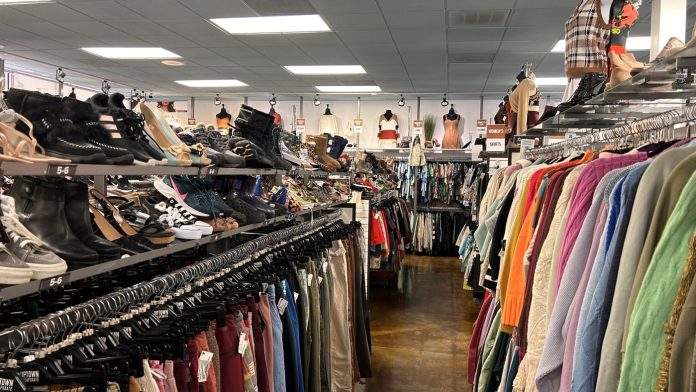
Thrift stores, like this one in Charlotte, N.C., could see an uptick in sales amid economic woes. But experts say supply could also become an issue.

Lindsey Nicholson/UCG/Universal Images Group via Getty Images


hide caption

toggle caption

Lindsey Nicholson/UCG/Universal Images Group via Getty Images

Amid tariffs, trade wars and general economic uncertainty, many Americans are thinking extra carefully about how to spend and save their money.

Consumer confidence tumbled in March, with the Conference Board‘s Expectations Index — based on consumers’ short-term outlook on business, income and the labor market — dropping to 65.2 out of 100, the lowest in 12 years.

And that was before President Trump announced a new round of sweeping tariffs, prompting retaliatory taxes from multiple countries — including China and the European Union — and fueling concerns about a possible recession. While he announced a 90-day delay this week, a 10% baseline tariff remains in effect on goods from all countries.

Tariffs are poised to increase the price of all sorts of goods, from groceries to technology to apparel. The U.S. imports nearly all of its clothing and shoes from other countries — including from China, which is not exempt from the tariffs and now faces a rate of 145%.

“The current situation is unprecedented because, simply put … all the major suppliers of apparel to the U.S. market, they will face a tariff hike,” explains Sheng Lu, professor of fashion and apparel studies at the University of Delaware. “Very likely, these additional sourcing costs will pass on to consumers.”

Price hikes may inspire savvy shoppers to buy more items secondhand, whether in person at thrift or consignment stores or online from retailers like Poshmark, eBay and ThredUp.

Many people — especially members of Gen Z — are already doing so. A 2025 report by Capital One Shopping Research found that approximately one-third of all clothing and apparel purchased in the U.S. over the past year was secondhand.

A record 58% of shoppers bought secondhand apparel in 2024, according to ThredUp’s annual Resale Report, released in March.

The report predicts that the market will only continue to grow globally and in the U.S., at least in part due to new government policies around tariffs and trade that are “expected to provide a healthy tailwind to secondhand.”

The ThredUp study found that 59% of consumers — and 69% of millennials — would seek more affordable options, like secondhand, if new government policies make apparel more expensive. Secondhand shopping has historically seen boosts during periods of economic uncertainty, like during the COVID-19 pandemic.

“Whenever there is an economic downturn, a recession or anything like that, there are more people that will start shopping resale that may not have shopped resale before,” says Adele Meyer, executive director of NARTS: The Association of Resale Professionals, a trade group with roughly 800 members.

Meyer and the retailers she’s talking to expect that to be true this time around. Buying used certainly has its benefits — but, as multiple experts cautioned NPR, it’s not exactly a silver bullet.

“It’s reasonable to see or to expect the booming of the secondhand clothing market, or more consumers may wish to purchase secondhand clothing,” Lu said. “But I do not think that secondhand clothing will be immune to the tariff impacts.”

People may not want to shop — or donate 

In order for something to make it to a secondhand store, it first needs to be acquired new. Lu and experts predict that in tighter times, Americans will likely be more hesitant both to buy new clothes and to donate their old ones.

That could eventually limit the supply of secondhand clothing and, in turn, drive prices up.

“I don’t think the tariff war is something good or exciting for the secondhand clothing market,” Lu reiterated.

But Meyer, of the trade group, downplayed the prospect of secondhand supply dwindling, saying, “It’s never happened in the past.”

Indeed, some people may be newly motivated to sell their unwanted apparel and accessories, be it online, at consignment shops or directly through retailers who offer credit in exchange for used products (such as Madewell and Patagonia).

Either way, experts say it could take months or even years to see the effects of tariffs on the secondhand market — whether positive, negative or negligible.

“The rates of our consumption for items like clothing are so historically high compared to previous decades that it might just be a drop in the bucket, whatever happens,” says Jennifer Le Zotte, a history professor at the University of North Carolina Wilmington, who specializes in material culture.

It could be a chance to rethink shopping altogether

Economic pressures may force people to rethink not just where they shop, but what — and how much — they’re buying.

Both the secondhand market and Americans’ shopping habits have changed considerably in recent decades, Le Zotte says. There are increasingly more specialized places to shop for clothes — and more pressure to do so.

“The fashion industry post World War II was really good at planned obsolescence and speeding up seasons for fashion clothing,” she explained. “So you can’t wear last season’s dresses or Pantone’s colors from 2019.”

To keep up, many Americans buy clothes from cheap fast fashion outlets like Shein. Products from Chinese e-commerce companies like Shein and Temu are due to become even more expensive after an executive order from Trump closes the “de minimus” shipping loophole on May 1.

Fast fashion items weren’t made for the secondhand market, Le Zotte said, since they aren’t likely to sell for much less and probably won’t hold up as well through multiple owners.

She would love to see this economic moment change the way people think about buying clothing.

“This is perhaps wishful thinking, but it might spur greater attention to things like slow fashion, where people decide to buy more durable, long-lasting clothing but not have as many different items of clothing in their individual wardrobes,” she added.

Lu agrees that the moment presents an opportunity for reflection.

“If this reminds consumers about their actual needs for clothing or whether they really need to spend so much money purchasing new clothing … maybe this could be a silver lining of all these [tariffs],” he said.

He encourages consumers to do their homework, whether that’s revisiting the size of their clothing budget, shopping in their own closets or monitoring price fluctuations for things they really need.

He says stores want people to keep shopping, and consumers will still have options even if prices are higher.

Le Zotte encourages shoppers to think about shopping sustainably — and not just in the environmental sense. She recommends people choose items they can wear for a long time, both because the quality is durable and because they aren’t just a passing trend.

“It’s a good idea for people to cultivate and learn what looks good on them … and hold on to those,” she added. “Even if somebody tells you they’re out of fashion, somebody or some advertising tells you that that’s not the cut of jeans or color that is in this season — if it suits you aesthetically and physically, hold on to it.”

Check out NPR’s Life Kit for expert tips on cultivating a sustainable closet, getting the most out of the thrift store and regifting (in a good way).

In a world that craves stability, Trump brings the chaos : NPR

0

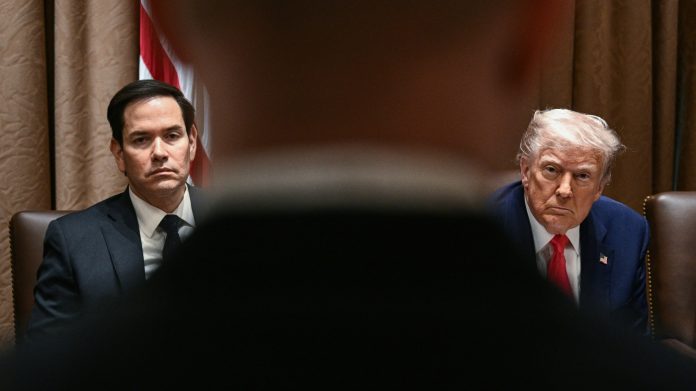
President Trump and Secretary of State Marco Rubio (left) attend a cabinet meeting at the White House on April 10. Trump on Thursday warned of the “transition cost” from his tariff policies, as Wall Street stocks fell again over the worsening trade war with China.

Brendan Smialowski/AFP via Getty Images


hide caption

toggle caption

Brendan Smialowski/AFP via Getty Images

President Trump’s trade war dominated the week, sending global markets reeling. He then put a 90-day pause on some tariffs, but left a 10% across-the-board tariff and ramped up his standoff with China. … The Supreme Court also gave Trump a green light on deportations and government firings — for now. … Congress squeezed through a measure that paves the path for Trump’s legislative agenda in one “big, beautiful bill.” … And Trump continued his campaign of retribution against those who’ve stood in his way.

Here are four takeaways from week 12 in our continued look at President Trump’s first 100 days in office:

1. How Trump has handled tariffs shows the furthest thing from stability and predictability. His team says that’s the point, but most don’t appear to be buying it.

On multiple occasions, Trump has referred to himself as “an extremely stable genius.” This week, though, put in stark relief the chaos that has so often defined Trump’s time in the White House. Some are still trying to sell Trump’s strategy as The Art of the Deal.

“No one creates leverage for himself like President Trump,” Treasury Secretary Scott Bessent said this week. White House Press Secretary Karoline Leavitt noted that 70 countries have reached out to make “tailor-made deals.”

There have been mixed messages from Trump advisers — some insisting that the tariffs are permanent, others saying they’re a negotiation tactic. Trump himself said they can be “both.”

“There can be permanent tariffs — and there can also be negotiations because there are things that we need beyond tariffs,” Trump told reporters.

Trump seemed to dig in on tariffs while talking to reporters on Air Force One on Sunday. He pushed back against a reporter’s question of whether there’s a threshold of pain that he’s willing to tolerate in the markets.

“I think your question is so stupid,” Trump said. “I mean, I think it’s just — well, I don’t want anything to go down. But sometimes you have to take medicine to fix something.”

Two more days of a market in the red ensued. By Wednesday morning, he was advising people in ALL CAPS on social media: “THIS IS A GREAT TIME TO BUY.”

“BE COOL!” he said in another. “Everything is going to work out well. The USA will be bigger and better than ever before!”

But, by the end of the day, Trump apparently had reached his threshold of market pain. He reversed course, ditching some of the tariffs, because, he said, people “were getting a little bit yippy, a little bit afraid.”

The market rallied Wednesday, but with Trump increasing tariffs to 145% on China, by Thursday, the Dow was down again. And, remember, China has leverage, too, because it buys a lot of U.S. government debt, and they seem to have every intention of using it.

The reality is a lot of damage has already been done — not just to 401(k)s and small businesses stateside, who rely on global supply chains, but also to relationships with trade partners around the world.

Who knows what next week will hold, but right now people just don’t like Trump’s tariff policy. Only 39% said they approve of his handling of trade, according to a Quinnipiac poll, and 7-in-10 think his tariff policies will hurt the U.S. economy in the short term.

Trump advisers continue to tell people that despite all that to “trust in Trump.” The one thing Trump can hang his hat on is that message seems to be getting through to his base. Even though 53% overall in the same survey said they think, in the long term, the tariffs will hurt the economy, almost 9-in-10 Republicans said they think they will help.

2. The Supreme Court gives Trump a green light — for now. 

The Trump administration had lost case after case in lower courts. But Trump continues to push the boundaries when it comes to freezing grants to universities, firings of federal workers and deportations — and he’s hoping the conservative majority at the Supreme Court helps him out.

This week, the Supreme Court did come down on Trump’s side, giving him a temporary green light to continue deporting people through the Alien Enemies Act, firing probationary workers and keeping leaders at agencies he feels are “hostile” to his agenda out of those agencies.

The court seems to be trying to walk a line. ABC’s Devin Dwyer writes that “the high court’s conservative majority has been neither a rubber stamp for the president nor an aggressive check on his prerogative. Instead, it has been a narrowly divided stickler for civil procedure, charting a cautious approach to explosive political disputes. In most cases, it has said very little about the substance of Trump’s actions.”

The court on Thursday night said the Trump administration had to “facilitate” a Maryland man’s return, who the government acknowledges was improperly deported. But it didn’t require it or give a timeline for when to do so by. 

As much as Chief Justice John Roberts would likely love to continue that approach and try to toe a line away from politics, that approach won’t last forever, especially as Trump continues to test the constitutional limits.

3. Trump’s legislative agenda gets a big step forward.

The House approved a budget framework narrowly Thursday, 216-214, that paves the path for Congress to pass Trump’s “big, beautiful bill” — that’s expected to include Trump’s proposed broad tax cuts — eventually. It’s complicated, but, in short, the House and Senate have now passed the same framework, and that unlocks a process known as budget reconciliation that only requires 51 votes to pass in the Senate and avoid a filibuster.

Passage of the House bill was a big win for Speaker Mike Johnson. Conservatives had threatened to tank it, and Johnson had to scrap a vote on it Wednesday night because of it. The Senate initially identified $4 billion in cuts — essentially nothing on the scale of federal spending — while House conservatives want $1.5 trillion. So to get something Republicans in both chambers can agree to isn’t going to be easy.

4. Trump continues his campaign of retribution.

Trump vowed “retribution” for his 2020 election loss as a candidate and, in office, has certainly followed through with his vendettas. On Wednesday, he signed executive orders targeting a law firm that represented Dominion Voting Systems, which won a nearly $788 million defamation lawsuit against Fox News, and he went after two former Trump 1.0 officials.

They included Miles Taylor, a former chief of staff at the Department of Homeland Security, who penned an anonymous op-ed in the New York Times and then wrote a book about his experience, as well as Chris Krebs, the former head of the Cybersecurity and Infrastructure Security Agency, or CISA.

The executive order strips Krebs of any security clearances, labels him a “risk” and calls him a “significant bad-faith actor who weaponized and abused his government authority.” As head of CISA, Krebs repeatedly tried to reassure Americans of the integrity of the vote — and he disavowed mis- and disinformation. This executive order makes the extraordinary pronouncement that he “falsely and baselessly denied that the 2020 election was rigged and stolen.” So the administration has targeted anyone who appears to get in the way of Trump’s agenda — and propaganda.

Here’s a day-by-day look at what happened in the past week:

Friday, April 4:

  • Jobs report shows the country added 228,000 jobs and unemployment ticked up to 4.2%. 
  • Nationwide anti-Trump protests planned for the weekend. 
  • Trump extends TikTok shutdown another 75 days. This is Trump’s second extension. 
  • Trump plans to pause federal funds to Brown and call for restrictions at Harvard. Princeton also says several dozen research grants were frozen to them as well, according to reporting by Reuters.
  • Judge rules Trump administration has to bring back Maryland man deported by mistake within three days. 
  • Federal Reserve Chairman Jerome Powell says that Trump’s tariffs raise the risk of higher inflation and slower growth.
  • By a 5-4 vote, the U.S. Supreme Court allows the administration to freeze millions of dollars in grant funding for diversity and instructional programs at public and private universities, including $65 million in teacher training. 
  • National Oceanic and Atmospheric Administration, or NOAA, websites devoted to climate change and weather research scheduled to shut down at midnight. 
  • The Dow drops 2,000 points or 5.5% on the heels of Trump’s tariffs. China also issued retaliatory tariffs of 34%.  
  • Politico reports that the acting administrator of FEMA “was given a lie detector test … to determine if he leaked details of a private meeting concerning efforts to dramatically shrink FEMA.”
  • Secretary of State Marco Rubio and Denmark’s foreign minister release very different readouts of their meeting. Rubio mentions NATO paying more for its own security. The Danish foreign minister bluntly notes that he “made it crystal clear that claims and statements about annexing Greenland are not only unacceptable and disrespectful. They amount to a violation of international law.”

Saturday: 

  • Elon Musk swipes at Peter Navarro, one of Trump’s top trade advisers, after a Navarro appearance on CNN defending Trump’s tariffs: “A PhD in Econ from Harvard is a bad thing, not a good thing. Results in the ego/brains>>1 problem,” Musk wrote in a post on X.
  • Senate Republicans approve a budget plan, but House Republican fiscal hawks come out against it. 
A demonstrator takes part in the Hands Off! day of action against the Trump administration and Elon Musk on April 5 on the National Mall in Washington, D.C. More than 100,000 attended the rally.

A demonstrator takes part in the Hands Off! day of action against the Trump administration and Elon Musk on April 5 on the National Mall in Washington, D.C. More than 100,000 attended the rally.

Paul Morigi/Getty Images


hide caption

toggle caption

Paul Morigi/Getty Images

  • People protest Trump’s presidency at events in all 50 states. 
  • President Obama spoke at Hamilton College in Upstate New York: “It is up to all of us to fix this,” Obama said, including “the citizen, the ordinary person who says, ‘No, that’s not right.'” He said he is “more deeply concerned with a federal government that threatens universities if they don’t give up students who are exercising their right to free speech.”
  • The attorney who argued the Maryland deportation case on behalf of the administration has been placed on leave by Justice Department. At one point during the hearing, he said the man who was deported on administrative error “should not have been removed.”
  • Attorney General Pam Bondi said in a statement: “At my direction, every Department of Justice attorney is required to zealously advocate on behalf of the United States. Any attorney who fails to abide by this direction will face consequences.”
  • Musk says in an event hosted by the Italian prime minister: “I hope it is agreed that both Europe and the United States should move, ideally, in my view, to a zero tariff situation, effectively creating a free trade zone between Europe and North America.”
  • Trump meets with the Major League Baseball World Series champions, the Los Angeles Dodgers, at the White House. 

Sunday:

  • Trump on Air Force One describes tariffs to reporters as “medicine.” He also insists that he won a seniors golf tournament. The Palm Beach Post notes: “Trump managed a golf trifecta — he attended, played or competed at all three of his Trump National Golf Club sites in Florida — after arriving April 3, 2025, for a four-day stay in his home state.”
  • The U.S. revokes visas for people from South Sudan. A civil war is happening in neighboring Sudan. 
  • Washington City Paper‘s Tom Sherwood reports there are plans for Trump to hold a military parade June 14 in Washington. It would stretch 4 miles, from the Pentagon to the White House. June 14 is the 250th anniversary of the U.S. Army. It is also Trump’s 79th birthday. Plans for a similar parade were curtailed in 2018 because of logistics and cost. Instead, there were flyovers but the day was dampened by rain. 
  • U.S. strikes in Yemen kill at least six. Trump posted a video of the bombing that suggested a larger death toll. 
  • Health and Human Services Secretary Robert F. Kennedy Jr., an influential vaccine skeptic, says the MMR vaccine is “the most effective way to prevent the spread of measles.”

Monday:

  • Goldman Sachs ups odds of a recession to 45%. 
  • Trump asks the Supreme Court to block order to bring Maryland man back from prison in El Salvador. Chief Justice Roberts pauses the deadline to do so, which would have been Monday.  
  • Trump threatens China with more tariffs: “China does not withdraw its 34% increase above their already long term trading abuses by tomorrow, April 8th, 2025, the United States will impose ADDITIONAL Tariffs on China of 50%, effective April 9th.”
  • Trump wrote on his Truth Social platform that he spoke with Japan’s prime minister about the tariffs and that “tough but fair parameters are being set” for negotiations. 
  • The stock market tumbles for a third straight session. Global markets dropped as well. 
  • The National Park Service edits Harriet Tubman references on Underground Railroad web page, the Washington Post reports. 
  • Stock market declines more under Trump than under any other president to this point in their presidency since the Dow was created in 1957 — 17%. Bush was the other who saw it at 15%, but Bush inherited a bear market. Trump inherited a bull market. 
Israeli Prime Minister Benjamin Netanyahu (left) speaks alongside President Trump, with a model of Air Force One on the table, during a meeting in the Oval Office on April 7. Vice President Vance and Secretary of State Marco Rubio were also in attendance.

Israeli Prime Minister Benjamin Netanyahu (left) speaks alongside President Trump, with a model of Air Force One on the table, during a meeting in the Oval Office on April 7. Vice President Vance and Secretary of State Marco Rubio were also in attendance.

Kevin Dietsch/Getty Images


hide caption

toggle caption

Kevin Dietsch/Getty Images

  • Trump meets with Israeli Prime Minister Benjamin Netanyahu at the White House. The visit revealed some differences between them. 
  • JP Morgan CEO Jamie Dimon is warning shareholders that the odds of higher inflation and a recession have gone up because of Trump’s tariffs: “The recent tariffs will likely increase inflation and are causing many to consider a greater probability of a recession,” Dimon wrote in his annual letter to shareholders.
  • Trump says there will be direct talks with Iran, starting Saturday. 
  • Asked if he is considering a pause in tariffs to help markets, Trump says, “We’re not looking at that.” He says they could both be permanent or other countries can make a deal. 
  • Trump says he will add a 50% tariff above what the U.S. has already put on China if it doesn’t strip away retaliatory tariffs. Of his tariff policy, Trump said, “It’s an honor to do it.”
  • Trump gets a 5-4 win at the Supreme Court, overturning a lower court ruling that had banned Trump from using the Alien Enemies Act to deport migrants to El Salvador. The court didn’t say if it was constitutional and said immigrants should be given advance notice and an opportunity to be heard. The court says Alien Enemies Act objections have to be brought by individuals not as a class. 
  • Trump vows to veto legislation put forward by some Republican senators that would require congressional approval of tariffs 60 days after they’re proposed. 
  • The New York Times reports that nearly 300 students have had their visas revoked and could be deported. 

Tuesday:

  • Trump allows older, coal-fired power plants that were set to be retired to continue operating. The reason given is to meet the growing energy demand in the country, including from data centers. 
  • The Department of Homeland Security revokes the legal status of those who used CBP One app. 
  • Elon Musk calls Trump trade adviser Peter Navarro “truly a moron.” White House Press Secretary Leavitt, in response, says, “These are obviously two individuals who have very different views on trade and on tariffs. Boys will be boys, and we will let their public sparring continue. You guys should all be very grateful that we have the most transparent administration in history, expressing our disagreements in public.” Navarro is 75 and Musk is 53.
  • Politico reports that the White House denies that Trump is planning a military parade on his birthday. 
  • NBC News reports that Trump is weighing drone strikes on Mexican cartels. Mexico’s president pushes back: “We do not agree with any kind of intervention or interference. This has been very clear: We coordinate, we collaborate, [but] we are not subordinate and there is no meddling in these actions.”
  • Iran disputes that it will hold “direct” talks, saying they will be indirect and through a mediator. 
  • Trump speaks to South Korea’s president about tariffs. 
  • Health and Human Services Secretary Robert F. Kennedy Jr. says he will tell the Centers for Disease Control and Prevention to stop recommending fluoride in drinking water. 
  • China is not backing down in the face of Trump’s tariffs: “The U.S. tariff escalation threat against China compounds its mistake and further exposes its nature of blackmail, which China will never accept,” the Chinese government said in a statement. “China will fight until the end if the U.S. side is bent on going down the wrong path.”
  • China also criticizes Vice President Vance for comments last week, saying the U.S. was borrowing money from “Chinese peasants.” A Chinese foreign ministry spokesman calls the remarks “ignorant and impolite.” Vance had said in a Fox News interview: “We borrow money from Chinese peasants to buy the things those Chinese peasants manufacture.”
  • Jaguar Land Rover and Audi say they are pausing exports to the U.S. 
U.S. Trade Representative Jamieson Greer arrives to testify during the Ways and Means Committee hearing on the "Trump Administration's 2025 Trade Policy Agenda," in Longworth building on Wednesday.

U.S. Trade Representative Jamieson Greer arrives to testify during the Ways and Means Committee hearing on the “Trump Administration’s 2025 Trade Policy Agenda,” in Longworth building on Wednesday.

Tom Williams/CQ-Roll Call, Inc via Getty Images


hide caption

toggle caption

Tom Williams/CQ-Roll Call, Inc via Getty Images

  • Trump’s U.S. Trade Rep. Jamieson Greer defended Trump’s tariffs, calling this “a moment of drastic, overdue change.” During the hearing, Sen. Thom Tillis, R-N.C. , asked, “Whose throat do I get to choke if this proves to be wrong?”
  • Trump says at a National Republican Campaign Committee dinner that there’s “no chance” he would support a Senate tariff bill that curtails some of his powers in implementing them. “Oh, that’s what I need. I need some guy telling me how to negotiate,” he said facetiously. 
  • Colorado Republican Rep. Jeff Hurd, who co-sponsored House legislation with Rep. Don Bacon, R-Neb. on scaling back presidential tariff power, tried to downplay a split with Trump: “This isn’t a political issue for me,” Hurd said. “I believe Congress must reclaim its constitutionally mandated authority, and I would support this measure regardless of who is in the White House.”
  • The administration fired another female military leader, Vice Adm. Shoshana Chatfield. She had been branded a “woke ideologue” in a December letter from a conservative group to now-Defense Secretary Pete Hegseth, the New York Times reports. 
  • The Supreme Court allows the Trump administration to fire over 16,000 probationary employees from the federal government, at least for now.
  • Trump meets with Republican lawmakers to talk about the Senate-passed reconciliation framework. Leavitt says Trump is in favor of it and expects House Republicans to pass it. House Republicans are moving forward with the bill despite not having the votes at this point. 
  • Some states are pushing back on the Department of Education’s mandate to comply with eliminating Diversity, Equity and Inclusion elements in schools or lose federal funding. 
  • The IRS agrees to share tax information of immigrants in the country without permanent legal status. The IRS previously didn’t in an effort to get immigrants to pay taxes. They paid about $97 billion in taxes in 2022, including about $60 billion to the federal government, according to an analysis by the Institute on Taxation and Economic Policy. 
  • The Washington Post reports: “Acting IRS commissioner Melanie Krause announced plans to resign after administration officials sidestepped her and senior IRS executives to get that deal done. She had also begun to feel increasingly shut out by U.S. DOGE Service officials, who were calling many of the shots at the IRS.”
  • Leavitt says Trump “directed” his trade team to create “tailor-made trade deals with each and every country that calls up this administration to strike a deal.” She says almost 70 countries have reached out since Trump’s tariff announcement last week. 
  • After an early rally, the stock market closed down, as optimism for trade deals faded. The Dow had gone up more than 1,400 points, but wound up down 0.8%. The S&P fell 1.6%. The Nasdaq dropped more than 2%. The market hit its lowest level in a year. 
  • The AP reports that tourism has plummeted to the U.S. since Trump has taken office: The “National Travel and Tourism Office released preliminary figures Tuesday showing visits to the U.S. from overseas fell 11.6% in March compared to the same month last year. The figures did not include arrivals from Canada, which is scheduled to report tourism data later this week, or land crossings from Mexico. But air travel from Mexico dropped 23%.”
President Trump arrives to speak at the National Republican Congressional Committee dinner at the National Building Museum on April 8.

President Trump arrives to speak at the National Republican Congressional Committee dinner at the National Building Museum on April 8.

Anna Moneymaker/Getty Images


hide caption

toggle caption

Anna Moneymaker/Getty Images

  • Park Service restores pages referencing Harriet Tubman and the Underground Railroad. “Changes to the Underground Railroad page on the National Park Service’s website were made without approval from NPS leadership nor Department leadership,” NPS spokeswoman Rachel Pawlitz said in email to the AP. “The webpage was immediately restored to its original content.”
  • A federal judge, a Trump appointee, says the Trump administration’s exclusion of the AP from the White House is unconstitutional. “The Government offers no other plausible explanation for its treatment of the AP,” the judge writes. “The Constitution forbids viewpoint discrimination, even in a nonpublic forum like the Oval Office.” The AP, however, was not immediately restored because the judge gave the administration until Sunday to appeal.
  • The White House announces that El Salvador’s president will visit the U.S. Monday followed by Italy’s Georgia Meloni Thursday. 
  • The Washington Post gives Vice President Vance four Pinocchios for saying in an interview on Fox News: “You see our Social Security system — 40% of the people who are calling are actually committing fraud.”
  • RFK Jr. tells CBS News: “The federal government’s position, my position, is that people should get the measles vaccine.” But “the government should not be mandating those.” 
  • Trump says the European Union has to buy $350 billion of U.S. energy to end the trade war. The EU hits back with 25% tariffs on a broad set of U.S. goods, like whiskey and motorcycles. 
  • The administration freezes almost $2 billion in funds to Cornell and Northwestern.

Wednesday: 

  • Trump’s tariffs went into effect at midnight. It will be 104% on anything made in China. China, meanwhile, imposes 84% tariff on U.S. goods. 
  • European luxury goods makers are feeling the squeeze of Trump’s trade war, the New York Times reports. 
  • Delta, the most profitable U.S. airline, is critical of Trump’s trade policies, calling it the “wrong approach” in an interview with CNBC. The company says flight bookings are weaker than expected. After Trump won, the company’s CEO said Trump’s approach to industry regulation would likely be a “breath of fresh air.” 
  • The Senate confirms former Arkansas Gov. Mike Huckabee as ambassador to Israel. “He’s going to bring home the bacon,” Trump says of Huckabee, adding, “even though bacon isn’t too big in Israel — had to clear that up.”
  • The Senate confirms Paul Atkins as chairman of the Securities and Exchange Commission. 
  • The Senate also confirmed former Rep. Peter Hoekstra of Michigan to be U.S. ambassador to Canada, Ronald Johnson to be ambassador to Mexico and Kevin Cabrera to be U.S. ambassador to Panama.
  • Gretchen Whitmer, the Democratic governor of Michigan, speaks in D.C. She also met with Trump in the Oval Office, and Trump says, “She’s done a really excellent job.” He had once referred to her as “the woman in Michigan.”
  • Minutes after the stock market opened down again, Trump posts on social media: “BE COOL! Everything is going to work out well. The USA will be bigger and better than ever before! … THIS IS A GREAT TIME TO BUY!!!”
  • Trump pauses some tariffs for 90 days. The markets go up as a result. But tariffs on China going to 125% threatens to deflate those gains. “I thought that people were jumping a little bit out of line,” Trump said during a photo op with “racing champions.” “They were getting yippy. You know, they were getting a little bit yippy, a little bit afraid.”
  • Former Treasury Secretary Larry Summers says the market rally is because it saw what Trump was doing as a major policy mistake. “What we have today is a partial reversal of an egregious mistake,” he said on CNN. 
  • Goldman Sachs rescinds its recession forecast.
  • Army Secretary Daniel Driscoll to serve as acting director of the Bureau of Alcohol, Tobacco and Firearms, the AP reports. 
  • Federal judges in New York and Texas halt deportations of some Venezuelan immigrants who challenged the Alien Enemies Act.  
  • A federal appeals court clears the way for Trump to restart firings of probationary government employees. The divided 4th Circuit determined the coalition of Democratic attorneys general lacked standing to bring the case.
  • A Quinnipiac poll finds that Americans overwhelmingly think tariffs will hurt the economy in the short term – 72% said so, only 22% said that they would help. In the long run, it was 53% hurt, 41% help. That mirrors Trump’s approval rating, where just 41% approve of the job he’s doing overall. Just 39% approve of the job he’s doing on trade. 
  • Trump signs an executive order calling for a review of and strips any security clearance from Chris Krebs, the former head of the Cybersecurity and Infrastructure Security Agency, or CISA. It labels him a “risk” and calls him a “significant bad-faith actor who weaponized and abused his government authority.” Krebs repeatedly said, as head of CISA, that the 2020 election was not stolen. This order says Krebs “falsely and baselessly denied that the 2020 election was rigged and stolen.” (It was not.) 
  • Trump also signed orders going after yet another law firm, one that represented Dominion Voting Systems in its successful defamation case against Fox News, and Miles Taylor, a former first-term Trump official, who anonymously wrote an op-ed describing himself as part of a “secret resistance” to Trump.
  • Trump also signs executive orders mandating “acceptable water pressure in showerheads.” The White House describes it as an order “to end the Obama-Biden war on water pressure and make America’s showers great again.”
  • A federal judge issued a permanent injunction on National Institutes of Health funding caps. The Trump administration is appealing. 
  • The Supreme Court sides with the Trump administration to put a temporary pause on reinstating leaders at two agencies. It was another case in which the Trump administration lost in lower courts, but made an emergency appeal to the Supreme Court to step in.
  • House Speaker Mike Johnson scraps a vote on a budget framework because conservatives are not happy with the $4 billion in identified cuts in the Senate bill. The House is looking at cuts of $1.5 trillion.
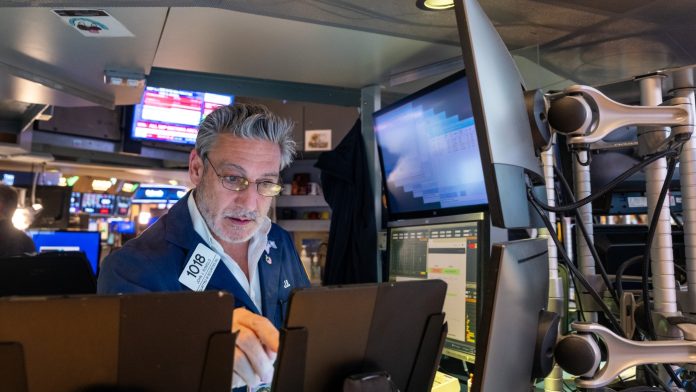
Traders work on the floor of the New York Stock Exchange during morning trading on April 10 in New York City. Stocks dropped at the opening a day after a record closing day after President Trump's announcement of a 90-day pause for many of his reciprocal tariffs.

Traders work on the floor of the New York Stock Exchange during morning trading on April 10 in New York City. Stocks dropped at the opening a day after a record closing day after President Trump’s announcement of a 90-day pause for many of his reciprocal tariffs.

Michael M. Santiago/Getty Images


hide caption

toggle caption

Michael M. Santiago/Getty Images

Thursday:

  • There was a prisoner exchange between Russia and the U.S. A Russian-American ballet dancer, who had made a pro-Ukraine donation, had been jailed in Russia for more than a year. Trump’s effort to get her released was at the request of a close Trump associate, Dana White, the Ultimate Fighting Championship CEO. “I appreciate the ballerina who was released,” Trump said. “That was at the request of a very good friend of all of ours, actually. Dana White called me and he said it’s the friend or the relationship of one of the fighters for UFC or one of the fighters, and Dana is an incredible guy.”
  • The House passes a bill related to voting that would require sweeping changes to voter registration, including requiring those signing up to present documents proving U.S. citizenship. The SAVE Act, or Safeguard American Voter Eligibility Act, passed 220-208 with all Republicans and four Democrats voting in favor.
  • Wednesday’s stock rally fades, as U.S.-China trade war intensifies. The Dow closed down 2.5% after going up 8% the day before. The S&P 500 and Nasdaq also fell more than 3% and 4%, respectively, after soaring the day before.
  • The House approves a budget framework, laying the path to getting Trump’s agenda through — eventually -– using the budget reconciliation process. 
  • Tariffs on China to be as high as 145%. 
  • Telephone services for receiving Social Security benefits will continue, another sign of the Trump administration further backing off the in-person requirements it announced for Americans seeking services that were set to go into effect Monday.
  • In an effort to pressure immigrants in the U.S. without permanent legal status, the New York Times reports that the Trump administration is seeking to strip migrants of Social Security Numbers.
  • The Supreme Court today orders the Trump administration to “facilitate” the return to the U.S. of a Maryland man who was mistakenly taken to El Salvador and remains in custody there — a rare win for those challenging the administration’s deportation orders. The court sent the case back to the district court judge to clarify one aspect of her decision “with due regard for the deference owed to the Executive Branch in the conduct of foreign affairs.”

The controversial and obscure law being used against immigrant student protestors : NPR

0

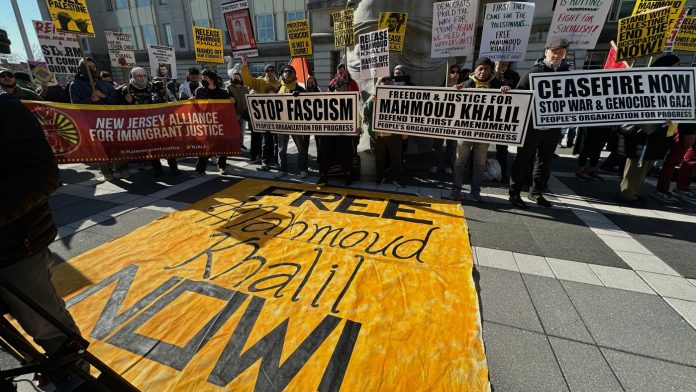
Pro-Palestinian protesters demanding the release of Columbia University graduate student Mahmoud Khalil stand outside his immigration court hearing in Newark, N.J., on Friday, March 28, 2025.

Ted Shaffrey/AP


hide caption

toggle caption

Ted Shaffrey/AP

Pro-Palestinian activist Mahmoud Khalil who was detained in early March by U.S. immigration officials, is facing possible deportation for actions the government alleges goes against American foreign interests.

Khalil, a Columbia University graduate student, is a Green Card holder, married to a U.S. citizen. To justify his deportation, the government is invoking an obscure law that played a major role in shaping American immigration during the Cold War: the McCarran-Walter Act, or the Immigration Nationality Act of 1952.

Since last year, some pro-Palestinian protestors have been accused of antisemitism and of supporting terrorist organizations. Protestors deny this, arguing that criticism of Israel’s actions in Gaza and U.S. support should not be equated with antisemitism.

The Trump Administration has promised a crackdown.

“We know there are more students at Columbia and other Universities across the country who have engaged in pro-terrorist, anti-Semitic, anti-American activity, and the Trump Administration will not tolerate it,” President Trump posted on his social media last month. “We will find, apprehend, and deport these terrorist sympathizers from our country — never to return again.”

What does the law say?

The case of Mahmoud Khalil has raised the question of free speech rights for immigrants. The Trump administration argues that when it comes to non-citizens, there are limits to free speech. Pro-Palestinian protestors, they say, are supporting terrorism.

“It is a privilege to be granted a visa to live & study in the United States of America,” Homeland Security Sec. Kristi Noem posted on X last month. “When you advocate for violence and terrorism that privilege should be revoked and you should not be in this country.”

The First Amendment to the Constitution does not distinguish between citizens and non-citizens, and the Supreme Court has in the past ruled that the First Amendment applies to noncitizens.

But the federal government has almost total power over immigration, deciding who comes and stays in the U.S., and has in the past made that ruling based on whether or not it believes an ideology affects American foreign policy. Notably, in the 1950’s, during the Cold War, the Immigration and Nationality Act or the McCarran-Walter Act heavily monitored immigrants for communist ideology.

Passed in 1952, the act states that the U.S. government may deport “an alien whose presence or activities in the United States the Secretary of State has reasonable ground to believe would have potentially serious adverse foreign policy consequences for the United States.”

It was specifically designed to detain, deport and bar entry visas to communists. According to the U.S. Department of State, Pennsylvania Congressman Francis McCarren “expressed concerns that the United States could face communist infiltration through immigration and that unassimilated aliens could threaten the foundations of American life.”

The Trump Administration is now calling back to that policy.

In a memo obtained by the Associated Press, in order to determine the detention and deportation of Mahmoud Khalil, Secretary of State Marco Rubio wrote, “I have determined that the activities and presence of these aliens in the United States would have potentially serious adverse foreign policy consequences.” The memo repeatedly cites the Immigration and Nationality Act.

The McCarren-Walter or Immigration and Nationality Act: a storied past

But from its inception, the law had far reaching consequences beyond ideology.

“You have to go back to some ugly eras in American history to find precedents for what we’re seeing now,” says Professor Michael Kagan of the University of Nevada school of law.

Legal scholars and historians say the act further cemented racial and ethnic immigration quotas which were already part of the American system.

“McCarran, in particular, was a virulent anti-Semite. He just sort of thought Jews and communists were overlapping groups,” says Kagan.

In fact the act’s impact on Jewish immigration was severe, favoring Western and Northern Europeans. According to Muzaffar Chishti and Julia Gelatt at the Migration Policy Institute, “It closed the door on almost all new Asian immigration and shut out most European Jews and other refugees fleeing fascism and the horrors of the Holocaust in Europe.”

Kagan says that while these actions might seem like ancient history for most Americans, there are commonalities with what is going on today.

“We don’t like your political beliefs and what you have expressed. So we are going to kick you out of the country,” Kagan said.

Secretary of State Marco Rubio says he has revoked more than 300 visas. “We gave you a visa to come and study and get a degree, not to become a social activist that tears up our university campus. We’ve given you a visa and you decide to do that — we’re going to take it away,” Rubio said in a recent news conference.

Free speech advocates worry this establishes a dangerous precedent that could eventually be turned on American citizens with dissenting opinions – much like the red scare in the 1950’s did.

A decision about Mahmoud Khalil’s is expected soon.

House Republicans pave the way for Trump cuts with budget deal : NPR

0

House Republicans approved a budget, narrowly, after some pushback from conservatives. Now GOP leaders in the House and Senate have to agree on details of major spending cuts to pave way for President Trump’s tax cuts and border security agenda.

Supreme Court says Trump officials should help return wrongly deported Maryland man : NPR

0

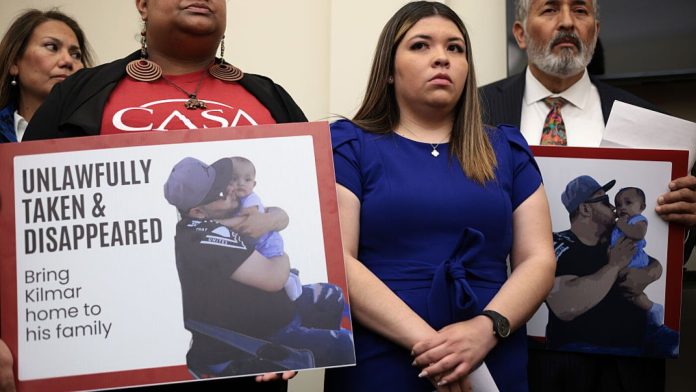
The wife of Kilmar Abrego Garcia, Jennifer Vasquez Sura (center), listens during a news conference to discuss her husband’s arrest and deportation on Capitol Hill on April 9.

Alex Wong/Getty Images


hide caption

toggle caption

Alex Wong/Getty Images

The Supreme Court has ordered the Trump administration to “facilitate” the return to the United States of Kilmar Armando Abrego Garcia, a Maryland man who was mistakenly taken to El Salvador and remains in custody there.

In a brief, unsigned decision issued Thursday, the court sided with a District Court judge who had ordered Abrego Garcia brought back to the U.S.

“The order properly requires the Government to ‘facilitate’ Abrego Garcia’s release from custody in El Salvador and to ensure that his case is handled as it would have been had he not been improperly sent to El Salvador,” the Supreme Court said in its ruling.

The decision was a rare win for those challenging the administration’s deportation orders. But it also left several key specifics unanswered for right now. The court said it was sending the case back to the district court judge to clarify one aspect of her decision “with due regard for the deference owed to the Executive Branch in the conduct of foreign affairs.”

The White House did not immediately respond to a request for comment on the order.

An ‘administrative error’

Since President Trump took office in January, a top priority has been to remove those he believes are a threat to Americans’ safety. In this case, though, the administration initially admitted the deportation was a mistake.

Abrego Garcia, an El Salvadoran citizen, has lived in Maryland for almost 15 years. While he initially entered the U.S. without being granted legal status, a federal judge in 2019 granted him protection from being deported, because of concerns for his safety if he were to return to El Salvador.

The 2019 proceedings stemmed from uncorroborated allegations that Abrego Garcia was a member of the MS-13 gang, which the Trump Administration has since designated a Foreign Terrorist Organization. But an immigration judge ultimately found that there was insufficient evidence to support the allegation and instead found that Abrego Garcia’s life would be endangered if he returned to El Salvador.

Since then, Abrego Garcia has lived and worked legally in Maryland, and has had no criminal record.

But in March, he was on his way home from work in Baltimore, with his five-year-old son in the backseat, when he was pulled over by Immigration and Customs Enforcement agents. They told him his legal “status had changed,” and he was arrested on the spot, as his wife, an American citizen, raced to the site to prevent ICE agents from turning over the couple’s child to Child Protective Services.

A few days later, Abrego Garcia was placed on a flight with other men alleged by the Trump administration to be members of the Venezuelan gang Tren de Aragua.

In a separate, but related, case out of Washington, D.C., the Supreme Court on Monday dismissed a judge’s ruling that temporarily blocked deportations under the Alien Enemies Act of 1798.

Unlike the challengers in that case, Abrego Garcia was not removed using the Alien Enemies Act. Still, the court’s ruling left open questions as to how deportees who have already been removed from the U.S., like Abrego Garcia, are supposed to challenge their deportations from outside the country.

The administration has avoided answering judges’ questions as to the number of individuals deported, how many planes have left the United States or the whereabouts of specific individuals.

Abrego Garcia, along with the other deportees, is being detained in a Salvadoran mega-prison, but his wife has said she has not heard from him since he was removed from the U.S.

In exchange for detaining the deportees in what one judge has called “one of the most dangerous prisons in the Western Hemisphere,” the Salvadoran government is receiving $6 million from the U.S. government.

Abrego Garcia, along with his wife and child, are contesting his removal from the U.S. The family argues that his deportation was unlawful given his protected status, which specifically barred him from being sent back to El Salvador without clearing some procedural hurdles first.

Indeed, a Justice Department lawyer conceded in court that Abrego Garcia’s deportation was a mistake, or as he put it, an “administrative error.”

The government says it can’t force El Salvador to act

Last Friday federal district court judge Paula Xinis ordered the administration to preserve the status quo by releasing Abrego Garcia from the Salvadoran prison and returning him to the U.S., and to do it no later than 11:59 PM the following Monday.

When the administration asked the Fourth Circuit Court of Appeals to pause that order, a three-judge panel unanimously declined. Judge J. Harvie Wilkinson III, a Reagan appointee, had strong words for the administration.

“There is no question that the government screwed up here,” he wrote, adding that “the government here took the only action which was expressly prohibited.”

Regarding the government’s admission of its mistake, Judge Wilkinson said “one would also expect the government to do what it can to rectify it. Most of us attempt to undo, to the extent that we can, the mistakes that we have made. But, to the best of my knowledge, the government has not made the attempt here.”

In an appeal to the Supreme Court, however, the administration said in its brief that the lawyer who admitted the error does not speak for the administration. In fact the lawyer was placed on leave after making the admission. And the administration continued to push the theory that Abrego Garcia is a member of MS-13, despite an immigration judge finding otherwise in 2019.

Separate and apart from that, the government argued that because Abrego Garcia is now outside the U.S., the administration cannot force the government of El Salvador to take any action, let alone to release Abrego Garcia from prison.

Finally, the government complained that its blunder didn’t authorize Judge Xinis to “seize control over foreign relations, treat the Executive Branch as a subordinate diplomat, and demand that the United States let a member of a foreign terrorist organization into America.”

With just hours left before the deadline on Monday, the Supreme Court granted a brief administrative stay to give the justices time to consider the matter.

There were no noted dissents in Thursday’s ruling, which included a statement from the three members of the court’s liberal wing that was sharply critical of the administration’s arguments.

“The Government’s argument, moreover, implies that it could deport and incarcerate any person, including U. S. citizens, without legal consequence, so long as it does so before a court can intervene,” wrote Justices Sonia Sotomayorr, Elena Kagan and Ketanji Brown Jackson.

Thursday’s ruling shows that there is no predicting what the Supreme Court might do next when it comes to the Trump administration.

NPR legal affairs intern Christina Gatti contributed to this report.

Why some are accusing Trump of manipulating stock markets : NPR

0

A trader on the floor of the New York Stock Exchange.

Spencer Platt/Getty Images North America


hide caption

toggle caption

Spencer Platt/Getty Images North America

Wall Street has been whipsawed for more than a week by President Trump’s every word about tariffs. Now he’s facing accusations of using his power to deliberately manipulate the markets.

The scrutiny started with a tale of two social-media posts. On Wednesday, shortly after the U.S. stock market opened, Trump posted on his Truth Social network in all caps: “THIS IS A GREAT TIME TO BUY!!!”

Less than four hours after his post, Trump said on Truth Social that he would pause the harshest of his tariffs on most countries.

Stocks immediately skyrocketed in relief, with the Dow closing up almost 3,000 points — meaning that any investors who had followed Trump’s advice in the morning and bought into the stock market right away would have made quite a bit of money by the end of the day.

Prior to his post, share prices had been plummeting for days, as fears mounted about the economic damage Trump’s new trade policies could cause. Powerful investors and billionaire business leaders had increasingly gone public airing their worries about the new tariffs, and the resulting financial panic.

By Wednesday afternoon, Trump seemed to hear them when he hit pause.

Now some Democratic lawmakers and government ethics experts are calling for investigations into whether Trump was attempting to deliberately manipulate the markets, or to enable others to trade on insider information.

Senator Adam Schiff, Democrat from California and Ruben Gallego, Democrat from Arizona, sent a letter to the White House on Wednesday, requesting “an urgent inquiry into whether President Trump, his family, or other members of the administration engaged in insider trading or other illegal financial transactions, informed by advanced knowledge” of his tariff policy changes.

Senator Elizabeth Warren, Democrat from Massachusetts, also called for an investigation, asking on the floor of Congress if this was “corruption in plain sight.”

White House spokesperson Kush Desai accused Democrats of “playing partisan games,” and tells NPR that Trump’s early-morning post was merely meant to calm investors’ fears.

“”It is the responsibility of the President of the United States to reassure the markets and Americans about their economic security,” he wrote in an emailed statement.

George W. Bush’s former chief ethics lawyer says such statements would have led to firing

But the criticisms of Trump’s two Truth Social posts aren’t just limited to his partisan opponents.

“We can’t have senior public officials — including the president – talking about stock prices and where to buy or to sell at the same time as they are making and announcing decisions that have a dramatic impact on stock prices,” says Richard Painter, a law professor at the University of Minnesota, who previously served as the chief ethics lawyer for President George W. Bush.

If anyone in the Bush administration had made similar public statements urging people to buy or sell stocks, Painter added, “that person probably would [have been] fired.”

Painter did not accuse President Trump of market manipulation: “We don’t have clear evidence of that here,” he tells NPR.

But he pointed out that the president already has a track record of pushing the boundaries, at the very least.

“Financial conflicts of interests for President Trump have been a concern since he was first elected in 2016,” Painter says, adding that the problems today are even greater.

Trump’s embrace of the crypto industry, for example, has drawn ongoing scrutiny: The president, who has a growing personal portfolio of cryptocurrency-related businesses, has appointed pro-crypto Cabinet officials and promised the industry much friendlier regulation.

It’s up to the SEC to investigate accusations of insider trading

Despite the wide-ranging calls for investigations into Trump’s social-media posts on Wednesday, Painter and others aren’t expecting to see much happen.

The Republican lawmakers who control both the House and Senate have shown little interest in picking fights with Trump. Nor do ethics experts expect much movement from the U.S. Securities and Exchange Commission, which investigates accusations of insider trading.

On Wednesday, the Senate voted to confirm Trump nominee Paul Atkins to lead the SEC. And Trump in February signed an executive order claiming more power over independent regulatory agencies, including the SEC.

An SEC spokesperson declined to comment on the matter.

Trump's social media post on stocks sparks questions about conflicts of interest

0

Hours before changing the tariffs that had panicked stock-market investors, President Trump announced it was a “great time to buy.” Now Democrats and ethics experts are calling for an investigation.

Trump administration rescinds Social Security in-person requirements : NPR

0

A Social Security Administration office in Washington, DC, March 26. On Wednesday, the Social Security Administration backtracked on its announced plan to require in-person visits to offices.

Saul Loeb/AFP via Getty Images


hide caption

toggle caption

Saul Loeb/AFP via Getty Images

The Trump administration is further backing off the in-person requirements it announced for Americans seeking services at the Social Security Administration that were set to go into effect Monday.

Liz Huston, a spokesperson for the White House, said in a statement to NPR on Thursday that telephone services will continue for people seeking services through the agency.

“President Trump has repeatedly promised to protect Social Security and uproot waste, fraud and abuse across the federal government,” she said. “The Social Security anti-fraud team has worked around the clock in person to improve technological capabilities and they are now able to identify fraud on claims filed over the telephone.”

Social Security officials first announced last month that people filing claims or seeking benefits would have to travel in-person to a local field office, if they were unable to use the agency’s online verification system. The policy would have effectively eliminated widely used telephone services for many beneficiaries.

These changes were met with concerns from advocates for seniors and people with disabilities, as well as lawmakers. Dozens of Democratic members of Congress sent a letter to agency leaders asking them to reconsider the change because it would “create additional barriers” for people seeking services — “particularly for those who live far from an office.”

The Center on Budget and Policy Priorities, a left-leaning think tank based in Washington advocating for “economic justice,” recently published an analysis that found the travel requirement would have amounted to a “45-mile trip for some 6 million seniors.”

According to a White House official who spoke on the condition of anonymity to speak generally about the Trump administration’s position, the Social Security Administration reversed course on these requirements because the anti-fraud team “implemented new technological capabilities so quickly” that the agency can now “perform anti-fraud checks on all claims filed over the phone.”

These technological improvements, the official said in a statement, will be able to flag abnormal behavior in a person’s account and then those individuals who were flagged would be required to travel in-person for verification.

In a statement, Max Richtman, president and CEO of the National Committee to Preserve Social Security and Medicare, called this reversal “a victory for Social Security beneficiaries across the country.”

“The Trump administration did not change the policy out of the goodness of their hearts,” he said. “They responded to public pressure. This is a victory for advocacy on the grassroots and national level, by and on behalf of the millions of seniors who depend on phone service from the Social Security Administration.”

“The Trump administration has been busy erecting barriers for people simply trying to access their earned benefits. We are glad this one barrier has fallen.”

The Social Security Administration is currently undergoing massive changes – including widespread layoffs, regional office closures and general restructuring of duties across the agency. These changes have worried advocates about access to services that many of the country’s seniors rely on.

Where tariffs stand after Trump’s partial pause : NPR

0

Treasury Secretary Scott Bessent and Commerce Secretary Howard Lutnick with President Trump in the Oval Office on Wednesday.

Saul Loeb/AFP via Getty Images


hide caption

toggle caption

Saul Loeb/AFP via Getty Images

The past week has been a wild ride for businesses and markets, starting with President Trump’s announcement of sweeping tariffs and ending with an abrupt pause on most of them.

About 12 hours after country-specific tariffs took effect on dozens of U.S. trading partners — and after days of insisting that he would hold the line — Trump said Wednesday afternoon that he would pause most of them for 90 days.

In a post on Truth Social, Trump said the reason was that “more than 75 countries have called Representatives of the United States … to negotiate a solution to the subjects being discussed relative to Trade, Trade Barriers, Tariffs, Currency Manipulation, and Non Monetary Tariffs, and that these Countries have not, at my strong suggestion, retaliated in any way, shape, or form against the United States.”

Trump had maintained all week — and even on Wednesday morning — that the country-specific tariffs would not be halted, despite top investors’ growing calls for him to do so. Even though the White House had insisted that tariffs weren’t about negotiations, Trump told reporters later Wednesday that “a lot of times, it’s not a negotiation until it is.”

Trump also conceded that the declining markets were making people nervous, or as he put it, “yippy.”

The pause on higher tariffs gives the White House three months to engage in negotiations with individual countries. Top administration officials are now saying this was Trump’s strategy all along, as opposed to a reaction to days of sharp declines in the market.

“Many of you in the media clearly missed the art of the deal,” White House press secretary Karoline Leavitt said, referring to the title of Trump’s co-written 1987 book. “You clearly failed to see what President Trump is doing here.”

While Wall Street and global markets have since breathed a sigh of relief, the trade war has left its mark — and still isn’t completely resolved.

Trump doubled down on tariffs on China, raising them to a whopping 125% — effective immediately — because of what he called “the lack of respect that China has shown to the World’s Markets.” The White House clarified Thursday that China faces a tariff rate of 145%, which includes a preexisting 20% tax on goods.

Plus, the baseline tariff of 10% on all imported goods that took effect last week will remain in place, as will previously enacted 25% tariffs on steel, aluminum, cars and car parts.

Here’s a look at how things are — and aren’t — changing.

What’s on hold 

The country-specific tariffs Trump announced last week are on hold for 90 days, meaning they are now slated to take effect in early July.

Speaking to reporters on Wednesday, Trump defended his flip-flop as a sign of flexibility.

And he pointed to market turmoil, particularly in the bond market, as the basis for his decision, which he said “came together … fairly early this morning” after several days of consideration.

The pause, which was announced in the middle of the trading day, was embraced by Wall Street figures.

Bill Ackman, billionaire hedge fund manager and Trump supporter, went from criticizing Trump’s approach to praising it on social media, calling the outcome “brilliant” and “the perfect setup for trade negotiations over the next 90 days.”

“There are better and worse ways of handling our problems with unsustainable debt and imbalances, and President Trump’s decision to step back from a worse way and negotiate how to deal with these imbalances is a much better way,” Bridgewater Associates founder Ray Dalio tweeted, adding he hopes the same will happen with China.

The pause also cheered U.S. markets, at least initially. On Wednesday, the Dow Jones Industrial Average surged close to 8%, the S&P 500 rose more than 9% and the Nasdaq rallied more than 12% — its largest one-day jump since 2001. But they all fell again on Thursday, a sign of continued uncertainty.

The European Union says it is also pausing its retaliatory tariffs against the U.S. for 90 days.

The 27-country bloc had said Wednesday that it would start collecting higher duties on U.S. imports on April 15 in response to the 25% tariffs on steel and aluminum that the Trump administration imposed in March.

The steel and aluminum tariffs — as well as a separate set of tariffs on car exports — are still in place. But after Trump’s announcement dropped the “reciprocal” 20% tariffs on all other European goods to a baseline of 10%, the EU signaled its willingness to negotiate.

“If negotiations are not satisfactory, our countermeasures will kick in,” European Commission President Ursula von der Leyen said Thursday.

What’s in effect

Baseline tariffs of 10% remain in place on imports from all countries, which means prices are still going to be higher than they were a few months ago — and may be slow to come down even if the tariffs were to go away, economists warn.

Canada and Mexico are not being hit with a 10% tariff, as those two countries were excluded from Trump’s list earlier this month. But many goods from those countries are still subject to tariffs, albeit fewer than Trump originally threatened.

In March, after a series of stops and starts, threats and delays, Trump imposed 25% tariffs on Mexican and Canadian goods, only to lift most of them two days later. As it stands, all goods covered by the United States-Mexico-Canada Agreement are exempt from tariffs.

Meanwhile, the trade war between China and the U.S. appears to be escalating.

“At some point, hopefully in the near future, China will realize that the days of ripping off the U.S.A., and other Countries, is no longer sustainable or acceptable,” Trump wrote on social media after once again hiking the tariff on Chinese imports, this time to 125%.

China also increased its retaliatory tariffs against the U.S. on Wednesday, bringing the total rate to 84%. That came days after China’s commerce ministry vowed to “fight till the end if the U.S. side is bent on going down the wrong path.”

In a further escalation, the Chinese Film Administration — which is contractually committed to releasing a certain number of foreign films per year — said Thursday it would cut the number of U.S. movies shown in the country. It said the Trump administration’s “erroneous practice of imposing excessive tariffs on China is likely to further diminish the Chinese audience’s favourable perception of American films.”

On Wednesday, Treasury Secretary Scott Bessent suggested Trump had intentionally “goaded China into a bad position.”

“They responded, they have shown themselves to the world to be the bad actors,” Bessent told reporters. “It wasn’t a hard message: don’t retaliate, things will turn out well.”

What happens next

Now that most of the “reciprocal” tariffs have been paused, the Trump administration says it is time to focus on making individual deals with the countries that did not retaliate.

Bessent told reporters that Trump wants to be “personally involved” in those conversations.

“Each one of these is going to be a separate, bespoke negotiation,” Bessent added.

Trump says his administration has already been approached by more than 75 countries interested in negotiating. While officials have not elaborated on specifics, leaders from dozens of countries in Asia, Europe and elsewhere have referenced such conversations publicly.

It’s not clear what exactly those negotiations will involve. The White House messaging around tariffs has varied, with goals ranging from reducing the trade deficit to bringing back manufacturing jobs to boosting federal revenue.

Israeli Prime Minister Benjamin Netanyahu met with Trump about the tariffs in D.C. on Monday. Bessent and Trump announced Monday that the U.S. would open negotiations with Japan, which they said is sending a team of negotiators stateside for talks.

Trump also told reporters on Wednesday that he is open to meeting with Chinese President Xi Jinping, calling him a friend and “one of the smartest people in the world.”

“Xi is a smart guy and we’ll end up making a very good deal,” Trump said. “We will get a phone call at some point and then it’s off to the races.”