Thursday, November 12, 2026
Home Blog Page 50

Trump Administration Revokes Visas of South Sudanese in Clash Over Deportees

0

Secretary of State Marco Rubio said on Saturday that he was revoking the visas of all South Sudan passport holders because the country’s transitional government had refused to accept in a “timely manner” citizens who were being deported by the Trump administration.

Mr. Rubio also said in a social media post that he would “restrict any further issuance to prevent entry” of South Sudanese, blaming the “failure of South Sudan’s transitional government” to accept the repatriations. In a statement issued through the State Department, Mr. Rubio said, “we will be prepared to review these actions when South Sudan is in full cooperation.”

Mr. Rubio’s action is similar to one that President Trump announced in late January, when he threatened Colombian officials with revocation of their visas and tariffs on the country’s exports because they were refusing to accept U.S. military flights with Colombian deportees. In that case, Colombia reversed its decision quickly.

The decision by Mr. Rubio to approve such a sweeping action on the visas of South Sudanese travelers and immigrants is a further sign of the Trump administration’s intense focus on trying to deport as many foreign citizens from the United States as quickly as possible, an action that Mr. Trump promised he would take while on the campaign trail.

Some of the potential deportees have filed lawsuits against the Trump administration, and several judges have issued temporary restraining orders as a result.

Officials in South Sudan could not immediately be reached for comment late Saturday.

Lucas Guttentag, a former Justice Department official during the Biden administration, called the move “another example of damning individuals based on nationality and upending the lives of innocent and law abiding visa holders instead of engaging in meaningful diplomacy.”

The Trump administration has attempted to conduct a mass deportation campaign through major operations across the United States in the last few months. Mr. Rubio has argued that he had the right to revoke the visas of some of those potential deportees, now in detention centers, because they were subverting American foreign policy.

Several prominent detainees took part in campus protests or wrote essays against Israel’s war in Gaza and American weapons support for it.

Mr. Rubio said on March 27 that he had revoked perhaps 300 or more visas and was signing papers daily to deport more people. The most prominent foreign citizen to have had his visa revoked was perhaps Óscar Arias Sánchez, the former president of Costa Rica and a recipient of the Nobel Peace Prize. Mr. Arias said on Tuesday that the U.S. government had informed him that the visa in his passport had been suspended, weeks after he wrote on social media that Mr. Trump was behaving as if he were “a Roman emperor.”

The U.S. government has long faced issues with countries taking in people set to be deported by the Department of Homeland Security — either because of a lack of diplomatic ties or problems getting the proper travel documents. During the first Trump administration, U.S. officials imposed visa sanctions on several countries that they viewed as uncooperative. Those sanctions affected certain people already abroad seeking visas.

In 2023, the Biden administration offered protection from deportation for migrants from South Sudan through a program known as Temporary Protected Status. The decision was made, officials said then, because of violence in the country. Those protections run until May.

After Trump’s Tariffs, Stocks Plunged but Penguin Memes Ticked Up

0

The Trump administration this week levied sweeping tariffs across the globe, provoking retaliation from other countries and sending the stock market tumbling. An unexpected consequence? Penguin memes.

Images of the flightless birds have waddled their way across the internet this week after President Trump imposed tariffs on Heard Island and McDonald Islands, Australian territories near Antarctica that are home to many penguins but no people.

One meme featured an altered photo of the explosive February White House meeting in which Mr. Trump and Vice President JD Vance publicly clashed with President Volodymyr Zelensky of Ukraine. Instead of a fiery confrontation with the wartime leader, however, Mr. Trump and Mr. Vance sit next to a black-and-white bird.

One person who posted the meme wrote, “Maybe it didn’t say thank you?” in a possible reference to Mr. Vance’s accusation that Mr. Zelensky had not appropriately thanked the United States for the military support Washington had provided Kyiv throughout the war.

A different meme showed a penguin teaching sea gulls to aim their waste at Teslas, an apparent nod to Mr. Trump’s billionaire adviser, Elon Musk. Yet another showed a huge gathering of penguins with a caption citing “Unprecedented protests” on Heard Island and McDonald Islands, “as the population rises up” against Mr. Trump’s imposition of across-the-board tariffs.

The UNESCO World Heritage Convention notes the islands’ “complete absence of alien plants and animals, as well as human impact.” Still, Mr. Trump included the desolate islands on his list, imposing the 10 percent base-line tariff he placed on nearly all goods imported into the United States.

The Wednesday announcement, which Mr. Trump described as America’s “Liberation Day,” sent shock waves across the world as both allies and adversaries scrambled to make sense of the new and hefty tariffs. The move has shot U.S. import duties to the highest levels in over a century.

Also slotted for new tariffs were the British Indian Ocean Territory, a collection of mostly uninhabited islands, save for U.S. and British soldiers stationed on joint military bases.

Other islands subjected to tariffs included Tokelau, a territory of New Zealand that has fewer than 2,000 inhabitants; the Norwegian islands of Svalbard, which has about 3,000 residents; and Jan Mayen, where the only humans are the military personnel who operate a weather and coastal services station.

Mr. Trump has said little about the methodology behind the new system of calculations, but each country’s new tariff rate appeared to come from a formula that takes the trade deficit America runs with a nation and divides it by the exports that country sent into the United States. The White House explained its methodology in this post, which essentially confirms that formula.

Then, because Mr. Trump said he was being “kind,” the final tariff number was cut in half.

It is not clear how the administration decided to add Heard Island and McDonald Islands to the list of tariffs. The White House did not immediately respond to request for comment.

Jenny Gross contributed reporting.

With sweeping tariffs, Trump tries to rewind globalization : NPR

0


TARIFFS US REAX

  • Download

U.K. Labour Lawmaker Suspended From Party After Arrest

0

Britain’s governing Labour Party on Saturday said it had suspended Dan Norris, one of its lawmakers in Parliament, after he was arrested by the police.

Mr. Morris “was immediately suspended by the Labour Party upon being informed of his arrest,” the party said in a statement, adding that it “cannot comment further while the police investigation is ongoing.”

The party did not specify why Mr. Norris, 65, had been arrested, and he did not immediately respond to a request for comment on Saturday.

In Britain, the police typically do not disclose the name of suspects unless they are charged. The BBC said that Mr. Norris was arrested on suspicion of rape, child sex offenses, child abduction and misconduct in a public office.

In a statement that did not give any names, the Avon and Somerset Police said that a man in his 60s was arrested on Friday on suspicion of sexual offenses against a girl, rape, child abduction and misconduct in a public office. The police said he had been released on conditional bail.

“In December 2024, we received a referral from another police force relating to alleged non-recent child sex offenses having been committed against a girl,” the police statement said.

“Most of the offenses are alleged to have occurred in the 2000s, but we’re also investigating an alleged offense of rape from the 2020s,” it added. The police said that the investigation was “ongoing and at an early stage.”

The Labour Party’s move is expected to mean that Mr. Norris will, pending the investigation, be effectively suspended from representing the party in the House of Commons.

Last year Mr. Norris won a seat in Parliament representing North East Somerset and Hanham, near the city of Bristol, defeating a former Conservative cabinet minister, Jacob Rees-Mogg.

Mr. Norris is also the mayor of the West of England, a position he has held since 2021, though he is not running for re-election when that post is contested on May 1.

His political career goes back more than two decades. Mr. Norris was a lawmaker from 1997 to 2010, representing the seat of Wansdyke, in the west of England. He was an assistant whip in the government of Tony Blair from 2001 to 2003, and a junior minister in the Department for Environment, Food and Rural Affairs from 2009 to 2010, under Prime Minister Gordon Brown.

When Kenyan Maids Sought Help Overseas, Diplomats Demanded Sex

0

Selestine Kemoli fled to the Kenyan Embassy in Riyadh in 2020, terrified and desperate.

Ms. Kemoli had been working in Saudi Arabia as a maid. Like many East Africans in her situation, she said, she was being abused. She told the embassy’s labor attaché that her boss slashed her breasts with a paring knife, forced her to drink urine and raped her.

Broke and alone, she wanted help getting home to her two children in Kenya.

“You are beautiful,” the labor attaché, Robinson Juma Twanga, responded, according to Ms. Kemoli.

Mr. Twanga offered to help, she said, but with a catch. “I will sleep with you, just the same way your boss has slept with you,” she remembers him saying.

Multiple women, who did not know each other and lived in separate counties, told The New York Times that when they fled abuse in Saudi Arabia, Mr. Twanga demanded sex or money, or pressured them to go into sex work to pay for a ticket home.

Robinson Juma Twanga, the Kenyan labor attaché, during a conversation about protecting overseas workers in 2021.

Lawyers say they have collected similar accounts from numerous women involving other embassy officials. They said that Mr. Twanga is but one example of how these officials exploit women at their most vulnerable moments.

A spokesman for William Ruto, Kenya’s president, commenting on behalf of the Foreign Ministry, said he had no knowledge of such complaints or any mistreatment by embassy officials.

Reached by phone and told what the women had said about him, Mr. Twanga replied: “I cannot get involved in that kind of story.” He said he is retired.

The women, who were interviewed across Kenya, gave consistent accounts. They said Kenyan officials insulted them and questioned whether they needed help, even when they arrived at the embassy destitute and with visible signs of abuse.

Ms. Kemoli, for instance, still has a scar across her chest and arms.

“They didn’t care for us,” said Faith Gathuo. She left for Saudi Arabia in 2014 and said that, when she sought help after being beaten and raped, another embassy official demanded money and anal sex.

Tens of thousands of Kenyans go each year to Saudi Arabia, where they can earn more than in their home country, which is in a prolonged economic crisis. Hundreds have died. Many more have endured abuse, gone unpaid or wound up detained in a country that lacks effective legal protection for East African workers.

A Times investigation last month revealed that powerful East African and Saudi figures make money off the labor system that sends these workers abroad.

When things go wrong, these latest interviews show, other powerful officials seek to profit.

Multiple women identified Mr. Twanga. Ms. Kemoli said he asked for sex. Two others said that when they asked for help, he berated them and told them to return to their employers.

A fourth woman, Feith Shimila Murunga, said that her boss beat her and poured hot water on her as punishment. When she sought the embassy’s help, she said, Mr. Twanga told her that if she didn’t want to return to her employer, maybe she could become a prostitute.

Lawyers in Nairobi provided the written accounts of six other women who said Mr. Twanga refused to help or told them to go into sex work.

“There’s no one holding them accountable,” said Bonareri Okeiga, who until recently was a program coordinator at Global Justice Group, a legal aid organization that has helped women document their experiences in hopes of getting them compensation.

While Mr. Twanga’s name surfaced repeatedly, workers and their families also described difficult experiences with other officials.

The relatives of three workers who died in Saudi Arabia said that officials at Kenya’s Foreign Ministry solicited cash to bring the bodies home. Hussein Mohamed, the president’s spokesman, said families were sometimes asked “to chip in” because the ministry cannot afford to pay for all of the bodies.

But relatives who returned to the ministry with lawyers said that they were told that they did not actually need to pay.

Years after returning from Saudi Arabia, Ms. Gathuo still has a gap in her smile from when, she said, her boss smashed her face with a pressure cooker. After he raped and impregnated her, she said, she escaped.

An embassy official offered to help, she said, if she paid him and had anal sex with him. She agreed, she said, and gave him all she had — about $500. But he never sent her home. Eventually, Saudi Arabia deported her.

Mr. Mohamed, the presidential spokesman, did not answer questions about Ms. Gathuo’s account.

Ms. Kemoli, who said her employer raped and cut her, said she refused Mr. Twanga’s proposition for sex. A well-connected relative in Kenya ultimately contacted the International Organization for Migration, which bought her a ticket home in 2021.

Ms. Kemoli said she has never been fully paid for her work in Saudi Arabia. She said she suffers from insomnia and often breaks down sobbing, seemingly unprompted. She said she has attempted suicide.

Sometimes, she said, her children ask about her scars.

“I don’t know what to tell them,” she said.

Dublin Acts to Protect Molly Malone Statue

0

In song, and then in bronze, she has become an emblem of Irish culture and an enduring symbol of working-class Dublin.

But to the familiar folklore of Molly Malone represented in her statue on Suffolk Street in central Dublin — a pretty young face, a hawker’s cart of cockles and mussels, a low-cut frilly dress — a new element will soon be added: wardens, provided by Dublin City Council.

The life-size statue was erected to commemorate the central figure of “Molly Malone” or “Cockles and Mussels,” a song belted out during St. Patrick’s Day celebrations around the world. The City Council said on Thursday that it was responding to complaints about people, especially tourists, touching the statue.

More specifically, the problem is with visitors grabbing and rubbing the statue’s breasts, supposedly for luck — something they do so often that its bust has become discolored.

The stewards will be positioned next to the statue for a week in May, and will not only guard it, but also try to educate tourists about it, the council said in a statement. The city will also repair the damage to the statue’s bust, a process that it has had to repeat over the years.

It is responding in part to a “Leave Molly mAlone” campaign led by Tilly Cripwell, 23, a final-year student at Trinity College Dublin who is also a regular busker on Suffolk Street.

On Thursday, she welcomed the restoration work as a step toward rectifying the “physical and symbolic damage,” but was less impressed by the idea of wardens.

“The stewarding system feels like a figurative barrier, which defeats the point, and the point is mind-set reform around behavior toward the statue,” she said.

People coming to see Molly Malone help make Suffolk Street a lucrative busking spot. Singing there, Ms. Cripwell said, she could collect at least 60 euros an hour, about $66. But she grew ever more infuriated at seeing tourists and nighttime drinkers grope the statue.

While touching parts of statues for luck is a widespread tradition — the toes of St. Peter in the Vatican, the groin of the 19th-century journalist Victor Noir in Paris’s Père Lachaise cemetery, even the testicles of Wall Street’s “Charging Bull” — the treatment of one of Dublin’s few statues of women struck Ms. Cripwell as both crude and sexist.

“I just got more and more triggered by it, and one day I just thought if I want to keep on busking by the statue, I’m going to have to do something about this,” she said.

To protest, Ms. Cripwell has used an alternative version of the popular folk song. “If she was there beside you, if she was alive oh,” she sang during one of her demonstrations, which have been joined by other performers. “Crying, ‘Stop, that’s enough’ — so leave Molly alone.”

In the song, which has been mournfully covered by Joni Mitchell and Sinead O’Connor, Molly Malone is a tragic figure, a fishmonger who sells her wares on Dublin’s streets and eventually dies of a fever. People have long debated whether the song is based on a real person.

The statue, commissioned in 1988 as part of celebrations of Dublin’s 1,000th anniversary, solidifies one particular version of the story, according to research by Sean Murphy, a city historian.

The authorities planning the celebration suggested that they had identified the real Molly, pointing to the baptism and burial records of a woman named Mary Mallone, who was christened in 1663 and buried in 1699 near the site chosen for the statue. Mr. Murphy regards that as far from sufficient proof: The name was a common one, he said, and documentary evidence of the song begins well over a century later.

“Myself and others protested back in the 1980s about the statue but were ignored,” he said.

The design of the statue, and the publicity surrounding it, may have encouraged undignified treatment, he added. He said the sculpture represented Molly Malone as “a prosperous trader who freelanced as a prostitute,” something that the historian calls “a gratuitous charge.”

Ms. Cripwell is seeking to give the disputed history a new chapter. Her campaign has sought to have the statue placed on a raised plinth, as many of Dublin’s heroic statues of men are, although the city’s statement dismissed that option as “costly.”

And in place of stewards explaining the statue, Ms. Cripwell says she would prefer a plaque.

“People don’t know the story — whether it’s fictional, whether it’s real, they don’t know it,” she said.

‘I Hope Trump Won’t Deceive Us’: Ukrainians Are Wary of U.S. Minerals Deal

0

A Ukrainian geologist was shopping in his local market recently for pork belly, lard, salmon and grapes when he heard the shouts of a man who seemed drunk, complaining about President Volodymyr Zelensky.

“Why didn’t Zelensky ask us before giving away our minerals to the Americans?” he yelled. A woman joined in: “The Americans are coming to take everything.”

The geologist, Volodymyr Savytskyi, 75, kept quiet. He is more hopeful about the potential minerals agreement that has dominated conversations — and exposed tensions — between his country and the United States.

“We just need to survive,” Mr. Savytskyi said. “I hope Trump won’t deceive us. I really hope he won’t. I believe the Americans should come, invest their money here, make their profit, but we should also get our fair share — our piece of the pie.”

In the central Ukrainian region of Kirovohrad, one of the country’s leading mining areas, reactions to the proposed deal are a mix of wary hopefulness, fatalism and anger. After years of trying to resist Russian influence and align with the West, many here reflexively view American investment positively, and are willing to use their natural resources to support the country’s most important ordeal, fending off Russia.

And yet, there are signs of growing skepticism about the terms and whether the United States, and specifically the Trump administration, can be trusted. Some people endorse the deal because they see Ukraine as having no other choice.

Ukrainian authorities say the country holds deposits of more than 20 critical minerals; one consulting firm valued them as being worth several trillion dollars.

The Trump administration is seeking future profits from these minerals, which it calls repayment for military aid the United States has given Ukraine since Russia invaded more than three years ago. In return, the U.S. would, in theory, continue to support Ukraine.

The deal has taken longer to reach than expected. An initial version fell apart at a disastrous White House meeting in late February. A new American proposal, made public in late March, is much more onerous for Ukrainians. Kyiv has said it would negotiate to improve the terms before signing a deal.

Critics derided it as a kind of blackmail. Some Ukrainians said it effectively steals resources from Ukraine while providing no security guarantees for the nation’s future.

Andriy Brodsky, who founded Velta, a leading private Ukrainian titanium company that could profit from a deal, said, “This is a win-win story if it’s done properly.”

But he stressed that any agreement should be fair to both countries. He said the deal should be a new Marshall Plan, which helped rebuild Europe after World War II while allowing American companies to profit. Six potential American investors had already approached Velta, wanting to join forces, Mr. Brodsky added.

Still, extracting minerals here is not like going to an A.T.M.: Although Velta started operations in 2003, it took until 2012 to start producing titanium from the large ilmenite deposits in Kirovohrad. Maps of Ukraine’s mineral deposits date back to Soviet times and aren’t necessarily reliable, experts say.

Environmentalists hope that U.S. investors might bring cleaner practices and better worker protections to the mines, but there have been no such guarantees.

Mr. Savytskyi, who grins to his ears when he talks about minerals, is a tour guide for everything below the surface here. He helped write an oft-cited paper in 2000 that outlines the region’s deposits of graphite, lithium, uranium and titanium, minerals that Mr. Trump is interested in. The Inhulska uranium mine, where he worked for about 23 years, is three miles from his front door.

The history of uranium extraction here, stretching back more than 60 years, shows how difficult it is to exploit minerals, even when there is a lot of interest.

In 1963, Soviet geologists drilled a well in the Inhul River valley, near the city of Kropyvnytskyi, to get water for a nearby plant. They found radiation. Core samples showed high levels of uranium.

It was considered a jackpot. The Soviet Union was in a nuclear arms race with the United States. Moscow quickly poured “a river of money” into developing that first mine, completing the work in just four years, said Mr. Savytskyi.

He arrived in the area in 1973 — a nerdy Cold Warrior, part of a secret geology research team — and started work on what was seen as a much richer uranium field beneath Kropyvnytskyi. If anyone asked what he was doing when he dug core samples in the city’s center, Mr. Savytskyi said he was looking for construction materials.

It took 10 years to develop that deposit, which together with the Inhulska mine became part of the state-run Eastern Mining and Processing Plant, now one of the world’s largest uranium mining facilities.

But in 1986, the Chernobyl disaster about 270 miles northwest — the largest nuclear accident in world history — dampened Moscow’s enthusiasm for Ukrainian uranium. Mr. Savytskyi’s research lost funding.

In 1996, five years after the Soviet Union collapsed, Mr. Savytskyi started working at the Inhulska mine. Over the years, it had its problems: The mine was not always profitable; workers were not always paid. For a time, nepotism and corruption were endemic, Mr. Savytskyi said. Workers often had health problems caused by radiation exposure.

Liudmyla Shestakova, who works with the environmental nonprofit Flora in Kropyvnytskyi, now a city of 220,000, took The New York Times on a tour around the Inhulska mine to look at the hills of leftover tailings that surround it.

This waste is mildly radioactive. When the wind blows or the rain pours, the results are predictably bad for the environment. Ukraine’s environmental rules lag behind the West’s: Asbestos wasn’t banned until 2017. Radon seems omnipresent.

Just outside Kropyvnytskyi, people fill jugs with water from a nearby spring that catches runoff from the mine. (They also take a constitutional cold-water dip in that spring, even on crisp February mornings.)

Ms. Shestakova, 65, said she generally believes U.S. investment might improve things, reflecting the durable good will Americans still have toward Ukraine, even with current tensions.

“If the investment comes through and it’s done responsibly — not with reckless mining practices — we fully support it,” she said.

But Ms. Shestakova voiced concern that Mr. Trump’s latest proposal is one-sided. She worries Ukraine will give away its natural resources with no guarantees for investments, environmental protections or the country’s security.

“It’s as if Ukraine gets nothing at all,” she said.

At a cemetery below a hill of uranium tailings, Nadiia Matsko, 65, recently visited the graves of family members; her husband, who worked underground as a miner, later died of diabetes. She was pragmatic about a deal with the Americans.

“If those minerals are lying there, and our people are not extracting them, and there is not any profit now, then if someone does it, and we get jobs and some percentage of the profit, then let them do it,” Ms. Matsko said, shrugging.

Maryna Vinnik, 64, immerses herself every morning in the spring that includes runoff from the mine. Ms. Vinnik is a librarian; her son is on the front lines. She said she has worried constantly over how the relationship with the United States has deteriorated.

“When we had strong support, everything felt different,” she said, standing barefoot on the snow, wrapped in a towel. “There’s a saying: ‘You can have this, but this also will take the shirt off your back.’ That’s how I view this agreement — as an unavoidable price we must accept. I don’t understand politics, but this feeling is heavy. In the past few days, I’ve been crying a lot and feeling deep sorrow.”

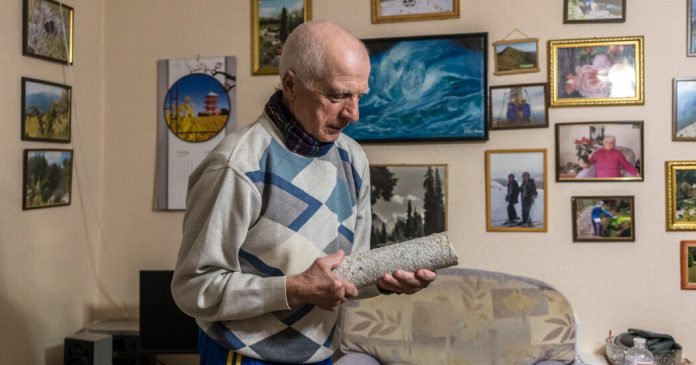
Mr. Savytskyi, who is a friend of Ms. Vinnik and believes her daily dips are probably harmless, still lives in the same apartment assigned to him by the Soviet Union about 40 years ago. Geology books like “Overseas Uranium Deposits” sit near his favorite chair, along with many of the minerals he holds dear: the core sample of granite, the smoky quartz from inside the Inhulska mine, the fluorite, the onyx, the gabbro, the glaucophane feldspar, all from deep in the ground of Ukraine.

His head was full of minerals, but he wasn’t oblivious to the war. A nearby missile strike had caused a power outage that morning. In 2022, he said, his family practically lived in the building’s basement because of shelling.

“That’s why I support this agreement,” he said. He added: “You understand that we are at war, and we must defend ourselves. We are willing to work with anyone who helps us.”

Chemical Industry Asks Trump for Exemption From Pollution Limits

0

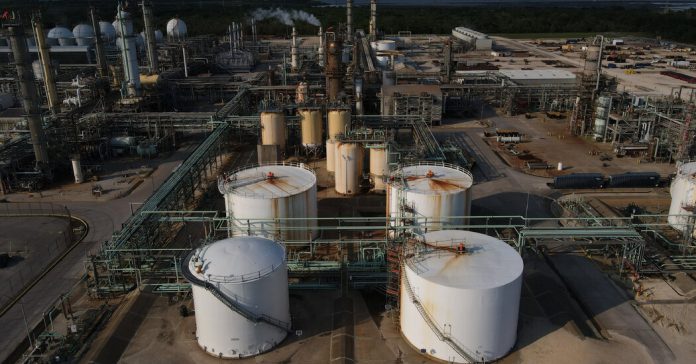
Two chemical industry groups are asking President Trump for a complete exemption to free their factories from new limits on hazardous air pollution.

Under a new rule finalized by the Biden administration last year, chemical plants would soon be required to monitor and reduce emissions of toxic pollutants, like ethylene oxide, a cancer-causing ingredient used in antifreeze and plastics.

Now the two groups, the American Chemistry Council and the American Fuel & Petrochemical Manufacturers, which represent the nation’s major chemical companies, are seeking a temporary presidential waiver for all polluters to the rule.

The new requirements burden their member corporations with “significantly costly requirements on an unworkable timeline,” the groups wrote in a letter dated March 31 that was obtained by the Environmental Defense Fund, an environmental advocacy group.

In the letter addressed to Lee Zeldin, the administrator of the Environmental Protection Agency, the groups said that the cost to companies of meeting even parts of the new rule would exceed $50 billion, significantly more than the agency’s estimate of $1.8 billion.

The request came after the E.P.A. told companies last month that they could apply for waivers to major clean-air rules by emailing the agency. The E.P.A. pointed to a section of the Clean Air Act that enables the president to temporarily exempt industrial facilities from new rules if the technology required to meet those rules isn’t available, and if it’s in the interest of national security.

Under Mr. Trump, the E.P.A. has moved to roll back many of the same rules. That could mean that companies granted a temporary exemption now would ultimately never have to comply with the new rules.

Taylor Rogers, a White House spokeswoman, said in a statement that she would “not get ahead of the president, but we can confirm President Trump’s commitment to unleashing American energy, protecting our national security interests and ensuring environmental stewardship.”

The Biden-era rule had been part of that administration’s effort to address the disproportionate effect of environmental hazards facing communities near chemical plants. These are often low-income, predominantly Black or Latino neighborhoods with elevated rates of asthma, cancer and other health problems.

It updates several regulations governing emissions from chemical plants, some of which have not been tightened in nearly 20 years, and applies to more than 200 chemical facilities across Texas and Louisiana, as well as the Ohio River Valley and West Virginia — all home to major chemical hubs.

The rule had for the first time considered the cumulative effects of multiple chemical plants on communities in such hubs, rather than simply the effect of a single source of pollution.

Companies would be required to rigorously tighten controls and processes to limit chemical emissions. They would also be required to monitor smokestacks and vents at the manufacturing facilities, while also checking whether chemicals are present at the property line of a plant. That kind of fence-line monitoring is similar to those required of petroleum refineries.

But the chemical industry had raised various concerns about the new restrictions, particularly on ethylene oxide, saying it was used in a variety of products like batteries for electric vehicles. It also is essential to sterilizing medical equipment, according to the Food and Drug Administration.

In a statement on Saturday, Chet Thompson, chief executive of American Fuel & Petrochemical Manufacturers, called the Biden-era rule “unlawful, unreasonable and technologically unachievable,” adding that it put “critical U.S. manufacturing operations at risk.”

Vickie Patton, general counsel of Environmental Defense Fund, said the Trump administration had ”opened a back door for companies to avoid complying with reasonable limits on the most toxic forms of air pollution.”

American families, she said, “must worry about their loved ones breathing dirtier air, their kids missing school days and suffering a lifetime of illness due to toxic pollution, and more cancer in their families.”

The latest move is part of an effort by the Trump administration to steer the E.P.A. away from its original role of environmental protection and regulation. Mr. Zeldin has described the agency’s new mission as lowering the cost of purchasing cars, heating homes and running businesses, as well as encouraging American energy dominance.

Last month, the administration dropped a federal lawsuit against a chemical manufacturer accused of releasing high levels of chloroprene, a likely carcinogen, from a plant in Louisiana.

She Accused the Senate President of Harassment. The Backlash Was Swift.

0

When Nigeria’s third most powerful politician was accused of sexual harassment on national television this year, a fierce backlash ensued — against his accuser.

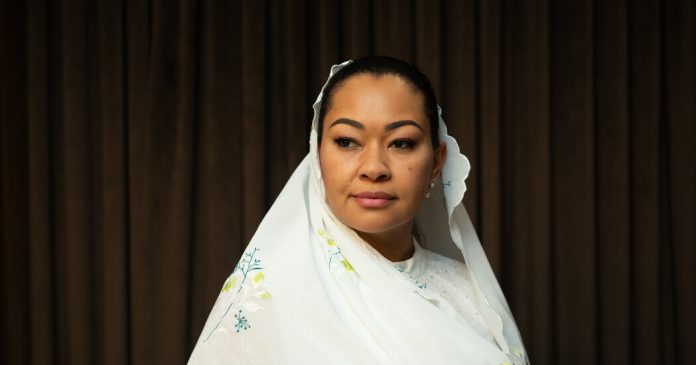
Natasha Akpoti-Uduaghan, one of four women in Nigeria’s 109-seat Senate, was suspended for six months without pay in February. She said the suspension was punishment for speaking out against Godswill Akpabio, the president of the Nigerian Senate.

Then, angry voters in her constituency in central Nigeria began campaigning to have her removed.

The ordeal has highlighted what women in Nigeria say is the sexism faced by female politicians in their country, and the risks of speaking out in a nation where few women hold political power.

Nigeria is Africa’s most populous nation and sub-Saharan Africa’s second largest economy, but it has the lowest representation of women in Parliament on the continent. It ranks in the bottom five globally.

Through a written response sent by a lawyer, Mr. Akpabio denied Ms. Akpoti-Uduaghan’s accusations, and he declined an interview request, citing continuing legal proceedings.

“It’s a first at that level in Nigeria,” Obiageli Ezekwesili, a former Nigerian minister of education, said of the accusation against such a high-ranking official. “But it’s a classic abuse of power, where a woman is denied the right to be heard out,” she added.

Ms. Akpoti-Uduaghan, 45, who was elected in 2023, said that Mr. Akpabio made sexual advances in December of that year when she and her husband visited Mr. Akpabio’s home. Mr. Akpabio squeezed her hand and told her, “I will make an opportunity for us to come here and have a good moment,” she said.

Ms. Akpoti-Uduaghan said that Mr. Akpabio later invited her to a hotel and made lewd remarks in the Senate building, including, “‘You can enjoy a lot of benefits if you make me happy.’”

In an interview with The New York Times, Ms. Akpoti-Uduaghan said she kept rejecting the advances, but did not talk about them or file a legal complaint.

“The moment you speak out on sexual harassment, you’re guilty,” she said. Throughout her two senatorial campaigns in 2018 and 2022, Ms. Akpoti-Uduaghan faced repeated online harassment and accusations that she was a prostitute. Such accusations are commonly leveled against women in Nigerian politics.

“We are made to bear it, to see it as part of life,” she added.

Ms. Akpoti-Uduaghan said that last year, she began avoiding the Senate cafeteria and other areas of the building where she might run into Mr. Akpabio, just to escape his sexual advances.

In February, Ms. Akpoti-Uduaghan said that her seat had been moved to a remote corner of the Senate without her consent, and that she was not told why. She came out with her accusations against Mr. Akpabio on Nigerian television later that month.

Days after she went public, the Senate’s ethics committee suspended Ms. Akpoti-Uduaghan for six months, accusing her of unruly behavior during a dispute over the new seating arrangement. It also dismissed a sexual harassment petition she filed against Mr. Akpabio, citing a rule that prohibits victims from filing their own complaints. (The petition must be filed by someone else on the victim’s behalf.)

Since the suspension, Ms. Akpoti-Uduaghan has received no public support from her three female peers. Mr. Akpabio’s wife has filed a defamation lawsuit.

“Women are part of the same patronage system as men are in Nigerian politics,” said Ayomide Ladipo, a Nigerian analyst. “Speaking out against a powerful man with lots of resources and political clout makes you risk being blacklisted or victimized.”

Mr. Akpabio, 62, is a close ally of Bola Ahmed Tinubu, the president of Nigeria and leader of the governing All Progressives Congress. Ms. Akpoti-Uduaghan is a member of the opposition People’s Democratic Party.

Another female public official, Joy Nunieh, accused Mr. Akpabio of sexual harassment in 2020. Nigeria’s former vice president, Atiku Abubakar, an opponent of Mr. Akpabio, said he had a “habit of abusing women.”

Thousands of supporters rallied on Tuesday when Ms. Akpoti-Uduaghan made an impromptu visit to her district in Kogi Central. But even in Kogi Central, nearly half of all registered voters signed a petition last week calling for her removal, just short of the 50 percent threshold needed to force her out.

No major political party has ever nominated a woman as a presidential candidate in Nigeria. The share of female lawmakers is under 10 percent, according to Invictus Africa, a nonprofit.

Other economic powerhouses on the continent have greater representation of women in politics. In Kenya, a quarter of lawmakers are women. That rate reaches 40 percent in Senegal, and nearly 50 percent in South Africa. Rwanda has the world’s highest rate of female lawmakers, at 61 percent.

All have implemented quota systems in some capacity. Nigeria has not.

“Men make you feel like sitting in the Senate is a privilege,” Ms. Akpoti-Uduaghan said. “I’ve earned my seat. A hostile environment to women sets our democracy back.”

Pius Adeleye contributed reporting from Eket, Nigeria.

Surprising Allies for Syria’s New Leaders: Some Jews Who Fled Long Ago

0

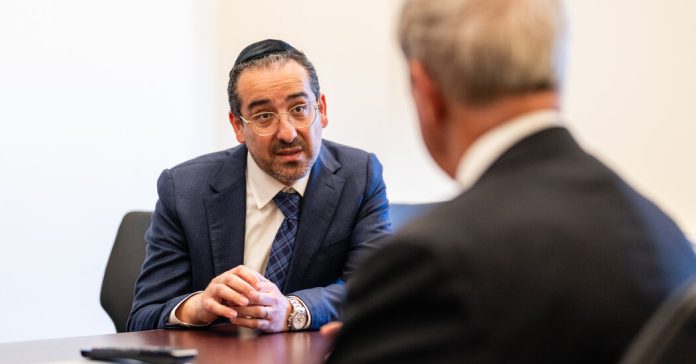
Now, his relatives are making the rounds in Washington with Mr. Moustafa, who said they had met with people at the National Security Council, the State Department and on Capitol Hill. A State Department spokeswoman confirmed that a meeting took place; the White House did not respond to a request for comment.

Maissa Kabbani, a Syrian Muslim who sought asylum in the United States decades ago, joined the Jewish delegation to Syria. Western officials have expressed concerns that Syria’s new rulers are not committed to pluralism and protection of minorities, despite their pledges, so she said she saw the visit as an opportunity to prove a point.

The symbolic value of the visit was also not lost on the Syrian Foreign Ministry, which welcomed the group and provided guidance, drivers and security, she said.

Sanctions relief for Syria will not come quickly, if at all, but some lawmakers on both sides of the aisle are making the case to the Trump administration. Representative Joe Wilson, Republican of South Carolina, a member of the Foreign Affairs Committee, and Senator Elizabeth Warren of Massachusetts, the top Democrat on the Banking Committee, wrote to Secretary of State Marco Rubio and Treasury Secretary Scott Bessent last month, arguing that “broad restrictions” aimed at a defunct regime “now risk undermining U.S. national security objectives and impeding Syria’s reconstruction.”

Mr. Wilson met with the Hamras on Tuesday and said he was “encouraged” by their accounts of interactions with the new Syrian government. “Obviously, the terrorist connections, we should be concerned,” he said. “But people change, OK. As we see, whole countries change.”

Later, Mr. Wilson posted on social media about the “important meeting” with Syrian Jews. “I agree with them,” he said. “We must ease sanctions on the Syrian people to give them a chance to live.”