


Elon Musk faced a tough week when it comes to his business and political interests. While he’s spent millions of his own money to fund pro-Trump races, this week that investment didn’t pay off.
Protesters in Gaza Call on Hamas to Step Aside
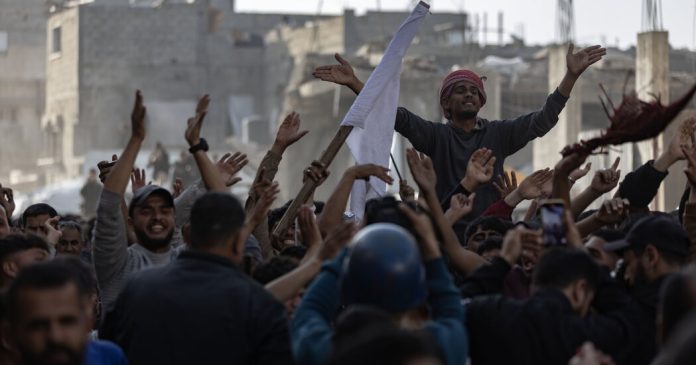
In a rare and perilous public show of anger against Hamas, hundreds of Palestinians marched through Beit Lahia in northern Gaza this week, demanding that the militant group relinquish control of the territory and end the war with Israel, according to four witnesses.
The march on Wednesday appeared to be the latest of a handful of such protests that have broken out in the last two weeks, despite Hamas’s efforts to suppress dissent with threats and shows of force. Witnesses said it was the first of the protests in Beit Lahia that women joined, some bringing their children.
Taken together, the demonstrations, while small and scattered, represent the most serious challenge to Hamas’s iron-fisted 18-year rule of the Gaza Strip since the war began when Hamas attacked Israel in October 2023. The overwhelming Israeli response that followed has ripped apart the territory and residents’ lives, killing tens of thousands. The bloodshed resumed after Israel ended a two-month-old cease-fire agreement in mid-March, citing Hamas’s refusal to accept Israeli demands.
Palestinians began marching about a week later in Beit Lahia, a farming community in the northernmost part of Gaza, and then in other parts of the enclave. The protests lasted for three days before appearing to fade.
Activists posted on social media this week calling for new rallies. Demonstrators assembled in Beit Lahia’s main square and marched toward another square, protesters said in interviews. They gave varying estimates of the rally’s size, from about 1,000 to 1,500.
“We have lost our homes, our loved ones, our hope and our future. Enough is enough,” said Abeer al-Radeea, 34, a homemaker who said she went to Wednesday’s demonstration with her husband and children. “We call on Hamas to stop this and leave us. We don’t know when this will end, but we want peace and democracy.”
The march went forward despite widespread fear in Gaza of Hamas, which in the past has cracked down violently on challenges to its rule. After the recent protests, however, Hamas’s response has appeared more muted, reflecting what analysts said was both the group’s fear of further inflaming an already angry population and its diminished ability to mobilize forces, with thousands of its members killed and with Israeli drones and warplanes overhead.
But the threat of retribution by Hamas remains.
On Friday, one of the protesters, Oday al-Rabi, 22, was abducted overnight by Hamas operatives from a shelter for displaced people in Gaza City, according to his brother, Hassan.
Hassan, 32, said he received a call hours later to pick up his brother from Al-Quds Hospital in Gaza City. He said Oday was bruised, bloodied and barely able to walk or talk.
“My whole brother’s body was blood,” he said, adding that the Hamas operatives were dragging him with a leash. “It was as if I didn’t know him.”
The operatives said that anyone who “curses” Hamas’s military wing would meet the same fate, Hassan said. He took his brother to another nearby hospital, but Oday died a few hours later.
Hassan said he believed his brother had been targeted both because of his participation in protests and because of his history of criticizing Hamas. About a month ago, Oday was attacked by a group of Hamas members, but they ran away when he pulled a knife on them, Hassan said.
Hamas officials and a spokesman for the Hamas-run government in Gaza did not respond to requests for comment.
Protesters on Wednesday included Raed al-Masri, 44, who said that masked Hamas members had been stationed on some corners, holding truncheons and sticks.
Two days after a previous protest, the Hamas-run internal security force in Gaza summoned Sharif al-Buheisi, 56, to a tent in the courtyard of Al Aqsa Martyrs Hospital in central Gaza. Mr. al-Buheisi is an activist in Fatah, Hamas’s rival political faction, and served as an administrator at Al-Azhar University in Gaza City before the war.
Two officers delivered a threat, suggesting he would regret participating in future protests, Mr. al-Buheisi said in a phone interview.
“This is not the time for protests — they’re stabbing the resistance in the back,” Mr. al-Buheisi recalled being told. “If you go out again, the result will not be good.”
After consulting with his family, Mr. al-Buheisi said he decided to stay away from further protests. It was a bitter reminder, he said, of how civilians in Gaza were trapped.
“We’re persecuted by both sides,” he said. “Israel bombs us without mercy and Hamas doesn’t care if we die.”
Mr. al-Masri said that several of his cousins had also received Hamas threats after recent marches. One received a phone call from a private number summoning him to meet on Tuesday with Hamas security officials, who interrogated him about his involvement, asked about protest supporters and organizers, and forced him to sign a document saying he would stop protesting, Mr. al-Masri said.
Others ignored such calls.
At Wednesday’s protest, many demonstrators were driven to march by hunger, participants said. Israel has blocked aid from entering Gaza for a month, forcing bakeries to close, markets to empty and aid groups to cut food distribution. Gaza residents say that what produce remains is exorbitantly expensive.
One child at Wednesday’s demonstration yelled that he wanted something to eat, Ms. al-Radeea said. Another protester held up a piece of an onion, shouting that he had been eating only onions and radishes for more than a week, said Basem Hamouda, 47, a farmer who was there.
For their desperation, the protesters blamed Israel — but also Hamas.
“Those who cannot provide their people with a loaf of bread have no right to start a war in the name of liberation,” Mr. Hamouda said.
He and others said Hamas should do a better job of holding down food prices by stopping merchants from hoarding supplies, a common complaint in Gaza.
“Hamas has given Israel a pretext to continue this war while failing to regulate and control market prices,” he added. “That is the real cause behind these protests.”
Ameera Harouda contributed reporting from Doha, Qatar.
YouTuber Is Arrested After Leaving Diet Coke on Isolated Tribe’s Island
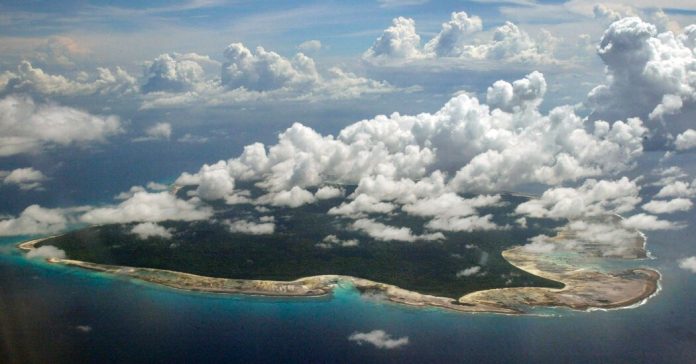
An American tourist set off alone last week on an inflatable boat for the remote island of North Sentinel in the Indian Ocean. He had packed a Diet Coke and a coconut as an offering for the highly isolated tribe that lives there, and had brought along a GoPro camera in hopes of filming the encounter, the Indian police said.
Guided by his GPS navigation, the man, Mykhailo Viktorovych Polyakov, 24, reached the northeastern shore of the island at 10 a.m. on March 29, according to the police. He scanned the land with binoculars, but saw no one. So he climbed ashore, left the Diet Coke and the coconut there, took sand samples, and recorded a video, the police said.
Mr. Polyakov was arrested on March 31 when he returned to Port Blair, the capital of the Andaman and Nicobar Islands, an archipelago more than 800 miles east of India’s mainland, the authorities said.
Few outsiders have been to the island of North Sentinel, which is a territory of India and is illegal to visit. Indian government regulations prohibit any outsider interaction with its isolated tribe, whose members hunt with bow and arrow and have killed intruders for stepping onto their shore.
In 2018, an American missionary, John Allen Chau, set off for the island with a Bible. He was shot with bows and arrows by tribesmen when he got onshore, the Indian authorities later said. Fishermen who helped take Mr. Chau to North Sentinel told the police that they had seen tribesmen dragging his body on the beach.
In 2006, the Sentinelese killed two fishermen who had accidentally drifted on shore.
But Mr. Polyakov was not deterred. He had planned his journey “meticulously,” the police said, studying sea conditions, tides, and accessibility from Khurmadera Beach, located on Andaman island.
Even after he pushed back from North Sentinel island, Mr. Polyakov tried to attract the attention of the Sentinelese people, by blowing a whistle from his boat, the police said.
He was accused of attempting to “interact with the Sentinelese tribe,” the police in Andaman said in a statement. Mr. Polyakov is being held on charges that include violating a law protecting aboriginal tribes and is scheduled to appear in court on April 17. The charges carry a possible sentence of up to five years in prison and a fine.
“His actions posed a serious threat to the safety and well-being of the Sentinelese people, whose contact with outsiders is strictly prohibited by law to protect their Indigenous way of life,” the statement said.
The police said that during their questioning of Mr. Polyakov, he disclosed that he was drawn to the island out of a “passion for adventure and his desire to undertake extreme challenges.” Officials added that his GoPro footage suggested entry into the island, and that he used GPS navigation throughout his voyage.
“He was particularly fascinated by the mystique of the Sentinelese people,” the police said, adding that the authorities had extracted footage from his GoPro camera.
The police statement said that the Ministry of External Affairs and the United States Embassy had been informed of the arrest.
A State Department spokesperson said that the department was “aware of reports of the detention of a U.S. citizen in India” but had no further comment because of privacy issues.
Mr. Polyakov’s family members could not be reached.
Mr. Polyakov has recorded his travel exploits on his YouTube channel, which includes videos of him in what he described as “Taliban-controlled Afghanistan,” some of which involve posing with and firing weapons.
The police said he had made previous trips to the remote region. In October, hotel staff stopped his attempt to go to North Sentinel Island using an inflatable kayak, the police said. In January, he reached Baratang Island, in the archipelago, and “illegally videographed” another tribe, the Jarawa, the police said.
Survival International, a group that protects the rights of Indigenous tribal peoples around the world, said that Mr. Polyakov’s attempted contact with the tribal people of North Sentinel was “reckless and idiotic.”
“This person’s actions not only endangered his own life, they put the lives of the entire Sentinelese tribe at risk,” the group’s director, Caroline Pearce, said in a statement. “It’s very well known by now that uncontacted peoples have no immunity to common outside diseases like flu or measles, which could completely wipe them out.”
She said it was disturbing that he was able to reach the island at all.
“The Indian authorities have a legal responsibility to ensure that the Sentinelese are safe from missionaries, social media influencers, people fishing illegally in their waters and anyone else who may try to make contact with them,” she said.
Kirsten Noyes contributed research.
He’s a decorated war vet but a convicted criminal. ICE wants to deport him : NPR

Jose Barco in Iraq in 2007.
Tia Barco
hide caption
toggle caption
Tia Barco
This week several dozen Venezuelan nationals were transferred from a U.S. immigration detention center in south Texas and boarded a deportation flight to their home country.
Among them was 39-year-old Jose Barco, a decorated American soldier who deployed twice to Iraq, saw horrific combat and received a Purple Heart after an explosion tossed him through the air and left him with a traumatic brain injury.
He was just four years old when his family left Venezuela, a country his father fled to after he was being released as a political prisoner in Cuba. Jose Barco’s fellow inmates in Texas, most of them much younger, simply call him “Cuba.”
How an American veteran, a father of a 15-year-old daughter, found himself inside this sprawling detention center outside Corpus Christi, Texas, waiting for a flight to a country he barely knows is a tortured tale of battlefield trauma, bureaucratic bumbling and eventually, a serious crime.
“His situation is incredibly complex and tragic,” said Anna Stout, a former mayor of Grand Junction, Colo., who is helping his family, told NPR. “It’s the story of multiple failures of the U.S. military when it comes to one of its own soldiers, of a man who fought and bled for the United States believing he was earning his right to be called an American only to find himself in deportation proceedings, and of the tragic intersection of a new age of immigration policy and unfortunate parole timing.”
On Thursday Barco’s journey took another unexpected twist: when he arrived in Honduras en route to Venezuela, the Venezuelan authorities there refused to take him. According to his family, the Venezuelan immigration officials didn’t believe Barco’s birth certificate was genuine; they said it looked too new. They said his accent sounded Cuban to them, plus he didn’t know his Venezuelan national identity card number (called a cedula). One even told Barco it wouldn’t be good for him in Venezuela, because he has no family there.
Barco now sits, again, at a U.S. detention center, this time at Port Isabel, near Los Fresnos, Texas, wondering what country will take him — if not the one he risked his life for in Iraq.
“I feel very scared for him,” said his wife, Tia. “America should not be sending a decorated veteran to Venezuela.”
Now that Venezuela also has rejected him she said, “We have no clue how to navigate this as of now. This whole ordeal has been unimaginable.”
An act of heroism
Barco deployed to Iraq in the summer of 2004 with a unit from Fort Carson in Colorado Springs, Colo. He was a private with Charlie Company, from the 1st Battalion of the 506th Regiment. His unit was in western Iraq, at a time of fierce fighting against insurgent forces and car bombs. While Barco was on patrol in November with his platoon, a car laden with explosives swerved and went airborne, erupting in flames.

A portrait of Jose Barco when he first enlisted in 2003.
Tia Barco/tktk
hide caption
toggle caption
Tia Barco/tktk
Ryan Krebbs was the company medic. As he was treating a wounded soldier amid the dust and smoke, he spotted Barco lifting the front end of the burning car, which had two soldiers pinned underneath it. “They were unconscious when he pulled them out,” Krebbs remembered. “[Barco] was on fire after lifting the car.”
Barco said he remembered none of that, only being thrown against a wall.
“I kind of remember the impact of the explosion,” Barco told the PBS series Frontline, which aired a story in 2010 about his unit called The Wounded Platoon. “They told me I was just walking around. Walking around in circles or whatever, just cursing out loud. But I don’t remember that.”
Barco was treated for burns to his hands and thigh, as well as a lacerated lip. But Frontline reported there was no record that he lost consciousness for several minutes or any suspicion of a possible brain injury. So Barco soon received further treatment at Brooke Army Medical Center in Texas for burns but no treatment for traumatic brain injury (TBI).

Months later, Barco noticed ringing in his ears, and military doctors at Fort Carson realized he had a head injury stemming from the November 2004 explosion, according to Frontline. He could have received a medical discharge with benefits, but he wanted to go back to Iraq, telling them he was fit for duty.
Barco was told that his burns and hearing loss qualified him for an honorable medical retirement from the Army, which would leave him with a lifelong pension and free healthcare with the VA.
But Barco pressed his doctors to let him return to his unit,
even though he was suffering from nightmares and sleeplessness.
“I told my doctors, ‘Hey, I want, like, to go back,” Barco said in the documentary. “They were looking at me like, ‘No way, you’re crazy, you should get evaluated, psychologically. They worked with me and they lowered my profile and they dropped everything. Cause, you know, if you want to go, they’re going to let you go, unless you’re paralyzed or something like that. They need people.”
Barco made it back to Iraq in the fall of 2006, during the surge of forces meant to tamp down the increasing sectarian violence. A few months before this, on July 6, one of Barco’s commanding officers, Lt. Col. Michael “Hutch” Hutchinson, helped him fill out the forms to become a naturalized citizen. For noncitizens, one of the promises of joining the military is that it’s a path to U.S. citizenship.
“I distinctly remember Jose Barco completing and submitting his application for United States citizenship,” Hutchinson wrote in a February 2025 memo for immigration officials. “He was fully eligible and with processing timelines at USCIS at the time should have been approved by the end of calendar year 2006. … At some point the packet was lost and we have not been able to find a chain of custody document.”
Criminal behavior
By the time he returned home in December 2007, Barco’s TBI symptoms worsened after he was exposed to still more explosions in Iraq, telling doctors he felt dazed and had memory problems. He was prescribed a variety of drugs, from Tylenol to Buspar, a psychoactive anti-anxiety drug. Barco said the drugs didn’t help. He was discharged in 2008, when he was 23.
Steve Xenakis, a retired Army brigadier general and psychiatrist, said Barco’s injuries happened when the Army had yet to understand these types of hidden wounds.
“This was at a time when the Army was not acknowledging the significant effects of blast concussions,” Xenakis said, adding that such a head injury can aggravate PTSD. “You really can’t control your emotions. You become irrational, impulsive.”
What happened next with Barco, Xenakis said, was “not surprising at all.” His mental health problems turned into criminal behavior.
In April, 2008, Barco was driving past a house party in Colorado Springs, where he had earlier that night been kicked out for firing a bullet into a basement ceiling.
Barco pulled out a handgun and shot into a crowd of teenagers standing on a porch. A bullet struck 19-year-old Ginny Clemens, who was pregnant. It left her with a serious leg injury. Clemens declined to speak with NPR through a relative. Barco has said he has no memory of what happened.

Barco was eventually charged with two counts of attempted first-degree murder and one count of menacing. Fourth Judicial District Judge Larry Schwartz sentenced him to 52 years, calling the crime “stunning in its lack of compassion. It brings considerable dishonor upon the uniform you wore,” according to a story in the Colorado Springs Gazette.
Barco ended up spending 15 years in prison, where he was a model prisoner, teaching English and math. And for good behavior, his sentence was reduced. A parole board released him on his first hearing. He walked out of prison on Jan. 21, 2025, one day after President Trump was inaugurated where he vowed to crack down on crime and illegal immigration.
Barco planned on heading to a family reunion in Florida. Instead he saw agents from Immigration and Customs Enforcement (ICE) waiting for him. He was hustled into a van.
“I was shocked. I told my case manager, ‘This is a joke, right? I’m a retired veteran,’ ” Barco told the Gazette.
Ryan Krebbs, the former Army medic, and Barco’s wife, Tia, said they hired a private lawyer and paid $400 for a consultation, then found a pro bono lawyer in Colorado to help with his case. But when Barco was transferred to Texas they searched in vain for another pro bono immigration lawyer. The ones they contacted were too busy.
They reached out to the American Civil Liberties Union but were told the ACLU does not take individual immigration cases.
Barco was ordered to be deported to Venezuela by Assistant Chief Immigration Judge Mathew Kaufman in February at Aurora, Colo. Barco said he was not interested in appealing, even though the judge asked, “Are you sure?” Barco later told his brother he was “disillusioned and tired. Send me to a country that will accept me, since my country doesn’t,” according to the Gazette.
“Jose’s spirit’s just broken,” said Krebbs, the medic. “They defeated him for sure.”
Krebbs and the other supporters tell NPR they won’t give up. They hope he can maybe get to Mexico where he can get access to better health care and a better life. They are also hoping that Democratic Colorado Gov. Jared Polis will pardon him, opening Barco up again to possible American citizenship. NPR reached out to Polis’ office, which did not comment before publication.
“He’s an American and that’s how he sees himself,” Krebbs said. “He’s a disabled combat veteran who saved people that day. In my eyes he’s an American hero.”
Krebbs can understand how some, including Ginny Clemens and her family, could find no sympathy for Barco. “What he did was awful. He knows what he did was wrong. He served his time and should be allowed another chance,” Krebbs said.
Hutchinson, the Army officer, said in his February memo to immigration authorities that Barco’s “peculiar legal residence status puts him at extreme risk of personal harm if he is extradited.”
In an interview with NPR, Hutchinson said, “If you cherry pick the facts of his story we could call him a hero or a villain.”
Still, he called Barco an “upstanding person,” who did his time, adding his story is “a symbol of how the prison system is supposed to work.”

“It boggles the mind. How you can pin a Purple Heart on someone and not give them citizenship,” said Danitza James with the League of United Latin American Citizens. The organization is tracking some 400 hundred veterans who have been deported or are in that process, going back to the early 1990s.
James is a two-tour combat veteran who served as a gunner on convoys in Iraq. She held a green card at the time, and twice had her citizenship ceremony cancelled because the Army ordered her to redeploy. When she left the military she was still not a citizen, James says, and she was later naturalized when she married another soldier.
“ I left the military with an expired green card,” says James.
James says LULAC is urging politicians in Texas and Colorado to intervene and let Barco be moved to a VA hospital for medical evaluation.
Tia Barco, who is American, said ICE agents earlier this week asked her husband about his citizenship application from 2006.
“But he didn’t ask why they were inquiring,” she said.
NPR reached out to ICE for comment, but they didn’t respond.
Israeli Military Expands Ground Operations in Gaza City
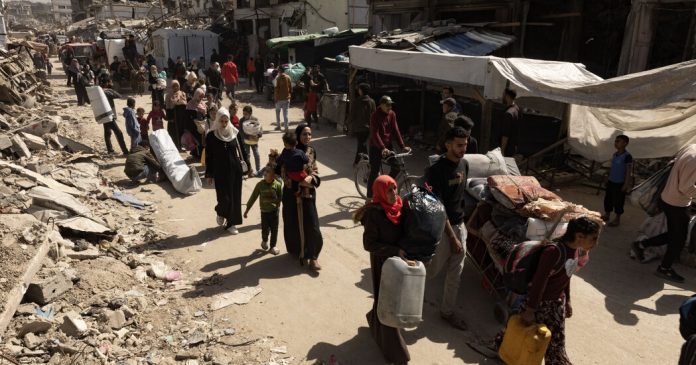
The Israeli military pressed deeper into northern Gaza by ground on Friday after issuing a series of evacuation orders calling on Palestinians to flee, part of its escalating offensive against Hamas in the war-battered Gaza Strip.
The expansion of ground operations came after the Palestinian health authorities said on Thursday that dozens of people, including children, were killed in Israeli strikes on a school turned shelter in the Tuffah neighborhood of Gaza City. On Friday, the Israeli military said the strikes were targeting well-known militants in a Hamas command and control center, without naming them.
The evacuation orders have brought renewed hardship to Palestinians who had already endured displacement from their homes and miserable conditions during the first 15 months of the war. A shaky two-month cease-fire between Israel and Hamas collapsed in March after the two sides failed to reach an agreement to extend it, ending a brief respite for Palestinians in Gaza.
The Israeli military has since embarked on a major bombing campaign and seized territory in Gaza in a tactic that Israeli officials have said was intended to compel Hamas to release more hostages.
As the Israeli military operation expanded, Hamas’s military wing on Friday appeared to threaten the remaining Israeli and foreign hostages held in Gaza. In a statement that did not mention the plight of its own people, Hamas said its fighters were holding some captives in the evacuation zones under “strict security measures that are extremely dangerous to their lives.”
The armed group has in the past threatened the well-being of hostages in the face of Israeli bombardments.
The military said its recent campaign had dismantled weapons infrastructure, including a Hamas command and control center and killed militants, including Mohammed Awad, who it described as a senior military commander in the Palestinian Mujahideen.
The military said that Mr. Awad had taken part in Hamas-led attacks on Oct. 7, 2023, and was “likely personally involved in the abduction and brutal murders of Shiri, Ariel and Kfir Bibas,” though it did not explain how it had come to that conclusion. Mrs. Bibas and her two young children became symbols for many Israelis of their suffering on Oct. 7, when about 1,200 people were killed and about 250 abducted to Gaza
Avichay Adraee, the military’s Arabic-language spokesman, said in a post late Thursday on social media that he was providing a “final” warning before a new attack, urging people to relocate southward. Mr. Adraee suggested that militant groups were operating among civilians.
Trump issues another TikTok ban extension : NPR

The icon for the TikTok video sharing app is seen on a smartphone in Marple Township, Pa., on Tuesday, Feb. 28, 2023.
Matt Slocum/Associated Press
hide caption
toggle caption
Matt Slocum/Associated Press
President Trump has again promised to delay enforcement of TikTok’s sell-by date, extending the video app’s effective deadline to sever ties with its China-based corporate owner by 75 days.
The White House’s TikTok deal “requires more work to ensure all necessary approvals are signed,” Trump wrote on Truth Social.
He said the administration hopes to “continue working in Good Faith with China, who I understand are not very happy about our Reciprocal Tariffs,” referring to the 34 percent levy on Chinese imports Trump announced this week.
“We do not want TikTok to “go dark.” We look forward to working with TikTok and China to close the Deal,” Trump wrote on his social media site.
Negotiators had been expecting to announce a deal on Friday morning on TikTok, but one factor that complicated the plans was Trump’s firing of a National Security Council official who was helping to coordinate the TikTok deal, according to a source directly involved in the talks who was not authorized to speak on the record.
The Friday reprieve provides TikTok with a bit of breathing room in what has been a bumpy year. A federal law took effect in January that legally banned the service nationwide unless it split away from ByteDance, the Beijing tech giant that owns the viral video app, which it did not.
Congress passed the ban in 2024 with overwhelming bipartisan support over national security fears that an app used by more than half of Americans should not be controlled by China, a foreign adversary of the U.S. TikTok fought the ban all the way to the Supreme Court, calling it a violation of free speech rights — but the high court upheld the law in early 2025.
Starting the evening of Jan. 18, just before the ban was planned to take effect, the app went dark for 14 hours. But it flickered back on the next day after Trump promised to sign an order delaying enforcement of the ban once he was sworn into office.
On Inauguration Day, Trump signed an executive order effectively pushing back the start of the ban by 75 days, and promising immunity for other tech companies that provide back end services for the app, such as Apple and Google, which host it in their web stores. That extension was set to expire on April 5.
The new order pushes it back by another 75 days.
Legal experts say Trump’s delays do not halt the TikTok ban, meaning it is still technically illegal for TikTok to operate in the U.S. with ties to China. Yet moves by Trump and his administration assuring TikTok and its service providers that U.S. authorities will not prosecute anyone under the law have been enough for the popular app to stay online despite operating in violation of a federal statute.
Since January, Trump has said there has been “tremendous interest” from potential buyers of TikTok, an app used by more than 170 million Americans and a remarkably valuable asset for anyone who might want to influence a whole generation of young internet users who flock to the service every day.
NPR reported in January that cloud computing company Oracle has been tapped by the White House as a top contender to lead a coalition of other investors to acquire a sizable stake in TikTok’s U.S. operation.
Oracle is run by Larry Ellison, a billionaire Republican donor who has long been a close ally of Trump.
During Trump’s first term, when he attempted to ban TikTok, he selected Oracle to lead a take over effort that collapsed in part because it could not win the support of regulators in China.
Likewise, securing the approval of the Chinese government has been a key sticking point this time around, with TikTok insiders telling NPR that any sale blessing from Beijing could hinge on China landing some kind of relief from tariffs.
Rubio Warns Russia that U.S. Patience on Ukraine War Is Running Out
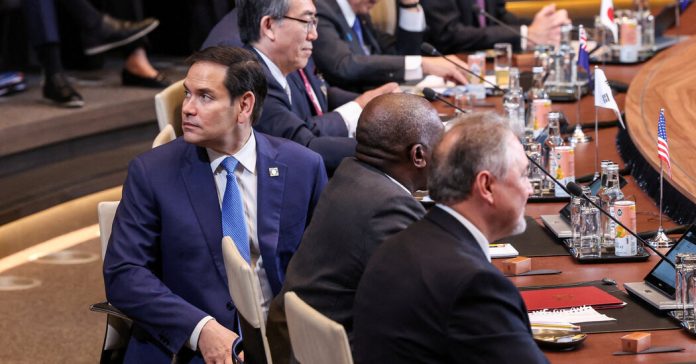
Secretary of State Marco Rubio said on Friday that Russia is running out of time to convince the Trump administration that it is serious about striking a peace deal with Ukraine and not just playing for time.
Speaking in Brussels after a two-day gathering of NATO ministers, Mr. Rubio said that the United States was losing patience with “talks about talks” and hinted that Russia was in danger of facing more American sanctions.
“We will know soon enough, in a matter of weeks, not months, whether Russia is serious about peace or not,” he told reporters. Members of Congress, he added, are already crafting new sanctions measures that administration officials are “not going to be able to stop” without signs of progress.
President Trump has vowed to end the war in Ukraine and is mediating talks between Moscow and Kyiv. Many observers had assumed that Russia would embrace such a deal and Ukraine would resist it, given that Russia occupies about one-fifth of its neighbor and has suffered staggering casualties.
But Mr. Rubio’s remarks were the latest sign that the Trump administration is coming around to a view long held by the Biden administration, and by Mr. Rubio himself when he was a Florida senator: that President Vladimir V. Putin of Russia does not bargain in good faith.
Many analysts say the Russian leader is stalling for time to press his military and political advantage.
Mr. Rubio spoke after a NATO gathering whose collegial photo-ops and press statements masked deep tensions between America and Europe over Ukraine, Mr. Trump’s market-rocking tariffs and even the fate of Greenland.
Mr. Rubio also conveyed Mr. Trump’s expectation that NATO members dramatically increase spending on their militaries to 5 percent of their gross domestic product — a tough pill for Europe to swallow as Mr. Trump’s tariffs threaten its economy.
In remarks to reporters, Mr. Rubio defended Mr. Trump’s tariffs as necessary, but soft-pedaled the timeline for increased military spending as “a path of getting up to 5 percent at some point.” He said that other NATO members were “open to doing more” to make the alliance stronger and less reliant on the United States.
A senior State Department official acknowledged that the tariffs had come up when Mr. Rubio met with his fellow ministers to discuss Ukraine. But the official, speaking on background to discuss private diplomacy, insisted that the mood in the room had been collegial.
There were reasons to believe that U.S. officials hoped to smooth over the obvious tensions during the event, however.
After Mr. Rubio met on Thursday with Denmark’s foreign minister, Lars Lokke Rasmussen, a bland State Department summary characterized the meeting as a “reaffirmation” of the U.S.-Denmark relationship. It made no mention of Greenland, the semiautonomous Danish territory that Mr. Trump has vowed to control by any means necessary.
But Mr. Rasmussen said in a pointed social media post that he had “made it crystal clear” to Mr. Rubio “that claims and statements about annexing Greenland are not only unacceptable and disrespectful. They amount to a violation of international law.”
In response on Friday, Mr. Rubio suggested that the United States would not need to seize Greenland because the island’s people, he said, already want to leave Denmark. “We didn’t give them that idea,” he said. “They’ve been talking about that for a long time.”
While it is true that Greenland has been on a path toward full independence, there is little sign that it hopes to become an American property.
Despite Mr. Trump’s talk that a peace deal in Ukraine could unlock a new U.S.-Russia relationship, the Kremlin has agreed only to very partial cease-fire terms, including a mutual pause on attacks against energy infrastructure sites which neither side has observed.
Still, European governments worry that Mr. Trump — an admirer of Mr. Putin and frequent critic of Ukraine’s president, Volodymyr Zelensky — may prioritize Russia’s interests in any peace agreement, and they are pressing their own efforts to protect Ukraine.
On Friday, French and British military leaders visited Kyiv to discuss a potential troop deployment to secure any cease-fire, the French foreign minister, Jean-Noël Barrot, told journalists in Brussels.
The discussions in Ukraine’s General Staff headquarters had been expected to focus on technical issues for such a peacekeeping force, Col. Pavlo Palisa, Mr. Zelensky’s top military adviser, told journalists earlier in the week. Such a deployment would serve both as a deterrent and guarantee the presence of allied military equipment such as air defenses, he added.
The Kremlin says it will not tolerate troops from NATO member nations in Ukraine.
In Brussels, Mr. Rubio also denied that the Trump administration’s shuttering of the U.S. Agency for International Development had prevented American disaster relief from quickly reaching Myanmar after the devastating earthquake there last week.
Mr. Rubio blamed the delay on Myanmar’s junta, without citing evidence, and said that other wealthy nations, including China and India, should contribute more. “We are the richest country in the world, but our resources are not unlimited,” he said.
Maria Varenikova contributed reporting from Kyiv, Ukraine.
What One Image Shows About a Strike in Gaza
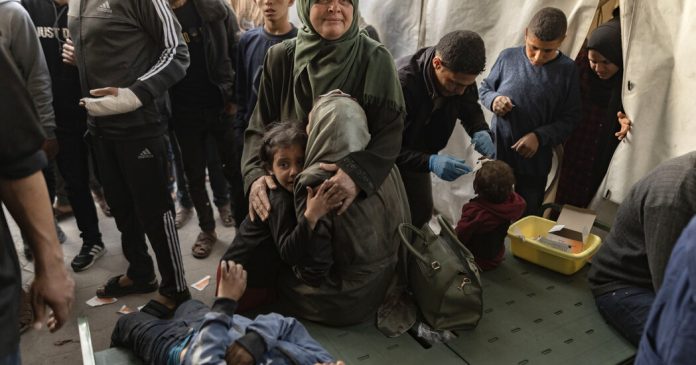
The cease-fire between Israel and Hamas collapsed last month, and the dead and wounded again pour into the hospital. The injured are triaged at a tent in the hospital’s courtyard, set up to relieve the pressure on the packed emergency room inside.
When people arrive, medical workers sort them into three categories: green, yellow and red. Those classified green are given basic treatment, like bandages, and are sent on their way. Yellow means treatment is required in the hospital. Red indicates an urgent case that requires immediate care, possibly surgery.
But nurses and doctors can only do so much. There is still a severe shortage of medical supplies and equipment — one of Gaza’s two CT scanners broke down there on Thursday — and many of the injured require extensive treatment.
Children are especially vulnerable to the injuries that can be caused by explosions in Gaza’s dense living conditions, experts say. Israel’s bombardment of Gaza, which began after Hamas led the October 2023 attack that started the war, has packed even more people into close quarters around the territory as it has displaced people from neighborhoods and towns.
Many have fled to crowded encampments in the south or to schools converted into shelters, like the one hit in Gaza City on Thursday. At least 27 people were killed in the strike, according to the Gaza health ministry, which does not distinguish between civilians and combatants in its casualty figures. Israel, as well as Palestinian civilians, have accused Hamas of embedding its forces in civilian spaces, including shelters and hospitals.
Videos verified by The New York Times showed an explosion and its aftermath at the shelter, the Dar al-Arqam school in the Tuffah neighborhood of Gaza City. The videos showed people carrying victims, children among them, as fires burned in the background.
The Israeli military said on Thursday that it was looking into reports about the strike. As of Friday morning, it said it still could not comment.
Employees at National Endowment for the Humanities put on leave : NPR
Staff at the National Endowment for the Humanities were put on administrative leave late Thursday night.
Graeme Sloan/Sipa USA via Reuters Connect
hide caption
toggle caption
Graeme Sloan/Sipa USA via Reuters Connect
Staff at the National Endowment for the Humanities (NEH) were told by email late Thursday night that they were being placed on paid administrative leave effective immediately. The news comes two days after 56 state and jurisdiction humanities councils across the country received a letter that their NEH grants were being terminated.
The NEH has not responded to multiple requests for comment.
A senior NEH official, who requested anonymity because they were not authorized to speak to the press, confirms to NPR that among the 145 staff members – 80% of the staff – placed on administrative leave are people from communications, program officers and directors. The official says a team from the Department of Government Efficiency has been visiting NEH offices over the past couple of weeks “and then ratcheted up the pressure.”
Earlier this week, DOGE had told NEH staff that it would lay off a substantial number of employees and cut its grant programs, as first reported by The New York Times.
Nearly half of the NEH’s budget goes directly to humanities councils in every U.S. state and jurisdiction. The endowment also supports museums, libraries, preservation, history and media projects through a competitive application process.
The American Federation of Government Employees Local 3403 (AFGE), the union that represents many NEH employees, writes in a statement that it “condemns these damaging cuts to people and funding. The arbitrary and dismissive approach to employees and grantees is frankly un-American and unacceptable.”
Humanities councils are reeling from the news that millions of dollars in previously awarded federal grants have been canceled by the Trump administration. The letter they received this week stated grants were being terminated because the NEH is “repurposing its funding allocations in a new direction in furtherance of President Trump’s agenda.”
Caroline Lowery, executive director of the Oklahoma Humanities Council, said the impact will be “devastating.” Among the projects it supports are oral histories from survivors of the 1921 Tulsa Race Massacre and archiving material from the 1995 Oklahoma City bombing.
“This will mean the erasure of our ability to preserve and share our history,” Lowery told NPR. “We have broad bipartisan support for our work. This is not a partisan issue. These funds had already been congressionally mandated and signed into law by people who we elect to represent us.”
Christina Barr, executive director of Nevada Humanities writes in a statement, “The loss of funding from the NEH will not only severely hinder our work, it will also reduce the tremendous amount of economic activity that arts and culture programming brings to the state of Nevada.”
Employees at the Institute of Museum and Library Services (IMLS) were also put on administrative leave this week.
Erin Harkey, CEO of American’s for the Arts (AFTA) calls the actions against the IMLS and the NEH “an unprecedented threat to culture in America.”
Harkey echoed Barr’s statement that eliminating funds to these agencies will hurt local economies in every corner of the country, pointing to recent study by the National Endowment for the Arts (NEA). The study found that the “arts and cultural sector grew at more than twice the rate of the total economy between 2022 and 2023.”
“Recent economic figures from the NEA highlight the significance of these institutions, which contribute $1.2 trillion to the U.S. economy and support 5.4 million jobs,” writes Harkey, “Eliminating federal support for arts and humanities agencies will harm American families, weaken local economies, and undermine our nation’s competitive edge.”
How ‘Free Speech’ Became a New Flashpoint Between Europe and U.S.

President Trump and Europe are clashing over tariffs, the war in Ukraine and the very purpose of the European Union’s existence. But they are also divided over free speech — with potentially far-reaching implications for how the digital world is regulated.
The E.U. has been investigating U.S. companies under the Digital Services Act, a new law meant to prevent illegal content and disinformation from spreading online. In the first major case to near a conclusion, regulators as soon as this summer are expected to impose significant penalties — including a fine and demands for product changes — on Elon Musk’s social media platform, X, saying the law was violated.
But Mr. Trump’s administration sees the law as a strike against his version of free speech: One that unshackles his allies to say what they want online, but restricts types of expression he does not agree with in the real world, like protests at universities.
The president has argued that Europe is at risk of “losing their wonderful right to freedom of speech.” Vice President JD Vance has accused European nations of “digital censorship” because of its laws, which he argues restricts far-right voices on the internet.
And both administration officials and their allies at big technology companies have suggested that Europe’s rules for curbing disinformation and incendiary speech on the internet are an attack on American companies — one that the United States could fight back against.
Since Mr. Trump’s inauguration, Europe and the United States have clashed repeatedly. On Ukraine, Mr. Trump has dialed back support and threatened not to defend European nations that do not invest enough in their own security. On trade, Mr. Trump this week announced wide-ranging tariffs on Europe. And as European regulators begin to enforce their new social media rules, free speech is becoming another flashpoint.
“We’re now at this impasse: The free speech debate is affecting every aspect of the trans-Atlantic relationship,” said David Salvo, a researcher at the German Marshall Fund who is an expert in democracy building. “It’s a mess.”
Even before the 2024 election, Mr. Vance argued in a podcast that America could consider tying its support for NATO to “respect” for American values and free speech. In February, Mr. Vance spoke at the security conference in Munich and warned that “free speech, I fear, is in retreat.”
Such comments come even as the American administration has itself quarreled with universities over speech on their campuses, arrested pro-Palestinian activists, ousted journalists from the White House press pool, canceled identity-related holidays at federal institutions and instituted policies that led to banned books in certain schools — moves that have alarmed free speech watchdogs.
And in Europe, officials have firmly objected to criticism of their laws, arguing that they help protect free speech, for instance by making sure that some ideas are not secretly promoted by platforms even as others are suppressed.
“We’re not a Ministry of Truth,” said Thomas Regnier, a spokesman for the European Union’s executive branch, the European Commission, referring to the dystopian force responsible for state propaganda in George Orwell’s “1984.”
Still, some fret that Europe’s latest policies surrounding digital services could come under attack. In February, the White House published a memo warning that E.U. tech laws were being scrutinized for unfairly targeting American companies.
“Of course our feeling is that they will use tariffs to push us to backtrack on tech regulation,” said Anna Cavazzini, an German representative from the Green party who was part of a trip to Washington for European lawmakers to meet with their American counterparts on the issues of digital policy and speech.
The tension goes back decades. Europe has long preferred more guardrails for speech, while America prioritizes personal rights over almost everything but immediate public safety. Germany has outlawed certain speech related to Nazism, while other countries restrict certain forms of hate speech toward religious groups. In Denmark, it is illegal to burn the Quran.
But while those nuanced differences have long existed, the internet and social media have now made the issue a geopolitical pressure point. And that has been sharply exacerbated by the new administration.
The Digital Services Act does not disallow specific content, but it requires companies to have safeguards in place to remove content that is illegal based on national or international laws, and focuses on whether content moderation decisions are made in a transparent way.
“This is a question about how to make sure that your services are safe to use and respecting the law of the land where you do your business,” said Margrethe Vestager, a former European Commission executive vice president from Denmark who oversaw antitrust and digital policy from 2014 to 2024.
Christel Schaldemose, who shepherded the law through negotiations for the European Parliament, said the law protects free speech. She added, “You don’t have a right to be amplified.”
The case against X will be the first major test of the law. In the first part of the investigation that regulators are now finalizing, authorities have concluded that X has breached the act because of its lack of oversight of its verified account system, its weak advertising transparency and its failure to provide data to outside researchers.
In another part of the case, E.U. authorities are investigating whether X’s hands-off approach to policing user-generated content has made it a hub of illegal hate speech, disinformation and other material that might undercut democracy.
This week, X said the E.U.’s actions amounted to “an unprecedented act of political censorship and an attack on free speech.”
E.U. officials have had to weigh the geopolitical ramifications of targeting a company owned by one of Mr. Trump’s closest advisers.
“Are they going to fine the guy who’s buddy-buddy with the President?” said William Echikson, a nonresident senior fellow with the Tech Policy Program at the Center for European Policy Analysis.
X is not the only major tech company in the conversation.
Meta, which is also under E.U. investigation, scrapped its use of fact checkers for Facebook, Instagram and Threads in the United States shortly after the election, and may eventually pull them back worldwide. Mark Zuckerberg, the company’s chief executive, has called the E.U.’s regulations “censorship” and argued that the United States should defend its technology companies against the onslaught.
This is not the first time America and Europe have had different standards for speech on the internet. European courts have upheld the idea that data about a person can be erased from the internet, the so-called “right to be forgotten.” American legal experts and policymakers have viewed that as an infringement on free speech.
But the alliance between Mr. Trump and big technology companies — which have been emboldened by his election — is widening the gap.
European officials have vowed that the Trump administration will not prevent them from standing by their values and enforcing their new legislation. The next few months will be a pivotal test of just how much they can stick to those plans.
When she visited Washington earlier this year to talk to lawmakers, Ms. Schaldemose said, she found little appetite for trying to understand the regulation that she helped to bring into existence.
“It doesn’t fit into the agenda of the administration: It doesn’t help them to understand,” she said. “We’re not targeting them, but it is perceived like that.”