Thursday, November 12, 2026
Home Blog Page 57

Ex-Yankees Player Brett Gardner’s Son Died From Carbon Monoxide, Officials Say

0

Miller Gardner, the 14-year-old son of the longtime Yankees player Brett Gardner, died of carbon monoxide poisoning while on vacation with his family last month, the Costa Rican authorities said on Thursday.

A toxicology report after his death found high levels of carboxyhemoglobin, an indicator of carbon monoxide in the blood, according to a statement from Randall Zúñiga, the director of the Costa Rica Judicial Investigation Agency. Miller Gardner’s test showed a saturation of 64 percent, he said, adding that anything over 50 percent was lethal.

Mr. Zúñiga said that other tests were also performed, including drug tests, but they were all negative. He said the autopsy report found telltale signs of carbon monoxide poisoning on the organs, and added that the case could be considered closed.

Miller and his family were staying at a resort in Costa Rica. The family said in a statement released through the Yankees last month that Miller had died on March 21 “after falling ill along with several other family members while on vacation.”

“He passed away peacefully in his sleep,” the family said.

The authorities said the family was staying in Manuel Antonio, a resort area on the central Pacific Coast of Costa Rica.

The authorities said at a news conference on Wednesday that the family’s room at the resort was next to a room with machinery and said that contamination may have occurred as a result.

The resort where the family stayed, Arenas Del Mar Beachfront & Rainforest Resort, did not respond to a request for comment after the toxicology results.

The family said Miller “loved football, baseball, golf, hunting, fishing, his family and his friends.”

Brett Gardner, 41, played for the Yankees for his entire major league career from 2008 to 2021.

He played left and center field and was part of the Yankee World Series championship team of 2009. By 2019 he was the last remaining Yankee from that team, which was the last to win the title.

A speedy left-handed hitting player, he led the league in stolen bases in 2011 and triples in 2013. His lone All Star season came in 2015. For his career, he hit .256 with 139 home runs.

He scored the final run in the old Yankee Stadium in 2008.

Mr. Gardner and his wife, Jessica, reside in South Carolina. They have another son, Hunter, who is 16.

Jonathan Wolfe contributed reporting.

Hegseth’s use of Signal to be investigated by Pentagon inspector general : NPR

0

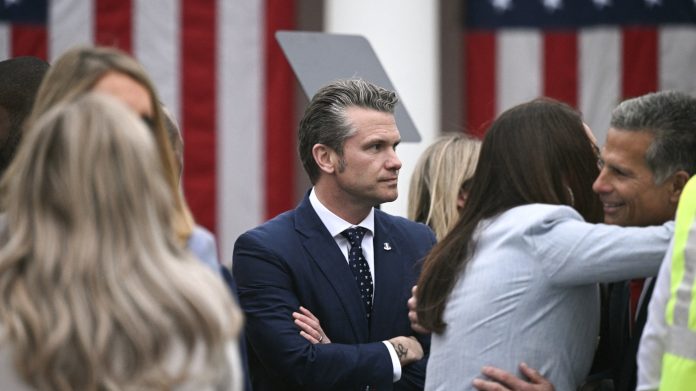
Secretary of Defense Pete Hegseth attends a tariff announcement in the Rose Garden on Wednesday. A Defense Department inspector general has announced he will review Hegseth’s use of the Signal messaging app to discuss a military attack on Yemen.

Brendan Smialowski/AFP via Getty Images


hide caption

toggle caption

Brendan Smialowski/AFP via Getty Images

The Pentagon acting Inspector General Steven Stebbins is beginning an evaluation of Defense Secretary Pete Hegseth’s use of the Signal messaging app to discuss military operations.

Stebbins’ memo on Thursday follows a request from the Republican chairman and the top Democrat on the Senate Armed Services Committee for a probe into the incident, which was first reported by the journalist Jeffrey Goldberg of The Atlantic. The lawmakers have voiced concern about whether Hegseth and other top national security officials shared classified information on a commercially available encrypted messaging app as they discussed a military strike against Houthi rebels in Yemen.

“If true, this reporting raises questions as to the use of unclassified networks to discuss sensitive and classified information, as well as the sharing of such information with those who do not have proper clearance and need to know,” Sen. Roger Wicker, R-Miss., and Sen. Jack Reed, D-R.I., wrote to Stebbins.

The leaders plan to hold a hearing on the matter after they collect evidence, Reed has told reporters.

Stebbins wrote that the aim of his investigation “is to determine the extent to which the Secretary of Defense and other DoD personnel complied with DoD policies and procedures for the use of a commercial messaging application for official business.” The review will also examine “compliance with classification and records retention requirements,” he said.

Stebbins became acting inspector general after President Trump fired a swath of inspectors general across the government after taking office in January.

Hegseth has adamantly denied that any classified war plans were discussed in the Signal chat.

The White House said on Monday that it had concluded its own review of how Goldberg was inadvertently included on the group chat, and said that none of the information shared was classified, despite its sensitive nature.

“This case has been closed here at the White House as far as we are concerned,” press secretary Karoline Leavitt told reporters. “There have been steps made to ensure that something like that can obviously never happen again, and we’re moving forward,” she added, without detailing those steps.

NPR disclosure: Katherine Maher, the CEO of NPR, chairs the board of the Signal Foundation.

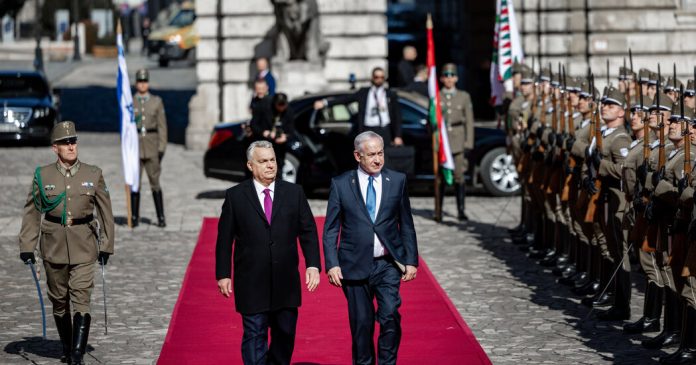
What Is the ICC? What to Know After Hungary’s Announcement

0

The I.C.C., established under a 1998 treaty, is the world’s highest criminal court.

It has the jurisdiction to investigate and try people for what it describes as “the gravest crimes of concern” to the world: war crimes, genocide, crimes against humanity and the crime of aggression. But the court cannot enforce its rulings and relies on its member states to detain people who are accused of crimes.

The court draws its jurisdiction from the Rome Statute, a treaty ratified by 125 countries. The statute formally commits its signatories to arrest a wanted person who enters their soil, but members do not always comply.

The court is based in The Hague, a Dutch city that is a hub for international law and justice. The International Court of Justice, which handles civil disputes between countries and is part of the United Nations, is also based there.

The I.C.C. cannot try any suspects in absentia. Instead, it relies on member states to enforce its rulings with actions like making arrests, freezing assets and surrendering suspects to The Hague, where the I.C.C. has a detention center.

Former President Rodrigo Duterte of the Philippines is currently in I.C.C. custody after being arrested in March by Filipino authorities on charges of crimes against humanity.

Some of the world’s most powerful countries, including the United States, China, Russia, India and Israel, are not members of the court. They do not honor its arrest warrants or hand their citizens over for prosecution.

Hungary would be the first European Union country to withdraw from the court. Under the Rome Statute, Hungary’s decision would not take effect for a year.

“Hungary remains under a duty to cooperate with the I.C.C.,” Fadi El Abdallah, the court spokesman, said in a statement on Thursday.

Burundi and the Philippines have both pulled out of court, in response to the I.C.C. prosecutor opening an investigation against their leaders. The court has said that Mr. Duterte is being prosecuted because the offenses he is accused of took place before his country’s withdrawal took effect, although his lawyers have contested that argument.

The court says that it has issued 60 arrest warrants.

About half of those people are “at large,” like Mr. Netanyahu. Others are either dead, like Col. Muammar el-Qaddafi, the former leader of Libya, or detained, like Mr. Duterte.

In November, the court issued arrest warrants for the leaders of Israel and Hamas. On the Israeli side, the warrants were for Mr. Netanyahu and his former defense minister, Yoav Gallant.

The court also issued a warrant for Muhammad Deif, a Hamas leader, who was later killed in an Israeli strike.

The court issued arrest warrants for President Vladimir V. Putin and another Russian official in 2023. It argued that they both bore criminal responsibility for the abduction and deportation of Ukrainian children after Russia’s full-scale invasion of Ukraine in 2022. It has also issued arrest warrants for four other Russian officials.

Mr. Putin made his first visit to an I.C.C. member state in September, but the country, Mongolia, warmly welcomed him with a red carpet.

William Ruto, the president, was charged in 2011 with crimes against humanity and other offenses tied to post-election violence in 2007 and 2008. The court dropped the case in 2016.

Omar Hassan al-Bashir, who was deposed as president in 2019 after three decades in power, is the subject of court warrants in 2009 and 2010 for crimes in the western region of Darfur. He traveled to South Africa in 2015 in defiance of the I.C.C. warrant but was not arrested there.

The I.C.C. also charged other Sudanese officials with crimes in Darfur.

Mr. al-Bashir also faces charges in Sudan that relate to the coup in 1989 that pushed him to power. If convicted, he could receive the death sentence or life in prison on those charges.

How much will tariffs raise prices? Trump’s economists just revealed their answer : NPR

0

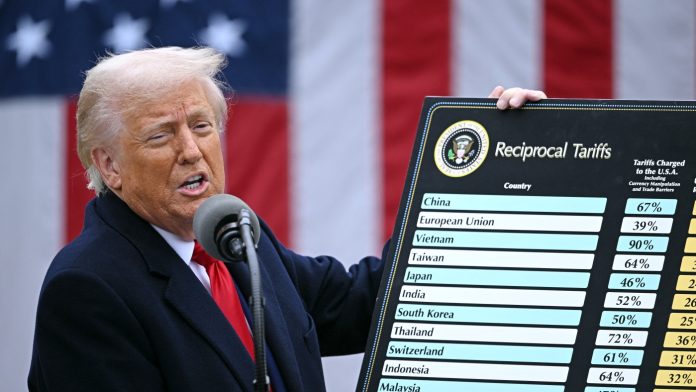
President Trump holds a chart as he delivers remarks on reciprocal tariffs.

Brendan Smialowski/AFP via Getty Images


hide caption

toggle caption

Brendan Smialowski/AFP via Getty Images

When President Trump announced his latest tariffs on Wednesday, he also ignited an economic mystery. Just where in the world did those numbers come from?

Holding up a sign on the White House lawn, Trump pointed to a new, 34% tax on imports from China; for the EU, a tax of 20%. Vietnam got 46%; India, 26%. Nigeria? Just 15 percent. Trump claimed that these “reciprocal” tariffs reflect how other countries already tax American products. “That means they do it to us and we do it to them,” he said. “Very simple.”

That is not true. These are not reciprocal tariffs. They do not correspond to the tariff rates in other countries. The truth behind where these tariffs came from is far more interesting.

On Wednesday night, the administration revealed how they calculated the new tariffs, which are the highest taxes on foreign products that America has seen in generations. (For a sense of that era, listen to the Planet Money episode on the Smoot-Hawley tariffs.)

Buried in that math, finally, is a straightforward answer to a question that Trump has long refused to straightforwardly answer: How much will his tariffs raise prices?

Diving deep into Trump’s tariff math

This is the Trump administration’s tariff formula, as revealed on Wednesday night by the Office of the U.S. Trade Representative :

The Trump administration’s tariff formula.

The Trump administration’s tariff formula.

Screenshot from ustr.gov


hide caption

toggle caption

Screenshot from ustr.gov

Behind these Greek letters there’s a blunt but understandable approach. Essentially, the equation is trying to answer the question: How high should we set tariffs in order to get Americans to buy fewer foreign products, and close the trade deficit? This math says, the more of a trade deficit the U.S. has with another country, the higher that tariffs should be on that country’s products.

Take China for instance. Last year, Americans imported about $439 billion of products from China — chiefly electronics, clothing, and machinery — while exporting only $144 billion. According to this formula, a 67% tax on those Chinese products should correct this trade imbalance. (On Wednesday Trump announced that the actual tariff would only be half of that, or 34%.)

Here’s how Trump’s math says it would work: The 67% tax should raise the prices of Chinese products in the United States. And those higher prices should discourage Americans from buying Chinese products or products that contain Chinese components.

This is contrary to Trump’s previous public statements, where he has variously denied that tariffs would raise prices or has said that he “couldn’t care less.”

But according to Trump’s math, the tariffs are supposed to raise prices. Because those higher prices are the driving force that will close the trade deficit.

Want the latest updates on all things related to money and the economy? Sign up for the Planet Money newsletter.

There are a couple of major assumptions in Trump’s math. The biggest assumption involves how much the tariffs would cause prices to go up. Here, the administration makes an eyebrow-raising admission: It guesses that for every 10% hike in tariffs, there will be a 2.5% increase in prices.

Translation: Trump’s economists think that about a quarter of his tariffs will be passed onto American consumers in the form of higher prices.

Going back to the China example, here’s how it would all play out. According to Trump’s math, the 67% tariff on Chinese products would cause prices of those products to go up by 16.75%.

By coincidence, the administration also assumes that for every 10% increase in the price of foreign products, there will be a 40% decrease in how much Americans buy. (This is on the higher but still reasonable end of what mainstream economists believe.) So, faced with 16.75% higher prices, Trump expects Americans to decrease their purchases by four times that amount. Which brings us back to 67%.

In other words, a 67% tariff on Chinese products would reduce demand for Chinese products by … also 67%. So if Americans are currently buying $439 billion worth of Chinese products each year, Trump’s economists expect that the new tariffs will reduce that spending by $294 billion — which would close the trade deficit. At least in theory.

What’s wrong with Trump’s tariff math?

Certainly these new tariffs are not “reciprocal” tariffs. But the math behind them is not wholly invented or nonsensical, despite what some online have claimed.

In fact, for possibly the first time ever, the administration is explicitly acknowledging some of the basic economic logic of tariffs. Tariffs do raise prices. And higher prices do cause people to buy less stuff. And if Americans buy less foreign stuff, then America’s trade deficit with other countries will narrow.

But that’s not to say that any of Trump’s tariff calculations arrive at the right answer. For one, these are very rough, back-of-the-envelope calculations. As laid out, this formula treats every trading partner, every good and every industry the same. Bananas, oil, clothing, computers or cars — it doesn’t matter what a country sends to the U.S.

More importantly, the formula hinges on a big assumption about how much tariffs will raise prices. Trump’s math assumes that only a quarter of the tariffs would be passed onto American consumers in the form of higher prices. But economists who have studied Trump’s tariffs in 2018 — on steel and aluminum and various products from China — calculate that almost all of those tariffs ended up being passed onto Americans.

Aside from that, Trump’s tariff math also ignores the broader economic consequences of these sweeping new tariffs. They will have an effect on the overall American economy. They will influence exchange rates. And they will likely provoke retaliatory tariffs from other countries.

So, will Trump’s new tariffs actually close the trade deficit? Maybe, maybe not. But finally, at least, the administration has shown its work. And according to their calculations, raising prices and closing the trade deficit is what these tariffs are designed to do.

Israel Shifts Goal Posts in Gaza War

0

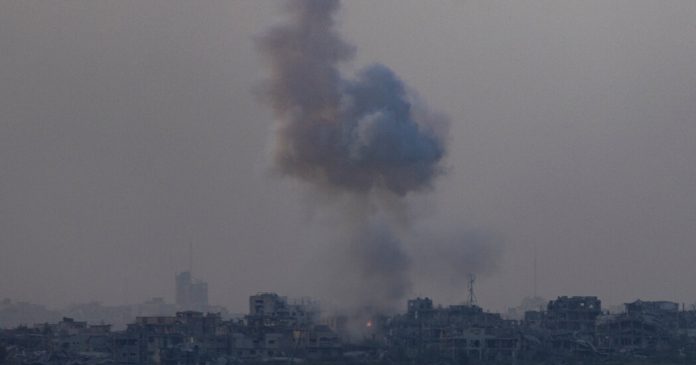
Israel’s leaders have articulated various goals for the expanding war in Gaza, spreading confusion over how the objectives might be achieved and on what terms the renewed campaign might end.

The primary aim is to squeeze Hamas into releasing the dozens of remaining hostages in Gaza. But other goals have emerged.

On Wednesday, Prime Minister Benjamin Netanyahu said Israel had “moved up a gear” in Gaza, capturing more territory, hitting militants and carving up the enclave. He reiterated his ultimate goals of crushing Hamas’s military capabilities and terminating its rule over Gaza, neither of which have been achieved in more than a year of war.

The defense minister, Israel Katz, said a day earlier that the military was seizing more territory to protect its forces and border towns, suggesting the possibility of a longer-term presence.

And over the weekend, Mr. Netanyahu said Israel would enable what he described as the voluntary emigration of Gazans, without clarifying where they would go.

If all of these different objectives have created uncertainty about what is to come, that may be intentional.

The military chief, Lt. Gen. Eyal Zamir, said on Wednesday that Israel would “preserve operational ambiguity and the element of surprise” during a field visit to Gaza. “The only thing that can halt our advance is the release of our hostages!”

Israeli forces appear to be gradually dissecting the enclave into separate districts, in part to encircle and restrict the movement of Hamas fighters who have regrouped in different areas, according to analysts.

But as the military attacks areas of Gaza that it had already conquered multiple times before, as well as some new ones, questions remain about what the forces can do this time that they couldn’t do in more than 15 months of fighting.

“The government has not yet presented a viable diplomatic framework that will translate the military achievements into realizing the war objectives over time and justify the prices paid for them,” said Assaf Orion, a retired Israeli brigadier general who is now a senior fellow at the Washington Institute for Near East Policy.

Israel’s ambiguity about its endgame in Gaza could also serve to satisfy the far-right members of Mr. Netanyahu’s coalition and buttress his grip on power by leaving open an option of fully occupying the enclave and, eventually, building new Jewish settlements there.

It is also unclear how the campaign will help the remaining hostages who were taken in the Hamas-led attack on Israel on Oct. 7, 2023, which ignited the war. Hamas is insisting on negotiations as the only way to free them, demanding a full Israeli troop withdrawal from Gaza and a permanent end to the war.

Israel has conditioned any end of the war on the disarmament of Hamas and its leaders leaving Gaza, terms the group has refused.

Former hostages have testified that their conditions in captivity only worsened as Israeli military pressure increased and that they feared being killed at any moment by their captors or Israeli bombardment.

To a large extent, Mr. Orion said of Israel’s renewed offensive, “it is a development that endangers the lives of the remaining hostages.” On Wednesday, a group representing the families of hostages said they were “horrified” to wake up to Mr. Katz’s announcement about the expansion of military operations in Gaza.

Israel broke a two-month cease-fire with Hamas on March 18 after talks to extend the truce stalled.

In the weeks since, Israeli troops have retaken most of the Netzarim Corridor, a route dividing the northern and southern halves of Gaza. On Wednesday, Mr. Netanyahu said Israeli forces were seizing another east-west corridor in southern Gaza.

The military has recently thickened parts of a buffer zone inside Gaza’s perimeter, and it has expanded ground raids in the northern and southern ends of the enclave along with issuing sweeping evacuation orders.

On Thursday, the military issued more evacuation warnings for residents of neighborhoods in eastern Gaza City ahead of operations there.

That has led to the displacement of more than 140,000 people in Gaza since the cease-fire broke down, according to the United Nations.

More than 1,000 people in Gaza have been killed since the cease-fire collapsed, according to the Gaza health ministry, which does not distinguish between civilians and combatants. The ministry said Thursday that the bodies of 97 people who had died had arrived at hospitals in Gaza in the previous day.

The ministry also said that the bodies of 27 people that is said had been killed in an Israeli strike on a school turned shelter in Gaza City had arrived at a hospital. The ministry does not differentiate between civilians and combatants in its casualty counts and the circumstances were not clear.

The Israeli military said it was looking into the reports and could not immediately comment. It has in the past accused Hamas of embedding itself among the civilian population.

In another tactic aimed at pressuring Hamas, Israel halted the entry of all commercial goods and humanitarian aid into Gaza a month ago, leading to price gouging by local merchants and shortages. The World Food Program, a U.N. agency, said this week it had run out of the flour and fuel needed to keep bakeries in Gaza open.

Gaza health officials say that more than 50,000 people have been killed in the enclave in the war prompted by the Hamas-led attack on Israel that killed about 1,200 people, according to Israeli officials, and in which 250 were taken to Gaza as hostages.

Israel believes up to 24 living hostages are being held in Gaza along with the remains of about 35 others.

Adam Rasgon contributed reporting.

Putin Envoy Says He’s in U.S. for Talks With Trump Administration

0

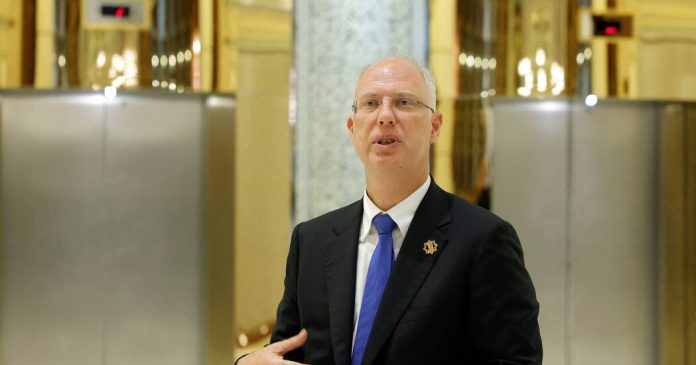
A Kremlin envoy met in the White House on Wednesday with President Trump’s senior aide on Russia negotiations, Steve Witkoff, according to a person in Washington with knowledge of the talks. The Russian envoy, Kirill Dmitriev, said online on Thursday that he had been in Washington to meet with Trump administration officials.

Mr. Dmitriev’s visit is the first time in years that a senior Russian official was known to have traveled to the United States for talks with American counterparts.

Mr. Dmitriev is the head of Russia’s sovereign wealth fund and President Vladimir V. Putin’s special representative for investment and economic cooperation. His counterpart, Mr. Witkoff, a real estate businessman who is also Mr. Trump’s special envoy for the Middle East, traveled late last month to Moscow, where he met with Mr. Putin.

Mr. Dmitriev arrived in Washington with two aides on Tuesday, and he and Mr. Witkoff met in the White House on Wednesday afternoon, said the person in Washington familiar with the events. The two officials continued talking in the evening.

The talks appeared to be the latest step in Russia’s effort to improve ties with the United States after Mr. Trump said last weekend that he was “very angry” at Mr. Putin for remarks that the Russian president had made on Ukraine, where Russia has been waging a full-scale war since 2022.

Mr. Dmitriev’s visit came despite sanctions imposed by the Biden administration that described him as “a known Putin ally.” The meeting also took place as Mr. Trump excluded Russia from the roster of countries hit by the steep tariffs unveiled on Wednesday.

The Treasury Department suspended sanctions on Mr. Dmitriev for seven days to allow him to visit, and the State Department then granted him a travel waiver and a visa, said the person in Washington. Mr. Dmitriev was still in Washington on Thursday.

Mr. Dmitriev said on Telegram on Thursday that he had met with “representatives of the administration of President Donald Trump” on Wednesday and would do so again on Thursday.

The White House National Security Council referred questions to the State Department on Thursday morning, and the State Department then referred questions to the White House.

Mr. Dmitriev, a 49-year-old former banker who studied at Stanford and Harvard and worked at McKinsey and Goldman Sachs, has emerged as a key emissary for Mr. Putin in the Kremlin’s efforts to build a close relationship with Mr. Trump.

Mr. Dmitriev’s message, tailored to Mr. Trump’s pecuniary mind-set, has been that the United States stands to profit from closer ties with Russia.

In February, Mr. Dmitriev worked with Mr. Witkoff to help broker a prisoner exchange that led to the release of Marc Fogel, an American teacher imprisoned in Moscow.

In talks with Mr. Witkoff and other American officials in Saudi Arabia days later, Mr. Dmitriev claimed that U.S. companies had incurred $324 billion in losses by pulling out of Russia after Mr. Putin’s invasion of Ukraine.

Mr. Dmitriev said in his social media post on Thursday that his meetings were about restoring the U.S.-Russian dialogue. The relationship had been “completely destroyed under the Biden administration,” he wrote, and the United States could benefit from cooperation “in international affairs and in the economy.”

“A real understanding of the Russian position opens up new opportunities for constructive interaction, including in the investment and economic sphere,” Mr. Dmitriev said.

He made no mention of the negotiations over the war in Ukraine between Moscow and Washington. Those talks appear to have run aground in recent days, after Mr. Putin rebuffed the proposal by Mr. Trump and Ukraine for a 30-day cease-fire.

Mr. Trump said last weekend that he was “very angry” over some of Mr. Putin’s comments about Ukraine, raising the possibility that the American president could drop his efforts to rebuild ties with Russia.

But Mr. Dmitriev’s visit indicated that the Trump administration was continuing to reverse the Biden administration’s isolation of Russia on the diplomatic stage.

In another sign of continuing engagement between Washington and Moscow, Sergey V. Lavrov, Russia’s foreign minister, said this week that preparations were underway for a second round of talks aimed at easing the work of American and Russian diplomats operating in each other’s countries.

U.S. and Russian officials first met in Istanbul on Feb. 27 for talks on unwinding years of tit-for-tat restrictions that reduced the American mission in Russia and the Russian mission in the United States to skeleton staffs.

“We can see signs of progress and our U.S. partners’ willingness to lift these obstacles to the normal work of diplomats in our respective capitals,” Mr. Lavrov said.

Trump tariffs hit uninhabited islands like Heard, McDonald : NPR

0

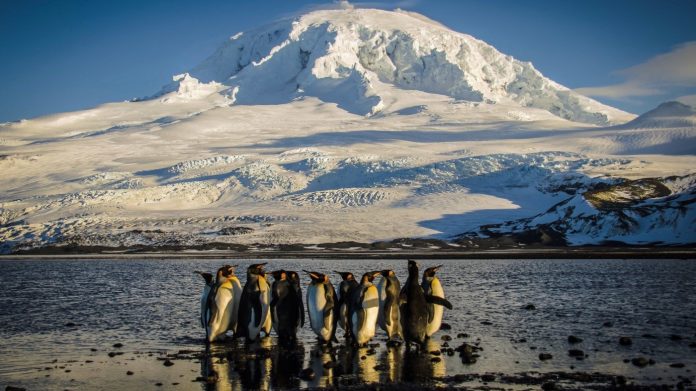
Penguins stand on the shores of Corinthian Bay in the Australian territory of Heard Island, one of the targets of the Trump administration’s sweeping set of tariffs.

Matt Curnock/Australian Antarctic Division/AFP


hide caption

toggle caption

Matt Curnock/Australian Antarctic Division/AFP

The Trump administration’s long list of nations targeted by forthcoming U.S. tariffs includes several territories so remote that they don’t have any permanent human residents.

On Wednesday, President Trump announced a baseline 10% tariff on all goods imported to the U.S. and steeper “reciprocal” tariffs on dozens of its trading partners. The amounts range from 49% for Cambodia, to 34% for China and 20% for the European Union.

The two sets of tariffs — which are due to take effect on Saturday and Wednesday, respectively — have rattled markets at home and abroad, prompted talk of retaliation from various countries and threatened to ignite a global trade war.

They also have drawn attention to several places many people have never heard of before — like the Heard Island and McDonald Islands and Jan Mayen — probably since most of them are unoccupied by humans.

The White House has not immediately responded to NPR’s questions about why the following places are subject to tariffs, especially since the territories don’t have active trade relationships with the U.S.

Heard Island and McDonald Islands 

One prime example is the Heard Island and McDonald Islands, an external Australian territory made up of volcanically active subantarctic islands. They face — at least on paper — what the Trump administration is calling a reciprocal tariff of 10%, even though the islands had zero trade with the U.S. last year, according to data from the U.S. Census Bureau, and have no human population.

The extremely remote islands, which are located in the southwest Indian Ocean about halfway between Australia and South Africa, are home only to a large populations of marine birds and mammals, including seals, albatrosses and penguins.

UNESCO, which designated the islands a World Heritage site in 1997, says they contain “outstanding examples of biological and physical processes continuing in an environment essentially undisturbed by humans.”

“The distinctive conservation value of Heard and McDonald — one of the world’s rare pristine island ecosystems — lies in the complete absence of alien plants and animals, as well as human impact,” the U.N. agency’s website says.

The Australian Antarctic Program says the highest level of activity at Heard Island — which is dominated by an active volcano named Big Ben — happens during Australian Antarctic Science expeditions, which occur about every three years and last only a few months.

“At other times the birds and seals have the place to themselves, except for the very occasional visit by a commercial tourist group, private expedition, or periodic fisheries/defence surveillance patrols,” it adds.

Those are incredibly rare: The Australian government says that since the first landing on Heard Island in 1855, there have been only been about 240 shore-based visits to the island and only two landings on the McDonald Islands, most recently in 1980.

Prospective visitors must apply for a permit from the Australian Antarctic Division, and can only travel by boat — at least in theory.

“The catch is that Heard Island is a long way from anywhere (approximately two weeks sail from Australia) and you have to pass through some of the roughest seas on the planet to get there, and back home again,” the Australian Antarctic Program says.

The White House’s inclusion of Heard Island and McDonald Islands on the tariff list has sparked an outpouring of internet searches and memes about the area, many focused on the fact that it is home to more penguins than people.

“BREAKING: A massive protest is happening now on the Heard and McDonald Islands after Trump announced a 10% retaliatory tariff against the islands,” one Threads user wrote, accompanied by a video of a penguin colony milling about.

Svalbard and Jan Mayen

A structure sits in a remote snowy area against a gray sky.

The meteorological station on Jan Mayen in the Arctic Sea, pictured in 2009. The Norwegian territory is home to only a handful of military personnel who operate the station.

Heiko Junge/AFP via Getty Images


hide caption

toggle caption

Heiko Junge/AFP via Getty Images

Also facing a 10% tariff are Svalbard and Jan Mayen, which Census Bureau data show had no trade with the U.S. last year either.

The remote Norwegian territories, both in the Arctic Ocean, are often mentioned together because of their geographical proximity and the fact that they are collectively designated by the International Organization for Standardization (for statistical purposes). But they are two separate jurisdictions.

Notably, Jan Mayen has no permanent residents. Its population — estimated at 18 in 2019 — consists only of Norwegian military personnel who operate its military aerodrome and meteorological station.

The CIA World Factbook describes it as a “desolate, mountainous island” with a total area of about 144 square miles, slightly more than twice the size of Washington, D.C. It is home to Beerenberg, the northernmost volcano in the world, which last erupted in 1985.

The island — which is named after the Dutch captain who discovered it in 1614 — was largely desolate for centuries, according to Arctic Portal, an Iceland-based nonprofit.

It briefly became a destination for Norwegian fox hunters at the start of the 20th century, leading to the extinction of the species around 1930 — which is when it officially came under Norwegian sovereignty. Jan Mayen was declared a nature reserve in 2010 and has strict regulations on visitors. The government requires non-Norwegians to obtain prior permission before visiting.

Svalbard, in contrast, has a total population of about 2,500, as of the latest data from Norway’s statistics bureau.

Svalbard is an archipelago located about midway between mainland Norway and the North Pole. Its largest town and administrative center, Longyearbyen, is the world’s northernmost permanent settlement.

On Svalbard, humans are outnumbered by polar bears — Svalbard’s tourism bureau says the species’ population on the archipelago and Barents Sea is around 3,000 — and people carry firearms for their safety whenever venturing outside the settlements.

“This is one of the few places in the world where it’s not uncommon to see mothers pushing a pram while carrying a rifle on their back,” Visit Svalbard’s website says, adding that “we are all fully aware that we are guests in the realm of the polar bear.”

British Indian Ocean Territory

An image realeased by the U.S. Navy shows an aerial view of Diego Garcia.

An image released by the U.S. Navy shows an aerial view of Diego Garcia. The largest island of the Chagos Archipelago measures 11.58 square miles.

AP/US Navy


hide caption

toggle caption

AP/US Navy

Another target of 10% tariffs is the British Indian Ocean Territory (BIOT), an overseas territory of the U.K. established in 1965. It is an archipelago of islands in the Indian Ocean, about halfway between Africa and Indonesia.

There is no permanent civilian population on the islands, only one of which — called Diego Garcia — has any residents, according to the CIA World Factbook.

The U.S. Navy Support Facility Diego Garcia provides “logistic support to operational forces forward deployed to the Indian Ocean and Persian Gulf areas,” according to its website. The U.S. military also operates telescopes on the island as part of its Ground-Based Electro-Optical Deep Space Surveillance System for tracking objects in deep space.

The U.S. Department of Defense says roughly 2,400 people live on the island, between joint forces military, DOD civilians and contractors.

In the 1960s and ’70s, the U.S. and U.K. forcibly relocated the entire indigenous population — hundreds of people known as Chagossians — from the Chagos Archipelago, including Diego Garcia, to Mauritius and the Seychelles in order to build the military base.

Mauritius has long claimed sovereignty over the Chagos Islands. In recent months, it has been negotiating a treaty with Britain to regain control over the archipelago, which would involve the U.K. then leasing the base back for 99 years. The U.K. government said this week that they are close to finalizing the deal after the Trump administration — which was consulted on it — gave its approval.


How Trump’s Tariffs Could Hobble a U.S. Battery Boom

0

The sweeping tariffs that President Trump announced on Wednesday could hobble the use of giant batteries that energy companies are increasingly installing to help them tap more wind and solar power and make the broader electric grid more reliable.

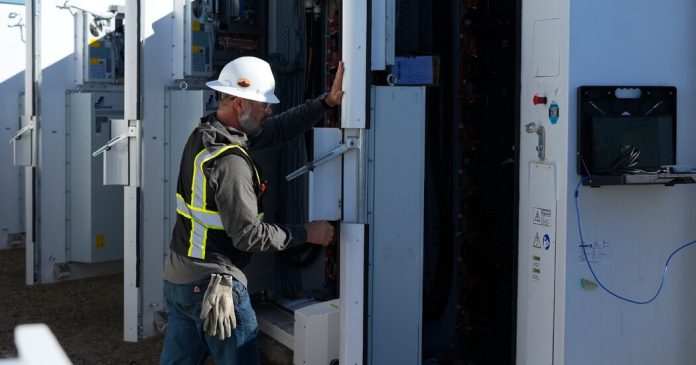
Over the past five years, grid batteries have become one of the biggest growth industries in the U.S. energy sector. In states like Texas and Arizona, companies have been installing stacks of lithium-ion cells the size of shipping containers. They can soak up excess wind and solar energy and save it for when it’s needed. In California, the use of batteries to store solar power for the evening hours has helped utilities reduce the amount of natural gas that is burned.

Yet the majority of America’s lithium-ion batteries are still imported, and 69 percent of those imports came from China in 2024, according to BloombergNEF. Mr. Trump’s latest round of tariffs, when combined with earlier trade moves, will impose a 64.5 percent tax on grid batteries from China, and that rate would rise to 82 percent next year.

“This will throttle U.S. energy storage deployment,” Jason Burwen, vice president of policy and strategy at the battery developer GridStor, wrote in a social media post. “Bad for business, bad for grid reliability.”

Energy companies were expected to install a record 18,200 megawatts of grid battery capacity this year, enough to store the entire output from 18 large nuclear reactors for a few hours, according to the U.S. Energy Information Administration. Together, batteries, wind and solar power were expected to make up 93 percent of capacity added to the grid.

Those batteries help address renewable energy’s biggest weakness: the fact that the wind and sun aren’t always available. In states that rely heavily on solar power like California and Texas, a boom in battery installations has helped reduce the risk of blackouts during the hot summer months by working together with gas plants to provide power when demand spikes.

But batteries aren’t just useful for adding more renewables: Utilities also use them to smooth out small disruptions in the flow of electricity, say, if a power plant unexpectedly tripped offline. Or, they can be used to reduce congestion on transmission lines.

Companies have largely been installing grid batteries because the price of lithium-ion technology has plummeted (the batteries are similar to those found in electric cars). Tariffs could reverse that trend.

“Batteries are the only major clean tech sector where imports still overwhelmingly come from China,” said Antoine Vagneur-Jones, head of trade and supply chains at BloombergNEF. “So the impacts of these tariffs are going to be a lot bigger for batteries than they are for other technologies.”

In recent years, the United States has started to build up a domestic battery supply chain. After the 2022 Inflation Reduction Act passed, the Biden administration poured billions of dollars into new battery factories and offered tax credits for both domestic manufacturers and the use of batteries in both grids and electric vehicles.

But many of those factories face an uncertain future now that President Trump and Republicans in Congress are looking to roll back a variety of clean energy policies.

Teasing out the precise effects of tariffs on the energy mix is complicated, Mr. Vagneur-Jones said. Right now, batteries often compete with natural gas plants as a technology to fill in the gaps left by fluctuating wind and solar power.

But it won’t always be so easy for many power companies to increase their use of gas: There is a lengthy global backlog for new gas turbines, and a company trying to build a new gas plant from scratch today may have to wait until 2030 or beyond. The oil and gas industry is also being hurt by new tariffs on steel and aluminum, which can affect everything from the steel pipe used to line new gas wells to power transformers.

“It’s always tempting to say these tariffs are good for fossil fuels, bad for clean energy,” said Mr. Vagneur-Jones. “But I think it’s just bad for everyone.”

Where Trump’s Tariffs Will Hit Hardest

0

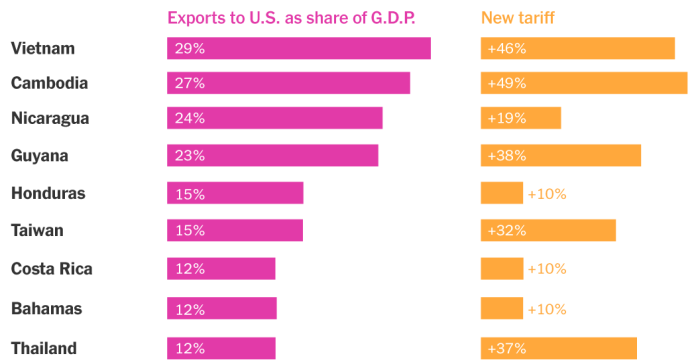
These countries are some of the most vulnerable to Washington’s sweeping new tariffs. Their economies are deeply reliant on selling goods to the United States, and many of them were hit with especially steep taxes.

Many of the worst-hit countries are close American allies and partners. In Southeast Asia, countries like Vietnam, Thailand and Cambodia have for years worked to turn themselves into alternatives to China for factories making the bags, electronics, shoes and auto parts that eventually end up in the United States. Now, they will face some of the most punishing tariffs.

A second group of trading partners facing high tariffs includes huge exporters like China, Japan, India and the European Union. Their overall economies are less exposed to changes in American exports, but many of them still face large economic risks.

These figures show the increase in duties announced by the Trump administration on Wednesday. The United States had already imposed some tariffs on many countries and sectors, but typically at lower levels.

Canada and Mexico, which both rely on trade with the United States, were exempted from the new tariffs announced on Wednesday. Both countries will remain subject to the 25 percent tariff that President Trump imposed on many of their products last month in addition to separate U.S. tariffs on global steel, aluminum and cars. The car tariffs went into effect on Thursday.

Mr. Trump imposed a minimum 10 percent tariff on almost every trading partner that did not get a higher rate.

The countries that have avoided the highest tariffs may still face extraordinary economic pressure. Experts warned the tariffs could destabilize the entire world economy. And European companies may struggle to compete with a flood of low-cost Chinese imports redirected from the United States.

“Even the countries that are not facing high tariffs are going to be in trouble,” said Jayati Ghosh, an economist at the University of Massachusetts Amherst. It will disrupt supply chains and inject a huge dose of uncertainty into the global economy, she said, “so you will get much lower investment, and lower economic activity, and lower employment.”

The Country Was Fake. But Its Land Grab in Bolivia Was Real.

0

They call themselves emissaries of the world’s first “sovereign nation” for Hindus, with its own passports and “cosmic constitution.” They claim to have created an official currency in sacred gold, managed by a “reserve bank.”

Representatives of this nonexistent country have given statements at U.N. events and posed for photos with global statesmen, American congressmen and the mayor of Newark. Their leader, a fugitive holy man, professes to be able to guide the process of reincarnation, guaranteeing that billionaires who use his services won’t be paupers in the next life.

But the self-proclaimed United States of Kailasa has now collided with reality.

Last week, officials in Bolivia said they had arrested 20 people associated with Kailasa, accusing them of “land trafficking” after they negotiated 1,000-year leases with Indigenous groups for swathes of the Amazon.

The agreements were declared void, and the Kailasans were deported — not to Kailasa, but to their actual home countries, among them India, the United States, Sweden and China.

“Bolivia does not maintain diplomatic relations with the alleged nation ‘United States of Kailasa,’” Bolivia’s Ministry of Foreign Affairs said in a statement. Kailasa’s “press office of the Holy See of Hinduism” did not respond to requests for comment.

The bizarre story of Kailasa stretches back at least to 2019, when the guru known as Swami Nithyananda — a.k.a. His Divine Holiness, the Supreme Pontiff of Hinduism — fled India after being accused of rape, torture and child abuse.

Born Arunachalam Rajasekaran in southern India, he became a Hindu monk and started his first ashram in his 20s near the tech hub of Bengaluru. He quickly built an empire across India and in cities around the world.

Nithyananda was also grandiose, linking himself to long religious and royal lineages. He claimed miracle powers, like helping the blind see through a “third eye” or delaying the sunrise by 40 minutes.

“I am a totality of unknown in your life. I’m the manifest of un-manifest,” he said in one sermon. “The moment you sit in front of me, enlightenment starts.”

During a conversation in front of a large crowd, he endorsed the idea of “the world’s first inter-life reincarnation trust management.” Rich people like Bill Gates or Warren Buffett could invest a few billion dollars in a trust; Nithyananda said he possessed the knowledge system to ensure they got the money when they were reborn.

That would be important, Nithyananda’s interlocutor said, “because it is possible Bill Gates will be born very poor, Warren Buffett may be born in some African village as a very poor guy.”

When the accusations of rape and sexual assault started piling up and the government went after Nithyananda, he claimed that the cases were an anti-Hindu conspiracy “to grab my land.”

It is not clear where he went after fleeing India, but reports put him in South America or the Caribbean. A couple of years later, he resurfaced with the declaration that he had founded the United States of Kailasa, which he said was the revival of past Hindu kingdoms.

The new nation’s website — where “free e-citizenship” is just a few clicks away — said its sovereign lands were “in the Andean region.” Nithyananda, who is now in his late 40s, was up front about the benefits the location offered.

“Many people asked me, ‘Swami ji, why did you leave such a huge empire you built in India and are sitting in a corner?’” he says in a video, referring to himself using an Indian honorific. The answer, he said, was “immunity” that made him “non-prosecutable” as the head of his own state.

Since then, Kailasa had popped up now and again when its emissaries caused embarrassment for politicians around the world.

In 2023, a senior official in Paraguay resigned after he had signed a memorandum of understanding with Kailasa. Earlier that year, the mayor of Newark, Ras Baraka, rescinded a sister cities agreement with the fictitious nation days after holding a ceremony announcing the partnership.

In Bolivia, the Kailasa followers, who officials said had arrived on tourist visas, managed a photo with the country’s president, Luis Arce. There is no evidence that Nithyananda joined them there.

Scandal erupted after an investigation by the Bolivian newspaper El Deber revealed the leases that the Kailasans had signed with Indigenous groups in the Amazon.

Pedro Guasico, a leader of the Baure, one of the groups, said its contact with the Kailasa emissaries had begun late last year, when they arrived offering help after forest fires.

The conversations eventually turned to a lease of land three times the size of New Delhi, and the Baure agreed to a 25-year deal that would supposedly have paid them nearly $200,000 annually. But when the Kailasa representatives came back with a draft in English, it covered 1,000 years and included the use of air space and the extraction of natural resources.

Mr. Guasico said his group signed anyway. “We made the mistake of listening to them,” he said by phone. “They offered us that money as an annual bonus for conserving and protecting our territory, but it was completely false.”