


Kim Soo-hyun, one of Korea’s most famous actors, was in tears as he denied allegations of dating the actress Kim Sae-ron when she was a minor. Ms. Kim, 24, died by suicide this year.
South Korean Actress’s Suicide Spurs Scrutiny of Ex-Boyfriend

When Kim Sae-ron was found dead at her home in February, she joined a growing list of South Korean entertainers who have ended their own lives. But the actress, who was 24, has generated more headlines in death than in life as her relationship with an older male superstar has come under scrutiny.
The tragedy and scandal has embroiled Kim Soo-hyun, 37, one of South Korea’s best-known actors, and is packed with allegations worthy of a K-drama story line: A former child prodigy and a man 13 years her senior started dating. Not long after they broke up, the actress got into a drunk-driving incident that proved fatal to her career and suffered financial troubles, while the actor became one of the country’s richest stars. She tried but failed to stage a comeback. Then she took her own life.
The scandal also raised more serious accusations. Since Ms. Kim’s death, her family has said Mr. Kim started dating her when she was a minor, and that after they parted, a talent agency he founded had pressured her over a debt she was unable to repay. Mr. Kim has denied the accusations against him, and filed a defamation lawsuit against Ms. Kim’s family.
But the scandal has already begun burning Mr. Kim’s career and highlighted the perils of celebrity in South Korea, where personal lives can come under unforgiving scrutiny. Stars have seen their careers ruined — or even ended their own lives — because of aggressive and sometimes malicious online rumors over everything from plastic surgeries to their romantic life.
“South Koreans treat entertainers like public figures who must live up to textbooklike ethical standards,” said Bae Kug-nam, the author of several books about South Korea’s entertainment industry.
That culture has created a deadly trap when combined with YouTubers and other influencers who have dished out sensational details of a star’s personal life, Mr. Bae said.
Ms. Kim, a former child star, faced such an onslaught when she got into a drunk-driving incident in 2022. Amid a public furor, advertisers deserted her. Roles were canceled. Ms. Kim left Mr. Kim’s agency Gold Medalist after the incident, but still owed it for a large loan that was used to pay penalties for failing to fulfill contracts with production companies and advertisers.
A lack of risk management training leaves many South Korean entertainers badly prepared for such crises, said Jeongseob Kim, a professor at the Graduate School of Culture Industry and Arts at Sungshin Women’s University in Seoul. To them, a scandal often means financial devastation.
“Stars reach incredible heights,” Prof. Kim said. “But they don’t realize that tall peaks mean deep valleys until they get into trouble.”
Ms. Kim’s relationship with Mr. Kim became news when she briefly posted an old photo on her Instagram last year. The photo showed the two with their cheeks touching and triggered a frenzy of speculation, although Mr. Kim denied a dating relationship.
Mr. Kim faced a full-blown scandal last month after Ms. Kim’s family took her story to HoverLab, a YouTube channel best known for carrying sensational content. HoverLab has released photos, video clips and text messages that it said backed its claims that Mr. Kim began sexually grooming Ms. Kim when she was under 16 and that he ignored her when she was in financial trouble.
Mr. Kim and his agency have denied the claims and filed lawsuits against HoverLab as well as Ms. Kim’s family, accusing them of spreading fabricated evidence, blackmailing the actor and violating his privacy.
Several days before Ms. Kim posted the photo last year, she had received a notice from Mr. Kim’s agency demanding repayment of her debt. The agency said that the notice was just a procedural step, but her family’s lawyers said she felt pressure and sought help from Mr. Kim.
“She tried but could not reach Kim Soo-hyun,” said Boo Ji-seok, her family’s lawyer. “She posted the photo briefly, hoping that it would prompt him to call her back.”
Only under growing pressure from Ms. Kim’s family did Mr. Kim say last month that he had dated her for a year, after she became an adult. Ms. Kim’s lawyers insist that their romantic relationship lasted six years, from 2015.
Mr. Kim said that his denial last year was driven by his fear of the damage his admission would cause. “I had so much to protect,” he said during a tearful news conference on Monday, explaining that a drama series in which he stars, called “Queen of Tears,” was being shown on television at the time. “What would happen to the actors performing alongside me, the staff who were working overnight on set and the production team who had everything staked on that project?”
Brands have begun dropping him from their advertisements. Local media reported that he could face huge penalties if the scandal jeopardized projects he has been involved in, including a Disney+ show.
“It will be difficult for him to maintain his current status,” said Prof. Kim. “The system rarely allows a second chance.”
If you are having thoughts of suicide, call or text 988 to reach the 988 Suicide and Crisis Lifeline or go to SpeakingOfSuicide.com/resources for a list of additional resources.
In South Korea, call 109 for the Health Ministry’s suicide prevention hotline, or go to the Korean-language site 129.go.kr/109.
Rubio Visits NATO Amid European Alarm Over Trump’s Agenda
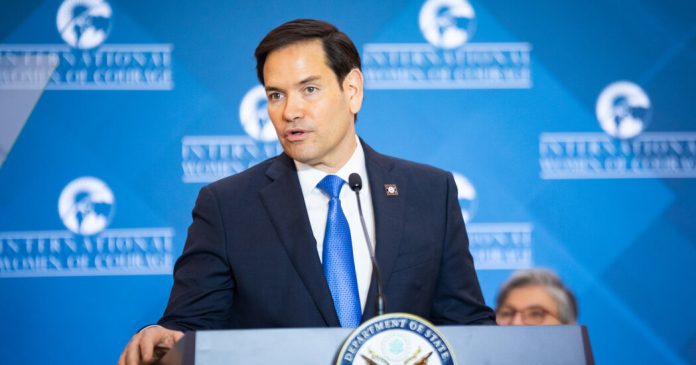
Secretary of State Marco Rubio traveled to Brussels on Thursday for a gathering of NATO foreign ministers amid high anxiety over the Trump administration’s approach to Europe, including the war in Ukraine, relations with Russia and President Trump’s growing trade war with the continent.
Mr. Rubio’s visit to the alliance’s headquarters, the first by a senior Trump administration official this year, comes as relations between the United States and Europe have abruptly shifted from the close cooperation of the Biden era to mistrust and acrimony under Mr. Trump.
At the same time, NATO officials may welcome a chance to confer with Mr. Rubio, whom many consider the most pro-alliance member of Mr. Trump’s national security team.
As a senator in 2023, representing Florida, Mr. Rubio cosponsored legislation requiring any president to seek the Senate’s advice and consent before withdrawing from the organization. Former aides say Mr. Trump has privately mused about taking that step, which would shatter the 32-nation military alliance formed to counter Russia.
Foreign officials who have dealt with Mr. Rubio since he became Mr. Trump’s top diplomat have described him as downplaying some of Mr. Trump’s wilder ideas and translating them into more realistic policy approaches, although they also question whether he truly speaks for a president with whom he does not have a close personal relationship.
And there is only so much Mr. Rubio can do to sugarcoat Mr. Trump’s agenda, which is driven by a view that Europe economically exploits the United States, is culturally out of sync with the values of Mr. Trump’s political movement and must do business with Russia’s president, Vladimir V. Putin.
Mr. Rubio also arrives just a day after Mr. Trump announced 20 percent tariffs on imports from the European Union. At the White House on Wednesday, Mr. Trump said of the E.U.: “They rip us off. It’s so sad to see. It’s so pathetic.”
In meetings with NATO ministers, Mr. Rubio is expected to press Mr. Trump’s call for a swift end to the war in Ukraine, an approach that alarms many European leaders who overwhelmingly support Kyiv and fear that Mr. Trump will wind up appeasing Mr. Putin.
Mr. Rubio’s fellow ministers will do their best to shape the Trump administration’s efforts to broker a deal between Kyiv and Moscow, which have stalled over wide gaps between the warring parties, and to urge the United States not to abandon Ukraine.
Mr. Rubio is also likely to reiterate Mr. Trump’s demand that NATO countries increase their military spending to 5 percent of their gross domestic product, even as many of them struggle to meet spending goals of 2 percent that the alliance set years ago. Mr. Trump and other top American officials believe that the alliance relies too heavily on the United States for protection.
That was made painfully clear to European officials by a discussion among top Trump administration officials last month on the Signal app that unwittingly included a journalist, Jeffrey Goldberg of The Atlantic magazine. During the text chain, about a U.S. plan to bomb Houthi militants in Yemen, Vice President JD Vance complained that America would “again” be “bailing out” Europe by taking unilateral action to protect international shipping lanes that the Houthis have attacked.
“I fully share your loathing of European freeloading,” Defense Secretary Pete Hegseth responded. “It’s PATHETIC.”
Mr. Trump himself has warned that he may not come to the defense of NATO countries that he feels are not spending enough on their militaries, despite the alliance’s commitment to mutual self-defense. “If they don’t pay, I’m not going to defend them,” the president told reporters last month.
An additional point of tension is Mr. Trump’s determination to acquire the island of Greenland, which is an autonomous territory of Denmark, a NATO member. Mr. Trump has shocked officials from Denmark and other NATO countries by declining to rule out taking Greenland by force, although Mr. Vance said on a recent visit to the island that military action was not under consideration.
Denmark’s foreign minister will attend the gathering in Brussels, although it is unclear whether he and Mr. Rubio will discuss Greenland. Danish officials say they cannot negotiate Greenland’s fate on their own because the island has the right of self-determination.
Mr. Rubio will be joined in Brussels by the new U.S. ambassador to NATO, Matthew G. Whitaker, whom the Senate narrowly confirmed on Tuesday.
NATO officials are unsure what to make of Mr. Whitaker, who briefly served as acting attorney general during Mr. Trump’s first term but has no foreign policy experience. During his confirmation hearing, Mr. Whitaker assured senators that the United States’ commitment to NATO was “ironclad.”
Netanyahu Arrives in Hungary, Finding a Rare Welcome in Europe
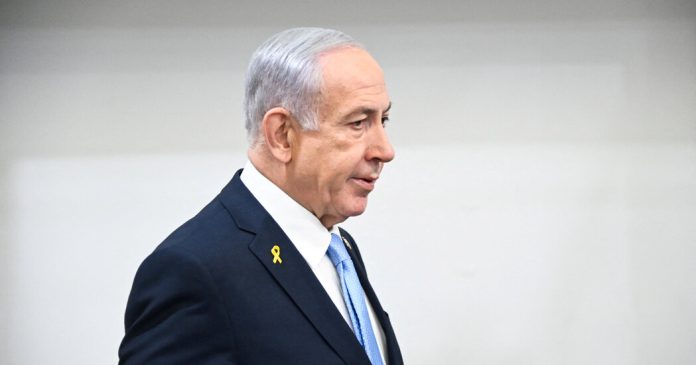
Prime Minister Benjamin Netanyahu of Israel on Thursday began a visit to Hungary, confident that Europe’s self-declared bastion of “illiberal democracy” would ignore an arrest warrant issued against him in November by the International Criminal Court.
The visit is Mr. Netanyahu’s first to a country that has recognized the jurisdiction of the court, raising the possibility, at least in theory, that he could be arrested. He visited Washington to discuss the future of Gaza with President Trump in February but the United States, like Israel, has never recognized the international court.
In Hungary, the government of Prime Minister Viktor Orban has made clear that it will ignore its obligations as a party to a 1998 treaty that established the court.
Mr. Orban invited Mr. Netanyahu to visit shortly after the court issued its arrest warrant, assuring him that “the judgment of the I.C.C. will have no effect in Hungary and that we will not follow its terms.”
Hungary’s expansive propaganda machine has embraced antisemitic tropes in its nonstop vilification of George Soros, a Hungarian-born American financier and philanthropist who is Jewish. It has cast him as the sinister puppeteer in a vast global conspiracy backed by high finance and hidden, cosmopolitan forces.
But Mr. Orban, a strong supporter of Israel, has embraced the country’s right-wing prime minister as a kindred spirit in tune with his own ethnonationalist views and reverence for national sovereignty free of foreign interference.
The International Criminal Court issued the arrest warrants for Mr. Netanyahu and his former defense minister, Yoav Gallant, accusing them of war crimes and crimes against humanity in the Gaza Strip, dealing a blow to Israel’s global standing.
For Mr. Netanyahu, the Hungary visit provides a chance for him to project strength abroad and statesmanship at home at a time of growing opposition to his leadership both inside and outside Israel.
By traveling to Europe, Mr. Netanyahu is signaling to the world that he remains broadly unaffected by the court’s arrest warrant, though Israel’s conduct of the war in Gaza has been denounced by many European governments. He is also signaling to critics in Israel, where he is enmeshed in a growing list of domestic crises, that he retains his international stature and that business continues as usual despite the arrest this week of two of his aides.
Amnesty International condemned the visit to Hungary as “a cynical effort to undermine the I.C.C. and its work,” describing it as “an insult to the victims of these crimes who are looking to the court for justice.” Hungary’s invitation, it added, “shows contempt for international law.”
For Mr. Orban, isolated within the European Union, welcoming the Israeli prime minister in defiance of the international court offers an opportunity to put himself in the spotlight and get Washington’s attention. President Trump has shown little apparent interest in Hungary since taking office in January even though he has long been an admirer of Mr. Orban.
Like Mr. Netanyahu, Mr. Orban faces a host of domestic problems, including Hungary having the highest inflation rate in the European Union and the country’s upstart opposition movement — led by a former Orban loyalist — enjoying a surge of support.
Before the November election Mr. Trump often praised Mr. Orban as a “great leader” but he did not invite him to the inauguration. Hungary said this was because no foreign leaders had been invited, but several did attend, including Italy’s prime minister, Giorgia Meloni, a rival to Mr. Orban for leadership of Europe’s hard-right political forces.
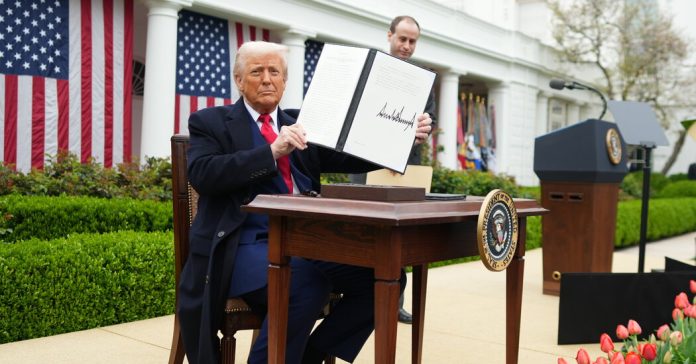
Mr. Trump, a fierce critic of the court, in February signed an executive order placing sanctions on the international court, vowing to impose “tangible and significant consequences” on people who work on investigations deemed to threaten the national security of the United States and Israel.
Mr. Netanyahu has vociferously denounced bribery, fraud and other charges against him in Israel as an effort by the judiciary to derail the will of voters. Similarly, Mr. Orban has frequently condemned what he sees as judicial overreach by European courts that have ruled against Hungary over its violations of European Union rules.
“We have always revolted against judicial activism,” Mr. Orban said at a November summit of European leaders in Budapest, Hungary’s capital.
Hungary in 2001 ratified the treaty establishing the International Criminal Court during Mr. Orban’s first stint as prime minister but its Parliament has never incorporated its terms into the country’s domestic legal code.
Mr. Orban’s chief of staff, Gergely Gulyas, said last month that this omission freed Hungary from any obligation to act on rulings by the court. He indicated that Hungary was considering withdrawing from the court but said no decision had yet been made.
Patrick Kingsley contributed reporting from Jerusalem.
What to Know About Israel’s Expanded Offensive in Gaza

Prime Minister Benjamin Netanyahu said on Wednesday that Israel has captured a new strip of territory in the Gaza Strip, part of a new strategy to seize land in the enclave after the cease-fire with Hamas collapsed last month.
Israel has conducted a new round of airstrikes to force Hamas to release more Israeli hostages. Hamas argues that Israel is violating the agreement it signed in January, which created a path toward ending the war. Both sides have been speaking to mediators about a potential deal to restore the truce — so far without success.
Meanwhile, some anti-Hamas protests have also broken out in parts of Gaza. And the United Nations accused Israel of killing more than a dozen rescue workers.
What is happening in Gaza?
On March 18, Israel launched what it called “extensive strikes” on Hamas targets in Gaza, shattering the fragile truce in the enclave.
In the weeks since, Israeli ground troops have seized the Netzarim Corridor in central Gaza, from which they withdrew during the cease-fire with Hamas, and they have expanded ground raids in northern and southern Gaza. The Israeli military has issued sweeping evacuation orders, displacing more than 140,000 people in Gaza since the cease-fire broke down, according to the United Nations.
On Wednesday, Mr. Netanyahu said Israeli forces were capturing what he described as the “Morag Corridor,” an apparent reference to territory near a former Israeli settlement in southern Gaza. It wasn’t clear how large the area Israel had seized was or how long it intended to hold it.
More than 1,000 people in Gaza have been killed since the cease-fire broke down, according to the Gaza health ministry, which does not distinguish between civilians and combatants.
There is also a growing humanitarian crisis in the enclave after Mr. Netanyahu ordered a halt to all aid deliveries there, in an attempt to pressure Hamas into accepting a new hostage release deal.
The World Food Program, a U.N. agency, said it had run out of the flour and fuel needed to keep bakeries in Gaza open. It will distribute its last food parcels this week, and its remaining supplies in Gaza are expected to run out within two weeks. The lack of aid deliveries has prompted violent competition for food and driven up prices.
Gaza health officials say that more than 50,000 people have been killed in the enclave since the war began after the Hamas-led attack on Israel on Oct. 7, 2023. That attack killed 1,200 people and saw 250 taken hostage to Gaza.
How has Hamas responded?
On March 20, Hamas fired three rockets at central Israel for the first time in months, all of which were either intercepted or fell in open areas. That was a far cry from the massive barrages with which the group pummeled Israel in the first months of the war.
In their public statements, Hamas officials have focused on getting back to the cease-fire.
It is unclear how forceful a military response the group can muster after months of devastating war. Israel has systematically killed many of the group’s top leaders and fighters. The group is believed to have recruited new members into its armed wing, the Qassam Brigades, but analysts say they might not be as well-trained and experienced as their predecessors.
Members of the Israeli Parliament’s foreign affairs and defense committee — who receive classified intelligence briefings — said in a recent letter that Hamas still had more than 25,000 fighters.
U.N. accuses Israel of killing rescue workers
As Israeli forces advanced on the southern Gaza city of Rafah on March 23, an ambulance crew set out to evacuate civilians wounded by Israeli shelling.
The ambulance and its crew were hit on the way, and several more ambulances and a fire truck headed to the scene to rescue them, according to the Palestine Red Crescent Society, as did a U.N. vehicle, the United Nations said. Seventeen people were dispatched in total. Then they all went silent.
It took five days for the United Nations and Red Crescent to negotiate with the Israeli military for safe passage to search for the missing people. U.N. officials said their retrieval team found 15 people dead, most of their bodies dumped in a mass grave.
On March 30, the United Nations said Israel had killed them — a rare accusation by the organization, which is typically cautious about assigning clear blame. After firing on the vehicles, U.N. officials said, Israeli forces bulldozed and crushed the ambulances, a fire truck and the U.N. vehicle.
The Red Crescent, the International Committee of the Red Cross and the United Nations said all of those killed were humanitarian workers who should never have come under attack. The Red Crescent called the killings a war crime and demanded accountability.
An Israeli military spokesman, Lt. Col. Nadav Shoshani, said on X on March 31 that nine of those killed were Palestinian militants. He said Israeli forces “did not randomly attack” an ambulance, but that several vehicles “were identified advancing suspiciously” without headlights or emergency signals toward Israeli troops, prompting them to shoot.
He did not directly say whether the militants were in the emergency vehicles or address the identities of the other six people killed.
Anti-Hamas protests in Gaza
For three consecutive days last month, hundreds of people marched through the northern Gazan town of Beit Lahia, demanding an end both of the war and of Hamas’s 18-year-old rule over Gaza — public protests that spread to a number of other towns in the battered enclave.
“Hamas needs to go away,” said Ahmad al-Masri, 26, a resident of Beit Lahia who helped call for the demonstrations. “If it doesn’t, the bloodshed, the wars and the destruction won’t stop.”
While most of the demonstrations have been small, they represent the boldest challenge to Hamas’s authority by Palestinians in Gaza since the Hamas-led attack on Israel of October 2023 and the ensuing war, which has reduced cities to rubble. They also embody the frustration of Palestinians who are again living through Israeli bombardment, and make clear that at least some Palestinians have put aside their fears about potential retribution by Hamas, which has governed Gaza with a heavy hand.
How did cease-fire talks break down?
The cease-fire between Israel and Hamas, which went into effect on Jan. 19, paused the fighting but did not secure an end to the war.
Instead, the agreement committed both sides to an initial truce that lasted at least six weeks as well as a broader framework for ending the conflict. As part of the first phase, Hamas handed over 30 hostages and the remains of eight others, while Israel released more than 1,500 Palestinian prisoners.
During the six-week cease-fire, Israel and Hamas were supposed to negotiate the terms for the next steps in the truce: an end to the war, the full withdrawal of Israeli forces, and the release of the remaining living hostages seized by Hamas during the Oct. 7, 2023, attack.
But those talks stalled because of disagreement over fundamental issues.
Hamas, which has tried to use the hostages as leverage, has refused to release significant numbers of additional captives until Israel promises to end the war permanently.
But Mr. Netanyahu’s government has refused to agree to end the war unless Hamas gives up control of Gaza or dismantles its military wing. Hamas has shown little inclination to agree to the Israeli demands.
To increase pressure on Hamas, Israel halted the delivery of aid and humanitarian supplies into Gaza earlier in March, and the week before launching airstrikes it cut off electricity that flowed to a water desalination plant in the enclave.
Those decisions exacerbated hardships faced by civilians in the shattered enclave, where Palestinian health authorities say more than 48,000 people have been killed.
How many hostages remain in Gaza?
Hamas and its allies seized more than 250 people during the October 2023 attacks that ignited the war in Gaza. More than 130 have been released, including more than 100 during an initial cease-fire in the early months of the war and 30 more during the truce that began in January. The hostages were exchanged for hundreds of Palestinians held in Israeli prisons.
The Israeli military has also retrieved the bodies of at least 40 others. Less than half of the 59 who remain in Gaza are alive, according to the Israeli government.
Mr. Netanyahu has argued that the operation will help pressure Hamas into releasing more hostages. Many relatives of the remaining hostages are not convinced: They have often accused Mr. Netanyahu of effectively abandoning those still held there by returning to the war against Hamas.
Reporting was contributed by Patrick Kingsley, Adam Rasgon, Yan Zhuang, Rawan Sheikh Ahmad.
Senate Republicans share budget plan to promote Trump’s domestic agenda : NPR
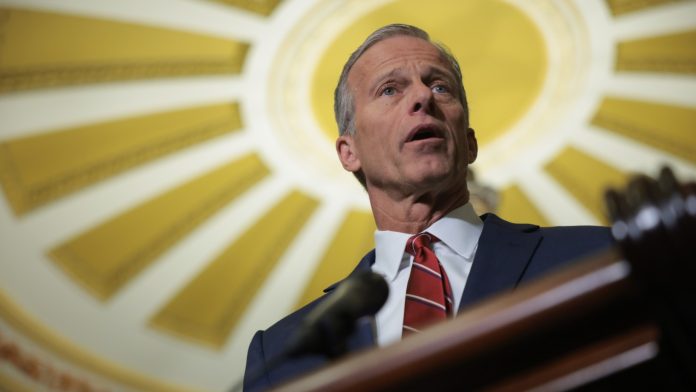
Senate Majority Leader John Thune, R-S.D., speaks to reporters at the U.S. Capitol on Tuesday. Senate Republicans have unveiled a budget blueprint they hope to pass as they look to enact key elements of President Trump’s domestic policy agenda.
Kayla Bartkowski/Getty Images
hide caption
toggle caption
Kayla Bartkowski/Getty Images
Senate Republicans have unveiled their proposed policy and budget package, setting up a fight with members of their own party and their House counterparts in a race to implement a key piece of President Trump’s legislative agenda.
Sen. Lindsey Graham, R-S.C., chairman of the Senate Budget Committee, released the 70-page Senate budget resolution text on Wednesday. Senators expect to start voting on the sweeping legislation by this weekend.
It would raise the country’s debt limit by $5 trillion to avoid a catastrophic financial default this summer, and make tax cuts that passed under Trump’s first term permanent. The House-passed $4.5 trillion Trump tax plan is included in the package.
“Today is one of the most important steps toward ensuring the Republican majority fulfills its promise to the American people that we will secure our border, strengthen our national security, make President Trump’s tax cuts permanent, and reduce spending,” Graham said in a statement.
If approved, the multitrillion-dollar plan could become a hallmark of Trump’s second term, reimagining the U.S. budget through defense, energy, immigration, and tax policy.
Senate Majority Leader John Thune, R-S.D., said the legislation would pave the way for “generational investment” in border security, national defense and the energy sector.
“Republicans in the Senate and the House are committed to working with President Trump to stop Democrats from imposing an automatic $4 trillion tax hike on the American people at the end of this year,” Thune said of the extension of the Trump tax cuts.
Thune said the plan also aims to reduce the size and scope of the federal government.
Earlier this year, Senate Republicans, impatient with delays tied to intraparty divisions in the lower chamber, jumped ahead of their GOP House counterparts in crafting the package. That’s left House Republicans, with a much tighter margin for their majority, worried the Senate version may lose support.
Senate Republicans crafted a resolution with some flexibility on spending cuts, but that could still face problems in the House, where a group of conservatives want to push for a higher figure.
Earlier this week South Carolina Republican Rep. Ralph Norman, asked about supporting a Senate resolution with a range of spending cuts, told reporters, “To me it’s dead on arrival.”
On the amount of cuts, he said, “It’s gotta be the $2 trillion — we have to be on lockstep with that.” Norman also said he opposed the $5 trillion increase in the debt ceiling, telling reporters, “I had trouble with 4 [trillion]. I went along with that [for the House budget reconciliation plan in February].”
To avoid a filibuster in the Senate and pass new policy, Republicans are using a feature of the budget process called reconciliation. The provisions that they include must have a substantial impact on the budget in order to be eligible for the simple majority vote.
However, even if they pass this resolution, there will be several procedural hurdles between now and when they could potentially pass any new policies.
Regardless, Thune on Wednesday said he was hopeful Republicans would be able to move ahead.
“The Senate parliamentarian has reviewed the Budget Committee’s substitute amendment and deemed it appropriate for consideration under the Budget Act,” Thune said. “It is now time for the Senate to move forward with this budget resolution in order to further advance our shared Republican agenda in Congress.”
Senate Minority Leader Chuck Schumer, like other Democrats, slammed the proposal, claiming it will trigger major cuts.
“As Americans start to feel the pain from the brazen Republican cuts, Republicans are running full speed ahead to pass their plan to gut vital programs, throw Americans off Medicaid, to give massive tax breaks to billionaires,” he said in a statement.
NPR congressional correspondent Deirdre Walsh contributed to this report.
Thursday Briefing: Trump’s Global Tariffs
Trump announced sweeping global tariffs
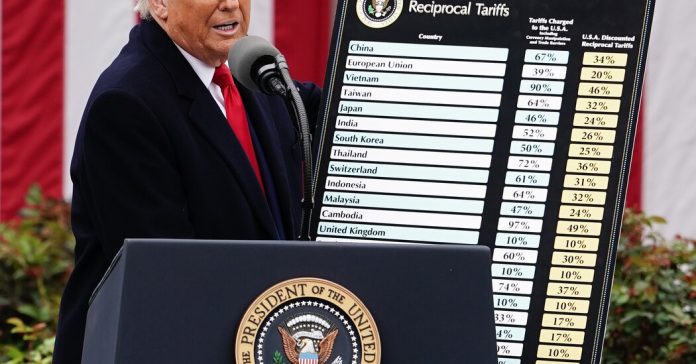
President Trump unveiled yesterday his most expansive tariffs to date, hitting all of the U.S. trading partners except Canada and Mexico with a 10 percent tariffs. Europe and China will face much higher rates.
At a ceremony at the White House, Trump called the announcement “our declaration of economic independence.” He added, “This is liberation day.”
Trump said the U.S. would calculate a tariff rate for countries based on the levies they impose and “other forms of cheating.” These tariff rates are quite high. China will face a staggering 34 percent tariff, while the E.U. will get 20 percent. Japan will be 24 percent and India 26 percent.
Trump has argued that tariffs will rebalance a global economy after years of countries “ripping off” the U.S. Governments across the world have been preparing to hit back, increasing the potential for a destabilizing trade war. We have live updates here.
“Many people had been expecting the president to announce high tariffs today, but the numbers that he just revealed are stunning,” said my colleague Ana Swanson, who covers international trade. The tariffs, she added, “will likely force some manufacturing back into the United States, but also raise costs for American consumers and manufacturers and incite trade wars on many fronts.”
Analysis: Trump’s advisers disagree on the goal of the sweeping tariffs. Is it to raise revenue or lower trade barriers?
Response: The Canadian and Chinese governments have already retaliated against Trump’s previous tariffs with taxes of their own. E.U. officials are weighing potentially targeting American tech and financial giants, a response that some refer to as a “bazooka.”
Israel expanded its offensive in Gaza
Prime Minister Benjamin Netanyahu said yesterday that Israel is seizing territory in the Gaza Strip hours after his government laid out plans to occupy large parts of the enclave.
Holding territory, Netanyahu said, was meant to push Hamas to return at least 59 remaining hostages captured in the Oct. 7, 2023, attacks. “The pressure will increase until they hand them over,” he said.
The Israeli military appears to be planning to station forces in captured territory. The defense minister said newly captured areas would be “added to the security zones” that the military currently maintains in Gaza.
One family’s story: Huda Abu Teir returned home to Gaza during the cease-fire last month, hoping to rebuild. She was killed along with eight others when Israel shattered the cease-fire and destroyed their home.
Anger at Elon Musk put Tesla in a slump
Tesla said yesterday that its global sales in the first quarter of 2025 fell 13 percent from a year earlier. Even in Norway, where electric vehicles account for more than 90 percent of new car purchases, sales dropped sharply.
The change partly reflects consumers’ anger at Elon Musk for his right-wing politics and prominent role in the Trump administration. But there are other explanations, including that other E.V. makers are catching up to Tesla’s technology and offering a wider range of vehicles.
After a lifetime of loving Shanghai in spite of its pollution, noise and mess, one longtime visitor recently returned to find a changed city after the pandemic, with bluer skies and quieter, cleaner streets.
But some changes, like the near-total transition to app-based life, for everything from payments to transportation, can make it tough for travelers. Here are some tips.
Lives lived: Val Kilmer, a Hollywood film star who played Jim Morrison and Batman, died at 65. Here’s seven of his best films.
David Hockney is ready for the exhibition of his life
When the Louis Vuitton Foundation in Paris asked David Hockney two years ago about staging a retrospective of his work, he assumed he wouldn’t be around to see it. Now, at 87 and under constant medical care, the artist is determined to attend what will be his biggest show ever.
“David Hockney 25,” which opens April 9, features more than 400 works, including many early pictures that will be shown in the same space for the first time. Hockney, who has become one of the most recognizable artists of his time by playing by his own rules, said he wanted visitors to take away just one thing from the show: “Joy, some real joy!” Read about it here.
Cory Booker on his record-breaking, 25-hour Senate floor speech : NPR
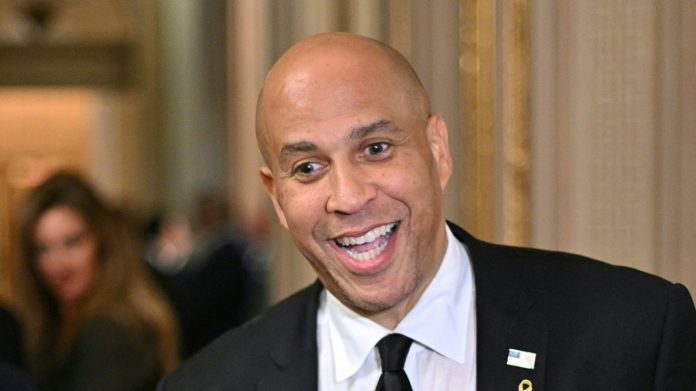
Sen. Cory Booker (D-NJ) speaks to the press at the U.S. Capitol in Washington on Wednesday. Booker spoke for more than 25 hours against President Trump’s “unconstitutional” actions.
Roberto Schmidt/AFP via Getty Images
hide caption
toggle caption
Roberto Schmidt/AFP via Getty Images
On Monday evening, Sen. Cory Booker stood on the Senate floor and began a speech criticizing the Trump administration.
The 55-year-old Democrat from New Jersey kept talking and talking — through the night and into the next day — for 25 hours and 5 minutes.
He did not sit. He did not eat. He did not use the restroom.
“The body is weary in a lot of places, from my back to my feet and to my legs, I’m just feeling it,” Booker told All Things Considered host Juana Summers. “But my soul is soaring and I feel very blessed by the whole experience.”

His effort, which involved dozens of fellow Senate Democrats asking questions to relieve his speaking burden, set a record for the longest speech on record in the chamber. It surpassed the previous record set in 1957 by segregationist Sen. Strom Thurmond, who filibustered for 24 hours and 18 minutes to oppose the Civil Rights Act.
Booker started his speech at 7 p.m. Monday and pledged to use his time to disrupt “the normal business of the United States Senate for as long as I am physically able.”
“In just 71 days, the president has inflicted harm after harm on Americans’ safety, financial stability, the foundations of our democracy and any sense of common decency,” he said in his introductory remarks. “These are not normal times in our nation. And they should not be treated as such in the United States Senate.”
Booker had said his impassioned anti-Trump speech comes at a time when many constituents are questioning the direction of the party.
“I think we could not talk about the party and start talking about the people,” he told NPR. “I really think that we have got to start having a bolder vision of who we are as a country, not just about who we’re against as the other party.”
When asked for comment on Booker’s speech before he set the record, a White House spokesperson issued a statement to several news outlets:
“Cory Booker is looking for another ‘I am Spartacus’ moment, but that didn’t work for his failed presidential campaign, and it didn’t work to block President Trump’s Supreme Court nominee, Brett Kavanaugh. When will he realize he’s not Spartacus — he’s a spoof?” the spokesperson, Harrison Fields, said in a statement.
This interview has been lightly edited for length and clarity.

The New Jersey Democrat criticized the Trump administration’s policies on immigration, education, and the economy for more than 25 hours straight.
Senate Television/via AP
hide caption
toggle caption
Senate Television/via AP
Interview highlights
Juana Summers: Democrats and those who oppose President Trump, they’ve been crying out for your party to do something really to do anything to stand up to the president. And following fiery public rhetoric like yours there in the Senate, how do you harness that momentum and to substantive, real action?
Cory Booker: Well, I really wanted to as much as possible, and I know that it is what it is. But I tried as much as possible to frame my remarks, not about left or right, but right or wrong, that this was a moral moment because a lot of the policies — and I know this from talking to my Republican colleagues — are not widely agreed upon by either side. And, you know, a lot of things that [Trump is] doing that he didn’t even run on. And the challenges to American people, whose voices I tried to bring into my speech and read dozens of real Americans from all across the country, especially New Jersey, but on both sides of the political aisle, just really saying that these policies are morally wrong and they’re going to hurt people. And so, I hope that perhaps this is one of many ignition points that get people to kind of galvanize and come together and stop him from doing a lot of these things, like we did in 2017, when Americans from all backgrounds were able to stop him, along with three Republican senators from taking away health care for millions of people.

Summers: I do want to talk about some of the issues that you brought up. You highlighted a number of issues, among them protecting Medicaid, Medicare and Social Security from possible cuts from the Trump administration. Do Democrats and those who want to protect those programs have a plan to actually do so?
Booker: Well, we know the reality right now. They’re going to use a budget process that necessitates no Democratic votes. And since they’re in the majority, that process means that we do not have the votes as Democrats alone to stop them. But you hear Republicans, a guy like [Congressman Thomas] Massie in the House, who has said very boldly, I will not vote for this because it creates trillions of dollars of new budget obligations, just expands the deficit. And I think appealing to the moral and character and, frankly, principles of the other side that they use. And they say and that’s why during the speech, I brought in so many Republican think tanks, Republican voices, Republican governors. And this cannot be a Democratic only win that we’re looking for. The only way to win now is by waking up and engaging with people on both sides of the political aisle. And the real reasons to stop this because it makes no fiscal sense to create trillions of dollars of more obligations for our grandchildren. It makes no sense to take money away from programs like Medicaid, all to give tax cuts that disproportionately go to the wealthiest amongst us. That’s, I think, most people’s sort of principles that violates.

Summers: You mentioned that Democrats can’t go it alone. I don’t have to tell you, Republicans hold majority control of the House and the Senate. What have you been hearing from your Republican colleagues in the wake of the speech?
Booker: I got a lot of hugs from my Republican colleagues. I think people might find that surprising, but a lot of people just appreciated, I think, the fact that it was Strom Thurmond’s record, bothered my Republican colleagues as well as Democratic colleagues. And they were happy to see me smash that record, even if they didn’t agree with all the points I made during my remarks. Others have said to me, you know, there’s a lot of things that I said that they can agree with, even though there’s things they disagreed with. So, I’ve had an experience in this in the Senate getting some big bills done by finding common ground. I think this is a time where the party knows how over the top Donald Trump is. The party knows how demeaning and degrading it can be to people in and out of the party. The party knows that there’s problematic things, but now we’ve got to wake them up to actually do something about it. I quoted [Martin Luther King Jr.] last night where he said, what we have to repent for is not the vitriolic words and violent actions of the bad people, but the appalling silence and inaction of the good people.”
Richard Bernstein Dies at 80; Times Correspondent, Critic and Author
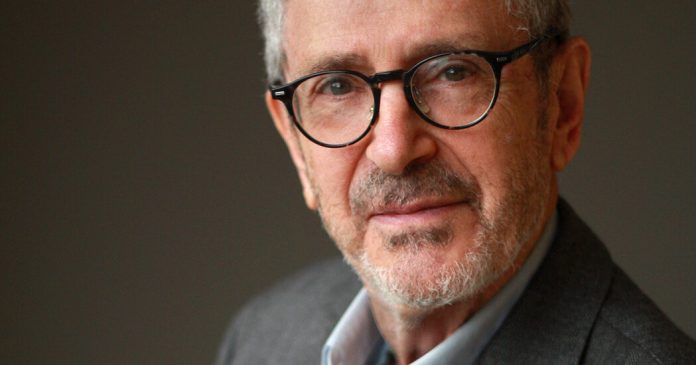
Richard Bernstein, a former correspondent and critic for The New York Times whose deep knowledge of Asia and Europe illuminated reporting from Tiananmen Square to the Bastille, and who wrote things as he saw them in 10 books driven by unflinching intellectual curiosity, died on Monday in Manhattan. He was 80.
His death, in a hospital, was caused by pancreatic cancer, diagnosed less than eight weeks ago, his son, Elias Bernstein, said. Mr. Bernstein lived in Brooklyn.
Over more than two decades at The Times, Mr. Bernstein brought deep historical knowledge, a gracious writing style and a stubborn contrarian streak to subjects as various as the meaning of the French Revolution, the nature of Chinese authoritarianism, the “multitudinous strands” in the 1993 World Trade Center bombing trial, and the significance of parentheses in the politics of academic language.
Writing about the Danube in 2003 after a 1,750-mile journey along it, Mr. Bernstein observed: “Rivers are symbols. You can not think of the Mississippi without also thinking of the American drama of race. The Seine is Parisian elegance; the Rhine, German national identity. The Yellow River is China immemorial.”
As for the water on which he glided from the Black Forest to the Black Sea, it was “the river of exquisite stricken cities of the former Austro-Hungarian Empire,” the “Blue Danube Waltz” of Johann Strauss, the Holocaust and “the clanging into place of the Iron Curtain.”
His journalism had sweep, an elegiac sense of the tragic inherent in human affairs, and often a subtly crafted argumentation rooted in thorough on-the-ground reporting. Mr. Bernstein, who retained throughout his life something of the nervousness and capacity for wonder of a cub reporter, never tired of working hard.
“I frankly do not like books that start from the premise that matters are too complex to allow for any generalizations,” he wrote in “Fragile Glory,” his rich 1990 portrait of France, a country “someplace midway between a certain persistent dream and an immovable reality.” It was a nation, for Mr. Bernstein, that sought to “glow with the torch of civilization itself” even as it writhed over its “military and moral collapse in the face of the Nazis.”
If cleareyed on the ineluctability of suffering, Mr. Bernstein was also an optimist. The first-generation son of Jewish immigrants from Hungary and Belarus, he grew up on a chicken farm in rural Connecticut, where he learned to sort small, medium, large, extra large and jumbo eggs and was schooled in scrappy struggle.
Clothes were hand-me-downs; Hanukkah gifts, modest. The family rule was corn in the garden could not be picked until the water was boiling. At age 9, seated on his father’s lap, he would drive the farm pickup truck to collect eggs at the chicken coops.
From that experience he took a distaste for posturing, a suspicion of fashion, an impatience with taboos and a deep belief in American possibility. He believed in a fair shake for everyone, including his journalistic subjects. In his view, it was to America, as a postwar power in Asia and Europe, that fell the responsibility to safeguard and extend the freedom from which his family had benefited.
“A Jewish intellectual from a chicken farm, he never swerved from his attachment to what America should stand for,” the author Kati Marton said in an interview.
In a dispatch from Beijing, where he had been sent to report soon after the massacre of protesting students on the night of June 3-4, 1989, Mr. Bernstein quoted a saying used in Imperial China to persuade people to inform on traitors: “For the sake of the great cause, destroy your loved ones.”
He pivoted, with the assurance of a China scholar, to ask whether, in this light, the Chinese People’s Liberation Army’s brutal slaying of hundreds of students was “a product of 20th-century totalitarianism” or reflective of the country’s long tradition of harsh autocratic rule. As often with Mr. Bernstein, it was an attempt to reach beyond the news to the deeper historical currents of events.
His conclusion was that there was something new and singular in the government’s bald denial of what had happened and in its “entirely modern campaign of incessant propaganda” against the “thugs,” as the government called its victims.
“The notion here is that any opposition to the Government is not just wrong,” he wrote. “It is criminal, treasonous, counterrevolutionary, and those who led it deserve neither respect nor humane treatment.”
A Democrat of sometimes conservative views, Mr. Bernstein grappled with America’s ideological drift long before cancel culture, gender-norm wars and the current angry fracture of the country over diversity, equity and inclusion policies.
In a gently mocking “On Language” column in The New York Times Magazine from 1990, he wrote of an academic conference he had attended that was advertised as “Rewriting the (Post)modern and (Post)colonialism,” and observed that the parentheses were a way of making readers think again about meanings “always taken for granted.”
“The parentheses were placed not only around words but also around parts of words,” he wrote. “There was one paper titled ‘Locating Un(re)presentable Desire: Narrational Transformations and Postmodern Man.’ Another was ‘It’s Not (Post) Until it’s Post(ed): (Post)modernism and the Terminological Endgames of Terrorism.’”
Drawing from that conference, he went on to note that “our basic values” were now commonly called “the dominant discourse,” or even “the totalizing discourse,” whose reputed ravages were most felt by “those outside the power structure.”
Attached to those increasingly contested basic American values, if aware of their need to evolve, he gave expression to his concerns in “Dictatorship of Virtue: Multiculturalism and the Battle for America’s Future,” published in 1994. In that book, he argued that attempts to promote diversity had often stifled diversity, and through reporting across American boardrooms and classrooms, he chronicled what he saw as a treacherous, feel-good undermining of the nation’s meritocratic, can-do vision.
It was a book that won Mr. Bernstein more enemies than friends even as it presaged ideological fissures destined to grow. He never shrank from difficult subjects: In 2009, he published “The East, the West, and Sex: A History,” an exploration of the connection between sex and power told through the encounters of Western explorers, merchants and conquerors with Eastern cultures.
“He believed in truth, no matter where the chips fell,” said David Margolick, a journalist and author. “Nobody had handed him anything. His integrity was absolute. He wrote what he thought without looking over his shoulder.”
Richard Paul Bernstein was born in New York on May 5, 1944, the first of two children of Herbert and Clare (Brown) Bernstein. The family moved soon after to a poultry farm in East Haddam, Conn., after the Jewish Agricultural Society, an organization established to provide farm training to Eastern European immigrants, gave his father a loan.
Richard attended an Orthodox synagogue — “a rickety old building cantilevered over a gully near the soda shop,” in the words of his lifelong friend Donald Berwick — and graduated from Nathan Hale-Ray High School in nearby Moodus, before attending the University of Connecticut, where he earned a B.A. in history.
Wanderlust already had a grip on him. He went on to earn an M.A. at Harvard University in history and East Asian languages, a course chosen in part because it offered the possibility of moving to Taiwan to study Mandarin. There was born a passion for Asia that never left him. It led to jobs as a stringer and later correspondent in Beijing for Time magazine before he joined The Times in 1982, initially as a reporter covering metropolitan New York.
Mr. Bernstein later served as United Nations bureau chief, Paris bureau chief, national cultural correspondent, book critic and Berlin bureau chief before leaving The Times in 2006.
Judy Peritz, his younger sister, recalled how their father had given him a BB gun when he was 11. He would shoot at birds, and one day he hit one, and was appalled to see how the bird struggled and suffered from what he had done. “He never used the gun again,” she said.
A deep kindness accompanied Mr. Bernstein to the end. Although not religious, he joined a Torah study group late in life, intent on exploring the meaning of his Jewishness.
In addition to his son and sister, Mr. Bernstein is survived by his wife, Zhongmei Li, a renowned Chinese classical dancer and choreographer.
“We all know death comes,” he told Ms. Peritz just before he died. “I would have loved to have more, but now understand that I won’t. I accept that and am not afraid. I have lived a really wonderful and interesting life.”