Thursday, November 12, 2026
Home Blog Page 62

Federal judge drops corruption case against New York City Mayor Eric Adams : NPR

0

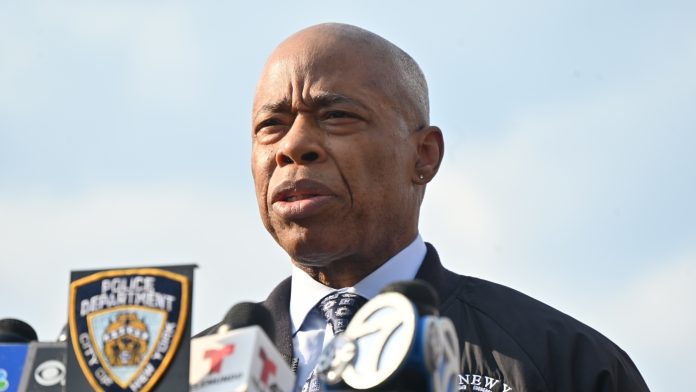
Mayor Eric Adams speaks at a news conference in Brooklyn, New York on March 29, 2025.

Kyle Mazza/Anadolu via Getty Images


hide caption

toggle caption

Kyle Mazza/Anadolu via Getty Images

A federal judge on Wednesday formally dismissed the corruption case against New York City Mayor Eric Adams, granting the controversial request from the Justice Department that generated a public outcry and spurred the largest mass resignation of senior federal prosecutors in decades.

The order from U.S. Judge Dale Ho brings an end to the case against Adams, who had pleaded not guilty to conspiracy, bribery, wire fraud and other charges following his indictment last year.

Ho said he was dismissing the case with prejudice, meaning the government could not bring the charges again later — contrary to the Justice Department’s request to dismiss the case without prejudice.

Adams was scheduled to go on trial in April until new leadership at the Justice Department under the Trump administration ordered prosecutors in New York in February to drop the case.

“In light of DOJ’s rationales, dismissing the case without prejudice would create the unavoidable perception that the Mayor’s freedom depends on his ability to carry out the immigration enforcement priorities of the administration, and that he might be more beholden to the demands of the federal government than to the wishes of his own constituents,” Ho wrote.

“That appearance is inevitable, and it counsels in favor of dismissal with prejudice.”

Judge says “everything here smacks of a bargain”

The directive to drop the case from Emil Bove, then the acting U.S. deputy attorney general, touched off a public uproar and intense internal pushback.

The acting U.S. Attorney for the Southern District of New York, Danielle Sassoon, refused to follow Bove’s directive, saying she saw no “good-faith basis” for dismissing the case. She resigned instead of abandoning the Adams prosecution.

One other prosecutor in New York and five attorneys tied to the Justice Department’s public integrity unit in Washington, D.C., also resigned rather than carrying out Bove’s order.

Adams’ attorney rejected allegations that the mayor had struck a deal with the Justice Department to help the Trump administration’s immigration enforcement policies in return for dropping the case against the mayor.

Judge Ho concluded that the career prosecutors in the case in Manhattan abided by DOJ guidelines and said “there is no evidence — zero — that they had improper motives” in seeking indictment of the mayor.

“Everything here smacks of a bargain: dismissal of the Indictment in exchange for immigration policy concessions,” Ho wrote.

After the DOJ had asked for the case to be dismissed, Ho had initially declined to immediately do so and instead appointed an outside counsel, Paul Clement, to examine the legal arguments and assist the court in its decision-making.

Clement, who served as solicitor general during the George W. Bush administration, had also advised the court to dismiss the case with prejudice. The government had proposed dismissing the case without prejudice, a scenario that would allow prosecutors to renew the case in the future.

Clement’s brief for the court also focused on the fact that the threat of another prosecution hanging over Adams would not be in the best interests of his constituents.

“Ultimately, because the decision to discontinue a prosecution belongs primarily to a political branch of government, it is the public’s judgment, and not this Court’s, that truly matters,” Ho added in Wednesday’s ruling.
23 More Women Come Forward With Allegations Against Serial Rapist

0

More than 20 women have come forward with allegations against a Chinese student in London who was convicted last month of drugging and raping 10 women in Britain and China.

The Metropolitan Police in London said that 23 women had contacted them with new reports about Zou Zhenhao, 28, after he was convicted in the city last month. Some of the women live in Britain, while others live in China and other parts of the world, the police said in a statement on Wednesday. The police have previously said they believe that Mr. Zou may have attacked more than 50 women, based on hundreds of videos stored on his devices.

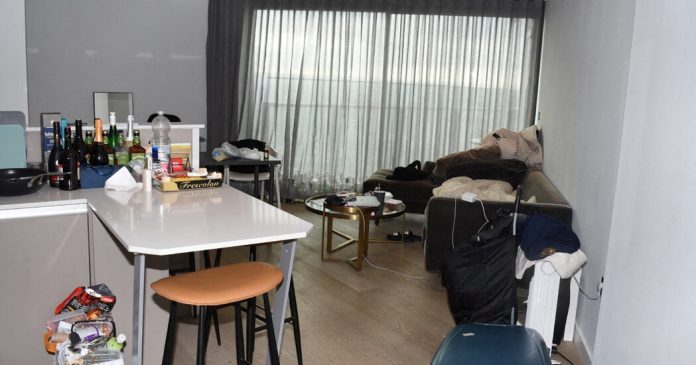
Mr. Zou was a Ph.D student at University College London between 2019 and 2024. During his weekslong trial earlier this year in London, the court heard that he would lure women to his apartments in the city and in China, and rape them.

Mr. Zou met the women on dating apps like Bumble and on online platforms, including the Chinese social media apps WeChat and Little Red Book, according to the police. He targeted Chinese students living in London, officers said, whom he may also have met at parties and student gatherings.

On March 5, a jury found Mr. Zou guilty of 11 counts of rape, as well as of charges related to the possession of drugs intended for use in a sexual assault, voyeurism, and the possession of extreme pornography, prosecutors said.

Two women testified against Mr. Zou in court, but eight others remain unidentified, the police said. Because the women were drugged, the police believe that some may not know what happened to them. With the conviction secured, the police issued a public appeal for more victims to come forward.

After arresting Mr. Zou in January 2024, police investigators uncovered hundreds of videos on his devices, which appeared to depict him raping and sexually assaulting multiple women. Officers also trawled through thousands of gigabytes of data that traced a pattern of Mr. Zou’s crimes.

Zou ZhenhaoCredit…Metropolitan Police, via Press Association

Once the women were in his apartment, the police said, he would offer them a drink laced with a substance that investigators believe was butanediol, a chemical that converts to GHB, a notorious date rape drug that depresses the central nervous system. When the women were unconscious, he raped and sexually assaulted them, while filming himself, the police said.

The women’s faces were often hidden or obscured, making it difficult for investigators to identify them. But the police said that Mr. Zou often kept souvenirs of his victims, and officers found items of jewelry and clothing in his apartment.

The police believe Mr. Zou followed the same tactics when he was living in China, with video evidence indicating that some of the attacks took place there. British police worked with their counterparts in China to find one of the women who testified against him.

Before moving to London, Mr. Zou studied at Queen’s University in Belfast, Northern Ireland.

“Zhenhao Zou is a dangerous and prolific sexual predator, who manipulated and drugged women in order to prey on them in the most cowardly way,” Kevin Southworth, a commander in the Metropolitan Police, said in a statement.

The police said that as part of their update on Wednesday they were also appealing again for any women who think they may have been attacked by Mr. Zou to come forward. “Officers believe that there are still more victim-survivors to be traced,” the statement said.

A judge will sentence Mr. Zou on June 19.

Cory Booker breaks Senate record with a 25-hour speech in protest of Trump policies

0

Sen. Cory Booker, D-N.J., gave the longest Senate floor speech in the chamber’s history — more than 25 hours — in protest of Trump administration policies.

Heathrow Was Warned of Power Supply Vulnerabilities, Airlines Advocate Says

0

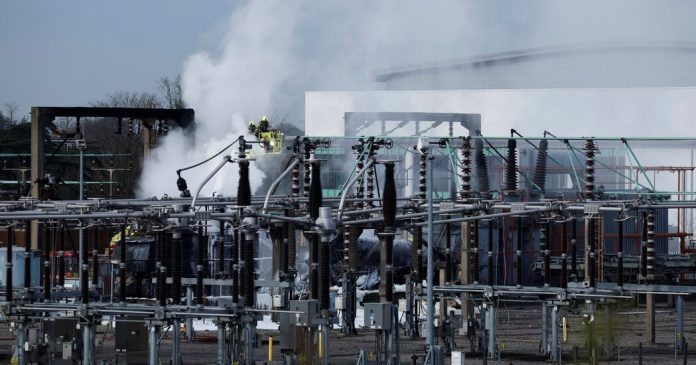
The head of an airline advocacy group warned officials at Heathrow Airport of the threat posed by potential substation failures days before a fire forced the shutdown of the airport last month, he told British lawmakers on Wednesday.

“I’d actually warned Heathrow of concerns that we had with regard to the substations,” Nigel Wicking, the chief executive of the Heathrow Airline Operators’ Committee, the advocacy group, told the parliamentary transport committee. “My concern was resilience.”

A fire at one of the three electrical substations that serves Heathrow, Europe’s busiest airport, led to a power outage there on March 21.

The shutdown dashed holiday plans and scrambled flights across the world, and Mr. Wicking said that he thought that some flights could have resumed by “late morning” if the airport had made better use of one of its five terminals.

“Flights could have been brought in,” he said, speaking of flights that were stuck in Europe and elsewhere, adding that the airlines had been pushing to bring planes to London much quicker.

The fire at the substation raised questions about the vulnerability of Britain’s infrastructure, and experts have said it could cost up to $100 million to create backup systems that could have kept the airport running during such a catastrophic power failure. Such a project could also likely take years to put in place.

But some of the issues surrounding the concerns about the substation were more mundane: For instance, Mr. Wicking said, there had been incidents of theft around the power supply at the substation.

On one occasion, he said, it “took out the lights on the runway for a period of time.”

“That obviously made me concerned,” he added, noting how important Heathrow is to air travel not just in Britain and the broader European region but around the world.

“We need to make sure it is resilient,” he said.

This is a developing story. Check back for updates.

Elections analyst discusses results of special elections in Florida and Wisconsin

0

NPR’s Steve Inskeep talks about results of special elections in Wisconsin and Florida with J. Miles Coleman, an elections analyst at the University of Virginia who has been tracking the races closely.

Israel Announces Plans to Seize ‘Large Areas’ of Gaza as It Expands Offensive Against Hamas

0

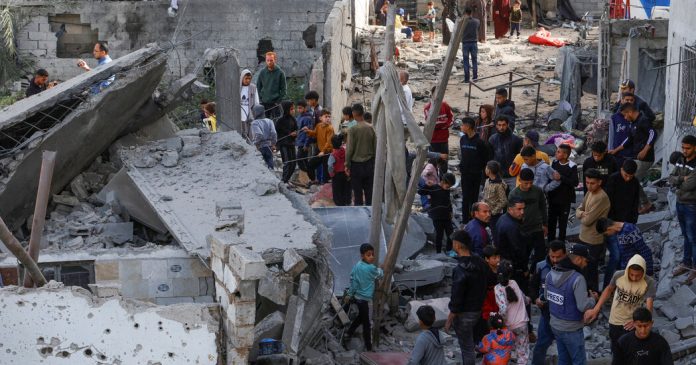
Israel’s defense minister announced on Wednesday an expansion of its military offensive in Gaza, including plans to seize “large areas” of the enclave, an apparent attempt to pile more pressure on Hamas as efforts to restore a shattered cease-fire falter.

The remarks, which echoed a similar threat by the minister, Israel Katz, last month, suggest that Israel intends to hold captured territory, at least temporarily, in a shift from earlier tactics. In the 15-month military campaign that preceded the January truce, Israeli forces stormed Gazan cities before withdrawing, leaving behind vast destruction but allowing Palestinian militants to regroup in the rubble.

Mr. Katz said newly captured territory would be “added to the security zones” that the military currently maintains in Gaza, which include a buffer along the enclave’s borders with Egypt and Israel, and much of a key road in the center of the enclave.

He added that the expanding operation involved “wide-scale evacuations of Gaza’s population from combat zones.”

He did not elaborate as to how much territory he hoped to capture or for how long. Since the cease-fire collapsed in late March, Israeli forces have been advancing deeper into the Gaza Strip, including in the southern city of Rafah, though they have not been sweeping through Palestinian cities as they did before the truce. Both sides have been speaking to mediators about a potential deal to restore the truce — so far without success.

It is far from clear whether either side could force the other to accept its terms for an agreement through military means. Hamas is demanding an end to the war and a full Israeli withdrawal in exchange for the release of all hostages.

This week, Prime Minister Benjamin Netanyahu of Israel laid out what appeared to be his demands for postwar Gaza — all of which are likely to be nonstarters for Hamas. They include Hamas’s laying down its arms, comprehensive Israeli security control in Gaza and the implementation of President Trump’s proposal that Gazans leave en masse.

“That’s the plan,” Mr. Netanyahu said in remarks distributed by his office on Sunday. “We aren’t hiding this. We’re ready to talk about it at any time.”

The Israeli military resumed its attacks against Hamas in Gaza on March 18 after Israel and Hamas failed to reach an agreement to extend a cease-fire that started in January. More than 1,000 people in Gaza have been killed since the truce’s collapse, according to the Gaza health ministry, which does not distinguish between civilians and combatants.

Israeli leaders have said that they could not allow the cease-fire to continue as long as Hamas does not release more of the dozens of remaining hostages held in Gaza. Hamas accused Israel of breaking the January truce.

Mediators — including envoys from the Trump administration — have so far failed to broker a new cease-fire. Many Gazans fear the war will continue indefinitely given the entrenched disagreements between Hamas and Israel over the shape of a potential future truce.

The Israeli military has issued sweeping evacuation orders for parts of Gaza. More than 140,000 people in the enclave have been displaced since the cease-fire broke down, according to the United Nations. Many were just beginning to resettle into their old neighborhoods across the Gaza Strip before being forced to flee again.

Gaza health officials say that more than 50,000 people have been killed in the enclave since the war began after the Hamas-led attack on Israel on Oct. 7, 2023. That attack killed 1,200 people and saw 250 taken hostage to Gaza. At least 59 hostages remain in the enclave, although about 35 of those are presumed dead, according to the Israeli government.

Gabby Sobelman contributed reporting from Rehovot, Israel.

Timeline of Trump’s tariff threats, deadlines and pauses : NPR

0

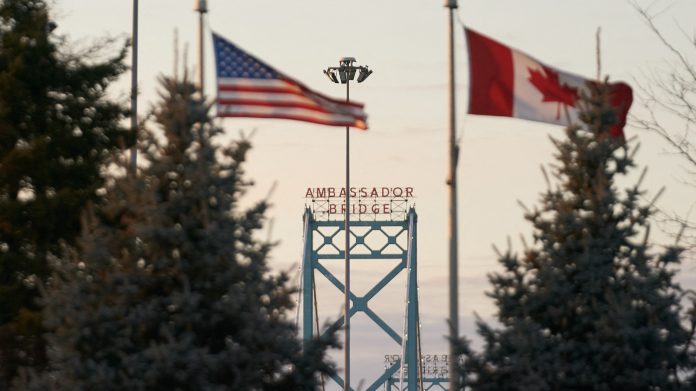
Canadian and American flags fly on the Canadian side of the Ambassador Bridge in Windsor, Ontario, on March 8 after President Donald Trump imposed vast tariffs on key partners Canada and Mexico, roiling cross-border ties before offering temporary relief to manufacturers.

Geoff Robins/AFP via Getty Images


hide caption

toggle caption

Geoff Robins/AFP via Getty Images

Tariffs are at the center of President Trump’s economic strategy, and since taking office in January, he’s kept them in the spotlight.

He kicked off his second term by imposing them on Canada and Mexico, tying them to border security and illegal drugs. He’s also said imposing tariffs on our trading partners would boost U.S. manufacturing, create “vast wealth” for the country and improve what he perceived as unfair trading relationships that create large annual trade deficits.

Economists warn of a escalating trade war and say his promises on tariffs will be hard to keep.

Part of the reason for that is the unpredictable way he’s rolled out his tariff agenda. He’s frequently changed course, threatening to impose them only to hit pause, shift deadlines or sometimes, double down.

Here’s a look at Trump’s on-again, off-again tariff agenda and how some countries have responded. Note that Trump frequently talks about tariffs in informal settings, but this timeline captures his biggest moves made ahead of Wednesday, which he’s hyped as “Liberation Day” — the day he’ll announce new reciprocal tariffs on a range of U.S. trading partners.

Bangkok Building Collapse Leads to Scrutiny of Chinese Company

0

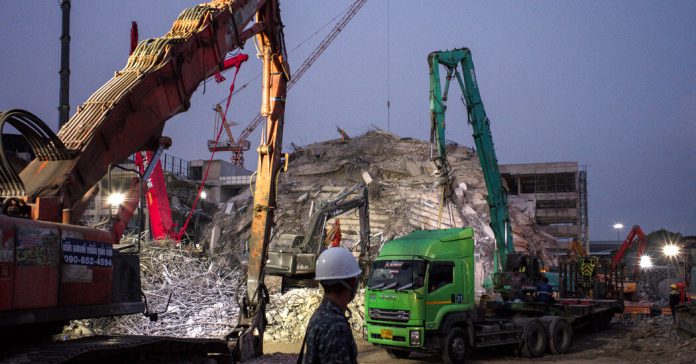
Only one building in Bangkok fell during the earthquake on Friday that rocked Myanmar, hundreds of miles away. Recovery efforts continue with at least 15 people killed and dozens still missing. Determining the cause could take months.

But interviews with workers who had been on the site, together with early official findings, highlighted potential problems with construction design and quality.

At the center of the scrutiny is China Railway 10th Engineering Group, a Chinese state-owned company with about a dozen other projects in Thailand and whose contractors tried to remove documents from the site after the disaster.

Behind that Chinese company is its parent, China Railway Group — a Chinese infrastructure giant with soaring debt, a hunger for new projects and subsidiaries facing accusations of weak safety in several countries.

Workers in Bangkok told The New York Times that China Railway 10th, which was part of a consortium constructing the building, underpaid contractors who turned to lower quality materials, and used columns narrower than usual.

Thai officials testing twisted metal from the ruins said they found substandard steel bars — made by a Thai factory with Chinese owners that the authorities had shut down in December.

An anti-corruption watchdog also said it had flagged construction irregularities at the 30-story tower before March 28, when fleeing workers watched the high-rise implode.

“The pillars on the third floor — where I stood and looked back — the beams didn’t burst,” said Netiphong Phatthong, 38, an electrician who barely escaped, waiting at the site for news about his missing friends on Tuesday. “They crumbled as the metals inside were squashed.”

Thai officials, describing the collapse as a blow to the country’s image, have moved aggressively to investigate the consortium with the $62 million construction contract for the tower. It had been meant to house government auditors.

At a cabinet meeting Tuesday, Prime Minister Paetongtarn Shinawatra ordered the authorities to also scrutinize all projects in Thailand involving China Railway 10th. She did not mention whether the parent company would be investigated.

“We really need to find an answer,” Ms. Paetongtarn told reporters. “We need to tell the people and the world what happened in Thailand.”

The joint venture for the 30-story tower was registered in Thailand in 2018. It included a Thai developer, Italian-Thai Development, but according to workers, daily operations were run by China Railway 10th.

A promotional video that the Chinese company recently released showed drone footage of the building and praised the quality of its construction. China Railway 10th is also responsible for an airport terminal in southern Thailand that was supposed to be finished in January but was less than 40 percent complete as of March, according to the transport ministry.

China Railway 10th’s Bangkok office did not respond to emails seeking comment. The Chinese Embassy, in a statement on Facebook, urged Chinese companies to cooperate with the Thai government’s investigation.

China Railway Group, the parent company, got its start building most of China’s almost 30,000 miles of high-speed rail lines. But in recent years, as demand for new projects at home faded, the company and its subsidiaries have expanded their scope in a rush to bring in work.

Its timing often coincided with Chinese government priorities. In 2019, as Beijing sought closer ties in the Pacific, China Railway Group bought a dormant gold mine in the Solomon Islands. Workers there told The Times that safety concerns were often ignored.

Along the way, the company’s debt soared. Its 2024 annual report shows total liabilities worth $211 billion, almost double the $112 billion that the company carried five years ago.

China Railway Group, an infrastructure giant, with soaring debt and a hunger for new projects.Credit…Reuters

Victor Shih, a specialist in Chinese politics and finance at the University of California, San Diego, said that when a company has such a heavy debt burden, “the pressure to generate cash flow to service debt can be quite intense.”

Another China Railway subsidiary has been blamed — along with allegedly corrupt officials — for the collapse of a train station canopy in Serbia last November, which killed 15 people.

Adding strain in Bangkok, construction was behind schedule. The building was less than half-finished despite a 2020 start. Mana Nimitmongkol, president of the Anti-Corruption Organization of Thailand, said the government had threatened to cancel the project in 2024 because of delays.

Adding suspicion, four Chinese nationals who identified themselves as subcontractors were caught on camera the day after the earthquake removing documents from an office behind the rubble. They told the authorities it was for an insurance claim. The police seized the documents; the men were detained, then released.

Structural engineers in Bangkok struggled to understand why the building buckled all at once.

Pennung Warnitchai, director of Earthquake Research Center of Thailand, who helped draft Bangkok’s earthquake-resistant standards, said that the building should have been able to stay up. The ground motion detected in Bangkok after the earthquake struck, he said, “was about one-third to one-half of the level we consider in the design of typical buildings.”

Thailand generally follows an American model for earthquake protection, which means skyscrapers start with a reinforced concrete core. The core is typically a rectangular shaft in a building’s center, with floors and vertical support columns emanating outward.

In the case of the building that fell, the designers set the core off-center, said Mr. Pennung, adding that he saw the plans. Other buildings with a similar design did not collapse. But because the earthquake’s distance created longer periods between waves of motion, and with much of Bangkok built on soft soil, he said, the building may have both swayed and twisted, compounding the danger.

Mr. Pennung and several other engineers stressed it was too early to determine the cause of the collapse. Steel quality, design, work standards and soil could all play a role. But he said that evidence from workers and officials gathered so far, plus video footage of the quake, suggested that the core and supporting pillars or columns gave way on the lower floors.

“It seems that it collapsed from the bottom, not the top,” he said.

A satellite image taken in December 2024 showing the construction of the building in Bangkok.Credit…Planet Labs, via Reuters

Other experts agreed that the building did not topple so much as drop, which corresponds with accounts from workers who escaped at the last minute.

Six employees from the downed building, who worked from the third to the 10th floors, said that the project often seemed unsafe. Some of the issues they reported were relatively minor: many workers wore sneakers rather than steel-toed boots; requirements for a harness on higher floors were ignored.

Three workers with experience on several lower floors said the columns of the building were thinner than those they had seen at other high-rise construction sites. Apichat Chaihlao, who worked on the eighth floor, said his supervisor was so concerned that he measured the columns himself “and he said these pillars are not right.”

“I didn’t think about it at that time, but now,” he added, “compared to the other projects I’ve worked on, that floor did not look sturdy.”

Two subcontractors, who declined to give their names out of fear of reprisal by their employer, said Chinese managers often disregarded suggestions from Thai counterparts and used lowball contracts that led to lower quality materials.

Reports about the China Railway Group’s subsidiary in Serbia also highlighted a lack of quality control. There, an engineer who had worked on the station with the fatal collapse said that a contractor hired by the Chinese consortium in charge had ignored design specifications and added extra concrete to the canopy.

Nonthichai Likitaporn, director of the Thai Industrial Standards Institute, said the problems with the Bangkok building included using steel that was too weak.

Samples of steel bars in two sizes that were collected from the site failed tests by the Iron and Steel Institute of Thailand for their mass, chemistry and ability to handle pressure. Other samples met the required standards, Mr. Nonthichai said, but the problematic metal was made by the same Chinese company: Xin Ke Yuan Steel Co., which had a factory in Thailand’s Rayong province.

Thai authorities closed the factory in December, citing risks to safety after an accident involving gas leaks. They seized more than 2,400 tons of steel after tests found that its rebar did not meet approved criteria for its ribbing height and boron content, undermining adhesion with concrete and weakening its strength.

The authorities also demanded that the company’s executives recall any steel already sold. It is not clear that they did that.

The company could not be reached for comment at the phone number listed on its website.

Chinese construction networks led by state-owned firms have played major roles in Bangkok’s recent building boom, adding apartments, train lines and other projects. The Thai government has increasingly close relations with China, which is Thailand’s largest investor. Last month, at Beijing’s request, Thailand deported 40 Uyghur asylum seekers back to China, drawing a sharp rebuke from U.N. officials and activists who had long warned that the men would possibly face torture and imprisonment upon their return.

Within China, Beijing has sought to censor coverage and discussion of the collapsed building. An explanatory story about the building’s structure by an investigative news outlet, Caixin, and a short piece by the official news agency, Xinhua, about the casualties caused by the collapse, were removed soon after they were published.

But in Thailand, fears of tall buildings are now common — and outrage has soared.

“Thailand’s public sentiment has been increasingly critical of Chinese business presence and government dealings,” said Thitinan Pongsudhirak, a professor of political science and international relations at Chulalongkorn University.

“The collapse of the Chinese-built building,” he added, “is likely to reinforce this critical view.”

David Pierson and Berry Wang contributed reporting from Hong Kong; Keith Bradsher and Li You from Beijing.

States say Trump’s freeze on FEMA aid violates a court order : NPR

0

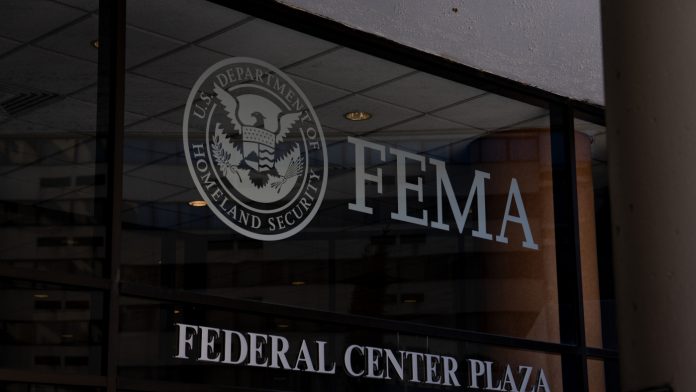
The Federal Emergency Management Agency headquarters in Washington, D.C.

Zayrha Rodriguez/NPR


hide caption

toggle caption

Zayrha Rodriguez/NPR

Erin McMahon says the Federal Emergency Management Agency (FEMA) owes her state, Oregon, a lot of money, and it’s starting to cause disruptions.

“In total, we’ve got $129 million in federal dollars that are frozen,” said McMahon, the director of Oregon’s Department of Emergency Management. She said FEMA owes Oregon that money for disasters and disaster mitigation for events like severe winter storms, flooding, mudslides and wildfires.

On top of that, McMahon said money to pay the salaries of local emergency managers across the state comes from FEMA.

“ We’re not gonna be able to pay them in April unless we get the funding from the federal government,” she told NPR.

Since January, the Trump administration has held up federal money across many different agencies while it says it’s reviewing the spending. Along with Oregon, Democratic officials from 21 states and the District of Columbia sued, saying the trillions in federal dollars were already allocated by Congress. A federal judge on March 6 ordered that the money start flowing again.

But the states are telling the judge that, in particular with the FEMA funding, the administration is not following his order.

“The Court’s intervention is necessary,” the states wrote in a filing last week, because they “have continued to experience significant obstacles to accessing federal funds.”

FEMA did not respond to NPR’s request for an interview or a statement. But in a court filing, the Trump administration said that it is complying with the court’s injunction. It said the funding is not frozen, it’s just being “reviewed” for fraud, waste or abuse, and that FEMA continues to process payments as quickly as possible.

Still, officials from states including Oregon, Hawaii, Colorado, Arizona and Illinois say they are still waiting on those FEMA payments.

Some individuals have felt the impact of the disruption in funding too.

Jason Frey and his wife live in California and own a condo on Maui. Since the wildfires hit the Hawaiian island nearly two years ago, they’ve been able to offer up their unit to an elderly man who lost his home. FEMA pays the rent.

But two weeks ago, Frey got an email saying that the FEMA rent money would be delayed because of the Trump administration’s spending pause.

“We’ve been really stressed out about it,” Frey told NPR.

A scene of destruction after the wildfire in Lahaina in August.

A scene of destruction after the wildfire in Lahaina, Maui in August 2023.

Claire Harbage/NPR


hide caption

toggle caption

Claire Harbage/NPR

Frey called his bank asking if he could get some kind of pause on making his mortgage payments for the condo. The bank said no.

“And so we’re scrambling to figure out, not only that, like, what’s going to happen with the survivor?” Frey said he couldn’t afford to house him for free and worried about having to evict the man living in their condo. “I hate using that word because … this is not his fault.”

Disaster aid recipients have complained in the past about federal money taking a while to arrive. Still, the states suing the Trump administration say this delay is different. There’s been a pattern in other lawsuits against the Trump administration where plaintiffs say the government is not complying with judges’ orders, while the Trump administration argues that it is.

“The administration, the Department of Justice lawyers, are still engaging with the courts,” said Deborah Pearlstein, a law professor at Princeton University who studies limits on presidential power. She says so far no federal court has said that the Trump administration has acted in open defiance of judges’ orders.

“They’re still filing briefs, the courts are filing orders, they’re being responsive,” said Pearlstein.

“ No federal court has issued an order of contempt,” she said, adding, “ but if we see that … that’s a really important blinking red light.”

At least some FEMA money is beginning to flow again. It’s unclear how much and who is getting it. But some groups that work with disaster survivors say they are starting to get payments.

The company that contracts with FEMA to route rent checks to landlords including Frey tells NPR that it has now received a deposit into its account from FEMA and can now pay the landlords housing disaster survivors.

“The relief that we got with that message,” said Frey, “now it sounds like things are going well.”

Still, he said he can’t help but wonder whether there will be ongoing disruptions at FEMA.

“You kind of sit there and think, OK … they’re not gonna put fire survivors on the street,” Frey said, “but then again, you kinda look at what’s happening elsewhere.”

Frey points to the Trump administration trying to shut down entire agencies and worries FEMA might be next. Trump administration officials have talked about eliminating it.

Meanwhile, officials overseeing emergency management for entire states say they’ve been waiting on FEMA money and have plenty of worries of their own.

McMahon says the frozen salary money and talk of eliminating FEMA is stressing out the people she oversees working in emergency management in Oregon.

“ The uncertainty that this has created with them, with their jobs … is really disruptive and it’s truly disappointing,” McMahon said. She said she has people working hard right now responding to flooding in the southern and eastern part of the state, and “this quite frankly is a distraction from what they need to be focused on.”

‘I’m Here! Can You Hear Me?’: One Family’s Story of Death in Gaza

0

There were times, before Israeli airstrikes on Gaza shattered the two-month-old cease-fire on March 18, when Huda Abu Teir and her family could almost believe things might go back to normal.

After fleeing from their home to a shelter for displaced people, and then to a tent, another shelter and on to another encampment during 15 months of war — six or seven displacements in all — they had returned to their house in Abasan al-Kabira, in southeastern Gaza, where they lived with Huda’s grandparents and uncles.

Back at home a few weeks ago, Huda, 19, threw a pizza party for her cousins, said one cousin, Fatma al-Shawwaf, 20. The other girls teased Huda: Shouldn’t you be studying? Huda, who was set on becoming a nurse, always seemed to be studying. But Huda laughingly retorted that she liked having fun, too.

The day before Israeli airstrikes resumed, Huda asked her Uncle Nour, who taught technology, if he could help her go over the material for her high school exams. He promised her a study session the next evening, he said.

Huda Abu Teir wanted to become a nurse. Credit…Via Abu Teir family.

But around midnight, Huda’s brother Abdullah, 15, heard an explosion. “What was that?” he screamed to his father, who had no time to answer before the next blast, this time over their heads and under their feet all at once.

Abdullah was sent flying onto a neighbor’s roof, he said. Pieces of the house he had grown up in smoldered around him. He felt a sharp pain in his right eye and couldn’t see much. He could only scream: “I’m here! Can you hear me?”

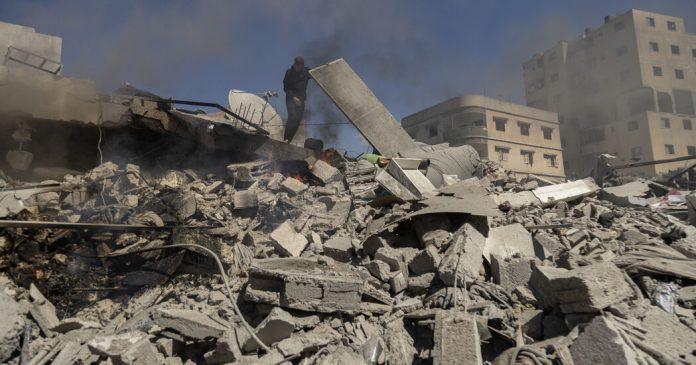
Startled awake by the explosions and the screaming, a cousin who lived nearby, Qasim, 35, sprinted down the street through the dark. The four-story house that Huda and Abdullah’s grandparents had built nearly three decades ago had all but collapsed, he said, the upper floors sandwiched flat atop the lower ones.

Using his phone as a flashlight, Qasim stepped inside and saw Huda’s grandmother, Shawqia, 63, lying in the rubble, bleeding. She was not moving.

Others who lived there had been flung outside by the force of the blast, Qasim said. Everywhere, people were bleeding from their noses or ears.

Huda was one of the eight killed, along with her parents: Asmaa, 35, who had taken care of all the Abu Teirs whenever Shawqia went to Egypt for thyroid cancer treatment, and Mohammed, 42, who worked as a security officer at the Rafah border crossing for the Hamas-led government, relatives said.

Huda’s cousin Anas, 13, was breathing when they found him. But an ambulance didn’t arrive for nearly an hour, Qasim said.

Anas died waiting. His two younger sisters, Jana, 11, and Leen, 6, and his mother, Fulla Abu Teir, 29, were also killed.

Shawqia was dead, too. Her husband, Suleiman, had died early in the war, relatives said, when his heart condition flared up after a nearby airstrike.

“We never thought such massive attacks would happen again,” Qasim said two days later at the European Gaza Hospital near Khan Younis. “We thought the fighting had exhausted both sides, and that war wouldn’t start again.”

The Israeli military said that it had targeted a Hamas operative who “stayed inside a building” on March 18, but did not identify the person or specify whether it meant the Abu Teirs’ home. Family members said there was no reason they would have been targeted.

Gaza has resumed counting its daily dead. The Israeli airstrikes that night killed more than 400 people, and barrages since then have killed about 600 more, the Gaza health ministry said. The ministry’s figures do not distinguish between civilians and combatants, though Hamas publicly announced the deaths of several senior officials in last month’s initial attacks.

Israel said it had renewed airstrikes on Hamas sites and operatives to force the group to release more Israeli hostages after Hamas rejected new Israeli demands.

A New York Times investigation found that the Israeli military has loosened its rules around how many civilians it can endanger with each airstrike in pursuit of Hamas fighters, who Israel says are embedded among civilians.

In all, Gaza health officials say, more than 50,000 people have been killed since the war began in October 2023, after a Hamas-led attack on Israel that killed about 1,200 people and took about 250 more captive. Israel’s response has crushed entire families, whole neighborhoods, Gaza’s health care system, its educational institutions, its infrastructure and most of its economy.

Abdullah, Huda’s 15-year-old brother, knew little of what happened that night two weeks ago. After the airstrike, he managed to push aside the broken water tank and heating panel he was trapped under before blacking out, he said two days later. He woke up in the hospital, pain singeing both eyes, his vision still blurry.

Nobody had told him yet that Huda was dead, or his parents, or that his brother Maher was in intensive care.

Abdullah was the third of five. His father had fallen for his mother, a cousin, when they were still teenagers. In a society where most marriages are arranged, relatives remarked on Mohammed and Asmaa’s visible tenderness toward each other, Qasim, a cousin, said.

Family was everything. Mohammed always threw big birthday parties for the children. And when one of Mohammed’s sisters, also called Huda, was recovering from a C-section, Asmaa bathed and cooked for her as if she were her own sister, the sister recalled.

Qasim remembered Mohammed bursting with pride when his eldest daughter, Bayan, got married. He jokingly asked Huda if she wanted to get married next, even before graduating, as some Gaza girls did.

Huda flew into a rage, her sister Amira remembered. She was the kind of kid who doodled “Nurse Huda in the future” in her notebooks. She loved weddings, and shopping, too — for skin care, for stylish dresses. But marriage could wait.

Their grandmother was more traditional. Shawqia was the backbone of the family, dispensing home-cooked food and help whenever anyone needed it and relying on her faith for strength, her family said.

Before the war, the family looked forward every year to the day before Ramadan, when Shawqia would invite everyone over for a giant meal in the garden before they began their daily fasts for the holy month. Maftoul, a Palestinian couscous dish, was her specialty, her family recalled: No one else was allowed to make it or fiddle with the spices she put in it.

When the Abu Teirs were sheltering in the southern city of Rafah early last year, Shawqia made a daily habit of visiting every son and daughter’s family in their respective tents to check in, her daughter Huda said. She sat and helped her grandchildren memorize verses of the Quran, feeding them dates and cookies.

At one point during the war, the Abu Teirs took refuge with another family in central Gaza. Grateful, Shawqia’s husband, Suleiman, promised to repay them when peace returned, their son Nour said.

Suleiman died shortly after. But Shawqia remembered their promise.

Earlier this month, she made several batches of maftoul and asked one of her sons to deliver them to the family who had hosted them. She was killed a week later.