Thursday, November 12, 2026
Home Blog Page 64

Immigration Officials Detain Former Taliban Ambassador to Spain

0

The Taliban’s former ambassador to Spain was detained by U.S. immigration officials while entering the United States on Saturday, and remained in custody after a federal judge declined to order his release on Monday.

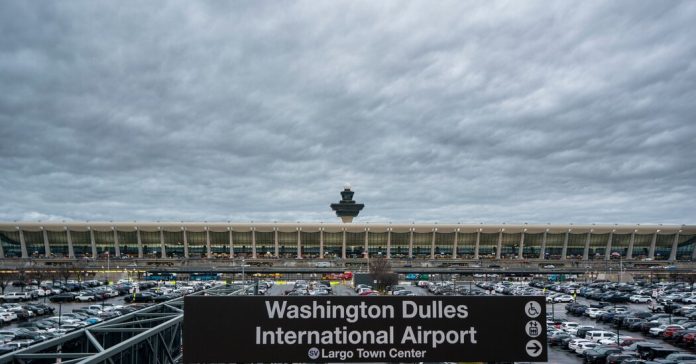
The former Afghan diplomat, Mohammad Rahim Wahidi, was detained at Washington Dulles International Airport under what his lawyer described as a weaponization of part of the Immigration and Nationality Act. Under the law, the secretary of state can deport a noncitizen determined to be a national security risk.

Mr. Wahidi is a lawful permanent resident and his wife, Mary Shakeri-Wahidi, is a U.S. citizen, according to a court filing from his lawyer, Hassan Ahmad.

The Trump administration has recently cited similar legal justifications for canceling the visas of hundreds of students whose participation in pro-Palestinian demonstrations has appeared to become grounds for detention and deportation. In targeting student activists such as Mahmoud Khalil, Rumeysa Ozturk and Momodou Taal for deportation, the administration has tried to link their protests against Israel to “adverse foreign policy consequences” that would justify their removal.

Mr. Wahidi’s case appears to be different.

According to the filing asking for his release, Mr. Wahidi’s brother-in-law is wanted by the United States in connection with a plot to assassinate an Iranian journalist that the Justice Department detailed in a news release in November.

Mr. Wahidi was stripped of his title in Spain over accusations of sexual assault during his time there, but criminal charges were never filed against him and he was allowed to leave the country, according to the filing.

Upon returning to the United States on a Turkish Airlines flight on Saturday, Mr. Wahidi was detained for more than 30 hours without access to a lawyer, according to the filing. He was then interrogated by “an unclear number of officers” who appeared to be from the F.B.I., Mr. Ahmad wrote in the petition.

Mr. Ahmad has also represented Badar Khan Suri, a postdoctoral student at Georgetown University who was targeted for deportation over his involvement in campus protests there.

After Mr. Wahidi’s petition was filed, Judge Leonie Brinkema of the U.S. District Court for the Eastern District of Virginia blocked the government from transferring Mr. Wahidi out of the area. In cases involving the student activists, people have routinely been moved to Immigration and Customs Enforcement detention centers in Louisiana, hundreds of miles from where they were initially arrested.

Neither Mr. Ahmad nor a spokesperson for Customs and Border Protection responded to requests for comment.

Judge Brinkema declined to immediately order Mr. Wahidi’s release, saying that “at this point the court cannot offer any relief.”

While the case proceeds, she ordered the government to “comply with C.B.P. short-term detention standards” and not to restrict Mr. Wahidi from speaking to a lawyer.
Scientists say Trump policies are causing a ‘climate of fear’ in research : NPR

0

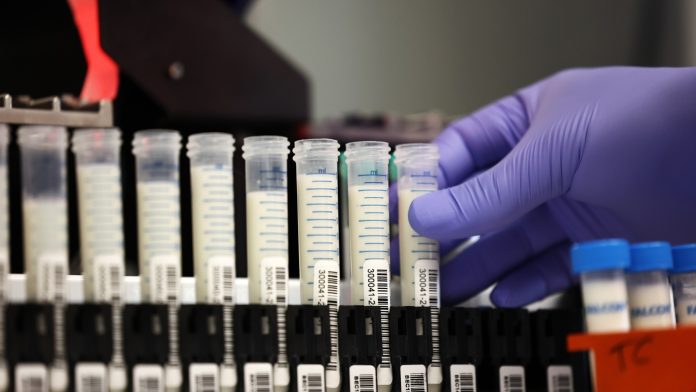
A lab manager in the molecular diagnostic lab prepares milk samples for testing at the Animal Health Diagnostic Center at Cornell University in Ithaca, N.Y., on Dec. 10, 2024, amid increased concern over a strain of the H5N1 avian flu.

Michael M. Santiago/Getty Images


hide caption

toggle caption

Michael M. Santiago/Getty Images

Nearly 2,000 leading American scientists, including dozens of Nobel Prize winners, have issued a stark warning that the U.S. lead in science is being “decimated” by the Trump administration’s cuts to research and a growing “climate of fear” that jeopardizes independent research.

An open letter from members of the U.S. National Academies of Sciences, Engineering, and Medicine made public on Monday outlines grave concerns.

“A climate of fear has descended on the research community,” the letter says. Researchers fearing for their jobs are “removing their names from publications, abandoning studies, and rewriting grant proposals and papers to remove scientifically accurate terms (such as ‘climate change’) that agencies are flagging as objectionable.”

“Science gave us the smartphones in our pockets, the navigation systems in our cars, and life-saving medical care,” the letter says. “We count on engineers when we drive across bridges and fly in airplanes. Businesses and farmers rely on science and engineering for product innovation, technological advances, and weather forecasting. Science helps humanity protect the planet and keeps pollutants and toxins out of our air, water, and food.”

As the administration cuts federal funding for scientific agencies, ends grants to scientists and defunds laboratories, there is “real danger in this moment,” the authors say. “[T]he nation’s scientific enterprise is being decimated.”

In recent weeks, the National Institutes of Health (NIH) has halted consideration of new grant applications and delayed decisions about funding disease research. As of Tuesday, layoff notices were also going out at NIH and FDA, but details were not immediately known.

In addition, the Trump White House’s effort to eliminate what it views as “woke” initiatives have included banning words and phrases such as “health disparities” and “climate science.” Just days ago, the NIH also rescinded a scientific integrity policy aimed at thwarting political interference in order to “ensure alignment with the Administration’s priorities.”

“We’re seeing this across sectors in which the government is exerting pressure to make changes that conform with ideological perspectives rather than … intellectual independence,” according to Dr. Steven Woolf, a professor of family medicine and population health at Virginia Commonwealth University, who is a co-author of the letter.

“The very research that would help improve our health is being defunded,” he says. “This is likely to have the opposite effect.”

In one instance, a public health study about inequities in smoking for rural young adults was withdrawn from publication in Public Health Reports, the official journal of the U.S. Surgeon General and the U.S. Public Health Service. The study’s authors say that after the paper was accepted for publication, editors instructed them to remove language relating to gender and sexual orientation, citing compliance with Trump’s executive order.

As a result, study co-author Tamar Antin, director of the Center for Critical Public Health, says she and her colleagues opted to withdraw publication in the peer-reviewed journal.

“The expectation that we would remove that information really felt like political interference in science and in fact, was clearly interference in science,” she says.

Antin says she and her fellow researchers plan to submit the paper elsewhere, but “we will not be submitting it to a journal that is supported by the federal government at this time, because this is a sign to us that they are not upholding principles of scientific integrity.”

NPR reached out to the Department of Health and Human Services, which oversees Public Health Reports about the study’s withdrawal and the scientists’ open letter but did not immediately receive a reply.

The assault on scientific inquiry is unlike anything that Dr. Ana V. Diez Roux, a professor of epidemiology at the Dornsife School of Public Health at Drexel University, says she has seen in her 30 years of research. Like Woolf, Roux is a co-author of the open letter.

“I think this is what’s so shocking — it’s arbitrary cuts to research, federally funded research, completely arbitrary and sudden cuts to projects that have been approved and reviewed by committees of scientists,” Roux says.

She says she’s concerned that the Trump administration’s stifling of scientific freedom could have a chilling effect on the future of science in the U.S.

“I fear that we are going to lose our ability to attract these very, very capable young scientists,” she says.

“In the past they have made careers in the United States and have contributed to the health of the American people in many ways and globally,” Roux says. “Now, [they may] feel that they’re no longer welcome here.”

VCU’s Woolf agrees, saying public investment in U.S. science since the end of World War II has made it “the envy of the world.”

But that could easily be undone, he cautions. “The broad, sweeping effects of the administration’s attack on … our research infrastructure is going to affect the lives of Americans in diverse ways,” he says. “And the effects are likely to be long-lasting.”

Trump’s Tariffs Are Coming, but at a Cost to U.S. Alliances

0

The incoming German chancellor, more convinced than ever that the defense and trade relationship with Washington is crumbling, has made plans to execute on his goal of “independence from the U.S.A.”

He’s not the only one.

The new Canadian prime minister said last week that “the old relationship we had with the United States” — the tightest of military and economic partnerships — is now “over.” Poland’s president is musing publicly about getting nuclear weapons. And the new leader of Greenland, host to American air bases since World War II, reacted to the uninvited visit of a high-level American delegation with indignation.

“President Trump says that the United States ‘will get Greenland,’” Prime Minister Jens-Frederik Nielsen said on social media. “Let me be clear: The United States will not get it. We do not belong to anyone else. We decide our own future.”

These are the results so far of President Trump’s threats to abandon NATO allies whose contributions he judges insufficient, his declaration that the European Union was designed “to screw” the United States and his efforts to expand the United States’ land mass. The main reaction is resistance all around. Now, into this maelstrom of threats, alienation and recriminations, President Trump is expected to announce his “Liberation Day” tariffs on Wednesday.

The details of the tariffs are still unclear, which is one reason the markets are so on edge. Political leaders are on edge as well, because Mr. Trump has made clear that the tariffs will fall on adversaries like China as well as nations that, until recently, were considered America’s closest defense and intelligence allies.

Trump administration officials do not dwell on the price that will be paid by consumers, nor on the effects that the inevitable retaliation will have on American farmers. But just as curiously, the administration has not described any cost-benefit analysis of the president’s actions, such as whether the revenue gained is worth the damage done to America’s central alliances.

Gone are the days when Mr. Trump merely threatened to pull troops out of nations like South Korea and Japan that run a trade surplus with the United States. Now, he wants them to pay up — for some kind of ill-defined mix of subsidies to their own industries, taxes on American goods, free-riding on American security and refusal of his expansionist demands.

Mr. Trump is already showing signs of concern that his targets may team up against him.

A few days ago, he posted a middle-of-the-night warning on social media to his closest allies that “if the European Union works with Canada in order to do economic harm to the USA, large scale Tariffs, far larger than currently planned, will be placed on them both.”

On Sunday China declared that its trade minister had agreed with Japan and South Korea — Washington’s two most powerful treaty allies in the Pacific — on a common response to Mr. Trump’s actions. In Seoul, the statement was described as an “exaggerated” version of a discussion about new supply chains. But Beijing clearly wanted to leave the impression that it can work with America’s allies if Washington will not.

Viewed one way, Mr. Trump’s “Liberation Day” is the logical extension of the goal he announced in his inaugural address. “Instead of taxing our citizens to enrich other countries,” he said, “we will tariff and tax foreign countries to enrich our citizens.” That suggests he does not intend the tariffs to be a negotiating tool. Instead, they are expected to be a permanent source of revenue and — if you believe officials like Commerce Secretary Howard Lutnick — “they are going to reduce the deficit and balance the budget.” He added: “Let the people who live off our economy pay, and we will pay less.”

Viewed less optimistically, the imposition of the tariffs may well kick out the last of the three pillars of the trans-Atlantic, trans-Pacific and Canadian alliances. The defense relationships, the trade interdependencies and the bond nurtured over 80 years in those regions have all been intertwined.

Those three strands were deliberately designed to be reinforcing. To Mr. Trump and his allies, though, they have been twisted to take advantage of the United States, a view made clear in the exchanges in the now-famous Signal chat made public last week. It drove home the fact that while President Trump is taking on all of America’s allies, he harbors a particular animus for Europe.

As they debated the timing and wisdom of a strike on the Houthis for their attacks on shipping, Vice President JD Vance wondered whether “we are making a mistake” since it is Europe and Egypt that are most dependent on moving ships through the Suez Canal. (In fact, China is among the biggest beneficiaries, but it was never mentioned.)

“I just hate bailing out Europe again,” he wrote, leading the defense secretary, Pete Hegseth, to respond, “I fully share your loathing of European free-loading. It’s PATHETIC.” They went on to discuss that, somehow, Europe would be made to pay for the cost of the operation — even though the European allies appear to have been kept in the dark about the planned attack.

“There needs to be some further economic gain extracted in return,” Stephen Miller, the deputy chief of staff in the White House, noted in the chat.

Ivo Daalder, a former U.S. ambassador to NATO, wrote recently that the clear conclusion other countries can reach from the chat is “apparently, the U.S. military is for hire, even if there has been no request for its services.”

“And if you want us — you have to pay,” he continued.

Somewhat remarkably, Mr. Trump’s national security officials are acting as if all is normal, as if their boss is not upending the system. On Thursday, a day after Mr. Trump is expected to announce the tariffs, Secretary of State Marco Rubio will represent the United States at a long-scheduled NATO meeting that will be heavily focused on the war in Ukraine.

He will have to navigate the resentments of fellow foreign ministers, most of whom argue, largely in private, that the United States is making a fundamental error by seeking to normalize relations with Russia — rather than contain it and punish it for invading Ukraine — and that it is seeking to hobble their economies. (Occasionally these leak out: Justin Trudeau, before he left office as prime minister of Canada, told a Canadian audience that Mr. Trump was attempting “a total collapse of the Canadian economy because that will make it easier to annex us”.)

The result is that the NATO nations are meeting regularly to discuss whether it is possible to design a peacekeeping or observer force to go into Ukraine, in the event that a cease-fire takes hold, without the United States. They are discussing whether Britain and France’s nuclear umbrella could extend over the other NATO allies, because the United States may no longer be relied upon. It is an erosion of trust that, just two-and-a-half months ago, seemed almost unthinkable.

Such discussions are prompting a long-overdue recognition by European nations that they will have to spend significantly more on defense, though it would probably take a decade or longer to replicate the capabilities the United States brings to the alliance. The downside is that should there be a world crisis in coming years, the United States may have to enter it without its greatest force-multiplier: its allies.

“In the 1950s the U.S. thought NATO was going to be one of many alliances,” Kori Schake, the director of foreign and defense Policy Studies at the American Enterprise Institute, said on Monday.

“The reason that NATO survived and prospered was because the common values and the trade relationship supported the security commitments,” Ms. Schake, a defense official in President George W. Bush’s first administration who writes extensively on the history of alliances, added.

“Who does President Trump think will help us when we need allied forces for operations critical to the security of the United States?” she asked. “And who is going to sympathize with Americans if there is another 9/11, given the behavior of the government of the United States?”

Consider This from NPR : NPR

0

World economies are jittery ahead of President Donald Trump’s “Liberation Day” when he is set to unleash tariffs against multiple countries.

Jim Watson/AFP via Getty Images


hide caption

toggle caption

Jim Watson/AFP via Getty Images


World economies are jittery ahead of President Donald Trump’s “Liberation Day” when he is set to unleash tariffs against multiple countries.

Jim Watson/AFP via Getty Images

In President Donald Trump’s telling, tariffs are the political equivalent of duct tape: you can use them to fix anything.

For example, they’re a negotiating tool — he used the threat of tariffs to pressure Canada and Mexico to implement border policies he liked. He also sees tariffs as a revenue source that might help offset his proposed $4.5 trillion in tax cuts and as a shield to protect American manufacturing jobs from overseas competition.

With all of these potentially conflicting aims, and with another major round of tariffs expected to be announced on Wednesday, what is the strategy behind them?

Rana Foroohar, a Financial Times columnist and the author of Homecoming: The Path to Prosperity in a Post-Global World, says they’re an “experiment” that could lead to a big change in the way the global economy works.

For sponsor-free episodes of Consider This, sign up for Consider This+ via Apple Podcasts or at plus.npr.org.

Email us at [email protected].

This episode was produced by Matthew Cloutier and Brianna Scott. It was edited by Connor Donevan and Courtney Dorning. Our executive producer is Sami Yenigun.

Wednesday Briefing: An Elections Test for Trump

0

Two states held elections yesterday that will provide hints as to how Americans feel about President Trump after 10 weeks back in office.

In Wisconsin, a race for a State Supreme Court seat has morphed into a referendum on Elon Musk’s role in politics. The billionaire, who leads the Trump administration’s cost-cutting efforts, and groups tied to him have spent more than $25 million to support a conservative candidate. Musk has become a deeply polarizing figure among Wisconsinites, many of whom said they would like him to stay out of their business.

“Most statewide races here are very close,” my colleague Reid Epstein, who is covering the vote in Wisconsin, said. “What it has never had before is a single political benefactor having so much skin in the game behind one candidate.”

In Florida, where Trump enjoys strong support, one of two elections for seats in the House of Representatives suddenly seems too close for comfort for Republicans. Democrats still expect to lose, but are watching closely for signs that their party is ascendant.

A week after 15 rescue workers were killed during an evacuation mission in Gaza, the U.N. said on Sunday that Israel had killed them all and dumped most of the bodies in a mass grave. It was a rare accusation from the U.N., which is typically cautious about definitively assigning blame.

An Israeli military spokesman said on Monday that nine of those killed were Palestinian militants, and that their vehicles had not received permission to be in the area. But the U.N. and other aid groups said the dead were humanitarian workers, with clearly marked vehicles. Israeli forces had bulldozed and crushed the ambulances, a fire truck and a U.N. vehicle, U.N. officials said.

Lebanon: Israel launched airstrikes without an evacuation warning on the southern outskirts of Beirut yesterday, the second time in less than a week, killing at least four people.

As Bangladesh tries to rebuild its democracy after ousting its authoritarian leader, Islamic extremists are trying to move the nation toward fundamentalism, our correspondents Mujib Mashal and Saif Hasnat reported from the country.

One town declared that young women couldn’t play soccer. Another forced the police to free a man who had harassed a woman for not covering her hair in public. A rally in Dhaka, the capital, called for the death penalty for anyone who disrespected Islam.

Critics say the country’s interim government, led by the Nobel laureate Muhammad Yunus, needs to push back harder. But his lieutenants describe a delicate balancing act: protecting the right to free speech and protest.


Martha Argerich, 83, is one of the world’s most astonishing pianists. She has the finger strength to shatter chestnuts, can make a Steinway sing and performs dizzying acrobatics across the keys. Just don’t ask her about it — she’s notoriously private.

It took all of our reporter’s cajoling powers to earn her trust. Read the profile and listen to her play.

Lives lived: Hank Steinbrecher, a key figure in raising American soccer’s profile on the world stage, died at 77.

Are you considering a trip to the U.S., but the news has you a little worried? The Trump administration’s “enhanced vetting” policy has flagged legal immigrants and green card holders — even citizens should prepare for additional questioning.

The rules haven’t changed, one lawyer said, but border agents are employing a “zero-tolerance policy.” Check your visa, shut off your phone and be aware of what’s on your social media. Here’s our current guide to visiting or returning to the U.S.


That’s it for today. See you tomorrow. — Emmett

We welcome your feedback. Send us your suggestions at [email protected].

Aging, disability and poverty-fighting agencies gutted amid HHS layoffs : Shots

0

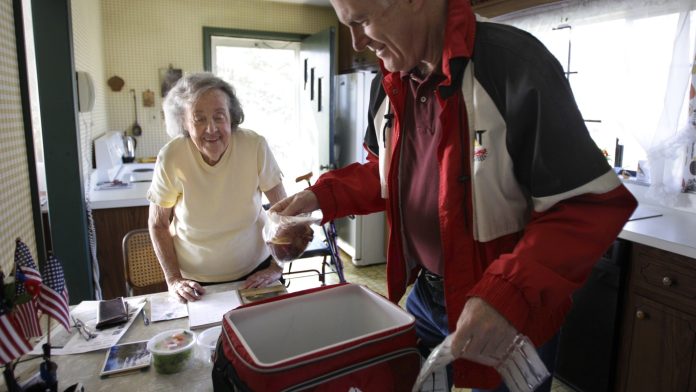
Meals on Wheels, which delivers food to homebound seniors, is among the programs for the elderly and disabled now at risk now because federal agencies have fired staff who administer them.

Amy Sancetta/AP


hide caption

toggle caption

Amy Sancetta/AP

The layoffs at the Department of Health and Human Services slashed the staffs of major federal aging, disability and anti-poverty programs, leaving the future of those programs uncertain.

At least 40% of staff got layoff notices and many were turned away at the front door Tuesday when they showed up for work at the Administration for Community Living, or ACL, which coordinates federal policy on aging and disability. That’s according to the agency’s former director under the Biden Administration, Alison Barkoff, who says she talked to multiple members of her former staff.

The agency funds programs that run senior centers and distribute 216 million meals a year to older and disabled people through the Meals on Wheels program.

“The programs that ACL implements improve the lives of literally tens of millions of older adults, people with disabilities and their families and caregivers,” says Barkoff, now director of a health law program at George Washington University’s Milken Institute School of Public Health. “There’s no way to have these RIFs and not impact the programs and the people who rely on them.”

Last week, the announcement of the coming layoffs at HHS said that ACL’s responsibilities would go to different parts of HHS.

But Project 2025, the Heritage Foundation’s guide for reshaping government, had suggested ACL take on work on special education services once the Department of Education was dismantled. It’s not clear where that work will be done now.

In addition, every staffer was laid off from the Division of Energy Assistance, according to two employees who lost their jobs on Tuesday, Andrew Germain and Vikki Pretlow. The office runs the Low-Income Home Energy Assistance Program, or LIHEAP, which helps 5.9 million low-income households pay heat and cooling bills and pay for home repairs to boost energy efficiency.

The staffers said layoffs of about 20 workers came as a surprise and they expressed concern about whether the program would continue once funding runs out at the end of September and impoverished people face rising heating bills in fall and winter.

LIHEAP provides “life-saving services,” says Germain. One way the funds are used is to help low-income people pay their electric bills when they rely upon oxygen or other medical devices or need to keep the refrigerator running to store insulin or other medicines.

Germain ran compliance monitoring to make sure states used the LIHEAP money correctly. He said fraud is rare. But LIHEAP was scrutinized by Project 2025. It noted a “loophole” – fixed by Congress more than ten years ago, in 2014 – that was used by about 10 states to give minimal energy assistance in a way that then qualified impoverished people for a bigger SNAP, or food stamp, payment.

Congress appropriated $4.1 billion to LIHEAP in fiscal year 2024. Germain says without federal staff to run the program, it’s unclear how it will continue after the current appropriation ends in September.

Pretlow, who lost her job as a program specialist in the LIHEAP office, said: “You can be paid much more in a different place, you can be praised more in a different place, you can be appreciated more in a different place. But the people I worked with have a great heart for service.”

France’s Parliament Is Set to Debate Changing Rape Law to Include Consent

0

Many countries require that consent be given before sex — and have written that into their rape laws. France is not among them.

Now two lawmakers hope to change that, and they got a step closer Tuesday night when the lower house of the French Parliament passed a bill that expands the definition of rape to include nonconsensual penetration.

Their cause gained traction after a horrific trial last fall in which dozens of men were convicted of raping Gisèle Pelicot while she was in a deeply drugged state.

“This is a starting point, not a final one,” Marie-Charlotte Garin, one of the two lawmakers who proposed the bill, told the National Assembly after the vote. “We are moving from a culture of rape to a culture of consent, and this is the first stone we are throwing against the wall of impunity.”

The bill will go on to be debated in the upper house.

Here is some background on why the change is being suggested and who objects.

French law defines rape as any form of sexual penetration committed on another person — woman or man — by violence, constraint, threat or surprise.

Ms. Garin, one of the two lawmakers proposing the change, said that experts report that up to 70 percent of rape victims freeze or dissociate during sex, rendering them incapable of resisting.

Yet a lack of resistance is often perceived by the courts as permission. Catherine Le Magueresse, a legal scholar and proponent of the change, said, “We have court decisions where it is written, ‘In the absence of resistance from Madame, Monsieur could not have been aware of raping her.’”

In most rape cases, attackers’ main defense is that they believed the plaintiff wanted to have sex, Ms. Le Magueresse said.

“We would be adding a safety step for women, and then he couldn’t even say, ‘I thought she agreed,’” added Ms. Le Magueresse, author of the book “The Consent Traps.”

Other backers of the change say it would broaden the lens of police investigations to look into whether the accused actively sought and acquired the consent of the plaintiff, instead of mostly looking for proof of her resistance.

And, perhaps most important, they believe it will reduce the level of impunity when it comes to the crime in France.

Yes. Here is a sampling.

In Canada, the definition of rape has included affirmative consent since 1983.

In Europe, the real push to include consent in the penal code occurred after the arrival of #MeToo in 2017. Since then, the number of European countries including consent in their laws has grown to 20 from seven, according to a 2024 report in the International Journal of Law, Crime and Justice.

In the United States, the definition of rape varies from state to state. A small number of states require affirmative consent, according to Deborah Tuerkheimer, a law professor at Northwestern University.

Among those against the change are some feminist activists and lawyers. They say it will actually make things worse for victims by keeping investigators’ attention on victims’ actions rather than on those of the accused.

“It’s a total trap,” said Lorraine Questiaux, a lawyer who focuses on defending female victims of violence. “Rape has nothing to do with consent. It is about domination.”

The French feminist philosopher Manon Garcia, who has published a book about the Pelicot trial, said changing the law would not fix the deeper social problems the case exposed.

What’s needed is not “a small change in the legal definition of rape,” she said during an interview with the radio station France Culture. “It’s having funds for the police, funds for the justice systems, funds for education, educating little boys and men to be introspective and put themselves in other people’s shoes, to understand that women are human beings they can love.”

The Pelicot case stunned France. Ms. Pelicot’s ex-husband was convicted of inviting other men to join him in raping her after he had drugged her into a stupor. The court also convicted the 50 other defendants, most of them on rape charges.

French jurisprudence already holds that penetrating someone who is drugged or asleep is automatically rape.

Still, the head judge, Roger Arata, asked one defendant after another if they believed Ms. Pelicot had consented to sex. Many admitted that they had never spoken to her and said that they believed her husband consented for her, a shock to many in France.

“We would not be here without the Pelicot trial,” Ms. Garin, the lawmaker, said. “It revealed how big rape culture is in France and, because of that, it became politicly unacceptable to not change something in the law.”

Cory Booker uses many, many hours on senate floor to criticize Trump agenda

0

In D.C., New Jersey Senator Cory Booker has been giving a speech on the Senate floor since 7pm on Monday night, only yielding for questions from other Democrats.

Betty Webb, Who Helped Bletchley Park Code Breakers, Dies at 101

0

Charlotte Webb, who as a young woman helped code breakers decipher enemy signals at Britain’s top-secret Bletchley Park, died on Monday. She was 101.

Her death was confirmed by the Women’s Royal Army Corps Association and by the Bletchley Park Trust.

Ms. Webb, known as Betty, was 18 when she joined the Auxiliary Territorial Service, the women’s branch of the British Army, and was assigned to work at the base in Buckinghamshire where Bletchley Park was located. From 1941 to 1945, she helped in the decryption of German messages, and also worked on Japanese signals.

In 2015, Ms. Webb was appointed as Member of the Order of the British Empire and in 2021 she was awarded the Légion d’Honneur, France’s most prestigious honor. She was one of the last surviving members of the storied Bletchley Park code breaking team.

Ms. Webb was one of a handful of young women working at Bletchley, where mathematicians, cryptographers and code breakers endeavored to crack encrypted messages and gather information about the Axis powers.

She had been studying domestic sciences at a local college, but as war swept across Europe, she dropped out. “Several of us decided that we ought to be serving our country rather than just making sausage rolls,” she recalled for an oral history in 2012.

With German submarines on the hunt for Allied vessels in the Atlantic Ocean, the work of the cryptologists at Bletchley Park was critical to the Allied war effort. With the enemy messages decoded, Allied ships could change course and avoid peril.

Like others working at the site, Ms. Webb was bound by Britain’s strict Official Secrets Act, meaning she could not share her work with family members, friends or even others working at Bletchley.

The level of secrecy was such, she said, that she knew only vaguely how her role fit into the greater scheme of intelligence gathering. She was unable to tie anything she saw to specific events during the war. It was not until much later that she understood her part in the bigger picture.

At war’s end, she began looking for another job, but was hampered by her inability to tell employers just what she had been doing for the past few years. By a stroke of good fortune, one of the people she interviewed with was the headmaster of Ludlow Grammar School — a fellow Bletchley Park alum.

“He gave me a job without questions,” Ms. Webb said later. The two never spoke about the place, she said. She worked at the school as a secretary.

In the mid-1970s, some of the work done at Bletchley Park began to be declassified, but Ms. Webb said she did not talk about her experience until the 1990s, when she was asked if she could give talks.

“I suddenly realized that, yes, I could, I’m free, I don’t have to worry any more,” she said in the oral history. “But I was never able to tell my parents, as they died before 1975, and my husband wasn’t particularly interested.”

Over time, she increased her efforts to record for posterity the work done by the code breakers, publishing a book: “No More Secrets.”

In it, Ms. Webb offered glimpses into her work and described her upbringing — including the time she spent in Nazi Germany as a child before the war broke out. She recounted a small act of defiance, in which, she said, she had refused to give a verbal Nazi salute beside her classmates.

Charlotte Vine-Stevens was born on May 13, 1923, in Aston on Clun, in Shropshire.

In a tribute on Tuesday, the Women’s Royal Army Corps Association said, “Betty inspired women in the Army for decades, and we will continue to take pride in her service during WWII and beyond, and as a champion of female veterans.”

Why gold prices are surging to record highs : NPR

0

Gold prices have been hitting record highs. Pictured are gold bullion bars in Birmingham, England on Dec. 13, 2023.

Christopher Furlong/Getty Images/Getty Images Europe


hide caption

toggle caption

Christopher Furlong/Getty Images/Getty Images Europe

President Trump’s chaotic tariff policies continue to rock U.S. stock markets, which just ended their worst quarter in years. But for some investors, all of this uncertainty has a big gold lining.

The price of gold has been hitting all-time highs this week, as investors snap up something that’s often seen as a safe haven. Early Tuesday, gold futures hit a new record price of $3,177 per ounce, before falling back a little. But they are still up more than 18% from the start of the year — while the S&P 500 is down more than 4% over the same period.

The gold frenzy comes as markets around the world continue to panic over Trump’s tariffs, which are widely expected to increase prices for consumers. The trade war has also created massive uncertainty for businesses and investors. It’s also fueling global tensions between the United States and its largest trading partners — and stoking fears about the increasing probability of a U.S. recession.

The president has promised to roll out even more tariffs on Wednesday, which he’s calling “Liberation Day.” But the steep taxes he has already imposed — as well as the on-again, off-again way he has announced them — have already shaken investors, businesses, economists, and consumers.

Amid all this uncertainty, here are three things to know about the surge in the price of gold.

Gold prices have been turbocharged by tariffs 

The price of gold has been gradually rising for years, but it’s really hit a hot streak since the beginning of 2025.

Some analysts expect the price to keep climbing. Michael Widmer, head of metals research at Bank of America, last week published a report projecting that the price of gold would soar to $3,500 per ounce over the next 18 months.

In an interview with NPR, Widmer said that many factors have contributed to the years-long run-up in gold prices — but the recent surge has been “almost exclusively driven” by tariffs-related fears and uncertainty.

“It’s those tensions — the uncertainty about economic policies or the policy uncertainty — that have really been supportive for the gold market,” he says.

Gold may be known as a “safe haven” — but it can be volatile 

Despite its current years-long rally, Widmer cautions that gold can be volatile. (As investors have recently seen with both stocks and the price of Bitcoin, what goes up can always come back down.)

Yet gold has long enjoyed a reputation for offering safety in what’s known as the “fear trade.” As a glittering precious metal that can be held (and hoarded!), gold offers the appearance of safety and solidity next to stocks and other (often less-material) financial instruments.

“When it seems like the world is going to hell in a handbasket, gold usually appreciates,” says Lee Baker, a certified financial planner who is the founder and CEO of Claris Financial Advisors in Atlanta.

Gold prices have surged, but stock markets have tumbled as investors worry about Trump's tariffs.

Gold prices have surged, but stock markets have tumbled as investors worry about Trump’s tariffs.

Michael M. Santiago/Getty Images/Getty Images North America


hide caption

toggle caption

Michael M. Santiago/Getty Images/Getty Images North America

But rushing out and buying gold might not be right for everyone

Baker warns there can be downsides to buying and owning gold — even in times of crisis. For example, unlike stocks or bonds, gold doesn’t pay any dividends or interest. So the only way to make money from this investment is to buy some, and then hope to sell it after the price goes up.

There are also physical and logistical challenges to investing in gold — especially for people who want to buy the real thing. For example, buyers need to consider how to store it — and whether to pay for the security and insurance required to keep precious metals in their homes.

For those who are gold-curious but perhaps not ready to adopt a doomsday-prepper lifestyle, Baker notes that it’s possible to invest in gold-backed funds that don’t require physical ownership of precious metals.

Still, “if you’re buying gold right now just because you’re caught up in the buzz, because it’s going up — I’d probably say leave it alone,” he says. “Because it’s likely to lead to some form of disappointment.”

More broadly, Baker says the current gold frenzy highlights a larger lesson about investing in more than just one asset class, such as stocks.

“Your mama told you not to put all your eggs in one basket. It applies to investing as well,” he says. “Diversification matters.”