Thursday, November 12, 2026
Home Blog Page 66

Netanyahu Drops Nominee for Spy Chief After Backlash

0

Prime Minister Benjamin Netanyahu of Israel backed away from his nominee for the head of Israel’s domestic intelligence service on Tuesday after conservative allies attacked him for criticizing President Trump and Israeli media reported that he had protested judicial overhauls pushed by Mr. Netanyahu’s government.

Mr. Netanyahu had backed Eli Sharvit, a former commander of Israel’s navy, to lead the Shin Bet intelligence agency after he dismissed his predecessor, Ronen Bar, a decision that prompted protests. But the Israeli leader dropped Mr. Sharvit a day after the Monday announcement after a backlash from the right, partly because he had written a column two months ago criticizing Mr. Trump for rolling back policies to fight climate change.

Mr. Netanyahu’s office said that he had met with Mr. Sharvit to inform him that he would pursue other candidates for the job, without specifying a reason. As the country’s domestic security agency, The Shin Bet plays a key role in the war in Gaza and Israel’s decades-long occupation of the West Bank.

Mr. Netanyahu removed Mr. Bar from the post last month, saying he could no longer trust him. Critics called the move an attempt by Mr. Netanyahu to purge dissenting views from the top ranks of Israel’s security establishment and the decision prompted protests.

Under Mr. Bar’s direction, the Shin Bet has been involved in investigating some of Mr. Netanyahu’s aides’ ties with Qatar, including over accusations that they received payments from people connected to the Qatari government. Israel’s Supreme Court is scheduled to hear petitions against Mr. Bar’s removal by next week, and Israeli legal experts say it may reverse Mr. Netanyahu’s decision.

Mr. Netanyahu’s left-wing and centrist opponents had feared that he would try to tighten his grip over the agency by appointing a close adviser. But many hailed Mr. Sharvit, who retired from the military in 2021, as an experienced and capable soldier.

There was a fierce and immediate right-wing response, however.

In 2023, Mr. Sharvit participated in demonstrations against Mr. Netanyahu’s judicial overhaul, according to Yediot Aharonot, a major Israeli newspaper. The proposals, which aimed to weaken Israel’s judiciary, prompted mass protests as many Israelis decried them as a threat to the country’s democracy. Mr. Sharvit did not immediately respond to a request for comment.

Tally Gotliv, a lawmaker from Mr. Netanyahu’s Likud party, denounced Mr. Sharvit as someone who had “undermined” the prime minister. “I would not have nominated him to this important post,” she said in a video posted on social media. “Sir, think it over again.”

It then emerged that Mr. Sharvit had written an opinion column in January criticizing Mr. Trump’s policies rolling back efforts aimed at limiting pollution and strengthening the fossil fuel industry.

After leaving the military, Mr. Sharvit worked as an executive in the green energy sector, and the article dealt with Mr. Trump’s climate change policy rather than any of the sensitive security issues that fall under the purview of the Shin Bet. “Trump’s shortsightedness sends a terrible message to the world of disregard for scientific reality, the well-being of humanity, and responsibility to future generations,” Mr. Sharvit wrote in Calcalist, an Israeli economic daily.

Senator Lindsey Graham, Republican of South Carolina and a key ally of Mr. Trump, called for Mr. Netanyahu to withdraw Mr. Sharvit’s nomination, saying that his appointment was “beyond problematic.”

“The statements made by Eli Sharvit about President Trump and his polices will create unnecessary stress at a critical time,” Mr. Graham wrote on social media on Monday. “My advice to my Israeli friends is change course and do better vetting.”
Cory Booker speaks overnight in Senate against Trump : NPR

0

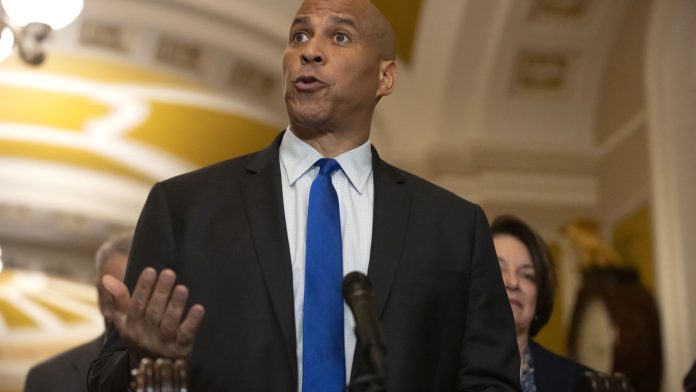
Sen. Cory Booker, D-N.J., pictured in March, started speaking on the Senate floor on Monday night in protest of the Trump administration’s policies.

Mark Schiefelbein/AP


hide caption

toggle caption

Mark Schiefelbein/AP

Sen. Cory Booker spent Monday night on the Senate floor, delivering a nonstop speech protesting the Trump administration’s policies.

The New Jersey Democrat took the podium at 7 p.m. EDT, vowing to speak “for as long as I am physically able.” He was still standing — with glasses on and papers in hand — as of 8 a.m. on Tuesday, taking periodic breaks by yielding to questions from several fellow Democrats.

“I’ve been hearing from people all over my state and indeed all over the nation calling upon folks in Congress to do more, to do things that recognize the urgency, the crisis of the moment,” Booker said in a video posted to social media beforehand. “And so we all have a responsibility, I believe, to do something different, to cause — as [late Rep.] John Lewis said — ‘good trouble,’ and that includes me.”

Booker’s speech took aim at President Trump, White House senior adviser Elon Musk and policies he says show a “complete disregard for the rule of law, the Constitution, and the needs of the American people.”

It covered a wide range of topics overnight, from healthcare and Social Security to immigration, the economy, public education and free speech. And it included portions of letters that Booker said he had received from affected constituents in recent weeks.

“In just 71 days, the president has inflicted harm after harm on Americans’ safety, financial stability, the foundations of our democracy, and any sense of common decency,” Booker said in his introductory remarks. “These are not normal times in our nation. And they should not be treated as such in the United States Senate.”

Trump and Musk have not commented publicly on Booker’s speech as of Tuesday morning. It comes at a tense time for Booker’s party: Nine Democrats joined with Republicans to pass a Trump-backed spending bill last month, preventing a government shutdown but alienating constituents who want lawmakers to push back against the president’s agenda.

What are the rules? 

The use of long speeches to delay legislation, known as a filibuster, is a time-honored tradition in the Senate. But that’s not technically what Booker’s speech is, since he is not trying to block a specific bill or nominee.

Under Senate rules, unless special limits on debate are in effect, a senator who has been recognized by the presiding officer can speak for as long as they wish, according to the Congressional Research Service (CRS).

“They usually cannot be forced to cede the floor, or even be interrupted, without their consent,” it says.

There are a few requirements they must meet, however. For one, the senator must “remain standing and must speak more or less continuously,” the CRS says, which becomes more difficult as the hours pass.

Sen. Chris Murphy, D-Conn., tweeted Monday night that Booker had employed an “interesting tactic” to that effect.

“Cory had a Senate page take his chair away to eliminate any temptation to sit down,” he wrote, just under three hours into the speech.

Booker employed another strategy at various points: permitting colleagues to ask questions, which is the only way a senator can yield without losing the floor. But it’s only partial relief, the senator must remain standing while others are talking.

Booker yielded the floor periodically to several Democrats, including Murphy, Sen. Andy Kim of New Jersey, Sen. Peter Welch of Vermont and Sen. Kirsten Gillibrand of New York.

How long can these speeches go? 

The New York Times reports that Booker’s speech could disrupt official business if it continues past noon, when the Senate is scheduled to convene.

At 12 hours and counting, it’s certainly a marathon effort. But it’s nowhere near the longest to grace the Senate floor in recent history.

Murphy led Democrats in a push for gun control legislation that lasted 15 hours after the Orlando Pulse nightclub shooting in 2016.

Republican Sen. Ted Cruz of Texas held the floor for 21 hours and 19 minutes as he advocated unsuccessfully for defunding Obamacare in 2013 — more than eight hours longer than Kentucky Republican Rand Paul did when he filibustered John Brennan’s CIA nomination months earlier.

The longest filibuster on record was a 1957 speech by then-Democratic Sen. Strom Thurmond of South Carolina — in opposition to the Civil Rights Act — that lasted for 24 hours and 18 minutes.

Media reported at the time that Thurmond sustained himself with “diced pumpernickel and bits of cooked hamburger” and sips of orange juice. His aides set up a bucket in the cloakroom so he could keep a foot on the Senate floor if he needed to relieve himself.

Iceland Volcano Eruption Near Grindavik Prompts Closure of Blue Lagoon

0

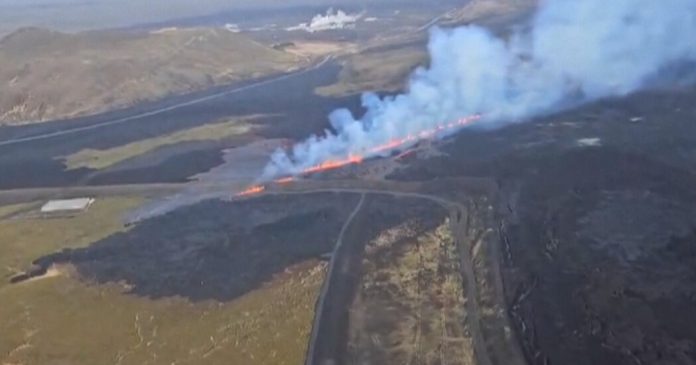
A volcano in southwestern Iceland began erupting on Tuesday, prompting the closure of the popular Blue Lagoon tourist destination and threatening the town of Grindavik, about 25 miles southwest of the capital, Reykjavik.

The country’s meteorological office said that the length of the magma intrusion — about seven miles — was the longest measured since November 2023, when the authorities ordered Grindavik’s approximately 4,000 residents to evacuate.

The eruption began at 9:45 a.m., and within 30 minutes a fissure in the Earth’s surface appeared to be about half a mile long, according to the meteorological office.

By 11 a.m., the office said, the first fissure had grown and another had opened a few hundred yards from the protective barriers near Grindavik.

This is a developing story. Check back for updates.

A Symbol of Mandalay’s Rapid Growth Comes Crashing Down in Earthquake

0

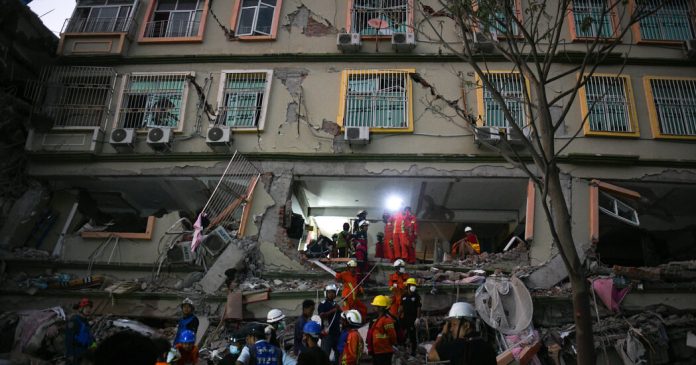
It was marketed as a place with an “earthquake-resistant foundation.” The 12-story Sky Villa Condominium complex featured the largest rooftop bar in the central Myanmar city of Mandalay and a gym with state-of-the-art equipment.

Now it is a tomb.

Sky Villa, which was built in 2017, was one of the hardest-hit sites in the devastating earthquake on Friday that killed 2,719 people. Until last week, it stood as a symbol of this city’s rapid urbanization despite a four-year civil war.

When the earthquake ravaged Myanmar, five stories of the condominium slid underground. On Tuesday, the air reeked of decaying corpses, the stench made worse by the 100-degree heat, as desperate family members circled the ruins of the building looking for loved ones.

“Please speed up!” shouted Sai Myo Tun, who was searching for his sister, to volunteers in yellow hard hats and Chinese rescue workers scrambling to untangle the mound of concrete, debris, and steel. “My sister can still be alive if you speed up.”

Mr. Sai Myo Tun said his sister, who is three months pregnant, and her husband were trapped under the building. He said his sister had bought an apartment in Sky Villa last year. It is not known how many other people may be under the ruins.

“The rescue teams say there may not be any survivors left,” he said. “But I’m still holding on to hope.”

In recent years, Mandalay has been the site of a building boom, its fancy nightclubs and rising apartment blocks a sign of increased social mobility. A center of Buddhist culture and the last royal capital before the kingdom was annexed by the British Empire in 1885, it is a sprawling city of about 1.5 million and home to multiple religions and ethnicities. That includes many Chinese who arrived in the 20th century.

Since the army seized power in a coup four years ago, it has also emerged as an epicenter of resistance.

Today, it is a city destroyed. On Tuesday, a gold mine collapsed in Mandalay’s Singu township, killing 27, according to Myanmar Rescue Let Pan Hla, a local group. For days, volunteers have been combing through the rubble of collapsed buildings with their bare hands. Heavy machinery finally arrived on Saturday with a rescue team from China.

“The smell of decomposing bodies is getting stronger, so I don’t think there will be any survivors,” said Kyaw Gyi, a volunteer helping with rescue efforts at Sky Villa. He said on Tuesday morning that a cat made it out alive, but no human survivors had been found. “I estimate that at least 100 people are still inside.”

Bananas had been placed on a table near the ruins of the condominium, as prayer offerings.

Daw Thet Tin, who said her daughter and granddaughter are trapped under the building, has kept vigil at a nearby monastery.

“Lin Lin, dear, Mama is right here!” she shouted in the direction of the building. “The rescue teams are working to save you, stay strong!”

Ms. Thet Tin said she had not left the monastery since the day of the earthquake. “Every day, I pray to Buddha for them,” she said.

The destruction in Mandalay has been widespread. An analysis of Mandalay by Microsoft’s AI for Good Lab showed 515 buildings were 80 percent to 100 percent damaged, and another 1,524 were 20 percent to 80 percent damaged. It was not clear what percentage of the city’s buildings those numbers represented.

Rural parts of Mandalay have been ignored for days as rescue teams focus on the downtown areas. Some of these are impoverished areas where Muslims, a minority in predominantly Buddhist Myanmar, are concentrated, aid groups say.

“They’re not receiving any support or aid, even though there’s been a lot of deaths there as well,” said Melody Crisp of Thr5ve, a nonprofit helping displaced communities.

Ms. Crisp said that in parts of Mandalay, the authorities were telling people to return home by 10 p.m. and threatening forced military service if they didn’t comply, citing her contacts in the city.

Families are sleeping on sidewalks in the city, swarmed by mosquitoes at night. There are fears that clean water and food could soon run out.

Haider Yaqub, the Myanmar country director for Plan International, a child rights organization, has been interviewing residents to assess what their needs are. He said they desperately need shelter and fuel to help with rescue efforts.

Many of the collapsed structures were some of the country’s historic and religious sites such as mosques, pagodas and monasteries. In one video, people wailed as they watched the top of a monastery crumble.

“In Burmese culture, especially in Buddhist superstition, when a pagoda breaks from the tip, that’s a very bad omen,” said Min Zaw Oo, executive director at the Myanmar Institute for Peace and Security, a think tank.

Many people in Mandalay did not want to wait to find out what else fate had in store for them. The daily aftershocks have scared them, and in recent days, many left town.

Wisconsin Supreme Court; Florida special elections : NPR

0

Good morning. You’re reading the Up First newsletter. Subscribe here to get it delivered to your inbox, and listen to the Up First podcast for all the news you need to start your day.

Today’s top stories

Wisconsin voters are casting their ballots in the state’s Supreme Court election. It’s been the most expensive court race in U.S. history. Billionaire Elon Musk and other donors have spent millions to decide the next justice. Musk held a rally in the state on Sunday, pitching conservative favorite Brad Schimel over the alternative candidate, Susan Crawford.

Elon Musk wears a cheesehead hat as he speaks during a rally in Green Bay, Wisc. on March 30, 2025. An election to choose a new state Supreme Court justice takes place Tuesday and Musk has contributed millions to the race, hoping to secure a win for the conservative candidate.

Robin Legrand/AFP via Getty Images


hide caption

toggle caption

Robin Legrand/AFP via Getty Images

  • 🎧 Whoever wins this nonpartisan race will determine the ideological balance of the court, as there is a clear liberal and conservative candidate, Anya van Wagtendonk of NPR network station Wisconsin Public Radio tells Up First. She says this election is a bit of a test to see how voters feel about President Trump’s first few months in office. Major issues are at stake, and this court could oversee cases involving abortion law, labor law and collective bargaining rights.

Meanwhile, in Florida, Democrats believe they have a chance to pick up at least one congressional seat as voters cast their ballots in two special elections. Both seats have been held by Republicans — former Congressmen Mike Waltz and Matt Gaetz. In both contests, the Democratic candidate has raised more money than their Republican counterpart.

  • 🎧 Both Republican candidates have received an endorsement from Trump, NPR’s Greg Allen says. In the panhandle, Jimmy Patronis is running against Democrat Gay Valimont, who lost to Gaetz by over 30 points in November. On the state’s east coast, Randy Fine is faces Democrat Josh Weil. Democrats feel they have a real chance in Fine and Weil’s race. Weil is only three or four points behind in recent polls. Democrats see these special elections as a starting point to rally a party that saw big losses in November.

Investors are bracing for Trump’s next phase in his trade war, which he’s calling “Liberation Day.” He is expected to unveil a new set of tariffs tomorrow to match the duties other countries have placed on American goods.

  • 🎧 The tariffs could potentially raise prices and invite retaliation against U.S. exports, NPR’s Scott Horsley says. Additionally, the Trump administration’s unpredictable tactics when announcing tariff agendas have added to uncertainty for businesses and made it hard for them to plan. One of the U.S.’s most protected industries is sugar. There’s a high trade barrier against imported sugar. Trade barriers drive up costs, allowing U.S. sugar producers to make higher profits. They also make sugar more expensive for businesses and consumers to buy. This form of trade barrier can sometimes drive businesses out of the country.

Picture show

An elephant prepares to "mock charge" the CATS Elephant Response Team's vehicle as the team attempt to drive it away from the town of Livingstone and back towards the Mosi-oa-Tunya National Park.

An elephant prepares to “mock charge” the CATS Elephant Response Team’s vehicle as the team attempt to drive it away from the town of Livingstone and back towards the Mosi-oa-Tunya National Park.

Tommy Trenchard for NPR


hide caption

toggle caption

Tommy Trenchard for NPR

The three men who work on an Elephant Response Team in Livingstone, Zambia, don’t have your typical 9-to-5 job. They maintain peace in a growing and sometimes dangerous conflict between humans and elephants, the largest land animals on Earth. Recent urban expansion and years of inadequate rainy seasons have significantly increased human-wildlife conflict in the area. Chamunolwa Jimayi, one of the team members, frequently drives a pickup truck to guide elephants away from residential areas. Last year, photographer Tommy Trenchard captured photos depicting the clash between hungry elephants and the residents of Livingstone. His work has been recognized as a 2025 World Press Photo contest winner. View Trenchard’s photos and read more about the community’s struggle with elephant-human conflict.

From our hosts

by Michel Martin, Morning Edition and Up First host

If you picked up a tool at the hardware store and asked, “What’s the purpose of this?” you’d get your answer and get on with your day. But if you were to ask that of a person: What’s YOUR purpose? Well…that feels awfully intimate, even rude. But a new play on Broadway suggests that’s something you need to ask yourself, especially if you are carrying the weight of a family history you didn’t choose but cannot escape.

Left to right: Alana Arenas (Morgan), Kara Young (Aziza), Harry Lennix (Solomon), LaTanya Richardson Jackson (Claudine), Glenn Davis (Junior) and Jon Michael Hill (Naz) perform in a Broadway production of the play Purpose, written by Branden Jacobs-Jenkins and directed by Phylicia Rashad.

Left to right: Alana Arenas (Morgan), Kara Young (Aziza), Harry Lennix (Solomon), LaTanya Richardson Jackson (Claudine), Glenn Davis (Junior) and Jon Michael Hill (Naz) perform in a Broadway production of the play Purpose, written by Branden Jacobs-Jenkins and directed by Phylicia Rashad.

Marc J. Franklin, 2025


hide caption

toggle caption

Marc J. Franklin, 2025

Purpose is the brainchild of Branden Jacobs-Jenkins, who won a Tony last season for Appropriate, his hit Broadway play. Appropriate is an intense but oddly funny work about a white Southern family that gathers at their family home as it’s being readied for sale, only to find a collection of unsavory artifacts that force them to confront some hard truths about who they are and their place in the world.

In Purpose, Jacobs-Jenkins, who is Black, flips the script. He focuses on a Black family but asks similar questions: Who are you, really? What have you actually built versus what have you inherited? And what are you going to do with that legacy?

The story loosely — very loosely — recalls part of the Rev. Jesse Jackson’s family history: There’s an aging patriarch at the twilight of his public career, an underestimated wife and two very different sons. One son has the charisma and drive to become a successful politician, only to sabotage himself by embezzling campaign money and implicating his (justifiably) infuriated wife. Another who wants no part of that high-profile, high-volume life but can’t seem to get away from it no matter how hard he tries.

You always hesitate to draw too tight a line between any creative project and current headlines. The play was written a while ago — but the issues it raises are hard to ignore. It asks us: Whose vision of history — family history, collective history — gets to prevail, and at what cost?

3 things to know before you go

Fram2 mission astronauts who will be first to circle the Earth from pole to pole: From left to right: pilot Rabea Rogge, Mission specialist and medical officer Eric Phillips, mission commander Chun Wang and vehicle commander Jannicke Mikkelsen.

Fram2 mission astronauts who will be first to circle the Earth from pole to pole: From left to right: pilot Rabea Rogge, Mission specialist and medical officer Eric Phillips, mission commander Chun Wang and vehicle commander Jannicke Mikkelsen.

SpaceX/via Reuters Connect


hide caption

toggle caption

SpaceX/via Reuters Connect

  1. SpaceX launched four astronauts into space yesterday on a historic mission to orbit Earth’s polar regions. They are expected to remain in space for three to five days.
  2. Search and recovery efforts continue for the fourth U.S. Army soldier who went missing in Lithuania last week when a U.S. armored vehicle was submerged in a swamp during a training mission.
  3. The Palestinian city of Nablus has been known for its olive oil soap for centuries. In December, the tradition was added to UNESCO’s list of Intangible Cultural Heritage. NPR visited Touqan, which opened in 1872 and is one of the oldest factories still in operation, to learn more about the soap.

This newsletter was edited by Suzanne Nuyen.

Druse Militia Refuse to Join Syria’s New Army

0

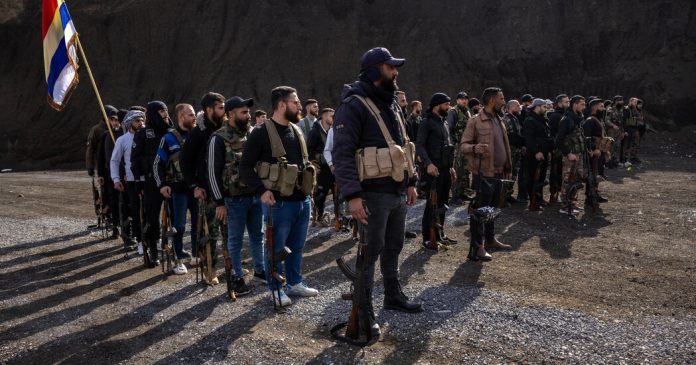
The trainer paced the grounds of a mountain enclave in southwestern Syria, shouting at dozens of new recruits as they drilled sprints between barricades made from old car tires.

“You have to practice as if it’s real,” screamed the instructor, Fadi Azam. “Want me to start shooting at you instead to make it real?” he said, lifting his rifle and firing a few rounds away from the group, the paw-paw-paw of gunfire echoing across the valley on a brisk morning recently.

“You are lions, lions!” Mr. Azam yelled at the recruits, some of the tens of thousands of fighters from Syria’s Druse religious minority whose powerful militias control the rugged province of Sweida, southwest of the capital, Damascus. Sweida is the heartland of the Druse — a strategically important region bordering Jordan and near Israel — and these fighters stand to play a small but essential role in Syria’s future.

As the Islamist rebels who ousted the dictator Bashar al-Assad in December set up a new government, they are seeking to fold disparate militias including this one, which sprung up during Syria’s nearly 14-year civil war, into a single national force. A unified military is crucial to securing control over the entire country and establishing stability, but that goal has proved elusive.

Since January, several of the strongest Druse militias had been in talks with the government about their conditions for joining the new army. They were skeptical over the interim president’s pledges to protect the rights of Syria’s many religious and ethnic minorities.

Those talks stalled last month after an outburst of violence against another religious minority, heightening the concerns of the Druse. The violence began with an attack by remnants of the old regime on the new government’s security forces in a region dominated by the Alawite sect, an offshoot of Shiite Islam. Mr. al-Assad’s family are Alawites, and during the family’s five decades ruling Syria, they often prioritized members of the sect in security and military jobs.

The government responded by mobilizing its security forces, which other armed groups and armed civilians joined, according to witnesses and rights groups. These fighters — some nominally under the government’s control and others outside it — killed hundreds of Alawite civilians in what the rights groups said were sectarian-driven attacks.

Druse militia leaders have also accused the interim president, Ahmed al-Shara, of monopolizing power. Mr. al-Shara and many in his cohort were part of an Islamist rebel group, dominated by members of Syria’s Sunni Muslim majority, that was once linked to Al Qaeda. They showed little willingness initially to cede power in their new government to minorities.

However, when Mr. al-Shara announced a caretaker government late Saturday, his choices acknowledged to some extent the pressure to form an inclusive administration representing Syria’s many diverse ethnic and religious groups. He appointed a Kurdish minister of education, a Christian woman minister and a Druse minister, among others. Still, the crucial ministries of defense, foreign affairs and interior will be run by the president’s close allies.

Another powerful militia, a Kurdish-led force that governs much of northeastern Syria and is backed by the United States, has agreed to a preliminary deal to join the national army but has not yet integrated, expressing concerns similar to those of the Druse.

Unless he can persuade the Druse militias and other armed groups to integrate into a national army, Mr. al-Shara will face a difficult choice. He must either agree to cede some authority and establish a somewhat decentralized government or risk ruling only part of the country — much as Mr. al-Assad did during the civil war.

Mr. al-Shara “is in a political deadlock with the Druse and the Kurds and doesn’t have much leverage,” said Mohammad al-Abdallah, a Syrian political analyst.

In the meantime, the Druse militias have bolstered their ranks, exerting authority across the region to fill the security void left by the collapse of the Assad regime. The recruits training recently in Sweida were part of the Mountain Brigade, one of several Druse militias that emerged during the civil war. The brigade’s ranks have swelled from 2,000 fighters to more than 7,000, their leaders say, amid the uncertainty of this transition of power.

“We want to defend our people, defend our homeland,” said Rakan Kahool, 28, who signed up with the militia in January. “The people of Sweida should protect Sweida.”

New recruits like Mr. Kahool and veteran fighters have been acting as the de facto police and security forces for Sweida Province, staffing checkpoints and patrolling the border with Jordan.

The Mountain Brigade’s commander, Sheqib Azam, said in an interview that the Druse militia leaders wanted to give the interim government a chance to prove themselves. “If the new government works in the right way, we will join them,” Mr. Azam said. “And if not, we will fight them.”

He has taken part in the discussions with Syria’s new authorities over joining the national army that reached an impasse in recent weeks.

“We want to be a part of the state, to have a say in political decisions,” he said. But he added, “It’s too early to give up our weapons.”

Should the Druse militias strike a deal with the new government, their fighters will be key to maintaining security in the southwest in the face of threats from the Islamic State, armed remnants of Assad regime and criminal groups, as well as Israeli incursions along the southern border. Any disruptions could plunge Syria into another cycle of violence and factionalism.

Israel’s actions in response to the collapse of the Assad regime is injecting even more uncertainty into the political landscape of southwestern Syria. Israel wants to ensure that no hostile forces entrench themselves in the parts of Syria near its borders, where they could easily launch attacks against northern Israel as Hezbollah, an Iran-backed group, did for years from neighboring Lebanon.

And the Israeli prime minister, Benjamin Netanyahu, has said that Israel will not tolerate the presence of Mr. al-Shara’s Turkish-backed Sunni Muslim forces south of Damascus. Israeli officials have referred to those forces as extremists.

Since the Assad regime fell, Israel has struck several hundred targets in Syria, knocking out weapons depots and other military assets from the former regime to keep them from falling into the hands anyone hostile to Israel, according to Israeli officials.

Israeli officials have also warned the Syrian authorities that they would intervene militarily to protect the Druse from any government crackdown, an overture that reflects the strong relationship that the Israeli state has with its own Druse minority. The Druse, who practice a religion that is an offshoot of Shiite Islam, can also be found in Lebanon and Jordan.

The major Syrian Druse militias have rejected the offer.

Although they have not yet agreed to join the national military, Druse militia and religious leaders have established informal arrangements with the new authorities that allow them to receive government aid while still maintaining their military control over Sweida.

In January, Mr. Azam said, he agreed to have an official from Mr. al-Shara’s former rebel group serve as a temporary provincial governor of Sweida, on the condition that government forces not deploy to Sweida.

In the weeks since the arrival of the interim governor, Mustafa Yasin Baquer, hundreds of people have crowded into his office each day to request support. The electricity works for only an hour a day, residents say. The water supply is erratic. Some want land stolen by the Assad government returned to them. Others, who once relied on subsidized bread under the old rulers, begged for similar aid.

“The infrastructure is completely destroyed,” Mr. Baquer said in an interview. While the negotiations with the Druse militias continue, the transitional government must “step in and try to stabilize the situation,” he added.

Many residents in Sweida share that sentiment.

One recent afternoon, Janat Abu al-Fadl, 55, meandered along the narrow cobblestone roads of Sweida’s market with her daughter. While both were uncertain about Syria’s new authorities, Ms. al-Fadl said she was hopeful about the future of Syria for the first time in decades.

“It will take time, and there will be a difficult period at first of course, but eventually I think things will improve,” she said. “Before the regime fell, we had no hope,” she added. “Now, at least, we have something.”

A Prison Death Highlights Russia’s LGBTQ Crackdown

0

The travel agency offered tours aimed solely at men, and that was enough to attract the attention of the police enforcing new Russian laws that restrict the rights of gay people.

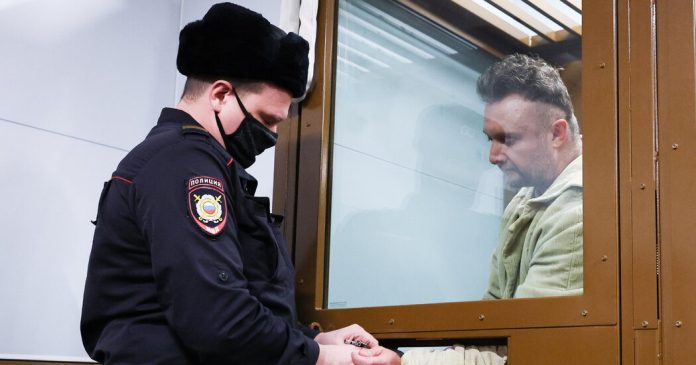
One night in December, officers stormed the apartment of the agency’s owner and tied him up, he later told a court.

“Fifteen people came to my place at night,” said the owner, Andrei Kotov. “They were beating me in the face, kicking me and leaving bruises.” His comments were reported by Russian media and confirmed by his lawyer.

Mr. Kotov said the officers pressured him to “confess” that he was running a travel agency aimed at gay people, which he denied. The officers kept beating him, he said, and told him: “No trips for gays.”

A few weeks later, Mr. Kotov, then 48, was found dead in his prison cell. Prison officials told his mother that he cut himself with a razor, said his lawyer, Leysan Mannapova. The circumstances of his death could not be independently determined, and Russian officials did not respond to a request for comment.

Mr. Kotov’s death reflects an increasingly harsh crackdown in Russia on the rights of L.G.B.T.Q. people that has accelerated since the start of the war in Ukraine. President Vladimir V. Putin has portrayed the new restrictions — and the war — as part of a broader battle to maintain “Russian traditional values.”

In November 2023, the Russian Supreme Court designated the “international L.G.B.T.Q. movement” as an “extremist organization” on par with the likes of Al Qaeda or the Islamic State. Under laws targeting extremist groups, gay rights activists, their lawyers or others involved in efforts to support L.G.B.T.Q. people could face jail sentences of six to 10 years.

That has led to a wave of repression against L.G.B.T.Q. people and groups, with the police raiding gay night clubs and investigators targeting ordinary Russians, according to members of the community and groups like Human Rights Watch.

At least 12 criminal inquiries on the L.G.B.T.Q. extremism charges were initiated last year, according to the Russian prisoner rights advocacy group OVD-Info.

Denis Olyenik, executive director of Coming Out, which helps L.G.B.T.Q. people in Russia, said the authorities’ pressure had initially focused on rights groups and activists.

“Now, the crackdown is reaching out to ordinary people, clubs, parties — it affected the community that previously would even distance itself from rights advocacy,” he said.

Homosexuality was decriminalized Russia in 1993, inspiring a vibrant gay scene that included celebrities openly talking about their sexuality and the establishment of gay clubs. Tatu, a pop group whose two female members pretended to be a lesbian couple, kissing between songs, was even picked by state-owned television to represent Russia at international contests.

But in 2013, Mr. Putin opened a salvo against gay people when he signed a bill outlawing the dissemination of what it described as “gay propaganda” — which includes material that makes “nontraditional relations attractive” — to minors. In 2022, Russia introduced fines for promoting “gay propaganda.”

Then came the 2023 court ruling that led to the current crackdown.

After Mr. Kotov, the travel agent, was arrested, he was also charged with producing images of child sexual abuse, but his lawyer was not able to review case materials on that charge.

During his arraignment hearing in December, an investigator told the court, without giving further details, that images on Mr. Kotov’s phone proved that he committed a crime “aimed against the constitutional order and security of the state.”

A few weeks later, Mr. Kotov was dead.

Just two days earlier, a psychological evaluation for Mr. Kotov did not show any suicidal tendencies, said Ms. Mannapova, his lawyer.

Mr. Kotov’s mother has asked the prosecutors to go ahead with his case posthumously so that he could be cleared of the allegations against him, his lawyer said.

“It was utterly unclear to him how arranging trips for men can be considered setting up an extremist group,” she said.

The night after the Supreme Court outlawed the L.G.B.T.Q. movement in 2023, Sergei Artyomov, a 36-year-old gay man from Moscow, said he and his friends were targeted in a police raid at a Moscow nightclub. The officers blocked off the exits, made patrons stand against a wall and then wrote down their ID details, he said.

No one was arrested, but Mr. Artyomov, who used to work as a TV producer, said the experience rattled him. He said that he had already been thinking about leaving Russia as he wanted to live as an openly gay man, and that the raid strengthened his resolve.

“I knew things would only get worse,” he said. “There is no gray area anymore. They call you an enemy of the people, and that’s it.”

He left just before Christmas for Spain, where he said he was granted asylum.

The Kremlin-driven anti-gay campaign has been whipped up by vigilante groups as well as local officials and state media.

In the remote eastern Siberian city of Yakutia, Pryany Yakutsk, a popular media channel on Telegram, raised alarm over the holidays about “debauchery and corruption of men happening under the very nose of law enforcement and the officials in Yakutsk.”

It published two grainy photos from a nightclub party depicting what appeared to be bare-breasted women, one of them on a naked man. The message on the Telegram channel said the party featured what it called “transvestite performers” from Thailand.

A court later fined the club 250,000 rubles, or about $2,800, for violating public order since its patrons were “in a state of undress that insults human dignity and promotes nontraditional sexual relations.”

Russian Community, a nationalist group that styles itself as social vigilantes, has also posted photos and videos from police raids. Last year, the group posted video of a raid on an L.G.B.T.Q. nightclub in the city of Orenburg that showed several young people lying on the floor, face down, being arrested.

A criminal case was later brought against the club’s owner, manager and art director, who are still awaiting trial.

State media has also been bombarding Russians with messaging about the virtues of heterosexual families with children. Earlier this year, Mr. Putin issued an order for his government to come up with a strategy to promote families with multiple children.

Since the Kremlin introduced the first anti-gay bill in 2013, the number of Russians who think gay people should not have the same rights as others has increased from 47 to 62 percent, according to the independent pollster Levada.

Young Russians are still far more accepting of L.G.B.T.Q. people than older ones, opinion polls show, but have also heard constant denunciations of them in the media over the past year.

“That torrent of gay and trans hatred that keeps pouring out from all media is going to have consequences,” said Tatyana Vinnichenko, a veteran L.G.B.T.Q. activist living in exile in Lithuania.

The trans community has been a particular target of the authorities, with the adoption of a law in 2023 banning trans health care and changing gender identifiers in official documents.

The latest round of repressions has spurred a silent exodus of gay and trans people from Russia, activists say.

But Tahir, a 25-year-old gay man who asked that his family name be withheld for fear of criminal prosecution, said he had no intention of leaving.

“I definitely know that things will get worse,” he said. “But I don’t want to leave. This country is mine as much as it is for others.”

U.S. Sanctions Chinese and Hong Kong Officials for Pursuing Activists Abroad

0

The U.S. fired a new round of sanctions at China on Monday, targeting six high-level Chinese and Hong Kong officials over what it described as acts of transnational repression for their crackdown on pro-democracy activists in Hong Kong and on U.S. soil.

The move was the first significant step by the new Trump administration to pressure China over human rights in Hong Kong. The State Department said in a statement that the officials used the city’s national security laws “to intimidate, silence, and harass 19 pro-democracy activists who had been forced to flee overseas, including a U.S. citizen and four other U.S. residents.”

The sanctioned officials included Dong Jingwei, China’s top national security official in the city since 2023. In his previous role as China’s vice minister of state security, Mr. Dong led the country’s efforts to track dissidents and catch foreign spies.

Hong Kong’s Secretary for Justice Paul Lam and Police Commissioner Raymond Siu were also among the six officials within national security bodies and the police force who were sanctioned for their roles in “coercing, arresting, detaining, or imprisoning” individuals under the national security law.

In a national security crackdown since widespread unrest rocked the city in 2019, the Hong Kong authorities have jailed scores of opposition lawmakers, activists and others, including journalists, in the city.

The state department also Monday released an annual report saying that the Hong Kong government had continued to use its broad national security laws to undermine human rights and civil liberties in Hong Kong, a criticism other Western countries have also made. It noted that, as recently as December, the Hong Kong government had offered bounties for information leading to the arrests of dissidents living overseas.

Hong Kong activists in the United States welcomed the move.

“Many of us have endured relentless pressure and threats through transnational repression. It truly means a great deal to see the U.S. taking the lead in holding accountable the officials who orchestrated these actions,” Frances Hui, who was granted political asylum in the U.S., said in a statement on behalf of the Committee for Freedom in Hong Kong Foundation in Washington. Family members of overseas activists including Ms. Hui have been questioned in Hong Kong by its national security police.

The Chinese embassy in Washington said in a statement that its enforcement of these laws, which were first imposed in 2020 in the aftermath of months of monthslong mass pro-democracy protests the year before, were “just and necessary” to return stability and prosperity to the Chinese territory. It also condemned the sanctions, calling it a “gross interference in China’s internal affairs and Hong Kong affairs.”

The Hong Kong government described the sanctions as “despicable behavior” and acts of intimidation that “clearly exposed the U.S.’s barbarity.”

The state department’s sanctions place restrictions on property ownership and financial dealings of the individuals in the United States. The U.S. has already sanctioned dozens of other Chinese and Hong Kong senior officials, issuing travel bans and directives to freeze assets imposed in 2020 and 2021.

Secretary of State Marco Rubio, long an outspoken critic of China’s human rights record, said that Monday’s actions demonstrated the Trump administration’s commitment to hold to account those responsible for restricting freedoms of people in Hong Kong and pursuing those based overseas.

Willy Wo-Lap Lam, a senior Fellow at The Jamestown Foundation in Washington, noted that while the sanctions were consistent with Mr. Rubio’s stance toward China, President Trump himself has not publicly placed much emphasis on supporting human rights in the region. The Trump administration has drastically cut funds to organizations that have long given a voice to dissident communities in China and other countries, including Voice of America and Radio Free Asia.

“Trump himself doesn’t have that much of an interest in what’s happening in Tibet, in Xinjiang and in Hong Kong,” Mr. Lam said. “But it’s just another card to play in the longstanding systemic competition with China.”

Wisconsin voters head to polls in most expensive court race in U.S. history

0

Wisconsin voters decide on the state’s next Supreme Court justice, and with it, the possibility of issues like abortion, voting and union rights. It’s the most expensive court race in U.S. history.

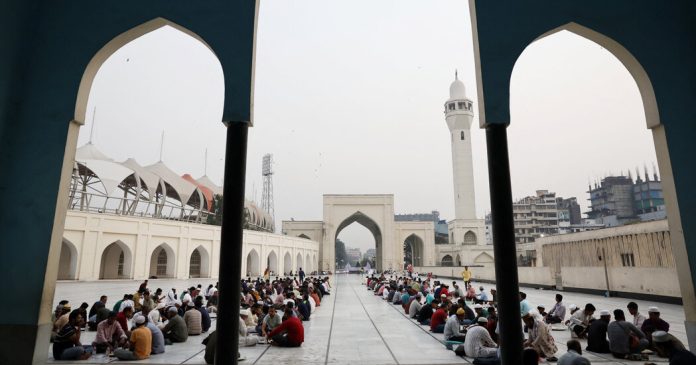
As Bangladesh Reinvents Itself, Islamist Hard-Liners See an Opening

0

The extremists began by asserting control over women’s bodies.

In the political vacuum that has emerged after the overthrow of Bangladesh’s authoritarian leader, religious fundamentalists in one town declared that young women could no longer play soccer. In another, they forced the police to free a man who had harassed a woman for not covering her hair in public, then draped him in garlands of flowers.

More brazen calls followed. Demonstrators at a rally in Dhaka, the capital, warned that if the government did not give the death penalty to anyone who disrespected Islam, they would carry out executions with their own hands. Days later, an outlawed group held a large march demanding an Islamic caliphate.

As Bangladesh tries to rebuild its democracy and chart a new future for its 175 million people, a streak of Islamist extremism that had long lurked beneath the country’s secular facade is bubbling to the surface.

In interviews, representatives of several Islamist parties and organizations — some of which had previously been banned — made clear that they were working to push Bangladesh in a more fundamentalist direction, a shift that has been little noticed outside the country.

The Islamist leaders are insisting that Bangladesh erect an “Islamic government” that punishes those who disrespect Islam and enforces “modesty” — vague concepts that in other places have given way to vigilantism or theocratic rule.

Officials across the political spectrum who are drafting a new Constitution acknowledged that the document was likely to drop secularism as a defining characteristic of Bangladesh, replacing it with pluralism and redrawing the country along more religious lines.

The fundamentalist turn has been especially distressing for female students who helped oust the country’s repressive prime minister, Sheikh Hasina.

They had hoped to replace her one-party rule with a democratic openness that accommodates the country’s diversity. But now they find themselves competing against a religious populism that leaves women and religious minorities, including Hindus and adherents of small sects of Islam, particularly vulnerable.

“We were at the forefront of the protests. We protected our brothers on the street,” said Sheikh Tasnim Afroz Emi, 29, a sociology graduate from Dhaka University. “Now after five, six months, the whole thing turned around.”

Critics say the country’s interim government, led by the 84-year-old Nobel laureate Muhammad Yunus, has not pushed back hard enough against extremist forces. They accuse Mr. Yunus of being soft, lost in the weeds of democratic reforms, conflict-averse and unable to articulate a clear vision as extremists take up more public space.

His lieutenants describe a delicate balancing act: They must protect the right to free speech and protest after years of authoritarianism, but doing so provides an opening for extremist demands.

The police, who largely deserted after Ms. Hasina’s fall and remain demoralized, can no longer hold the line. The military, which has taken up some policing duties, is increasingly at odds with the interim government and the student movement, which wants to hold officers accountable for past atrocities.

What is beginning to happen in Bangladesh mirrors a wave of fundamentalism that has consumed the region.

Afghanistan has become an extreme ethno-religious state, depriving women of the most basic liberties. In Pakistan, Islamist extremists have exerted their will through violence for years. In India, an entrenched Hindu right wing has undermined the country’s traditions of secular democracy. Myanmar is gripped by Buddhist extremists overseeing a campaign of ethnic cleansing.

Nahid Islam, a student leader who was a government minister in Bangladesh’s interim administration before stepping away recently to lead a new political party, acknowledged “the fear is there” that the country will slip toward extremism.

But he is hopeful that despite changes in the Constitution, values like democracy, cultural diversity and an aversion to religious extremism can hold. “I don’t think a state can be built in Bangladesh that goes against those fundamental values,” he said.

Some point to a Bengali culture with a deep tradition of art and intellectual debate. Others find hope in the shape of the country’s economy.

Women are so integrated in Bangladesh’s economy — 37 percent are in the formal labor force, one of the highest rates in South Asia — that any efforts to force them back into the home could result in a backlash.

Extremist forces are trying to push their way into the picture after 15 years in which Ms. Hasina both suppressed and appeased them.

She ran a police state that cracked down on Islamist elements, including those closer to the mainstream that could pose a political challenge. At the same time, she tried to win over Islamist parties’ religiously conservative base by allowing thousands of unregulated Islamic religious seminaries and putting $1 billion toward building hundreds of mosques.

With Ms. Hasina gone, smaller extremist outfits that want to upend the system entirely, and more mainstream Islamist parties that want to work within the democratic system, appear to be converging on a shared goal of a more conservative Bangladesh.

The largest Islamist party, Jamaat-e-Islami, sees a big opportunity. The party, which has significant business investments, is playing a long-term game, analysts and diplomats said. While it is unlikely to win an election expected at the end of the year, the party hopes to capitalize on the discrediting of mainstream secular parties.

Mia Golam Parwar, Jamaat’s general secretary, said the party wanted an Islamic welfare state. The closest model, in its mix of religion and politics, is Turkey, he said.

“Islam provides moral guidelines for both men and women in terms of behavior and ethics,” Mr. Parwar said. “Within these guidelines, women can take part in any profession — sports, singing, theater, judiciary, military and bureaucracy.”

In the current vacuum, however, men at the local level have been coming up with their own interpretations of Islamic governance.

In the farming town of Taraganj, a group of organizers decided last month to hold a soccer match between two teams of young women. The goal was to provide entertainment and inspire local girls.

But as preparations got underway, a town mosque leader, Ashraf Ali, proclaimed that women and girls should not be allowed to play soccer.

Sports organizers usually announce details of a game by sending loudspeakers tied to rickshaws around town. Mr. Ali matched them by sending his own speakers, warning people not to attend.

On Feb. 6, as the players were changing into their jerseys in classrooms turned into dressing rooms, local officials were holding a meeting about the game. Mr. Ali declared that he “would rather become a martyr than allow the match,” said Sirajul Islam, one of the organizers.

The local administration caved in, announcing the game’s cancellation and putting the area under curfew.

Taslima Aktar, 22, who had traveled four hours by bus to play in the match, said she had seen “a lot of cars, army and police,” who told the players that the match was off.

Ms. Aktar said that in her decade playing soccer, this was the first time she had faced such opposition.

“I am a bit afraid now of what could happen,” she said.

The organizers managed to carry out a women’s match a couple of weeks later, in the presence of dozens of security forces. But as a precaution, they asked the young women to wear stockings under their shorts.

With the preacher’s unrelenting threats, the organizers said they were not sure they would take the risk again.

During an interview, Mr. Ali, the mosque leader, beamed with pride: He had turned something mundane into something disputed. In a rural area like Taraganj, he said, women’s soccer contributes to “indecency.”

Women’s sports was just his latest cause. For years, he has preached and petitioned against the Ahmadiyya, a long-persecuted minority Muslim community, trying to drive its 500 members out of his area.

The Ahmadiyya’s place of worship was attacked by a mob on the night that Ms. Hasina’s government collapsed, part of a national wave of anarchy that targeted minority religious sites, particularly those of Hindus. The Ahmadiyya community continues to live in fear; attendance at their prayer hall has shrunk by nearly half.

They are not allowed to rebuild the hall’s destroyed sign or to broadcast their call to prayer from loudspeakers. Mr. Ali shrugged off any responsibility for the violence. But the sermons of preachers like him, declaring the Ahmadiyya heretics who need to be expelled, continue to blare.

“The public is respectful,” said A.K.M. Shafiqul Islam, the president of the local Ahmadiyya chapter. “But these religious leaders are against us.”