Thursday, November 12, 2026
Home Blog Page 69

What We Know About the Dispute at Prince Harry’s Charity

0

Prince Harry announced on March 25 that he had stepped down as a patron of Sentebale, the charity he co-founded in memory of his mother, after a monthslong dispute between the charity’s chair and the board of trustees broke into the open.

Harry and his fellow co-founder, Prince Seeiso of Lesotho, said they had quit in solidarity with five board members who had resigned over a dispute with the chair, Sophie Chandauka.

Both Ms. Chandauka and the group of former trustees have made allegations of wrongdoing against each other, and both parties said they had submitted claims and evidence of their arguments to Britain’s Charity Commission.

Here’s what we know.

Harry founded the charity with Prince Seeiso in 2006. In recent months, the organization’s leadership has been at loggerheads. The five trustees who resigned — Timothy Boucher, Mark Dyer, Audrey Kgosidintsi, Kelello Lerotholi and Damian West — said in a joint statement that they had called on the board’s chair, Ms. Chandauka, to resign from her position, after losing “trust and confidence” in her.

They said that Ms. Chandauka, who was appointed in 2023, responded by filing a lawsuit in Britain “to block us from voting her out,” and that they were resigning to avoid burdening the charity with the cost of the suit.

“We could not in good conscience allow Sentebale to undertake that legal and financial burden and have been left with no other option but to vacate our positions,” the former trustees said in their statement. “This was not a choice willingly made, but rather something we felt forced into in order to look after the charity.”

Prince Harry and Prince Seeiso said in their statement that the former trustees had “acted in the best interest of the charity in asking the chair to step down.” They added: “What’s transpired is unthinkable. We are in shock that we have to do this, but we have a continued responsibility to Sentebale’s beneficiaries, so we will be sharing all of our concerns with the Charity Commission as to how this came about.”

Ms. Chandauka said in a statement about the former trustees that she had acted to expose what she described as “issues of poor governance, weak executive management, abuse of power, bullying, harassment, misogyny, misogynoir and the coverup that ensued.” (Misogynoir is a term referring to pointed sexism toward Black women.) In addition to filing a case in an English court, she said, she had reported the trustees to Britain’s Charity Commission.

After the five trustees stepped down, Ms. Chandauka appointed four new trustees

In interviews with the British news media, Ms. Chandauka has since accused the prince of engaging in harassment and bullying to try to force her out of her post. A spokesman for Harry declined to comment on her latest claims.

Despite her allegations, Ms. Chandauka said her relationship with Harry had been “fantastic, actually.” But she said, “There are some individuals on the board who thought they could get away with mistreating a woman.”

Harry established Sentebale with Prince Seeiso, the younger brother of King Letsie III of Lesotho, in 2006. Founded in honor of Harry’s mother, Diana, Princess of Wales, and Seeiso’s mother, the charity raised funds for communities affected by the H.I.V. pandemic in Lesotho, a small landlocked kingdom that is one of the world’s poorest countries. In 2019, it expanded its work into nearby Botswana, and to addressing substance abuse, gender-based violence and other social ills among young people.

Both sides have filed claims of wrongdoing with Britain’s Charity Commission, which regulates charities in England and Wales. Although Sentebale operates in southern Africa, it is registered in Britain.

A spokeswoman for the Charity Commission said that the regulator was “assessing the issues to determine the appropriate regulatory steps.”


Trump Says He’s ‘Not Joking’ About Seeking a Third Term in Defiance of Constitution

0

Follow the latest news on the Trump administration.

President Trump did not rule out seeking a third term in office on Sunday, telling NBC News that he was “not joking” about the possibility and suggesting there were “methods” to circumvent the two-term limit laid out in the Constitution.

In wide-ranging remarks to “Meet the Press,” Mr. Trump said “a lot of people” wanted him to serve a third term, described himself as “pissed off” at President Vladimir V. Putin of Russia and vowed to impose tariffs on global rivals, according to a transcript of the interview provided by the network.

“A lot of people want me to do it,” he said to the program’s host, Kristen Welker, about the possibility of a third term. “But we have — my thinking is, we have a long way to go. I’m focused on the current.”

Any attempt to seek a third term would run afoul of the 22nd Amendment, which begins, “No person shall be elected to the office of the president more than twice.”

On Sunday, after the release of the interview, the White House reiterated Mr. Trump’s point that he was focused on his current term, and added that it was “far too early to think about” the idea.

“Americans overwhelmingly approve and support President Trump and his America First policies,” Steven Cheung, the White House communications director, said in a statement. He added that Mr. Trump was focused on “undoing all the hurt” done by the Biden administration and “Making America Great Again.”

Mr. Trump has often mused about the idea of a third term, particularly in rallies and speeches that have delighted his supporters, though he has often treated it more as a humorous aside. The interview was the first time that Mr. Trump indicated that he was seriously considering the idea, which his allies have continued to amplify. Already he has likened himself to a king, shown an affinity for autocratic leaders and displayed governance tactics constitutional experts and historians have compared to authoritarianism.

Three days after Mr. Trump was sworn in for the second time, Representative Andy Ogles of Tennessee proposed an amendment to the Constitution that would make Mr. Trump eligible for a third term. Such a measure would be extraordinarily difficult: Constitutional amendments require approval by a two-thirds vote of Congress and then the ratification of three-fourths of the states.

In the interview, Ms. Welker noted that she had heard him joke about serving a third term a number of times. Mr. Trump made it clear he considered it a real possibility.

“No, no I’m not joking,” he said. “I’m not joking.”

Ms. Welker asked Mr. Trump whether he had been presented with plans, and he said that he had not — but added that there were “methods which you could do it.”

Ms. Welker suggested one possibility: having Vice President JD Vance at the top of the ticket in 2028, only to pass the office on to Mr. Trump after winning. Mr. Trump acknowledged “that’s one” way it could happen.

“But there are others too,” he said. “There are others.”

Mr. Trump declined to say what those could be.

Derek T. Muller, a law professor at the University of Notre Dame and a scholar in election law, said there has been a dissenting view about the provision of the 22nd Amendment — which focuses on being “elected” president without addressing the idea of ascending to the office. However, he said, such a route would be complicated by the 12th Amendment.

Mr. Muller pointed out that the 12th Amendment states that “no person constitutionally ineligible to the office of president shall be eligible to that of vice-president of the United States.”

Mr. Muller said he very much doubted that would provide a path to a third term for Mr. Trump.

“You’d have to have so many pieces fall into place for this even to be practically viable, on top of this complicated legal theory,” he said.

In his remarks to Ms. Welker, the president also leveled his strongest criticism to date against Mr. Putin, threatening to impose “secondary tariffs” on Russia’s oil if the country thwarted negotiations on a cease-fire deal with Ukraine that would stop the fighting.

The comments signaled growing impatience with the negotiations. Mr. Trump said that tariffs of 25 to 50 percent on Russian oil could be imposed at “any moment” and that he planned to speak with his Russian counterpart this week.

“If Russia and I are unable to make a deal on stopping the bloodshed in Ukraine, and if I think it was Russia’s fault — which it might not be — but if I think it was Russia’s fault, I am going to put secondary tariffs on oil, on all oil coming out of Russia,” Mr. Trump said.

Mr. Trump has previously referred to secondary tariffs as levies on imports from countries that purchase products from a nation he’s targeted in his foreign policy. The White House did not immediately respond to a request for comment.

The comments were notable given the steps that Mr. Trump has taken to align himself with Mr. Putin, despite the United States’ support for Ukraine since Russia’s full-scale invasion more than three years ago. Since taking office, Mr. Trump has declined to acknowledge that it was Russia who started the war, falsely declared President Volodymyr Zelensky of Ukraine a “dictator,” but not Mr. Putin, and accused Mr. Zelensky of not wanting peace.

Mr. Trump’s remarks also underscored his increasing promise to use tariffs to compel countries to bend to his domestic and foreign policy goals. In the same phone call, he said he would consider secondary tariffs on Iran if it did not reach a deal with the United States to ensure it did not develop a nuclear weapon, Ms. Welker said.

Mr. Trump told Ms. Welker that he was “very angry, pissed off” at Mr. Putin for questioning the credibility of Mr. Zelensky, and for discussing the prospect of new leadership in that country. Mr. Trump suggested that such comments could set negotiations back, and that they were ”not going in the right location.”

“New leadership means you’re not going to have a deal for a long time, right?” Mr. Trump said.

Russia and Ukraine have agreed to a limited truce, but that has fallen short of the complete pause in combat that Trump administration officials have sought, with Ukraine’s support. The limited cease-fire remains tenuous as Russia seeks more concessions and Ukraine has expressed doubt that a truce would be upheld.

On negotiations about Iran’s nuclear capabilities, Mr. Trump said officials from both countries were “talking,” according to NBC’s account of Ms. Welker’s call with the president, although he raised the prospect of military action if economic and other measures do not succeed.

“If they don’t make a deal,” Mr. Trump said about Iran, “there will be bombing. It will be bombing the likes of which they have never seen before.”

Earlier this month, Mr. Trump sent a letter to Iran’s supreme leader, Ayatollah Ali Khamenei, urging direct negotiations with the government in Tehran on a deal to curb the country’s advancing nuclear program. The letter said Mr. Trump preferred diplomacy over military action.

Mr. Trump’s raising of secondary tariffs on oil from Russia and Iran was the latest example of the president’s interest in using the prospect of economic pressure on third-party nations.

Last week, he issued an executive order on Monday to crack down on countries that buy Venezuelan oil by imposing tariffs on the goods those nations send into the United States, claiming that Venezuela has “purposefully and deceitfully” sent criminals and murderers into America.

Mr. Trump called the new levies he threatened on buyers of Venezuelan oil “secondary tariffs,” a label that echoed “secondary sanctions” — penalties imposed on other countries or parties that trade with nations under sanctions.

Some trade and sanctions experts said existing secondary sanctions associated with countries such as Russia and Iran already were not well enforced, and questioned whether the United States would have the capacity to pull off new tariff-based penalties.

What court docs reveal about DOGE access to sensitive data : NPR

0

Recent court filings have shed more light on Elon Musk’s Department of Government Efficiency within the Trump administration.

Scott Olson/Getty Images


hide caption

toggle caption

Scott Olson/Getty Images

The DOGE staffer who resigned from his post over old racist tweets — and who broke data-sharing rules, an audit found — has been rehired to work with sensitive data at several federal agencies.

The staffer is Marko Elez, a Department of Labor employee detailed to the DOGE entity within the White House, according to a Saturday court filing. It says the Labor Department is aware of four other agencies, including the Department of Health and Human Services (HHS), where Elez is also detailed or employed.

The court filing provides an accounting of the access Elez and other DOGE employees have inside certain sensitive and secure databases. And it comes as federal judges in other cases have found the Elon Musk-led effort has likely broken the law and has been largely unable to explain why it needs such sweeping data access.

The filing is in response to a lawsuit filed by labor unions and nonprofits, which are seeking more information about the Trump administration staffers who’ve been reported as part of DOGE.

U.S. District Judge John Bates, a George W. Bush appointee, has so far declined to block DOGE from its work inside the Department of Labor, HHS and the Consumer Financial Protection Bureau, but has ordered more discovery into how the White House entity has operated.

From resigning to accessing more sensitive data

Elez resigned from his Treasury position in early February after racist social media posts resurfaced, though Musk soon pledged to rehire him. A later internal audit of Elez’s work account that was highlighted in a different court filing found he improperly sent a spreadsheet of what was described as “low risk” personally identifying information to two General Services Administration (GSA) officials.

In that case, U.S. District Court Judge Jeannette Vargas blocked DOGE access to Treasury data on Feb. 21, finding “a real possibility exists that sensitive information has already been shared outside of the Treasury Department, in potential violation of federal law.”

But just four days later, Elez was given read-only access to four Labor Department databases, including one on unemployment insurance, according to Saturday’s filing.

Elez was given access as part of President Trump’s directive “to identify waste, fraud, and abuse and to modernize government technology and software to increase efficiency and productivity,” according to the filing, which said Elez had not accessed any of the sensitive Labor Department systems, as of March 26.

The week of March 5, Elez was granted permission to access several HHS systems, including Medicare and Medicaid payment databases, HHS contract systems and a “national database of wage and employment information” that aids with child support enforcement. The filing says HHS later disabled his permission to access the Medicare and Medicaid databases.

An effort to reach Elez has not been successful.

The most in-depth look at DOGE’s access

Saturday’s filing offers the clearest-yet picture about DOGE workers and their data access.

NPR previously reported that DOGE staffer Akash Bobba is one of fewer than 50 people who have the highest access to Social Security Administration data — and Bobba also has access to Office of Personnel Management (OPM) and Education Department files.

A review of thousands of pages of court documents across more than a dozen lawsuits challenging DOGE access at agencies finds sparse details about mostly-unnamed employees embedded in different agencies.

Some of what’s new in the Saturday filing:

The filing details a dozen HHS systems that Luke Farritor has access to, including administrator privileges for the department’s grants payment management service, contracting system and its human resources management system.

Edward Coristine, who works for the GSA and is detailed to HHS, was also granted access to Centers for Medicare and Medicaid Services payment data and “has been involved in standard software development activities inside the HHS internal cloud environment.”

Amy Gleason, who has previously been identified by the Trump administration as the acting administrator of DOGE, is currently an HHS employee.

At the Consumer Financial Protection Bureau (CFPB), the DOGE team includes Jordan Wick, Christopher Young, Nikhil Rajpal and Farritor. Wick had access to the CFPB financial, contract and human resources systems.

DOGE staffers have not “modified, copied and shared with unauthorized users” the systems they have access to or removed any records from the systems, the filing says.

On Friday, U.S. District Court Judge Amy Berman Jackson issued a sweeping ruling that blocked the Trump administration from dismantling the office and outlined in great detail the DOGE-led effort to shutter the bureau.

“Absent an injunction freezing the status quo – preserving the agency’s data, its operational capacity, and its workforce – there is a substantial risk that the defendants will complete the destruction of the agency completely in violation of law well before the Court can rule on the merits, and it will be impossible to rebuild,” the order reads.

A DOGE affiliate named Kyle Schutt who works at GSA and is detailed to the Administration for Children and Families was granted access to the Unaccompanied Alien Children (UAC) Portal.

Someone with the username “kschuttgov” on GitHub changed the U.S. Digital Service website in mid-March to remove contact information for the office that is now the umbrella organization for DOGE.

The White House did not respond to previous questions about DOGE following privacy laws, or if Americans should be concerned about the level of DOGE’s access.

Have information you want to share about DOGE access to government databases and IT systems? Reach out to these authors through encrypted communication on Signal. Stephen Fowler is at stphnfwlr.25, Jenna McLaughlin is at JennaMcLaughlin.54.

French Far-Right Leader Marine Le Pen Is Convicted of Embezzlement

0

A criminal court in Paris ruled that Marine Le Pen had played a “central role” in a scheme to siphon funds from the European Parliament to finance her far-right National Rally party. Ms. Le Pen has been barred from public office for five years.

Trump not ruling out third term in office, though Constitution says he can't serve

0

President Trump said Sunday that “there are methods” that would allow him to serve a third term in office, despite the two-term limit mandated by the Constitution.

Soldiers Slow Rescue Efforts in a City Destroyed by Myanmar Earthquake

0

Three days after Myanmar’s worst earthquake in more than a century ravaged the remote, war-torn city of Sagaing, razing monasteries and apartment buildings, help was still just starting to trickle in.

The city’s 300,000 residents had been left to largely fend for themselves after the 7.7-magnitude quake struck, damaging roads and prompting the authorities to close a bridge over safety concerns. The area was already deeply isolated, cut off from the internet by Myanmar’s military, which has been fighting rebels in a civil war.

By late Monday, some international aid groups began arriving in Sagaing. But local volunteers seeking to help with search and rescue efforts said they were being blocked by the military.

“We are not allowed to freely enter and provide assistance,” said U Tin Shwe, a resident of Sagaing who was standing outside a military barricade at a monastery that had toppled, with monks still trapped under the debris. “Rescue operations can only be carried out with their permission.”

The military government said on Monday that the toll from the earthquake, which ripped through large swaths of Myanmar, including Sagaing, and the cities of Mandalay and Naypyidaw, had surged to 2,056, up from around 1,700 on Saturday. Another 3,900 were injured. Preliminary modeling by the U.S. Geological Survey suggests the number of deaths could be more than 10,000.

Search-and-rescue teams have flocked to the cities of Mandalay and Naypyidaw, the home of the country’s generals. But many people in Myanmar have taken to social media to plead with foreign governments to redirect aid into Sagaing, which was close to the quake’s epicenter and where residents say that over 80 percent of the town has been destroyed.

In Sagaing on Monday, soldiers kept watch at checkpoints but were not seen helping to search for survivors. With no space left in the main hospital in the city, people wrapped their dead in white cloth and laid them on the concrete outside. Hundreds of residents were stranded on the streets, sleeping under plastic tarps with no power, and food and water that is quickly running out.

The disaster was so bad that it prompted the junta to make a rare call for international aid. But it is clear that such aid will only be allowed in on the junta’s own terms. Since the earthquake, countless trucks carrying aid have been stuck overnight at military checkpoints in the city, according to the Centre for Ah Nyar Studies, an independent, nonprofit based in central Myanmar. Then on Monday, a 50-member trauma response team from Malaysia entered Sagaing, the first foreign rescue team to do so, according to local media.

Myanmar’s military regime, headed by Senior Gen. Min Aung Hlaing, has been battling rebel forces for control of Sagaing since it seized power in a coup four years ago. Scrappy groups of ordinary citizens who took up arms against the junta have made it a stronghold of resistance, and the junta has responded with a sustained campaign of airstrikes, beheadings and arson. In the past year, the rebel fighters, who have received training from some of Myanmar’s ethnic armies, have notched significant gains against the military.

Doctors belonging to the Civil Disobedience Movement, made up of government workers who left their jobs following the coup, have been blocked from entering Sagaing, according to Dr. Wai Zan, who works at the Sagaing General Hospital.

“The military is conducting security checks everywhere, making it impossible for them to enter,” Dr. Wai Zan said.

The broader Sagaing region, in central Myanmar, with about 5 million people including in the city proper, is home to the country’s Bamar Buddhist majority. It sits between two rivers — the Irrawaddy to the east and the Chindwin to the west — that serve as vital routes for the army’s transportation of goods, people and military supplies.

Even before the earthquake, Sagaing was at the center of much suffering.

The region has borne the brunt of military airstrikes in the country. And it accounts for the biggest number of internally displaced people in Myanmar, tallying more than 1 million, according to the United Nations Office for the Coordination of Humanitarian Affairs.

Even before the quake, at least 27 townships in Sagaing region already lacked access to clean water and power, according to the Institute for Strategy and Policy-Myanmar, an independent research group. More than half of the houses and buildings in Myanmar that have been destroyed by the civil war were in this region.

“Really extreme violence was carried out: beheadings, dismemberment and different sorts of violent displays meant to intimidate the population,” said Morgan Michaels, a research fellow at the International Institute for Strategic Studies.

The aftermath of the earthquake offered reminders of the city’s isolation.

Win Mar said that when the earthquake struck, she was sitting outside her house, which “crumbled entirely, with bricks falling one by one.” Her husband and her 16-year-old daughter were trapped inside and died, but it was not until Sunday that volunteers from Mandalay managed to pull their bodies out.

“I have lost everything, my family and my home,” she said.

Because the internet has been cut off since the coup and phone signals are weak, Sagaing residents could not tell the outside world what was happening. The city is overrun by soldiers and militia who closely monitor arrivals of people and aid.

“Nothing is really getting there,” said Joe Freeman, Amnesty International’s Myanmar researcher. “We are mainly worried about aid being blocked by the military because it is their history and pattern.”

Thant Zin, a volunteer trying to help in Sagaing, said aid “efforts are ineffective because we are working with bare hands, without the necessary equipment.”

“Many of the people trapped under collapsed houses are already dead,” he said. “Right now, what we need most is to recover dead bodies.”

Getting aid to the city has been challenging because the military closed the main bridge connecting Mandalay and Sagaing, out of safety concerns, after another bridge, a British colonial-era one, collapsed following the quake. The authorities reopened the main bridge on Sunday, but directed rescue vehicles entering Sagaing to a checkpoint.

Cars and trucks have been unable to pass along damaged roads. The World Food Program, which expected to start distributing food to 17,000 people in Sagaing starting Monday, had to go by ferry.

The agency plans to help 1 million people in conflict zones around the country in the coming weeks, according to Melissa Hein, head of communications for the World Food Program in Myanmar.

On Monday afternoon, a team from Unicef, the United Nations agency for children, arrived in Sagaing after a 13-hour drive from Yangon to Mandalay, according to Trevor Clark, the agency’s regional emergency adviser. He said that so far, the agency’s workers had not encountered any trouble at checkpoints.

Catholic Charities tests Wisconsin’s unemployment payment system at Supreme Court : NPR

0

The Supreme Court hears a challenge to Wisconsin’s unemployment compensation system from a chapter of Catholic Charities that contends it should be exempted from the program because it’s a charitable organization with a religious mission.

Andrew Harnik/Getty Images North America


hide caption

toggle caption

Andrew Harnik/Getty Images North America

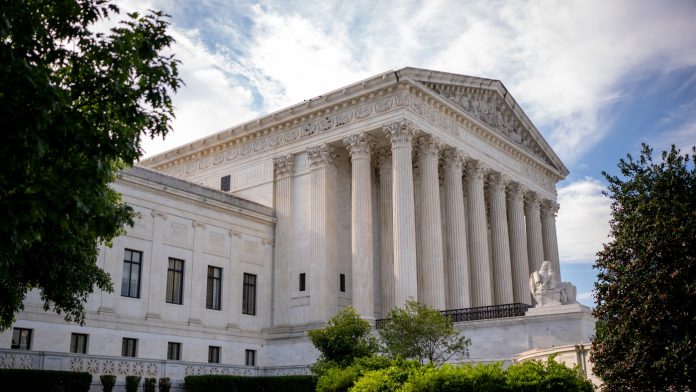
The U.S. Supreme Court hears arguments Monday in a case testing whether Catholic Charities is entitled to opt out of a state unemployment compensation system for its employees.

Ironically, the case comes from Wisconsin, which in 1932, at the height of the Great Depression, became the first state in the nation to set up an unemployment compensation program.

The experiment failed, largely because paying into the fund was optional, and employers dropped out, often to undercut their competitors. But three years later, Congress enacted a federal-state unemployment system that required all employers, including non-profits, to pay into the system so that employees who lose their jobs can pay their basic bills. The only exemptions were for religious employers who conduct programs that are “operated primarily for religious purposes.”

Monday’s case was brought by a single chapter of Catholic Charities, affiliated with the Diocese of Superior in northern Wisconsin. The chapter contends that it is entitled to be exempted from the state’s mandatory unemployment compensation system because it is a charitable organization that carries out a religious mission. At the same time, however, Catholic Charities specifically eschews indoctrination. There is no proselytizing permitted, and employees include Catholics and non-Catholics alike.

“I don’t think that detracts from the fact that this is part of a religious mission,” says Eric Rassbach, who is representing Catholic Charities in the Supreme Court. “The Catholic Church tells people that you’re supposed to help other people.”

But the state of Wisconsin says that is not enough to qualify for an exemption from the compulsory state compensation system. The state notes that other non-profits, and indeed even other Catholic Charities chapters, do not seek religious exemptions, even though they, too, are run by the dioceses they serve.

The state in its briefs contends that the work that Catholic Charities does is “typical” of the work done by other non-profits, and that without a religious gloss on the actual services that are provided by the charity, it is just like other non-profits that must pay into the state system.

But Rassbach counters that forcing Catholic Charities to participate interferes with the Church’s free exercise of religion and that it unconstitutionally entangles church and state. He sees the mandatory system as “perverse” because under the state’s rationale, Catholic Charities could opt out of the system if it proselytized or employed only Catholics, but it can’t opt out under its current practices, even though it acts as the charitable arm of a diocese.

So why does this branch of Catholic Charities want to opt out of the state program? It wants to join something called the Church Unemployment Pay Program, or CUPP, which provides unemployment compensation for employees at churches, Catholic schools, and other overtly religious church affiliates.

“We think that this will definitely save us some money that [Catholic Charities] can use to carry out the rest of their mission,” says lawyer Rassbach.

That view, however, is not universal.

“Our concern is that you get what you pay for,” counters Laurence Dupuis, who filed a brief in the case on behalf of the Economic Policy Institute and similar organizations in support of the state’s position. “In fact, the CUPP program disclaims any responsibility if the employer doesn’t have sufficient reserves set aside… and you’d lose all the federal add-ons that go along with this, and that’s especially important during deep downturns.”

As a practical matter, Dupuis says, he does not see CUPP as equivalent to the state unemployment compensation program, and he warns that if the Supreme Court allows Catholic Charities of Superior to opt out, there will be no stopping point for other organizations. According to Dupuis, nationwide, “Catholic hospitals alone employ 500,000 people and we estimate… 1.2 million people employed by religiously affiliated non-profits.”

If all of these Catholic hospitals and religious employers were to opt out of their state insurance systems, he says, it would put a genuine strain on the systems’ viability, a strain that could be felt in 46 other states that have religious exemption laws similar to Wisconsin’s.

Not withstanding all that, the state of Wisconsin is likely playing a weak hand at the Supreme Court. Catholic Charities is a revered organization that does everything from providing aid to the needy to aiding in the resettlement of refugees. The Supreme Court’s conservative super-majority has repeatedly sided with the Catholic Church’s position in religion cases, and seven of the nine justices were raised Catholic.

Israel Digs In Beyond Its Northern Border

0

Israel has built a growing network of outposts and fortifications in Syria and Lebanon, deepening concerns about a protracted occupation in parts of the two countries.

Israel says it wants to prevent another surprise attack across its borders like the October 2023 Hamas-led attack that ignited the war in Gaza. It has not said how long its forces will remain in its neighbors’ territories, where groups hostile to Israel are present.

But there are signs that Israel appears prepared to remain indefinitely, a visual analysis by The New York Times has found.

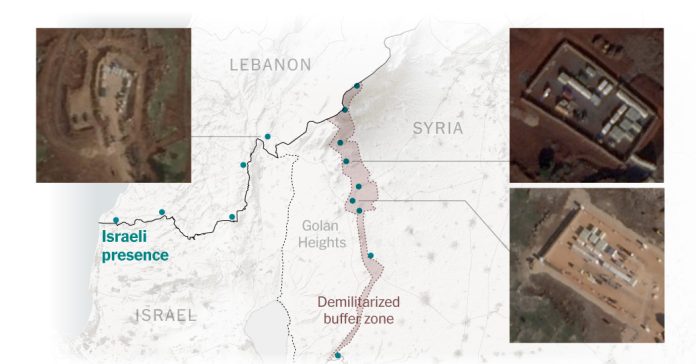
The military has set up watchtowers, prefabricated housing modules, roads and communication infrastructure, according to local residents and the United Nations. An image taken in January of an area near the Syrian town of Jubata al-Khashab shows heavy equipment at work and a newly built perimeter wall.

The largest visible buildup has been in the demilitarized buffer zone in Syria, where Israeli forces have taken up positions and set up roadblocks throughout the territory. They have also deployed beyond the zone — which was created after the 1973 Arab-Israeli war — inside Syria, including on a hill overlooking the village of Kodana.

“They say it’s temporary, but based on what they’re building, it seems they’re preparing to stay for a while,” said Omar Tahan, a local leader in Kodana.

Israel also says that its forces will remain in five places in southern Lebanon so they can defend Israeli communities from potential attack.

It initially pledged as a part of a cease-fire deal reached in late November to withdraw from the country. That deadline was extended, and the two countries are now holding further negotiations.

In parallel to the war in Gaza, Israel has fought along its northern border with Hezbollah, the Iran-backed militia group based in Lebanon. Hezbollah began firing rockets and drones at Israeli positions shortly after the Hamas-led Oct. 7 assault that began the war, prompting back-and-forth attacks between both sides and displacing thousands of Israeli and Lebanese residents on either side of the border.

Last summer, Israel launched a massive aerial campaign and ground invasion that killed Hezbollah’s top leadership and many of its fighters. The conflict killed around 4,000 people in Lebanon and wounded over 16,000, according to the Lebanese authorities.

An incursion into Syria

Israel says its presence in southern Syria — it has at least nine outposts there — is intended to protect communities in northern Israel. It has expressed distrust of the new government in Damascus, which is led by the Islamist rebels who toppled President Bashar al-Assad late last year.

In 1973, Syria — joined by Egypt — launched a surprise assault that caught Israel off guard. The following year, Israel and Syria agreed to a cease-fire that created the buffer zone, in which neither military was allowed to operate.

But after the fall of Mr. al-Assad, Israeli soldiers swept into the buffer zone and beyond, with Israeli warplanes carrying out hundreds of strikes against military sites across the country.

Syria’s interim president, Ahmed al-Shara, says his country remains committed to the 1974 cease-fire. But Israel’s prime minister, Benjamin Netanyahu, says the cease-fire “collapsed” with the fall of Mr. al-Assad. Now he is demanding the “complete demilitarization” of much of southern Syria “from the forces of the new regime.”

Last month, Israel Katz, Israel’s defense minister, said the country’s forces were prepared to remain in the buffer zone, where thousands of Syrian residents live, “for an indefinite period.” They were also conducting raids deeper into southern Syria, he said.

In another sign of widening Israel control, Mr. Katz added that his government would start issuing permission to some Syrians to enter the Golan Heights for work. Israel conquered the territory from Syria in the 1967 war and later annexed it, building Israeli settlements there. Much of the world views the area as Israeli-occupied Syrian territory.

In recent weeks, Israeli trucks have been seen operating along the buffer area. A photo from early January showed construction vehicles at work near the town of Quneitra.

An Israeli army construction site near Quneitra on Jan. 3

Atef Safadi/EPA, via Shutterstock

And satellite images captured by Planet Labs on Jan. 21 show a recently built outpost and a 75-acre bulldozed area near Jubata al-Khashab.

Israeli forces have deployed in abandoned outposts, constructing fortifications and concrete watchtowers, including a hilltop outpost overlooking the nearby towns of Hader in Syria and Majdal Shams in the Golan Heights.

Elsewhere, construction vehicles are building access roads for the military outposts and digging a defensive line along the Alpha Line, which separates the Golan Heights from the buffer zone. The Israeli military says its engineers have been reinforcing the barrier along the border as part of its security effort.

Staying put in Lebanon

In Lebanon, Israeli forces have constructed outposts in five locations, despite the initial agreement to leave in January.

Israel has long feared a surprise attack by Hezbollah from its strongholds in southern Lebanon. As part of the cease-fire, the Lebanese army was supposed to take control in the area, which it has begun to do. But Israel is still bombarding southern Lebanon on a near-daily basis, accusing Hezbollah of violating the truce.

More than 90,000 people in Lebanon remain displaced, particularly from devastated villages along the border, where many homes were destroyed.

Satellite images and videos show Israel building military installations on the Lebanese side of the border between the two countries. The Times was able to pinpoint the locations of the five outposts.

At one site, just outside the eastern Lebanese town of Khiam, satellite images show a path leading to a rectangular structure bearing the characteristics of a military outpost that was built this year. Cars and trucks are parked inside the walled area.

A photo taken from the southern Lebanese village of Sarada shows the Israeli flag flying over the Al-Hamames hills facing the Israeli village of Metulah on Feb. 19, 2025. Rabih Daher / Agence France-Presse — Getty Images

Photos also show an Israeli flag planted at this site. Trees dotted around the hill nearby had been cleared in recent weeks too.

Another outpost has been built between the towns of Markaba and Houla. Satellite images from March show a new, wide path leading up to a rectangular outpost with cars parked inside. The area nearby was cleared of debris.

The U.N. peacekeeping force known as UNIFIL, which monitors the conflict along the border between Lebanon and Israel, has two outposts within 400 yards of the new Israeli site. Videos reviewed by The Times show Israeli forces operating nearby.

In another location on Lebanon’s southern border with Israel, near the town of Aitaroun, satellite imagery shows the beginnings of a similar structure — walled and rectangular, with cars inside — on a mountain top. Near the town of Marwahin, satellite imagery shows the beginnings of similar structures being built around a hilltop, Jebel Blat, overlooking the Israeli settlement of Zar’it.

Rabih Daher / Agence France-Presse — Getty Images

Satellite imagery and photos also confirm that new concrete blocks and barbed wire have been placed around this part of the border wall.

Footage published by a reporter working for al-Manar, a Hezbollah-owned TV channel, and verified by The Times, shows Israeli forces in this area after the withdrawal deadline. One video shows a soldier raising an Israeli flag.

The Wisconsin Supreme Court vote is getting national attention and millions from Musk : NPR

0

Elon Musk wears a cheesehead hat as he speaks during a rally in Green Bay, Wisc. on March 30, 2025. An election to choose a new state Supreme Court justice takes place Tuesday and Musk has contributed millions to the race, hoping to secure a win for the conservative candidate.

Robin Legrand/AFP via Getty Images


hide caption

toggle caption

Robin Legrand/AFP via Getty Images

Many of the country’s most contested issues and hottest partisan politics are playing out in a race for the Wisconsin Supreme Court. The election is Tuesday.

At the state level, abortion rights, voting rights and the powers of public employee unions could all be in the balance in future court rulings.

And impacting the national scene, the court could determine whether the state redraws its congressional districts along lines that end up narrowing or ending the majority that Republicans hold in the U.S. House of Representatives.

Money is pouring in from around the country, with millions of dollars in support of the conservative candidate coming from billionaire Elon Musk, who visited the state Sunday night for a rally donning a cheesehead hat. He handed out $1 million to two people after a legal back-and-forth on whether the money amounted to bribing voters. The liberal candidate has received millions in support from billionaire George Soros, Illinois Democratic Gov. JB Pritzker, a Wisconsin philanthropist and others.

Spending on both sides is expected to reach $100 million, which is more than all but a few U.S. Senate races each cost last year. It’s the most expensive state judge race ever, says The Brennan Center for Justice, a non-partisan think tank and democracy advocacy group.

Wisconsin’s a swing state where President Trump narrowly defeated Kamala Harris in 2024. There’s a Democratic governor, Tony Evers, and a Republican-controlled legislature. Tuesday’s vote could be the first measure of Trump’s popularity and Democrats’ energy after the election five months ago. It could also be a referendum on Trump’s close adviser, Musk.

Wisconsin Supreme Court candidates Susan Crawford and Brad Schimel shake hands before a debate March 12 in Milwaukee.

Wisconsin Supreme Court candidates Susan Crawford and Brad Schimel shake hands before a debate March 12 in Milwaukee.

Morry Gash/AP


hide caption

toggle caption

Morry Gash/AP

Two county judges face off for a seat opening on the court

Supreme Court races are non-partisan in Wisconsin, so there won’t be a “D” or an “R” next to the justices’ names on the ballot, but they are generally described as either liberal or conservative. This race would replace one of the four liberal-leaning judges on the seven-judge court for a 10-year term.

Both candidates are county judges. Brad Schimel is a Waukesha County judge and former Republican Wisconsin attorney general. He’s endorsed by Trump. Dane County Judge Susan Crawford was endorsed by former President Barack Obama last week.

Crawford worked as an assistant state attorney general and as chief legal counsel for former Democratic Gov. Jim Doyle. Schimel was Waukesha’s district attorney and was elected state attorney general but lost a bid for a second term in that position in 2018.

With the heavy spending, voters are being barraged with ads on television, websites and mail by both campaigns and independent groups.

Waukesha County Judge Brad Schimel, candidate for the Wisconsin Supreme Court, speaks to supporters in Waukesha, Wis., before boarding his campaign bus.

Waukesha County Judge Brad Schimel speaks to supporters in Waukesha, Wis., before boarding his campaign bus on March 22.

Chuck Quirmbach/WUWM


hide caption

toggle caption

Chuck Quirmbach/WUWM

The issues: Abortion rights, voter ID, unions

The race has teed up many of the same issues as the last presidential election. On abortion rights, Crawford accuses Schimel of supporting an 1849 state law that is still on the books and before the court. It was used to block abortion in Wisconsin for over a year after the U.S. Supreme Court overturned the federal right to abortion in 2022. Currently, abortion is legal up to about 20 weeks of pregnancy.

Schimel acknowledges he has said the 1849 law is valid but says that abortion should be up to “the will of the people.” Democrats note he’s opposed abortion in the past. Crawford talks about how she represented Planned Parenthood of Wisconsin when she was a private attorney.

Wisconsin is also home to one of the country’s biggest battles over labor rights. As an attorney, Crawford worked for teachers opposed to a 2011 law prohibiting most public employees from collective bargaining. A judge recently blocked that law, which could be headed to the state supreme court.

Meanwhile, Schimel has said he’ll vote yes on a measure also on the ballot Tuesday to place voter ID requirements in the state constitution. Crawford says she doesn’t think a judicial candidate should take a public position on something that could end up being interpreted by the court.

The Schimel campaign has also deployed an issue that GOP candidates say worked for them in 2024 — opposition to transgender rights. One campaign ad features a woman saying Crawford “sides with” radicals in favor of allowing “transitioning male teachers” in girls’ bathrooms at school. Advocates for transgender rights say it’s an example of fearmongering.

Dane County Judge Susan Crawford, candidate for the Wisconsin Supreme Court, prepares to speak at a campaign stop at Racine County Democratic Party headquarters.

Dane County Judge Susan Crawford, candidate for the Wisconsin Supreme Court, prepares to speak at a campaign stop at Racine County Democratic Party headquarters.

Chuck Quirmbach/WUWM


hide caption

toggle caption

Chuck Quirmbach/WUWM

Musk’s millions, his paid petition and the outside money

Elon Musk and groups linked to him have reportedly spent at least $20 million in support of Schimel. The Associated Press reports that they have run misleading ads that appear to be from the Crawford camp and highlight controversial buzzwords. Musk has also offered $100 to anyone who signs a petition against “activist judges” and gave away $1 million to two petition signers.

Musk says he’s interested in the race because the court has power over redistricting for congressional elections and that if Crawford wins, “then the Democrats will attempt to redraw the districts and cause Wisconsin to lose two Republican seats.”

Crawford supporters have highlighted Musk’s involvement. “Elon Musk is really trying to buy a seat on the Wisconsin Supreme Court,” Crawford says.

“I have no control over whatever any outside group does. I will enforce the law. I will apply the law the way the legislature has written it,” Schimel said in the one campaign debate.

Musk has a matter in Wisconsin courts as CEO of Tesla. In January, the automaker sued seeking an exemption from a state law that bans car manufacturers from selling directly to consumers — as Tesla does — instead of going through dealers.

Crawford says his spending far exceeds her top donors. Her biggest financial backer appears to be Wisconsin philanthropist Lynde Uihlein, who the Brennan Center says has given $6.2 million. Soros has given $2 million.

This story was written by NPR’s Larry Kaplow with reporting from Chuck Quirmbach and Maayan Silver of WUWM and Rich Kremer and Anya van Wagtendonk of Wisconsin Public Radio.

Marine Le Pen Barred From French Presidential Run After Embezzlement Ruling

0

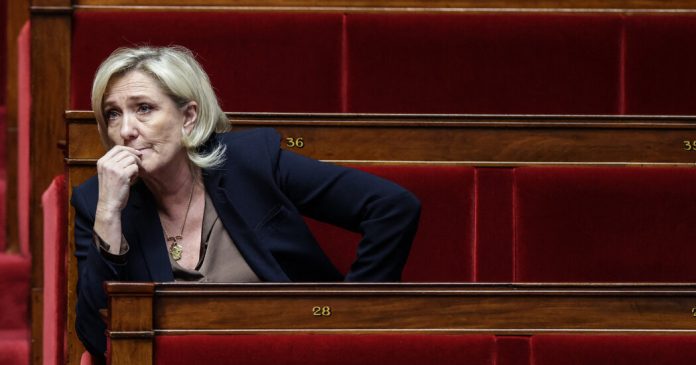
Marine Le Pen, the French far-right leader, was found guilty of embezzlement by a criminal court in Paris on Monday and immediately barred from running for public office for five years, setting off a democratic crisis in France.

The verdict effectively barred the current front-runner in the 2027 presidential election from participating in it, an extraordinary step but one the presiding judge said was necessary because nobody is entitled to “immunity in violation of the rule of law.”

Jordan Bardella, Ms. Le Pen’s protégé and a likely presidential candidate in her absence, said on social media, “Not only has Marine Le Pen been unjustly convicted, French democracy has been executed.” Hard-right leaders across Europe, including Viktor Orban, the Hungarian prime minister, appeared to agree.

“Je suis Marine!” Mr. Orban declared.

However, Sacha Houlié, a centrist lawmaker, asked, “Is our society really so sick that we are going to take offense at what is no more and no less than the rule of law?”

The verdict infuriated Ms. Le Pen, an anti-immigrant, nationalist politician who has already mounted three failed presidential bids. Looking grim and murmuring “incredible,” she walked briskly out of the courtroom before the judges had completed reading her sentence.

She did not address the dozens of camera crews outside the courtroom, but she was expected to speak on French television on Monday evening. She had spoken of her “serenity” before the hearing but there was little evidence of that.

An opinion poll on the presidential election published on Sunday gave Ms. Le Pen 34 to 37 percent of the vote, more than 10 points ahead of her nearest rival. President Emmanuel Macron is term-limited and cannot run again.

Ms. Le Pen has denied any wrongdoing in the case, which involved accusations that her party, the National Rally, illegally used several million euros in European Parliament funds for expenses between 2004 and 2016.

The court also sentenced Ms. Le Pen, 56, to four years in prison, with two of those years suspended. The court said the other two could be served under a form of house arrest. She was fined 100,000 euros, or about $108,000.

Ms. Le Pen’s electoral ineligibility is effective immediately. As a result, only a successful appeal before the 2027 deadline to enter the race would allow her to run.

That is not impossible, but it will be difficult. The appeals process is slow in France, and even if a new trial took take place before the election, it is unclear whether the prosecution’s case would be overturned.

The presiding judge, Bénédicte de Perthuis, acknowledged that a politician prevented from running for office might later win on appeal, and she said the tribunal could not be indifferent to “the need to seek social consensus.”

But the gravity of the case, and the apparent refusal of those accused to acknowledge the facts, made political disqualification necessary, the judge said. The court has to “insure that elected officials, like any citizen, do not benefit from any favorable treatment,” she noted.

The verdict could usher in a period of renewed political turmoil if Ms. Le Pen decides to lash out against France’s fragile government or if anger spills over into the streets. The government struggled to pass a budget this year and could still be toppled at any time by lawmakers in the lower house, the National Assembly, where Ms. Le Pen’s party is the single largest.

The verdict does not affect her current mandate as a lawmaker in the lower house. But if Mr. Macron calls snap parliamentary elections, as he did last year, she will not be eligible to run again. Given the current impasse in a divided assembly, such a dissolution this year is plausible.

Ms. Le Pen and her party stood accused of embezzling a sum close to $5 million in European Parliament funds over more than a decade. But the accusations did little to hinder the National Rally’s rise from the fringes of French politics to its heart.

Ms. Le Pen has endeavored to rebrand the party, founded in 1972 by her father, Jean-Marie Le Pen, steering it away from its antisemitic and racist roots. Its platform, however, has remained resolutely hard right, calling for extreme toughness on crime and drastic measures against immigration.

The court ruled that Ms. Le Pen had played a “central role” in the scheme to siphon funds from the European Parliament and to fill up its coffers at a time when they were precariously empty. Ms. Le Pen was a European lawmaker from 2004 to 2017.

The party used lawmaker assistants who were paid with European Parliament funds to perform tasks for the party that were unrelated to E.U. business, the court ruled.

Ms. Le Pen, a lawyer by training, argued that lawmaker assistants were not direct employees of the European Parliament.

The court disagreed. It also rejected Ms. Le Pen’s argument that the case was a political witch hunt.

“No one is on trial for engaging in politics,” Judge de Perthuis said.