Tuesday, November 10, 2026
Home Blog Page 7

Unauthorized immigrants could lose health care in states : NPR

0

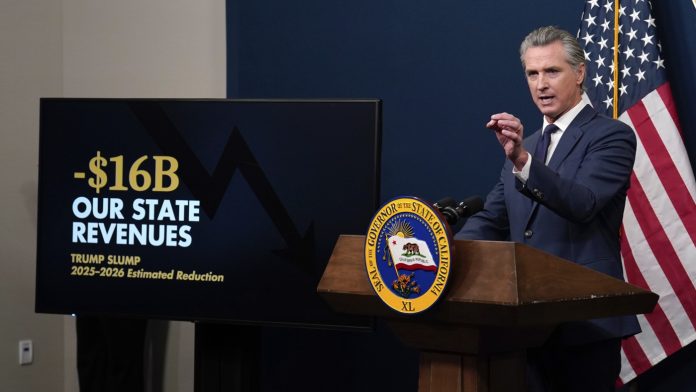
Calif. Gov. Gavin Newsom presents his revised 2025-2026 state budget during a news conference in Sacramento, Calif., Wednesday, May 14, 2025.

Rich Pedroncelli/AP


hide caption

toggle caption

Rich Pedroncelli/AP

Democratic governors in states offering health insurance coverage for immigrants without legal status are proposing to roll back coverage that they signed into law.

As states grapple with budget holes, efforts to limit access to the programs are becoming a common thread. Debates about rolling back coverage or eliminating it entirely come as Congress considers a proposal that would reduce state Medicaid funds from 90% to 80% if they offer health insurance coverage to immigrants without proper authorization.

California 

On Wednesday, Gov. Gavin Newsom announced that he wants to freeze new enrollments for unauthorized people 19 or older on Medi-Cal, California’s insurance plan for lower-income people, and charge a $100 monthly premium starting in January 2026. There would be exceptions for pregnant people and emergency care.

“I don’t want to be in this position, but we are in this position,” Newsom said.

California expanded Medi-Cal to include all adults without legal status in 2024, and 1.6 million immigrants in California currently receive health insurance through the program. Under the proposal, those already enrolled by year’s end would still be eligible for coverage, but other adults without legal status couldn’t enroll.

Republicans, who were against the program’s expansion from the start, have criticized Newsom for continuing to spend on coverage under his latest proposal.

“The governor showed his priorities,” said California Assembly Minority Leader James Gallagher, a Republican. “He wants to continue to spend on health care for illegal immigrants. Billions and billions of dollars.”

The Democratic governor also faces pushback from state lawmakers in his own party, including members of the Latino Caucus in the Legislature, who say they’ll fight to maintain some form of coverage for those without legal status during the final month of budget negotiations.

“We can look at options for budget cuts elsewhere,” said Democratic state senator Lena Gonzalez, who chairs the Legislative Latino Caucus. “We can be a little bit more mindful of how we do this without always having to look at our most underserved communities.”

Experts, lawmakers, and Newsom point out that the state pays for coverage either way. Those without health insurance often seek care in emergency rooms, so some lawmakers and advocates initially pushed for expanding access so people could have regular care, like doctor’s visits and prescription medications.

In states where lawmakers granted Medicaid access for undocumented immigrants, hospital administrators and faith groups, along with immigrant advocates, have helped push for the expansion of benefits.

Minnesota

That’s true in Minnesota, where the proposal to strip the state’s health insurance coverage for adults in the country without authorization emerged as part of a compromise budget framework.

That drew immediate opposition from some Democrats and immigrant advocates.

Minnesota Gov. Tim Walz speaks at a town hall meeting at the DeYor Performing Arts Center on April 7, 2025, in Youngstown, Ohio.

Minnesota Gov. Tim Walz speaks at a town hall meeting at the DeYor Performing Arts Center on April 7, 2025, in Youngstown, Ohio.

Jeff Swensen/Getty Images North America


hide caption

toggle caption

Jeff Swensen/Getty Images North America

Thursday, a group of Democratic lawmakers banged on the door to the room where Gov. Tim Walz, a former vice presidential candidate, was laying out his budget plan with legislative leaders.

They yelled out, “You’re killing our communities,” and said they would vote against the provision to make adult immigrants without legal status ineligible for MinnesotaCare, the state’s Medicaid program, in 2026. Under the proposed budget, children would still be eligible for coverage.

In 2023, Democrats passed a bill granting all people in the country without legal status access to state-funded health coverage and Walz signed it. The program took effect in January, and more than 20,000 people without legal status have enrolled, including about 3,000 children.

Walz and Democratic legislative leaders said they opposed the change but had to accept it as part of a budget framework. The state Legislature is nearly split, with 101 Democrats and 100 Republicans, so they said they needed to accept the proposal that was a priority for GOP lawmakers.

“I’m not going to sugarcoat how difficult this was,” Walz said as lawmakers pounded on the door outside his news conference. “We didn’t expect everybody to be happy in this; I think many of us compromised.”

State House Speaker Lisa Demuth, a Republican, agreed that it was a compromise that could help plug a projected $6 billion budget deficit over the next four years.

“It’s not a measure of being uncaring. It’s a fiscal issue, and there are still opportunities,” Demuth said. “They can still join the private market, so it’s not that health care is being denied in any way,” she added. “We had to make hard decisions in that room, and when we looked at numbers and we looked going forward, this was a compromise that we were all able to come to any negotiation. No one walks out completely happy.”

Some Democratic lawmakers who fought for the program say they’ll oppose the rollback. Without their votes, the measure in a broader health budget bill could stall.

“Although we protected the children, which is a very noble thing to do, those children will lose moms, dads, grandfathers, aunts, uncles, siblings,” said Rep. Cedrick Frazier, a co-chair of the Minnesota People of Color and Indigenous Caucus. “That is what we are faced here with today.”

If Minnesota lawmakers can’t pass a budget before July 1, they could face a state government shutdown.

Politics chat: Trump attacks the Supreme Court, Walmart, Jerome Powell on Truth Social

0

On the heels of his first foreign trip, President Trump got busy on Truth Social. He took swipes at the Supreme Court, Walmart and the Federal Reserve Chairman Jerome Powell.

Week in politics: House Republicans block Trump's 'big, beautiful bill'

0

House Republicans blocked a major funding and tax cut bill and will reconvene Sunday to negotiate further.

Trump’s DOJ focuses in on voter fraud, with help from DOGE : NPR

0

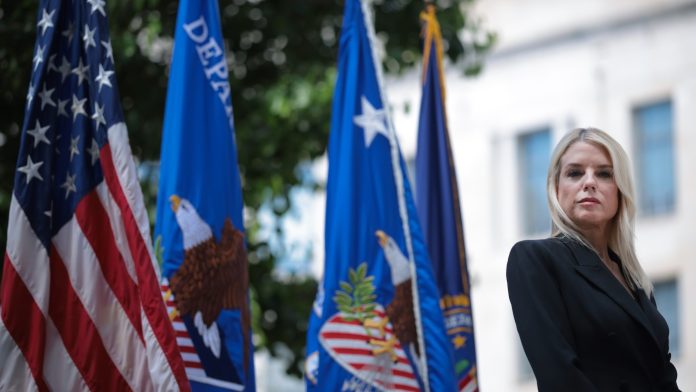
U.S. Attorney General Pam Bondi is seen during a press conference on May 7 in Washington, D.C. Bondi’s Department of Justice recently charged a few noncitizens for alleged illegal voting, citing assistance from the Department of Government Efficiency, or DOGE.

Kayla Bartkowski/Getty Images


hide caption

toggle caption

Kayla Bartkowski/Getty Images

Last October, at a library in Boynton Beach, Fla., Yelyzaveta Demydenko went with her mom and stepdad to vote for the first time.

Demydenko, who’s 22, told a federal investigator that she voted in the presidential election “because she wanted to make a difference.” Her mother, Svitlana, also voting for the first time, said she cast a ballot “because she wanted to support the country.”

The women, who were born in Ukraine, are green card holders, not U.S. citizens, as is required to vote in federal elections. They now represent two of the first illegal voting charges brought by the Justice Department under President Trump.

The same week, federal law enforcement also announced charges against an Iraqi man accused of casting a ballot in the 2020 election, and a Jamaican woman accused of illegally voting in last year’s presidential primary in Florida.

The four cases were made public about a month after Trump signed an executive order that seeks to add new document checks to voter registration, and as Republicans in Congress and in legislatures across the country try to pass laws with similar restrictions.

Trump and his allies have for years pushed the false narrative that non-U.S. citizens are voting in large numbers in federal elections, but nothing in these initial charges points to any widespread conspiracy.

The charges also come as the Justice Department’s Civil Rights Division turns its focus from its longtime mission of protecting the constitutional rights of all Americans to enforcing the president’s executive orders. And according to federal officials, at least some of the initial cases relate to work done by the Department of Government Efficiency, or DOGE, though the government has not disclosed many details on how the Elon Musk-led group was involved.

Prosecuting mistakes

In the leadup to the 2024 election, Trump and his allies, including Musk, pushed the baseless conspiracy theory that the Biden administration allowed migrants to enter the country so they would illegally vote in an attempt to steal the election for Democrats.

“A lot of these illegal immigrants coming in, they’re trying to get them to vote,” Trump said during last September’s presidential debate. “They can’t even speak English. They don’t even know what country they’re in practically.”

No evidence ever came to light to support those allegations. And at least for the four people charged in recent weeks, available public records paint a much different picture.

Records suggest the Iraqi man, Akeel Abdul Jamiel, had lived in the U.S. for more than a decade before allegedly voting illegally, and letters he appears to have submitted in other court cases show he was a fan of Trump and that he was worried about immigration.

“I pray and hope that illegal immigration be stopped completely,” Jamiel wrote in a letter to the Trump White House in 2019. In a separate document he wrote, “May god bless my favorite President Mr. Donald J Trump the greatest man of our times.”

The charging document for Jacqueline Wallace, the Jamaican woman who was arrested, indicates she has been in the country for more than 14 years.

The Ukrainian mother and daughter, who entered the country legally on visas, were given permanent legal residence in the U.S. more than a year prior to voting, and told a federal investigator they didn’t know they weren’t also allowed to vote.

That’s extremely common among these cases, said University of Idaho law professor Benji Cover, who wrote a paper about people, including noncitizens, misunderstanding election rules and being prosecuted in recent decades.

“We don’t use the phrase ‘voter mistake.’ And I found in my research that a lot of these cases that are described as voter fraud seem to involve mistakes rather than fraud,” Cover said. “There’s a huge mismatch between the language we’re using in our political rhetoric and the reality on the ground.”

In a statement, White House spokesperson Liz Huston said: “Non-citizen voting is a very real problem, and anyone who says otherwise is delusional and lying.” The White House also sent a list of noncitizen voting cases stretching back to 2011 that amount to roughly 30 people charged.

In other isolated cases this year, noncitizens have been charged with illegal voting in addition to other forms of identity fraud. A handful of such cases were also federally prosecuted during the Biden administration. But generally, Cover noted that it doesn’t make sense for an immigrant without legal status to risk prison, deportation and family separation to cast one ballot — especially because the inherent paper trail of voting makes it very easy to get caught.

“It’s a very strange crime because you actually go to the government to commit the crime and you write your name down on a piece of paper when you commit the crime,” Cover said. “That always struck me as unlikely.”

What state reviews have found about noncitizen voting

States are also beginning to quantify the noncitizen voting issue themselves — adding to the evidence that it rarely occurs.

Michigan recently released the results of a 2024 election audit that found 15 potential noncitizen votes out of the state’s more than 5.7 million cast. A similar audit last year in Georgia uncovered 20 potential noncitizens out of the state’s 8.2 million registered voters. Iowa says it found 35 potential noncitizen votes out of the state’s nearly 1.7 million votes in 2024.

Still, some Republicans are pointing to the recent criminal cases as evidence of a systemic flaw that requires a comprehensive solution, like requiring all Americans to provide a birth certificate, passport or other citizenship document to register to vote. Research shows such a change would pose a barrier for as many as 1-in-10 American voters.

Trump’s March 25 executive order called for adding a requirement to the national voter registration form to show proof of citizenship, but a federal judge paused that effort after finding the president did not have the authority to make that change.

The Republican-controlled House of Representatives also passed a version of such restrictions in March, called the SAVE Act, which is now at the Senate for consideration.

“The thing that never happens keeps happening,” GOP Sen. Mike Lee of Utah wrote in response to news about the Demydenkos’ charges. “American elections are for Americans only. Pass the SAVE Act NOW!”

In half of all states as well, legislatures have introduced some sort of proof-of-citizenship legislation in 2025, according to tracking by the Voting Rights Lab, with New Hampshire, Wyoming and Louisiana already having passed some form of those restrictions.

Arizona and Kansas were the first states to enact such laws and controversy followed. Kansas’ law is no longer in effect after a federal court found it unconstitutional and evidence surfaced that tens of thousands of eligible citizens were blocked from voting.

A voter registers to vote in Derry, N.H., on March 11. New Hampshire's March elections were the first test of the state's new proof-of-citizenship law.

A voter registers to vote in Derry, N.H., on March 11. New Hampshire’s March elections were the first test of the state’s new proof-of-citizenship law.

Reba Saldanha/AP


hide caption

toggle caption

Reba Saldanha/AP

Cover, of the University of Idaho, says he worries isolated illegal voting arrests will be conflated into a bigger national crisis that justifies such restrictions.

“There may be ways to improve the voter registration process [so this never happens]. That’s a legitimate policy goal,” Cover said. “But when you start with this very heated political rhetoric and this false premise there’s this massive widespread voter fraud, that suggests a very different set of solutions that involves making it much, much harder for everybody to register and much, much harder for everybody to vote.”

Unclear role for DOGE

Justice Department press releases, and the head of the Department of Homeland Security, credit DOGE with assisting with the investigations into Jamiel and the Demydenkos, but it is not clear what role DOGE played, or whether DOGE also assisted with the arrest of Wallace.

NPR requested more information on DOGE’s involvement in the cases but did not receive more details from the White House, DOJ or DHS.

The case against the Demydenkos was already underway in December, before Trump’s inauguration, according to a statement from the Palm Beach County Supervisor of Elections, and so far there is no mention of DOGE in any court documents.

But those involved with DOGE have publicly mentioned election crimes work.

At a rally in Wisconsin at the end of March, Musk and associate Antonio Gracias, a DOGE staffer assigned to the Social Security Administration, revealed that DOGE was comparing Social Security data with state voter data in an effort to identify potential noncitizens who had illegally voted. Gracias said his team had referred cases of noncitizens voting to DHS’ Homeland Security Investigations arm.

Earlier that same week, Trump’s executive order instructed DHS to work with DOGE on voter list maintenance efforts. The next day, a Homeland Security Investigations special agent requested Jamiel’s voter record from local election officials in New York, according to an email acquired by NPR through a public records request.

It’s unclear how many potential noncitizen voters DOGE has uncovered.

Gracias told Fox News in early April that his team had found “thousands” of potential noncitizens on the voter rolls in a handful of states. But at the end of April, Musk and Gracias cited a smaller number — 57 — when they mentioned to reporters how many potential noncitizen voter fraud cases DOGE had referred so far to law enforcement, according to ABC News.

Elections administrators note this sort of records matching is notoriously arduous and can lead to huge initial numbers of potential noncitizens that get whittled down once investigators dig in, eliminate false positives, and find up-to-date citizenship information on people who have naturalized.

In Ohio last year, for instance, Republican Secretary of State Frank LaRose referred more than 600 potential noncitizen voters from the previous decade for prosecution. The state’s attorney general ended up announcing fewer than 10 indictments, and of those, the Associated Press found some who illegally voted had done so without understanding they were ineligible.

“A scalpel, not a sledgehammer”

Maybe the most high profile noncitizen voting incident last election cycle occured in Michigan, when a 19-year-old Chinese college student voted in Ann Arbor, then attempted to get his ballot back after it had already been counted. He now faces two state felony charges.

The incident put Michigan in the spotlight on the issue, so after voting was completed Secretary of State Jocelyn Benson, a Democrat, sought to put hard numbers to all the accusations and theories flying around.

“I think we all can agree that only U.S. citizens should be voting in American elections,” Benson, who’s also running for governor, told NPR in an interview. “And as the rhetoric around noncitizens having the ability to vote in our elections is increasing, I thought it was really important for us to just have a sense of the real raw numbers and data.”

Her office compared the state’s voter file to data they had on file with the state’s department of motor vehicles and checked any matches against available federal citizenship data. Benson said she modeled the audit after the one Georgia election officials completed last year.

The Michigan audit revealed 15 potential noncitizens, in addition to the Chinese student, who seem to have successfully voted in 2024, and Benson’s office turned those cases over to law enforcement for investigation.

When asked by NPR why she didn’t have her office complete the review before the election, to prevent any improper votes, Benson said the state was implementing early voting for the first time in a presidential election — something that would impact every one of the state’s more than 7 million registered voters — and there was only so much effort she felt the state’s local election administrators could put toward something she knew wasn’t occurring in large numbers.

Benson is backing a bill in Michigan’s legislature to permanently codify some citizenship checks on the back end of the state’s registration system. Meanwhile, Republican lawmakers and advocacy groups are trying to put at least one proof-of-citizenship initiative on the 2026 ballot.

Benson is opposed to adding new burdens to the front end of registration for millions of voters.

“We want to have no evidence of people who aren’t eligible voting in our elections,” Benson said. “But this is a serious issue and it has to be addressed with a scalpel, not a sledgehammer.”

Long before Trump proposed movie tariffs, Hollywood was hurting : NPR

0

A backlot on the Radford Studio Center in Los Angeles is built to look like New York City. Seinfeld shot here in the 1990s.

Eilish M. Nobes/Radford Studio Center


hide caption

toggle caption

Eilish M. Nobes/Radford Studio Center

On a Hollywood backlot in Los Angeles, you can find a replica New York City street — complete with a diner, a newsstand, brownstones, a bodega and a subway entrance.

It’s part of the Radford Studio Center, a sprawling production hub in Studio City. In 1928, silent film actor and director Mack Sennett built the studio on what was once a lettuce ranch. Classic TV shows Gunsmoke, Gilligan’s Island and The Mary Tyler Moore Show were all made here. So was the hit 1990s TV show Seinfeld.

“This stage has a ton of positive juju,” says Zach Sokoloff from Radford’s soundstage nine, where Seinfeld taped. Sokoloff is senior vice president at Hackman Capital Partners, which manages Radford Studio Center and studios around the world.

Riding in a studio golf cart to the backlot, Sokoloff points out the spot where the show’s famous episode “The Soup Nazi” was made.

The lot is full of recognizable Seinfeld spots: “Up there, you’ve got the balcony where Jerry threw the marbled rye,” he says.

Sokoloff explains that the studio built this backlot for Seinfeld in 1994, after a massive 6.7 magnitude earthquake rocked Los Angeles and destroyed much of the set.

“There was trepidation about remaining in LA, so we decided to bring New York to the production, as opposed to having the production go to New York,” he says.

Building a replica New York City is what it took to convince Seinfeld to stay in California, says Sokoloff. But keeping productions in the area – and even in the country – has become a challenge, at a time when film and TV production has increasingly moved elsewhere.

The issue came to national attention this month, when President Trump took to Truth Social to declare, “The movie industry in America is DYING a very fast death.” He announced he would authorize a 100% tariff on movies made outside the U.S.

Trump’s proclamation — prompted by a visit from one of his “special ambassadors” to Hollywood, Jon Voight – shocked and confused film industries around the world. But the president quickly paused to consider the idea, saying he’d meet with industry leaders because he wanted “to make them happy.” In the days since, Voight, and fellow “ambassador” Sylvester Stallone teamed up with the Motion Picture Association and several industry unions to craft a letter urging the president to consider enacting federal tax incentives and adjusting certain tax provisions to increase film and TV production in the United States.

The entire episode opened a conversation about the decline of TV and movie-making — and what can be done about it.

A worldwide competition for production work 

According to FilmLA, which issues film permits, production still hasn’t rebounded from the COVID-19 pandemic and delays triggered by the writers and actors’ strikes in 2023. Studios and streamers also aren’t ordering as many shows these days.

“With less work to go around, the competition for what’s left is intensified,” says spokesman Philip Sokoloski.

Most states have some sort of financial incentive for productions. So do nearly 100 countries, including Canada, the U.K., Ireland and Australia.

“Even Thailand [has incentives],” says Joe Chianese, senior vice president of Entertainment Partners, a global production services company. “The recent season of The White Lotus was shot entirely in Thailand. With the number of incentives here in the U.S. and around the world, producers really have a lot of choices.”

Chianese consults with producers about production laws, incentives and taxes around the world.

He says that productions can bring a lot of money to an area at once, “which is a real stimulus to the economy, creating jobs.” The trend of what’s known as “runaway production” began in the late 1990s, he says, when Canada introduced tax credits for film and TV production, and “you saw that rolling out in other countries.”

Ever since, there’s been global competition for entertainment jobs and bragging rights.

Even within the U.S., states are competing for production 

Within the U.S., states are jockeying to get those show business jobs. Last week, New York passed its budget with an $100 million increase in funds dedicated to production incentives, setting aside a total of $800 million.

This week, thanks to New Jersey’s tax credits, Netflix broke ground on new soundstages, a backlot, and post-production facilities on a former U.S. Army base at Fort Monmouth.

And in Texas, a proposed state bill offering more incentives to film there has gotten a boost from some famous celebrities.

YouTube

“Small fraction of the Texas budget surplus could turn this state into the new Hollywood,” actor Woody Harrelson says in a recent video, teaming up with Matthew McConaughey, Billy Bob Thornton, Dennis Quaid and Renée Zellweger.

“No shade to Texas, but I think people would rather film in California,” says Steven Jaworski, vice president of production for A&E Studios.

Jaworski is in charge of budgeting for the Netflix series The Lincoln Lawyer, a legal drama produced at Los Angeles Center Studios, not far from City Hall and other downtown locations where the show often shoots.

“The reality is this show could be shot anywhere,” he says from the set of The Lincoln Lawyer. “LA is a character to our story … but as costs increase, whether it’s inflation or even the way that the economy may be going, there may be a mandate of ‘you have to cut your costs,’ and the only way to keep the show going would be to relocate. It would be heartbreaking if this show had to leave.”

Long before Trump’s announcement, Jaworski and others were sounding the alarm about productions leaving California.

“The situation’s so dire,” he says, “that if something is not done this summer, I truly believe California being the entertainment capital of the world and the production capital of the world — I think that will be a thing of the past.”

California needs a comeback, studio executives and grassroots groups agree

It wasn’t until 2009 that California began offering tax credits to film there – and by that time, production was already moving elsewhere to take advantage of lucrative credits. The California legislation was even nicknamed “The Ugly Betty Bill” – after the hit ABC series that moved its production from California to New York for the tax credits there.

But California’s existing tax credit program badly needs updating, according to Casey Bloys, the chairman and CEO of HBO and Max Content.

“The talent is here, the infrastructure is here. We have a number of shows, including Hacks, that are shooting here,” he said on a panel at the Milken Institute earlier this month. “But the issue becomes, when you try to plan, you have to get into a lottery, and you’re not sure your show is going to get a tax break or not.”

Ravi Ahuja, President and CEO of Sony Pictures Entertainment, speaks at the Milken Institute Global Conference in Beverly Hills in May.

Ravi Ahuja, President and CEO of Sony Pictures Entertainment, speaks at the Milken Institute Global Conference in Beverly Hills in May.

Patrick T. Fallon/AFP via Getty Images


hide caption

toggle caption

Patrick T. Fallon/AFP via Getty Images

Sony Pictures Entertainment CEO and president Ravi Ahuja also made the case for helping out the state.

“While it’s true a lot of production has left the United States, it’s even worse for California,” he said on a panel. He and other studio executives said they like filming in LA, but also want to be able to film and shoot on location around the world.

To solve the problem, California Gov. Gavin Newsom has already been pushing to more than double California’s tax credit program, and two bills going through the state legislature would expand the types of productions that are eligible for credits.

After Trump introduced the idea of movie tariffs, he blamed Newsom for allowing the Hollywood jobs to leave. Newsom stood by the program in California and the incentive increases he’s already proposed. He also volunteered to help the president craft a $7.5 billion dollar federal tax credit plan. “America continues to be a film powerhouse, and California is all in to bring more production here. Building on our successful state program, we’re eager to partner with the Trump administration to further strengthen domestic production and Make America Film Again,” he said in a statement.

Despite the recent attention on keeping production in the country, industry leaders in California still say the program there needs help. Boosting California’s budget and revising its tax credit program would offer a reward for productions made in the state, not a punishing tariff for producing outside the U.S., says Pamala Buzick Kim, co-founder of a grassroots group called Stay in LA.

The group has been lobbying for enhanced incentives to keep production in California.

“A lot of people outside of LA think that when you say Hollywood, everyone’s rich,” Kim says. “I wish that that was the case. But 99% of us who are in production really are your everyday working class folks.”

Kim says Trump’s movie tariff idea “definitely sent a spiral of confusion through the industry and through the international market, but the fact that we are getting attention at a national level is great.”

Kim says it’s important to preserve LA’s legacy and its biggest greatest export.

“We have generations of people who have been in this business who are in this area who are the best of the best. And we need to protect that.”

DOGE has turned its attention to small, independent entities : NPR

0

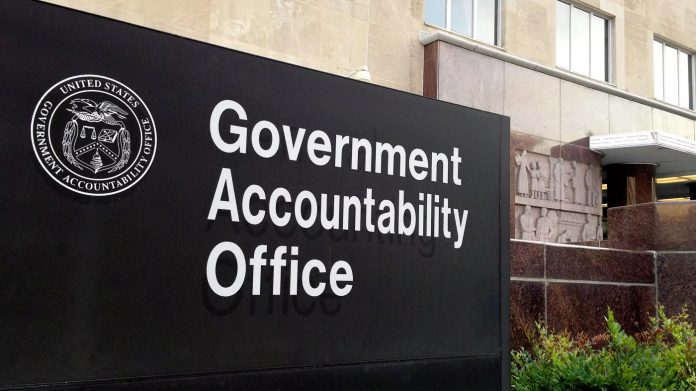
The Government Accountability Office, which falls under the legislative branch, has rejected DOGE’s efforts to embed staffers at the agency.

Government Accountability Office/GAO


hide caption

toggle caption

Government Accountability Office/GAO

When the Department of Government Efficiency comes calling, it typically starts with an email.

That often includes a request to embed DOGE staffers to learn more about what the agency does and review its inner workings.

In response to a DOGE staffer’s May 13 message asking “to discuss getting a DOGE team assigned to the agency,” the Government Accountability Office’s response was straightforward.

“Today, we sent a letter to the Acting Administrator of DOGE stating that GAO is a legislative branch agency that conducts work for the Congress,” a spokesperson for the watchdog said on Friday. “As such, we are not subject to DOGE or Executive Orders.”

It’s the latest example of how DOGE is attempting to expand its reach beyond high-profile Cabinet agencies, and in some cases beyond the executive branch and the federal government entirely.

NPR has identified close to 40 entities — inside, adjacent to and outside of the government — where DOGE and the Trump administration have turned their attention in recent weeks.

Some of them have already been effectively dismantled by DOGE, like the U.S. Institute of Peace, the site of a dramatic daylong standoff between USIP staffers and representatives of the cost-cutting initiative claiming to be new leadership.

Some have been targeted for elimination by the president in his budget proposal for next year, like AmeriCorps and the Federal Mediation and Conciliation Service.

Some of them aren’t government agencies at all and, like GAO, have rebuffed DOGE’s requests, such as the independent Corporation for Public Broadcasting and the private nonprofit Vera Institute of Justice.

Nearly all of the meetings have been conducted by a small group of young staffers, including at least one college student, with no federal government experience and little apparent knowledge about what these entities do, according to more than a dozen lawsuits, documents shared with NPR and interviews with employees who were granted anonymity because they are not authorized to speak publicly and fear retaliation from the Trump administration.

Protesters rallying against the Trump administration and Elon Musk's Department of Government Efficiency (DOGE) in Washington, DC on the National Mall on April 5, 2025.

Protesters rallying against the Trump administration and Elon Musk’s Department of Government Efficiency (DOGE) in Washington, DC on the National Mall on April 5, 2025.

Anna Moneymaker/Getty Images


hide caption

toggle caption

Anna Moneymaker/Getty Images

Meet the young staffers driving DOGE’s outreach

NPR has identified six DOGE staffers based at the General Services Administration who have been primarily responsible for meeting with these independent organizations: Nate Cavanaugh, Justin Fox, Justin Aimonetti, Jack Stein, Jonathan Mendelson and Marshall Wood.

Cavanaugh currently serves as the appointed president of the U.S. Institute of Peace. Shortly after being named the acting director of the Interagency Council on Homelessness — one of the agencies Trump’s budget proposal calls for eliminating — Cavanaugh placed its entire staff on administrative leave.

Cavanaugh first emerged at GSA in February, where he met with many technical staffers and software engineers and interviewed them about their jobs, according to four GSA employees who spoke on condition of anonymity because they feared retaliation.

Since then, he’s also been detailed to multiple other agencies, according to court filings, including the U.S. African Development Foundation (USADF), the Inter-American Foundation (IAF), the Institute of Museum and Library Services, the National Endowment for the Humanities (NEH) and the Minority Business Development Agency.

 An email from DOGE staffer Justin Fox to Government Accountability Office staffers sent on May 13, provided by House Committee on Oversight and Government Reform Democrats. Redactions by Congressional staff.

An email from DOGE staffer Justin Fox to Government Accountability Office staffers sent on May 13, provided by House Committee on Oversight and Government Reform Democrats. Redactions by Congressional staff.

NPR screenshot/House Committee on Oversight and Government Reform Democrats


hide caption

toggle caption

NPR screenshot/House Committee on Oversight and Government Reform Democrats

Cavanaugh’s partner in much of the small agency outreach is Justin Fox, a 21-year-old college student who, according to his LinkedIn profile, is a college student at Indiana University Bloomington and the founder of Vantix Advisors, a “cutting-edge blockchain consulting firm.”

Less than a week after joining the federal government in early March, Fox was detailed to aid DOGE’s efforts at USADF, and has been involved with meetings regarding IAF, NEH, USIP, the Wilson Center, the Millennium Challenge Corporation and more.

Fox sent this week’s email to the GAO, with Cavanaugh copied, according to a copy of the email shared by the top Democrats on the House Oversight and Administration Committees.

Cavanaugh and Fox were detailed to the National Labor Relations Board one day after NPR reported on a whistleblower disclosure alleging sensitive data left the agency’s network after DOGE staffers were given unfettered access to its systems.

The two have also been assisted at times by Justin Aimonetti, an attorney who previously worked as an associate at the firm Dechert LLP. Aimonetti is detailed to DOGE from the GSA.

Recent DOGE meetings have also included a trio of young government novices with finance backgrounds, according to their LinkedIn profiles: Mendelson, most recently an investor at Accel; Stein, most recently an investment banking associate at Salem Partners; and Wood, who was an investment banking associate at Jefferies.

Mendelson started at GSA on Apr. 9, Stein started Apr. 15, and Wood started Apr. 21, according to two government employees not authorized to speak publicly about DOGE’s activities.

None of the DOGE staffers named in this story returned NPR’s request for comment about their backgrounds or work engaging with these small agencies.

A look at the onboarding process

At the Advisory Council on Historic Preservation, DOGE’s email came on Apr. 17, requesting a meeting to assign a team to the small federal agency, which advises the president and Congress on preserving the nation’s heritage. The agency has just 42 employees, according to its website.

A 2008 file photo of the National Building Museum in Washington, DC, which houses the small Advisory Council on Historic Preservation, an agency now facing scrutiny from the Department of Government Efficiency.

A 2008 file photo of the National Building Museum in Washington, DC, which houses the small Advisory Council on Historic Preservation, an agency now facing scrutiny from the Department of Government Efficiency.

Paul J. Richards/AFP via Getty Images


hide caption

toggle caption

Paul J. Richards/AFP via Getty Images

An initial video call took place on Apr. 22, followed by an in-person meeting the next day at the National Building Museum in Washington, D.C., according to Lynne Richmond, ACHP’s acting director of communications, education and outreach.

“The DOGE representatives were seeking a general overview of the ACHP and its program, responsibilities, and activities. They also sought information about our budget, staff, and existing contracts,” Richmond said. Since then, DOGE has detailed a team to ACHP, where they are in the process of being onboarded, she said.

A similar process has played out at dozens of small, often obscure, independent entities across the federal government since early March.

On Apr. 17 alone, DOGE staffers scheduled meetings with officials from the Truman Scholarship Foundation, the Denali Commission, the Office of Navajo and Hopi Indian Relocation and the U.S. Access Board, according to the two sources not authorized to speak about DOGE’s operations.

Amy Nieves, a spokesperson for the Access Board, which develops accessibility standards under federal laws including the Americans with Disabilities Act, confirmed that the board’s leadership had a “cordial meeting” with members of DOGE at the board’s Washington office on Apr. 22 and that “additional meetings and engagements have taken place and are expected.”

The Truman Scholarship Foundation, the Denali Commission and the Office of Navajo and Hopi Indian Relocation didn’t respond to NPR’s requests for comment.

When bringing DOGE in means shutting down 

At some places, interactions with DOGE have quickly turned into efforts to shut them down.

After Trump issued an executive order calling for the effective shuttering of the Institute of Museum and Library Services, DOGE took part in carrying out that directive.

Cavanaugh accompanied Trump’s newly appointed acting director to IMLS headquarters on Mar. 20, where they took control of its computer systems, according to court filings. Soon after, IMLS’s entire staff of 70 was put on administrative leave. (A federal judge has since paused Trump’s attempt to eliminate IMLS and six other agencies.)

Rain falls on the National Endowment for the Humanities building (NEH) on April 11, 2025 in Washington, DC. The Trump administration's Department of Government Efficiency has assigned a team to the agency, which gives grants tied to the arts. The agency is in the process of trying to lay of 80% of its staff on the orders of the Trump administration.

Rain falls on the National Endowment for the Humanities building (NEH) on April 11, 2025 in Washington, DC. The Trump administration’s Department of Government Efficiency has assigned a team to the agency, which gives grants tied to the arts. The agency is in the process of trying to lay of 75% of its staff on the orders of the Trump administration.

Kayla Bartkowski/Getty Images


hide caption

toggle caption

Kayla Bartkowski/Getty Images

At the National Endowment for the Humanities, Cavanaugh and Fox notified nearly 1,500 grantees that their awards were terminated, using a non-governmental Microsoft email account, according to a lawsuit challenging the agency’s dismantling.

They then demanded NEH leadership terminate roughly 75% of its staff, leaving it a “shell of an agency that Congress established and has consistently funded,” the lawsuit said.

As part of Trump’s efforts to shrink the federal bureaucracy and slash government spending, the president has issued a slew of executive orders aiming to eliminate many of the entities contacted by DOGE.

Trump’s topline 2026 budget proposal calls for the shuttering of nearly two dozen independent agencies, commissions and organizations, from the Marine Mammal Commission to the nonprofit Neighborhood Reinvestment Corporation to regional federal-state collaborative partnerships like the Delta Regional Authority and the Denali Commission.

At other agencies, employees are waiting to see what comes of DOGE’s review. Following DOGE’s visits to Peace Corps headquarters in April, the agency that sends volunteers abroad has told staff to prepare for cuts.

DOGE staff met with Peace Corps officials as recently as May 9 to discuss staffing cuts and resignations, according to the two government employees not authorized to speak about DOGE’s operations.

“Last month, the Department of Government Efficiency (DOGE) began an assessment of Peace Corps operations. As a result, the agency has identified ways to significantly restructure its workforce, both domestically and overseas,” an unnamed spokesperson using a Peace Corps press email account told NPR. “Staff were offered a Deferred Resignation Program option and have been made aware that the agency intends to also implement further staff reductions.”

The Peace Corps spokesperson said the agency “remains operational” and has no plans to withdraw volunteers serving abroad. The National Peace Corps Association, an alumni group, has raised concerns that “an already lean agency will be forced to sacrifice services for current Peace Corps applicants, Volunteers, and alumni.”

Last week, the Peace Corps was added as a defendant in a lawsuit brought by a coalition of labor unions, nonprofits and local governments that’s challenging the Trump administration’s overhaul of the federal government. A court has temporarily blocked some agencies from cutting jobs and putting workers on administrative leave.

Some DOGE targets are not federal agencies at all

Among the dozens of organizations contacted by DOGE in recent weeks are several privately incorporated nonprofits that were created by Congress and receive federal funding but are not considered government agencies.

That includes the Legal Services Corporation, which funds legal aid for those who can’t afford it, the Neighborhood Reinvestment Corporation, which operates under the name NeighborWorks America and provides grants, training, and assistance to community development groups, and the Corporation for Public Broadcasting, which provides grants to public radio and television stations.

Cavanaugh tried to assign a DOGE team to review CPB’s operations in April, a day after Trump attempted to fire three board members, according to filings in a lawsuit brought by CPB challenging Trump’s move.

CPB denied that request, citing federal law stating that the organization “will not be an agency or establishment of the United States Government.”

The laws creating the Legal Services Corporation and NeighborWorks America also say, in both cases, that “the corporation shall not be considered a department, agency, or instrumentality of the Federal Government.”

Legal Services Corporation president Ron Flagg met with DOGE staff on Apr. 14, Carl Rauscher, director of communications and media relations at LSC, confirmed. “We provided information they requested,” Raucher said.

NeighborWorks America declined to comment on its interactions with DOGE. “NeighborWorks America is aligned with the administration’s housing goals,” Douglas Robinson, a spokesperson for the nonprofit, said in a statement to NPR. “Like the administration, we believe in the efficient delivery of financial resources and technical expertise that sustains and builds affordable housing supply.”

DOGE’s efforts went even further when it approached the Vera Institute of Justice, a private nonprofit that has received federal grants, but was not created by Congress, about assigning a team there.

In an Apr. 15 call, Cavanaugh said his request to embed into Vera was “void” — not because Vera is a nongovernmental organization, but after learning from Vera staff that the Department of Justice had terminated all of the organization’s grants, according to notes Vera Institute staff shared with NPR.

DOGE’s larger playbook

At larger, better-known agencies including the Internal Revenue Service and the Department of Agriculture, DOGE has been amassing sensitive personal data for purposes that include immigration enforcement and searching for fraud. It’s also been behind firings, program cuts and grant cancellations across the federal government.

DOGE’s interactions with smaller, independent entities appear to be focused not on data, but on slashing spending and carrying out the Trump administration’s agenda as laid out in the president’s executive orders and budget proposal.

In the call with Vera Institute leadership, Cavanaugh said DOGE’s outreach was about interrogating “every institute or agency that has Congressional monies appropriated to it,” according to notes provided by Vera.

Tesla and SpaceX CEO Elon Musk (right) attends a Cabinet meeting at the White House on April 30, 2025. Musk is stepping back from his guiding role with the Department of Government Efficiency even as the ad hoc team's work continues.

Tesla and SpaceX CEO Elon Musk (right) attends a Cabinet meeting at the White House on April 30, 2025. Musk is stepping back from his guiding role with the Department of Government Efficiency even as the ad hoc team’s work continues.

Andrew Harnik/Getty Images


hide caption

toggle caption

Andrew Harnik/Getty Images

Cavanaugh did not respond to a request for comment about why DOGE has sought to embed staff at Vera and other organizations that are not government agencies.

Slashing staff and budgets of smaller agencies is unlikely to make a big contribution towards DOGE’s stated goal of downsizing the federal government. Billionaire Elon Musk, the de facto head of DOGE, has already reduced his cost-cutting target from $2 trillion before Trump took office to $150 billion.

Musk says he is scaling back the time he’s spending working in the federal government, but that does not mean DOGE’s work is scaling back. The busy schedules of staffers including Cavanaugh and Fox, who have been onboarded as full-time GSA employees and not time-limited special government employees like Musk, show that the work is intended to continue into the future.

Do you have information about DOGE outreach to independent agencies and nongovernmental organizations? Reach out to the authors through encrypted communications on Signal. Stephen Fowler is available on Signal at stphnfwlr.25. Shannon Bond is at shannonbond.01. Please use a nonwork device.


The first time we had ‘one big, beautiful bill’ we called it Reaganomics : NPR

0

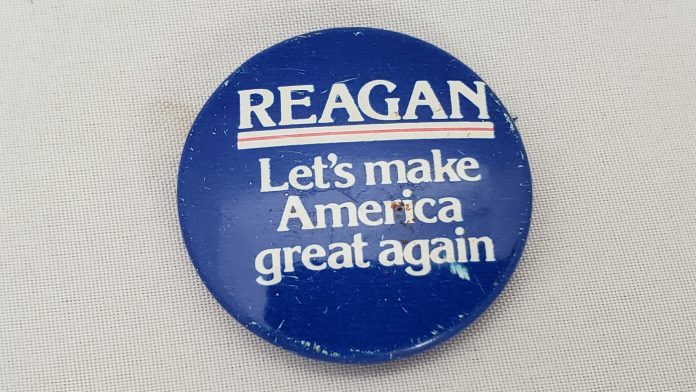
Close-up photo of pinback button with text reading Reagan, Let’s Make America Great Again, for Ronald Reagan’s 1980 presidential election campaign.

Smith Collection/Gado/Sipa USA/Sipa via AP Images


hide caption

toggle caption

Smith Collection/Gado/Sipa USA/Sipa via AP Images

Have some sympathy for the headline writers and TV chyron composers trying to describe what’s happening on Capitol Hill right now.

Should they just call it the “budget bill” (yawn) or the “mega bill” (one eye opens) or the “gargantuan package deal”?

Many simply succumb and adopt President Trump’s phrase “one big, beautiful bill” — the latest testament to his knack for marketing with labels that stick. It’s even the proposed official name for the House legislation. (For those with tight space constraints, there’s the casual acronym “OBBB.”)

Members of Congress or staff can of course fall back on the bill’s formal procedural description — budget reconciliation, or just “reconciliation” for short. But it’s not hard to understand why talk of “budget reconciliation” is not sweeping the nation.

Nonetheless, everything Trump has poured into this legislative potpourri — from tax and spending cuts to a big Pentagon boost and sprawling policy directives — depends on the package getting special consideration under special rules.

Those rules are only available for budget reconciliation bills, and they make all the difference — the biggest being their exemption from the Senate’s practice of allowing unlimited debate, the filibuster.

Normally, the threat of a filibuster means bills need at least 60 votes to get through the Senate. But take away that threat and the majority party can enact even its most ambitious changes to existing policy and law by a simple majority vote. No votes from the opposition are needed.

That has been crucial to enacting key programs for each of the past seven presidents, who have used reconciliation more than two dozen times over the half century since it was created. It was used for crucial parts of the Affordable Care Act (also known as Obamacare) and for Biden’s energy and infrastructure initiatives as well as for the deep tax cuts done in the first year of Trump’s first term.

Rep. Randy Weber, R-Texas, attends the House Energy and Commerce markup of the FY2025 budget resolution in Rayburn building on May 13.

Rep. Randy Weber, R-Texas, attends the House Energy and Commerce markup of the FY2025 budget resolution in Rayburn building on May 13.

Tom Williams/CQ-Roll Call, Inc via Getty Images


hide caption

toggle caption

Tom Williams/CQ-Roll Call, Inc via Getty Images

But the president who initiated the ambitious use of reconciliation was Ronald Reagan, whose first federal budget was a watershed in the history of federal fiscal policy.

The Reagan Revolution, brought to you by …

The year was 1981, and official Washington was waking up to an unfamiliar landscape. There was a newly inaugurated outsider in the White House determined to move fast and change things. His new budget featured eye-popping increases for the Pentagon alongside deep cuts for social safety net programs.

But looming over all else was a historic reduction in the federal tax on income and capital gains. Sold as being “across the board” with something for taxpayers at all income levels, the cuts’ dollar value was highest for the investor class.

All in all, the changes constituted the centerpiece of Ronald Reagan’s effort to reverse the growth trends in the federal government and install what would be called “Reaganomics” — the centerpiece of the “Reagan Revolution.”

You could say Reagan’s priorities were just a statement of Republican orthodoxy. To be sure, tax cuts and muscular national defense and a gimlet eye on other programs had been components of Republican platforms for generations.

Reaganomics was something else again. Like the thrusts that have come with Trump’s return to office, the White House in 1981 was striving to strike while the post-election iron was still hot.

The promise of Reagan’s program was that tax cuts could lessen the burden of government, unleash enterprise and so stimulate the economy as to create jobs and even increase federal revenue. The biggest advocates of the tax cuts maintained they would “pay for themselves.” All gain with little or no pain. Everyone would be better off. America, writ large, would be better off.

Or, as one of Reagan’s 1980 campaign slogans put it: “Let’s Make America Great Again.”

Another parallel between the Trump and Reagan upheavals was the presence of an unelected official suddenly wielding enormous power in a new role. In the current scenario that has been Elon Musk, the auto and space entrepreneur who helped fuel Trump’s campaign late in 2024. Musk came aboard as a special adviser to Trump, running the new “Department of Government Efficiency” initiative and threatening the jobs of well over a hundred thousand federal employees.

President Reagan and his director of the Office of Management and Budget, David Stockman.

President Reagan and his director of the Office of Management and Budget, David Stockman.

HUM Images/Universal Images Group via Getty Images


hide caption

toggle caption

HUM Images/Universal Images Group via Getty Images

In 1981, the designated slasher was Reagan’s new director at the Office of Management and Budget, David Stockman. Stockman, a former seminarian and congressman from Michigan, quickly assembled an executive budget blueprint that upended generations of assumptions about the federal government’s role. At 34 years old, Stockman’s youthful assurance and irreverence for sacred cows of all kinds soon upset many of his former colleagues on the Hill.

But Reagan’s revolution went forward because his election coattails from 1980 had sent such a strong message to Congress. Republicans had their first majority in the Senate since the 1950s. Just as important, Reagan could look to a working coalition in the House, where Democrats had just lost 35 seats and they could not count on the votes of another 30 or more Southern Democrats whose districts had gone for Reagan. Those members’ votes in the House would be enough to put his proposal over the top in their chamber.

Still, enacting as large a course correction as the new administration envisioned was a major challenge. As news of the spending cuts sank in there were protests in major cities and outside the offices of members of Congress. Reconciliation required a lot of committee action and some panels chafed at their new marching orders (called “reconciliation instructions”).

As the package struggled its way through a maze of committee votes, there was a growing sense that the pushback was going to dismember the deal or defeat it outright.

But on March 30, 1981, a disturbed young man ambushed Reagan leaving the Washington Hilton Hotel and shot him at close range. Reagan took a bullet that punctured a lung and might have ended his presidency in its third month. But after emergency surgery and two weeks of hospital, Reagan was back. The drama of it all lent fresh impetus to the package as previously wavering Republicans rallied ’round.

Through it all, the drama centered on Reagan, giving him what UCLA political scientist Mark A. Peterson has called “an image of invincibility and legislative acumen” that would last for years.

But before the summer was over, the other hero of the tale would prove to be the reconciliation process that was making the legislative win possible — a process with its origins in quite a different era of relations between Congress and the president.

It was a window opened by Watergate

Reconciliation was created in the Congressional Budget Control and Impoundment Act of 1974. It was a product of the politics of that year, when the Vietnam War was coming to a disheartening end and President Richard Nixon was fighting a long battle against impeachment.

Nixon had been reelected in a 49-state landslide in 1972, but his second term was soon subsumed by a scandal involving his reelection campaign, spying on political opponents (including the Democratic National Committee offices in the Watergate office complex) and an elaborate effort to cover it all up. Nixon’s public approval, once as high as 60%, was plummeting further by the month. He would resign in August of 1974.

The 1974 act created the first Congressional Budget Office and the budget committees in both chambers of Congress, setting out a process for planning each federal fiscal year. It also included the notion of a unified, multipurpose bill that would incorporate spending and tax priorities and policy changes as well (while leaving the actual commitment of federal dollars to the traditional appropriations committees of the House and Senate).

As noted, the key element in all these rules was the elimination of the filibuster and empowerment of the Senate majority party. The original legislation limited the number of times reconciliation could be used and indicated it should be for purposes of lowering the annual budget deficit and reducing the national debt.

Although it had been available in law for Presidents Gerald Ford and Jimmy Carter, neither had the majorities in Congress that have been key to making reconciliation work.

Reagan was the first who did, and he used it to make his mark on his era. The effects of Reaganomics on job creation, inflation, income distribution and equity in the U.S. have been debated for more than 40 years and remain controversial today. The same could be said for the effects of other presidential uses of the reconciliation tool in the past.

How well Trump and his congressional leadership team handle that tool this year to reshape and redirect the federal government will set a powerful narrative for the first stage of Trump’s second term.

Consider This from NPR : NPR

0

CEO of Tesla and SpaceX Elon Musk leaves the stage holding a chainsaw after speaking at the Conservative Political Action Conference (CPAC) on February 20.

Andrew Harnik/Getty Images


hide caption

toggle caption

Andrew Harnik/Getty Images


CEO of Tesla and SpaceX Elon Musk leaves the stage holding a chainsaw after speaking at the Conservative Political Action Conference (CPAC) on February 20.

Andrew Harnik/Getty Images

It’s been six months since President Trump first announced the creation of the Department of Government Efficiency initiative, which has dramatically shrunk parts of the federal government. And with so many individual stories about federal workers losing their jobs around the country, the big picture can sometimes look blurry.

A team of NPR reporters has been looking at agencies — from food inspectors to nuclear scientists to firefighters and more — and today, we’ll connect some of the dots on how DOGE cuts have impacted workers, and hear how Americans far beyond Washington may feel the effects of these cuts.

For sponsor-free episodes of Consider This, sign up for Consider This+ via Apple Podcasts or at plus.npr.org.

Email us at [email protected].

This episode was produced by Alejandra Marquez Janse and Connor Donevan, with audio engineering by Simon-Laslo Janssen. It was edited by Ashley Brown and Nadia Lancy. Our executive producer is Sami Yenigun.

Former FBI director Comey’s ‘8647’ post seen as Trump threat : NPR

0

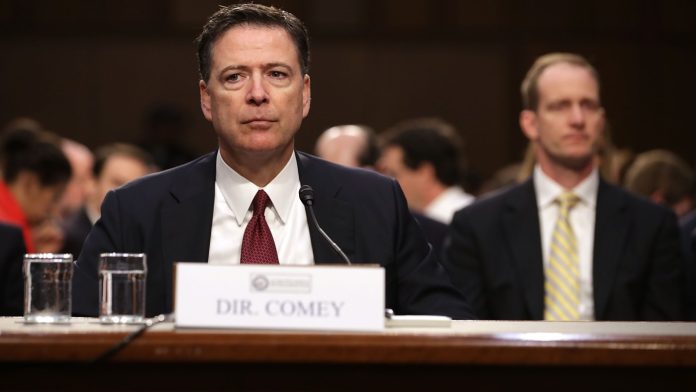
Former FBI Director James Comey, shown here testifying before the Senate Intelligence Committee in June 2017, is under fire from conservatives for a social media post some interpret as a threat to President Trump’s life.

Chip Somodevilla/Getty Images


hide caption

toggle caption

Chip Somodevilla/Getty Images

The Trump administration is investigating former FBI Director James Comey over a social media post that some government officials and supporters of President Trump are interpreting as a threat to the president.

On Thursday, Comey shared a picture on Instagram of seashells on a beach arranged into the numbers “8647.” The caption read: “Cool shell formation on my beach walk.”

“Eighty-six” is a slang term that means “get rid of,” and Trump is the 47th (and 45th) president of the United States. According to Merriam-Webster, the most common meaning of 86 — which has its roots in the service industry — is to “throw out” or “refuse service to” a customer. The dictionary notes that the term has also come to mean “to kill.” But the dictionary says it does not include this meaning in the official entry “due to its relative recency and sparseness of use.”

The post sparked uproar among some Republicans, who suggested Comey was threatening the president. Donald Trump Jr. accused him of “calling for my dad to be murdered.”

But Comey, who deleted the photo within hours, said he assumed the shells were a “political message,” not a violent one. It’s unclear who created the shell formation.

Comey has been an outspoken critic of Trump since he led the FBI during the president’s first term. Trump fired Comey in 2017, four years into his ten-year term, as he was overseeing an investigation into alleged Russian meddling in the 2016 election.

“I didn’t realize some folks associate those numbers with violence,” Comey wrote on Instagram. “It never occurred to me but I oppose violence of any kind so I took the post down.”

Several Republican politicians are calling for Comey to face consequences ranging from an investigation to an arrest. Homeland Security Secretary Kristi Noem announced late Thursday that her department and the Secret Service are “investigating this threat and will respond appropriately.” NPR has reached out to Comey for comment and did not receive a response before publication of this story.

Secret Service spokesperson Anthony Guglielmi told NPR on Friday that the agency is aware of Comey’s post and takes “rhetoric like this very seriously.”

“The Secret Service vigorously investigates anything that can be taken as a potential threat against our protectees,” Guglielmi said.

Some Republicans, including Director of National Intelligence Tulsi Gabbard, say they do not believe Comey was unaware of the term’s violent connotations.

“I’m very concerned for the president’s life; we’ve already seen assassination attempts,” Gabbard told Fox News on Thursday. “I’m very concerned for his life and James Comey, in my view, should be held accountable and put behind bars for this.”

Then-candidate Trump survived two assassination attempts while running for reelection last year.

He was wounded in a shooting during a July campaign rally in Pennsylvania. In September, a man trained his rifle on the president’s security detail as he golfed in Florida, but fled after being spotted. The man, Ryan Routh, was charged with attempted assassination of a presidential candidate but has pleaded not guilty — and on Thursday asked a judge to dismiss some of the charges against him.

On Friday, Trump told Fox News that he thinks Comey “knew exactly what he meant.”

“A child knows what that meant. If you’re the FBI director and you don’t know … that meant ‘assassination,'” Trump said in a clip of an interview scheduled to air Friday night. “And it says it loud and clear. He wasn’t very competent, but he was competent enough to know what that meant.”

’86’ has shown up in politics before

This isn’t the first time that “86” has caused a stir in U.S. politics.

It seems to have crossed into the political lexicon in 2018, when Sarah Huckabee Sanders — then-press secretary in the first Trump administration — was kicked out of a Virginia restaurant. The restaurant’s closing staff wrote “86 Sarah Huckabee Sanders” on their note to the morning manager, a photo of which went viral.

In October 2020, Michigan Gov. Gretchen Whitmer, a Democrat, gave a Zoom interview to Meet the Press with an “8645” pin visible behind her, prompting some Republicans to wonder if she was sending a pointed, or possibly violent, message.

Detroit News reported at the time that Whitmer’s team said the Trump campaign’s reaction was evidence no one in the campaign had worked in the restaurant industry.

Anne Curzan, a linguist at the University of Michigan, told Michigan Public at the time that the most accurate meaning of the term was likely the same as in the Huckabee Sanders incident.

“It could mean they’re fired, that there’s no more use for them, they’ve been asked to leave,” she said. “So that meaning is out there as well, which is more relevant to the ‘8645.’”

The “8647” slogan has quietly become a code for opposition to Trump, circulating in TikTok posts and on protest signs in recent months.

The online publication Distractify reported in March that people use it to mean they don’t want Trump to be president.

“The message is vague about how exactly these people want to do that, but it seems that the point is to signal that you don’t want Trump to be in the White House,” it said.

Republican Sen. Mike Lee of Utah retweeted a photo of one such sign at an anti-Trump protest in April, saying “All Americans should condemn this.”

He condemned Comey’s post in a 14-tweet thread on Thursday, saying it “hits too close to home — and occurs too soon after two serious, nearly successful assassination attempts … to be dismissed as a joke or harmless hyperbole.”

Some liberals see a double standard 

Merchandise stamped with “8647,” from shirts and hats to bumper stickers and pins, are offered by vendors on sites like Amazon and Etsy. So too, however, are “8646” items — a reference to former President Joe Biden.

NPR has reached out to Amazon and Etsy to ask whether those items violate their seller policies prohibiting items that glorify violence.

Some liberal critics on social media say that Republicans did not seem to take issue when the same slogan — or even more violent rhetoric — was targeted at a Democratic president.

They are pointing to examples of violent rhetoric by the president and his allies, including Trump’s 2024 post on Truth Social featuring video of a truck driving on the highway with an image of Biden tied up on the back. In 2021, then-Rep. Paul Gosar, R-Ariz., was censured after sharing an anime video of himself killing Rep. Alexandria Ocasio-Cortez and swinging swords at Biden.

And some have found examples of prominent conservatives using the “86” slogan over the years, digging up far-right influencer Jack Posobiec’s 2022 tweet reading: “86 46.” In 2024, then-Rep. Matt Gaetz, R-Fla., used the term to describe Republicans who had been removed from office, which did not cause notable controversy at the time.

DOGE tried to embed in the GAO, which is part of Congress : NPR

0

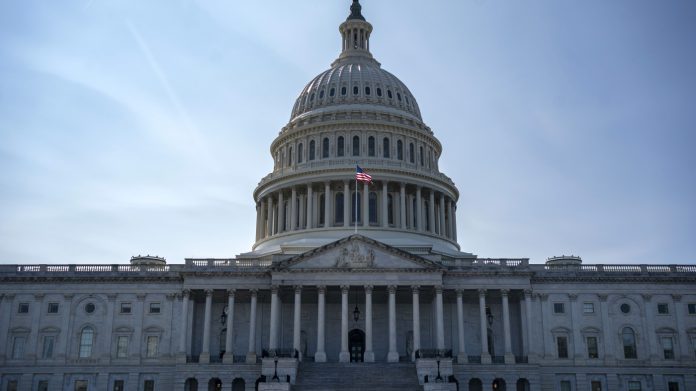
A 2024 file photo of the U.S. Capitol.

Bonnie Cash/Getty Images


hide caption

toggle caption

Bonnie Cash/Getty Images

The Department of Government Efficiency is continuing its attempts to expand its reach beyond executive branch agencies, this time seeking to embed in an independent legislative watchdog that finds waste, fraud and abuse in the government.

But the U.S. Government Accountability Office, a legislative branch entity that helps audit government spending and suggest ways to make it more efficient, rejected that request on Friday by noting that GAO is not subject to presidential executive orders.

The request to GAO had cited President Trump’s Jan. 20 executive order creating DOGE, which, despite its name, is not a formal agency.

DOGE’s request to GAO and its response was first reported by NOTUS.

A spokesperson for GAO confirmed DOGE’s outreach, and reiterated that “as a legislative branch agency, GAO is not subject to Executive Orders and has therefore declined any requests to have a DOGE team assigned to GAO.”

In an announcement to employees posted Friday afternoon, GAO leadership said they sent a letter to Acting Administrator of DOGE Amy Gleason with their response, as well as notified members of Congress, according to a copy of the notice shared with NPR by an employee not authorized to speak publicly.

The GAO regularly releases reports that highlight ways to improve government efficiency, like a May 13 review of federal programs with fragmented, overlapping, or duplicative actions it says could save over $100 billion in spending. But there’s been little overlap between GAO’s work and DOGE’s actions so far.

“DOGE’s attempted intrusion into an independent, nonpartisan legislative branch agency is a direct assault on our nation’s sacred separation of powers,” said Rep. Gerry Connolly, D-Va., top Democrat on the House Oversight Committee, which oversees GAO, in a statement to NPR. “DOGE cannot and must not have any access to GAO. Oversight Democrats are monitoring this situation closely and stand behind GAO’s well-established status as a critical legislative branch agency.”

The White House did not immediately respond to a request for comment about DOGE’s attempts to place a team at GAO.

It’s not the first time DOGE has sought to embed staffers at an organization outside of the executive branch. In recent weeks, DOGE representatives have been in contact with several privately incorporated nonprofits that were created by Congress and receive federal funding but are not considered government agencies, as well as at least one nonprofit that was established with no relationship to Congress.

In addition, last week President Trump abruptly fired the Librarian of Congress, a year before the end of her term — raising concerns from members of Congress including Senate Majority leader John Thune.

DOGE tried to assign a team to review operations at the Corporation for Public Broadcasting in April, a day after Trump attempted to fire three board members, according to filings in a lawsuit brought by CPB challenging Trump’s move.

CPB denied that request, citing federal law stating that the organization “will not be an agency or establishment of the United States Government.”

DOGE’s overreach was even more extreme when it approached the Vera Institute of Justice, a private nonprofit that has received federal grants, but was not created by Congress, about assigning a team there.

In an Apr. 15 call with Vera Institute leadership, a DOGE representative said DOGE’s outreach was about interrogating “every institute or agency that has Congressional monies appropriated to it,” according to notes Vera Institute staff shared with NPR.

After Vera staff told the DOGE representative that the Department of Justice had terminated the organization’s grants, he said his request to embed into Vera was “void.”

Do you have information about DOGE outreach to independent agencies and nongovernmental organizations? Reach out to the authors through encrypted communications on Signal. Stephen Fowler is available on Signal at stphnfwlr.25.  Shannon Bond is at shannonbond.01. Please use a nonwork device.