Thursday, November 12, 2026
Home Blog Page 71

Zimbabwe’s Leader Faces Call for Removal From Within His Own Party

0

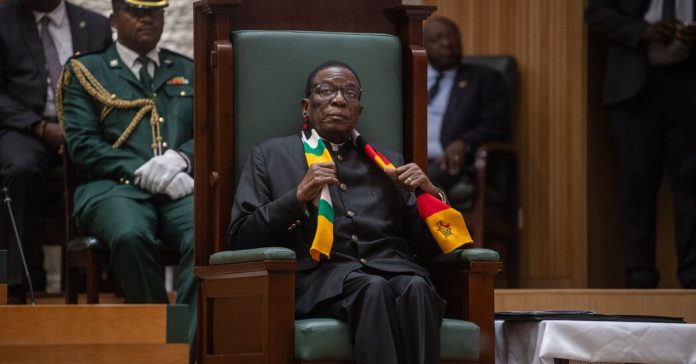
Battling a yearslong economic crisis and persistent accusations of corruption, Zimbabwe’s president faces the greatest threat to his power since taking office in a coup nearly eight years ago, with members of his own party calling for mass demonstrations in the streets on Monday to unseat him.

The president, Emmerson Mnangagwa, has vowed to crack down on dissent, saying in a speech at a meeting of his party, ZANU-PF, that calls for him to step down were a “treasonous” plot driven by “chameleon-like characters.”

The tensions over the president’s future have pushed this southern African nation, which has suffered decades of political and economic instability, to the brink of yet another crisis, with many anxious residents bracing for potential violence.

Over the past two decades, persistent hyperinflation in Zimbabwe has left the country struggling to keep a currency worth the paper it’s printed on, fueling acute poverty. The Zimbabwe National Chamber of Commerce estimates that 80 percent of jobs in the country are in the informal sector, with low pay and little security.

Accusations of gross rights abuses, political repression, dubious elections and corruption have tarnished Zimbabwe’s international standing. The United States has imposed sanctions on members of the country’s ruling elite, including Mr. Mnangagwa.

Mr. Mnangagwa, 82, promised democratic and economic reforms when he helped to overthrow Robert Mugabe, an autocrat in power for 37 years, in 2017. Instead, he has failed to harness the country’s wealth of critical minerals — among the richest in Africa — into an economic boom.

He also fired Zimbabwe’s army chief, Anselem Sanyatwe, ahead of the planned nationwide protests. The shake-up follows the removal of the chief of police and head of Zimbabwe’s intelligence service — moves that political analysts widely view as an effort to protect Mr. Mnangagwa against a military takeover.

Zimbabweans — who have fled the country by the hundreds of thousands, if not millions, over the past two decades — continue to leave in droves, fomenting animosity among neighboring countries feeling the strain of growing migrant populations.

“Zimbabwe is saying Mugabe was better — that is how bad the situation is,” said Ntokozo Msipha, a ZANU-PF member who is helping to organize the protests against Mr. Mnangagwa. “We should have done this earlier.”

Those leading the charge against Mr. Mnangagwa accuse him of attempting to extend his rule beyond the end of his second term in 2028, despite his public assurances that he will step down as mandated in the country’s Constitution. His opponents say he previously promised to hand over power to his vice president, Constantino Chiwenga.

Earlier this year, the governing party said it would amend the Constitution so Mr. Mnangagwa could run for a third term in the 2028 elections.

Mr. Chiwenga, a decorated army general, was an architect of the coup that toppled Mr. Mugabe. He is now the man whom Mr. Mnangagwa’s opponents want to replace him. He has not publicly commented on the upheaval caused by ZANU-PF allies who say that he should be the next president.

The effort to oust Mr. Mnangagwa has been led by Blessed Geza, a liberation war veteran and former senior ZANU-PF member. Mr. Geza went into hiding this month after party officials accused him of treason for publicly suggesting that the president had used his power to allow family members to enrich themselves.

In a news conference last week, Mr. Geza called on the president “to go or face being removed.”

Tafadzwa Mugwadi, a ZANU-PF member of Parliament, dismissed Mr. Geza and his faction of disgruntled war veterans within the party as having no credibility.

“I have no record of any internal factional fights,” Mr. Mugwadi said. “I don’t understand his authority.”

Even as his supporters brush off critics, Mr. Mnangagwa seemed to be leaving nothing to chance.

The police presence was heavy across the capital, Harare, on Friday last week. Officers clutching batons roamed Africa Unity Square Park, a well-known protest site, as people ate food on the lawn and lounged on benches.

At a roadblock in Mabvuku, just outside Harare, the police searched vehicles, telling motorists that they were looking for weapons and acting on the government’s instructions to prevent violent protesters.

After getting his car searched, Gilbert Tapfumaneyi said he would return to town on Monday without his vehicle to join the protests. Mr. Tapfumaneyi, a car salesman, said he did not make enough money to buy gas.

“We have suffered enough,” he said.

While some workers in central Harare said they would stay away on Monday out of fear of violence breaking out, others said that they had little choice but to try to go to work.

“I have mouths to feed back home,” said Belinda Chisewu, a roadside vendor selling cellphone credit, adding that she had three children, “meaning trouble at home if I don’t endure working.”

The ZANU-PF infighting fueling the tensions may have less to do with the challenges faced by ordinary citizens and more to do with a battle over state power and resources, political analysts said.

Rashweat Mukundu, a Zimbabwe-based media researcher and rights activist, said the divisions within the party were comparable to what happened in the Mugabe era.

“What we are seeing is a similar pattern of the ruling party failing to manage its transition,” he said. “An incumbent perhaps wanting to be an imperial president and stay in power until death and that always agitates those who have political aspirations.”
How Trump Supercharged Distrust, Driving U.S. Allies Away

0

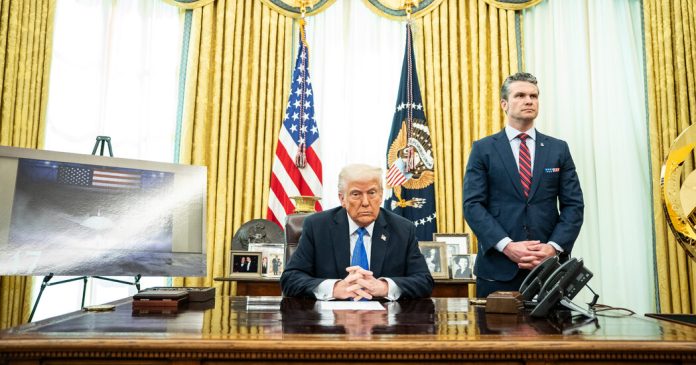
The F-35, a fifth-generation fighter, was developed in partnership with eight countries, making it a model of international cooperation. When President Trump introduced its successor, the F-47, he praised its strengths — and said the version sold to allies would be deliberately downgraded.

That made sense, Mr. Trump said last week, “because someday, maybe they’re not our allies.”

For many countries wedded to the United States, his remark confirmed a related conclusion: that America can no longer be trusted. Even nations not yet directly affected can see where things are heading, as Mr. Trump threatens allies’ economies, their defense partnerships and even their sovereignty.

For now, they are negotiating to minimize the pain from blow after blow, including a broad round of tariffs expected in April. But at the same time, they are pulling back. Preparing for intimidation to be a lasting feature of U.S. relations, they are trying to go their own way.

A few examples:

  • Canada made a $4.2 billion deal with Australia this month to develop cutting-edge radar and announced that it was in talks to take part in the European Union’s military buildup.

  • Portugal and other NATO nations are reconsidering plans to buy F-35s, fearing American control over parts and software.

  • Negotiations over a free trade and technology deal between the European Union and India have suddenly accelerated after years of delays.

  • Brazil is not only increasing trade with China, it’s doing it in China’s currency, sidelining the dollar.

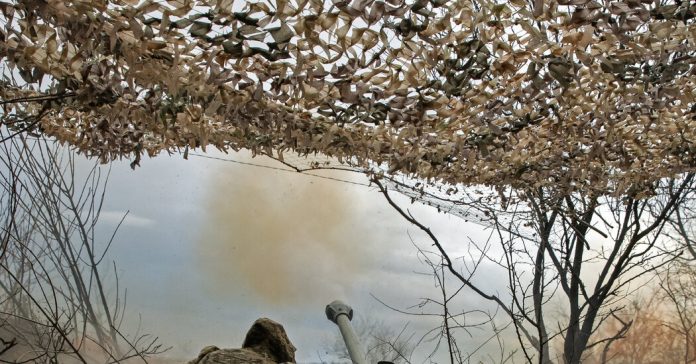
  • Several allies, including Poland, South Korea and Australia, are even discussing whether to build or secure access to nuclear weapons for their own protection.

Some degree of distancing from the United States had already been in motion as other countries became wealthier, more capable and less convinced that American centrality would be permanent. But the past few months of Trump 2.0 have supercharged the process.

History and psychology help explain why. Few forces have such a powerful, long-lasting impact on geopolitics as distrust, according to social scientists who study international relations. It has repeatedly poisoned negotiations in the Palestinian-Israeli conflict. It kept Cold War tensions between the United States and the Soviet Union burning for decades.

So-called realists — who see international relations as an amoral contest between self-interested states — argue that trust should always be assessed with skepticism, because believing in good intentions is risky.

But Mr. Trump has sparked more than cautious suspicion. His own distrust of allies, evident in his zero-sum belief that gains for others are losses for America, has been reciprocated. What it’s created is familiar — a distrust spiral. If you think the other person (or country) is not trustworthy, you’re more likely to break rules and contracts without shame, studies show, reinforcing a partner’s own distrust, leading to more aggression or reduced interaction.

“Trust is fragile,” Paul Slovic, a psychologist at the University of Oregon, wrote in a seminal 1993 study on risk, trust and democracy. “It is typically created rather slowly, but it can be destroyed in an instant — by a single mishap or mistake.”

In Mr. Trump’s case, allies point to a sustained assault.

His tariffs on imports from Mexico and Canada, which ignored the North American free trade deal that he signed during his first term, stunned America’s neighbors.

His threats to make Canada an American state and send the U.S. military into Mexico to go after drug cartels were brash intrusions on sovereignty, not unlike his demands for Greenland and the Panama Canal. His blaming of Ukraine for the war that Russia started further alienated allies, forcing them to ask: Is the United States a defender of dictators or democracy?

Relatively quickly, they have determined that even if Mr. Trump’s boldest proposals — like turning Gaza into a Mideast Riviera — are fantasies, the trend lines point in the same direction: toward a world order less like the Olympics and more like Ultimate Fighting.

Perhaps no country is more shocked than Canada. It shares the world’s largest undefended border with the United States, despite their wide disparity in military strength. Why? Because Canadians trusted America. Now, in large part, they do not.

Mark Carney, Canada’s prime minister, said on Thursday that his country’s traditional relationship with the United States was “over.”

“Trump has violated the deep assumption in Canadian foreign policy that the U.S. is an inherently trustworthy nation,” said Brian Rathbun, a global affairs professor at the University of Toronto. “That is very threatening to basic Canadian interests in trade and security, leading it to cast around for alternatives.”

Economic patriotism is somewhat new for Canada, but it has given rise to a Buy Canadian movement that urges consumers to shun American products and stocks. Canadians are also canceling U.S. holidays in large numbers.

More significant in the longer term, Mr. Trump’s threats have forged a surprising consensus around a policy that had been contentious or ignored: that Canada should be building pipelines, ports and other infrastructure east to west, not north to south, to reduce its reliance on the United States and push its resources outward to Asia and Europe.

Europe is further ahead in this process. After the U.S. election, the European Union finalized a trade deal with South American countries to create one of the world’s largest trade zones, and it has worked toward closer trade ties with India, South Africa, South Korea and Mexico.

Japan, America’s largest ally in Asia, has also been prioritizing new markets in the global south, where fast-growing economies like Vietnam’s offer new customers.

“There has been the emerging perception in Japan that we definitely have to change the portfolio of our investments,” said Ken Jimbo, a professor of international politics and security at Keio University in Tokyo. For the current administration and those that follow, he added, “we have to adjust our expectations of the American alliance.”

On the defense front, what some call “de-Americanization” is more challenging. This is especially true in Asia, where there is no NATO equivalent, and reliance on American support has somewhat stunted the militaries of countries that the United States has promised to defend (Japan, South Korea and the Philippines).

On Friday, Defense Secretary Pete Hegseth was in Manila, promising to “truly prioritize and shift to this region.” But many of America’s partners are now working together without the United States, signing reciprocal access agreements for each other’s troops and building new coalitions to deter China as much as they can.

Europe, too, is years away from being able to fully defend itself without the help of U.S. weaponry and technology. Yet in response to the Trump administration’s tariffs, threats and general disdain — as in the leaked Signal chat in which Defense Secretary Pete Hegseth called Europe “pathetic” — the European Union recently announced plans to ramp up military spending. That includes a 150 billion euro loan program to finance defense investment.

The 27-nation European Union is also increasingly collaborating with two nonmembers, Britain and Norway, on defending Ukraine and on other strategic defense priorities.

For some countries, none of this is quite enough. Poland’s prime minister, Donald Tusk, told Parliament in early March that Poland would explore gaining access to nuclear weapons, fearing that Mr. Trump could not be trusted to defend a fellow NATO nation fully.

“This is a race for security,” Mr. Tusk said.

In February, South Korea’s foreign minister, Cho Tae-yul, told the National Assembly that building nuclear weapons was “not on the table, but that doesn’t necessarily mean that it is off the table either.” By some estimates, both South Korea and Japan have the technical know-how to develop nuclear weapons in less than two months.

Bilihari Kausikan, a former Singaporean diplomat, said that a little mistrust can lead to healthy caution, noting that Asia has been skeptical of America since the Vietnam War. He said the end result of the Trump era could be “a more diversified world, with more maneuvering space” and a less dominant United States.

But for now, distrust is spreading. Experts said it would take years and a slew of costly trust-building efforts to bring America together with allies, new or old, for anything long-term.

“Trust is difficult to create and easy to lose,” said Deborah Welch Larson, a political scientist at the University of California, Los Angeles who wrote a book about mistrust’s Cold War role. She added, “Mistrust of the United States’ intentions and motives is growing day by day.”

Reporting was contributed by Matina Stevis-Gridneff from Toronto, Jeanna Smialek from Brussels, Choe Sang-Hun from Seoul and Martin Fackler from Tokyo.

Monday Briefing – The New York Times

0

After Russia’s armies crossed into Ukraine in 2022, two Ukrainian generals traveled in secret to a U.S. military garrison in Germany. There, they sealed a partnership that brought America into the war far more intimately than has previously been known.

That deal, known only to a small group of officials, became part of what the Biden administration framed as its effort to both rescue Ukraine and protect the post-World War II order in the West. It also enabled Ukrainians to survive three long years of fighting against a far larger, vastly more powerful enemy.

Now, as President Trump begins to undo elements of this agreement, here is the untold story of America’s hidden role in the military operations against Russia’s invading forces.

In brief: Read the main takeaways here.


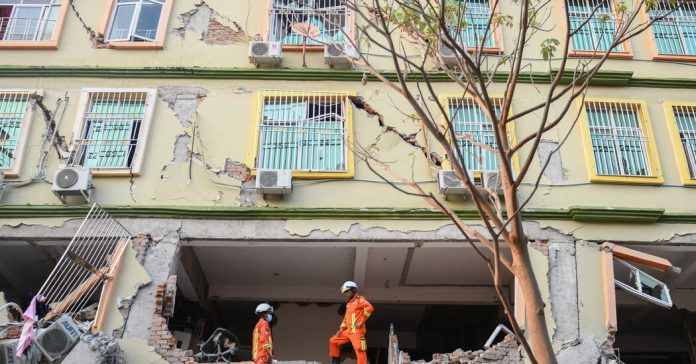
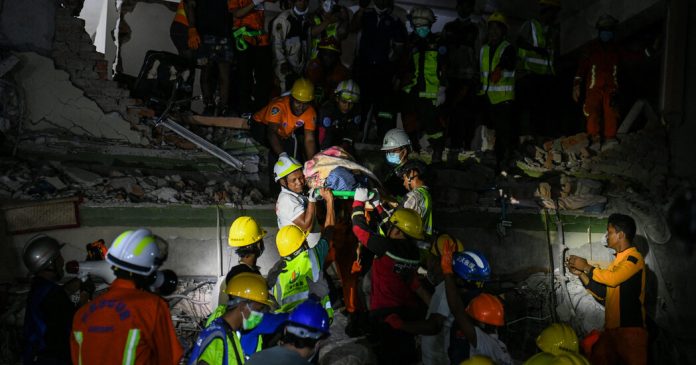
Across Myanmar, more than 1,600 people were confirmed dead and more than 3,000 were injured in an earthquake that struck on Friday. It was the worst quake there in over a century. Here is a map of the damage and images of the devastation.

An aftershock yesterday struck Mandalay, Myanmar’s second-largest city, near the epicenter of the initial quake, toppling several buildings. Fear for any survivors in the rubble is rising; this evening brings the 72-hour mark after which experts say the chances of survival drop sharply.

Civil war: As Myanmar reeled from the disaster, the ruling military junta continued its brutal bombing campaign. A long-running civil war has ravaged the country, leaving nearly 20 million people in need of shelter and food even before the quake, according to the U.N. But experts say the earthquake could change the war’s trajectory.

Support: Aid from other countries began arriving, but there were doubts about how Myanmar’s army would distribute it. The U.S., the richest nation in the world and once its most generous provider of foreign aid, has sent nothing.

Thailand: The earthquake sent a high-rise building under construction in Bangkok crashing to the ground, killing at least 11 people.


A court will decide today whether Marine Le Pen, the French far-right leader, is guilty of embezzlement. A conviction could bar her from running in the 2027 presidential election, potentially causing a political firestorm at a time when the French Fifth Republic appears increasingly dysfunctional.

Le Pen, who has tried and failed three times to become president, has steered her anti-immigrant party, now known as the National Rally, away from its antisemitic roots and toward the mainstream. It is now the largest single party in the National Assembly, with 123 seats. She and other party members are accused of embezzling some $4.8 million in E.U. funds, charges she denies.

Eid al-Fitr, the joyful holiday that marks the end of the holy month of fasting for Muslims, was yesterday. Across New York City — as in much of the Muslim world — mothers spent Saturday night making the magic happen.

“We don’t measure,” one said of her preparations. “We just cook.”

Lives lived: Richard Chamberlain, the actor who came to fame in the TV series “Dr. Kildare” in the early 1960s, then proved his mettle as a serious stage actor and leading man, died on Saturday at 90.

Before 1999, when the skateboarder Tony Hawk landed the 900 — named for the number of degrees of rotation the move needs — the trick had seemed impossible. Soon after Hawk’s moment of triumph, the vertical skating (or “vert”) that he exemplified faded in popularity. But now it’s coming back.

Recently, videos of young skaters launching into the air have flooded social media. The revival has shocked some veterans, but it has allowed Hawk to push the form back into the public eye. He has been campaigning for vert skating to be in the 2028 Olympics. A final decision is expected on April 9.

London Police Arrest Gaza Protest Planners at Quaker House

0

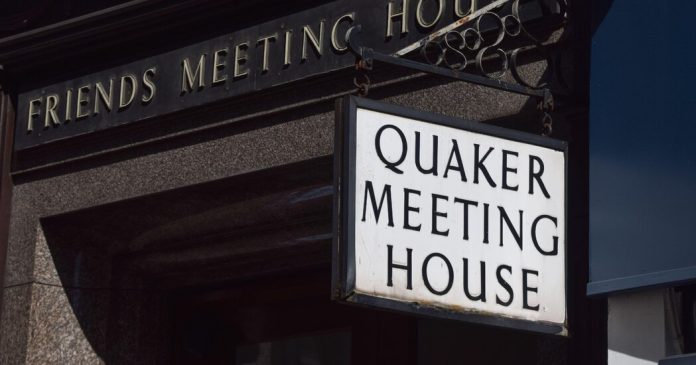
Quakers in Britain are reeling from what they say is an unheard-of violation of one of their places of worship by police officers who forced their way into a meeting house in London and arrested activists gathered there to plan Gaza war protests.

“No one has been arrested in a Quaker meeting house in living memory,” Paul Parker, the recording clerk for Quakers in Britain, said in a statement issued after the raid.

But on Thursday evening, the pacifist group said, more than 20 uniformed police officers, some armed with tasers, forced their way into the meeting house in Westminster, breaking open the front door “without warning or ringing the bell.”

The officers searched the building and arrested six women at a gathering of Youth Demand, an unaffiliated activist group that was renting a room to meet in, the Quakers in Britain said.

The Metropolitan Police said the arrests followed Youth Demand’s plans to “shut down” London with protests next month, according to British media. The police said that while they recognized the right to protest, “we have a responsibility to intervene to prevent activity that crosses the line from protest into serious disruption and other criminality,” British media reported.

The arrests raised alarms in England, and came amid a crackdown on Gaza War protesters in the United States, especially on college campuses, where some students have denounced Israel’s prosecution of the war against Hamas.

Legal experts say that the Trump administration has been trampling on free speech rights, and after the raid on the meeting house, Quakers in Britain voiced similar concerns.

S

“This aggressive violation of our place of worship and the forceful removal of young people holding a protest group meeting clearly shows what happens when a society criminalizes protest,” Mr. Parker said.

In recent years, Britain has enacted several measures to crack down on protests and granted new powers to the police.

One of the measures, Public Order Act 2023, was described by the United Nations human rights chief, Volker Türk, as “deeply troubling.” The law imposes “serious and undue restrictions” on the right of peaceful assembly and criminalizes some forms of peaceful protest by Britons, according to the United Nations.

Youth Demand said in a statement that when the raid took place, it was having a “Welcome Talk” at the Quaker house to discuss Gaza, the West Bank and the climate crisis, and to share plans for nonviolent civil resistance actions that it has scheduled for next month.

The activists were told that they were being detained on suspicions of “conspiracy to cause a public nuisance,” according to the group. Additional activists from the group were arrested the next day, it said.

Youth Demand said in an email on Sunday that it did not “have the full picture yet,” but that it appeared that about 10 arrests were made on Thursday and Friday and that 11 activists’ homes were raided. All of the activists have been released and none have been charged, the group said.

Youth Demand, which calls on the British government to stop all trade with Israel and to raise money from the wealthy to pay for environmental damage from fossil-fuel burning, was started last year. While relatively small, some of its protests have generated headlines.

In April, the group hung a banner and lined up children’s shoes outside the home of the Labour leader, Keir Starmer, before he became prime minister. “Stop the killing” in Gaza, the banner read.

In a statement after the raid, the group called on “young people to take to the streets day after day and shut London down.”

Ella Grace-Taylor, 20, an actor-musician student who was arrested on Thursday at the meeting house, said in a video after her release that the group “will not be deterred.”

“We will let this fuel us because we know this means that we are winning,” she said. “It means that the government, that the police, that the state is afraid of us, that they recognize the power that we have.”

The Metropolitan Police did not immediately respond to a request for comment.

In Tokyo, Rice Farmers Protest ‘Misguided’ Rules Fueling Shortages

0

In the United States, the affordability of eggs has prompted a national discussion — underscoring anxieties about the economy and the government’s role in addressing them. In Japan, there’s an equivalent: rice.

Over the past year, Japan has grappled with a more than 200,000-ton shortage of its staple grain. Rice prices have skyrocketed, and supermarkets have been forced to restrict amounts that shoppers can buy. The situation became so dire that the government had to tap its emergency rice reserves.

The twist is that even as Japan deals with shortages, the government is paying farmers to limit how much they grow. The policy, in place for more than half a century, consumes billions of dollars a year in public spending.

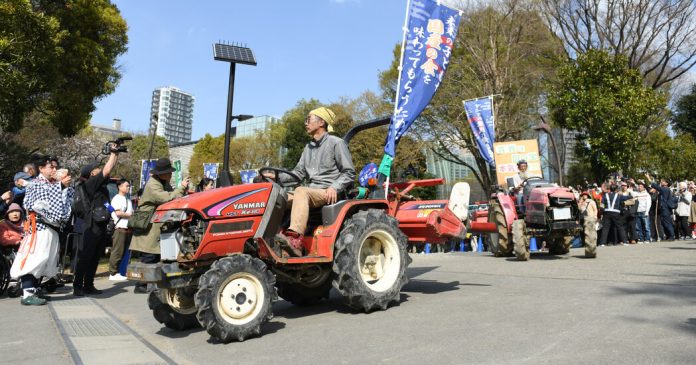
Farmers exasperated with the government regulations protested on Sunday. Under cherry blossoms in a park in central Tokyo, more than 4,000 farmers, wearing straw hats and sun caps, gathered with signs declaring “Rice is life” and “We make rice but can’t make a living.” Thirty of them drove tractors through the skyscraper-lined streets of the capital city.

The ability of Japan to manage its rice problem may have significant implications for the country’s political and economic landscape in the months ahead.

Last month, fresh food inflation surged 19 percent, driven by an 81 percent rise in the price of rice. Anxieties over the cost of food and other staples have weighed on Japanese consumers, and the economy, as households cut back on spending.

Shortages of Japan’s staple food are also occurring before an upper house election — expected in July — that will be the first nationwide poll for the prime minister, Shigeru Ishiba. His predecessor resigned last August, facing dismal public approval ratings caused in large part by the cost of basic goods.

The rice shortages stem from a mix of factors, including record summer heat in 2023 that damaged the harvest and a surge in tourism that has led to increased rice consumption.

But experts say the root cause lies in a decades-old policy that has systematically reduced arable land for rice growing. Since the 1970s, Japan has subsidized farmers to curtail the production of rice. The goal, officials say, is to support farmer incomes by maintaining high prices.

Farmers at the protest on Sunday said that policy isn’t working.

In 2022, the average earnings of rice farmers was around $23,000, according to statistics from Japan’s agriculture ministry. That level of income hasn’t been enough to attract young farmers, leaving the industry rapidly aging and shrinking by tens of thousands of workers each year.

“If things continue in this way, our farms will disappear. The products that we produce will disappear,” said Yoshihide Kanno, 75, a rice farmer from a prefecture north of Tokyo, and one of the leaders of the demonstration. “Before that happens, we need to change Japan’s misguided agriculture policies.”

Over the past five decades, Mr. Kanno said, about a third of the rice paddies in his town have been abandoned. “Why do we have to reduce production when there are shortages and fields available?” Mr. Kanno asked. “If my son and grandchildren are to continue farming, there needs to be a longer-term outlook.”

Japan has continued to adhere to a policy of limiting rice production to keep prices high, in contrast with the United States and the European Union, which have instead adopted systems that allow farmers to produce as much as they want while subsidizing them for price-related losses.

Adopting a similar policy in Japan would cost the government about $2.65 billion per year, compared with the $2.32 billion currently being spent on encouraging farmers to cut production, according to calculations by Nobuhiro Suzuki, a professor at the University of Tokyo specializing in agricultural economics.

While slightly more costly, a policy focused on expanding production would increase rice supply, enhancing Japan’s food security, while lowering prices for consumers, Mr. Suzuki said. Enabling farmers to grow without restrictions while backstopping their incomes would also make the industry more attractive to new generations of workers, he said.

There are many theories why rice production-reduction policies have prevailed. Mr. Suzuki suggests it stems from a broader austerity trend within the Japanese government, making it challenging to justify even marginal increases in agricultural spending. Others suggest that some level of pork-barrel politics may be a factor.

A spokesman for Japan’s agriculture ministry said that, “like with anything else,” the government promotes producing a level of rice that aligns with demand projections.

Historically, debates in Japan over agricultural policy have spurred political shifts. In 2007, a key factor in the brief ouster of the Liberal Democratic Party — which has held power almost continuously since its founding in 1955 — was the opposition party’s advocacy for doing away with policies reducing rice production.

For now, what is clear is that until agricultural policy undergoes fundamental reform, the problem of rice shortages will persist, said Mr. Suzuki, the professor at the University of Tokyo. That means, he said, heading into the summer elections, “the anger of farmers and citizens will continue to rise.”

Monday Briefing: Devastation in Myanmar

0

More than 1,600 people were confirmed dead across Myanmar over the weekend, and more than 3,000 were injured in the worst earthquake to hit the country in over a century. Here is a map of the damage, and images from the region.

An aftershock yesterday struck Mandalay, Myanmar’s second-largest city, near the epicenter of the initial quake, toppling several buildings that had previously survived. Many fear for the missing, whose chances drop sharply after this evening, when a crucial 72-hour survival window closes.

Amid the natural destruction, the governing military junta over the weekend continued a brutal bombing campaign. A long-running civil war has ravaged the country, leaving nearly 20 million people in need of shelter and food even before the quake, according to the U.N.

Power: Experts say the earthquake could change the trajectory of the civil war. The Arakan Army, a powerful rebel group, has won control of large parts of Rakhine State. It could exploit this moment to take the south of the country from the military.

Aid: Support from other countries is arriving, but doubts remained about how the Myanmar Army would distribute the much-needed relief.

“They have a long track record of using aid as a weapon,” said Scot Marciel, the U.S. ambassador to Myanmar from 2016 to 2020.

Thailand: The earthquake sent one building in Bangkok crashing to the ground, killing at least 11 people.


After Russia’s armies crossed into Ukraine in 2022, two Ukrainian generals traveled in secret to a U.S. military facility in Germany. There, they sealed a partnership that brought America into the war far more intimately than previously known.

That deal, known only to a small group of officials, became part of what the Biden administration framed as its effort to both rescue Ukraine and protect the post-World War II order in the West. It also enabled Ukrainians to survive three long years of fighting against a far larger, vastly more powerful enemy.

Now, as President Trump begins to undo elements of this agreement, here is the untold story of America’s hidden role in the military operations against Russia’s invading armies.

And if you’re pressed for time, we have the main takeaways here.


Syria’s interim president, Ahmed al-Shara, announced a new caretaker government over the weekend, and finished swearing in 23 cabinet ministers yesterday. Several are close allies, but others are independent. He named ministers from each of the main ethnic minorities. Among the 23 are five Assad-era ministers who served before the civil war.

Al-Shara kept most of the official power close at hand: He left close allies in charge of defense, and foreign and interior affairs.

What’s next: The government will be in power for five years, allowing for a permanent constitution to be adopted and elections to be held.

Elsewhere in the region: Israel and Hamas signaled that renewed cease-fire talks were underway, but details were elusive.


Trump’s aid and visa cutoffs have left students of the American University of Afghanistan in crisis. When the Taliban returned to power in 2021 and targeted the campus, hundreds of students were evacuated to sister schools in other countries.

Now, with funds drying up in June, students may have to return home, where women cannot get an education and Western ideals could be persecuted.

Lives lived: Gananath Obeyesekere, an anthropologist and a leading intellectual figure in both his native Sri Lanka and Western academia, died at 95.

Before the skateboarder Tony Hawk landed the 900 in 1999 — named for the number of degrees of rotation the move needs — the trick seemed impossible. And then the vertical skating, or “vert,” that Hawk exemplified faded in popularity — until now.

Recently, a rush of young skaters have flooded social media with videos of themselves launching into the air, shaping the sport’s future as they fly. The revival has shocked some veterans, but it has allowed Hawk to push the form back into the public eye. He has been campaigning for vert skating to be in the 2028 Olympics. A final decision is expected on April 9.

Trump is ‘not joking’ about third term, though Constitution says he can’t serve : NPR

0

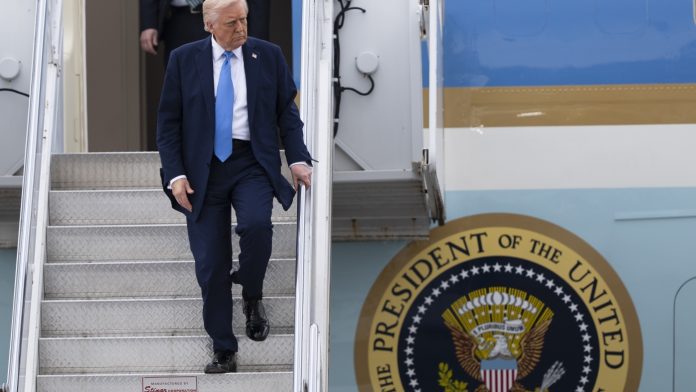
President Donald Trump arrives on Air Force One at Palm Beach International Airport, Friday, March 28, 2025, in West Palm Beach, Fla. (AP Photo/Manuel Balce Ceneta)

Manuel Balce Ceneta/AP/AP


hide caption

toggle caption

Manuel Balce Ceneta/AP/AP

President Trump said “there are methods” that would allow him to serve a third term in office — despite the two-term limit mandated by the Constitution.

His remarks came during a wide-ranging phone interview with NBC News on Sunday. NBC News also reported that Trump said he is “pissed off” at Vladimir Putin for the Russian president’s recent comments on Ukrainian President Volodymyr Zelenskyy’s leadership. Trump said he is planning “secondary sanctions on Russia” if they don’t cooperate with the his U.S.-brokered ceasefire proposal the two countries agreed to this last week.

The call with NBC News’ Kirsten Welker Sunday was the second in two days. In the first, Trump spoke about the impact of tariffs and U.S. policy toward Iran. While portions of the transcript have been released, the audio from the interview has not been shared.

‘I’m not joking’

Trump, 78, said in the interview that he was serious about seeking a third term in office.

“A lot of people want me to do it,” Trump said, according to NBC News. “But we have – my thinking is, we have a long way to go. I’m focused on the current.”

When asked about specific plans for seeking a third term, Trump confirmed one method — Vice President JD Vance wins the White House in a future election and then hands over the presidency. Trump said there were other plans, but he refused to say what they were.

As it stands, the Constitution’s 22nd Amendment prohibits anyone from being elected president more than twice. Separately, the 12 Amendment says: “No person constitutionally ineligible to the office of President shall be eligible to that of Vice-President of the United States.”

Changing the Constitution requires a two-thirds vote in Congress or a constitutional convention — which 34 states need to request. Given the congressional deadlock — not to mention how the country is divided politically — the prospect of this appear slim.

Trump did not mention the Constitution during his call with NBC News, but repeatedly pointed to his popularity.

“A lot of people would like me to do that,” Trump said of a third presidential run, according to NBC News. “But, I mean, I basically tell them, we have a long way to go, you know, it’s very early in the administration.”

Trump’s openness to a third term comes after encouragement from his most ardent allies. His former-adviser Steve Bannon, who is now a podcast host, has already endorsed Trump for the 2028 campaign. In Congress, Rep. Andy Ogles, R-Tenn., proposed amending the 22nd Amendment to clear the way for Trump’s third term just days after his second inauguration.

When asked if he was joking about another presidential run, Trump said, “No, no I’m not joking,” according to NBC News.

The 22nd Amendment was ratified by Congress in 1951 after Democrat Franklin D. Roosevelt was elected president four times.

‘Very angry’ with Putin

Trump also said he was “pissed off” and “very angry” with Putin after the Russian leader questioned Zelenskyy’s leadership of Ukraine.

On Friday, Putin called for a “transitional administration” in Ukraine and for his troops to “finish off” the Ukrainian army, according to reports by Agence France-Presse.

Trump said these comments were “not going in the right” direction and threatened sanctions against Russia if they don’t cooperate on a ceasefire plan.

“If Russia and I are unable to make a deal on stopping the bloodshed in Ukraine, and if I think it was Russia’s fault — which it might not be — but if I think it was Russia’s fault, I am going to put secondary tariffs on oil, on all oil coming out of Russia, ” Trump said Sunday, according to NBC News.

“That would be that if you buy oil from Russia, you can’t do business in the United States,” Trump clarified. “There will be a 25% tariff on all oil, a 25- to 50-point tariff on all oil.”

Trump said he spoke with Putin “not long ago” and confirmed the Russian president knows his feelings.

“Angry, but have a very good relationship with him,” Trump said about Putin.

Trump said he plans to speak with Putin this week.

Last week, Russia and Ukraine agreed on a partial and tentative ceasefire in the Black Sea region. The deal came after a three-day meeting in Riyadh. Since the deal was made, both Moscow and Kyiv have accused each other of violating the agreement while continuing attacks on each other elsewhere. Trump promised a swift end to the fighting between Russian and Ukraine during the campaign.

Trump’s U.S.A.I.D. Cuts Hobble Earthquake Response in Myanmar

0

China, Russia and India have dispatched emergency teams and supplies to earthquake-ravaged Myanmar. So have Thailand, Malaysia and Vietnam.

The United States, the richest country in the world and once its most generous provider of foreign aid, has sent nothing.

Even as President Trump was dismantling the U.S. Agency for International Development, he said that American help was on its way to Myanmar, where a 7.7-magnitude earthquake ripped through the country’s heavily populated center on Friday. More than 1,700 people were killed, according to Myanmar’s military government, with the death toll expected to climb steeply as more bodies are uncovered in the rubble and rescue teams reach remote villages.

But a three-person U.S.A.I.D. assessment team is not expected to arrive until Wednesday, people with knowledge of the deployment efforts said. The overall American response has been slower than under normal circumstances, people who have worked on earlier disaster relief efforts as well as on aid to Myanmar said.

Chinese search-and-rescue teams, complete with dogs trained to sniff out trapped people, are already on the ground in Mandalay, Myanmar’s second-largest city and one of the places most deeply affected by the quake. China has pledged $14 million for Myanmar quake relief, sending 126 rescue workers and six dogs, along with medical kits, drones and earthquake detectors.

“Being charitable and being seen as charitable serves American foreign policy,” said Michael Schiffer, the assistant administrator of the U.S.A.I.D. bureau for Asia from 2022 until earlier this year. “If we don’t show up and China shows up, that sends a pretty strong message.”

On Sunday, the U.S. Embassy in Myanmar announced on its website that the United States would provide up to $2 million in aid, dispersed through humanitarian groups based in Myanmar. But many of the systems needed to funnel American aid to Myanmar have been shattered.

On Friday, as some employees in Washington in U.S.A.I.D.’s Bureau for Humanitarian Assistance were preparing a response to the earthquake, they received agencywide layoff emails. Career diplomats working for U.S.A.I.D. and other employees had been bracing for layoffs for weeks; Trump political appointees in Washington had already fired most of the contractors working for the agency.

The employees who received layoff notices were told they should go home that afternoon. Some had been coordinating with aid missions in Bangkok and Manila, which handle disaster response in Asia.

Two of the employees in Washington had expected to move this winter to Yangon, in Myanmar, and to Bangkok to work as humanitarian assistance advisers out of the U.S. missions there. But those positions were cut. Had they not been, the two employees would have been on the ground to organize urgent responses to the earthquake.

After the disaster hit on Friday, the U.S. Embassy in Yangon sent a cable to U.S.A.I.D. headquarters in Washington to start the process of evaluating aid needs and getting help out the door. And the next day, a Trump administration political appointee in U.S.A.I.D., Tim Meisburger, held a call with officials from national security agencies to discuss a plan.

But Mr. Meisburger said that although there would be a response, no one should expect the agency’s capabilities to be what they were in the past, said a person with direct knowledge of the call.

A U.S.A.I.D. spokesperson did not reply to a request for comment.

The agency typically has access to food and emergency supplies in warehouses in Dubai and Subang Jaya, Malaysia. But the big question now is how quickly, after being almost fully dismantled, it can get goods from those places into Myanmar. The goods include medical kits that can each serve the health care needs of 30,000 people for over three months.

Apart from career diplomats, the ranks of the agency’s Bureau for Humanitarian Assistance have included crisis specialist contractors who live around the globe and can deploy quickly in what are called Disaster Assistance Response Teams. Many of those contractors have been fired, and the infrastructure to support them in Washington and other offices — people who can book flights and manage payments, for instance — was crippled by cuts over the last two months.

The agency would also usually put certified search-and-rescue teams in Virginia and Southern California on alert for possible deployment to the disaster zone, but transportation contracts for those teams have been cut, said one former aid agency employee.

U.S.A.I.D.’s annual allocations for Myanmar were about $320 million last year. About $170 million of that was for humanitarian work, and the rest was for development initiatives, like democracy building and health. Only a few million dollars’ worth of projects remain operational, though some of those programs, like one for maternal and child health, have not received funding despite being told the initiatives are not being closed down.

Before the cuts, the annual costs of total U.S. foreign aid were less than 1 percent of the federal budget.

At a news conference in Jamaica last week, Secretary of State Marco Rubio said the United States would continue foreign aid work, though in drastically reduced form. He said the aim was to provide aid “that is strategically aligned with our foreign policy priorities and the priorities of our host countries and our nation states that we’re partners with.”

On Friday, Tammy Bruce, a State Department spokeswoman, said that crisis teams stood ready to deploy to Myanmar.

The United States’ ability to provide lifesaving aid has been hampered not just by budgets cuts but by obstacles in Myanmar itself. Since grabbing power in 2021, Myanmar’s military junta has closed off the country from Western influences. Myanmar is now embroiled in civil war, with a loose coalition of opposition forces having wrested control of more than half of the country’s territory.

The United States and other Western nations have responded to the junta’s brutal human rights record with sanctions, and the military chief who orchestrated the coup, Senior Gen. Min Aung Hlaing, has railed against the West, thanking China and Russia for ideological and economic support.

Nevertheless, in the hours after the earthquake struck, General Min Aung Hlaing said he welcomed outside disaster relief aid — and not just from countries with friendly relations with the military regime.

Myanmar experts say they are concerned that some of the aid that goes through the junta could be diverted to the armed forces. The Myanmar military is underfunded and short on morale as it fights resistance forces on many fronts.

In Mandalay, residents said they were upset to see soldiers lounging around the sites of collapsed buildings. Some played video games on their phones, while locals used their hands to pry bricks from the rubble.

Still, Chinese and Russian search-and-rescue teams, outfitted in orange and blue uniforms, were digging through the wreckage in Mandalay on Sunday, and a Belgian squad was making its way north.

A good chunk of U.S.A.I.D. funding had been dedicated to areas of the country not under junta control. American assistance has gone to health care and schooling for internally displaced people. It has supported local administrations that are trying to form mini-governments in conflict areas. And it has tried to provide emergency relief to civilians battered by junta airstrikes.

In the region of Sagaing, a stronghold of resistance against the junta, Myanmar military jets carried out two rounds of airstrikes on Nwel Khwe village hours after the earthquake destroyed buildings there, adding more terror to residents’ lives.

“It’s as if Min Aung Hlaing wants to make sure we die, if not from the earthquake, then from his attacks,” said one villager, Ko Aung Kyaw.

But Mr. Aung Kyaw said he did not expect foreigners, American or otherwise, to be able to alleviate the situation. Sagaing has suffered for four years, and its people have died by the thousands in fighting the junta. Foreign aid, he said, would most likely end up benefiting the military regime, not those who most need it.

“In the end, we have only ourselves,” he said. “We’ve been resisting for four years now, and it’s clear that we’ll have to find our own way forward, no matter what.”

Stephanie Nolen contributed reporting,

U.S. Institute of Peace staff is laid off, escalating legal battle with Trump administration : NPR

0

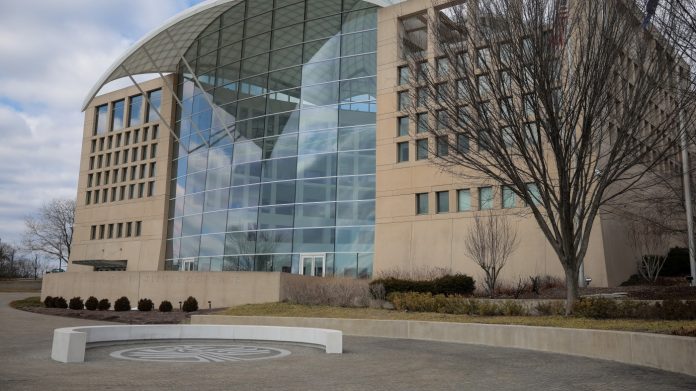
The United States Institute of Peace (USIP) headquarters is seen on Feb. 20 in Washington, D.C. The institute has laid off nearly all of its staff.

Kayla Bartkowski/Getty Images


hide caption

toggle caption

Kayla Bartkowski/Getty Images

The U.S. Institute of Peace, a government-funded think tank, has terminated nearly all of its U.S.-based employees and is drawing up plans to fire its remaining overseas employees, escalating an ongoing legal battle over whether President Trump has the authority to dismantle organizations created and funded by Congress.

The firings come after a federal judge declined to block the Elon Musk-led Department of Government Efficiency (DOGE) group from taking control of the U.S. Institute of Peace (USIP) earlier this month.

The termination notices, sent out starting around 9 p.m. on Friday to more than 200 USIP employees, are effective immediately, according to five USIP employees who received the letters. They all spoke to NPR on condition of anonymity, because all had also been given a confidential severance offer of two to four weeks’ pay if they waived all rights to take legal action against the think tank.

Staffers were told to sign up for 15-minute windows to go to USIP’s Washington, D.C. office to retrieve their belongings. Dozens of overseas employees and contractors have also been notified that they must submit plans on moving themselves to a “safe” location by April 9, after which they also expect to be fired, according to the employees.

Seven former USIP board members are currently suing Trump administration officials installed on the think tank’s new board, accusing them of trespassing and “takeover by force.”

“The dismissal of U.S. Institute of Peace employees in the dark of night is unconscionable and deeply troubling,” said George M. Foote, an outside counsel for the institute who is supporting the fired board members, in a statement. He also vowed to continue to fight to “reverse the Administration’s unlawful attempt to dismantle the Institute.”

More court hearings over the lawsuit are set for April.

A think tank under siege

In February, Trump ordered the USIP to effectively shut down its operations as part of a wider effort to drastically downsize the federal government.

USIP management immediately began preparing for a hostile effort to shut down operations, drawing lessons from how DOGE had shuttered wholesale the U.S. Agency of International Development (USAID) just weeks earlier, according to two employees.

USIP’s IT staff began taking steps to protect their data systems, according to three former employees. It offered last-minute cybersecurity training to staff in case members of the Trump administration tried to hack their way into USIP’s systems. Security staff ordered USIP employees to keep their offices locked and started requiring employees to use security badges to access any entrance way in the think tank’s building, according to a senior USIP employee.

Some employees also began downloading all their research, work contacts, and work emails.

On March 17, DOGE representatives forced their way into the locked USIP building using a physical key they had taken from a former USIP security contractor and with help from the D.C. police.

Working remotely that day, three USIP staffers told NPR they started to notice their Microsoft software services glitching — attempts, they said, of USIP’s cybersecurity defenses trying to stop DOGE from penetrating the think tank’s servers inside the USIP offices.

DOGE representatives convinced a former USIP IT employee to travel the day after from his base in the state of Georgia to USIP’s headquarters in Washington, according to court filings, in order to help DOGE bypass USIP’s cybersecurity controls and gain full control over their computer systems.

Shortly after, two employees said they received phishing emails about a nonexistent Microsoft Teams meeting sent from USIP accounts, including one from Ken Jackson, the Trump-appointed acting head of USIP and who was also tapped to briefly head USAID as it was being closed down. Someone then used the same employee’s email account to contact an overseas USIP employee.

USIP employes were working remotely when the final termination letters arrived Friday evening in their personal email inboxes and even by WhatsApp message, said two employees, because they have been unable to log into their work computers or email accounts since DOGE took over.

How far does the executive go?

At the heart of the USIP controversy is the question of whether the think tank falls under the purview of the executive branch. Earlier in March, U.S. District Judge Beryl Howell said during a lawsuit hearing there was “confusion” over the think tank’s status.

USIP was founded in 1984 by an act of Congress, shortly after a nuclear standoff with the Soviet Union, in order to support scholarship and policy know-how aimed at peace-building. It regularly briefed decision-makers at the Pentagon and the executive branch on issues of foreign policy and national security.

Unlike other federal agencies the Trump administration has taken aim at in its federal cost-cutting campaign, USIP is a private nonprofit, and as such, its staffers were not federal employees.

It also has a nearly $80 million endowment, which includes its Washington office building, built using funds raised from private donors including Boeing, and thus not government-owned. The land the building sits on was authorized for USIP’s use by Congress. It is unclear what will happen to these assets if USIP is closed.

The president of the U.S. is allowed to appoint and remove USIP board members, but must do so with the consent of a majority of the board or with approval from multiple Senate subcommittees.

“This is part of a much larger and more profound issue about the unitary executive and when the executive wins an election, whether they can do whatever they want with any federal funds,” said a USIP employee.

Michele Kelemen contributed reporting.

Gananath Obeyesekere, 95, Dies; Anthropologist Bridged East and West

0

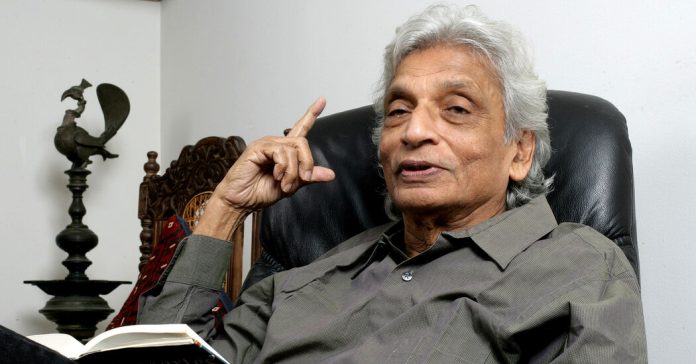
Gananath Obeyesekere, an anthropologist whose long career and wide-ranging social insights — which drew on Hindu texts, Freudian psychoanalysis and Christian mysticism, among many other ideas — made him a leading intellectual figure in both his native Sri Lanka and the rarefied world of Western academia, died on Tuesday at his home in Colombo, Sri Lanka. He was 95.

His son Asita confirmed the death.

Dr. Obeyesekere was born in a small Sri Lankan village at a time when the country, then known as Ceylon, was still in the grip of the British Empire. He spent most of his career teaching in the United States, primarily at Princeton, where he established his reputation as a critical voice in debates about colonialism, pluralism and the possibility of finding commonalities across cultural divides.

Long prominent among academics, he broke into the broader public’s consciousness in 1992 with his book “The Apotheosis of Captain Cook: European Mythmaking in the Pacific.”

Cap. James Cook was a British explorer who, after being received with great ceremony by Hawaiian islanders in 1779, unexpectedly returned and was murdered by the same people who had warmly welcomed him before.

Among historians and anthropologists, the common understanding was that the islanders had believed Captain Cook to be a god, and that his return, because of a broken mast on his ship, inadvertently fulfilled a belief in a banished god who would one day be defeated by their chief.

Dr. Obeyesekere saw it differently. The Hawaiians, he believed, knew he was just a man; had honored him as an honorary chief, not a god; and had killed him over a more secular dispute. Westerners, in saying otherwise, had then imposed their own biases on the Hawaiians, in a sense creating their own myths about a mythmaking people.

“This ‘European god,’” he wrote, “is a myth of conquest, imperialism and civilization.”

Among his targets was Marshall Sahlins, another prominent anthropologist, who had argued the god-making thesis in 1985 in his book “Islands of History.”

Dr. Sahlins responded to Dr. Obeyesekere with a second book. In “How ‘Natives’ Think: About Captain Cook, for Example” (1995), he said that Dr. Obeyesekere was the real imperialist, because he denied the possibility that Hawaiians could have a way of seeing reality that was fundamentally different from the West’s.

The debate was covered widely, in The New York Times and elsewhere. Dr. Obeyesekere denied being an imperialist, but Dr. Sahlins was not entirely wrong in saying that he sought commonalities between East and West. Much of Dr. Obeyesekere’s work explored the ways in which different cultures shared certain universal qualities, including what he called “practical rationality,” a basic sense of seeing the world.

His willingness to take a critical eye to political beliefs in Sri Lanka made him something of a controversial figure at home, though he often laughed that off with self-deprecating humor.

“For some of my critics I must seem a foolish person and also an ignorant one,” he said in a 2015 address at the University of Peradeniya in Sri Lanka. “That indeed is true: In the course of my long intellectual life, I must have been sometimes a fool.”

Though he built his reputation on ethnographic field work in Sri Lanka, Dr. Obeyesekere’s later work moved away from conventional anthropology to encompass philosophy, sociology and literary criticism.

In another of his major works, “The Awakened Ones: Phenomenology of Visionary Experience” (2012), he examined mysticism across a variety of cultures and time periods. Touching on Hinduism, Buddhism and the poetry of William Blake, he found in them a similar embrace of a different kind of thinking.

“That which is nonrational,” he said in 2015, “is not necessarily irrational.”

Gananath Obeyesekere (pronounced GAH-na-nat “Obey-SAY-kara) was born on Feb. 2, 1930, in Meegama, in the Western Province of what is now Sri Lanka, but his family moved to Colombo, the capital, when he was 5 so his father, Don Dharmadasa Obeyesekere, could teach traditional Indian, or Ayurvedic, medicine. His mother, Amara (Kannangara) Obeyesekere, died when he was very young.

He attended private schools run on the British model and steeped in British culture, then studied English literature at the University of Ceylon (which later split into four institutions).

After graduating in 1955, he had the opportunity to attend Oxford to continue studying literature. But he had also grown interested in collecting stories and studying folklore in the countryside, and he opted to pursue anthropology instead.

He married Ranjini Ellepola in 1958. Along with their son Asita, she survives him, as does another son, Indrajit; their daughter, Nalinika Obeyesekere; three grandchildren; and one great-grandson.

Dr. Obeyesekere received his master’s and doctorate degrees, both in anthropology, from the University of Washington, where he also taught. He later taught at the University of California San Diego and at Princeton, where he was chairman of the anthropology department from 1980 until his retirement in 2000.

Dr. Obeyesekere’s early work included “Land Tenure in Village Ceylon: A Sociological and Historical Study” (1967) and “The Cult of the Goddess Pattini” (1984), both of which delved into the culture and politics of his native country.

In a 2003 interview for the University of California, Berkeley, he said that his grand intellectual mission was to study the way ideas from one culture filtered through another, whether it be South Asian culture through the West or vice versa.

“Even Buddhism was filtered through the West,” he said. “I am a product of that myself.”