Thursday, November 12, 2026
Home Blog Page 75

In Myanmar’s Earthquake, Some See Political Omens

0

The dust from the devastating earthquake on Friday was still churning in Myanmar when an existential question swirled into the mix: Could this fatal clash of tectonic plates, which added yet another layer of trauma to a country already plagued by civil war, also portend the demise of Myanmar’s ruling junta?

The earthquake, known to have killed at least 1,000 and probably many more than that, struck a day after Myanmar’s military regime celebrated the country’s 80th Armed Forces Day with a parade in Naypyidaw, the capital purpose-built by a previous group of generals.

The sequence of events was hard to ignore.

Omens and rumors have long been prized in an authoritarian country with little free flow of information. When the ruling generals grabbed power four years ago, they sealed off the country and reverted to a reverence of superstition and propaganda. And earthquakes do figure into astrological almanacs that are well thumbed in Myanmar. A popular version states that an earthquake in March signals the destruction of cities, while one in July is an augury of kings and rulers deposed.

The junta’s stronghold remains in the cities, like in Mandalay, the second-largest in the country and one of the hardest hit by the earthquake. Daw Marlar Myint, 89, said this was the worst natural disaster she had ever experienced. A retired school principal, she is not waiting until July to cast her prediction.

“We have a saying that a massive earthquake like this is nature’s way of punishing a cruel and corrupt ruler,” she said. “After killing so many people, Min Aung Hlaing is now facing the judgment of nature.”

“Even the bones of those he murdered are trembling,” she added.

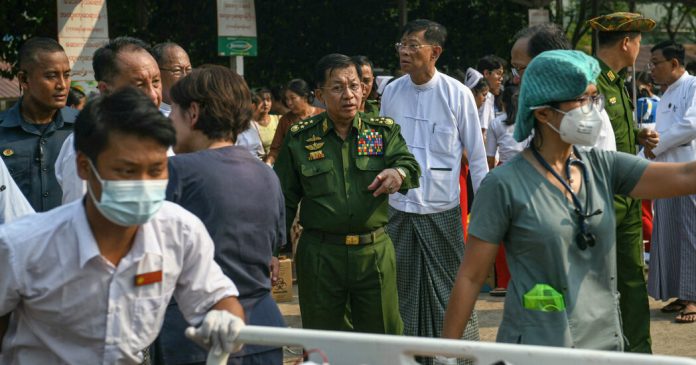
Since Senior Gen. Min Aung Hlaing overthrew Myanmar’s elected government in 2021, civil war has flared in this Southeast Asian country. The majority of territory is now in resistance hands, with the military fortified in the big cities. The junta has terrorized civilian areas with airstrikes outpaced in recent months only by those rained on Gaza.

The Myanmar rebels — an unwieldy assortment of ethnic minority militias, opposition politicians and tech-savvy youth who are honing drone warfare out of jury-rigged parts — have fought hard with little international support. The Myanmar military is bleeding soldiers, with desertion rife. Still, it is punishing jungle warfare, and both sides are desperate for an exit.

And as people in Myanmar surveyed the aftermath of the earthquake on Saturday, with screams from those trapped under the wreckage still echoing through towns, the full extent of the devastation is only beginning to take shape.

Ko Kyaw works in Singapore, part of the large diaspora of young, educated people from Myanmar who fled their country to look for better jobs overseas. He had been sending money back home to his parents, wife and two daughters, ages 4 and 7. They all died in the earthquake, when their condominium building in Mandalay crashed to the ground. Their bodies were part of a pile arranged inside a nearby hall, no space for burial yet.

For most of its post-colonial history, Myanmar, previously known as Burma, has been ruled by military dictatorships. Generations of generals have relied on fortunetellers and astrologers to guide their policy decisions. A former junta chief consulted a dwarf who spoke through her sister. (That sister continued to prognosticate after her sibling died, but her prophecies lost authenticity, according to those who initially paid a lot of money for her solo consultation sessions.)

One former spy chief collected white elephants (the real, live kind) to burnish his power. An earlier junta leader was so superstitious about the number nine that he denominated the country’s currency by it, including 45 and 90 kyat notes. And General Min Aung Hlaing, the current military chief, has consecrated temples and a giant Buddha in Naypyidaw to burnish his reputation. He has collected white elephants, too.

For the generals, perhaps the most consequential prophecy came in 2005. That is when seers determined the precise timing most auspicious for beginning a secret move of Myanmar’s capital from Yangon to an as-yet unnamed construction site in the center of the country. After consultations with fortunetellers, trucks began a convoy north to what would soon be called Naypyidaw, or the abode of kings.

Today, the new capital is defended by hills and invulnerable to attack by sea, unlike Yangon. When Cyclone Nargis slammed into the old capital and the nearby Irrawaddy Delta in 2008, leaving more than 130,000 people dead or missing, Naypyidaw was unscathed. The generals celebrated their bunkered capital, with its grand boulevards, massive ministries and penguins on ice (again, the real, live kind).

But Friday’s earthquake was not so benign to Naypyidaw. Government ministries cracked. Portraits of top leaders, including of General Min Aung Hlaing, fell to the floor. The air traffic control tower in the capital toppled, killing at least seven people, according to Myanmar state media.

In hills not too far away, rebel forces are watching. With fewer high buildings in the territory they control, the earthquake on Friday had less effect on them. But even as residents of Mandalay and other urban areas, like Sagaing and Kyaukse, dug through the rubble with their bare hands, prying out each brick to get closer to possible survivors, the Myanmar military resumed its old habits.

On Friday evening, in northern Shan State, which borders Mandalay Region, junta fighter jets dropped bombs on Naung Lin village, which is held by the rebels. There were no casualties this time, but sorties two days before killed four people in nearby villages. And a week and half before that, 10 people sheltering in a seminary in the same township died in aerial raids.

“I just can’t believe they did airstrikes at the same time as the earthquake,” said Lway Yal Oo, a Naung Lin resident. “Min Aung Hlaing is creating a killing field in Myanmar.”

In Yangon, an astrologer for a top junta official said that the top brass’s belief in star signs has not waned. If anything, they are hanging on even more to faith as their grip on the country diminishes, she said. The astrologer, who did not want her name used because of the sensitivity of speaking about her high-profile military clients, said that General Min Aung Hlaing relies heavily on Buddhist talismans to stay in power.

On Saturday morning, a military intermediary called her, the astrologer said, and requested help in protecting the junta chief’s hold on Myanmar. She advised a Buddha amulet, to be worn at all times.

But, the astrologer said, she thought the earthquake was an ominous sign for the general.

Why Stephen Miller has become one of Trump's closest aides on some of his signature issues

0

We examine the role of one of President Trump’s longest-serving and closest advisers: Deputy Chief of Staff, Stephen Miller.

In Bangkok, a Desperate Search for Survivors Buried Under Collapsed Building

0

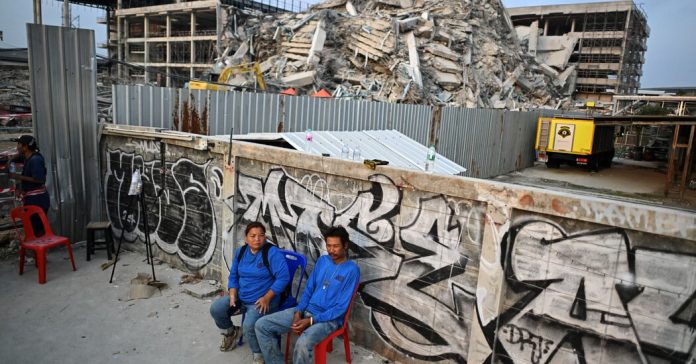
The pile of rubble was nearly seven stories high. There was a cloud of dust. And there was punishing, 96 degrees Fahrenheit heat.

Rescue workers were desperately scouring for survivors on Saturday at the site of the high-rise building in Bangkok that collapsed after the powerful earthquake in Myanmar. Eight people were confirmed dead at the site but scores more are missing, mostly workers buried as the 33-story structure, which was under construction, caved in on itself near the city’s Chatuchak Park.

The rescue crews used several excavators to dig through the debris, dump trucks to carry it away and sprayed mists of water to improve visibility. Relatives of some of those trapped have looked on, hoping that their loved ones might be pulled out alive.

Earlier in the day there was a flicker of hope. Crews detected signs of life of 15 survivors in multiple locations, Suriyachai Rawiwan, the director of the Department of Disaster Prevention and Mitigation, told reporters. Some were buried under 10 feet of rubble.

But there had been no updates on survivors by 3 p.m. local time, almost 24 hours after the earthquake rocked Bangkok. Those trapped were all presumed to be part of the 320-person crew of workers putting up a new building for the Thai government.

“The building came down so fast,” said Than Htike, 42, adding that he was still in shock. The father of two from Bago in Myanmar said he was on the ground floor and managed to escape, but his wife, who was helping build the elevator shaft on the 6th floor, was still missing.

Mr. Than Htike said he spent all of Friday afternoon and night at the site, hoping for a sign of life from his wife and colleagues who are still trapped under a huge pile of rubble.

“I only want my wife back,” he said, standing alongside a handful of other construction workers from Myanmar.

Like other migrant workers from Myanmar, economic hardship in their home country forced the couple to seek employment in Thailand. They had been working at construction sites in Bangkok for the past three years, earning about 400 Thai baht, roughly $10, a day.

Natthanan Kaewkaiyasit, 49, was also among those still waiting for news about their loved ones at the site. Her partner, Noy Thicha, a 53-year-old welder, was missing.

“We have to hope for miracles. I will stay here, waiting,” she said.

Aubonrat Setnawet, 44, was at the construction site when the quake hit.

“I felt everything swaying. I thought I was going to faint because everything dizzy,” she said. “Then I heard a kind of cracking sound, then I ran out with the others. I saw the building swayed before it collapsed.”

She had started working at the site earlier this month with her husband, who was missing.

She, too, said that she was hoping for a miracle.

Earthquake Devastates Myanmar’s Cultural Sites

0

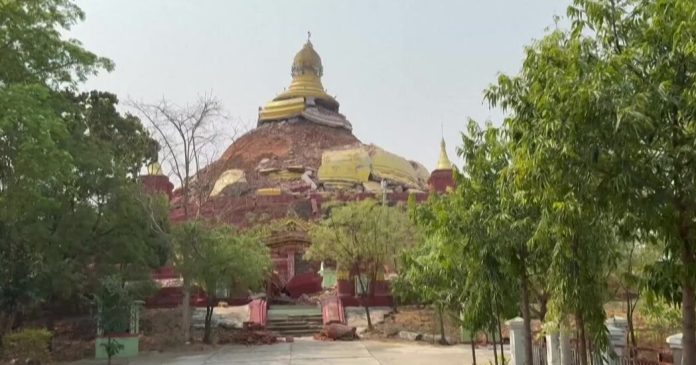
The powerful earthquake that shook Myanmar on Friday took a considerable toll on historic and religious sites across the country, toppling pagodas, collapsing sections of Buddhist monasteries and reducing centuries-old monuments to rubble, according to photographs and videos shared by witnesses and verified by The New York Times.

In its latest count on Saturday morning, Myanmar’s government said that over 3,000 buildings had been damaged, including about 150 mosques and pagodas.

Southwest of Mandalay, the 200-year-old Me Nu Brick Monastery appeared to be largely destroyed. Tiers of the building’s distinctive balconies had collapsed around the bulky interior walls.

Southeast of Mandalay, a video showed the ornate golden spire of the Shwe Sar Yan Pagoda toppling over, to the screams of onlookers.

Seconds later, video showed their five-story monastery building collapsing before them. Dozens of monks who lived at the monastery slept out on mats in nearby streets on Friday night. One of them, Moe Nat Ashin, photographed the scene.

Photos shared by the Burma Human Rights Network showed fallen minarets and domes of mosques in several parts of the country. The online news outlet Mizzima, citing local officials and residents, reported that 490 people were killed in mosque collapses on Friday.

In Pindaya, 70 miles from the epicenter, Buddhist monuments known as stupas that adorned a large monastery were toppled, and cracks split the foundations of others that survived.

All around the stupas, the remains of golden spires and the red bricks common to the region littered the ground.

In one witness video, onlookers wailed as the top of the monastery’s largest stupas crumbled in an aftershock.

“Pindaya felt some earthquakes before but not so strong like today’s,” said Tun Tun Aye, the administrator of a Facebook page for the monastery. He said that the stupas were believed to be more than a century old, and that he did not know how the monastery would be restored.

In Nepal in 2015, billions of dollars were pledged toward reconstruction after two earthquakes devastated the country. Initially hampered by bureaucracy, the restoration led to a resurgence in traditional craftsmanship in the country.

But in Myanmar, which is ruled by a military junta that has terrorized civilian areas as it battles a rebel movement, establishing a unified and internationally supported reconstruction effort is likely to be more challenging.

Week in politics: Top FDA official forced out, auto tariffs take effect

0

It was an eventful week in politics, one that was dominated by the fallout from a security breach involving a commercial messaging app and the announcement of steep tariffs on imported cars.

Breaking Through – The New York Times

0

In a meeting at work last week, my colleague told the story of how she recently took her son, age 17, to his first concert, Kim Deal at the Brooklyn Paramount. She was so excited to blow his mind, to introduce him to the magic of live music that she’d discovered at 15 when she first went to a rock show herself. How cool, I thought, imagining her son, forevermore when asked “What was the first band you saw live?” getting to answer that he went with his mom to see a rock icon like Deal, bassist and frontwoman of the indisputably hip bands the Pixies and the Breeders. This occasioned everyone at the meeting revealing the first band they saw in concert.

Perhaps more than any other bit of personal trivia, I find this one fascinating. You learn about their teenage tastes in music. If their parents took them, you learn something about their childhoods. (“Oh, he had the kind of parents who took their 6-year-old to see Steely Dan!”) My colleagues’ first concerts were impressive: Duran Duran, R.E.M. on the “Monster” tour. Mine was the English rock band Squeeze, age 15, third row, Madison Square Garden.

And people love to tell you about their first concerts. It’s a jewel box of a question, an invitation to reveal something unique about themselves , to tell a well-practiced personal story. They get to convey as much or as little about your taste as you feel comfortable with — “See, I’ve always been cool” or “God, look what a dork I was.” It’s the perfect specimen of that most reviled form of corporate get-to-know-you activity: the icebreaker.

I have, over the past few days, conducted an unscientific but wholly convincing study of my friends’ feelings about icebreakers. They all, to a person, hate them. I get it. On their face, team-building exercises of any sort should be treated with suspicion. Icebreakers are meant to loosen people up. How loose, one might wonder wisely, is it ever appropriate to get at work? We’re going around the table stating our favorite breakfast cereals, innocuous enough, but I’m not sure I want to reveal anything more intimate than that to the entire marketing department.

But, as cheesy as they can be in a work context (is there anything more humiliating than trying to conjure “a fun fact about yourself”?), I will defend a good icebreaker as a delightful shortcut to a measured intimacy. In a past job where I ran a weekly staff meeting, I began each meeting with an icebreaker. A good portion of my team was remote, before remote work was normal, and it seemed impossible that we were going to get comfortable with one another without some kind of corny intervention. I may be deluding myself, but once the team members got to know one another a little, the icebreakers became a fun parlor game, a way to get closer, to remind ourselves that we were interesting, dynamic human beings even in the matrix of the workplace.

Looking back at my icebreakers from those weekly meetings, I see in my notes questions I have no idea how the people closest to me would answer, and I’m tempted to ask them. Some of these questions I devised myself, some came from the writer Rob Walkers’s newsletter “The Art of Noticing,” some came from the team. “What’s the first thing you bought with your own money?” “What were you doing at 23?” “What’s something you’re great at but hate doing?” “What are the most common things people say when you tell them your hometown?”

It might feel awkward or artificial to pose these questions in the middle of a regular conversation, but it might be fun to deliberately ask an icebreaker of your family at dinner, or a group of friends about whom you think you know everything, or your spouse. For those of us who understand the utility of small talk but deplore the slow, inefficient on-ramp of get-to-know-you questions — where are you from, what do you do, any siblings? — icebreakers do just what they claim to. You can wait for the ice to melt, or you can just smash it with a question that gets at something actually a little interesting, a little revealing. And you don’t have to call them icebreakers. Outside of a corporate framework, icebreakers are just manifestations of curiosity. What do you really want to know about the person you’re talking to? Why not just ask them?

Politics

  • Justin Vernon’s early success with Bon Iver left him drained. His next album — “Sable, Fable” — is a moment of reinvention. Listen to his conversation with the hosts of Popcast.

  • Boost your mood this weekend with these new up-tempo songs, recommended by the Times’s pop music editor.

More Culture

🎬 “A Minecraft Movie” (Friday): This movie will have references — to things like water buckets, Creepers and Ender pearls — that go over your head. But they’ll delight the kids in your moviegoing party. Hopefully the high jinks of Jack Black and Jason Momoa bumbling through a video game realm prove entertaining enough that even the newbies can enjoy their time in the Overworld.

For a not-too-sweet dessert that will keep well into the week, there’s Samantha Seneviratne’s moist and tender Earl Grey tea cake with dark chocolate and orange zest. Its subtle floral-citrus scent comes from loose tea leaves stirred into the buttery cake batter, which is also liberally speckled with chopped dark chocolate. Serve thick wedges after dinner or for a midafternoon snack, preferably accompanied by a pot of Earl Grey tea.

The Hunt: A couple with a $350,000 budget searched for a home on the sea. Which boat did they choose? Play our game.

At home with: See inside the spacious Potomac, Md., home of a film producer couple.

What you get for $55,000: A 1912 Queen Anne Revival house in Harpers Ferry, W.V.; a condo in an 1840 house in Charleston, S.C.; or a shingled house in New Bedford, Mass.

Mortgages: Trump administration officials are ramping up talks of privatizing Fannie Mae and Freddie Mac. This is what it will mean for home buyers.

Click here to read this weekend’s edition of T, The New York Times Style Magazine.

Achy knees? This exercise can help.

If you feel called to bask in the springtime delight that is bird-watching, but don’t have the time to camp out and patiently spy, consider setting up a smart bird feeder. Our favorites look just like regular feeders, but they come equipped with cameras that capture high-quality, up-close shots of avian visitors. They’ll send you smartphone alerts when birds come by, and even record videos or photos of their escapades — perfect for sparking some joy in your group chats. Also: We’ve spotted deals on both of our top-pick feeders as part of this weekend’s spring sales. — Brittney Ho

Notre Dame vs. TCU, women’s N.C.A.A. tournament: Notre Dame’s past three seasons have ended in the Sweet Sixteen round. Can it avoid the same fate this year? The Irish defense has been great, thanks in large part to Hannah Hidalgo, the ACC’s defensive player of the year. But TCU’s offense can be tough to stop when Hailey Van Lith gets her pick-and-roll game going with Sedona Prince. Today at 1 p.m. Eastern on ESPN

Trump and Tariffs Enter the Scene Only Days Into Canada’s Election Campaign

0

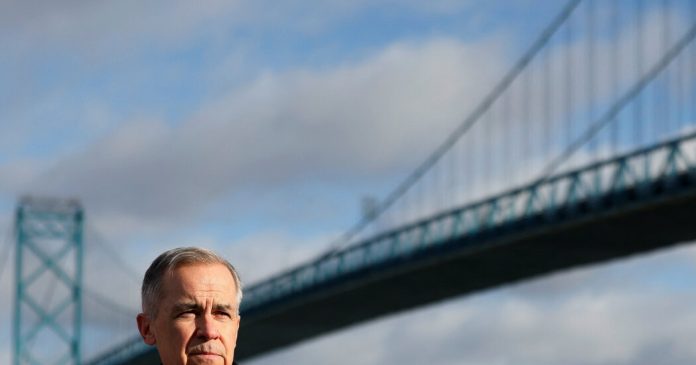
On Wednesday, Prime Minister Mark Carney’s election campaign had brought him to the bridge between Windsor, Ontario, and Detroit, over which $300 million worth of auto parts cross daily.

He unveiled a series of promises of programs for workers and auto-related industries that would be rolled out if President Trump imposed tariffs on products from the Canadian auto industry. Among them was a proposed fund of 2 billion Canadian dollars to reshape the industry for a future without the U.S. market.

The stakes are high. Cars and auto parts are the country’s second-biggest export by value and an employer, directly and indirectly, of about 500,000 people, accounting for 10 percent of manufacturing gross domestic product.

But what Mr. Carney, nor anyone else in the Canadian government, knew at that time was that a few hours later the program would no longer be something for an emergency situation.

Mr. Trump, without first informing Canada, announced that he was imposing 25 percent tariffs effective April 2 on all imports of cars and auto parts, with no exemption for Canada.

[Read: Trump Announces 25% Tariffs on Imported Cars and Car Parts]

[Read: With Car Tariffs, Trump Puts His Unorthodox Trade Theory to the Test]

[Read: Trump’s Punishing Tariffs Stun America’s Automaker Allies]

“This is a direct attack,” Mr. Carney told reporters at another campaign stop after the president’s announcement, adding that because of the tariffs, ties between Canada and the United States “are in the process of being broken.”

Mr. Carney then suspended campaigning to return to Ottawa for a cabinet meeting the next morning.

How to deal with Mr. Trump and his trade agenda were, of course, at the top of the list of issues when the election campaign began on Sunday.

Here’s how the three leading national parties are promising to deal with the future of the auto industry:

Liberals: Mr. Carney said his fund would “build an all-in-Canada auto manufacturing network.” He added: “On average, auto parts cross the border six times before final assembly. In a trade war, that’s a huge vulnerability.”

Conservatives: Pierre Poilievre, the Conservative leader, did not directly offer a plan for the auto sector but renewed his call for an end to the carbon tax on industries as well as expansion of Canada’s energy and natural resource sectors to revitalize the economy. “We have to become more self-reliant and have new and different markets,” he said this week.

New Democrats: Jagmeet Singh, the party’s leader, appeared in Windsor, his hometown, the day after Mr. Carney. He said that if auto companies based in the United States wanted to continue selling in Canada, he would require them to make vehicles in Canada or buy Canadian parts. He also said that he would use past government subsidies to block the removal of any machinery or tooling to the United States. “Those machines, those tools, that equipment — Canadians paid for them,” he said. “They belong to us.”

For an general assessment of the industry’s future, I spoke with Greig Mordue, the former general manager of Toyota Motor Manufacturing Canada. Mr. Mordue is now a professor of engineering at McMaster University in Hamilton, and his doctoral thesis was partly a history of automaking in Canada.

He said that the idea of an all-Canadian car industry had popped up every now and then since a government inquiry in 1960 promoted something it suggested be called the Beaver.

It doesn’t seem that any party is going that far, which may be just as well. Mr. Mordue said that “there’s really not enough volume to make a viable, profitable, sustainable Canadian automotive company.”

But he said that if Mr. Trump did enact his auto tariffs next week and if they were sustained, the result might be the opposite of what Mr. Carney hopes for the parts makers.

“The parts industry in Canada will be devastated, and it will be devastated quite rapidly,” he said.

Parts makers face two problems. The profit margin on parts is a fraction of the 25 percent tariff rate, so their operations will become deeply financially unsustainable.

At the same time, Mr. Mordue doesn’t expect that the automakers will immediately walk away from their multibillion-dollar assembly plants and their skilled and trained employees. Instead, he said, they are likely to try to buy as many parts as possible from the United States as a tariff solution. The Trump administration has indicated that the tariffs on cars assembled outside the United States will be lowered based on their American content.

But even if assembly plants stay open for now, Mr. Mordue sees a dim future for the industry should American tariffs be put in place and persist.

“If this goes through, nothing good happens for the Canadian automotive industry,” he said. “They will scramble, and they will find workarounds. But those workarounds will ultimately only delay the eventual withering of automotive manufacturing.”

As the week ended, Mr. Carney and Mr. Trump had their first telephone conversation. The president dropped his rhetoric about making Canada the 51st state, and the two leaders described their talk in positive tones. But Mr. Trump later said that his tariffs against Canada were “absolutely” coming on April 2.

[Read: Trump Tones Down His Rhetoric About Canada After Call With Its Leader]


  • After a 142 years in operation, Canada’s only rice mill finds itself squeezed from both sides in the trade war between Canada and the United States. Its future is now in jeopardy.

  • Canadian airlines are eliminating tens of thousands of seats on flights to the United States this April as the Canadian boycott of all things American grows, Vjosa Isai and Christine Chung report.

  • Agents of India’s government raised money and helped organize support in 2022 for Pierre Poilievre’s successful bid for the Conservative leadership, news outlets reported, citing intelligence officials.

  • Four company-owned Tesla dealers claimed in government filings that they had sold an astonishing 8,653 cars in three days. Now, amid questions about the validity of the claims, Transport Canada has frozen the 43 million Canadian dollars in rebates they are claiming.

  • In a guest essay for Opinion, author Glynnis MacNicol writes that “it’s been downright infuriating to see some Americans contemplating how Canada becoming the 51st state might be a good thing … for American Democrats.”

  • If the skies are clear, some Canadians will see the most pronounced effect of a partial eclipse on Saturday.


Ian Austen reports on Canada for The Times based in Ottawa. He covers politics, culture and the people of Canada and has reported on the country for two decades. He can be reached at [email protected]. More about Ian Austen


How are we doing?
We’re eager to have your thoughts about this newsletter and events in Canada in general. Please send them to [email protected].

Like this email?
Forward it to your friends, and let them know they can sign up here.

Turkey’s Opposition Is Energized: ‘The Fire Is Already Lit’

0

Turkey’s largest opposition party is organizing rallies, urging boycotts of pro-government businesses and standing by its presidential candidate — even if he will have to campaign from jail.

At universities, students have formed councils to direct protests and spread the word, sharing tips for dealing with the riot police and tear gas. Their efforts — part of the largest wave of political protest in Turkey in more than a decade — were catalyzed by the government’s March 19 arrest of Ekrem Imamoglu, the mayor of Istanbul and President Recep Tayyip Erdogan’s top political rival.

They have been met with equally vast measures by Mr. Erdogan’s government to quash them. But instead of cowing opposition supporters, the crackdown seems to be energizing them.

“Everybody in the forums and meetings says this is not only about Imamoglu,” said Irem Tacyildiz, 24, an economics student at Middle East Technical University in the capital, Ankara, who has participated in protests. “The fire is already lit.”

But it remains unclear to what extent the nascent protest movement can sustain its momentum and succeed in persuading or forcing the government to change course.

The government removed Mr. Imamoglu from his post and jailed him on Sunday pending trial on corruption charges. That same day, his political party picked him as its candidate in the next presidential election.

His university also annulled his diploma, citing improper procedures more than three decades ago, which effectively blocked him from the presidential race because candidates must have completed higher education.

Mr. Imamoglu has denied the charges and vowed to fight them in court. The opposition has called his arrest a “coup” aimed at blocking a challenge to Mr. Erdogan.

Turkey is officially a democratic republic, but foreign officials, experts and many Turks say that Mr. Erdogan has in recent years pushed the country toward autocracy and is now seeking to further consolidate his power. That means that Turks seeking to resist the government must reckon with Mr. Erdogan’s control of the security forces and influence over the news media and courts, analysts say.

“The authoritarian side is getting stronger and with each step, the areas for struggle where the opposition can express its positions and talk about injustices are becoming narrower,” said Seren Selvin Korkmaz, co-director of IstanPol, an Istanbul-based think tank. “So the opposition always needs to find creative solutions to express their positions to the people.”

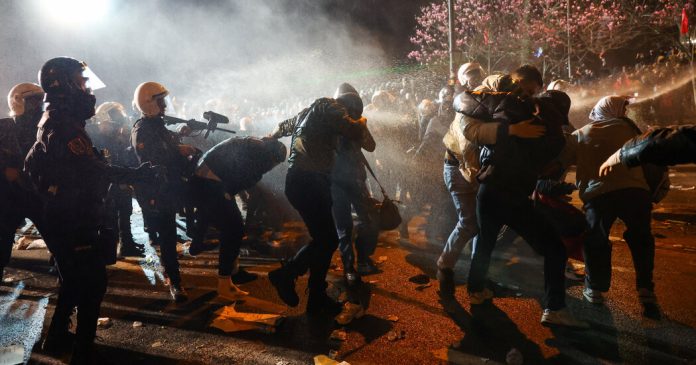
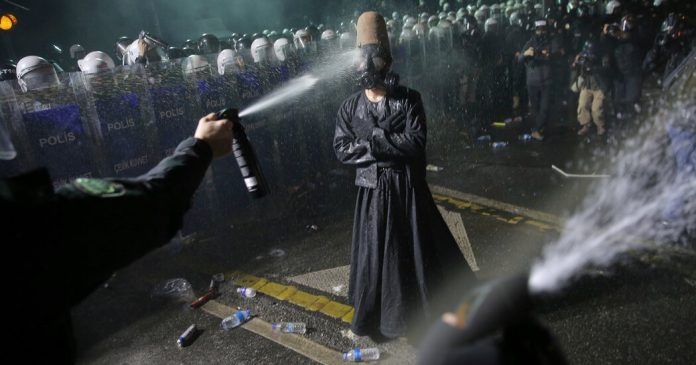
The news of Mr. Imamoglu’s arrest led to large nightly protests in front of Istanbul’s City Hall and in other Turkish cities. The police cleared many of them by force.

Leading the opposition is the Republican People’s Party, or C.H.P., to which Mr. Imamoglu belongs. The party of Turkey’s revered founder, Mustafa Kemal Ataturk, it stands for staunchly secular government and draws most its support from the larger, coastal cities.

Its most public face has been its leader, Ozgur Ozel, a pharmacist and lawmaker known for his altercations with members of Mr. Erdogan’s ruling Justice and Development Party in Parliament. After Mr. Imamoglu’s arrest, he took up residence in a room in City Hall with a small bed to coordinate the party’s response, delivering fiery nightly speeches to the protesters.

He called for boycotting companies linked to pro-government news channels that did not air footage of the demonstrations.

“A boycott is coming for whoever ignores this square,” he yelled during an address on Sunday, his voice hoarse. “We will use the power of our consumption.”

In an interview on Friday, Gokhan Gunaydin, a senior official with the party, said it would push for early presidential elections while trying to channel what he called a broader disgruntlement with the “blatant anti-democratic push” by the government.

The party planned to stick with Mr. Imamoglu, he said, even if that meant prison became his “presidential campaign office.”

The party would fight the charges against the mayor, his aides and other party officials and contest the cancellation of his diploma, he said. It would push ahead with the boycott and organize regular rallies to support Mr. Imamoglu around Istanbul and elsewhere in the country.

Many protesters are university students expressing anger at how Mr. Erdogan has run the country and worried about restrictions on civil rights.

At first, the students at her university had been surprised by the harsh police response, said Ms. Tacyildiz, the economics student. So they organized precautions: gas masks, asthma medications and antacids, which can counter the effects of tear gas. A university search and rescue club volunteered to help if protesters got injured.

Many of her friends have been arrested and police were patrolling her campus in plain clothes and using drones to track protests, she said. Some of the protesters wore masks to prevent the police from identifying them.

The students distrust the courts and feel anxious about where the country is headed, she said.

The government has issued blanket bans on public demonstrations and closed transit hubs, and riot police have dispersed protesters with water cannons, tear gas and pepper spray. More than 1,800 people have been arrested and about 260 jailed pending trial, according to the Interior Ministry.

Pro-government news outlets, many owned by allies of Mr. Erdogan, have avoided live broadcasts of the protests while dedicating substantial airtime to the accusations against Mr. Imamoglu.

On Thursday, a parliamentary committee that regulates the news media suspended an opposition broadcaster, SZC TV, for 10 days after accusing it of “inciting the public to hatred and hostility,” according to a statement on its website.

Three other pro-opposition channels were also fined for showing Mr. Ozel, the opposition party leader, criticizing the state prosecutor who ordered the mayor’s arrest, an opposition member of the committee wrote on social media.

Mr. Erdogan has dismissed the protesters as violent vandals and accused the opposition of fueling havoc in the streets to avoid confronting the corruption allegations against its members.

On Thursday, Justice Minister Yilmaz Tunc insisted to reporters that the courts were independent and criticized attempts to dismiss the investigation of Mr. Imamoglu as political.

“This investigation is conducted entirely by independent judicial bodies, and when the investigative authorities become aware of these allegations, it would be unthinkable of them not to open an investigation,” he said.

He denied any relation between Mr. Imamoglu’s nomination to run for president and his detention.

“This is not related to his candidacy process or other developments,” he said.

Turkey’s next election is scheduled for 2028, but many Turks expect Parliament to call for early elections in which Mr. Erdogan, 71, could potentially run against Mr. Imamoglu, 54.

Osman Sert, the director of PanoramaTR, a research institute in Ankara, said Mr. Imamoglu’s arrest had a “rallying around the flag effect” that helped unite the opposition.

Still, he said, it faced a government with great power that would be a challenge to confront.

“Turkey is still not in a position where democracy is already on hold and totally canceled. But these are of course the most difficult days for democracy,” he said. “These are the rules of the game and you can’t get out of it.”

Kristi Noem’s Rolex at El Salvador Prison Draws Attention

0

What do you wear on a visit to one of the world’s most notorious prisons?

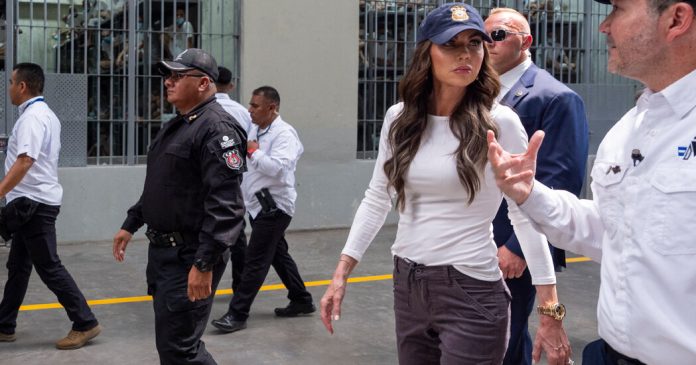
If you’re Kristi Noem, the homeland security secretary who visited El Salvador’s massive Terrorism Confinement Center on Wednesday, the answer was a white long-sleeve top, gray slacks and a baseball cap emblazoned with the Immigration and Customs Enforcement logo.

Oh, and a gold Rolex Cosmograph Daytona that sells for about $50,000.

Ms. Noem traveled to the prison, known as Cecot, where the Trump administration this month sent hundreds of Venezuelan deportees. Earlier this week, the U.S. Court of Appeals for the District of Columbia Circuit denied the government’s attempts to restart the deportations, which a federal judge had blocked earlier in March. On Friday, the Trump administration asked the Supreme Court to allow it to resume the deportations.

At Cecot, as Ms. Noem filmed a video in front of a row of prisoners that were crowded tightly into bunks behind bars, her flashy watch bulged from her wrist, standing out in an austere scene.

The display led to a great deal of criticism on social media from people who questioned the taste of wearing such a pricey watch for the visit. Cecot, which opened in 2023 and was designed to hold as many as 40,000 prisoners, was a signature initiative of Nayib Bukele, the El Salvadoran president who has gained an international reputation for dealing with his country’s gang problem through mass incarceration — a campaign that has been criticized by multiple human rights groups.

In a statement about the watch, Tricia McLaughlin, homeland security’s assistant secretary for public affairs, wrote that Ms. Noem used the proceeds of her books “to purchase an item she could wear and one day pass down to her children.” Ms. McLaughlin did not address the decision to wear that potential heirloom to Cecot.

It is perhaps not a surprise that Ms. Noem, formerly the governor of South Dakota, owns a Rolex — the Swiss brand has been a watch of choice for politicians for decades. Former president Joseph R. Biden Jr., a known watch enthusiast, wore a Rolex Datejust to his inauguration — a choice that led to some criticism from the right. Presidents Trump, Ford and Reagan all wore Rolexes. And even the former Soviet leader Leonid Brezhnev made a concession to the fruits of private industry when he wore a gold Datejust.

According to the watch journalist Brynn Wallner, the founder of Dimepiece, a site for female watch enthusiasts, the Daytona is among the most sought-after Rolexes. First produced in 1963, the watch shot to popularity when Paul Newman started wearing one. Today, the watch is hard to get — buyers typically have to sit on a yearslong wait list to buy it from an official dealer — and as a result, many resort to paying inflated prices on the secondary market.

“If you’re buying it, you’re flaunting the fact that you can even get one,” Ms. Wallner said. “And you probably pay a little more for it than you had to. It’s a flex piece. It’s a signifier of wealth. It’s not subtle at all.”

Paul Altieri, the founder and chief executive of Bob’s Watches, an online marketplace for the resale and trade of watches, agreed.

“Rolex intentionally keeps supplies limited to maintain exclusivity,” he said. “Most customers won’t be offered one unless they have a longstanding relationship with the dealer or are high-priority clients.”

That Ms. Noem’s watch was quickly identified was to be expected. “Watchspotting,” the internet sport of identifying the watches of public figures, has flourished in recent years.

At the Super Bowl in February, enthusiasts immediately identified a Jacob & Co. Caviar Tourbillon on Tom Brady’s wrist, which retails for more than $700,000. Jay-Z was even more extreme at last month’s Grammy Awards, wearing a Patek Philippe Minute Repeater Perpetual Calendarwatch, which retails for more than $2 million. Mr. Trump is often spotted wearing luxury watches beyond just Rolexes, and also has his own line of signature watches that cost as much as $100,000 each.

Watchspotters often pay close attention to any glimpses they can get of watches during awards shows and galas, and they quickly report what they find online.

Now, thanks to Ms. Noem, they have expanded their purview to prisons.

How Trump Is Inspiring Wannabe Authoritarians Everywhere

0

When President Joseph R. Biden Jr. convened democracy summits at the White House in 2021 and 2023, he pointedly disinvited President Recep Tayyip Erdogan of Turkey, a man he had once described an “autocrat” who deserved to be driven from office by voters.

On Tuesday, President Trump offered a much rosier assessment of the Turkish president, even as protesters filled the streets following the arrest of the mayor of Istanbul, Mr. Erdogan’s chief political rival.

“A good leader,” the president said of Mr. Erdogan during a meeting of his ambassadors at the White House. He made no mention of the arrest or the protests.

Since taking office 66 days ago, Mr. Trump has turned a central precept of American diplomacy on its head. He is embracing — rather than denouncing — fellow leaders who abandon democratic principles. The longstanding bipartisan effort to bolster democratic institutions around the globe has been replaced by a president who praises leaders who move toward autocracy.

And Mr. Trump’s own actions — taking revenge against his political rivals, attacking law firms, journalists and universities, and questioning the authority of the judiciary — are offering new models for democratically elected leaders in countries like Serbia and Israel who have already shown their willingness to push the boundaries of their own institutions.

“There’s a great emboldening,” said Rosa Balfour, the Europe director for the Carnegie Endowment for International Peace. “What Trump says reverberates strongly here. But also what the United States does not do. It does not punish or condemn any attempt to undermine rule of law or democracy. There are no repercussions.”

Jane Harman, a former member of Congress and former president of the Woodrow Wilson International Center for Scholars, noted that Mr. Erdogan and other leaders around the world had been “drifting away” from democratic principles for years.

In 2016, a faction in Mr. Erdogan’s government attempted a coup to overthrow him. Since then, he has tightened control of the presidency by attacking the media, political opponents, the courts and other institutions.

“This has become a very different world, but I don’t think Trump started it, and I don’t think Trump is going to end it either,” Ms. Harman said. And she noted that in at least a few places, Mr. Trump’s return to power had prompted some voters to question the authoritarian leanings of candidates and parties.

“Think Germany,” she said, referring to recent elections in the country. “The far right has risen in popularity, but it didn’t win. And the backlash to Trump might have been part of the momentum that held it back.”

Mr. Trump is not the first president to tolerate less-than-democratic actions from allies when they deemed it necessary.

Mr. Biden offered a fist-bump to Crown Prince Mohammed bin Salman, Saudi Arabia’s de facto ruler, even as he blamed him for the murder of the columnist Jamal Khashoggi. Mr. Biden also worked with Prime Minister Narendra Modi of India, who has increasingly cracked down on dissent in his country, and — at times — with Mr. Erdogan.

But Mr. Trump’s election has coincided with actions by elected leaders that appear to depart from the kind of democratic principles that America stood for.

In Israel, Prime Minister Benjamin Netanyahu no longer needs to contend with Mr. Biden’s opposition to a long-planned overhaul of the courts, which many Israelis view as an attempt to control and politicize the judiciary. In 2023, Mr. Biden told reporters that Mr. Netanyahu “cannot continue down this road” of judicial changes.

Now, with Mr. Trump in office, the Israeli leader faces no such pressure. This month, he fired the chief of the country’s domestic intelligence agency, a move seen as undermining its independence. Later, the cabinet approved a vote of no confidence in the country’s attorney general, prompting fresh accusations that Mr. Netanyahu is curbing the independence of the justice system, purging officials he considers disloyal.

On Thursday, Mr. Netanyahu’s allies in Parliament voted to give themselves more power over the selection of the country’s judges. The vote came after the prime minister gave a speech echoing Mr. Trump and saying that the action meant that “the deep state is in danger.”

“The U.S. is not going to put any pressure whatsoever on Netanyahu to respect the democratic institutions of his own country,” Ms. Balfour said. “Netanyahu feels that he has impunity in that respect.”

In Serbia, President Aleksandar Vucic has spent years attacking the media and other political opponents. Last month — as Mr. Trump dismantled the U.S. Agency for International Development — Mr. Vucic sent police to raid organizations in his country, some of which had received money from the now largely shuttered American agency.

Authorities in Mr. Vucic’s government cited Mr. Trump’s actions in the United States as justification for moving against the organizations, including the Centre for Research, Transparency and Accountability and Civic Initiatives. They quoted Elon Musk, the multibillionaire who is running the so-called Department of Government Efficiency, who claimed, without evidence, that USAID was a “criminal organization.”

Two weeks after the raids in Serbia, Donald Trump Jr., the president’s eldest son, traveled to Belgrade, the country’s capital, to interview Mr. Vucic for his podcast. In the interview, Mr. Vucic complained that he, like the American president, is opposed by “an entire liberal establishment from Washington and New York and L.A. going against you.” He said the raids of the nongovernmental organizations were designed to root out corruption and financial mismanagement.

Mr. Trump Jr. fawned over Mr. Vucic, describing what he called “an embrace of common sense, an embrace of law and order, of a shared national sense of identity.” He criticized protesters angry about Mr. Vucic’s recent actions.

“I’m sure the media will cover them only one way,” Mr. Trump Jr. said. “And now there’s seemingly evidence that they are all tied in some form to the same left-wing actors here in America. That same propaganda machine.”

The president’s son is not the only one echoing his father’s language.

Last week, after Mr. Erdogan’s government jailed the mayor of Istanbul, one of Mr. Trump’s senior diplomatic envoys spoke positively about Turkey’s leader during an interview with the former Fox News host Tucker Carlson.

“Really transformational,” Steve Witkoff said of a recent telephone call between Mr. Trump and Mr. Erdogan. “There’s just a lot of good, positive news coming out of Turkey right now as a result of that conversation.”

Ruth Ben-Ghiat, a professor of history at New York University, said Mr. Trump’s words and actions — and those of his surrogates — are being watched by other leaders. She said the president’s lack of condemnation of Mr. Erdogan following the arrest of the Istanbul mayor would have been noted by authoritarian-leaning presidents and prime ministers.

“The moves of Trump in this same direction,” she said, “embolden foreign leaders who know the U.S. is now an autocratic ally and there will be no consequences for repressive behavior.”