Thursday, November 12, 2026
Home Blog Page 76

Judicial rulings block Kari Lake’s drive to shutter Voice of America : NPR

0

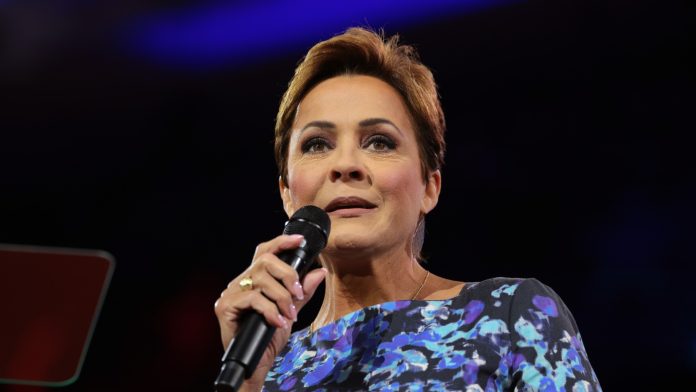
As a special adviser to President Trump, Kari Lake is overseeing the dismantling of federally funded networks that broadcast overseas. Federal judges have issued restraining orders blocking her from further actions against Voice of America and Radio Free Europe/Radio Liberty.

Kayla Bartkowski/Getty Images/Getty Images North America


hide caption

toggle caption

Kayla Bartkowski/Getty Images/Getty Images North America

Trump adviser Kari Lake and the U.S. Agency for Global Media aren’t just defendants in five federal court battles.

They’re on the defensive.

In two temporary – but consequential – decisions this week, federal judges dealt blows to Lake’s drive to dismantle five government-funded international broadcasters that are overseen by USAGM.

On Friday, U.S. Judge J. Paul Oetken in Manhattan issued a temporary restraining order against Lake, the agency, and its acting chief, Victor Morales, saying they could take no additional steps to shutter the Voice of America, the oldest of the five networks. The agency has already indefinitely suspended Voice of America’s full-time workforce and terminated all its contractual employees.

The government-owned network, which broadcasts to hundreds of millions of listeners, viewers and readers each week, shut down operations two weeks ago; no fresh content has been produced since March 15.

In Washington on Wednesday, another federal judge froze Lake’s efforts to cut off funds for Radio Free Europe/Radio Liberty, another U.S.-funded international broadcaster. Shortly after, the U.S. Agency for Global Media started to inform the network and several others that funding would be restored. But the state of play – for the moment, and down the line – remains unclear.

Lake navigates new political and legal waters

Lake is a local TV news anchor in Phoenix turned two-time unsuccessful MAGA candidate for statewide office in Arizona. Her embrace of President Trump brought her to Washington, where she is now a senior presidential adviser assigned to the agency. Lake did not reply to NPR’s request for comment for this story.

Previously, she amplified the statements the agency put out under her guidance, calling itself and the networks “irretrievably broken.” Lake has attacked Voice of America and its sister networks as rife with liberal and anti-Trump bias.

After the rulings, she suggested Friday night that she wanted to recast the network to serve the country better – and to make sure it serves the Trump administration’s priorities.

“Voice of America has an incredible mission. It needs to return to it,” she wrote on X, the social media platform controlled by Elon Musk. “We’re going to modernize it, make it more efficient, and ensure that instead of spreading anti-American propaganda, it’s spreading information aligned with our diplomatic policies.”

President Trump had ordered last month that the parent agency be reduced to the barest level permitted by law as part of his slashing cuts in government programs. Six Voice of America journalists, a director of strategy at the U.S. Agency for Global Media, and a coalition of unions and press advocacy groups sued the agency and its two top officials for shutting down the eight-decades old network.

Congressional Democrats and some Republicans have defended the value of Voice of America and some of its sister networks.

Judges find First Amendment injury, unlawful acts

Judge Oetken wrote that he repeatedly saw merit in the plaintiffs’ allegations that Lake, Morales and the agency had violated the law and constitutional provisions, including the requirement that Trump “take care” to ensure that federal laws are enforced. Oetken noted that Congress has specifically allocated money for Voice of America since its founding.

“This is a ‘classic First Amendment injur[y],” Oetken wrote in his ruling Friday. “And it is also a harm stemming from the other unlawful acts resulting in the shuttering of USAGM.”

Similarly, on Wednesday in Washington, D.C., U.S. Judge Royce C. Lamberth ruled in favor of Radio Free Europe/Radio Liberty, another network funded by the government. (Unlike Voice of America, which is owned by the government, Radio Free Europe/Radio Liberty is a not-for-profit wholly dependent on federal grants.) Lamberth’s temporary restraining order prohibits Lake and the agency from moving forward with plans to cut off all Congressionally-mandated money to Radio Free Europe/Radio Liberty.

“”The leadership of USAGM cannot, with one sentence of reasoning offering virtually no explanation, force RFE/RL to shut down — even if the President has told them to do so,” Lamberth wrote.

In both instances, the U.S. Agency for Global Media had contended that it was merely complying with Trump’s order to reduce its operations only to those required by law. It also argued in the New York case involving Voice of America that it had met “statutory requirements” by retaining 33 employees from Voice of America’s sister network, Radio/TV Marti as well as “approximately 31” other employees.

Lamberth held that the Trump administration’s declaration that it would reduce the networks to the minimum required by law failed to override Congress’ right to designate money specifically for the network. White House and USAGM officials also failed to follow required policies for winding down such programs, which would slow the effort considerably.

Two hundred miles north, in the Voice of America case, Judge Oetken sounded the same themes.

“While Lake has continually used phrases such as ‘shed[ing] everything that is not statutorily required’ at USAGM, and ‘streamlining our operations to what is statutorily required by law’,” Oetken wrote in the Voice of America ruling, “insinuating that these actions fall within the statutory parameters laid out by Congress, such language is impossible to square with what Plaintiffs allege has happened.”

More than 1,500 employees were placed on administrative leave with pay; hundreds of employees on contracts were terminated.

Deep repercussions for abrupt acts

The actions have had immediate effects.

Radio Free Asia, another non-profit network funded by Congress through USAGM, furloughed three-quarters of its Washington-based staff last Friday. The chief executive of Radio Free Europe/Radio Liberty said he would have to take “drastic” measures to keep the network alive.

Staffers reported long lines of employees returning their security passes and devices at the Voice of America building on Friday.

Many nationals of other countries working for the networks and their foreign-language services expect to have to return to their native lands. In some cases, as defendants have alleged in lawsuits against Lake and the agency, they face a hostile reception under autocratic regimes who resent critical coverage by U.S.-funded news organizations.

The networks are intended to serve as a demonstration of soft power in places around the world. By providing news that incorporates political debate and dissent inside the U.S., the networks aim to promote and model pluralistic American ideals. And they serve as a source of public accountability in countries without a robust or free press.

“Those are the values that we extol – the best of America,” says David Seide, one of the attorneys for the coalition of plaintiffs that brought suit in New York City.

According to the agency’s own figures, the networks together reach more than 420 million people in 63 languages and more than 100 countries each week. They are fully funded by federal dollars.

Trump initially announced he wanted Lake to become the director of Voice of America; back then, she said she wanted to reform the network.

The position of director is not presidentially appointed, however, and Trump fired the bipartisan oversight board that would have to approve it once a permanent agency CEO has been appointed; Trump has diverted his choice to take over USAGM, nominating him to be ambassador to South Africa instead. And the oversight board has not yet been reconstituted.

Meanwhile, Voice of America Director Michael Abramowitz, who is also indefinitely suspended, is the lead plaintiff in yet another suit against the agency. There are at least five lawsuits in all, including the two that have already yielded temporary restraining orders.

Lake says she is a victim of ‘lawfare’

Lake, Morales and the agency did not reply to NPR’s requests for comment for this story.

On social media Friday, Lake posted clips of her appearances on right-wing outlets.

“As President Trump tries to reduce the government bloat, the bureaucracy in Washington, D.C., it’s been one lawsuit after the next, after the next, after the next,” she told OANN. “This is just par for the course. We’ve been victims – President Trump has, I myself have – of lawfare, It’s the same cast of characters who are coming over and trying to put landmines in the way.”

Following this week’s restraining order preventing further actions against Radio Free Europe/Radio Liberty, the agency informed Radio Free Europe/Radio Liberty that it would rescind the order to cancel the grants and would instead release money for this fiscal year. It has also embarked on informing other nonprofits that receive grants from the agency, including the Open Technology Fund, which has helped to underwrite open sourced tech for secure communications, including the code underlying Signal.

Officials at Radio Free Asia and the Middle East Broadcasting Networks are said to be awaiting notification as well.

The temporary reprieve – and even the promises of the restoration of funds – offers no permanent relief, however. Executives and staffers of the networks believe Lake will seek to convince lawmakers to strip funds for the upcoming budget year, though they just affirmed their budgets in the current stopgap spending measure.

And it appears unclear that Lake intends to fully retreat.

On Friday night, she advised all USAGM employees to check their e-mail boxes. Staffers told NPR they found another offer encouraging them to take a voluntary buyout – her way of suggesting full permanent layoffs may be on the horizon.

Death Toll in Myanmar Quake Rises to Nearly 700: Live Updates

0

Myanmar’s long isolation and its internal instability are likely to complicate the global humanitarian aid response to the earthquake that struck on Friday, despite a rare plea for outside help from the country’s military-dominated government.

“We need and want the international community to provide humanitarian aid,” said the military spokesman, Gen. Zaw Min Tun. “We will cooperate with them to ensure the best care for the victims.”

Myanmar was cut off by the United States and many other Western nations in 2021, after the military seized power in a coup and imposed a brutal crackdown. Even before the coup, the country had been under various sanctions for decades, most recently over organized violence against the Rohingya minority.

Western sanctions include carve-outs for humanitarian aid, and the United Nations said on Friday that it was mobilizing help for those in need. But in a country ravaged by civil war, major logistical hurdles remain in getting the aid to the people who most need it.

Michael Martin, a nonresident fellow at the Center for Strategic and International Studies, said that the security and safety of international aid workers in reaching affected regions is one issue.

There is also a risk that the military prevents aid workers from reaching rebel-held areas, or will slow-walk the delivery of aid, including by repackaging it to appear as if it is from the military rather than international institutions, said Dr. Martin, who was the former lead analyst on Myanmar for the Congressional Research Service. The military could also prevent relief workers from getting visas or delay processing times, he added.

And, while many international aid organizations were founded on the principle that delivery of aid should not be political, in practice, that is not always possible. The military “may attempt to direct more of the assistance to areas that are nominally under their control” than areas under control of opposition forces, Dr. Martin said.

When a 7.8 magnitude earthquake struck Syria’s northwest region two years ago, under the repressive regime of Bashar al-Assad, little international aid reached the region in the immediate aftermath. Some survivors had to dig through rubble by hand, as the government limited what went to opposition-held areas.

In Myanmar, the military has ruled oppressively for most of the time since 1962; and even during periods of limited liberalization, the armed forces remained a major political power. For much of that time, the country has restricted contacts with the outside world.

Stefan Dercon, an economics professor at the Blavatnik School of Government at the University of Oxford, said that another issue may be transferring funds into Myanmar, whether through sanctioned banks run by officials or other channels, and the logistics of getting supplies to the right areas.

“The delivery of humanitarian aid will be very, very complicated,” Dr. Dercon said. “Humanitarian operations are fundamentally logistical operations, and they need cooperation from a lot of people.”

Another issue is raising necessary funds, he said. Given Myanmar’s isolation from the West, there is unlikely to be a big queue of international, Western donors, he said.

Dr. Martin also said that it was not clear to what extent the U.S. government would help, given the Trump administration’s hostility to foreign aid programs and major cuts to the U.S. Agency for International Development.

‘Tesla Takedown’ campaign aims for its biggest protest weekend yet : NPR

0

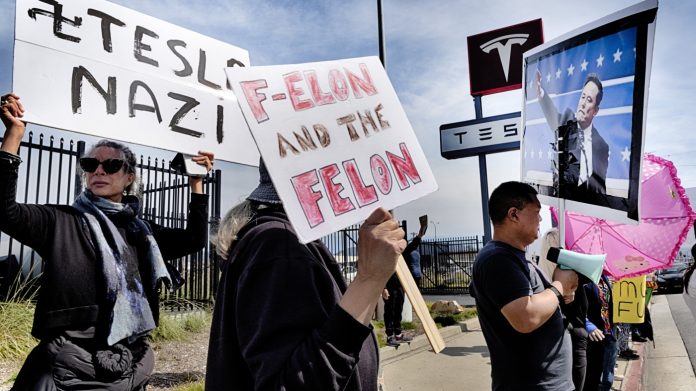
Protesters showed up outside a Tesla showroom and service center in the North Hollywood area of Los Angeles on Saturday, March 15, 2025.

Richard Vogel/AP


hide caption

toggle caption

Richard Vogel/AP

Tesla facilities worldwide have been the target of protests objecting to Tesla CEO Elon Musk’s influential role in the Trump administration. This weekend, organizers who have been leading peaceful protests in recent weeks are staging what they hope to be their biggest day yet.

As part of the “Tesla Takedown” campaign, hundreds of nonviolent demonstrations are planned to take place across the U.S. on Saturday. Organizers are calling it a “global day of action” with a goal of 500 protests worldwide.

For weeks, the movement’s organizers have been encouraging people to boycott the EV maker by selling their Tesla cars and stocks. According to Tesla Takedown, thousands of grassroots groups and individuals worldwide are driving the decentralized effort.

Tesla Takedown organizers say the movement is fueled by anger over Musk’s slashing of the federal government, and that it aims to hit the billionaire where it hurts — the electric vehicle company that’s become his main source of wealth.

Joel Lava, who has been helping lead Tesla Takedown protests in Los Angeles, says Musk’s work to dismantle government agencies and workforce through the unofficially named DOGE initiative is the primary motivator for the movement’s members.

“He’s spearheading DOGE, which is spearheading our country’s destruction — literally destroying our country’s infrastructure,” Lava said. “Therefore, we are taking direct aim at his power, which is his wealth, which is Tesla.” 

Musk critics point to a litany of other grievances, including his attacks on diversity, a gesture he made on the Inauguration Day stage that was widely interpreted to be a Nazi salute, and his support for far-right parties.

Musk and the White House did not respond to NPR’s request for comment.

Since Musk’s political turn, Tesla sales have slumped, and investors have grown uneasy. But market analysts question how much the dip in Tesla sales and shares can be pinned on its CEO’s actions. Tesla has been losing market share to EV competitors for years. And the stock price has fallen in anticipation of auto tariffs. But Trump administration’s recently announced 25% import tariffs on cars made outside the U.S. could give the stock a welcome boost; auto industry analysts say that among domestic carmakers, Tesla will be the least impacted by the tariffs.

Some of the anti-Musk backlash has been violent. Tesla vehicles, dealerships and charging stations across the U.S. and in Europe have been the target of arson and vandalism. Some have taken to spray-painting swastikas on Tesla sedans and Cybertrucks.

Tesla Takedown movement, organizers say its participants are exercising their right to peacefully protest and that they oppose violence and property destruction.

But Musk did not make that distinction when he went after Valerie Costa, a community activist who has helped organize recent peaceful protests in the Seattle area as part of the Tesla Takedown demonstrations.

Musk, in a post on X earlier this month, accused Costa of “committing crimes,” without giving evidence or specific allegations. That was after he claimed that an environmental activist group she cofounded was backed by the ActBlue, a fundraising platform for Democrats.

Costa told NPR that the accusations were false, and that Musk supporters subsequently targeted her in direct messages that included threats of physical violence.

“When one of the most powerful, if not the most powerful person in the world is saying you’ve committed a crime, it doesn’t matter what the truth is,” Costa said.

Tesla Takedown organizers who say they want to chip away at Musk’s power, and that starts with tarnishing Tesla’s brand.

“Trump only likes [Musk] because he’s rich,” Lava, the LA-based organizer, said. “If suddenly Musk becomes just another boring, low-end billionaire, Trump will dump him too, and that will also show the power we have as people to effect change.”

Hold the Chianti: Tariff Threat Leaves Italian Bottles Grounded

0

All it took was an all-caps social media threat by President Trump to impose a 200 percent tariff on European wine for the shipments of many Brunellos, Chiantis and Proseccos to come to a shuddering halt.

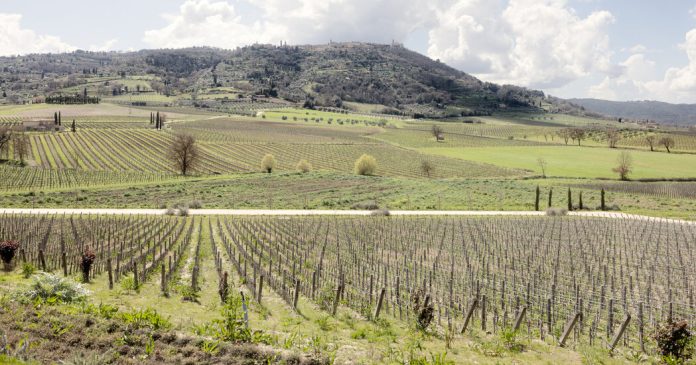
In Tuscany, Italy’s most famous wine-exporting region, thousands of bottles meant for American tables are stranded in the wineries’ chilly cellars or in storage rooms in Livorno, the port city from which they were to depart.

“Everything is stopped,” said Tiziana Mazzetti, the sales and marketing manager of the Old Cellar, a winery in the Tuscan town of Montepulciano, as she stood among boxes of wine bottles that were supposed to leave this month for the United States. “The damage is already here.”

So far, Mr. Trump’s threat remains just that. But it has been enough for jittery American importers to pause orders rather than potentially pay tariffs that could make the wine unaffordable for some and just not worth it for others. If the tariffs were to be imposed — and passed on to consumers in full — a $20 bottle would suddenly cost $60.

Together with France and Spain, Italy is among the most exposed in Europe to American tariffs on wine, and many say a 200 percent tariff would be devastating. For nearly 15 years, the United States has been Italy’s biggest export market for wines. About a quarter of Italy’s wine exports, or about $2 billion worth, get shipped to America each year.

Across Tuscany’s rolling hills, with its olive groves and cypress-lined country roads, that relationship feels especially tight.

For decades, wine importers speaking Tuscan-inflected, American-accented Italian have flocked to Tuscany, taking back bottles of its famous Chiantis and Brunellos to the tables of American homes and restaurants. American wine lovers come in droves to the region — second only to Veneto for its wine exports — and Tuscan wine shops post signs that read, “USA+Europe free shipping.”

Perhaps not for much longer.

Giancarlo Pacenti, whose winery is on the slopes of the medieval hilltop town of Montalcino, sat beside prizes he received from American wine magazines for his Brunellos as he described his fears for the future.

Mr. Pacenti, who inherited his father’s winery, visits the United States several times a year. He has exported his wine — made from Sangiovese grapes and aged in barrels of French oak — across the Atlantic since the mid-1990s. Strong American demand helped grow his business, he said, and he now sells nearly 40 percent of his wine to importers in the United States.

But now, the importers are telling him to pause further shipments.

“A pillar is crumbling,” he said. “We would have never expected that we would find a closed door where we always had absolute freedom.”

Some producers said the threat of tariffs added to other recent woes, including the rise of nonalcoholic wines, beers and spirits.

On the other side of the ocean, importers said the uncertainty caused by the escalating global trade war was forcing them to take a break as shipments, which travel by sea, could arrive at customs after tariffs go into effect.

“The tariffs could be 200 percent,” said Brian Larky, an American importer of Mr. Pacenti’s wines, who is based in Napa Valley, in California. “That’s enough to stop you in your tracks.”

Importers, who are responsible for paying the tariffs, could pass the cost to customers, but it would no doubt reduce sales. They could also absorb the cost of the tariffs, erasing their profits, or request that producers bear some of the burden, hitting their earnings. But with a 200 percent tariff, “we’d all end up jobless,” said Ms. Mazzetti, from the Montepulciano winery.

Mr. Trump announced his intention of imposing the crushing tariffs on European wine and champagne on Truth Social on March 13. It was part of a tit-for-tat trade fight with the European Union that started with a batch of Trump-imposed tariffs. The bloc responded with what Mr. Trump called a “nasty” 50 percent tariff on American whiskey, which led him to issue his threat against “all WINES, CHAMPAGNES, & ALCOHOLIC PRODUCTS COMING OUT OF FRANCE AND OTHER E.U. REPRESENTED COUNTRIES” if the whiskey tariff were not removed.

The European Union has since said it would delay that tariff to give officials more time to strike a deal with the Trump administration.

Mr. Trump said that the tariffs on European alcoholic products “will be great for the Wine and Champagne businesses in the U.S.” But it might not be that simple. For most U.S. wine producers, sales rely on small businesses — distributors, retailers and restaurateurs — that also depend partly on the sales of European wines.

“Those Italian wines are needed in Italian restaurants,” said Mr. Larky, who imports nearly five million bottles of Italian wine into the United States every year. “People are not going to substitute wines from la Loire, from Chablis, or from Tuscany — a Brunello or Barolo — with some wine from Chile.”

As they strolled this past week around Montalcino, which overlooks a valley of vineyards, some American tourists agreed.

“It would be a huge loss,” said Dave Whitmer, 74, a retired physician from Sonoma, in California, who says he prefers Italian and French wines to the homegrown variety. “I grew up drinking American wine,” he said. “But I grew up.”

Other American tourists said they had ordered hundreds of bottles of wine from local wineries during their vacation to stock up before any tariffs came into effect.

“I told them to ship them right away,” said Jennifer Mangusson, 48, from Idaho.

While some producers had initially rushed to stack American warehouses with bottles before the tariffs came into effect, they say that window has mostly closed.

“Our biggest clients have already sent letters to Italian producers telling them to hold off,” said Lamberto Frescobaldi, the president of the Italian Wine Union, the country’s largest winemakers’ association. “With this uncertainty, we can’t afford to bottle and ship.”

The Bourgogne Wine Board, a trade association that promotes Burgundy wines in France, and the Spanish wine association also said they were seeing a similar trend, with importers putting some shipments on hold.

Ben Grossberg, who imports Portuguese wine into the United States, said that he canceled his last container 15 minutes before it departed from the warehouse in Portugal. “The risk of putting wine on the water is too great,” he said.

Some importers with a higher tolerance for risk have still been placing orders, but Mr. Frescobaldi said that if the tariffs were to actually come into effect, “it would be a deadly blow” for the industry.

“The American market,” he said, “is irreplaceable.”

Tuscans still expressed hope that the European Union could somehow persuade Mr. Trump to back off. But even if the trade battle cools, many in Tuscany and elsewhere fear that at least part of the losses inflicted amid the uncertainty cannot be undone.

Laura Mayr, the general manager of the Ruggeri winery, which makes Prosecco in northern Italy, said that at this time of the year, she and her staff were usually organizing promotional activities and tastings for American importers. But they had stopped.

“The damage is already done,” Ms. Mayr said. “We have lost time at a critical moment.”

Roser Toll Pifarré contributed reporting from Barcelona.

Airlines Cut Seats to the U.S. as Canadians Stay Away

0

Airlines are having to revamp their plans ahead of the peak summer travel season as Canadians avoid trips to the United States amid an escalating trade war between the two neighbors.

A grass roots effort by Canadians to boycott all things American — from U.S. grocery products and alcohol to tourist hot spots — had already set off alarms across the United States travel industry, which warned of multibillion-dollar losses.

Now, about two months since President Trump took office and launched an attack against Canada’s economy and its sovereignty, the fallout from Canadians’ resulting anger is becoming clearer.

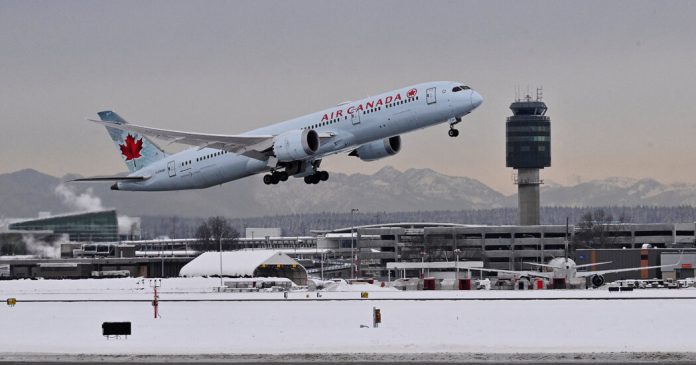
Canadian airlines are eliminating tens of thousands of seats to the United States this April, a peak period when Canadians travel to warmer destinations. The reductions range from 7 percent by Air Canada to 25 percent by Flair Airlines, a discount airline, according to Visual Approach Analytics, an aviation research company.

“We’re seeing Canadians book away from the U.S.,” said Courtney Miller, the founder and managing director of Visual Approach Analytics. “The Canadian airlines are feeling this effect disproportionately.”

Travel agencies, in response, are also changing how they advertise flight packages.

“We completely stopped promoting the U.S. because of the backlash from the consumers,” said Flemming Friisdahl, the chief executive of The Travel Agent Next Door, a Canadian company with 1,500 travel agents in its network.

The agency is selling far fewer trips to the United States, he added, as travelers redirect their spending to destinations in Europe and elsewhere.

“It’s such a shame that we’re in this position today because we’ve always been amazing neighbors,” Mr. Friisdahl said.

Air Canada, the country’s largest airline, said it would be reducing some U.S. flights to warmer destinations “to reflect commercial demand,” Christophe Hennebelle, a spokesman for the airline, said in an email.

Just how large the drop in demand is remains a little up for debate.

OAG Aviation Worldwide Limited, an analytics company based in the United Kingdom, said advance bookings for routes between Canada and the United States from April through October are down by roughly 70 percent, compared to the same time period last year.

While airlines have seen a decrease in demand, some said it has not been as pronounced as what OAG said.

“No data source is showing a decline of the magnitude that OAG is reporting — for Air Canada or in the market overall,” Mr. Hennebelle said.

Brad Cicero, a spokesman for Porter Airlines, said air travel between Canada and the United States remained robust, adding that the airline was “finalizing the summer schedule to ensure that flights are deployed where there is the greatest demand.”

John Grant, the analyst who prepared the OAG report, said the data had been supplied by a major travel distribution company, but he could not divulge its name because of an agreement with the provider.

Canadian residents took about 586,000 trips to the United States in February, a 13 percent drop from the same month last year, according to Canada’s national census agency. In a recent report, it also found that the number of car trips across the border in February fell to 1.2 million from about 1.5 million in February 2024.

Canadian seasonal travelers who spend part of the year in sunny American states, known as snowbirds, are part of the shifting tide.

Florida is the destination feeling the greatest effect from the reduction in seats on flights from Canada, the report from Visual Approach Analytics said, with airports in Fort Lauderdale, Fort Myers and Orlando seeing up to a 30 percent cut in April.

Major airlines in the United States are also responding to falling demand from Canadians.

Scott Kirby, the chief executive officer of United Airlines, recently said the airline had reduced the frequency of numerous routes to Canada because of a “big drop in Canadian traffic” into the United States.

United canceled a new daily route between Toronto and Los Angeles that it had planned to begin in May and said it would also reduce the frequency of other existing routes to Canada.

Beyond any desire to boycott America, a weaker Canadian dollar has made the United States more expensive and is also part of the equation for some travelers.

“The exchange rate certainly helps us be more firm in our expression of not wanting to go the U.S.,” said Katherine Velan, a travel adviser based in Montreal. Some travelers are opting for Mexico, Cuba, Costa Rica and other destinations where the Canadian dollar stretches further.

Ms. Velan, who spoke while on vacation herself in Costa Rica, said she and her friends had encountered a group of Americans while dining out who sent a bottle of wine to her table.

“They said, ‘Oh my God, we’re so sorry. We love Canadians.’”

Peter Marks cites RFK Jr.’s “misinformation and lies,” as a reason for his resignation : Shots

0

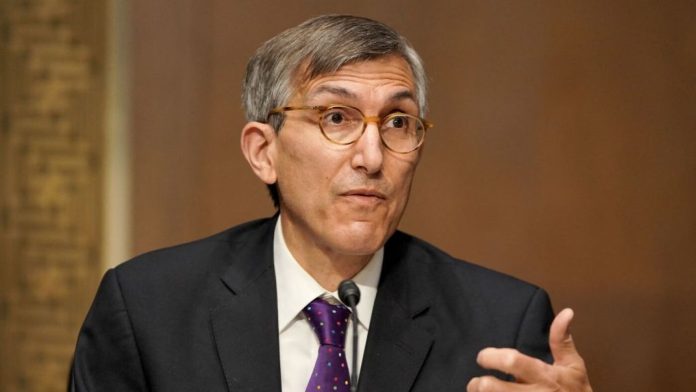
Dr. Peter Marks has long steered the FDA’s regulation of vaccines.

GREG NASH/POOL/AFP/Getty Images


hide caption

toggle caption

GREG NASH/POOL/AFP/Getty Images

The top vaccine advisor at the Food and Drug Administration who was forced out of the agency announced his resignation Friday, and sharply criticized his boss at the Health and Human Services Department: Robert F. Kennedy Jr.

Dr. Peter Marks has long steered the FDA’s regulation of vaccines. He became especially well known during the first Trump administration for his work with Operation Warp Speed, which was credited with the fast development of COVID-19 vaccines.

Marks, wrote in his resignation letter “it has become clear that truth and transparency are not desired by the secretary, but rather he wishes subservient confirmation of his misinformation and lies.”

In response, an HHS official released a statement that if Marks “does not want to get behind restoring science to its golden standard and promoting radical transparency, then he has no place at FDA under the strong leadership of Secretary Kennedy.”

The announcement was met with disappointment by many in the scientific community.

“Peter Marks is one of the most brilliant, dedicated scientists and public servants,” wrote Dr. Ashish Jha, the dean of the Brown University School of Public Health who served as President Biden’s COVID-19 response coordinator.

Marks said he is leaving the agency with “a heavy heart.”

“I leave behind a staff of professionals who are undoubtedly the most devoted to protecting and promoting the public health of any group of people that I have encountered.

But then he issued a caution: “Efforts currently being advanced by some on the adverse health effects of vaccination are concerning.”

Marks cited special worry about the ongoing measles outbreak in Texas, which has now grown to at least 400 cases. Measles can cause a long list of potentially serious complications and the vaccines provide strong, safe protection, Marks said.

“Undermining confidence in well-established vaccines that have met the high standards for quality, safety, and effectiveness that have been in place for decades at FDA is irresponsible, detrimental to public health, and a clear danger to our nation’s health, safety. and security,” Marks wrote.

Marks says he was willing to work with the Secretary but worries “the unprecedented assault on scientific truth that has adversely impacted public health in our nation comes to an end so that the citizens of our country can fully benefit from the breadth of advances in medical science.”

Vance Makes Quick Trip to Greenland, a Place That Doesn’t Want Him

0

Vice President JD Vance spent three hours in Greenland on Friday touring a U.S. military base, on a contentious trip pushed by the Trump administration and angrily opposed by Greenlanders.

In remarks with reporters, Mr. Vance said the United States had to “wake up” to China and Russia’s designs on the island.

“We can’t just bury our head in the sand,” he said, “or, in Greenland, bury our head in the snow.”

President Trump has been insisting that the United States take over the icebound island, which is a semiautonomous territory of Denmark and has been connected to Denmark for more than 300 years. Mr. Trump has been fixated on Greenland since his first term in office and recently vowed to “get it — one way or the other.”

Mr. Vance took a softer tone, saying that the United States would respect Greenland’s right to self-determination and that using military force, which Mr. Trump refused to rule out, would not be necessary.

But Greenlanders have resisted the overtures. The government of Greenland did not invite Mr. Vance or the others in his group, which included his wife, Usha, as well as the national security adviser and the energy secretary. Protests had been planned in Nuuk, the capital, where Ms. Vance was originally scheduled to visit, and that part of the trip was scrapped a few days ago.

Instead, the entire visit was reduced to the Pituffik Space Base, a missile defense station far from any town — or any chance of an embarrassing TV moment.

The White House’s original plan was for Ms. Vance to attend a famous dog sled race this weekend and see other cultural sites, in an effort to bring the United States and Greenland closer.

The plan backfired. Protesters were gearing up to line the road from the airport into town. Greenland’s government blasted the visit as “highly aggressive.” Even the organizers of the dog sled race said they never asked Ms. Vance to attend in the first place.

A spokeswoman for Ms. Vance contested that, saying she had received “multiple invitations.”

As the Vances sat down for lunch at the base, Mr. Vance made a colorful remark about how cold it was and said, “Nobody told me,” prompting laughs.

The national security adviser, Michael Waltz, gave a few remarks but said nothing about the intense criticism he was facing for discussing military plans over a messaging app in a group that included a journalist.

Foreign policy analysts said the revised trip was a watered-down version of what the White House really wanted.

“It’s a tactical retreat,” said Lars Trier Mogensen, a political analyst based in Copenhagen. “On the one hand, they de-escalated by not carrying out the full cultural mission and skipping the P.R. stunt. On the other hand, it’s a symbolic escalation that the highest-ranking official is visiting Greenland.”

Mr. Vance is the most senior American official to ever visit the island, according to foreign policy experts.

Greenland’s size — it’s the world’s largest island — and its location in North America along the increasingly contested Arctic Ocean seems to be the root of Mr. Trump’s fascination. Members of his inner circle, including Mr. Vance, have also spoken of Greenland’s “incredible natural resources” (though most of them are buried under ice).

Just this week, Mr. Trump again insisted that Greenland was vital to American security, saying, “We need it. We have to have it.”

Greenland had been steadily inching away from Denmark, with the island gaining more power over its own affairs and Greenlanders showing more interest in independence. There is — or was, until recently — a significant movement within Greenland that wanted to form a closer alliance with the United States, which has stationed troops on the island since World War II.

But the mood is turning against Mr. Trump, and many ordinary Greenlanders didn’t want Mr. Vance to come at all.

“I don’t know what he wants,” said Tupaarnaq Kanuthsen, a woman walking through Nuuk on Friday. “He’s not welcome.”

Shortly before Mr. Vance arrived, Greenland announced a new government; the island held elections a few weeks ago but no party won a majority.

The new government will be a coalition of all the island’s major parties except one — the Naleraq party, which has the closest connections to Mr. Trump. One of the party’s prominent members has been open about his support for Mr. Trump and attended the president’s inauguration.

Politicians from the ruling coalition downplayed the significance of their exclusion of the Naleraq party, citing other reasons they couldn’t work with its members.

But members of Naleraq, which came in second during the election, didn’t buy it.

“I think our party has been misunderstood,” said Qupanuk Olsen, a well-known social media influencer elected on the Naleraq ticket.

“Being open to cooperation with the U.S. is being interpreted as sucking up to them,” she said. “But it’s really just about openness to business and trade. Trump is only president for four more years; we have to think 10, 20 years ahead. We can’t just shut out the U.S. completely.”

Trump Is Giving Europe Vertigo, and Not Just About Ukraine

0

If progress in ending the war in Ukraine requires cohesion between allies, there seems to be little or none for now.

A flurry of diplomatic talks this week did less to advance a truce, let alone a peace, than to illustrate the uneasy discord growing between Europe and the United States.

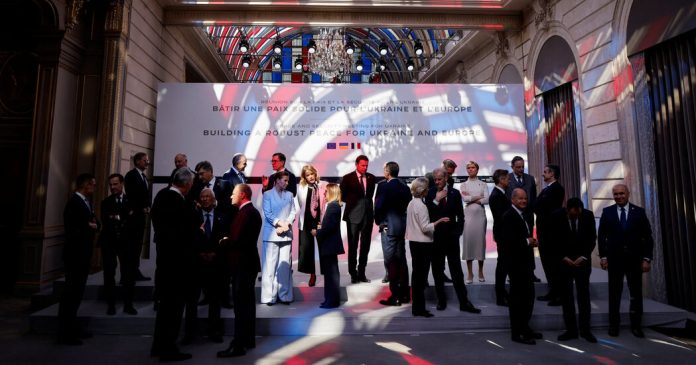
As they huddled in Paris, European leaders made clear that their priority is a free, democratic and stable Ukraine able to withstand any further Russian aggression. “We must place Ukraine in the strongest position to negotiate a solid and durable peace,” President Emmanuel Macron of France said on Thursday.

The Trump administration, meanwhile, pursued its rush to end the three-year-old war fast and on favorable economic terms for the United States. Those terms include a revived relationship with Russia and substantial recompense from a Ukraine seen as insufficiently grateful for American support.

As a result, the allies, if they are still that, resembled ships passing in the night, with President Trump on course to reward President Vladimir V. Putin’s invasion of Ukraine, while Europeans anchored themselves to a refusal to do so.

A U.S.-brokered deal to stop fighting in the Black Sea was reached in Riyadh, Saudi Arabia, without a European presence. But it immediately became unclear whether the agreement would be enforced soon — if at all.

The Trump administration and the Kremlin offered three versions of its terms, as Moscow conditioned the deal on the removal of economic sanctions, a move that requires European support and faces stiff European opposition.

In Paris, where European leaders gathered without American officials, the discussion was about how to dispatch an eventual “reassurance force” to bolster any Ukrainian truce. But the so-called coalition of the willing began to look more like a coalition of the reluctant. It was unclear which countries would participate and where the troops would deploy. Moscow warned of a direct Russia-NATO military clash if they did.

After the meeting, President Volodymyr Zelensky of Ukraine, who attended the talks, declared that “nobody is going to give our territory to Putin.” This, he added, “is our common position — at least those present today.” The United States believes peace without territorial concessions from Ukraine is impossible.

The disagreements between Europe and Washington go much deeper than disputes over Ukraine. Europe is afflicted with vertigo. It is unsure whether Mr. Trump now regards it as a strategic and ideological rival, which would be a world-changing shift, or merely wants Europe to assume its own defense responsibilities. The latter would be a brutal shock, but perhaps an inevitable and manageable one.

“The reconfiguration of the alliance demanded by Trump can feel more like the end of the alliance,” said Michel Duclos, a special adviser to the Institut Montaigne, a research organization in Paris. “There is no longer even the pretense of a relationship of equals.”

The linchpin of the alliance has long been Article 5 of NATO’s founding treaty, which promises that “an armed attack against one or more” of the alliance’s member states “shall be considered an attack against them all” and met, if necessary, “by the use of armed force.” But that vow seems shakier than a few months ago.

Mr. Trump has long complained that the United States spends too much on Europe’s security and promised to force European nations to increase their military budgets, which has begun to happen but not to his satisfaction. With the Cold War long gone, he has threatened not to defend NATO allies that don’t pay up. Such threats have escalated in his second term.

This has led to widespread unease. France is preparing to distribute a “resilience manual” to every household to help citizens prepare for threats, including armed conflict on French soil.

At the same time, Mr. Macron announced a $2.1 billion plan to modernize an air base and equip it to host next-generation Rafale fighter jets able to deliver hypersonic nuclear missiles.

“What has become increasingly clear is that Trump’s team sees Europe as a parasitic freeloading ally and its liberal democracies as political and ideological adversaries,” said Célia Belin, the head of the Paris office of the European Council on Foreign relations. “But this is so contradictory to everything the United States has stood for that we are bound to ask: Can America really tilt this way?”

The United States has long been an idea as well as a nation. It would be a spectacular inversion of its alliances and values for Mr. Trump’s America to not only set about unraveling the European Union, an alliance he has described as created to “screw” the United States, but also to celebrate illiberal, nationalist states like Hungary.

Yet, with Pete Hegseth, the secretary of defense, calling European freeloading “PATHETIC” in a leaked conversation on the Signal messaging app among top Trump administration officials, and with a tone of dismissive contempt for Europe coming from Washington, such an American strategic objective no longer seems far-fetched.

Mr. Putin’s nationalism and conservative values appear to hold significant appeal for the Trump administration, perhaps more than the liberal democracies Vice President JD Vance assailed during a visit to Europe last month for allegedly refusing to listen to voters.

“It seems there has been a seismic change,” Sir David Manning, the former British ambassador to the United States, told the House of Lords this month, alluding to the difficulties of intelligence sharing when there are people in the Trump administration who are “looking for ways to appease Russia.”

These, he said, “are not our values.”

The Trump administration argues that it has a mandate to push back against what it views as the left’s political correctness and to seek through re-engagement with Moscow an end to a bloody war started by Russia.

It will not be easy, given European divisions and budgetary constraints, for the continent to end its reliance on U.S. military might and pursue a program of aggressive rearmament, but over a five- to 10-year period it is conceivable. German rearmament would change the face of Europe; it would certainly cause Moscow to take note.

What feels inconceivable to many Europeans, however, is dealing with an America that has become an adversary, whether in the short-term goal of reaching a peace settlement in Ukraine or the longer-term aim of limiting the power and influence of autocrats from Beijing to Ankara.

In the view of Stephen Walt, a professor of international relations at Harvard University, the Trump administration is following a familiar playbook toward strongman rule. “First the judges, then the universities, then the press, then the lawyers — there are no rules Trump is not willing to break,” he said.

Nobody, of course, knows what Mr. Trump’s ultimate intentions are, but alarm is widespread in Europe. Ms. Belin said that just as Mr. Trump appears determined to weaken checks and balances at home, he is seeking to replicate that externally, dispensing with any rules-based or values-based order.

“Anything that is a check on whatever he wants to do on whatever day, including Article 5, is something he may tear up,” she said. “What counts in Trump world are power and interests. For Europe the choice may come down to this: Show teeth or give him what he wants.”

For now, on Ukraine, Europe seems determined to show teeth rather than offer Mr. Putin a victory perceived as threatening the entire continent. Beyond that, a great European disorientation is apparent.

“The only hope is the American people,” Mr. Duclos said.

Ségolène Le Stradic and Aurelien Breeden contributed reporting.

Rubio Says He Has Revoked 300 or More Visas in Trump’s Deportation Push

0

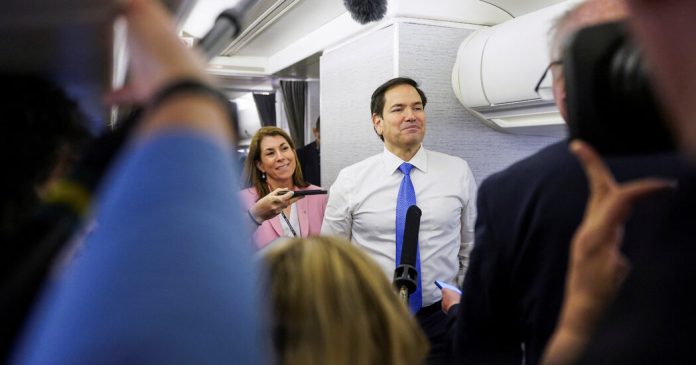
Secretary of State Marco Rubio estimated that he had signed perhaps more than 300 letters revoking the visas of students, visitors and others to force their expulsion from the United States because of their foreign policy views or criminal activities.

He has been signing letters daily to revoke visas since taking office in late January, Mr. Rubio told reporters on Thursday night aboard an Air Force passenger jet traveling between Paramaribo, Suriname, and Miami, where he lives with his family. Mr. Rubio was concluding a three-nation tour in the Caribbean and South America.

“I don’t know actually if it’s primarily student visas,” he said. “It’s a combination of visas. They’re visitors to the country. If they’re taking activities that are counter to our foreign, to our national interest, to our foreign policy, we’ll revoke the visa.”

He said he reviewed each case himself before signing off on actions that would be taken by immigration agents. Mr. Rubio said that a visa holder charged with a crime while in the United States should automatically lose their visa. He is also expelling permanent U.S. residents by stripping them of their green cards.

“My standard: If we knew this information about them before we gave them a visa, would we have allowed them in?” he said. “And if the answer is no, then we revoke the visa.”

Mr. Rubio declined to say how the cases arrived at his desk. “We’re not going to talk about the process by which we’re identifying it because obviously we’re looking for more people,” he said.

Mr. Rubio has been the most senior aide of President Trump involved in the contentious deportation efforts in communities across the United States. In mid-March, Mr. Rubio finalized a deal in which President Nayib Bukele of El Salvador agreed to accept U.S. deportation flights with more than 200 migrants, who were put into a prison there.

At least some of the migrants had fled to the United States from the repressive autocratic government of Venezuela and were not criminals, their lawyers say, but the United States failed to give them due process during their detention and deportation.

Mr. Rubio has also told the Homeland Security Department to detain students or recent graduates for deportation because of what he called their opposition to American foreign policy.

He told reporters on Thursday at a news conference in Georgetown, Guyana, that he had revoked the student visa of a Tufts University doctorate student and Fulbright scholar from Turkey. The student, Rumeysa Ozturk, was one of several authors of a student newspaper essay last year calling for university support of Palestinian rights and divestment from Israel.

After Mr. Rubio’s action, six people in black clothes and some wearing masks — presumably federal agents — seized her off a street outside her home in Somerville, Mass.

Mr. Rubio has also signed off on stripping the permanent residency status of two other students who were involved in pro-Palestinian protests at Columbia University: Mahmoud Khalil, born in Syria, and Yunseo Chung, born in South Korea.

Mr. Khalil, 30, is married to a U.S. citizen who was eight months pregnant when immigration agents seized him from their home in New York this month and took him to a detention center in Louisiana.

Ms. Chung, 21, has been in the United States since age 7 with her family.

Mr. Rubio has been named in separate lawsuits filed by Mr. Khalil and Ms. Chung, as well as other legal challenges to the visa and green card revocations and attempted deportations.

In Ms. Chung’s case, a federal judge ordered the Trump administration to halt its efforts to deport her.

Mr. Rubio has vigorously defended the actions when asked in recent days about them. He has avoided talking about details of each case but has described many of the people whose visas or green cards he has stripped as activists in movements whose participants have vandalized buildings, held disruptive rallies at universities and prevented other students from attending class.

“At some point I hope we run out because we’ve gotten rid of all of them,” he said in Guyana. “But we’re looking every day for these lunatics that are tearing things up.”

He added, “I encourage every country to do that, by the way, because I think it’s crazy to invite students into your country that are coming onto your campus and destabilizing it.”

Critics say Mr. Trump and Mr. Rubio’s actions are similar to those taken by authoritarian governments that seek to suppress free speech and assembly.

On Thursday, Mr. Rubio was asked twice whether under his rationale, Chinese Communist Party officials and authorities in Hong Kong had the right to deport foreign students involved in the 2019 pro-democracy protests in Hong Kong. As a senator from Florida, Mr. Rubio supported the protests through legislation, even though some of the protesters’ actions disrupted campuses and public life.

On the plane, Mr. Rubio said, “Well, every country in the world can deny visas to whoever they want. It’s that simple. That’s a fact. Whether we like it or not, they can deny visas.”

President Trump wants to restore monuments. Will that happen? : NPR

0

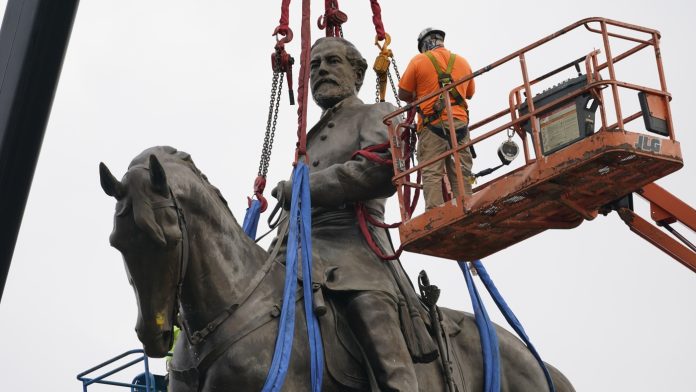
A towering statue of Confederate General Robert E. Lee is removed in Richmond, Va., in September 2021. It was one of many monuments and statues to Confederate leaders removed or relocated following protests after George Floyd’s murder in 2020.

Steve Helber/AP


hide caption

toggle caption

Steve Helber/AP

President Trump signed an executive order on Thursday aimed at “restoring truth and sanity to American history” – decrying what the order characterized as efforts to “undermine the remarkable achievements of the United States by casting its founding principles and historical milestones in a negative light.” The order calls for the removal of “divisive race-centered ideology” from the Smithsonian’s museums and research centers. It also calls on the Secretary of the Interior to restore public monuments, statues and other markers that have been removed or changed since 2020. But it’s unclear how many sites — and which ones — will be impacted by the executive order.

President Trump has called on the Interior Secretary to determine whether any memorials, statues, markers or properties that fall within the Department of the Interior’s jurisdiction “have been removed or changed to perpetuate a false reconstruction of American history, inappropriately minimize the value of certain historical events or figures, or include any other improper partisan ideology” since January 1, 2020, more than a year before Trump left office in his first term. If so, the executive order calls on the Department to reinstate any such statues or monuments. The Department of the Interior includes the National Park Service, the Bureau of Indian Affairs, and nine other bureaus. The Department did not respond to NPR’s request for comment regarding the executive order.

The order also directs the Department of the Interior to ensure that any monuments, statues or memorials under its jurisdiction “do not contain descriptions, depictions, or other content that inappropriately disparage Americans past or living (including persons living in colonial times), and instead focus on the greatness of the achievements and progress of the American people or, with respect to natural features, the beauty, abundance, and grandeur of the American landscape.”

A national reckoning on race – and monuments to the past – grew after George Floyd was killed by police in 2020. More than 200 public Confederate symbols across the country were removed, relocated or renamed within about a year and a half, according to research by the Southern Poverty Law Center (SPLC). Seth Levi, Chief Program Strategy Officer of the SPLC, says many of these removals did not take place on lands under the Department of the Interior’s jurisdiction.

“Even for the objects that are on public land, it’s normally land that’s owned and controlled by municipalities or state governments. I’m not actually aware of any removals on National Park Service land,” Levi says. “There have been removals on land that’s controlled by the Department of Defense with the names of military bases, [but] it’s unclear to us how many monuments have already been removed that this would actually apply to.”

Though action from Thursday’s executive order might be limited for now, Levi says he believes the Trump administration is trying to “minimize the fact that enslavement was a huge part of our history” and that the contributions of racial minorities to American history “seem to be under threat.” He also points to SPLC data showing that historically, Confederate monuments and names on schools, roads and other sites grew in the U.S. during the beginning of the Jim Crow era and around the time of the landmark case Brown v. Board of Education, in which the Supreme Court ruled in 1954 that racial segregation in public schools is unconstitutional.

The National Park Service has already been revising its websites 

Thursday’s executive order comes on the heels of other changes to National Park Service websites. After President Trump’s January executive order about gender ideology declared that “It is the policy of the United States to recognize two sexes, male and female,” the NPS removed all references to transgender people from the Stonewall National Monument website. Weeks later, it had deleted websites containing information about transgender activists like Marsha P. Johnson and Sylvia Rivera.

The National Parks Conservation Association, a nonpartisan group that advocates to protect national parks, issued a statement regarding Thursday’s order. “Across the country, our national parks protect vital American history, from the birthplaces of American presidents to the birthplaces of our democracy. Our parks tell stories from the civil rights movement, the Civil War, and beyond,” said Alan Spears, a senior director at the National Parks Conservation Association. “Every American who cares about our country’s history should be worried about what people, places, and themes disappear next.”

Last year, the National Park Foundation, the fundraising partner of the NPS, announced a historic grant of $100 million from the philanthropic organization the Lilly Endowment, part of which would help “Tell a More Complete Story of America: Delivering a more comprehensive historical narrative, including the experiences of communities whose voices and contributions have not been fully told as a part of the American story.” The Lilly Endowment declined to comment on whether Trump’s executive order would impact the grant. The National Park Foundation did not respond to NPR’s request for comment.

Erin Thompson, author of Smashing Statues: The Rise and Fall of America’s Public Monuments, says the wording of the order – and specifically the phrase “false reconstruction of American history” – caught her eye. “The use of the term reconstruction is pretty loaded there, referring to the post-Civil War period of what some people regard as an attack on white Southern culture,” she says. “It fits right into the narrative of the ‘Lost Cause,’ making an argument not only that the Civil War wasn’t about slavery, but implying that it was about slavery is somehow an insult to Southern strength.”

“You can’t control historical memory by controlling monuments,” says Thompson. “There’s so many people who tell their children other stories, who lead tour groups, who write books. There’s so many ways of learning about history that are not looking at some chunk of stone.”