Thursday, November 12, 2026
Home Blog Page 86

Russia and Ukraine Agree to Black Sea Cease-fire: What to Know

0

Russia and Ukraine have agreed to cease fighting in the Black Sea in a U.S.-brokered deal, but it remains unclear whether the agreement can come into force soon — if at all.

Russia had a major caveat: it would abide by the deal only after various restrictions were removed from its agricultural exports. The penalties were imposed by the United States and the European Union, and removing them would be an arduous process.

Kyiv and Moscow also appear to have different interpretations of the agreement announced on Tuesday. Russia framed it as a way to revive a 2022 U.N.-backed deal giving it some control over commercial shipping through the sea. Kyiv, however, insisted that it would not allow the Russian Navy back into the western Black Sea, which Ukraine uses at its main seaborne export route.

Underscoring the mistrust between the two countries, each side accused the other of breaching the truce on Wednesday. Ukraine reported an attack on its port city of Mykolaiv, while Moscow said it shot down two Ukrainian drones over the Black Sea.

Russia’s conditions highlighted how it is in no hurry to end the war. With a sympathetic administration in the White House and as its forces have the upper hand on the battlefield, Moscow has been determined to get as many concessions as possible.

The Kremlin said it would not agree to a maritime cease-fire deal unless its state agriculture bank and other financial institutions involved in the trade of food and fertilizers were reconnected to the international payment system known as Swift.

The system has its headquarters in Belgium, meaning that the United States would need to press European regulators to agree. In a statement about the deal, the White House pledged that it would “help restore Russia’s access to the world market for agricultural and fertilizer exports.”

Moscow said it also wanted Western companies to restore deliveries of agricultural equipment to Russia and sanctions removed against its companies, ships and insurers involved in the food and fertilizer trade.

Russia says its exports of grain and fertilizers reached $45 billion in 2023. Even during the war, Russia has been exporting record-high volumes of grain and fertilizers, said Andrei Sizov, director of SovEcon, a Russian consultancy.

If sanctions were lifted against a Russian state bank, the Kremlin could use it for other transactions, too, said Aleksandr Kolyandr, a Russia analyst at the Center for European Policy Analysis.

“The minute you have a sanctions-free bank, you can use it for whatever you want,” Mr. Kolyandr said. “It can be an instrument to crack the sanctions regime,” he said, but “it is much easier to monitor just one bank.”

While Kyiv said it would comply with the maritime cease-fire, it remains skeptical about Moscow’s intentions.

President Volodymyr Zelensky of Ukraine said on Tuesday that Russia’s demand for lifting sanctions showed that “they are already trying to distort agreements.”

Mr. Zelensky also said the U.S. commitment to help bolster Russian agricultural exports was “a weakening of positions and a weakening of sanctions.”

Given Russia’s demands and the differing interpretations both sides have of the deal, it remains unclear what Ukraine stand to gain. Experts note the White House did not say whether the deal would protect Ukrainian ports from Russian attacks and enable the reopening of the ports of Mykolaiv and Kherson — two demands that Ukraine had pushed for during negotiations.

Kyiv also has little interest in returning to the 2022 U.N.-backed agreement that Russia wants to revive. The deal allowed Ukraine to export its grain through an agreed upon Black Sea corridor, and Russia to inspect all commercial ships to ensure that they did not carry weapons.

But Andrii Klymenko, the head of the Black Sea Institute of Strategic Studies, said the inspections delayed exports so much that it made the route unprofitable.

After Russia backed out of the deal, Ukraine secured its own shipping corridor by pushing the Russian Navy out of the western parts of the Black Sea. That allowed seaborne grain exports to return to near-prewar levels.

Last week, President Vladimir V. Putin of Russia agreed to halt attacks against Ukrainian energy infrastructure for 30 days. Ukraine, which has been in favor of a full immediate cease-fire, followed suit. Both countries reaffirmed on Tuesday their commitment to institute a 30-day moratorium on energy strikes.

On Tuesday, the Kremlin published a list of facilities that fall under the moratorium. The list includes oil refineries, pipelines and storage facilities, nuclear plants, hydroelectric dams and energy transmission infrastructure.

But both sides have traded accusations of attacks against each other’s power grid over the past week, and it was unclear whether they could find common ground soon. The situation with the energy cease-fire highlighted how Moscow has been willing to drag the talks, portraying itself as open to negotiations but making no major concessions.

Rustem Umerov, Ukraine’s defense minister, said on Tuesday that “additional technical consultations” would have to be held as soon as possible to effectively carry out the energy and maritime agreements.

Trump is making many moves, and he says he has a mandate that justifies them

0

President Trump claims the 2024 election provided him with a mandate that justifies even the most controversial actions by his administration. It’s a common claim for presidents, but not always an accurate one.

A Fire Plunged Heathrow Into Darkness. A Nearby Data Center Kept Humming. Why?

0

A gleaming new data center sits less than half a mile from the electric substation where a fire plunged Heathrow Airport into darkness last week. The data center’s own power was also cut that day. But no one who relied on it would have noticed, thanks to a bank of batteries and backup generators designed to kick in instantly.

Meanwhile it took officials at Europe’s busiest airport close to 18 hours to bring its terminals and runways back into operation, causing global travel delays and underscoring the vulnerability of Britain’s infrastructure.

It is a striking contrast that energy experts say can be explained largely by one word: Money.

“The data center industry is relatively young. They are more attuned to the cost of a catastrophic failure,” said Simon Gallagher, the managing director at UK Networks Services, which advises clients on the resilience of their electricity networks. He said most of the world’s airports — including Heathrow — have not been willing to make the big investments necessary to build total backup systems.

Even at an airport the size of Heathrow, which officials have described as equivalent in power use to a small city, it is possible to create backup systems robust enough to maintain normal operations during a catastrophic power failure, Mr. Gallagher and other engineering experts said.

But it could cost as much as $100 million and would likely take years to put in place. So far, most airports have chosen not to make the investment.

“It comes down to a cost-benefit analysis,” Mr. Gallagher said. “At the minute, there seems to be an assumption that it would cost too much.”

Heathrow officials were quick to point out after Friday’s incident that the airport has backup power in place for its most critical systems: runway lights and the tower’s traffic control safety systems. If a plane had needed to land that day, it could have done so safely.

But the airport had no way to power the rest of the sprawling and complicated facility: the vast terminals, filled with shops and restaurants, moving walkways and escalators. Cut from the grid, there was no power to move bags to the claim area, or for ticket counters or bathrooms.

First opened at the end of World War II, Heathrow has been expanded and updated over the decades. The result has been a patchwork of older and newer electrical cables and systems carrying an ever-increasing demand for power.

“The grid is old,” said Najmedin Meshkati, an engineering professor at the University of Southern California. “For aviation, for the grid and for other safety critical systems, the older that they get the more important maintenance becomes.”

What Heathrow does not have are backup generators that could supply the 40 megawatts of power required at peak times to maintain normal operations.

Instead, on Friday, engineers at the airport had to manually reconfigure switches at another substation to temporarily reroute available power to Heathrow. That took hours, and because the airport’s systems had been sitting without power, it took even more time to boot them back up, followed by rounds of testing.

The airport’s primary power source is the Hyde North substation about a mile away, owned and operated by National Grid Electricity Distribution, the private power company responsible for the area.

Two of the substation’s transformers were taken offline by the fire. The cause is still under investigation, but the police said Tuesday they had found “no evidence” of suspicious activity.

John Pettigrew, the chief executive of National Grid, told The Financial Times that there was “no lack of capacity” in the area after the fire. Energy experts said that is correct: The places where there is an actual lack of power tend to be developing countries and war zones.

The challenge, though, was making use of the area’s ample power once Heathrow’s connection to Hyde North was severed. Thomas Woldbye, the chief executive of the airport, told the BBC that he was proud of the employees who worked through Friday to switch their systems to use power from two nearby substations.

But he said that Heathrow would now assess whether to install “a different level of resilience if we cannot trust that the grid around us is working the way it should.” Heathrow did not respond to requests for comment for this story.

The airport’s leaders might want to examine their corporate neighbor just to the north.

The Union Park data facility, run by Ark Data Centres, is a six minute walk from the Hyde North substation. Inside, computers run 24 hours a day, powering the cloud services and artificial intelligence that are at the heart of modern banking, commerce, research and government operations.

Huw Owen, the company’s chief executive, said its electrical supply was interrupted when the fire broke out. But sophisticated sensors detected the loss of power and instantly shifted to batteries that operate much like an uninterruptible power supply system for a personal computer. That gave the facility’s generators time to spin up, and they soon took over.

“It’s a well-rehearsed, well-known process,” Mr. Owen said in an interview. “It’s this mind-set that resilience and keeping everything powered is absolutely front and center of our world.” Mr. Owen said the company installed the costly generator backup system despite expectations it might never be needed. A permitting application prepared for the company in December described the possibility of a power outage as “extremely rare.”

“It would require a catastrophic regional failure on the grid, or at the supplying power station, and would likely impact not only the site but the surrounding London area,” the summary notes. “As a result, the grid connection is considered to be highly reliable as demonstrated in the grid reliability letter provided with the application (calculated as 99.999605%).”

Prime Minister Keir Starmer told the BBC after the fire, “I don’t want to see an airport as important as Heathrow going down in the way it did on Friday.”

But how to avoid it in future?

The challenge in making electrical upgrades to places like Heathrow is determining how to pay for it when high energy costs are straining consumer budgets. In the past, airport investment has often been passed on to customers in the form of higher ticket prices on airlines.

Mr. Gallagher, the consultant on electrical network resilience, noted that new airports in places like Dubai were built with the kind of backups that could keep terminals open. And a few older airports, like Schiphol in Amsterdam, have upgraded their facilities with large generators.

But if Heathrow’s management wants to follow suit, experts say, they will need to accept that it requires a large investment to prevent a crisis that may not happen again for many years.

“It’s a hell of a lot easier to build it from Day 1 than it is to try and retrofit stuff,” Mr. Owen said of Heathrow and other old airports. “They are as capable of instigating resilience at those sites as I am, but they’re now going to have to retrofit, whereas I built it from Day 1.”

Federal workers ordered back to office find chaos and shortages : NPR

0

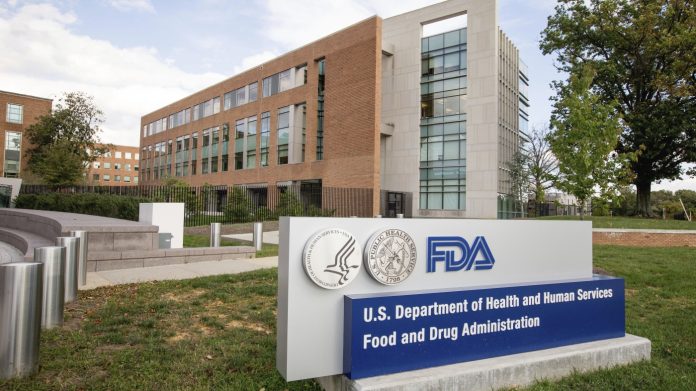
The U.S. Food and Drug Administration campus in Silver Spring, Md. Employees at the FDA and other federal agencies say the Trump administration’s return-to-office mandate has been marked by confusion, changing guidance, and frustrating conditions.

Andrew Harnik/AP


hide caption

toggle caption

Andrew Harnik/AP

Earlier this month, a Department of Agriculture employee who works remotely was given a list of possible locations for their upcoming mandatory return to office. One location was described as a “storage unit.”

Confused, the employee drove to the address, which turned out to be, in fact, a storage facility. When the employee asked the facility’s owner why it might show up on a list of federal office spaces, the owner laughed and told the employee that the federal government does rent a unit there — to store a U.S. Fish and Wildlife Service boat. It doesn’t have heat, windows or power.

The USDA employee notified their supervisor, but hasn’t heard back. NPR spoke to 27 current employees at more than a dozen federal agencies for this story. All of them requested their names be withheld for fear of reprisal from the Trump administration for speaking out.

In a statement to NPR, USDA said it’s “using a systematic process to assign over 100,000 employees to USDA office locations nationwide.” It added, “Any assignment issues are being identified and addressed quickly.”

As agencies scramble to comply with President Trump’s Jan. 20 order terminating remote work, employees say the process has been marked by confusion, changing guidance and frustrating conditions, akin to the recent chaos over mass firings of probationary employees and the Office of Personnel Management’s “What did you do last week?” emails.

Federal workers have been ordered back into offices only to face shortages of desks, computer monitors, parking and even toilet paper. Others are still waiting to find out if they will be assigned to a building near where they live or asked to relocate across the country in the coming weeks.

Some civil servants say the return-to-office mandate feels like an indirect way to get them to quit, and flies in the face of a years-long push by the federal government, predating the COVID pandemic, to encourage teleworking.

A 2024 study by the Office of Management and Budget found that of the 2.28 million civilians working across 24 federal agencies, one in 10 were in fully remote positions “where there was no expectation that they worked in-person on any regular or recurring basis.” The study found 54% of employees worked fully on-site and 46% were eligible for telework.

Cumulatively, the rush to bring workers into federal offices is taking a toll across the country, federal employees told NPR, with few apparent benefits for efficiency, cost savings or productivity.

“This is not saving money for taxpayers,” an employee at the U.S. Forest Service said. “The government needs to pay for heat, for electricity, for water. If you are concerned about saving money, return to office would be a low priority.”

“At least I have a desk”

Many employees at agencies including the Food and Drug Administration, the Federal Aviation Administration, the Internal Revenue Service and the Bureau of Land Management have turned up at offices that don’t seem equipped for the influx, they told NPR.

On the eve of the IRS’ March 10 return-to-office deadline, some employees were told not to come in after all because there wasn’t space for them, according to IRS employees in multiple states and screenshots of employee chat logs seen by NPR.

A 2007 file photo of the U.S. Department of Agriculture building is in Washington, DC. Federal employees returning to full-time in-person work say that there are not enough desks, internet connections aren't strong enough to support videoconferencing and that even necessities like toilet paper can be in short supply.

A 2007 file photo of the U.S. Department of Agriculture building is in Washington, DC. Federal employees returning to full-time in-person work say that there are not enough desks, internet connections aren’t strong enough to support videoconferencing and that even necessities like toilet paper can be in short supply.

Saul Loeb/AFP via Getty Images


hide caption

toggle caption

Saul Loeb/AFP via Getty Images

“At least I have a desk. Many of my team members have been in classrooms and auditoriums or had to move desks multiple times. Some were assigned to secure areas that they can’t access,” one employee who works at an IRS office in Texas told NPR. Those without desk assignments “were told to go to the cafeteria and wait for an email, but there’s no Wi-Fi in the cafeteria,” the employee said. The IRS didn’t respond to a request for comment.

At the Department of Veterans Affairs, space shortages have sparked concerns among telehealth staff that crowding into offices will compromise patient care and violate privacy. A VA spokesperson told NPR the organization would make space accommodations in order to ensure veterans’ access to care would remain uninterrupted and compliant with federal health privacy law.

On the first day of mandatory in-person work at the FDA’s main White Oak campus in Silver Spring, Md., last week, parking lots were gridlocked and security lines were backed up, two employees told NPR. Some workers were assigned offices but not given keys, one of the employees said.

“There are all the small indignities of being in a facility never equipped for this many people: toilet paper and paper towels running out immediately, very long lines at the cafeteria, loud noise, people working in hallways,” the FDA employee said.

FDA workers at White Oak are also worried about drinking water in the office after testing last year found Legionella bacteria in some buildings. Before the return to office this month, the agency sent an email this month saying the water is safe to drink. However, it didn’t include new testing results, according to a copy of the email seen by NPR.

“I personally don’t risk it,” a second FDA employee told NPR.

In a statement to NPR, the FDA said it is “working to ensure staff remain able to conduct their important public health work.” It added: “The agency continues to provide its employees with up-to-date information regarding these activities, including workspace, security, parking accommodations, as well as public transportation and alternative commuting options.”

Toilet paper, computer monitors and Wi-Fi in short supply

Returning employees are also straining Wi-Fi connections and internet network capacity, while some agencies are having trouble getting enough equipment and supplies because of a freeze on federal payment cards.

At a Bureau of Land Management office in the Mountain West, employees have been asked not to use video conferencing, according to a worker there.

“It’s actually made it harder to be productive,” the worker said, because their work involves supporting activities in the field and “the lack of video makes it hard to build a rapport.”

At a different BLM site in the West, “we have to go to the agency head to ask if we can buy toilet paper” because the government-issued pay cards they’d normally use to buy it have been capped at $1, another BLM worker said. The BLM didn’t respond to a request for comment.

A 2019 file photo of the Federal Aviation Administration (FAA) building in Washington, DC. Workers who have been ordered to return to the office there report that there's a shortage of monitors and computer equipment and the agency is unable to buy more due to spending freezes.

A 2019 file photo of the Federal Aviation Administration (FAA) building in Washington, DC. Workers who have been ordered to return to the office there report that there’s a shortage of monitors and computer equipment and the agency is unable to buy more due to spending freezes.

Eric Baradat/AFP via Getty Images


hide caption

toggle caption

Eric Baradat/AFP via Getty Images

At the FAA, IT workers are running low on monitors and other computer equipment and are unable to buy more, according to an FAA employee.

In a statement to NPR, the FAA said it is “committed to safely and efficiently bringing our employees back to in-person work to better uphold our core safety mission. We are working with employees to ensure they have the workspace needed as we go through this period of adjustment.”

Adding to the confusion, some employees are being told the offices they’re returning to may close, as the government weighs plans to dramatically shrink its real estate footprint.

A Treasury Department employee said they and their colleagues were asked if they would consider relocating “due to our office being closed after we have just been given the return to work order.” The employee said it’s not clear where that different location might be.

An employee at the Department of Health and Human Services who lives hundreds of miles away from the agency’s Maryland headquarters is still waiting to find out where they will be instructed to work from as the April 28 return-to-office deadline approaches. They, like other remote HHS employees NPR spoke with, are concerned they will be asked to relocate to Maryland on short notice.

“If we have to up and move, that’s something that we need to know,” the HHS employee said.

HHS and Treasury Department officials didn’t respond to requests for comment.

Until recently, the government encouraged many employees to work from home

The number of federal employees who work remotely or regularly telework increased significantly during the COVID pandemic. But many agencies have been shifting toward teleworking for decades, spurred by the desire to reduce office space costs and improve recruitment and retention, according to the federal Office of Personnel Management.

“Thoughtfully implemented alongside meaningful in-person work, telework has the potential to significantly enhance the agility, productivity, and engagement of our workforce. It has enabled the government to attract and retain diverse, top-quality talent from across the nation,” OPM wrote in its annual report to Congress on telework last year.

Telework saved federal agencies more than $230 million in fiscal year 2023, OPM’s survey found, led by reduced costs for commuting and transit, real estate and energy.

“Agencies are also reporting significant increases in cost savings in human capital (recruitment, retention, reduced turnover etc.),” OPM said.

The push to work remotely existed during the first Trump term. In its fiscal year 2019 report to Congress, OPM said that “agencies continue to make progress in their use of telework to deliver mission outcomes, provide excellent customer service, and efficient stewardship of our taxpayer dollars.”

Many of the federal employees NPR spoke with said their agencies had experienced the benefits of working remotely.

“Telework wasn’t just a nice to do thing, it was a necessity,” said an Air Force employee who works at the Pentagon. Their unit doesn’t have enough desks to accommodate everyone, a situation that predates COVID, they said. The Defense Department didn’t respond to a request for comment.

“We have been a hybrid work force doing top-notch science for decades,” one of the FDA employees said. “The physical difficulty and the psychological distraction of [return to office] will result in real attrition and lower productivity.”

Remote workers say RTO order feels like an “arbitrary punishment”

For many civil servants who have been working remotely, the blanket order to return to an office that in some cases they never worked in feels like a misunderstanding of their jobs.

“They talk about the bloat in D.C. — we live in the states and communities that voted for this administration, and we represent those states and communities,” the remote HHS employee said. “We bring expertise because we come from these communities.”

Russell Vought is sworn in during his Senate nomination hearing. Vought, who's now the director of the Office of Management and Budget, was an architect of the Heritage Foundation's Project 2025 plan that's served as a roadmap for many of the Trump administration's policies.

Russell Vought is sworn in during his Senate nomination hearing. Vought, who’s now the director of the Office of Management and Budget, was an architect of the Heritage Foundation’s Project 2025 plan that’s served as a roadmap for many of the Trump administration’s policies.

Kayla Bartkowski/Getty Images


hide caption

toggle caption

Kayla Bartkowski/Getty Images

Others say working in an office hasn’t done anything to improve their work or efficiency. Instead they’re carrying the added burden and expense of commuting every day — and creating more costs for the government, too, which has to pay for office space and utilities.

“Our calls are still virtual. Our work is still done through email, [Microsoft] Teams calls and SharePoint uploads,” the IRS employee in Texas said. “My supervisor is in another state. My supervisor’s supervisor is in a totally different state. We’re not ‘collaborating’ any more than we were two weeks ago. The whole thing is absurd.”

“I’m literally remote working from an office instead of at home,” said a worker at U.S. Citizenship and Immigration Services whose supervisor and colleagues are in different states. “I would be more receptive [to working in the office] if there was a tangible, coherent reason for doing so.”

The return-to-office push feels to some federal workers in line with what they see as an effort to drive them to the point of quitting, at the same time agencies are planning large-scale job cuts at the direction of the Trump administration.

Several people NPR spoke with brought up a 2023 speech by Russell Vought, an architect of the Heritage Foundation’s Project 2025 roadmap to pare back the government. He now heads the Office of Management and Budget and said in that speech: “We want the bureaucrats to be traumatically affected. When they wake up in the morning, we want them to not want to go to work because they are increasingly viewed as the villains.”

“It has seemed like an arbitrary punishment to lower morale,” one of the FDA workers in Maryland said.

Have information you want to share about the ongoing changes across the federal government? Reach out to these authors: Shannon Bond is available through encrypted communications on Signal at shannonbond.01, and Jenna McLaughlin is available at jennamclaughlin.54


Europe Talks Tough on Military Spending, but Unity Is Fracturing

0

European leaders have gotten the message from Washington about doing more for their own defense and for Ukraine, too. They are talking tough when it comes to supporting Ukraine and about protecting their own borders, and they are standing up to a demanding and even hostile Trump administration.

But there is an inevitable gap between talk and action, and unity is fracturing already, especially when it comes to spending and borrowing money in a period of low growth and high debt.

The Dutch and others are not fans of raising collective debt for defense. Keeping Hungary on board is ever more difficult.

And when the president of the European Commission, Ursula von der Leyen, announced a plan for billions more for the military, called “ReArm Europe,” two of the bloc’s largest countries, Italy and Spain, thought that was all a bit aggressive. So now the plan has been rebranded as “Readiness 2030.”

That’s a year after Donald J. Trump is no longer expected to be president. But it is also a realistic understanding that Europe’s new commitment to self-reliance will take time, billions of euros, political deftness and cooperation with the United States.

Kaja Kallas, the former prime minister of Estonia who is now the chief foreign and security official for the European Union, has been a forceful advocate for supporting Ukraine as a first line of European defense against an aggressive, militarized Russia.

But it has been a rocky start for Ms. Kallas. Her effort to get the E.U. to provide up to 40 billion euros (more than $43 billion) to Ukraine through a small, fixed percentage levy on each country’s national income has gone nowhere.

Her backup proposal, for an added €5 billion as a first step toward providing Ukraine two million artillery shells this year, was also rejected by Italy, Slovakia and even France, an E.U. official said, speaking anonymously in accordance with diplomatic practice. The countries insisted that contributions to Ukraine remain voluntary, bilateral and not required by Brussels.

And her recent response to Mr. Trump’s effort to push Ukraine into a cease-fire without security assurances rubbed many the wrong way, both in Europe and Washington, as dangerously premature. “The free world needs a new leader,” she wrote on X. “It’s up to us, Europeans, to take this challenge.”

But in fact the Europeans are working hard to respond to Mr. Trump in a convincing fashion. Ms. von der Leyen sold her rearmament or readiness plan with a headline figure of €800 billion. But only €150 billion of that is real money, available as long-term loans for countries that wish to use it for the military. The rest simply represents a notional figure — a four-year permission from the bloc for countries to borrow even more for military purposes out of their own national budgets.

For a country like Germany, which has low debt, that is likely to work, especially now that the next chancellor, Friedrich Merz, got Parliament to agree to loosen its own debt rules to allow for huge spending on the military, civilian infrastructure and climate.

But for countries like Italy and Spain, which can feel far away from Russia and have their own fiscal problems, that may not be an easy choice. France, despite President Emmanuel Macron’s strong words about European “strategic autonomy” and his desire to lead the Continent, is itself deeply indebted, and piling on more debt is politically and economically hazardous.

France, too, is insisting on a high percentage of European content and manufacture for any weapons bought with the new loans, and is so far working to keep American, British and Canadian companies from participating. And other issues are intruding; an E.U. effort to draft a defense agreement with Britain is being held up by Paris over squabbles about fisheries.

But Europe will spend considerably more on defense, as it has known it must, said Ian Lesser, director of the Brussels office of the German Marshall Fund. “The advent of the Trump administration has given history a shove,” he said. “We’re not in a linear environment, with a linear spending trajectory.”

On NATO, too, major European countries are beginning to talk seriously about how to replace the vital American role in the alliance — both in terms of sophisticated arms and political and military leadership. But there is little desire to accelerate any rupture with Washington, since any such transition is likely to take five or even 10 years.

Now, 23 of 27 E.U. states are also NATO members, including about 95 percent of E.U. citizens, and NATO has its own requirements for new military spending. European states are discussing what they can propose to Mr. Trump at the next NATO summit in June, in The Hague, that will ensure American cooperation in any transition.

But while Trump officials have privately reassured Europeans that the U.S. president supports NATO, will retain the American nuclear umbrella over Europe and remains committed to collective defense, Mr. Trump’s views are famously changeable, and he persists in viewing NATO as a club where members pay for American protection.

In his first term, he often mused about leaving NATO while saying the United States will defend only countries that pay enough for defense. This month, he repeated that warning. He has demanded that NATO members pay up to 5 percent of gross domestic product on defense, significantly more than the United States, which spends about 3.4 percent of G.D.P. on its global military.

NATO officials want to set a new spending goal at the summit in June, but one closer to 3.5 percent of G.D.P., up from 2 percent now.

Reinforcing concerns in Europe that the United States may no longer be a reliable partner was the extraordinary discussion among top Trump administration officials of the American strike on Yemen, revealed by Jeffrey Goldberg in The Atlantic, who was inadvertently added to the group chat on the messaging app Signal.

The discussion was replete with comments like this one from Vice President JD Vance: “I just hate bailing out the Europeans again.” And there were boastful messages about finding a way to get Europe to pay for the operation — but nothing about China, which benefits hugely from the trade passing through the straits near Yemen, including much of its oil imports and its exports to Europe.

Mr. Trump’s sudden suggestion last week that a future American fighter plane might be sold to allies in a downgraded version has also reinforced these concerns.

Prompted by Mr. Trump’s stated intention to leave Ukraine’s defense to Europe, Britain and France are working on a proposal for a European “reassurance force” to be on the ground in Ukraine once a peace settlement is reached between Kyiv and Moscow, if one ever is. But so far, no other E.U. country has publicly volunteered to serve in such a force, which is largely undefined and unfinanced, and which Russia has consistently rejected.

Mr. Macron is to meet with President Volodymyr Zelensky of Ukraine on Wednesday night. Then on Thursday, he is scheduled to be host at another meeting of this “coalition of the willing,” guest list unclear. But Mr. Trump’s special envoy, Steve Witkoff, called the idea “simplistic” and “a posture and a pose.”

Efforts at creating a cease-fire between Russia and Ukraine continued, with the announcement on Tuesday that the two countries had agreed to stop attacks on ships in the Black Sea. But even that agreement was subject to a Russian demand that Western countries drop restrictions on Russian agricultural exports.

Ms. von der Leyen talks of making Ukraine “a steel porcupine,” too difficult for Russia to swallow in the future, an echo of an early plan for Ukrainian defense drafted by a former NATO secretary general, Anders Rasmussen.

But even a steel porcupine is not a security guarantee, and it implies an endless commitment to supporting Ukraine.

Prime Minister Bart De Wever of Belgium summed up the European problem nicely last week. He praised Mr. Macron for drumming up a “coalition of the willing” to boost military aid for Ukraine as U.S. support dwindles. But he said he had pleaded for a bit more structure in the group.

“We are willing — but willing to do what, exactly?” he asked.

Colorado Democrats may severely limit detachable magazines : NPR

0

Sen. Tom Sullivan hears testimony of opponents of a bill at Old Supreme Court chamber of Colorado State Capitol building in Denver, Colo., on March 8, 2023.

Hyoung Chang/Denver Post via Getty Images


hide caption

toggle caption

Hyoung Chang/Denver Post via Getty Images

DENVER — Gun dealers and owners in Colorado could soon be subject to some of the most restrictive gun-control laws in the country.

Lawmakers in the state are poised to pass a measure that would, with a few exceptions, outlaw the use of detachable ammunition magazines. By doing so, it would make it illegal to buy, sell and manufacture a wide range of firearm models, including rifles, shotguns, pistols and some handguns.

Detachable magazines are devices that allow shooters to reload and fire bullets more quickly. Without them, gun users would have to load bullets into the chamber one by one.

The bill’s supporters say the legislation is necessary to limit the damage inflicted during mass shootings.

Shootings in Colorado

Colorado has a long history of mass shootings, dating back to Columbine High School in 1999. Then, in 2012, when a gunman used a hundred-round detachable magazine to open fire on moviegoers in Aurora.

Tom Sullivan’s son, Alex, was one of the dozen people killed in that shooting.

“If Alex had had two seconds, maybe he could have gotten behind the seat, maybe something else could have happened in front of him. Maybe he’d still be here today,” Sullivan says.

The Aurora movie theater shooting was one reason Colorado passed a law more than a decade ago banning magazines that contain more than fifteen rounds.

But since then, two more significant shootings happened in Colorado — at a Boulder supermarket in 2021 and at Club Q, an LGBTQ-plus nightclub in Colorado Springs, a year later. Both involved high-capacity detachable magazines.

Flags fly at half-staff over the Colorado State Capitol on March 28, 2021, in Denver, Colorado.

Flags fly at half-staff over the Colorado State Capitol on March 28, 2021, in Denver, Colorado.

Michael Ciaglo/Getty Images


hide caption

toggle caption

Michael Ciaglo/Getty Images

Sullivan, now a Democratic state senator, is behind the latest proposal and framed it as a way to strengthen the ban on high-capacity magazines without affecting the guns Coloradans already own.

“This is for the next purchase, and this is for the next person who becomes disgruntled at work or is being led down a path by some ideology out there,” Sullivan says. “When that person goes down to their local gun shop or big box store, they are going to buy something that’s got an attached magazine to it.”

Other states already have magazine restrictions in place. In California, magazines are supposed to be fixed but the locking mechanism can still be removed in minutes with simple tools. In New York, they are considered one of the features that define assault weapons, which are outlawed in the state.

The Colorado legislation would go even further and require magazines to be soldered, welded or affixed to the gun with strong epoxy.

A need to compromise

Most Democrats in the legislature support the measure, but they had to make some concessions to get Democratic Gov. Jared Polis fully on board.

One compromise exempts several dozen firearms commonly used for hunting. Another lets people buy prohibited guns if they get a special permit by taking up to twelve hours of safety training and getting approval from their local sheriff.

Other changes to the bill would create a process for reviewing permit applications that are rejected by sheriffs, require annual transparency reports on the bill’s cost and postpone the law’s enactment date until 2026.

A CompMag fixed magazine conversion kit for an AR-15 rile, installed to make a rifle compliant for restrictive states such as California, is demonstrated at the Crossroads of the West Gun Show at the Orange County Fairgrounds on June 5, 2021 in Costa Mesa, Calif.

A CompMag fixed magazine conversion kit for an AR-15 rifle, installed to make a rifle compliant for restrictive states such as California, is demonstrated at the Crossroads of the West Gun Show at the Orange County Fairgrounds on June 5, 2021 in Costa Mesa, Calif.

Patrick T. Fallon/AFP via Getty Images


hide caption

toggle caption

Patrick T. Fallon/AFP via Getty Images

“Colorado could be really a pioneer in true safety test for civilian firearm owners,” says Daniel Webster, who studies state gun laws at Johns Hopkins University. He says that even with those changes, the measure would amount to some of the country’s strictest gun ownership laws.

It’s also particularly significant that Colorado, a Western state with a deep-rooted gun culture, is proposing this kind of gun regulation, Webster says. “It would be a statement that you can still preserve your Second Amendment rights to be able to acquire firearms, both for sport and defense, but we acknowledge that it’s important for there to be a more rigorous process for vetting to make sure that the person is safe to have firearms.”

The opposition

One of the bill’s biggest critics are the state’s gun dealers.

“The last three to four years, we feel like we’ve been under attack,” says Brian Clark, who has owned Bristlecone Shooting, Training and Retail Center in Lakewood, Colorado, just outside Denver, for a decade. “The Colorado legislature has definitely been chipping away at our rights and our ability to make a living.”

Over that time, Colorado has passed more than a dozen laws that gun-ownership advocates say restrict their rights. But the latest proposal goes much further than any of those, and many gun store owners claim it would put them out of business.

Clark says it would make a significant portion of his inventory illegal overnight, especially when it comes to his rifles and shotguns.

“For our long gun inventory, 60 to 75% of the guns we sell would be affected.”

That includes one of his best-sellers, and one of the most popular models in the United States: the AR-15.

Other critics, including Colorado’s Republican lawmakers, say the measure would be outright unconstitutional. Everytown for Gun Safety and Moms Demand Action are supporting the bill on one side. The National Rifle Association and other groups are lobbying against it.

The bill has one last legislative vote to get through, with widespread support from the Democratic majority.

It may now have a clear path to the finish line in Colorado, but even if it’s signed into law, it will likely face challenges in court.

Deadly Wildfires Destroy Historic Landmarks in South Korea

0

Wildfires in South Korea have resulted in deaths, turned an ancient Buddhist temple into ashes and forced the evacuation of residents of a UNESCO World Heritage site.

How Small Restaurants Are Dealing With Record Egg Prices

0

“Making It Work” is a series about small-business owners striving to endure hard times.


Bird flu outbreaks that wiped out about 15 percent of the nation’s egg-laying chickens and drove wholesale egg prices to a peak of more than $8.50 a dozen in February have vexed grocery shoppers and prompted big breakfast chains to add surcharges to diners’ checks. But for owners of small eateries, paying double or triple for an ingredient they crack by the hundreds each day could potentially put them out of business.

These business owners are getting creative: changing recipes; using liquid or powdered eggs, which haven’t gotten as expensive as quickly; and selling whatever items they can that don’t include eggs — things like falafel or packaged snacks or even fresh flowers.

Prices have come down in recent weeks but remain historically high, and worry about new outbreaks is keeping business owners on edge. The U.S. Department of Agriculture predicted on Tuesday that egg prices would climb nearly 58 percent this year. Food trends like all-day breakfast menus and protein-heavy diets are keeping demand — and therefore prices — high, according to analysts at CoBank, a bank that lends to farmers.

Eggs are too perishable to be stockpiled and small businesses generally don’t have extra cash for refrigerator space to keep extra eggs even for brief periods, said Rob Handfield, a professor and the director of the Supply Chain Resource Cooperative at North Carolina State University.

“It’s not like you can stock up on a month’s worth of eggs,” he said. “You really rely on those weekly or daily deliveries of eggs if you’re a small business.”

Restaurant and bakery owners could charge more for their baked goods or breakfast sandwiches, but they fear that hiking prices will drive away customers.

“That’s the big challenge for a lot of owners right now,” said Holly Wade, executive director of the NFIB Research Center at the National Federation of Independent Business.

Here’s how the owners of four small businesses are trying to be creative in adapting to the jump in egg prices.

For most of the 24 years Ted Karounos and his wife, Ann, have owned the Square Diner in the TriBeCa neighborhood of New York City, egg prices hovered between $30 and $35 for a case of 30 dozen eggs. During the pandemic, prices spiked as high as $100 a case.

Today, Mr. Karounos would be thrilled with that price. “This year’s been scary,” he said. “I’ve never seen $200 before.” Now, he is paying $239 per case — a nonnegotiable cost, considering that he serves about 360 eggs a day at the Square Diner, a classic restaurant with booths, a long row of counter stools and vintage signs adorning the walls.

Eggs are the star of the diner’s signature omelets and of the “lumberjack” breakfast platter that includes eggs and pancakes, which also incorporate eggs in the batter. In total, Mr. Karounos estimated that about 60 percent of his menu included eggs.

Mr. Karounos raised prices 7.5 percent last year to keep pace with inflation, he said, and is considering hiking them again. The margins on something as workaday as a two-egg breakfast have shrunk drastically, he said: “You’re talking about a dollar per plate of lost profit.”

“This is not an ingredient we can go without,” he added. “Right now we’re just absorbing the hit.”

At least 90 percent of everything Melissa Johnson sells includes eggs. That’s not unexpected for a bakery, but Ms. Johnson, founder and chief executive of Oh My Cupcakes! in Sioux Falls, S.D., said the price of eggs led her to add other types of inventory.

“The more items we can come up with that don’t include eggs but still supplement our income, the better off we’ll be,” she said. She has added bags of snack mix and dry pancake batter mix to the shelves, along with gift items like candles and fresh flowers.

Ms. Johnson considered adding a surcharge to offset some of the increase in egg costs. But she worried that even an increase as low as 25 cents would dissuade customers, who are already spending less now than they did in previous years.

“We could easily price ourselves out of the market,” she said. “Cupcakes are not a necessity. We understand people are really needing to make some decisions with how they’re spending their hard-earned money.”

The sweet breads, cakes and desserts Mark Burgos sells at his family-owned bakery in the Pico-Union neighborhood of Central Los Angeles have two things in common: traditional Mexican flavors and lots of eggs.

“Very few things don’t have eggs in them,” he said, listing customer favorites like kings cake, a traditional holiday sweet bread; tres leches cake; and flan. His flan recipe alone, which makes two dozen portions, takes 260 eggs. “You don’t have a lot of wiggle room,” he said.

Mr. Burgos has started buying fewer eggs and hunting down liquid and powdered eggs so he can save whole eggs for recipes where he can’t make substitutions. “We’ve had to use everything we could get our hands on,” he said, adding that he found liquid eggs in January but had no such luck in February.

Mr. Burgos said he had had to raise prices by about 20 percent, but he said the increase — plus the economic impact of the recent wildfires in Los Angeles — had hurt business. “Since things are expensive, things slow down,” he said. “Everybody’s having a hard time.”

Eggs are ubiquitous on the menu at Side Piece Kitchen, a restaurant in Tacoma, Wash., that specializes in brunch: The sandwiches are laden with poached or fried eggs as well as egg-based sauces. Even the latkes — the restaurant’s version of breakfast potatoes — use eggs as a binding ingredient.

But the owner, Hailey Hernandez, who opened the restaurant with her mother and husband in 2022, says her newest menu items have fewer eggs — or none at all. Recently, the cost of eggs prompted her to halve the number of fried eggs in her signature maple-sausage-and-cheddar biscuit sandwich down to one, and to set a daily market price for eggs ordered on the side ($6.50 for two eggs in mid-March).

Side Piece’s weekly specials no longer feature eggs, Ms. Hernandez said. “We’re spending more time really transforming ingredients” to elevate cheap items like chickpeas into an appetizing dish, she said. “This week we made falafel from scratch.”

Wednesday Briefing

0

Fallout from the Trump administration’s Signal chat leak.

fentanyl is a top threat to the U.S, according to Trump administration : NPR

0

WASHINGTON, DC – MARCH 25: Director of National Intelligence Tulsi Gabbard appeared during a Senate Committee on Intelligence Hearing on March 25, 2025 in Washington, DC. Despite a decline in fentanyl overdose deaths, her team ranked smuggling and drug cartels as top threats to U.S. security.

Andrew Harnik/Getty Images/Getty Images North America


hide caption

toggle caption

Andrew Harnik/Getty Images/Getty Images North America

Fentanyl and international drug gangs responsible for smuggling the deadly street drug rank among the top threats to U.S. national security. That’s according to an assessment delivered on Tuesday by top Trump administration officials to members of the Senate Intelligence Committee.

“Cartels were largely responsible for the deaths of more than 54,000 U.S. citizens from synthetic opioids” during the 12-month period that ended in October 2024, Director of National Intelligence Tulsi Gabbard said during opening remarks.

The U.S Intelligence Community’s annual threat assessment for 2025, also released Tuesday, offered a slightly different number, estimating 52,000 U.S. deaths could be linked to cartel activity. NPR couldn’t independently verify either figure.

According to the Centers for Disease Control and Prevention, a total of roughly 84,000 people in the U.S. died during that time period from all overdoses linked to fentanyl, methamphetamines and other street drugs.

During Tuesday’s hearing, Sen. Tom Cotton (R-AR), who chairs the Intelligence Committee, noted that fentanyl has been elevated by the Trump administration as a top concern — ahead of other national security threats from countries such as Iran, North Korea and Russia.

“For the first time, the annual threat assessment lists foreign illicit drug actors as the very first threat to our country,” Cotton said, singling out “Mexican-based cartels using precursors [industrial chemicals] produced in China.”

The Trump team’s effort to focus on fentanyl was often overshadowed during Tuesday’s hearing by a growing scandal over the use of a civilian messaging app called Signal by administration officials planning a bombing mission in Yemen.

From public health crisis to national security threat

WASHINGTON, DC - JANUARY 30: U.S. Sen. Tom Cotton (R-AR) looks on as Tulsi Gabbard, U.S. President Donald Trump’s nominee to be Director of National Intelligence, testifies during her confirmation hearing before the Senate Intelligence Committee in the Dirksen Senate Office Building on January 30, 2025 in Washington, DC. Gabbard, a former Congresswoman from Hawaii who previously ran for president as a Democrat before joining the Republican Party and supporting President Trump, is facing criticism from Senators over her lack of intelligence experience and her opinions on domestic surveillance powers. (Photo by Kevin Dietsch/Getty Images)

Sen. Tom Cotton, who chairs the Senate Intelligence Committee, asked top U.S. intelligence leaders on Tuesday whether China is doing enough to stop the sale and shipment of industrial chemicals used to make street fentanyl, which kills tens of thousands of people in American communities every year.

Kevin Dietsch/Getty Images/Getty Images North America


hide caption

toggle caption

Kevin Dietsch/Getty Images/Getty Images North America

Fentanyl first began to spread as a street drug in the U.S. in 2012, displacing heroin and prescription pain pills as the most dangerous opioid sold by criminal gangs. During the first Trump administration, deaths spurred largely by fentanyl soared, rising more than 30 percent in 2020 alone.

The carnage caused by opioids has eased in recent years, with fatal overdoses declining more than 26 percent from the peak in 2023 through October of last year, according to the latest CDC data. The Biden administration focused much of its response to the crisis on public health measures.

But President Donald Trump has linked his tariff policies against Canada, China and Mexico to his concerns about fentanyl trafficking. Trump listed cartels as terrorist organizations for the first time in an executive order. He has also called for the death penalty for drug dealers.

Some Republican lawmakers including Rep. Greg Steube of Florida want the U.S. to launch military operations targeting drug organizations inside Mexico and elsewhere.

During Tuesday’s hearing, Sen. Cotton asked CIA Director John Ratcliffe whether China’s government is doing enough to stop exports of fentanyl-related chemicals used by drug gangs.

“No, there’s nothing to prevent China, the People’s Republic of China, from cracking down on fentanyl precursors,” Ratcliffe replied.

He said companies with ties to China’s Communist Party continue to play a significant role in illicit fentanyl production.

“There are more than six hundred PRC-related companies that produce those precursor chemicals in an industry that produces more than $1.5 trillion [in revenue],” Ratcliffe said.

Biden administration officials said last year they were making significant progress building international cooperation with China and Mexico aimed at disrupting the fentanyl supply chain and there is evidence fentanyl smuggling and overdose deaths declined.

But Ratcliffe described Chinese cooperation in fighting drug smuggling as “intermittent in nature and limited in nature.”

Drug policy experts generally acknowledge cartels and other drug gangs have contributed to the deadliest overdose epidemic in U.S. history, with companies in China and gangs in Mexico playing a significant role.

But many of these experts are skeptical about the Trump administration’s move to describe criminal smuggling operations in military, terrorist or national security terms.

“They’re looking at drug trafficking as if it’s done in a traditional kind of war-like manner,” said Regina LaBelle an expert on drug policy at Georgetown University, who served as temporary director of the White House Office of National Drug Control Policy during the Biden administration.

“You can’t bomb [drug gangs] out of existence. It’s a much more sophisticated complex type of effort,” LaBelle said.

She and others interviewed by NPR said they are concerned the Trump administration’s efforts could cause China, in particular, to scale back anti-narcotics cooperation.

Vanda Felbab-Brown, a drug policy expert at the Brookings Institution, noted that the Trump administration faces pressure to take the additional step of listing fentanyl as a weapon of mass destruction, which would put it in the same legal category as nuclear and biological weapons.

“If the Trump administration tries to accuse China of allowing WMD terrorism, or sponsoring WMD terrorism, this would further jeopardize the relationship,” Felbab-Brown said.

Felbab-Brown said the Trump team’s rapid moves to portray fentanyl as a national security or terror threat could also “create further political if not legal atmosphere for U.S. military air strikes into Mexico.”