Thursday, November 12, 2026
Home Blog Page 87

South Korea Fires Kill At Least 18 People

0

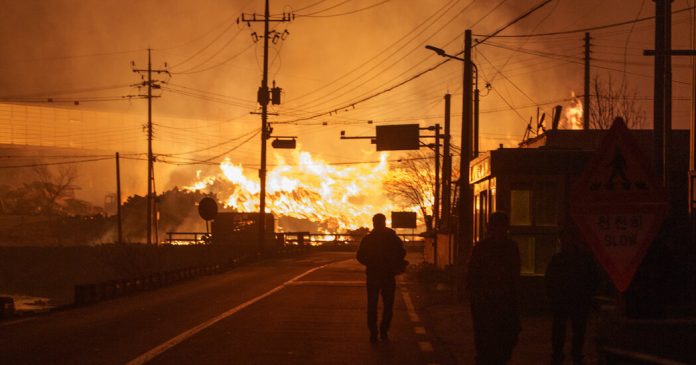
South Korean fire crews battled what the acting president said on Wednesday were some of the worst wildfires ever in the country. At least 18 people have died, according to the authorities, as strong winds and dry conditions helped fuel the fires.

Two ancient Buddhist temples were among the more than 200 buildings damaged or destroyed since the fires began on Friday. Tens of thousands of acres have been scorched in the country’s southeast, the government said, and more than 27,000 people evacuated, including around 500 inmates from a prison.

Eight fires were still burning on Wednesday morning, up from six on Monday.

In addition to the fatalities, at least 19 people were injured, six of them seriously, the Interior Ministry said on Wednesday. Many of those who died were in their 60s and 70s, a local police official said in a briefing. The government noted that 43,000 acres had been damaged.

The fires appeared to be “breaking the record for the worst wildfires ever,” said acting President Han Duck-soo, who just this week was reinstated after being impeached in December. In a statement, his office said the fires were spreading beyond initial predictions.

Among the people evacuated from their homes were residents of the 600-year-old Andong Hahoe folk village, a UNESCO World Heritage site more than 130 miles southeast of Seoul. Villagers described the blaze as “the devil” on social media and expressed frustration at the lack of success in putting it out.

Flames and smoke damaged 209 buildings across the region, according to the ministry statement, including two temples. Videos from local news stations showed the inferno surrounding and closing in on the temples, both more than 1,000 years old.

The Korea Heritage Service said on social media on Wednesday that some treasures from one, the Gounsa temple, including a stone Buddha statue, had been removed before the fire reached it.

Local officials closed off roads and suspended train services, and some places lost power.

The government said that firefighters had contained nearly 70 percent of the largest blaze in Euiseong County, west of the folk village. Their efforts were slowed by winds of 56 miles per hour starting Tuesday afternoon, which prevented them from mobilizing helicopters and drones.

The first blaze started on Friday afternoon in Sancheong County, around 160 miles southeast of the capital. The Interior Ministry said it was investigating claims that a farmer’s lawn mower had started that one.

Separate fires broke out in nearby counties and cities in the following days from episodes at a graveyard and at a garbage incinerator. Officials attributed the rapid spread of the fires to dry weather conditions.

The Justice Ministry said it had transferred around 500 inmates in North Gyeongsang Province overnight on Tuesday, according to Yonhap News.

New Trump action would require proof of citizenship for voter registration : NPR

0

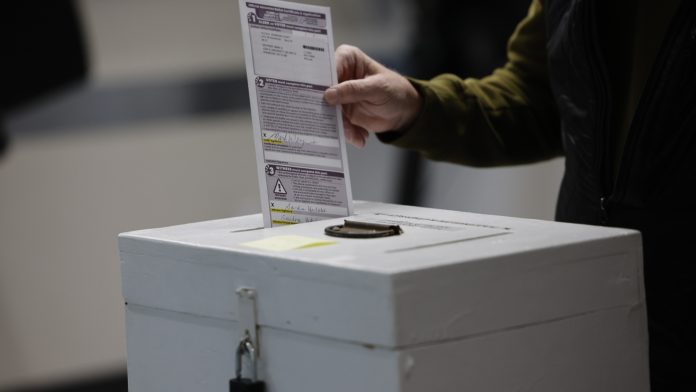
A man places his ballot in a box during early voting in Waukesha, Wis Tuesday, March 18, 2025.

Jeffrey Phelps/AP


hide caption

toggle caption

Jeffrey Phelps/AP

President Donald Trump has signed a new executive order that would require prospective voters to show proof of citizenship to register to vote. The order’s sweeping changes test the power of Trump’s presidential authority.

Voting rights advocates worry the new provisions could block millions of Americans from voting if enacted, and say Trump lacks the legal authority to make such changes.

The order claims the United States “fails to enforce basic and necessary election protections.”

The order calls for updating the federal form voters can use to register to vote, to include a requirement that voters show proof of citizenship, like a passport, to a local or state official.

States have long had considerable leeway in how they manage their elections. The federal government has been able to set some minimum standards for federal races, though typically via legislation.

The order also requires states to remove noncitizens from voter rolls, calls for states and federal agencies to share data to prosecute election crimes, and grants federal agencies, including to the head of the Department of Government Efficiency team, access to check state rolls “for consistency with Federal requirements.” It also directs federal agencies to share data with states, such as immigration and Social Security records, to facilitate states checking the eligibility of the names on their voter rolls.

Voting rights advocates, however, warn outdated databases can erroneously list naturalized citizens as noncitizens. Past efforts by states to purge noncitizens from voter rolls have sometimes swept up eligible U.S. citizens.

The executive order also seeks to stop states from counting mail or absentee ballots received after Election Day by withholding funding from states that allow such ballots to be counted.

Proof of citizenship requirement

Ahead of the 2024 election, Trump and his allies made baseless claims about the threat of noncitizens voting in large numbers.

The current federal voter registration form asks registrants to swear, under penalty of perjury, that they are U.S. citizens and eligible to vote. Those who attempt to vote illegally can face prison time, fines or deportation. Past audits and studies have shown such cases are incredibly rare. Most states require either a driver’s license or a state ID to register to vote.

Yet Republicans have made requiring documentary proof of citizenship a policy priority. The executive order borrows heavily from the Safeguard American Voter Eligibility Act, known as the SAVE Act, a Republican-backed bill. House Republicans have signaled that they intend to pass it in their chamber but it faces difficult odds in the Senate.

The executive order shows Trump isn’t waiting for Congress. But legal experts say that he does not have the authority through executive order to make such changes, and the order conflicts with existing federal voting law.

“It’s illegal at many different levels,” said Sean Morales-Doyle, the voting rights director at the Brennan Center for Justice, a nonprofit that studies and advocates for voting rights. The order directs the Election Assistance Commission, a small, independent bipartisan agency, to make various changes, including to the federal voter registration form, but Morales-Doyle said the president can’t tell that commission what to do.

The order is explicit that it applies to anyone who uses the federal voter registration form. What is less clear is if the order would also pressure states to require showing proof of citizenship with state registration forms, such as by withholding funds.

The order only lists a limited number of ways to prove U.S. citizenship. The options given are a U.S. passport, an ID that complies with the REAL ID Act that shows citizenship, or a military ID that shows citizenship. A fourth option is a valid government photo ID that “indicates that the applicant is a United States citizen or if such identification is otherwise accompanied by proof of United States citizenship,” but does not say if a birth certificate would count.

Morales-Doyle said the fact that birth certificates are not explicitly mentioned in the order as a way to prove citizenship are consistent with another Trump order that ends birthright citizenship.

Only about half of Americans have a U.S. passport, and only five states currently offer enhanced driver’s licenses that show proof of citizenship.

Why These Islanders Hunt Dolphins

0

The call of a conch shell roused the dolphin hunters from their beds. Under moonlight, the six men shuffled to the village church.

There a priest led them in a whispered prayer, his voice barely audible over the sound of crashing waves; the tide was high that day. Saltwater pooled in parts of the village, which is on Fanalei Island, an ever-shrinking speck of land that is part of the Solomon Islands in the South Pacific.

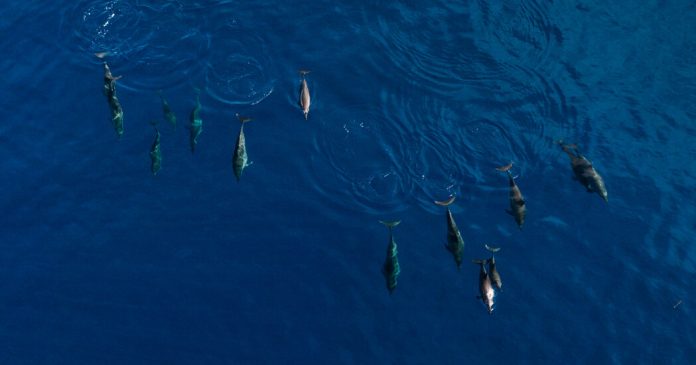
They paddled out in wooden canoes before first light, cutting through the darkness until they were miles away from shore. After hours of scanning the horizon, one of the hunters, Lesley Fugui, saw a fin slice the glassy water. He raised a 10-foot-long bamboo pole with a piece of cloth tied to the end, alerting the others of his discovery. Then he made a phone call to his wife. He had found dolphins. The hunt would begin.

These men are among the last dolphin hunters of Solomon Islands. Some conservationists say the slaughter is cruel and unnecessary. But for the 130 or so residents of Fanalei, the traditional hunt has taken on renewed urgency as climate change threatens their home. They say they need the dolphins for their lucrative teeth, which are used as local currency, to buy land on higher ground and escape their sinking home.

Each tooth fetches 3 Solomon Islands dollars (roughly $0.36) — a price set by the chiefs of Fanalei — and a single hunt of around 200 dolphins can bring in tens of thousands of dollars, more than any other economic activity on the island.

“We feel sorry, too, for killing the dolphins, but we don’t really have a choice,” Mr. Fugui said. He would be willing to abandon the hunts, he added, if there were an alternative way to secure his family’s future.

Crops can no longer be grown on Fanalei, which is about a third of the size of Central Park in New York City. The once fertile land has been ruined by encroaching saltwater. The government has promoted seaweed farming as a source of income, while overseas conservation groups have offered cash to end the hunts. But the ocean remains both an existential threat and the villagers’ most profitable resource. Government research suggests the island could be underwater by the end of the century.

“For a low-lying island like ours, we witness with our own eyes how sea rise is affecting our lives,” said Wilson Filei, the head chief of Fanalei.

Over time, dolphin teeth have allowed the villagers to pay for a new church, a sea wall and an extension to the local primary school.

During the hunting season, which runs from January through April, people here can kill up to a thousand dolphins, but the hunters say that the weather is becoming increasingly unpredictable, making it harder for them to locate and trap a pod.

While dolphin meat is eaten and bartered with neighboring islands for food, betel nuts and other products, the teeth are the true prize of the hunt. They are used for cultural activities, and families of prospective grooms buy them by the hundreds to give to a woman during a traditional bride price ceremony.

In recent years, most villagers have fled to a neighboring island. They continue to hunt dolphins from there, saying they need to buy more land to house those left behind and support their growing population.

Dolphin hunting is a community affair in Fanalei. When Mr. Fugui raised his flag that morning, he set off a cacophony of delight. Children climbed trees to watch the hunters and cheered “kirio” — dolphin in the local Lau language — so that every resident would know that the hunt had started. Men in canoes hanging close to shore broke through the waves into the open ocean to help the hunters form a semicircle around the dolphins and corral them to land.

The teeth, once collected, are shared among every family according to a strict tier system: The hunters get the largest share (“first prize”); married men who didn’t participate get the next largest portion; and the remaining teeth are divided among widows, orphans and other households without a male representative.

Village leaders also set aside a portion of the teeth in what they call a “community basket” for major works. One day, they hope this will include the purchase of land to expand a resettlement village on the larger South Malaita Island.

These shares have been an important safety net to residents like Eddie Sua and his family. Mr. Sua was once a skilled fisherman and dolphin hunter who became mysteriously paralyzed from the neck down two years ago, and he has been bedridden ever since. These days, during high tide, his home floods.

“We have to be scared of these floods, because that’s what will make us act to save our lives,” he said, watching the saltwater lick at the sides of his bed.

Dolphin hunting is very good or “good tumas,” Mr. Sua’s wife, Florence Bobo, said in the local pijin language, especially now that her husband is unable to support the family like he once did. They both hope to eventually have enough money to relocate off the island.

“If we didn’t have dolphin teeth, we’d have no other choice but to eat rocks,” Mr. Sua joked.

But a successful hunt is never a certainty. After spotting the dolphins, Mr. Fugui and the other hunters started beating fist-size rocks under the water to drive the pod toward the shore. But a trawler passed behind them, the roar of its engine drowning out the dull thuds of their rocks. The dolphins scattered and the men returned empty-handed.

Halfway through this year’s season, there was only one successful hunt in Solomon Islands, where a village near Fanalei killed over 300 dolphins.

Experts say it’s unclear whether dolphin hunting is sustainable. Rochelle Constantine, a marine biologist who teaches at the University of Auckland, and Kabini Afia, a climate and environmental researcher from the Solomon Islands, said that some of the more commonly hunted species appear to have healthy populations. But the effects of the hunt are still unclear on more coastal and smaller dolphins.

For the people of Fanalei, the more pressing question isn’t the future of the dolphins — it’s their own survival in the face of rising seas.

“Dolphin hunting may be our identity,” Mr. Fugui said, “but our lives and the lives of our children — that’s what’s important.”

Mike Huckabee’s Senate confirmation hearing begins amid controversy and protests : NPR

0

The Senate confirmation hearing for Mike Huckabee, President Trump’s pick for ambassador to Israel, is being held Tuesday after it was delayed by controversy over his appointment.


JUANA SUMMERS, HOST:

As Israel’s war against Hamas in Gaza heats up again, President Trump’s pick to be U.S. ambassador to Israel faced tough questions on Capitol Hill. Mike Huckabee is a Baptist minister and former governor of Arkansas who has a long history with Israel, as NPR’s Michele Kelemen reports.

(SOUNDBITE OF ARCHIVED RECORDING)

MIKE HUCKABEE: Thank you very, very much for giving me the privilege of coming to…

UNIDENTIFIED PROTESTOR #1: (Screaming).

UNIDENTIFIED PROTESTOR #2: I am a proud American Jew.

MICHELE KELEMEN, BYLINE: The protest began just as Mike Huckabee started his opening remarks.

(SOUNDBITE OF ARCHIVED RECORDING)

UNIDENTIFIED PROTESTOR #1: Let Gaza live…

UNIDENTIFIED PROTESTOR #2: Jews say no to Huckabee.

UNIDENTIFIED PROTESTOR #1: Jews say no.

UNIDENTIFIED PROTESTOR #2: Jews say no to war.

KELEMEN: The former Arkansas governor smiled through the repeated protests and talked about his deep ties to Israel. He says he first went there 52 years ago, and in recent decades, he’s led over a hundred religious tours, adding that many American churches have connections to Israel.

(SOUNDBITE OF ARCHIVED RECORDING)

HUCKABEE: We ultimately are people of the book. We believe the Bible. And therefore, that connection is not geopolitical. It is also spiritual.

KELEMEN: Huckabee often uses biblical terms when talking about Israel, referring to the occupied Palestinian West Bank as Judea and Samaria and supporting the right-wing Israeli efforts to annex land that Palestinians want as their future state. Senator Jeff Merkley, an Oregon Democrat, pressed him on that.

(SOUNDBITE OF ARCHIVED RECORDING)

JEFF MERKLEY: Have you previously supported the idea of annexation of the West Bank?

HUCKABEE: I have previously supported it. Yes, sir…

MERKLEY: Thank you.

HUCKABEE: …Judea and Samaria. But it would not be my prerogative to make that the policy of the president.

MERKLEY: Yeah. Do you support the annexation of Gaza as well?

HUCKABEE: Senator, once again, it would be the prerogative of the president.

KELEMEN: Maryland Democrat Chris Van Hollen called Huckabee a big hero of the Israeli settler movement, while Nevada Senator Jacky Rosen pressed him on whether the U.S. should continue to support the idea of two states for two people, Israelis and Palestinians. Huckabee says Israel is a tiny country, while Muslim countries control much more land.

(SOUNDBITE OF ARCHIVED RECORDING)

HUCKABEE: I think the question is not, is there a need for people who are Palestinian to be able to live and have a future? The question is, where and when? Where will that be? Will it be on top of the Israeli Jewish state?

KELEMEN: Or somewhere else, he wondered. On Gaza, Huckabee says President Trump does not want to force Palestinians to leave, but he thinks it would be better if they do so that the territory can be rebuilt after the war ends. He says Hamas has no future there.

Michele Kelemen, NPR News, the State Department.

Copyright © 2025 NPR. All rights reserved. Visit our website terms of use and permissions pages at www.npr.org for further information.

NPR transcripts are created on a rush deadline by an NPR contractor. This text may not be in its final form and may be updated or revised in the future. Accuracy and availability may vary. The authoritative record of NPR’s programming is the audio record.


At This Clinic in Hawaii, Nature Is the Medicine

0

50 States, 50 Fixes

The air is filled with birdsong, the land a tableau of soft greens and gentle light. This is Ho‘oulu ‘Āina, a 100-acre preserve with an unusual twist. Linked to a community health center, it is a place where patients come to heal the land, and themselves.

As climate change accelerates and the Trump administration abandons the fight, Ho‘oulu ‘Āina is one example of how people in all 50 states, red and blue, are working to restore land, clean up waterways, cut pollution and protect wildlife.


50 States, 50 Fixes is a series about local solutions to environmental problems. More to come this year.


Twenty years ago, Ho‘oulu ‘Āina was neglected, overrun with garbage and invasive plants. But today, it’s thriving.

And the volunteers and patients who spend long hours there, removing nonnative plants and growing vegetables, fruit and herbs, have experienced a restoration of body and soul.

There is growing research that shows how spending time in nature can improve mental, physical and cognitive health, something that the stewards of Ho‘oulu ‘Āina have seen firsthand.

Older people once dependent on canes and walkers have regained some mobility. Diabetics have seen their glucose levels drop. Depressed teens have grown bright-eyed. In Hawaiian, the name Ho‘oulu ‘Āina means “to grow because of the land,” and they have.

“Many people within the health center saw the land as a means to improve human health, sort of a tool,” said Puni Jackson, the program director at Ho‘oulu ‘Āina. But for Native Hawaiians and Pacific Islanders, who make up a majority of patients at the clinic, the connection to nature is familial and profound, Ms. Jackson said. “It’s a sacred relationship,” she said.

Ho‘oulu ‘Āina is a 10-minute drive from the clinic, off a thicketed road, over a wooden bridge and up a steep dirt driveway that leads to grassy fields bordered by forest. The land has breadfruit, koa and banana trees, medicinal plants and taro, organic gardens, low-slung buildings, and a tiny apothecary where Ms. Jackson, who is also a native Hawaiian medicine practitioner, sees patients.

Democratic Senator Mark Warner reacts to leak of military strike information : NPR

0

NPR’s Ailsa Chang speaks to Sen. Mark Warner of Virginia about questioning top Intelligence officials today on Capitol Hill about war plans being leaked in a group chat with a journalist.


AILSA CHANG, HOST:

Today, senators grilled top U.S. intelligence officials on Capitol Hill. This, after The Atlantic reported that the magazine’s top editor was added to a group chat on the widely available messaging app Signal, where top national security officials for the Trump administration were sharing details about military plans to bomb Yemen. We should note that NPR’s CEO Katherine Maher is chair of the board of Signal Foundation, which runs the Signal messaging app. At the Senate hearing today, here is what Georgia Democrat Jon Ossoff said.

(SOUNDBITE OF ARCHIVED RECORDING)

JON OSSOFF: This is utterly unprofessional. There’s been no apology. There has been no recognition of the gravity of this error.

CHANG: The top Democrat on the Senate Intelligence Committee, Mark Warner of Virginia, slammed the incident as mind-boggling. Senator Warner joins us now. Welcome.

MARK WARNER: Thank you so much.

CHANG: OK, so you and your fellow Democrats, as expected, had pretty sharp words today for the director of National Intelligence, Tulsi Gabbard, and John Ratcliffe, head of the CIA. Notably, none of your Republican colleagues seemed intent on focusing at all on this whole Signal episode. Do you have a sense of whether any of those Republicans share your concerns?

WARNER: I think they do, and I think it was extraordinarily telling that none of my Republican colleagues came to these folks’ defense. Let’s – if anybody hasn’t heard, let’s just review very quickly. You know, there was a – Signal is a good encrypted application, but it is not a classified means of transmitting information. Matter of fact…

CHANG: Right.

WARNER: …We have evidence that Russia and China have tried to break into Signal-based systems. Two, you’ve got this senior level of individuals communicating on this nonclassified channel and, plain sloppiness, put a journalist on. And nobody bothered to check, who’s this other person on the line?

CHANG: But I ask you…

WARNER: Now…

CHANG: …If none of your Republican colleagues are willing to speak out against what happened, without their support and seeking accountability, are we going to see any accountability?

WARNER: Well, I think we will. Listen, I think we’re going to…

CHANG: Yeah.

WARNER: …See this – the full text. I think the journalist is thinking about releasing it. And if they said – Gabbard said today, there’s nothing classified. Well, if there’s nothing classified, there’s no reason why it shouldn’t be released.

CHANG: Right.

WARNER: Matter of fact, though…

CHANG: You said, OK.

WARNER: …She refused…

CHANG: Share it with the committee.

WARNER: She refused to acknowledge whether…

CHANG: At first.

WARNER: …She was using her phone, a government phone. But just, Ailsa, step back for a moment. Even with what we know right now, we have the vice president of the United States disagreeing with others about an imminent bombing. Having that information, if it had gone out ahead of time, I can tell you that Russia and China, Iran – that’s what their spies would love to have. That very information alone, in any traditional way, would be viewed as classified and not supposed to be disclosed.

CHANG: Let’s talk about the classified nature or nonclassified nature of the information, because you’re right. Gabbard said that there was no classified material shared on that chat. But if Jeffrey Goldberg’s reporting is correct, that text thread included the name of a CIA officer and information about targets, weapons the U.S. would be deploying, attack sequencing. Are there any conceivable circumstances where none of that information would be classified? You tell me.

WARNER: There was no conceivable circumstance. And let me acknowledge we overclassify in this country, but they shouldn’t be changing the rules. And the hypocrisy here of the director of National Intelligence, who literally 11 days ago tweeted out, like, we’re going to go after every leaker, and anybody that leaks, we’re going to pursue to the full extent of the law. And then to be so cavalier and treat this information – ’cause if it had gotten out, Americans could have died in terms of the Houthis being able to reconfigure or redirect their defensive capabilities. This is kind of security 101. If this had been a military officer or a CIA case officer, they would be fired with this kind of behavior, without question.

CHANG: If it turns out that Jeffrey Goldberg and The Atlantic decide not to release further content of what Goldberg saw on that group chat, you did ask Gabbard today – you said, well, if nothing’s classified, then share the contents with the committee. How do you proceed at that point if you want to see those contents that are apparently nonclassified? – according to her.

WARNER: One of the things I’ve loved about the Intelligence Committee – I was chair under the last administration, I’m vice chair now – is that we have a tendency of almost always being bipartisan. I absolutely believe if the administration tries to stonewall this, we will have bipartisan support. For us, as the Intelligence Committee, the Oversight Committee that’s supposed to be making sure things are appropriate, will get a look at this transcript.

CHANG: But let me ask you this. If she is…

WARNER: And just – let me just add…

CHANG: …Open…

WARNER: …One quick thing.

CHANG: Yes.

WARNER: Can I just add…

CHANG: Yes.

WARNER: …One last quick thing here on this? If this was the first time it would still be awful, but it wouldn’t be as awful as it is right now. This is the same administration that, a couple weeks in, inadvertently released the names of 200 CIA new agents, many of those who now can’t be deployed. And this is the administration that Elon Musk and his so-called DOGE boys released classified information almost on a daily basis.

CHANG: All right, well, we are now…

WARNER: Not the first time.

CHANG: …Out of time. Thank you so much. That is Senator Mark Warner of Virginia, the top Democrat on the Senate Intelligence Committee. It was good to talk to you.

WARNER: Thank you so much.

Copyright © 2025 NPR. All rights reserved. Visit our website terms of use and permissions pages at www.npr.org for further information.

NPR transcripts are created on a rush deadline by an NPR contractor. This text may not be in its final form and may be updated or revised in the future. Accuracy and availability may vary. The authoritative record of NPR’s programming is the audio record.
Art Expert Accused of Duping Prince and Palace of Versailles Stands Trial

0

Bill Pallot had an unparalleled passion for 18th-century French chairs that he turned into a lucrative career consulting with museums, galleries, collectors and the Palace of Versailles.

He became a fixture in Parisian society and a celebrity in the art world, until he was felled by a former student who had become so steeped in antiques that he could — literally — taste a fake.

At the height of his powers, Mr. Pallot’s expertise and assurances of authenticity had helped convince French experts to designate multiple items as national treasures. He also used his renown to dupe deep-pocketed buyers, including Prince Abdullah bin Khalifa Al-Thani of Qatar, into believing they were purchasing genuine pieces of royal history.

He attested to the authenticity of seating said to have belonged to Marie Antoinette and to the mistress of Louis XV, Madame du Barry.

People believed so fully in Mr. Pallot because almost 40 years ago he wrote what was long considered the book on the topic: “The Art of the Chair in 18th Century France,” which includes a preface by his friend, the antique enthusiast and fashion designer Karl Lagerfeld.

Now, Mr. Pallot is perhaps best known for using his knowledge of art history to hoodwink some of the most esteemed antique experts and buyers.

On Tuesday, after years of investigations by the French police, Mr. Pallot and five others said to be involved in a scheme to unload fakes onto unsuspecting buyers attended the first day of a criminal trial in Pontoise, near Paris, where they stand accused of trafficking in counterfeit antique furniture.

In 2016, the French culture ministry issued a statement saying that the police were investigating the authenticity of pieces of furniture valued at 2.7 million euros (about $2.9 million), including two Louis XV chairs, purchased by the Palace of Versailles. That inquiry led to the conclusion they were not authentic and to the arrest of Mr. Pallot the same year. In 2017, the scandal also changed how the French authorities authenticated antiques.

But doubts about Mr. Pallot had begun to surface years before, most notably for his fellow antique dealer and former student, Charles Hooreman, who shared his concerns with Mr. Pallot, as well as with buyers and the French authorities.

In 2018, Mr. Hooreman told Vanity Fair that he had considered Mr. Pallot his “hero” after attending his art history lectures at the Sorbonne. He later entered the same profession as his teacher, but he became suspicious of his mentor based on conversations with a buyer and about the quantity of antiques surfacing.

As far back as 2012, Mr. Hooreman said he had seen two folding benches that were being touted as having belonged to Princess Louise Élisabeth, the eldest daughter of King Louis XV. He felt compelled to test them.

“I licked the chair and voilà. I could taste the fraud,” he told Vanity Fair.

Familiar with the methods used by master craftsmen for restoration, he recognized a trick used by a woodworker whom Mr. Pallot favored, Bruno Desnoues. Mr. Desnoues used melted licorice to give new wood an old feel.

Mr. Desnoues is also on trial now and has admitted his role in the scheme. Mr. Pallot himself has widely admitted complicity but denies there are as many fakes as Mr. Hooreman has claimed.

An investigative judge in France noted in a previous proceeding that a smiling Mr. Pallot had told the court about the origins of the deception: He and Mr. Desnoues had become curious about whether they could make a good fake one day while the craftsman was restoring authentic antiques, according to Le Monde.

Consider This from NPR : NPR

0

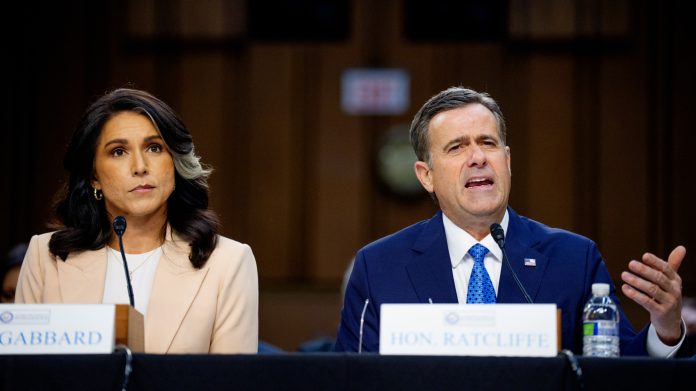
CIA Director John Ratcliffe and Director of National Intelligence Tulsi Gabbard answered questions from senators about the national security fiasco involving a group chat in the encrypted messaging app Signal.

Andrew Harnik/Getty Images


hide caption

toggle caption

Andrew Harnik/Getty Images


CIA Director John Ratcliffe and Director of National Intelligence Tulsi Gabbard answered questions from senators about the national security fiasco involving a group chat in the encrypted messaging app Signal.

Andrew Harnik/Getty Images

In the 24 hours since a bombshell Atlantic article, senators have grilled Trump administration intelligence officials — but there are no signs yet that anyone involved will face any repercussions. The article, by Jeffrey Goldberg, details how he was inadvertently added to a chat on Signal, the encrypted messaging app, where key administration figures were planning a U.S. bombing operation in Yemen.

NPR’s Ryan Lucas followed a Senate Intelligence Committee hearing, where CIA Director John Ratcliffe and the director of national intelligence, Tulsi Gabbard testified that no classified information was discussed in the chat group. Democrats challenged that assertion.

And Willem Marx reports on reaction in European capitals. The Atlantic article included disparaging comments about European allies from Vice President J.D. Vance and Defense Secretary Pete Hegseth.

For sponsor-free episodes of Consider This, sign up for Consider This+ via Apple Podcasts or at plus.npr.org.

Email us at [email protected].

This episode was produced by Connor Donevan, Mia Venkat and Michelle Aslam. It was edited by Christopher Intagliata, Anna Yukhananov and Nick Spicer. Our executive producer is Sami Yenigun.

They’re in Hot Water in Idaho. Here’s Why That’s a Good Thing.

0

50 States, 50 Fixes

Nearly 500 buildings in the state capital get their heat from a clean, renewable source located deep in the ground.

It’s pretty easy to get into hot water in Boise. After all, it’s in Idaho, a state filled with hundreds of hot springs.

The city has tapped into that naturally hot water to create the largest municipally run geothermal system in the country.

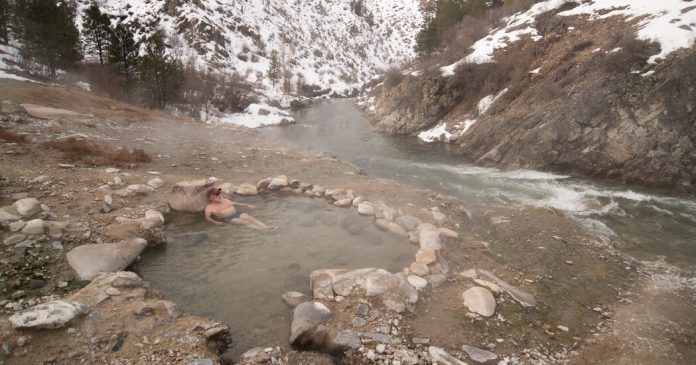
Nearly 500 Boise businesses, government buildings and homes — as well as hospital and university buildings, City Hall and a Y.M.C.A. — are warmed by heat drawn directly from hot water reservoirs, or aquifers, below ground. The Idaho Statehouse, in Boise, is the only one in the United States to use geothermal heat. The heat even warms some sidewalks in the winter, to melt the snow, and raises the temperature in hot tubs.


50 States, 50 Fixes is a series about local solutions to environmental problems. More to come this year.


Renewable, reliable and relatively free of pollution, geothermal heating is possible in Boise because of fault lines that expose groundwater to hot rocks, heating water to around 170 degrees Fahrenheit, or about 77 degrees Celsius. The water is drawn from wells in nearby foothills into a closed-loop network of pipes that reach into buildings, before going back to the aquifer to be heated again.

In each building, the geothermal heat is transferred to water in separate adjoining pipes, which distribute the heat throughout the building.

“We pump the water up, we borrow the heat for buildings, and then we put it right back in the aquifer again,” said Tina Riley, Boise’s geothermal development coordinator.

The number of buildings the city of Boise heats this way has grown more than sixfold in the last 40 years, with more growth on the way. One result of the expansion is cleaner air. In 2024, city officials calculated that geothermal heat had resulted in 6,500 fewer metric tons of carbon dioxide emissions annually, the equivalent of removing 1,500 cars from the road each year.

“There is a lot of demand for clean, affordable, local energy,” Ms. Riley said. “There’s a degree of energy independence that comes with this as well.”

Boiseans began using this natural resource to heat buildings in the 1890s, after drilling wells into aquifers that yielded hundreds of thousands of gallons of piping hot water a day. The water heated pools and baths at the local swimming pool, a Victorian mansion belonging to the head of the water company and, eventually, hundreds of homes in an area that was christened the Boise Warm Springs Water District.

Things might’ve ended there were it not for the oil crisis in the 1970s, which prompted officials to seek a more affordable form of energy.

“At that point in time, the Boise Warm Springs District had been thriving for almost 100 years,” Ms. Riley said. “So that’s what we looked at to then say, ‘Let’s do the same thing.’”

Today, there are four separately run geothermal water systems in Boise: one run by the city, another by the Boise Warm Springs District and two more that serve the Capitol and U.S. Department of Veterans Affairs buildings.

The city’s system is operated as a utility, funded by the sale of water rather than by taxpayers. Ms. Riley said the price of the heat was roughly comparable to that of natural gas, depending on the efficiency of buildings, but cost less when used in tandem with heat pumps.

Over in the Boise Warm Springs Water District, Scott Lewis, a technician, said that geothermal heat was especially cost-effective for warming old Victorian homes that hadn’t been weatherized.

It all amounts to less stress on the power grid because it uses minimal electricity, he said. It costs the district $1,800 a month to power the water pumps that provide heat to more than one million square feet of space. Expansion of the geothermal networks has been limited by what the aquifer can provide, but Mr. Lewis said the district was looking to add another 30 homes to the network to help meet demand.

“It is actually very desired, especially around this area,” he said. “We find a lot of people are really environmentally conscious around here.”

The heating system has even made Boise a destination, drawing visitors from Iceland, Croatia and Australia.

“We’ve had people from all over the world,” Mr. Lewis said. “We love just letting everybody know about our little geothermal system that we have here.”

Vice President Vance is going to Greenland this week : NPR

0

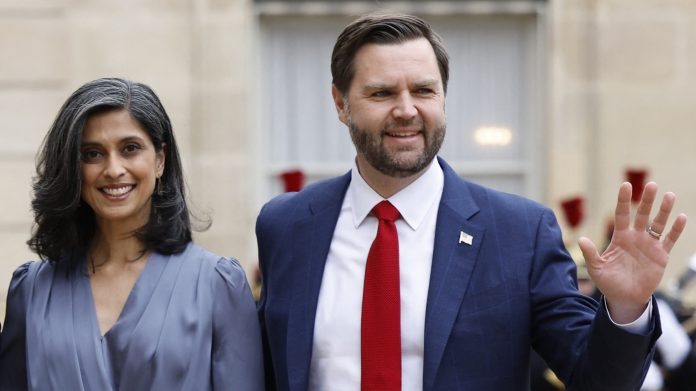
Vice President JD Vance and second lady Usha Vance as seen at the Elysee Palace, in Paris, on Feb. 11, 2025.

Ian Langsdon/AFP


hide caption

toggle caption

Ian Langsdon/AFP

Vice President JD Vance said on Tuesday that he would join his wife, second lady Usha Vance, on a trip to Greenland this week after an earlier announcement of her plans for a cultural visit to the Danish territory received an icy reception.

The trip comes as President Trump has continued to muse about the United States annexing Greenland, a territory controlled by Denmark. Greenland and Denmark have both repeatedly emphasized that Greenland is not for sale.

The Vances will visit U.S. service members at the Pituffik Space Base on Friday and receive a briefing on Arctic security issues, according to the White House.

Vance said in a video posted on social media that he wanted to “just check out what’s going on with the security there.”

“A lot of other countries have threatened Greenland, have threatened to use its territories and its waterways to threaten the United States, to threaten Canada, and of course, to threaten the people of Greenland, so we’re going to check out how things are going there,” Vance said.

Homes in Nuuk, Greenland, as seen on March 24, 2025. Greenland's Prime Minister Mute Egede accused Washington of interfering in its affairs after second lady Usha Vance and other U.S. officials said they would visit the Danish territory.

Homes in Nuuk, Greenland, as seen on March 24, 2025. Greenland’s Prime Minister Mute Egede accused Washington of interfering in its affairs after second lady Usha Vance and other U.S. officials said they would visit the Danish territory.

Juliette Pavy/AFP


hide caption

toggle caption

Juliette Pavy/AFP

The original itinerary involved a dogsled race

The renewed attention on Greenland kicked off on Sunday. Usha Vance announced that she and one of her young sons would visit Greenland to see cultural and historical sites, and attend the national dogsled race — and the White House had said that national security adviser Mike Waltz would visit a U.S. military base on the island.

Usha Vance had received “multiple invitations” to attend the dogsled race — and the head of a dogsledding association had asked her to wave the flag to open the race, her communications director Nikki Reeves said, citing conversations between the U.S. consulate and event organizers.

But other Greenlandic leaders had expressed concerns. The territory’s Prime Minister Mute Egede said in a Facebook post that there would be no meetings between U.S. officials and government officials in Greenland during the visit.

At a cabinet meeting Monday, Trump rejected the notion that the planned visits were in any way confrontational.

“This is friendliness, not provocation. We’re dealing with a lot of people from Greenland that would like to see something happen with respect to them being properly protected and properly taken care of. They’re calling us. We’re not calling them,” Trump said on Monday.

Vance office chides Denmark and past U.S. leaders for ‘neglect and inaction’

The vice president’s office said in a statement on Tuesday that Trump is “rightly changing course” on the security of Greenland — and criticized Denmark and previous U.S. presidents for not paying more attention.

“The strategic partnership between the United States and Greenland has long played a vital role in our national and economic security. During World War Two, the United States established over a dozen military bases in Greenland to defend the North Atlantic from Nazi incursion. During the Cold War, the United States committed additional resources to Greenland to defend against Soviet missile attacks,” the statement said.

“In the decades since, neglect and inaction from Danish leaders and past U.S. administrations have presented our adversaries with the opportunity to advance their own priorities in Greenland and the Arctic.”