Thursday, November 12, 2026
Home Blog Page 88

Living Car-Free in Arizona, on Purpose and Happily

0

Last year, when Andre Rouhani and Gabriela Reyes toured Culdesac Tempe, a rental development outside of Phoenix, the place looked pretty sweet. It had winsome walkways, boutique shops and low-slung white stucco buildings clustered around shaded courtyards.

The only surprise came when Mr. Rouhani, 33, a doctoral student at Arizona State University, asked about resident parking and was told there was none.

The couple had two dogs, a toddler and another baby on the way. “Long story short, we decided that all the pros outweigh the cons,” Mr. Rouhani said in a recent phone interview. The family gave its car to Ms. Reyes’ father and moved into Culdesac in December. “We do really, really love it here,” Mr. Rouhani said. “It’s the best place I’ve ever lived.”


50 States, 50 Fixes is a series about local solutions to environmental problems. More to come this year.


Modeled on towns in Italy and Greece built long before the advent of cars, Culdesac Tempe is what its developers call the country’s first neighborhood purposely built to be car free.

Ryan Johnson, the Culdesac chief executive, said he wanted offer a blueprint for living in a walkable place, even in a state that’s car-centric and often broiling.

“It’s one of the best things we can do for climate, health, happiness, low cost of living, even low cost of government,” said Mr. Johnson, who lives at Culdesac, too. “It’s also a better lifestyle. We all become the worst versions of ourselves behind the wheel.”

While there’s a short-term parking lot for deliveries, retailers and guests, Culdesac residents are expected to get around by the nearby light rail system, as well as on buses, scooters, electric bikes and by using ride shares. There are 22 retail shops, several of them live-work spaces, and a small Korean market. So far, 288 apartment units have been built on eight of the site’s 17 acres with another 450 units planned.

There are other car-free places in the United States, mostly island getaways where people walk, bike or tool around on golf carts. But zoning requirements in most cities usually require new developments to provide residents with a minimum number of parking spots, including in the Phoenix area, a paragon of urban sprawl. Culdesac Tempe’s developers were given a special exemption from parking requirements by the City of Tempe.

“This is completely different than our modern, conventional approach to development,” said Edward Erfurt, chief technical adviser at Strong Towns, a North American nonprofit group that promotes community resilience. “We’ve just had this experiment for the last eight decades where we’ve opted to prioritize an isolated transportation system versus our natural way of working together as humans.”

Culdesac Tempe broke that mold, Mr. Erfurt said, adding, “This is a very big deal.”

Culdesac’s two- and three-story buildings are designed for the desert climate, painted bright white to reflect heat. Not having to factor in residential parking allowed its architects to configure buildings to maximize shade and to design narrow pathways that encouraged breezes and social engagement.

“The pedestrian is really the primary person, the figure that you’re developing for,” said Alexandra Vondeling, the lead architect on the project. Big expanses of glass were eschewed, awnings added over sun-facing windows, and native plants and trees put in for cooling shade. There’s a wide walkway that can accommodate emergency vehicles, but no asphalt, reducing the urban heat island effect and improving conditions for the dogs that live there, too.

The apartments range from studios to three bedroom units, renting from between $1,300 to $2,800 a month, which Mr. Johnson said were market rates. Nearly 90 percent are leased.

Some residents were drawn to Culdesac because of its car-free mission, others in spite of it. There’s a contingent, size unknown, that quietly still owns cars, just parked off-site.

Sheryl Murdock, 50, a postdoctoral researcher who lives in Canada, is renting a unit because she is frequently in Tempe for work and wanted to balance the carbon emissions from all that flying.

Ashley Weiland and her husband moved in with their young child to give up the expense of having a car and ended up getting jobs at Culdesac, she at a restaurant there and he in maintenance.

Electra Hug, 24, who works for the city of Tempe and is blind, wanted to be close to public transit and have a sense of community. It’s the first time she’s lived without the assistance of family and friends. “In order to have a good time or have fun, I do not have to cross the street,” Ms. Hug said. “It’s just super unique and really just homey.”

Mr. Rouhani and Ms. Reyes borrow her father’s car once a week for errands. Otherwise they mostly ride public transit with free passes provided by Culdesac.

Living in a place where people are not running from where people are not zipping about in their cars means the pace is slower, with more opportunity for connection, Mr. Rouhani said. It is the kind of community, he said, where neighbors borrow a cup of sugar from each other. In the days after their daughter was born, three different families either brought a meal, dropped off cookies, or offered to go buy them groceries. “We really feel supported and loved here,” he said.

David King, who teaches urban planning at Arizona State University, said Culdesac Tempe could prompt other developers to push for exemptions from parking requirements. And Mr. Erfurt of Strong Towns said Culdesac Tempe could pave the way, as it were, for similar car-free developments to be built in places like shuttered strip malls, which could address the affordable housing crisis, lessen loneliness and bring people closer to where they work.

“We could do all that simply by decoupling parking from development,” Mr. Erfurt said. “In every market, people are looking for that.”

Virginia senator Mark Warner reacts to Signal group chat fiasco : NPR

0

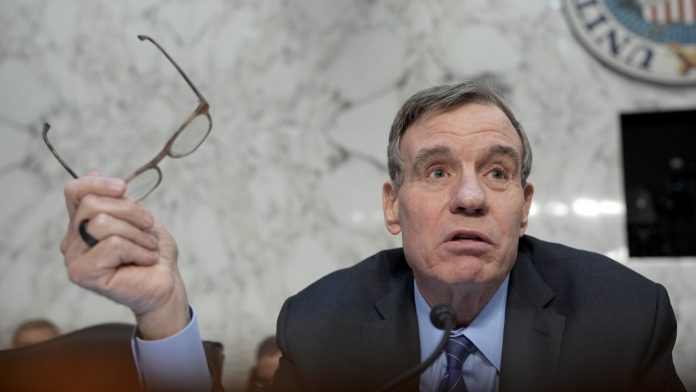
Sen. Mark Warner (D-VA) addresses the nation’s top intelligence officials as they appear during a Senate Intelligence Committee hearing on Tuesday.

Andrew Harnik/Getty Images


hide caption

toggle caption

Andrew Harnik/Getty Images

During a heated Senate hearing Tuesday, Democrats on the Senate Intelligence Committee grilled the nation’s top security officials about their participation in a Signal group chat and accidentally discussing war plans with a journalist.

Among the senators reprimanding members of the Trump administration was ranking member Sen. Mark Warner, a Democrat from Virginia, who slammed the incident as “mind-boggling.”

“You’ve got this senior level of individuals communicating on this non-classified channel and plain sloppiness put a journalist on and nobody bothered to check who’s this other person on the line,” Warner told All Things Considered‘s Ailsa Chang.

The hearing, previously scheduled, came a day after Jeffrey Goldberg, the editor-in-chief of The Atlantic, revealed he was mistakenly added to a group chat where the nation’s top security officials discussed highly sensitive plans to bomb Houthi targets in Yemen.

Goldberg told NPR that he was not vetted before being added to the chat.

“It was a chilling thing to realize that I’ve inadvertently discovered a massive security breach in the national security system of the United States,” he said in an interview with All Things Considered.

Speaking to reporters after the Senate hearing, President Trump downplayed the massive security breach. “There was no classified information, as I understand it,” Trump said, adding that many people in the government use Signal.

U.S. National Security Adviser Michael Waltz (L) and Deputy White House Chief of Staff for Policy Stephen Miller (R) look on as U.S. Pres. Donald Trump speaks with reporters after signing two executive orders in the Oval Office of the White House on Feb. 04, 2025.

U.S. National Security Adviser Michael Waltz (L) and Deputy White House Chief of Staff for Policy Stephen Miller (R) look on as U.S. Pres. Donald Trump speaks with reporters after signing two executive orders in the Oval Office of the White House on Feb. 04, 2025. (Photo by Anna Moneymaker/Getty Images)

Anna Moneymaker/Getty Images


hide caption

toggle caption

Anna Moneymaker/Getty Images

NPR recently learned that a Pentagon-wide advisory went out last week warning against using the app, even for unclassified information, saying “a vulnerability has been identified.”

During the Senate hearing, Warner described the actions of the nation’s top intelligence officials as “sloppy, careless, incompetent behavior.”

“If this was the case of a military officer or an intelligence officer and they had this kind of behavior, they would be fired,” he said.

This interview has been lightly edited for length and clarity.

Interview highlights

Ailsa Chang: You and your fellow Democrats, as expected, had pretty sharp words today for the Director of National Intelligence, Tulsi Gabbard, and John Ratcliffe, head of the CIA. Notably, none of your Republican colleagues seemed intent on focusing at all on this whole Signal episode. Do you have a sense of whether any of those Republicans share your concerns?

Mark Warner: I think they do. And I think it was extraordinarily telling that none of my Republican colleagues came to these folks’ defense. If anybody hasn’t heard, let’s just review very quickly there was a Signal — a good encrypted application, but it is not a classified means of transmitting information. Matter of fact, we have evidence that Russia and China try to break into Signal-based systems. Two, you’ve got this senior level of individuals communicating on this non-classified channel and plain sloppiness put a journalist on and nobody bothered to check who’s this other person on the line.

Chang: But I ask you, if none of your Republican colleagues are willing to speak out against what happened without their support in seeking accountability, are we going to see any accountability?

Warner: Well, I think we will. Listen, I think we’re going to see this, the full text. I think the journalist is thinking about releasing it. Gabbard said today, there’s nothing classified. [If] there’s nothing classified, there’s no reason why it shouldn’t be released.

Chang: Right, you said OK, “Share it with the committee.”

Warner: She refused to acknowledge…

Chang: At first.

Warner: … whether she was using her phone or a government phone, but Ailsa step back for a moment — even with what we know right now, we have the vice president disagreeing with others about an imminent bombing — having that information, if it had gone out ahead of time, I can tell you that Russia and China, Iran, that’s what their spies would love to have. That very information alone in any traditional way would be viewed as classified and not supposed to be disclosed.

Chang: Let’s talk about the classified nature or non-classified nature of the information, because you’re right, Gabbard said that there was no classified material shared on that chat. But if Jeffrey Goldberg’s reporting is correct, that text thread included the name of a CIA officer and information about targets, weapons the U.S. would be deploying, attacks sequencing. Are there any conceivable circumstances where none of that information would be classified? You tell me.

Warner: There was no conceivable circumstance. And let me acknowledge we over classify in this country, but they shouldn’t be changing the rules. And the hypocrisy here of the director of national intelligence, who literally 11 days ago tweeted out, like, we’re going to go after every leaker and anybody that leaks, we’re going to pursue to the full extent of the law and then to be so cavalier and treat this information because if it’d gotten out, Americans could have died in terms of the Houthis being able to reconfigure or redirect their defensive capabilities. This is kind of Security 101. If this had been a military officer or a CIA case officer, they would be fired with this kind of behavior, without question.

(L-R) FBI Director Kash Patel, Director of National Intelligence Tulsi Gabbard and CIA Director John Ratcliffe testify before the Senate Intelligence Committee hearing on "Worldwide Threats," in Washington on Tuesday.

(L-R) FBI Director Kash Patel, Director of National Intelligence Tulsi Gabbard and CIA Director John Ratcliffe testify before the Senate Intelligence Committee hearing on “Worldwide Threats,” in Washington on Tuesday.

Saul Loeb/AFP via Getty Images


hide caption

toggle caption

Saul Loeb/AFP via Getty Images

Chang: If it turns out that Jeffrey Goldberg and The Atlantic decide not to release further content of what Goldberg saw on that group chat. You did ask Gabbard today. You said, well, if nothing’s classified, then share the contents with the committee. How do you proceed at that point if you want to see those contents that are apparently non-classified according to her?

Warner: One of the things I have loved about the [Senate] Intelligence Committee, I was chair under the last administration and vice chair now, is that we have a tendency of almost always being bipartisan. I absolutely believe if the administration tries to stonewall this, we will have bipartisan support for us as the Intelligence Committee, the oversight committee that’s supposed to be making sure things are appropriate. We’ll get a look at this at the transcript.

Chang: Well, let me ask you this, if she is open…

Warner: Can I just add one last quick thing here? If this was the first time. It would still be awful, but it wouldn’t be as awful as it is right now. This is the same administration that a couple weeks in inadvertently released the names of 200 CIA new agents. Many of those who can’t be deployed and this is the administration that Elon Musk and his so-called DOGE boys released classified information almost on a daily basis.

NPR disclosure: Katherine Maher, the CEO of NPR, chairs the board of the Signal Foundation.

Sudan Military Bombing Kills Dozens in Attack on Market in Darfur

0

An airstrike by Sudan’s military ripped through a crowded market in the country’s western region of Darfur, killing at least 54 people and wounding dozens more, according to local monitoring groups that called the attack a likely war crime.

The attack on Monday came as Sudan’s military continued to make sweeping gains in the capital, Khartoum, where it seized the presidential palace on Friday. The military is now trying to drive its foe, the paramilitary Rapid Support Forces, entirely out of the city.

The reported atrocity in Darfur, though, was a grim reminder of the brutal toll of Sudan’s war, the largest in Africa, as it approaches two full years. Videos and photographs from the aftermath of the strike in Toura, a small town in North Darfur, showed dozens of charred bodies and partial human remains strewed across a smoldering expanse in a town market.

The videos were geolocated to Toura by the Sudan Witness Project at the Centre for Information Resilience, a nonprofit that documents potential war crimes. Satellite images and data from NASA satellites that detect fires confirmed that an area of around 10,000 square meters was burned on Monday.

The exact toll was unclear. One Sudanese monitoring group said dozens had been killed. The American international advocacy group Avaaz, citing local groups, put it at over 200 dead. A handwritten list of fatalities provided by activists in Darfur had 54 names.

Witnesses said the attack came from the air; the Rapid Support Forces do not have warplanes, but the Sudanese military does, and has carried out other airstrikes in the region recently.

The military said in a statement that any allegations that the attack was an atrocity committed against civilians “are completely false and are repeatedly raised whenever our forces exercise their constitutional and legitimate right to engage hostile targets.”

The military’s statement said, “We strictly adhere to targeting protocols in accordance with international law,” and went on to accuse the Rapid Support Forces of “systematically attacking civilians since the outbreak of the war.”

Sudan’s sprawling civil war has forced nearly 13 million people from their homes since it started in April 2023, and has caused many tens of thousands of deaths, according to estimates from the United Nations and Western nations. Parts of the country are in famine. Both sides have been accused of atrocities.

The Rapid Support Forces has faced the most frequent accusations of brutality, including charges by the United States of genocide over ethnic massacres carried out by the Forces’ troops in Darfur.

The army, however, has been accused frequently of indiscriminate bombing in areas held by the Rapid Support Forces, often killing dozens of people at once. Most of those attacks have also taken place in Darfur.

“All of these are poor, innocent unarmed people,” said the narrator of one graphic video as he walked through the carnage of the strike in Toura on Monday. “They have no affiliation” with either side, he added.

Analysis of the footage by The Times, which shows several pockets of scorched ground across the market, suggests that there were multiple explosions. In a video filmed at the scene, a witness said that four missiles had hit the market, one striking its center and three striking the outskirts.

Emergency Lawyers, a Sudanese group that documents atrocities on both sides of the war, called it a “horrific massacre” and a likely war crime.

In Khartoum, army officers said on Tuesday that the paramilitaries had withdrawn from Burri, a key neighborhood located between the River Nile and the main international airport.

On a walking tour of the city center with Sudanese forces, The Times passed through streets littered with debris and charred vehicles, and lined with destroyed office blocks. Half a dozen decomposing bodies lay at one traffic junction.

Explosions and gunfire echoed as military forces sought to flush out the last remaining pockets of R.S.F. fighters in the area.

It would likely take two weeks to drive the paramilitaries from the city, said the area commander, Brig. Gen. Yasir Hassan. He led journalists to captured armored vehicles that he said had been supplied to the R.S.F. by the United Arab Emirates, the group’s main foreign sponsor.

General Hassan described the Emirates, which denies backing the R.S.F., as “the statelet of evil” — unusually harsh language between once-friendly Arab nations that pointed to the deep divisions brought about by Sudan’s war.

The bombing in Darfur was an ominous portent for the war’s future direction.

If the R.S.F. is pushed out of Khartoum, it will likely retreat to Darfur, where it has promised to establish a parallel government. That raises the prospect of Sudan being split between rival administrations, much as Libya has been since the Arab Spring in 2011.

Analysts say the R.S.F. is also likely to intensify its efforts to capture El Fasher, the capital of North Darfur, which its forces have been besieging for almost a year, and where a famine is also raging.

Reporting was contributed by Declan Walsh and Abdalrahman Altayeb from Khartoum, Sudan, and by Abubakr Abdelbagi and Christoph Koettl from New York.

NPR, PBS leaders to testify before House DOGE subcommittee : NPR

0

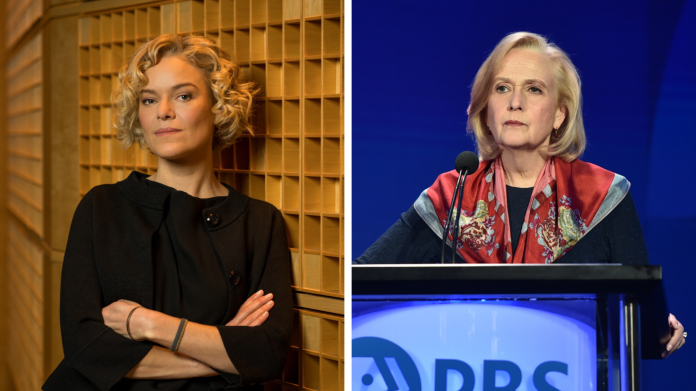
Katherine Maher of NPR, at left, and Paula Kerger of PBS are scheduled to testify on Capitol Hill about the federal funding their organizations receive.

StephenVoss/NPR and Alberto E. Rodriguez/Getty Images


hide caption

toggle caption

StephenVoss/NPR and Alberto E. Rodriguez/Getty Images

A U.S. House subcommittee has called the chief executives of the nation’s two largest public broadcasters to Capitol Hill to testify on Wednesday, with an eye to wiping out the federal funding their institutions receive.

The two CEOs — PBS’s Paula Kerger and NPR’s Katherine Maher — appear in some ways to be a study in contrasts: Kerger, 68, worked her way up the ranks at New York City’s WNET public television before becoming the longest serving chief in PBS history.

Maher, 41, was a tech executive who took over NPR one year ago this week in what was her first job in journalism, though she has no direct role in the network’s newsroom. She almost immediately became engulfed in the uproar around an essay critical of the network by a veteran NPR editor and a subsequent dissection of her own past progressive political beliefs, posted online years before joining the network.

Even so, Kerger and Maher’s fates are tethered together, as they seek to maintain long-standing bipartisan support on Capitol Hill for funding public broadcasters around the country. President Trump’s allies have repeatedly assailed the two networks.

“This could be a perfect storm,” Kerger said in an interview. “That’s why this moment does feel different. It feels as if this is a time that we really do need to step up and make as clear a case as possible.”

The hearing, entitled “Anti-American Airwaves: Holding the Heads of NPR and PBS Accountable,” appears arranged more to score points than to find facts. It will be led by Rep. Marjorie Taylor Greene, R-Ga., whose subcommittee is named after Trump adviser Elon Musk’s budget-slashing DOGE initiative. She has accused the two networks of profound liberal bias.

“I want to hear why NPR and PBS think they should ever again receive a single cent from the American taxpayer,” Greene said in a statement ahead of the hearing. “These partisan, so-called ‘media’ stations dropped the ball on Hunter Biden’s laptop, down-played COVID-19 origins, and failed to properly report the Russian collusion hoax. Now, it is time for their CEOs to publicly explain this biased coverage.”

The effort to cut funding to NPR has a strong supporter in Musk, who also owns the social media site X, previously known as Twitter. In 2023, NPR stopped posting on X, after Musk first designated the network as “state-affiliated,” which is the same label given to propaganda sites in China and Russia, and then as “government funded.” NPR considers that a broad overstatement and has not returned to the platform.

Public media chiefs point to public service

In the separate interviews, PBS’s Kerger and NPR’s Maher say they are proud of the coverage their networks offer — and of the service provided by public media outlets more broadly across the country.

PBS, for example, now has a new series called “Carl the Collector” focusing on a friendly racoon with autism. Kerger cites it as an example in which the network serves audiences of broad ranges of interests and challenges, as well as fulfilling its educational mission.

In addition to providing news coverage, such as through NPR’s Morning Edition and All Things Considered and “PBS News Hour”, NPR and PBS stations serve as a vital component of the emergency broadcasting system. NPR’s Tiny Desk Concerts feature both aspiring and established stars – and are a sensation with listeners young and old. Stations across the two networks offer shows that sustain distinct musical and cultural traditions in regions across the country. And their news coverage remains free in perpetuity (though some network podcast series offer bonus episodes to paying members).

“We think of it as our local station but in reality we are one of the largest… networks in the nation,” NPR’s Maher said in an interview.

The public radio ecosystem is sprawling and decentralized. NPR stations collectively reach 43 million listeners each week, the network said. Its programming is distributed by 246 member institutions operating more 1,000 stations around the country, which together have about 3,000 local journalists.

In addition to Maher and Kerger, the head of Alaska Public Media, Ed Ulman, is slated to testify Wednesday upon the request of subcommittee Democrats. A fourth panelist, Michael Gonzalez of The Heritage Foundation, is a critic of public media.

How public broadcasters are funded

Congress allocates money to the Corporation for Public Broadcasting: $535 million in the current fiscal year. By design, three-quarters of the money spent on public media outlets are dedicated to television, one quarter to radio. In aggregate, local stations receive far more than the national networks.

NPR receives most of its approximately $300 million annual operating budget from corporate underwriting spots (about 36%) and station programming fees (about 30%). About 1% comes directly from federal sources. Considering NPR member stations draw about 8 to 10% of their revenue from CPB, NPR could be said to get close to 3% of its budget from federal funds indirectly, via the stations. In contrast, PBS receives 16% of its funds from the CPB.

The public media entities most dependent on federal funding tend to be in rural regions or depressed areas. They may draw as much as 50% of their revenues from the federal dollars.

“For them, a reduction in federal funding — or more importantly, the elimination of federal funding — would be an existential crisis,” PBS’s Kerger said.

“The work we do and the reporting that we do informs the national discourse,” Maher said. “And you don’t want that to disappear. You want to make sure that the service we provide remains something that is robust and vital to the country.”

“It’s easy to feel like public media has always been there and therefore will always be there,” Maher said in an interview. “And in reality, it is a constant ask of our listeners and our readers to know that their support and their affirmation of our value make the case to Congress that this is the right use of taxpayer dollars.”

“Public media is big in this country,” she adds.

Conservatives’ distrust is long standing

But public media has also drawn political fire. Senator John Kennedy, R-La., and Rep. Scott Perry, R-Pa., this winter introduced what they are calling the “No Propaganda Bill” to bar all funding for the CPB.

Trump’s pick as Federal Communications Commission chairman, Brendan Carr, has signaled he supports their aim. He has also initiated inquiries of NPR and PBS, focusing at first on a handful of major stations, arguing those corporate underwriting spots violate federal laws and policies because they too closely resemble commercials.

Both networks have said they have scrupulously followed regulators’ guidance over the course of decades to stay well within the law. Those spots cannot, for example, make a call to action, such as telling their audiences to buy a car or insurance policies.

This week features separate litigation in Washington, D.C., and Manhattan to prevent the Trump administration from dismantling the federally funded international broadcasters Radio Free Europe/Radio Liberty and Voice of America. (On Tuesday, a federal judge issued a temporary restraining order freezing any further action against Radio Free Europe/Radio Liberty.) The Associated Press is seeking a reversal of

Trump White House rules barring it from some events for refusing to conform to the president’s decree renaming the Gulf of Mexico as the Gulf of America. And FCC chief Carr has embarked on investigations of every broadcast network save Fox — whose controlling owner, Rupert Murdoch, is an ally of the president.

The Heritage Foundation’s Gonzalez wrote the section of the group’s Project 2025 blueprint for the Trump administration that has foreshadowed much of his agenda. He attacked the public broadcasters as leftists, writing, “To stop public funding is good policy and good politics.”

Gonzales said others could pay for its programming: “The membership model that the CPB uses, along with the funding from corporations and foundations that it also receives, would allow these broadcasters to continue to thrive,” he wrote. (The FCC’s Carr is challenging the legality of those corporate revenues through underwriting — a pincer movement on the system’s finances.)

Gonzales approvingly cited the conservative columnist George Will, who wrote in 2017, “If ‘Sesame Street’ programming were put up for auction, the danger would be of getting trampled by the stampede of potential bidders.” Gonzales added, “Indeed, ‘Sesame Street’ is on HBO now, which shows its potential as a money earner.”

That line lands differently now. Late last year, HBO dropped the deal for new episodes with Sesame Workshop, striking a far smaller licensing arrangement for back episodes. Sesame Street recently laid off roughly 20% of its staff as a result. No other streamer or broadcaster has yet stepped forward to pay for its new shows.

In a recent column, Will argued for the end of CPB funding: “CPB is like the human appendix: vestigial, purposeless and susceptible to unhealthy episodes.”

Disclosure: This story was reported and written by NPR Media Correspondent David Folkenflik and edited by Deputy Business Editor Emily Kopp and Managing Editors Gerry Holmes and Vickie Walton-James. Under NPR’s protocol for reporting on itself, no NPR corporate official or news executive reviewed this story before it was posted publicly.

JD Vance to Lead Controversial Visit to Greenland

0

The Trump administration seems like it just doubled down on Greenland.

Vice President JD Vance announced on Tuesday that he was headed to the island later this week, taking over a controversial visit that officials in Greenland have made very clear they don’t want at all.

Earlier this week, the Trump administration said that Usha Vance, the second lady, and Michael Waltz, the national security adviser, were traveling to Greenland to promote ties with the semiautonomous territory of Denmark that President Trump wants for the United States.

Officials from Denmark and Greenland immediately branded the trip as “aggressive” and part of the president’s plan to get the island, as he recently put it, “one way or the other.”

The White House issued a statement on Tuesday afternoon changing the plan. And in a post on X, Mr. Vance said that he would “just check out what’s going on with the security there of Greenland.”

He accused Denmark of ignoring the island, which, he said, was “bad for the security of the entire world.”

“We think we can take things in a different direction,” he added, “so I’m going to go check it out.”

Anti-Trump sentiment has been rising steadily on the island, and activists there are already preparing to protest the arrival of the American delegation, starting at the international airport in the capital, Nuuk.

Each day, the anti-Trump animosity in Denmark also grows. On Tuesday, a few hours before Mr. Vance made his announcement, Prime Minister Mette Frederiksen of Denmark called the trip “unacceptable” and vowed to “resist.”

Greenland officials have emphasized that they had not invited the Americans in the first place.

Initially, the plan was for Ms. Vance and one of her sons to watch a dog sled race on Saturday, a cherished Greenland tradition. But the organizers of the race made a pointed statement on Sunday that while the race was open to the public, they had not asked the Vances to attend.

A spokeswoman for Ms. Vance denied that, saying she had received “multiple invitations.”

U.S. administration officials had also said that Mr. Waltz would visit an American military base on the northern coast of the island. But with Mr. Waltz now embroiled in a controversy over his use of a mobile phone messaging application to discuss sensitive war plans, his participation seems up in the air.

In its new statement on Tuesday, the White House said that Mr. and Ms. Vance would be visiting Pituffik Space Base, high above the Arctic Circle, “to receive a briefing on Arctic security issues and meet with U.S. service members.”

The American government has a longstanding defense agreement with Denmark that allows it to station troops in Greenland and essentially have them come and go at will.

The statement also indicated that Ms. Vance would no longer be going to the dog sled race. It’s not clear if the Vances will even pass through Nuuk on the way to the base, a missile defense installation, which is nearly 1,000 miles north of the capital.

Wisconsin's Supreme Court race is revealing how voters feel about Trump's term so far

0

The race for one seat on the Wisconsin Supreme Court has become a test of how voters are feeling about President Trump’s first months in office. It’s also broken judicial race fundraising records.

Wednesday Briefing: A Cease-Fire Deal for the Black Sea

0

Ukraine and Russia agreed to stop fighting in the Black Sea, the White House said yesterday. The pause in maritime attacks would be a significant step, but falls short of a full cease-fire.

The U.S. also said both sides agreed to hash out details about halting strikes on energy facilities. The agreements, which came after three days of negotiations in Saudi Arabia, appeared to extract no concessions from Russia.

The Kremlin said it would honor the Black Sea deal only after Western restrictions on Russian agricultural exports were removed. A White House statement said that the U.S. would “help restore Russia’s access to the world market for agricultural and fertilizer exports,” among other measures.

President Volodymyr Zelensky of Ukraine said the provision was “a weakening of positions and a weakening of sanctions.” And lifting restrictions would need E.U. approval, which at the moment is unlikely.

What’s to gain: Kyiv and Moscow have an interest in stopping strikes on their respective energy facilities. In the Black Sea, Russia’s navy has been forced into a retreat by repeated Ukrainian attacks.

What’s next: It remains unclear how and when these partial cease-fires would be implemented or how firm either side’s commitment was. Ukraine’s defense minister said that more talks would have to be held as soon as possible to put the deal in place.


The Trump administration’s two top intelligence officials told a Senate hearing yesterday that no classified information about an attack on Yemen was shared in a group chat that mistakenly included a journalist.

Tulsi Gabbard, the intelligence director, and John Ratcliffe, the C.I.A. director, acknowledged the sensitivity of information about strike targets but maintained that no classified information from their departments was shared, leaving Defense Secretary Pete Hegseth, who shared the war plan in the chat, under a microscope.

President Trump also downplayed the significance of the chat leak and defended Michael Waltz, the national security adviser, who set up the chat, calling him “a very good man.” He called the journalist who was inadvertently added to the chat and revealed the leak a “sleaze bag.” We broke down the details about the leak here.

Europe: The chat included comments that showed the administration’s dislike of Europeans. Hegseth complained of “European freeloading,” calling it “PATHETIC.” Trump said yesterday that he agreed with Hegseth.

Signal: The messaging app was used to host the military chat. How secure is it?


The Israeli authorities yesterday released Hamdan Ballal, a Palestinian director of the Oscar-winning documentary “No Other Land,” who was detained overnight. Ballal was arrested after what he and other witnesses said was an attack by masked Israeli settlers in the West Bank.

Singapore is one of the most expensive places to drive on Earth. So when it costs up to $84,000 for the right to even own a car, the biggest status symbol is anything on four wheels.

“It’s the same as being dressed in formal wear with leather shoes, or wearing a Rolex,” said one car owner, who had paid about $24,000 for a used 2010 Kia Forte.

Lives lived: Han Jong-Hee, the co-chief executive of Samsung Electronics and a nearly four-decade veteran with the tech giant, died at 63.

The hit series “Adolescence,” about a 13-year-old British boy suspected of killing a girl from his school, has been Netflix’s most-watched show in dozens of countries in recent weeks. The show has reignited debate about restricting children’s access to smartphones to stop them from viewing harmful content.

In Britain, where officials have warned of online harm gangs, lawmakers have used “Adolescence” to argue that the country should crack down on social media use among children.

Hill Republicans aim to rein in judges but divided on strategy : NPR

0

Republicans on Capitol Hill are divided over how they plan to address judicial actions that they say have unfairly targeted President Donald Trump and his administration.

Kayla Bartkowski/Getty Images/Getty Images North America


hide caption

toggle caption

Kayla Bartkowski/Getty Images/Getty Images North America

Republicans on Capitol Hill are planning ways to push back at the federal judiciary over allegations that activist judges are unfairly targeting the Trump administration. But GOP members are divided about what to do, and their efforts to block action by the courts face significant political and legal hurdles.

President Trump’s efforts to remake the shape and size of the federal government using Elon Musk’s Department of Government Efficiency and his use of a war-era statute to deport a group of Venezuelans have been reviewed by the courts.

Some GOP lawmakers have filed articles of impeachment to remove judges and others are pushing legislation to bar district judges from issuing national injunctions following public pressure on social media from Trump and Musk to impeach or punish judges.

Democrats dismiss the effort as purely political and legally unsound since the series of court rulings GOP lawmakers are fighting come down to a a disagreement about the law, not high crimes or corruption on the part of judges.

Impeachment effort divides GOP

Texas Republican Rep. Brandon Gill argued U.S. District Court Judge James Boasberg abused his power and has filed a resolution to impeach him. Boasberg questioned the Trump administration’s use of the Alien Enemies Act of 1798 after the Immigration and Customs Enforcement (ICE) cited the law when it flew over 100 Venezuelans to a prison in El Salvador. President Trump also called for Boasberg’s removal. The administration is appealing that decision arguing the individuals were members of Tren de Aragua, a gang deemed a terrorist organization.

Gill says 19 others have co-sponsored his resolution and he maintained the judge was stepping on the president’s authority by “usurping his powers as Commander in chief to conduct our foreign policy and to repel alien enemies.”

The top Democrat on the House Judiciary Committee, Rep. Jamie Raskin, D-Md., dismissed the GOP effort, saying “Threatening judges with impeachment or retribution for upholding their oaths of office and doing their jobs under the Constitution is an act of outlaw tyranny, not constitutional government.”

Several House GOP sources admit they don’t have the votes to pass an impeachment resolution. House Judiciary Chairman Jim Jordan, who would preside over any impeachment, told reporters “everything is on the table” and said he briefed President Trump this weekend about his plans to act.

Jordan is expected to convene a hearing next Tuesday. Jordan said 15 national injunctions have been issued in the last month in response to Trump administration actions.

“The country instinctively knows that there’s been this aggressive push against the president for policies he campaigned on and he was elected to implement,” Jordan said. “That’s a problem.”

But even if the GOP-led House could pass an impeachment resolution convicting and removing a judge requires a supermajority in the Senate and it’s unlikely Republicans would get any support from Democrats.

Senate Majority Leader John Thune, R-S.D., pointed out that the appeals process, not impeachment was the proper route to fight back against rulings, saying on Monday “at the end of the day, there is a process and there’s an appeals process. And, you know, I suspect that’s ultimately how this will get handled.”

The Trump Justice department has already appealed the ruling by Judge Boasberg.

North Carolina Sen. Thom Tillis, a member of the Senate Judiciary Committee, called the impeachment push by some House Republicans “an unmitigated waste of time.” He said floor time in the Senate is “the coin of the realm” and those pushing impeachment will be disappointed when not a single judge will be impeached because they won’t have 67 votes to remove them. “I’m not here to make a point,” Tillis said, “we’re here to make a difference.”

Gill, pressed about the reality of the Senate not having the votes to convict even if the House did impeach Boasberg told reporters “What we can do in the House is separate from that and I think just getting an impeachment bill through the House would send a pretty clear message to rogue activist judges.”

Congress has rarely exercised its authority to remove federal officials, including judges. According to the House historian’s office, 15 federal judges were impeached but just eight have been convicted and removed by the Senate.

Legislation to limit rulings by district judges to get House vote

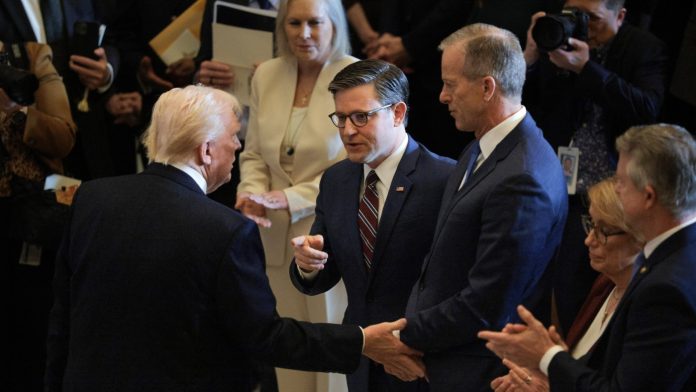
While Jordan and the Senate Judiciary panel explore hearings, House Speaker Mike Johnson, R-La., is making plans for a House vote next week on legislation that would bar district judges from issuing national injunctions.

Rep. Darrell Issa, R-Calif., sponsored the legislation and says it’s about addressing what he called “a growing trend” of district court judges’ decisions having broad impact nationally. He argued it was about striking a balance and restricting the scope of rulings, saying “it goes back to the very creation of district courts. You know, we don’t need a Supreme Court if 700 judges can each do what the Supreme Court does.”

Issa said his bill was one step Congress could take immediately.

“Impeachment is a tool best used rarely,” he said. “Well, legislation that defines the role of district court judges is appropriate at any time. That’s what we’ve done since the creation of district court courts, which were created by Congress.”

Johnson maintained that the Trump administration is facing what he called an “unusual” response from the courts and he endorsed Issa’s bill. “It is a dangerous trend and it violates equal justice under law. That critical principle, it violates our system itself. It violates separation of powers. When a judge thinks that they can enjoin something that a president is doing, that the American people voted for, that is not what the founders intended.”

Missouri Sen. Josh Hawley is pushing legislation similar to Issa’s and says he remembers some Democrats complaining about national injunctions when some of President Biden’s actions were going through the courts. He argues that there is a systemic issue and said that he believes district judges don’t currently have the power to issue broad decisions that apply nationally.

“I think we ought to just make it clear, if you’re a district court, you can bind the parties who are in front of you or the parties who are in your district. but you cannot bind people outside your purview. Only the Supreme Court can do that,” Hawley said.

Another option Republicans in Congress are considering limiting or redirecting the amount of money they approve for federal courts through the appropriations process. But they are unlikely to find Democratic support for any effort that amounts to defunding the judiciary.

Hawley noted that President Thomas Jefferson feuded with the judiciary during his tenure but he said that instead of reducing judges he wants the GOP Senate to fill existing vacancies on the federal bench, “I’d like to fill those with Republican judges as opposed to eliminate spots.”

Trump’s Team Calls Europe ‘Pathetic’ in Leaked Signal Group Chat Messages

0

Trump administration officials haven’t kept their disdain for Europe quiet. But the contempt seems to be even louder behind closed doors.

Europeans reacted with a mix of exasperation and anger to the publication of parts of a discussion between top-ranking Trump administration officials, carried out on the messaging app Signal. The discussion, about a planned strike on Yemen, was replete with comments that painted Europeans as geopolitical parasites, and was revealed on Monday in The Atlantic, whose editor was inadvertently included in the conversation.

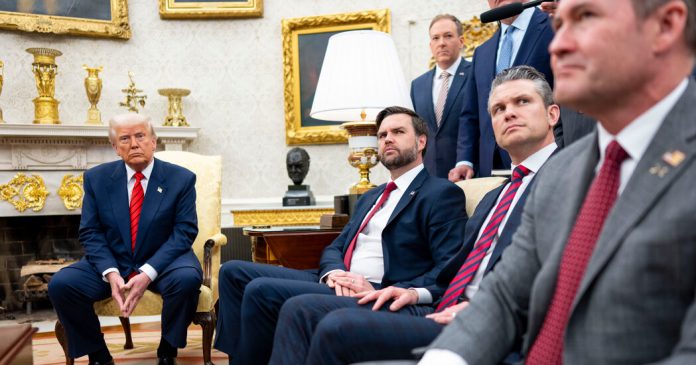
“I just hate bailing out the Europeans again,” wrote Vice President JD Vance, asserting that the strikes would benefit Europe far more than the United States.

“I fully share your loathing of European freeloading,” Pete Hegseth, the secretary of defense, later replied. “It’s PATHETIC.”

The exchange seemed to show real feelings and judgments — that the Europeans are mooching and that any American military action, no matter how clearly in American interests as well, should be somehow paid for by other beneficiaries.

A member of the chat identified as “SM,” and believed to be Stephen Miller, a top aide to President Trump, suggested that both Egypt and “Europe” should compensate the United States for the operation. “If Europe doesn’t remunerate, then what? If the US successfully restores freedom of navigation at great cost there needs to be some further economic gain extracted in return,” SM wrote.

There was no official request from European Union officials that America carry out the strike in Yemen — they were simply informed, said a European diplomat and a European official who spoke on condition of anonymity to discuss diplomatic conversations. There have also been no conversations with high-level policymakers about remuneration, according to the diplomat.

The apparent disregard by administration officials of security protocols by having a discussion that included operational details on a consumer chat app, even an encrypted one, prompted concern that Russia and China could be listening in.

“Putin is now unemployed: No point in spying anymore,” Nathalie Loiseau, a member of the European Parliament, wrote on X, saying the leaks now came from the Americans themselves. “No point in crushing Ukraine anymore, Trump will take care of it.”

The commentary in the exchange is the latest blow to one of the world’s most storied alliances, which took generations to build and strengthen but which the Trump administration has managed to weaken in mere weeks.

“It is clear that the trans-Atlantic relationship, as was, is over, and there is, at best, an indifferent disdain,” said Nathalie Tocci, director of Italy’s Institute of International Affairs, who formerly advised a top E.U. official. “And at worst, and closer to that, there is an active attempt to undermine Europe.”

The European Union is, in many ways, the antithesis of the principles that Mr. Trump and his colleagues are championing. The bloc is built around an embrace of international trade based on rules. It has been at the forefront of climate-related regulation and social media user protections.

If the relationship between the United States and Europe were merely transactional, it would be relatively easy for Europeans to just spend more on the military and give Mr. Trump some sort of victory, said François Heisbourg, a French analyst and former defense official.

But in Mr. Vance’s speech attacking European democracy in Munich, let alone in the newly public exchange, the distaste for Europe is about more than transactions.

“Vance was quite clear: We don’t share the same values,” Mr. Heisbourg said.

He and others, like Anna Sauerbrey, the foreign editor of Die Zeit, noted that the explicit demand for payment, rather than just political and military support, as in Iraq and Afghanistan, was new. And it ignored the fact that “the U.S. depends on global trade,” she said, and that “France, Britain and the Netherlands have deployed ships to the region” for the same purpose. The Americans, she said, “are constantly overlooking European efforts.”

China, for example, gets most of its oil imports through the Bab el-Mandeb Strait and does much of its export trade with Europe through the same sea route. But no one is asking China to pay, Ms. Tocci noted.

For months, Washington has been sending barbed statements and actions Europe’s way.

Mr. Trump has made it clear that he wants to acquire Greenland, a semiautonomous territory of Denmark, even as European leaders warn that they will defend territorial integrity. Usha Vance, Mr. Vance’s wife, and Mike Waltz, the national security adviser, are visiting the island this week, uninvited, its government says, and to an agitated response.

Mr. Trump has also repeatedly warned that Europe must pay much more for its own defense, threatening not to come to the aid of nations that do not pay up sufficiently, and has pivoted sharply away from Ukraine. He has simultaneously rolled out plans to slap hefty tariffs on Europe and argued that the European Union was created to “screw” America.

Christel Schaldemose, a Danish politician who is a center-left member of the European Parliament, said the way the U.S. has been talking about the E.U. in general lately is “not helping.”

“Could we start talking to each other as allies and not enemies?” she said.

Even as European leaders try to maintain the friendship, they are racing to try to bolster their defense expenditures, cognizant that it would be nearly impossible to replace American military capabilities overnight.

They are meeting on Thursday in Paris to discuss Ukraine, and NATO foreign ministers meet early next month to discuss progress.

They are also scrambling to strike a trade deal with the United States, with the E.U. trade commissioner headed to Washington on Tuesday to talk with his American counterparts.

But with America’s increasingly hostile attitude toward Europe, the continent’s officials are contemplating a future where the prized relationship stretching across the Atlantic, a foundation upon which decades of relative peace and prosperity have been built, might never be the same.

“The international order is undergoing changes of a magnitude not seen since 1945,” Kaja Kallas, the top E.U. diplomat, said last week, echoing a line from the bloc’s defense preparedness plan, which is meant to help Europe to become more militarily independent.

Splintering from the United States is an expensive prospect. The E.U. has already unveiled an initiative that could be worth 800 billion euros, about $865 billion, to help European nations achieve desired military spending levels.

Still, the group chat leak underscores why a divorce may be necessary: The United States is not the reliable ally it once was, either rhetorically or practically.

It is highly unusual and possibly illegal for sensitive military plans to be discussed on a messaging app, rather than by a more secure means of communication.

That disregard for normal security procedures will “cause allies to be very reluctant to share analysis and intelligence,” said Ben Hodges, former commander of U.S. forces in Europe. Barring major change, people “will assume America can’t be trusted.”

5 things to know as Dr. Oz gets one step closer to leading Medicare and Medicaid : Shots

0

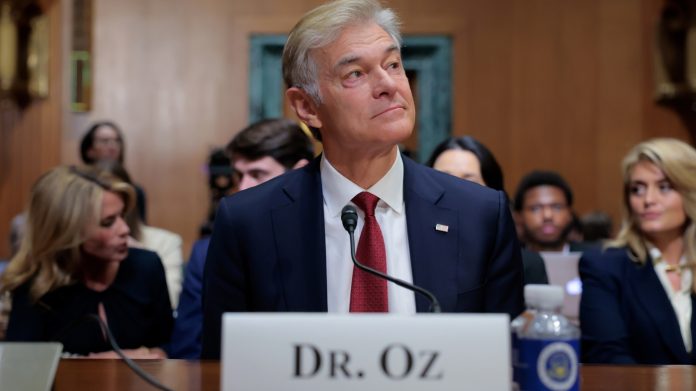
Dr. Mehmet Oz at his confirmation hearing with the Senate Finance Committee on March 14. The committee voted to advance his nomination on Tuesday.

Anna Moneymaker/Getty Images


hide caption

toggle caption

Anna Moneymaker/Getty Images

Dr. Mehmet Oz, once the star of the long-running TV program “The Dr. Oz Show,” cleared another hurdle today in his bid to run the Centers for Medicare and Medicaid Services or CMS, part of the Department of Health and Human Services. CMS runs Medicare, Healthcare.gov, and Medicaid, which is the joint state and federal health insurance program for low-income people. Altogether, it provides health coverage for nearly half the country.

The Senate Finance committee voted along party lines Tuesday to recommend Oz to the full Senate. That vote is expected soon.

Here are five things to know about Oz and the job he’s up for.

1. Like Trump and RFK, Jr., being a celebrity is part of his career path. 

Oz’s first career was as a cardiothoracic surgeon at Columbia University. He is remembered by colleagues there as a hard-worker who seemed to never sleep and cared about his patients.

In the early 2000s, he began writing health books and going on television, and he eventually launched “The Dr. Oz Show” which ran for years. Oz got into some hot water for products he promoted on the show, especially weight loss products, and in 2015, ten doctors called for his dismissal from the university. (He was not dismissed, and his affiliation with the university continued for nearly a decade.) In 2021, he announced his move into politics with a Senate run as the Republican candidate in Pennsylvania — a race he narrowly lost.

2. The future of Medicaid is up in the air. 

Unlike many previous administrators, Oz didn’t work in health policy, but he does have experience treating patients on Medicare and Medicaid as a physician. During his hearing, he said the Columbia medical school is in an area of New York City “heavily populated by Medicaid patients, and I saw firsthand how our services [and] our health care system underserved these communities.”

He seemed sympathetic to the Republican idea that Medicaid should be exclusively for the population it was originally designed to serve, including pregnant women and people with disabilities. Since 2014, the Affordable Care Act enabled states to offer Medicaid to all low-income people, not just particular populations, and the program has grown.

Now, congressional Republicans are looking to drastically shrink Medicaid to pay for President Trump’s tax cuts. The House GOP budget outline asks the committee overseeing CMS to find $880 million in cuts, which would likely come from Medicaid.

Pressed for his position on these cuts by Democrats in his confirmation hearing, Oz was noncommittal, saying, “I cherish Medicaid,” and that, to protect the program, it has to be “viable at every level.”

“He dodged, he weaved, he simply wouldn’t answer,” Ranking Member Ron Wyden, D.-Ore., said in the Finance Committee hearing Tuesday.

Democrats on the committee slammed Oz for not committing to fight cuts to Medicaid. “I’m voting no because of what I see as a concerted effort by the Trump administration and some congressional Republicans to use Medicaid as an ATM to pay for tax breaks for the biggest, most successful corporations and wealthy individuals,” Sen. Tina Smith, D.-Minn., said Tuesday.

Sen. Roger Marshall, R.-Kan., who is also a physician, responded by defending Republican plans. “Republicans are here to save Medicaid,” he said, saying the program has gotten too big and too expensive and was unsustainable. “We want to strengthen Medicaid for the most vulnerable.”

3. Oz’s plans for Medicare are fuzzy.

Even with Republican lawmakers looking for cuts, the future of Medicare is more secure than Medicaid.

Still, the program is in flux as more and more seniors opt for the privatized version of it called Medicare Advantage, which allows beneficiaries to choose private insurance plans that the government pays for, over traditional, government-run Medicare.

Oz has filmed promotional videos about Medicare Advantage plans that are still up on his YouTube page, and are not clearly marked as ads. He also co-authored an opinion piece in 2020 arguing that “Medicare Advantage for All” could provide universal coverage for everyone, not just seniors, and “save our health-care system.” His financial disclosures also show he owned as much as $600,000 in stock in UnitedHealth Group, one of the largest Medicare Advantage insurers, although he said he would divest that interest if confirmed.

Critics of the program, which essentially privatizes Medicare, point to insurance companies cherry-picking enrollees who are younger and healthier and overcharging the program for treatment.

During the hearing earlier this month, Oz acknowledged some of these criticisms. “We’re actually apparently paying more for Medicare Advantage than we’re paying for regular Medicare — so it’s upside down,” Oz said. He cited a report from the nonpartisan Medicare Payment Advisory Commission, which found that the federal government “will pay $83 billion more for [Medicare Advantage] enrollees in 2024 than if those beneficiaries had instead been in [traditional Medicare].”

On Tuesday, Sen. Marshall called Medicare Advantage a “very broken system” and called for a bipartisan effort to reform it. Ranking Member Wyden had a different view. “Given Dr. Oz’s history of basically acting as a salesman for Medicare Advantage, putting him in charge of regulating these middlemen is almost like letting the fox guard the proverbial henhouse,” Wyden said.

4. He thinks being healthy is a “patriotic duty.”

Towards the end of his Senate hearing, Oz answered a question from Sen. Todd Young, R.-Ind., about how a healthier American population could help with high health care costs.

“I think it is our patriotic duty to be healthy,” Oz said. It feels better, it’s the right thing for your family, he added, “but it also costs a lot of money to take care of sick people who are sick because of lifestyle choices.”

At another point during the hearing he told the senators: “For anyone in this committee who was able to go running or exercising for 20 minutes yesterday, you probably did the equivalent of reducing $100 billion of expenses for Medicare and Medicaid just by being active — if Americans would do that every day, that’s what we’d experience.”

He also floated the idea of using federal guidance to incentivize patients to make healthy choices, such as instructing Medicare Advantage enrollees on how to use their benefits for nutritious food. This position fits in nicely with the “Make America Healthy Again” slogan of Health and Human Services Secretary Robert F. Kennedy Jr., who will be Oz’s boss.

Some commentators characterized these statements as tone deaf, given Oz’s wealth and privilege. “There is no recognition that being able to afford groceries, let alone have time to cook them, is a prerequisite for achieving his version of ‘eating healthy,’ ” wrote author Virginia Sole-Smith.

5. He’s widely expected to be confirmed.

In his confirmation hearing earlier this month, Oz bantered easily with senators on both sides of the aisle, about potato chips with committee Chair Mike Crapo of Idaho and playing basketball with Ranking Member Wyden. (The hearing was much friendlier than the hearings for Secretary Kennedy, who was skewered by Democratic senators for his past controversial statements and views, although he was ultimately narrowly confirmed.)

Still, that friendliness did not translate to bipartisan support in the Finance Committee, which voted 14 to 13. All Republicans on the committee voted for him; all Democrats voted against him. Next, the nomination will be scheduled for a vote by the full senate. That’s expected in the coming days or weeks.