Thursday, November 12, 2026
Home Blog Page 89

Vandals of Paddington Statue Were ‘Antithesis’ of Beloved Bear, Judge Says

0

It was shortly after 2 a.m. on March 2, the police said, when two members of the British Royal Air Force approached a statue of Paddington Bear, sitting placidly on a park bench in Newbury, England, and holding his favorite snack: a sandwich dripping with marmalade.

The men then kicked, broke apart and stole Paddington, leaving a husk of the bear still affixed to the park bench. But it turns out that they had picked the wrong bear to mess with, in the wrong place.

Newbury has a special reverence for Paddington, as the birthplace of Michael Bond, the author of the beloved children’s book series about the genial Peruvian bear and his adopted family in London, the Browns.

So when the men, Daniel Heath and William Lawrence, both 22, pleaded guilty to criminal damage on Tuesday, the judge had some choice words before he sentenced them.

“Paddington Bear is a beloved cultural icon with children and adults alike,” the judge, Sam Goozée of Reading Magistrates’ Court, told the men, according to a copy of his remarks released by the court. “He represents kindness, tolerance and promotes integration and acceptance in our society. His famous label attached to his duffle coat says, ‘Please look after this bear.’ On the night of 2 March 2025, your actions were the antithesis of everything Paddington stands for.”

The damaged statue after it was recovered by the police.Credit…Thames Valley Police/Cover Images, via Associated Press

Judge Goozée sentenced the men to 150 hours of community service and ordered them each to pay 2,725 British pounds, or about $3,530, to repair Paddington. “Your actions lacked respect and integrity, two values you should uphold as members of the armed forces,” he said.

Both men expressed remorse for the damage that they had done to the bear.

“Mr. Lawrence and Mr. Heath deeply regret their actions on the day and immediately accepted responsibility when spoken to by the police,” their lawyer, Tom Brymer, said in an email. “No doubt this was behavior which was completely out of character.”

The statue of Paddington, classically attired in a red bucket hat and blue coat, was one of one 23 that were installed last year across the United Kingdom and Ireland to promote the release of the movie “Paddington in Peru.”

On March 2, security-camera footage showed two men — later identified as Mr. Heath and Mr. Lawrence — approaching Paddington on a dark street. Both men were “under the influence of alcohol” at the time, the judge said.

After some prying and pulling, the men succeeded in removing Paddington’s facade. They then carried Paddington to a taxi, which took them and the broken bear back to their Air Force base, Judge Goozée said.

Officers from the Newbury Neighborhood Policing Team tracked Mr. Heath and Mr. Lawrence to their barracks later that day, arrested them and seized the damaged statue, which had been stashed in the trunk of Mr. Lawrence’s car, the police said.

Cracking the case was a point of pride for the local police.

“The Paddington Bear statue is a beloved part of Newbury so we did everything we could to locate it and bring the offenders to justice,” Inspector Alan Hawkett of the Newbury Neighborhood Policing Team said in a statement on Tuesday.

“After a short stay at Newbury police station,” he added, “we handed the statue back to its owners so it can be restored.”

The Newbury Business Improvement District, which owns the Paddington statue, is planning to have the bear repaired and restored to his rightful perch on the park bench.

In the meantime, a spokesman said the district had covered the bench with a gazebo tent, partly to protect passers-by from the rough edges on the damaged statue and “partly so that children wouldn’t see the bear in the broken state.”
Trump’s foreign policy helps China, Chinese scholar says : NPR

0

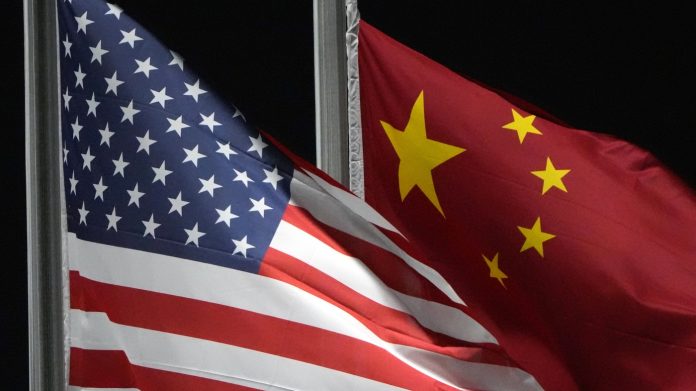
U.S. and Chinese flags wave at Genting Snow Park, Feb. 2, 2022, in Zhangjiakou, China.

Kiichiro Sato/AP


hide caption

toggle caption

Kiichiro Sato/AP

A Chinese scholar who studies the United States has some opinions about the early moves of the second Trump administration.

Da Wei spoke with NPR last year. He told us then that his decades of studying China’s rival gave him some idea of what made America strong, including a “mature political system,” stable institutions and immigration, among other things.

Now the U.S. has a new president, so we asked to meet Da Wei again to hear what he’s thinking now.

Da, who’s a professor at Tsinghua University in Beijing, lives in a country where expression is limited, especially on sensitive topics. But American specialists in China have found him a useful interlocutor, offering a window into the thinking inside the United States’ great geopolitical rival.

Da Wei, director of the Center for International Security and Strategy (CISS) at Tsinghua University, sits for an interview with NPR on March 24 at Linxi Tea House in Beijing. He says China stands to gain from some of the Trump administration's foreign policy actions.

Da Wei, director of the Center for International Security and Strategy (CISS) at Tsinghua University, sits for an interview with NPR on March 24 at Linxi Tea House in Beijing. He says China stands to gain from some of the Trump administration’s foreign policy actions.

Reena Advani/NPR


hide caption

toggle caption

Reena Advani/NPR

He met us in a Beijing tea shop. We drank Dragonwell tea, which is said to be freshest at this time of year–and several points emerged. Here’s what he had to say about shifting U.S. foreign policy approaches and how changes may benefit China.

He says he’s witnessing “something big”

Da has followed the Trump administration’s firing of many U.S. federal workers and dismantling of some agencies. As a past visitor to Washington, he knows people who have been fired.

“Having said that,” he added, “I don’t want to be too critical to the Trump administration just from this personal level. As a scholar I try to be neutral. I think there is something big happening in the U.S. It could be bad. It could be good.”

He says modern forms of government rose with the Industrial Revolution. Now technology is changing, and the government may change too.

He says some American friends compare it to China’s Cultural Revolution

The Chinese scholar mostly dismisses the comparison, but not entirely. From 1966 to 1976, Chinese Communist leader Mao Tse-tung led an assault on suspected capitalist sympathizers–closing universities, sending professors and intellectuals to work in the fields, purging government workers, and encouraging his supporters to harass or attack their elders. It was “the most chaotic period of modern China,” the professor says.

“What is happening in the US is still far from the Cultural Revolution. It’s maybe one or two percent. But you can sense that smell. The populist sentiments … [that] common sense is good, [and] sophisticated thoughts are something bad.”

He learned English listening to Voice of America

“It was so sad,” he said, when news spread that the administration planned to shutter VOA, the U.S.-funded broadcaster that delivers news and cultural programming in countries where access to news is limited or isn’t available. He said he learned some of his English in college while listening to VOA broadcasts–and also learned news that wasn’t reported on Chinese media.

Da Wei acknowledges that in recent years, VOA was less important as the internet spread. But he says another agency mattered more: the U.S. Agency for International Development.

The “majority view” in China sees some of Trump’s moves as an “own goal”

He asserts that most Chinese he talks with viewed USAID, the foreign aid agency, as one of America’s strengths, improving its image and influence in the developing world. Virtually eliminating the agency was “in China’s interest.”

With that said, China itself does not distribute foreign aid in the way that USAID did, and analysts do not expect it to start doing so.

He sees U.S. alliances as a strength

“The alliances of the U.S. we believe [are] an important source, probably one of the most important sources of the U.S. strength,” he said.

He spoke of Europe’s widespread feeling that they have lost American protection, and also spoke of events in South Korea and Japan.

China has long tried to improve its relations with the U.S. allies near its borders. The Chinese scholar said his country might soon be able to do that “with smaller resistance.”

The radio version of this story was edited by Reena Advani and produced by Milton Guevara.

Ukraine and Russia Agree to Cease Fighting in the Black Sea, White House Says

0

The White House said Tuesday that Ukraine and Russia had agreed to cease fighting in the Black Sea and to hash out the details for halting strikes on energy facilities. It would be the first significant step toward the full cease-fire the Trump Administration had been pushing, but it still would fall short of that goal and it remains unclear how and when this limited truce would be implemented.

Both Ukraine and Russia confirmed the agreement, although it appeared to come with some serious caveats on the part of Moscow. In a statement about the talks, the Kremlin said it would honor the agreement only after its state agriculture bank is reconnected to the international payment system and restrictions are lifted on “trade finance operations,” which are some of the penalties imposed after Russia invaded Ukraine in 2022.

In a statement about the U.S.-Russia talks, the White House appeared to agree with at least some of the conditions, saying it “will help restore Russia’s access to the world market for agricultural and fertilizer exports, lower maritime insurance costs, and enhance access to ports and payment systems for such transactions.”

The agreements came after three days of intense negotiations in Riyadh, the capital of Saudi Arabia, during which delegations from Ukraine and Russia met separately with U.S. mediators.

The White House released two different statements saying it had separately struck deals with Ukraine and Russia on the maritime and energy attacks. The statements added that Washington, Kyiv and Moscow welcomed the involvement of third countries in “supporting the implementation of the energy and maritime agreements.”

Although the agreements marked a breakthrough in the White House’s efforts to reach a cease-fire, even limited, in Ukraine after three years of full-scale war, they did not appear the extract major concessions from Russia, the aggressor country.

Kyiv and Moscow have an interest in stopping strikes on their respective energy facilities, which have caused pain for both sides. Russia, in particular, stands to gain from a cease-fire in the Black Sea, where repeated Ukrainian attacks have forced its navy into retreat.

While President Vladimir V. Putin of Russia has portrayed himself as being open to demands from President Trump, like halting the strikes on energy facilities or security in the Black Sea, they are goals that the Kremlin has in the past pursued and seen as beneficial to itself.

Mr. Putin rejected an earlier proposal from the United States, which Ukraine agreed to, for a total 30-day cease-fire. He said a broader truce would have to include a halt to Western military aid to Ukraine and to the country’s mobilization efforts — two conditions that are nonstarters for Ukraine.

Ukraine and Russia are now expected to hammer out details for implementing the maritime and energy cease-fire. Mr. Umerov, who led his country’s delegation in Riyadh, said “additional technical consultations” would have to be held as soon as possible for “the implementation, monitoring and control of the arrangements.”

Both countries had already agreed last week to halt strikes on energy facilities, but they had yet to implement the agreement and quickly accused each other of continuing attacks on energy sites.

Strikes on energy facilities have been central to each side’s efforts to weaken the other throughout the war. Russia has pounded Ukraine’s power grid, aiming to make life unbearable for civilians and hinder its war effort. Ukraine has repeatedly struck Russian oil facilities to try to choke off revenues fueling Moscow’s military operations.

Both Russia and Ukraine also rely on the Black Sea for commodity exports. In mid-2022, they brokered a deal allowing Ukraine to ship grain through the sea, but Russia withdrew from the agreement a year later, arguing that Western sanctions were severely limiting its ability to export agricultural products.

Russia then threatened all commercial vessels heading to and from Ukraine, aiming to strangle its seaborne exports. In response, Ukraine’s military started a campaign that pushed the Russian navy out of the western parts of the Black Sea, destroying many of its warships and striking its headquarters in Russian-occupied Crimea. The operation allowed Ukraine to establish a new shipping corridor in the Black Sea and return seaborne grain exports to near-prewar levels.

Mr. Umerov, Ukraine’s defense minister, said that under the deal, “all movement by Russia of its military vessels outside of eastern part of the Black Sea will constitute violation of the spirit of this agreement,” and that Ukraine would have “full right to exercise right to self-defense.”

The White House statements said both Russia and Ukraine had agreed to “eliminate the use of force in the Black Sea.” It was not immediately clear if this would result in a halt on strikes on port infrastructure, which the Ukrainians said was discussed during the talks. Kyiv has also been interested in restarting operations in frontline Ukrainian port cities like Mykolaiv and Kherson, where the nearby fighting has forced them to shut down.

‘Mad House’ exposes disfunction in the 118th Congress : NPR

0

The 118th body of Congress was elected in 2022 and served from 2023 until 2025.

Allison Bailey/Middle East Images/AFP via Getty


hide caption

toggle caption

Allison Bailey/Middle East Images/AFP via Getty

It’s no secret that Capitol Hill is often mired in partisan politics and infighting, but a new book highlights additional chaos that public doesn’t see. In Mad House, Annie Karni and Luke Broadwater — both veteran reporters for The New York Times — chronicle the 118th body of Congress, which was elected in 2022 and served from January 2023 until January 2025.

Karni and Broadwater describe the 118th House as the first MAGA-controlled Congress, one that fully adopted the extremism and stagecraft of Trumpism. During its two-year session, the House passed only 27 bills that became law — the lowest number since the Great Depression.

Mad House chronicles how Rep. Kevin McCarthy (R-Calif.) was elected speaker of the House after 15 rounds of voting — only to be ousted 10 months later. It also revisits the infamous spat in which Reps. Marjorie Taylor Greene (R-Ga.) and Jasmine Crockett (D-Texas) traded personal barbs during at a House committee oversight meeting. That particular meeting was held in the evening, which, Karni says, can be a particularly fraught time for legislative events.

Karni and Broadwater write that Republicans had a very narrow majority in the 118th Congress — with a handful of party members who often refused to do what the leadership wanted.

“When you have a tiny majority, any member can throw themselves in the mix and make themselves the deciding vote,” Karni explains. “And in the last Congress, it gave this group of 20 … far-right members outsized power. … And that’s who really kind of decided how the House functioned last year — or, more likely, did not function.”

Broadwater says current House Speaker Mike Johnson (R-La.) owes his position to the endorsement President Trump. “And you’re seeing that play out right now with how the House has chosen not to assert itself as a co-equal branch of government to Donald Trump, not to conduct oversight of the administration, and to essentially make itself a subservient branch,” Broadwater adds.

Looking ahead, Broadwater predicts we’ll see more Congressional disfunction, rather than less — especially since “it seems that voters actually like the fisticuffs.”

“A successful way to win primaries on the Right is to be the loudest, the fighter, the most extreme,” Broadwater explains. “So what we’re seeing now in the Democratic party is I think there’s a desire among the populace for the Democrats to become more of the party of fighting and not the party that plays by Robert’s Rules and keeps things super professional.”

Karni agrees: “Looking back on it now, I feel like if you want to understand the moment we’re in, it’s really brought to you by these characters from the 118th Congress.”

Interview highlights

Mad House

Mad House

Penguin Random House


hide caption

toggle caption

Penguin Random House

On members of Congress sometimes sleeping in their offices instead of renting an apartment in Washington, D.C.

Karni: A lot of people can’t have two residences, and the office sleeping is a long-time thing. It kind of got less popular during COVID and after the MeToo movement because it’s an awkward thing to be living in your office and having staffers walk in in the morning and you’re, like, brushing your teeth. But people still do it to save money.

Broadwater: It’s extremely expensive to live in DC, and then you have a family back home and probably a house or a mortgage or at least an apartment back home. And so you have two residences and it becomes kind of untenable for them to deal on one salary unless you’re independently wealthy, which a lot of the members of Congress and a lot of the senators are extremely wealthy. But if you’re somebody like AOC [Alexandria Ocasio-Cortez] or somebody else who comes from smaller means, it does become quite difficult.

On burnout among members of Congress

Karni: For these House members, it’s a slog. First of all, there’s the travel. I mean, you are back and forth every week. Like, if you live across the country, the jet lag and the travel is just crushing. Then there is not seeing your family. … That takes a toll. … The physical violence and the threats [have] become huge. I mean, these members are under constant threats of violence, and they don’t have protection. If they want protection, they have to pay for it themselves from their campaign. Not to mention, then, you’re doing all of this traveling and not having a regular family life and being threatened. And then you look at it and you’re like, “For what? When we’re here, the House floor is frozen. We’re not actually voting. … It took a week to elect a speaker. For what?” So a lot of people just made the calculation it’s just not worth it anymore.

On the Left criticizing Sen. Chuck Schumer (D-NY) for his response to the current Trump administration

Karni: I think right now what’s happening is Chuck Schumer has become the boogeyman of the Democratic Party among rank-and-file House Democrats and among voters, for just emotion and frustration at just wanting to do more, wanting to fight back. And this is because last week he voted with Republicans to stave off a government shutdown. If Democrats had not joined Republicans in the Senate, we would be in a government shutdown right now. And Chuck Schumer has been defending this decision for the past week, saying that would have been much, much worse. Elon Musk and Donald Trump wanted a shutdown. It would have allowed them to decide which programs are essential and not essential, and therefore never bring them back. His example that he’s been talking a lot about is SNAP, food stamps. They could just say during a shutdown, “This is not essential.” And during a shutdown, there’s no court check. So that could just go away.

On the relationship between Republicans in the current Congress and Elon Musk’s DOGE task force

Broadwater: It looks to me like they are embracing Elon Musk and his mission very much so. Each chamber has set up its own DOGE caucus, and they are trying to implement his cuts into their various spending plans. When he comes to Capitol Hill, he gave out his private cell phone number to members. He has tried to court people individually. And he’s posing for pictures. But Elon Musk, his polling is much lower than Donald Trump’s. The public at large does not feel the same way they feel about Trump as they do with Elon Musk. And Democrats, I believe, are focusing in on him as perhaps their best target. He wasn’t elected. He’s extremely rich. They know that there’s a lot of populist anger against the wealthy. And so, if the richest man in the world, who has all these contracts with the federal government, is coming in slashing the jobs of regular workers — and there are federal workers not just in DC, but all over the country — you can see how that could be a potent political weapon for Democrats to wield.

Sam Briger and Susan Nyakundi produced and edited this interview for broadcast. Bridget Bentz, Molly Seavy-Nesper and Meghan Sullivan adapted it for the web.

Olympic Track Officials to Require Sex Tests for Female Athletes

0

Track and field will introduce mandatory DNA sex testing for athletes entering female competitions, its global leader said Tuesday, making it the first Olympic sport to add the requirement.

The move comes amid an increasingly vexed debate over eligibility rules in female sports and comes less than a year after the issue erupted at the Paris Olympics when questions about the qualifications of two women who went on to secure gold medals in boxing led to tumultuous — and at times disturbing — scenes inside and outside of the ring.

The move is essential to protect female sports, said Sebastian Coe of Britain, the head of track’s governing body, World Athletics, and a former double Olympic gold medalist in the 1500 meters. He said the new policy, which will subject competitors to what is described as a noninvasive cheek swab or dry blood DNA test, was part of his vow to “doggedly protect the female category and do whatever it takes to protect it.”

World Athletics said the new tests could be in place in time for its next world championships, in Tokyo in September.

“We’re not just talking about the integrity of female women’s sport, but actually guaranteeing it,” Mr. Coe told reporters in Nanjing, China. “And this, we feel, is a really important way of providing confidence and maintaining that absolute focus on the integrity of competition.”

Mr. Coe, an unsuccessful candidate in the recent election to lead the International Olympic Committee, has been a polarizing force in his zeal on this issue. The debate over women’s eligibility criteria has led to pitched battles — mostly played out in the bear pit of social media — over who has the right to compete. Track since 2023 has banned transgender athletes from women’s competition.

The new rules eliminate from women’s competition a minority of athletes who do not have the typical female XX sex chromosomes, and have one of several conditions that together are known as differences in sex development, or DSD. Such people can be female to outward appearances, and in some do not know they have DSD. But their unusual genetics can result in high levels of testosterone, and possibly greater muscular development, giving them some of the athletic advantage that men have.

Track and field has been at the forefront of the debate since the South African runner Caster Semenya exploded into the public consciousness by winning gold in the 800 meters at a world championships in 2009. Her victory prompted a backlash from rivals who complained about Ms. Semenya’s appearance, leading to the governing body at the time ordering sex tests. At issue was a rare trait giving her naturally elevated levels of testosterone.

She won gold at the London Olympics in 2012, and again at the Rio de Janeiro Olympics in 2016, when all three medalists in the women’s 800 meters were all athletes with DSD.

In 2018, track officials began requiring all DSD athletes to take medication to reduce the amount of testosterone in their bodies in order to compete. Now even that allowance — which some athletes challenged — will disappear.

World Athletics said it updated its policy after concluding that the most recent research showed that male advantages exist even before puberty. The performance benefits, it said, between men and women were up to five percent in running events and even higher in the throwing and jumping categories.

Human rights groups previously criticized track and field’s rules, describing the gender eligibility tests and the requirement to restrict athletes’ natural testosterone levels as abusive and harmful.

Mr. Coe tried to play down the effect of latest tests, which all female athletes will have to undergo once.

“The process is very straightforward, frankly,” he said. “Neither of these are invasive. They are necessary and they will be done to absolute medical standards.”

Ms. Semenya challenged the governing body’s previous rules, and the case went to international sports’ top court in 2019, where she lost. Mr. Coe said he was prepared to defend the new rules to the court, as well, should a similar challenge arise.

The issue about who is or isn’t eligible to participate in the female category was prominent at the recent I.O.C. election in which Mr. Coe and five other candidates lost to Kirsty Coventry, a former gold medal-winning swimmer from Zimbabwe, who will take control in June.

Ms. Coventry has said she intends to set up task force, as well as a meeting with different sports, to discuss ideas about protecting women’s sports but was vague about specific policy, calling only for “a little more sensitivity” toward athletes with a difference in sex development. The I.O.C. has previously rejected the idea of sex testing, but Ms. Coventry did not rule out the possibility.

Addressing the topic has also become more treacherous for sports officials since the return of President Trump to the White House. Ahead of the 2028 Los Angeles Olympics, Mr. Trump has been outspoken on the issue, saying there are only two genders — male and female — and ordering visa bans last month to prevent transgender athletes from entering the United States.

Pentagon-wide email recently went out warning about Signal vulnerability : NPR

0

The Pentagon in Arlington, Va., is seen from above.

Jen Golbeck/SOPA Images/LightRocket via Getty Images


hide caption

toggle caption

Jen Golbeck/SOPA Images/LightRocket via Getty Images

A Pentagon-wide advisory went out one week ago warning against using the messaging app Signal, even for unclassified information.

“A vulnerability has been identified in the Signal messenger application,” begins the department-wide email, dated March 18, obtained by NPR.

The memo continues, “Russian professional hacking groups are employing the ‘linked devices’ features to spy on encrypted conversations.” It notes that Google has identified Russian hacking groups who are “targeting Signal Messenger to spy on persons of interest.”

In a statement to NPR, Signal spokesperson Jun Harada said, “We aren’t aware of any vulnerabilities or supposed ones that we haven’t addressed publicly.

A screengrab of a page of a Pentagon-wide memo warning against using the messaging app Signal.

A screengrab of a page from a Pentagon-wide memo warning against using the messaging app Signal.

NPR


hide caption

toggle caption

NPR

The Pentagon memo adds, “Please note: third-party messaging apps (e.g. Signal) are permitted by policy for unclassified accountability/recall exercises but are not approved to process or store non-public unclassified information.”

The encrypted Signal app is what Defense Secretary Pete Hegseth and other leading national security officials within the administration used to discuss bombing Houthi sites in Yemen earlier this month. The Atlantic editor Jeffrey Goldberg was inadvertently added to the group and privy to the highly sensitive discussions.

In the military, sending classified data over insecure channels is called “slippage” when it’s considered minor, but even that can be a career ender for a military officer.

At least as far back as 2023 a DoD memo, also seen by NPR, prohibited use of mobile applications for even “controlled unclassified information,” which is many degrees less important than information about on-going military operations.

There’s almost no precedent for the heads of Defense, State, Intelligence and National Security to be sharing such sensitive military intelligence in a forum that was known to be unsecured.

NPR’s Bobby Allyn contributed to this story.

NPR disclosure: Katherine Maher, the CEO of NPR, chairs the board of the Signal Foundation.

Online Harm Gangs Pose ‘Unprecedented Risk’ to Teens, Says U.K. Crime Agency

0

Britain’s National Crime Agency has warned of an “unprecedented risk” to young people from online groups that encourage teenagers to share sadistic and misogynistic material and to coerce others into sexual abuse, self-harm or violence.

The agency, which is responsible for combating serious and organized crime in Britain, said Tuesday in an annual assessment of crime trends that reports of incidents related to the threat from online groups increased sixfold between 2022 and 2024 in Britain and warned of significant numbers of victims being groomed or blackmailed.

“Young people are being drawn into these sadistic and violent online gangs, where they are collaborating at scale to inflict, or incite others to commit, serious harm,” said Graeme Biggar, director general of the agency, in a statement.

Graeme Biggar, director general of Britain’s National Crime Agency.Credit…Liam McBurney/PA Images, via Getty Images

He added, “These groups are not lurking on the dark web, they exist in the same online world and platforms young people use on a daily basis,” and noted that young girls were being “groomed into hurting themselves and in some cases, even encouraged to attempt suicide.”

The groups have reached young people using gaming platforms like Roblox as well as messaging apps such as Discord and Telegram.

The agency’s National Strategic Assessment for 2024 said that while adults were involved in these communities or networks, it was especially concerned about teenage boys often sharing sadistic and misogynistic material and targeting girls as young as 11.

Described as “Com” networks, the forums have become vehicles for sharing images of extreme violence, gore and child sexual abuse. They are also used to apply “extreme coercion” to manipulate young people into harming or abusing themselves, their siblings or pets, the agency said.

“Members of ‘Com’ networks are usually young men who are motivated by status, power, control, misogyny, sexual gratification, or an obsession with extreme or violent material,” said the report, which added that the emergence of these types of online groups “are almost certainly causing some individuals, especially younger people, to develop a dangerous propensity for extreme violence.”

It added that the networks typically attract young males promoting nihilistic views, who “attempt to gain status with other users by committing or encouraging harmful acts across a broad spectrum of offending.”

Users in Britain and other western countries “had exchanged millions of messages online relating to sexual and physical abuse,” it noted.

The crime agency gave the example of Cameron Finnigan, a British teenager who was sentenced to jail in January after being part of an online Satanist group that blackmails other children into filming or livestreaming self-harm, violence and sexual abuse. Mr. Finnigan, 19, used the Telegram app to encourage contacts to commit murder and suicide.

In his statement, Mr. Biggar said that police were collaborating with technology companies and psychologists to better understand the behavior of young people but added that he encouraged parents “to have regular conversations with their child about what they do online.”

Jess Phillips, a government minister who has responsibility for tackling violence against women and girls, described the scale of abuse outlined in the report as “absolutely horrific,” and also urged open conversations within families.

“My message to tech companies is simple: This is your responsibility, too,” she added. “You must ensure your platforms are safe for children, so that we can protect the most vulnerable and put predators behind bars.”

The agency’s latest survey focused heavily on the use of technology and online platforms in crimes including fraud, extremism and sexual abuse.

Citing statistics from the Internet Watch Foundation, a nonprofit organization, it said that 291,273 web pages had contained indecent images of children in 2024, a 6 percent increase since 2023. Of these, 91 percent were classified as self-generated indecent imagery, either shared consensually, or elicited through manipulation.

How a Cheap Drone Punctured Chernobyl’s Steel Shield During the Ukraine War

0

Eric Schmieman worked for 15 years on the modern engineering equivalent of the Great Pyramid — building a giant protective shield for a damaged reactor at Chernobyl that would protect the world from further fallout from the worst ever nuclear disaster.

The steel shell, slid into place over Reactor No. 4 on railroad tracks in 2016, is the world’s largest movable structure. It is as tall as a football field and weighs almost 40,000 tons. More than 45 countries and organizations spent almost $1.7 billion building it.

“We did a lot of safety analysis, considering a lot of bad things that could happen,” said Mr. Schmieman, 78, a retired civil engineer from Washington state who was a senior technical adviser on the project. “We considered earthquakes, tornadoes, heavy winds, 100-year snowfalls, all kinds of things. We didn’t consider acts of war.”

On Feb. 14, a drone with a high-explosive warhead that likely cost as little as $20,000 to produce punched a hole in the steel shell. Ukrainian officials said the Russians deliberately targeted the structure with a Shahed 136 drone. The Kremlin has denied responsibility.

While the initial fire was quickly put out, a waterproof membrane inside the insulation of the arch burned and smoldered for almost three weeks, said Artem Siryi, the head of the operations department for the structure, called the New Safe Confinement. Emergency workers in mountain-climbing equipment had to knock holes into the shield’s outer layer, hunting for the fire, and spray water inside a structure designed to stay dry to prevent corrosion, Ukrainian officials and international experts said.

On March 7, Ukraine declared the fire officially extinguished. But by that point, roughly half of the northern section of the shield had been damaged, Ukrainian officials said. The International Atomic Energy Agency said on March 13 that the fires and smoldering had caused “extensive damage, including to the northern side and to a lesser extent to the southern side of its roof,” according to an evaluation that Ukraine shared with the agency.

Radiation levels outside Chernobyl are still normal, the I.A.E.A. and Ukrainian nuclear regulators say. But it is unclear how the shield will be fixed, how much it will cost and how long it will take.

Repairs could take years, nuclear experts warn. That could delay a plan to dismantle the damaged reactor and safely dispose of the radioactive waste that was supposed to begin over the next five years. And there are risks that the steel shell starts corroding — or that the temporary “sarcophagus” Soviet engineers built around the reactor almost 40 years ago, which still sits within the shell, deteriorates further.

“The reason the international community spent so much money and time building this structure is because they know the scale of the threat radiologically inside,” said Shaun Burnie, a nuclear specialist at Greenpeace who visited the damaged reactor at Chernobyl after the drone attack.

“It’s an enormous intellectual achievement to build something that could protect Europe, Ukraine and the world from what’s inside,” he said. “And now the Russians have basically blown a hole in it, both physically and metaphorically.”

On Thursday, Greenpeace released a report saying the drone attack severely compromised plans for the damaged reactor and that the shell was no longer functioning as designed. Jan Vande Putte, a nuclear specialist at Greenpeace Ukraine, said the entire shell might have to be removed, dismantled and replaced — a view echoed by Mr. Schmieman and Mr. Siryi. The I.A.E.A. said the shell’s confinement function had been compromised and that the structure needed “extensive repair efforts.”

Both Russia and Ukraine have targeted one another’s energy infrastructure since Moscow’s full-scale invasion in February 2022, but both have also stopped short of launching major strikes at nuclear power plants.

On Wednesday, as part of negotiations on a potential cease-fire, President Trump suggested that the United States take over Ukraine’s electrical and nuclear power sites, arguing that this would help protect them.

Drones continue to fly over Chernobyl almost every night, Mr. Siryi said in an interview. “Their motor noise has become a familiar sound,” he added. Many were likely heading toward Kyiv, the country’s capital.

For people of a certain age, the explosion at Chernobyl in 1986, after years of heightened fears of nuclear war between the Soviet Union and the United States, was the stuff of nightmares. It sent a plume of radioactive material into the air, caused a public health emergency across Europe and led many to question nuclear energy. The Soviets, who initially hid the extent of the disaster, hastily built the concrete-and-steel emergency “sarcophagus” to encase the damaged reactor. Authorities also set up a 1,000-square-mile “exclusion zone” where no one was allowed to live.

The explosion’s official death toll was 31. But many other people got sick or eventually died. Cancer rates, especially for thyroid cancer, increased in areas heavily exposed to radiation.

The sarcophagus, which has become increasingly unstable, was never meant to last. Figuring out how to replace it took decades.

The confinement structure at Chernobyl that Mr. Schmieman worked on was an engineering and construction feat, designed to protect the damaged reactor for 100 years. To minimize radiation exposure, the structure was built about one-third of a mile away from the damaged reactor, then moved into place. It is about 40 feet thick, with an outer and an inner shell that are both made of steel. The humidity level between the shells is kept below 40 percent to prevent corrosion.

The outer shell is the key to keeping out precipitation, Mr. Schmieman said. The inner shell is designed to keep the radioactive dust inside the structure, especially when the cranes already set up start taking apart the sarcophagus and the damaged reactor before safely disposing of the waste in smaller containers.

By the end of this year, specialists had aimed to finish the initial plan outlining the first dismantling stage. “Unfortunately, that’s no longer possible” because of the drone attack, Mr. Siryi said.

He said experts were evaluating how the shell could be fixed — and even if it could be. Workers would have to close the initial 540-square-foot hole from the drone. But they would also have to seal up the small holes created by workers trying to extinguish the fire. They would have to somehow repair the damaged membrane and insulation and any damaged internal structures. And they would have to reduce the humidity that resulted from hundreds of workers spraying high-powered hoses inside the structure.

Doing that where the confinement shell now sits is probably not possible, experts said, because workers would be exposed to high radiation levels from within. Moving the structure and then fixing it would also be challenging. What would protect the already unstable sarcophagus while that work was carried out?

“Full restoration of the facility is practically impossible,” Mr. Siryi said. “To bring it as close as possible to its original state — well, that would likely require hundreds of millions of dollars.”

Mr. Schmieman said repairing the structure, or building a new one, would be extremely costly. He suggested temporarily covering the holes — with something akin to duct tape — so the ventilation system inside could start reducing humidity. “Don’t immediately look for a quick, permanent solution for the large number of holes in the building, but look for a quick way to reduce corrosion,” he said.

One thing that might help, he said: drones. Largely because of the war, Ukraine has developed drone technology faster than almost any other country. Small drones — much smaller than the Shahed 136 that pierced the structure — could perhaps evaluate the damage inside the shell, and even help with fixing it.

Oleksandra Mykolyshyn contributed reporting.

How Trump is choosing his battles against the courts : NPR

0

President Trump looks on during a cabinet meeting at the White House on Monday.

Brendan Smialowski/AFP via Getty Images


hide caption

toggle caption

Brendan Smialowski/AFP via Getty Images

As courts continue to push back against President Trump and his policies, the White House is showing no intention of allowing the narrative about the administration’s legal challenges to stay inside the courtroom.

Instead, Trump and his aides are driving headlines, accusing judges who have ruled against the administration of being liberal activists, and painting anyone who raises concerns about due process or other issues as being out of touch with everyday Americans.

“President Trump is delivering on the common-sense policies that Americans overwhelmingly voted for, and leftist judges shouldn’t deprive the president of his constitutional authority to enact his lawful agenda,” White House spokesman Harrison Fields told NPR.

Trump is attempting to set the parameters of the debate with this strategy, forcing Democrats and the media to respond to him — and not the other way around, said Doug Heye, a veteran Republican strategist.

“In politics, you always want to be talking about what you want to talk about and have your opponent talk about what you want to talk about,” said Heye.

He compared Trump to a matador waving the red cape of a provocative political issue, knowing very well that all of Washington and the press will follow him like a charging bull.

Since taking office, Trump’s rhetoric against the judicial system has intensified. He’s betting Americans care more about removing gang members than whether they get a by-the-book court hearing. It’s just one of the several examples of how Trump is picking favored political issues to test the U.S. system of checks and balances.

Last week, Trump spent days attacking the judge who tried to stop him from deporting alleged members of a Venezuelan gang, Tren de Aragua, and other migrants.

During an Oval Office meeting, Trump laid out why he felt the various fights he’s having with the judicial branch help him more than hurt him.

“I just can’t imagine that the Democrats are taking this issue where they want to have them back,” Trump said. “So now they have men playing in women’s sports. They have transgender for everyone. They have open borders. They have all of their crazy policies that are, I think, 95-5 and not 90-10. And their new policy is let’s bring Tren de Aragua back into our country.”

Legal cases move slowly and can be boring. They often hinge on complexities the ordinary public doesn’t care about or understand.

What people care about is being safe in their own neighborhoods, said Sandy Moyer, chairwoman of the Republican National Hispanic Assembly of North Carolina. She said they’re also worried about “activist judges” encouraging other judges to make questionable rulings that will make it harder for Trump.

“There is a concern that this is going to delay this issue that we want to see swiftly being handled,” Moyer said.

‘Playing footsie’ with a constitutional showdown

The White House edged closer to a constitutional showdown after U.S. officials flew planes full of Venezuelan immigrants to a prison in El Salvador — despite a court order telling the administration to stop using an obscure wartime law to deport people.

But Justin Levitt, a law professor at Loyola Marymount University who served in the Biden White House, said the administration has stopped short of defying the courts.

“What I see them doing so far is playing footsie with the notion of defying a court order rather than actually defying a court order,” he said.

The White House says it’s going to obey court orders and has expressed confidence it will ultimately win the court cases.

In addition to attacking the judge handling the case over the deportation flights, members of the Trump administration have also lashed out at the judiciary for hampering his efforts to cut the federal workforce.

This weekend, Defense Secretary Pete Hegseth, criticized the judge who temporarily blocked the administration’s effort to ban transgender people from serving in the military.

“President Trump is delivering on the common-sense policies that Americans overwhelmingly voted for, and leftist judges shouldn’t deprive the President of his constitutional authority to enact his lawful agenda,” said White House spokesman Harrison Fields.

‘Picking the fight’

President Trump speaks to reporters at the White House on March 21. Last week, Trump spent days criticizing the judge who tried to stop him from deporting alleged members of a Venezuelan gang, Tren de Aragua.

President Trump speaks to reporters at the White House on March 21. Last week, Trump spent days criticizing the judge who tried to stop him from deporting alleged members of a Venezuelan gang, Tren de Aragua.

Anna Moneymaker/Getty Images/Getty Images North America


hide caption

toggle caption

Anna Moneymaker/Getty Images/Getty Images North America

It makes sense that Trump and his team are picking these specific issues to go public about, said Jon McHenry, a Republican pollster with North Star Opinion Research.

“When you’re picking the fight, you’re essentially fighting from your safest ground,” said McHenry.

Politically, it’s a winning issue. It’s one Trump campaigned on, and the White House is claiming the deportation operation is him carrying out that promise.

Strategists say reasonable people may disagree about immigration and who should be allowed to remain in the country and who shouldn’t. But Trump is making this about deporting criminals.

“It’s harder for the other side to argue it on the point of, ‘no, you shouldn’t be deporting gang members,'” McHenry said. “Well, 80% of Americans probably do think you should be deporting gang members, as quickly as possible. And they don’t really care about any constitutional rights or separation of powers between the presidency and the judicial.”

The administration has given little evidence that the deportees are even gang members.

But Jenny Stromer-Galley, who studies political messaging at Syracuse University, says if Trump and his surrogates allow the lawyers to start telling the story, they lose the message.

It’s also about reinforcing Trump’s image that only a strong executive can cut through the gridlock of Congress and judiciary.

“They’re not willing to let the judiciary and these processes just play out, because then to some degree, they’re acknowledging that the judiciary could be a check on the executive branch’s power,” said Stromer-Galley.

Online Harm Groups Pose ‘Unprecedented Risk’ to Teens, Says U.K. Crime Agency

0

Britain’s National Crime Agency has warned of an “unprecedented risk” to young people from online groups that encourage teenagers to share sadistic and misogynistic material and to coerce others into sexual abuse, self-harm or violence.

The agency, which is responsible for combating serious and organized crime in Britain, said Tuesday in an annual assessment of crime trends that reports of incidents related to the threat from online groups increased sixfold between 2022 and 2024 in Britain and warned of significant numbers of victims being groomed or blackmailed.

“Young people are being drawn into these sadistic and violent online gangs, where they are collaborating at scale to inflict, or incite others to commit, serious harm,” said Graeme Biggar, director general of the agency, in a statement.

Graeme Biggar, director general of Britain’s National Crime Agency.Credit…Liam McBurney/PA Images, via Getty Images

He added, “These groups are not lurking on the dark web, they exist in the same online world and platforms young people use on a daily basis,” and noted that young girls were being “groomed into hurting themselves and in some cases, even encouraged to attempt suicide.”

The agency’s National Strategic Assessment for 2024 said that while adults were involved in these communities or networks, it was especially concerned about teenage boys often sharing sadistic and misogynistic material and targeting girls as young as 11.

Described as “Com” networks, the forums have become vehicles for sharing images of extreme violence, gore and child sexual abuse. They are also used to apply “extreme coercion” to manipulate young people into harming or abusing themselves, their siblings or pets, the agency said.

“Members of ‘Com’ networks are usually young men who are motivated by status, power, control, misogyny, sexual gratification, or an obsession with extreme or violent material,” said the report, which added that the emergence of these types of online groups “are almost certainly causing some individuals, especially younger people, to develop a dangerous propensity for extreme violence.”

It added that the networks typically attract young males promoting nihilistic views, who “attempt to gain status with other users by committing or encouraging harmful acts across a broad spectrum of offending.”

Users in Britain and other western countries “had exchanged millions of messages online relating to sexual and physical abuse,” it noted.

The crime agency gave the example of Cameron Finnigan, a British teenager who was sentenced to jail in January after being part of an online Satanist group that blackmails other children into filming or livestreaming self-harm, violence and sexual abuse. Mr. Finnigan, 19, used the Telegram app to encourage contacts to commit murder and suicide.

In his statement, Mr. Biggar said that police were collaborating with technology companies and psychologists to better understand the behavior of young people but added that he encouraged parents “to have regular conversations with their child about what they do online.”

Jess Phillips, a government minister who has responsibility for tackling violence against women and girls, described the scale of abuse outlined in the report as “absolutely horrific,” and also urged open conversations within families.

“My message to tech companies is simple: This is your responsibility, too,” she added. “You must ensure your platforms are safe for children, so that we can protect the most vulnerable and put predators behind bars.”

The agency’s latest survey focused heavily on the use of technology and online platforms in crimes including fraud, extremism and sexual abuse.

Citing statistics from the Internet Watch Foundation, a nonprofit organization, it said that 291,273 web pages had contained indecent images of children in 2024, a 6 percent increase since 2023. Of these, 91 percent were classified as self-generated indecent imagery, either shared consensually, or elicited through manipulation.