Tuesday, November 10, 2026
Home Blog Page 9

Supreme Court justices appear divided in birthright citizenship arguments : NPR

0

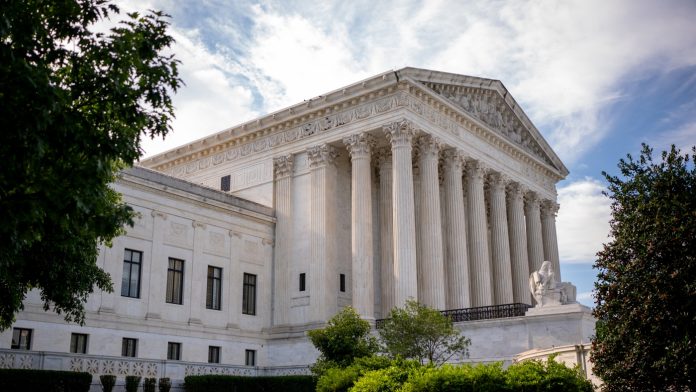
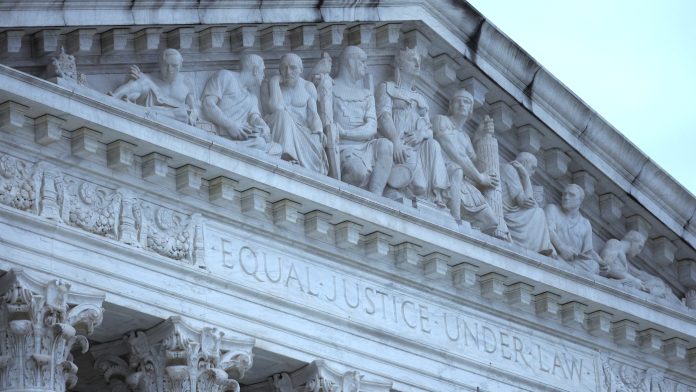
The U.S. Supreme Court heard arguments Thursday in a case challenging the Trump administration’s effort to limit who gets birthright citizenship.

Andrew Harnik/Getty Images


hide caption

toggle caption

Andrew Harnik/Getty Images

At the U.S. Supreme Court Thursday, the justices heard a case that challenges the constitutional provision guaranteeing automatic citizenship to all babies born in the United States, but the arguments focused on a separate question: Can federal district court judges rule against the administration on a nationwide basis.

The justices appeared divided on the issue.

Several seemed skeptical of the Trump administration’s argument that lower courts should not have the right to issue nationwide injunctions.

“What do hospitals do with a newborn? What do states do with a newborn?” Justice Brett Kavanaugh asked Solicitor General D. John Sauer, the government’s lawyer, about how the federal government would enforce Trump’s order.

Justice Brown Jackson was more pointed.

“Your argument seems to turn our justice system, in my view at least, into a catch me if you can kind of regime … where everybody has to have a lawyer and file a lawsuit in order for the government to stop violating people’s rights,” she said.

But Justice Clarence Thomas seemed more receptive to Sauer’s argument, noting the U.S. had “survived” without nationwide injunctions until the 1960s.

New Jersey Solicitor General Jeremy Feigenbaum, who represented the 22 states suing the government, told the court that nationwide injunctions should be available in “narrow circumstances” — like this case involving birthright citizenship.

Kelsi Corkran, who represented pregnant women and immigrant rights groups in the case, suggested allowing nationwide injunctions only when the government action is deemed by plaintiffs to be violating the Constitution. She argued that an injunction limited to only parties in the case would not be “administratively workable.”

President Trump has long maintained that the Constitution does not guarantee birthright citizenship. So, on Day One of his second presidential term, he issued an executive order barring automatic citizenship for any baby born in the U.S. whose parents entered the country illegally, or who were here legally but on a temporary visa.

On Thursday, he posted on Truth social that “it all started right after the Civil War ended, it had nothing to do with current day Immigration Policy!” — and repeated incorrect claims that the U.S. is the only country with birthright citizenship.

Immigrant rights groups and 22 states promptly challenged the Trump order in court. Since then, three federal judges, conservative and liberal, have ruled that the Trump executive order is, as one put it, “blatantly unconstitutional.” And three separate appeals courts have refused to unblock those orders while appeals are ongoing. Meanwhile, Trump’s legal claim has few supporters.

Nonetheless, the Trump administration took its case to the Supreme Court on an emergency basis. But instead of asking the court to rule on the legality of Trump’s executive order, the administration focused its argument on the power of federal district court judges to do what they did here — rule against the administration on a nationwide basis.

This is a developing story and will be updated.

GOP strategist Rob Burgess discusses differering Republican positions on the budget

0

NPR’s Steve Inskeep talks with GOP strategist Rob Burgess about the different positions within the Republican Party as budget negotiations continue.

Republicans continue negotiations over budget despite divisions on certain policies

0

House Republicans are still negotiating the details of a wide-ranging legislative package of President Trump’s domestic priorities that they hope to advance by the end of next week.

Supreme Court hears arguments in case challenging birthright citizenship : NPR

0

The U.S. Supreme Court hears oral arguments on May 15 in a case challenging an executive order President Trump signed in January to limit who is entitled to birthright citizenship.

Win McNamee/Getty Images


hide caption

toggle caption

Win McNamee/Getty Images

The Supreme Court hears historic arguments on Thursday, as the Trump administration seeks to challenge the constitutional provision that guarantees automatic citizenship to all babies born in the United States. NPR is carrying the arguments live.

Tap to hear NPR’s live special coverage

And yet, the arguments are likely to focus primarily on a different question entirely, a legal question on nationwide injunctions that could make it much more difficult and time-consuming to bring challenges to all of Trump’s legal policies, not just this one.

The Fourteenth Amendment to the Constitution, enacted after the Civil War, was aimed at reversing the Supreme Court’s infamous Dred Scott decision, a ruling that declared Black people, enslaved or free, could not be citizens of the United States.

The Amendment says: “All persons born or naturalized in the United States and subject to the jurisdiction thereof, are citizens of the United States.”

Challenges to birthright citizenship have long been considered a fringe legal theory. That’s because 127 years ago, the Supreme Court ruled to the contrary by a unanimous vote. Moreover, as if to put icing on the cake, Congress in 1940 passed a statute codifying birthright citizenship for any child born in the U.S.

President Trump, however, has long maintained that the Constitution does not guarantee birthright citizenship. So, on Day One of his second presidential term, he issued an executive order barring automatic citizenship for any baby born in the U.S. whose parents entered the country illegally, or who were here legally but on a temporary visa.

On Thursday, he posted on Truth social that “it all started right after the Civil War ended, it had nothing to do with current day Immigration Policy!” — and repeated incorrect claims that the U.S. is the only country with birthright citizenship.

The legal challenge

Immigrant rights groups and 22 states promptly challenged the Trump order in court. Since then, three federal judges, conservative and liberal, have ruled that the Trump executive order is, as one put it, “blatantly unconstitutional.” And three separate appeals courts have refused to unblock those orders while appeals are ongoing. Meanwhile, Trump’s legal claim has few supporters. At a program put on by the conservative Federalist society, writer Robert Verbruggen, a senior fellow at the conservative Manhattan Institute, referred to birthright citizenship as “a nutty policy we’re probably stuck with.” As he observed, the only way to undo the Fourteenth Amendment’s birthright citizenship provision would be by enacting a constitutional amendment, a process that requires the House and Senate to approve by a two-thirds vote, and three-fourths of the states to do likewise — something that is unlikely in the current political climate.

Nonetheless, the Trump administration took its case to the Supreme Court on an emergency basis. But instead of asking the court to rule on the legality of Trump’s executive order, the administration focused its argument on the power of federal district court judges to do what they did here — rule against the administration on a nationwide basis.

The odd result is that on Thursday the Supreme Court may hear some arguments about birthright citizenship, but most of the debate is likely to focus on what are called “universal” or “nationwide injunctions,” like the ones in this case, that have barred the administration from enforcing its birthright policy anywhere in the country while the case proceeds through the appellate process in numerous jurisdictions.

Bipartisan complaints

The Trump administration is not the first to complain about nationwide injunctions, observes University of Notre Dame law professor Samuel Bray. Over the last decade, both Democratic and Republican presidents have seen their policies stymied by these injunctions, which is why Bray calls these injunctions “a bipartisan scourge.”

And yet Bray admits that there is little wiggle room in terms of a principle that would weed out unjustified nationwide injunctions, and leave in place the ones that are needed to preserve the status quo and prevent ongoing harm from continuing. “I don’t find a lot of middle-ground options here,” he concedes.

Still, he thinks nationwide injunctions, powered by overt judge shopping—in which partisans often bring cases before judges they think will agree with them—do more harm than good. And he contends that because Trump is so “flagrantly wrong” about birthright citizenship, the court could acknowledge that but use Thursday’s case to get rid of nationwide injunctions altogether.

Georgetown University law professor Stephen Vladeck vehemently disagrees.

“To me that sort of gives up the game about what’s really at stake here because you’re saying, ‘Yes, we all know that this is unlawful and we’re [still] going to let the government put it into effect anyway,'” he says.

Indeed, he adds, the birthright citizenship case is a prime example of why nationwide injunctions are sometimes needed.

The question the court needs to think about, he says, “is whether it wants the federal courts to be able to block these policies on a nationwide basis or whether its going to require these cases to go plaintiff by plaintiff and district by district when you have an administration that will see that as a green light to try to manipulate the circumstances of other cases.”

And that, he maintains will end up deluging the court with more, not fewer, emergency cases.

‘A logistical nightmare’

Professor Bray, however, thinks this case was filed at just the right time psychologically.

“You just have to imagine the justices are looking at the potential for the emergency docket consuming the entire summer when they’re supposed to be away,” he says.

The summer break is good for the justices, he observes. They get time to recharge, let tempers cool, and come back from vacation refreshed for a new term in the fall. But in laymen’s terms, given the huge number of emergency appeals about Trump administration policies, this could really screw up justices’ summer.

Fixing the problem is not so easy, though, explains William Powell, one of the lawyers representing the Asylum Seeker Advocacy Project, a group suing to block Trump’s birthright order.

“Citizenship under the Fourteenth Amendment needs to apply in a way that is uniform across the country,” he says. “We cannot have a situation in which a baby born in Massachusetts is a birthright citizen but a baby born in Tennessee isn’t.”

The 22 states that are also challenging Trump’s birthright order contend that a Supreme Court decision barring nationwide injunctions would cause chaos until each case is ultimately resolved, perhaps with a second trip to the Supreme Court. The states are particularly worried about how to ascertain citizenship when a new resident comes from another state, according to Noah Purcell, solicitor general for the state of Washington. How would the new state resident prove citizenship in order to vote or qualify for a state benefit, he asks.

“Under their theory, a child born in Philadelphia would not become a citizen, but of course, that child could easily move across the border to New Jersey or another state,” he says, adding, “And that would just be a logistical nightmare.”

Of course, behind all the legal arguments, there are real people. People like Dina and Henry — those are the pseudonyms they used for our interview.

They have been in the U.S. for six years. Both are IT specialists seeking asylum. Their stories are different but both say they fled their home country, Kenya, in fear for their lives.

“My dad was forcing me to get married to somebody and one of my brothers intervened, and in the process he got killed,” Dina says.

Dina and Henry’s daughter was born in April and their biggest worry right now is that their child will be stateless—neither a citizen of the U.S., nor of Kenya. As Henry puts it, “We feel as though she may be relegated to a class of population that are not identified with any country.”

A decision in the birthright citizenship case is expected by late June or early July.

Who's eligible for birthright citizenship in America? Find out in this history quiz

0

Who was Wong Kim Ark and what is the story behind the Supreme court case United States vs. Wong Kim Ark? Find out here.

Trump touts ‘freedom zone’ plan for Gaza while in Qatar : NPR

0

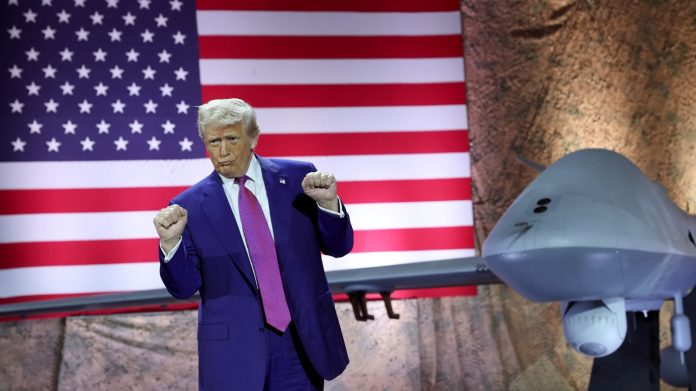
President Trump dances as his campaign song “God Bless the U.S.A.” plays on stage at the Al Udeid Air Base in Qatar on May 15, 2025.

Win McNamee/Getty Images Europe


hide caption

toggle caption

Win McNamee/Getty Images Europe

RIYADH, Saudi Arabia, and AL-UDEID AIR BASE, Qatar — President Trump said on Thursday the Gaza Strip should be made into a “freedom zone,” doubling down on his proposal to displace Palestinians from the territory just as Israel plans a major offensive and intensifies deadly airstrikes, killing more than 150 people in the past day, including dozens of children.

Trump is on the last leg of a trip to the Middle East – a visit that did not include a stop in Israel. He has mainly skirted the issue of the war in Gaza in his public remarks during the trip, but made comments to reporters after a roundtable with business leaders in Qatar.

“Gaza has been a territory of death and destruction for many years,” Trump said. “I have concepts for Gaza that I think are very good — make it a freedom zone. Let the United States get involved and make it just a freedom zone.”

Israel’s far-right government has embraced Trump’s proposals on Gaza to displace Palestinians permanently outside the territory and turn it into a seaside real-estate development. Trump’s latest comments on Gaza were made while he was still in Qatar. All Arab states have rejected the plan, and Hamas has called it ethnic cleansing.

Trump’s remarks about Gaza came on the same day the number of Palestinians killed in Israeli attacks in the war surpassed 53,000 people — a third of them children, according to Gaza’s health ministry. Hundreds of Palestinians have been killed this week in intensified Israeli airstrikes, according to hospitals and health officials contacted by NPR.

Trump described aerial images of the widespread destruction from Israeli airstrikes on Gaza.

“There’s practically no building standing. It’s not like you’re trying to save something,” he said.

A man holds the body of a child at a hospital morgue in Beit Lahia, Gaza as he stands next to the bodies of other family members killed in Israeli airstrikes in northern Gaza on May 14, 2025.

A man holds the body of a child at a hospital morgue in Beit Lahia, Gaza as he stands next to the bodies of other family members killed in Israeli airstrikes in northern Gaza on May 14, 2025.

Anas Baba/NPR


hide caption

toggle caption

Anas Baba/NPR

Ceasefire talks stall even while Trump in Qatar, where talks are happening

Only a day before Trump arrived in the Middle East, Hamas freed U.S.-Israeli hostage Edan Alexander, an Israeli soldier taken captive by Palestinian militants in the Oct. 7th, 2023 attack on Israel. The release raised hopes that the United States could push forward a ceasefire.

But talks appear stuck with no progress being made in recent days, despite the presence of Israeli negotiators in Qatar this week and a visit by Trump’s Mideast Envoy Steve Witkoff to Israel on Tuesday.

Hamas agreed to release Alexander after rare direct talks with the Trump administration in Qatar before the president’s tour of the Gulf. Those talks sidestepped Israel’s prime minister, who’s under increasing pressure at home to strike a deal that frees hostages. Hamas wants U.S. guarantees that a deal releasing remaining Israeli hostages would be in exchange for an end to war and Israel removing its troops from Gaza.

Israeli Prime Minister Benjamin Netanyahu has insisted on only a temporary truce to free some hostages. He has vowed to return to war after any pause in fighting with the aim of eliminating Hamas and disarming the group.

While in the Gulf, Trump heard from the leaders of Saudi Arabia and Qatar on the need to end the war in Gaza. The Saudi crown prince made those remarks at a Gulf Arab leaders’ summit with Trump, and Qatar’s ruling emir was heard raising the issue with Trump upon his arrival to Doha on Wednesday.

Israel, however, is planning an offensive to take over more territory in Gaza and has called up tens of thousands of reservist soldiers in preparation. Israel also has plans to roll out a U.S-backed plan to distribute food rations to Palestinians who would be forcibly displaced to small zones of southern Gaza.

Israel says its aim is to ensure Hamas does not access or benefit from aid. U.N. organizations and other aid groups in Gaza refuse to participate in the new scheme, saying it would put Palestinians at greater risk and further displace the population.

Israel has imposed more than two months of blockade on the territory, barring the entry of all aid, including food, fuel and medicine. The blockade has pushed half a million people in Gaza to starvation, according to the latest review by independent experts on famine. Israel’s blockade has sparked widespread criticism from countries around the world, as well as aid organizations and rights groups.

Qatar's Emir Sheikh Tamim bin Hamad al-Thani and Prime Minister Sheikh Mohammed bin Abdulrahman Al-Thani talk to President Donald Trump at the Al-Udeid air base on May 15, 2025.

Qatar’s Emir Sheikh Tamim bin Hamad al-Thani and Prime Minister Sheikh Mohammed bin Abdulrahman Al-Thani talk to President Donald Trump at the Al-Udeid air base on May 15, 2025.

Brendan Smialowski/AFP


hide caption

toggle caption

Brendan Smialowski/AFP

Trump’s focus is on big investment deals in the Gulf

Trump’s visit to the Gulf has focused on multibillion-dollar deals that boost investment in U.S. companies, like an order signed by Qatar on Wednesday for up to 210 Boeing airplanes.

Major deals were also signed during his two-day stop in Saudi Arabia this week in technology and AI, but the bulk of investments and sales to Gulf states are in U.S. defense and weaponry.

Trump gave rally-style remarks on Thursday to thousands of U.S. troops stationed in Qatar’s Al-Udeid Air Base, falsely telling them he had won the 2020 election, and describing the Biden administration as “evil.”

“You are, without a doubt, the greatest fighting force in the history of the world,” he said, adapting his campaign slogan to tell troops they were “making America great again” and describing his administration’s efforts to end diversity initiatives in the military.

“We don’t care if you’re politically correct,” he said.

The sprawling air base has been used by the U.S. for airstrikes against the Islamic State group and other operations in the Middle East. The U.S. also has the Navy’s 5th Fleet positioned off the coast of Bahrain, and troops present at bases in the UAE, where the president is slated to round out his Gulf tour on Friday.

Aya Batrawy reported from Riyadh, Saudi Arabia.

A bipartisan group in Texas wants to clarify when doctors can perform abortions : Shots

0

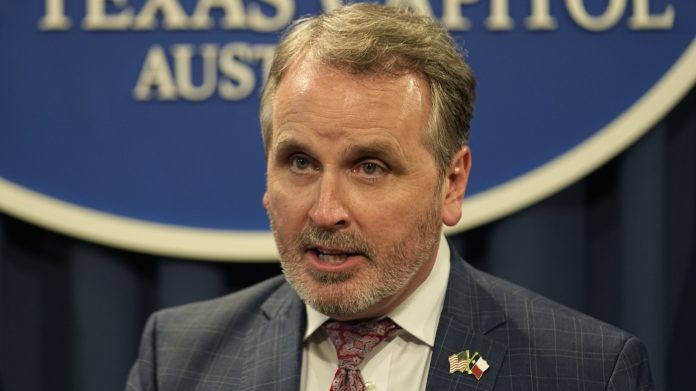
Texas State Sen. Bryan Hughes, R-Mineola, one of the original sponsors of the Texas Heartbeat Act, is now the lead sponsor of a bill to clarify when a doctor can terminate a pregnancy to save the life of the mother.

Eric Gay/AP


hide caption

toggle caption

Eric Gay/AP

Since abortion became nearly entirely illegal in Texas in 2021, the state has seen a significant rise in the number of women who die in pregnancy or after giving birth. A group of bipartisan lawmakers in the state wants to change that by clarifying the state’s abortion ban with a new law.

A central player in this effort has been Republican State Senator Bryan Hughes. Though he was one of the original sponsors of The Texas Heartbeat Act which outlawed abortion, Hughes is now leading an effort to make clear there is a narrow pathway to the procedure.

“ Everybody agrees that the life of the mother should be protected,” says Hughes, who is the lead sponsor on the new legislation called, The Life of the Mother Act. Hughes says the bill clarifies that doctors can terminate a pregnancy when the mother’s life is at risk, as well as provide training for physicians on the subject.

“Most hospitals and doctors are getting it right, but a few are not,” he says.

The bill represents a sea change for the Senator, who last year wrote an op-ed in the Houston Chronicle defending the original law and blaming the media for doctors’ failures to treat women in need of life-saving abortion care.

If the bill passes, it would be a rare bipartisan victory in the Texas legislature, but whether it will make a significant difference for pregnant women and their doctors is unclear and is a question on which medical professionals across the state have not reached consensus.

Texas is a dangerous place to be pregnant

Despite the Trump administration exhorting Americans to have more babies, pregnancy can be a dangerous endeavor in the United States. Geography matters. A recent report from the Gender Equity Policy Institute showed that the risk of maternal death in Texas is 155 percent higher than it is in California, where 9.5 women per 100,000 died.

Since Texas outlawed most abortions, the state has seen increased rates of maternal death, sepsis among women who are experiencing miscarriage and a strained workforce of obstetricians increasingly reluctant to practice in the state. Doctors who perform a prohibited abortion can face first degree felony charges, have their license revoked and incur fines of at least $100,000.

Reporting from ProPublica shows that several women have died after experiencing an inability to get an abortion or a delay in getting one. The organization also documented soaring rates of sepsis among hospitalized women who lost a pregnancy in the second trimester.

“ We warned our colleagues that this would happen,” says Democratic State Senator Carol Alvarado, one of several Democrats who supports the bill. “Let’s figure out what we need to do to give our physicians clarity.”

The bill spells out that abortions can be performed when a woman’s life is at risk, even if it is not “imminent,” and or may cause medical impairment to the mother.

Mixed reception

The bill passed the State Senate unanimously and now heads to the House. Conservative Governor Greg Abbott has signaled his support.

But the proposed bill has gotten mixed reactions elsewhere. While some medical interest groups have endorsed the legislation, others are opposed.

“This bill would keep Texas’s abortion ban in place,” reads a statement from the American College of Obstetricians and Gynecologists. “And we strongly oppose the abortion ban and will continue to do so.”

Some advocates for abortion rights argue the law is an exercise in futility.

“ There’s a lot of language here, but it’s all circular,” says Molly Duane, an attorney for The Center for Reproductive Rights. “In my legal opinion, it would actually make the exception more confusing.”

Duane points out that determining when someone’s life is in jeopardy is a subjective matter of medical interpretation and legal language to quantify risk will inevitably be flawed.

“How sick does someone have to be for this exception to be in play?” she asks.

That’s a question, she says, that is not answered — nor is it clear if answering it is possible.

“ It leads me back to the inevitable conclusion that exceptions just don’t work in practice.”

Dr. Todd Ivey, an obstetrician in Houston, has been dealing with life-threatening circumstances for his pregnant patients in recent years. He is hopeful the legislation could offer clarity.

“ Personally, I feel like it will help me feel more assured in providing safe care for women and in discussing options with women.”

Ivey recalls one patient who was battling metastatic breast cancer and had four young children at home. She needed to terminate a pregnancy in order to continue chemotherapy.

“ I literally spent eight plus hours calling around trying to find someone that would accept her,” says Ivey. “Trying to find an institution to provide this care so she could get her cancer care.”

Under this bill, Ivey believes, this patient would have been able to end her pregnancy without delay. That said, he does think the proposal has its shortcomings. “I don’t think it’s a perfect bill,” says Ivey.

It’s hard to define ‘life threatening’ 

Texas’ abortion law allows for no exceptions for rape, incest, or fatal fetal anomalies. The original law implied some exception for medical emergencies, but offered a murky definition of what the term actually meant. Doctors who do not comply with the Texas abortion ban could lose their medical license, face felony charges, or risk life in prison, which is still the case.

A previous attempt from Democratic State Senator Ann Johnson tried to give doctors some clear guidance on things like ectopic pregnancy and ruptured membranes, a condition which can quickly lead to fatal infections for the mother if the uterus is not emptied. But many felt the amended law still did not offer the legal guarantees that doctors needed to exercise their medical judgement and avoid harsh punishment.

Texas is not the only state that has sought to clarify abortion exceptions. South Dakota made a video in an effort to educate its doctors on abortion law. Kentucky lawmakers worked to add a list of medical conditions that would qualify as exemptions. In Tennessee, legislators tried to add an exemption for women carrying pregnancies in which the baby would not survive.

None of these efforts have offered a national template for states seeking to do the same.

‘My life was never at risk’

Kaitlyn Kash is an advocate for abortion rights who came to the cause after experiencing her own medical crisis. She left the state for an abortion after her fetus was diagnosed with a rare fatal condition.

She recalls the doctor’s appointment in which she learned of the diagnosis.

“They kept telling me all of these horrible things like ‘lethal anomaly,’ and ‘incompatible with life,’ ‘suffocation at birth,’ ‘bones breaking in utero,’ ‘lifesaving medical care,’ ‘lifelong hospital stays,’ ‘short life expectancy,'” she remembers. “You’re just sitting there going, oh my God, every time I ask a question, it gets worse.”

She points out that this new law would not have changed her circumstances.

“ My life was never at risk under the qualifications of the medical exemption,” she says.

Kash says this new law doesn’t take into account threats to a mother’s mental health — such as carrying a baby to term that won’t survive. The new law, she says, would not give women the latitude they need to make decisions about what is best for their own health.

“I hope this law gives doctors the clarity they need,” she says. “But that is a small piece of this bigger picture.”

Edited by Jane Greenhalgh

Trump to meet South African president amid deteriorating relations : NPR

0

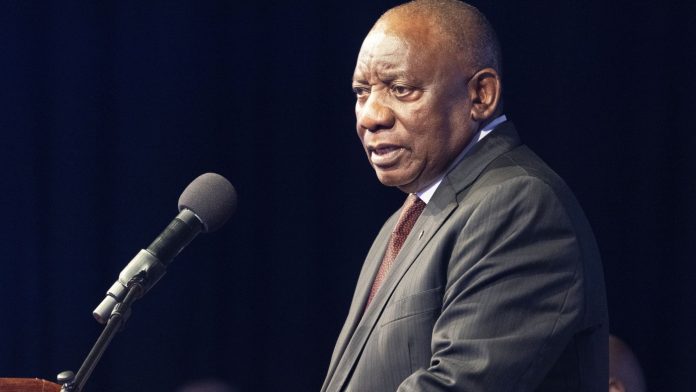
South African President Cyril Ramaphosa addresses the opening session of the G20 foreign ministers meeting in Johannesburg, South Africa in February.

Jerome Delay/AP


hide caption

toggle caption

Jerome Delay/AP

JOHANNESBURG — South African President Cyril Ramaphosa will travel to Washington next week to meet President Trump at the White House on Wednesday “to discuss bilateral, regional and global issues of interest,” his office has announced.

The visit comes as relations between the U.S. and South Africa are at their lowest since the end of apartheid. Trump has repeatedly claimed that “terrible things are happening” in South Africa, and invited Afrikaners to apply for refugee status in the U.S. On Monday, the first group of some 59 white South Africans who had been approved arrived in Washington on a U.S. government-chartered plane.

The statement from Ramaphosa’s office said that next week’s visit “provides a platform to reset the strategic relations between the two countries.”

In February, Trump cut all aid to South Africa – a longtime ally of the U.S. – in an executive order. The order cited the fact that the South African government – a firm supporter of Palestinians – accused Israel of genocide for its war against Hamas in Gaza, filing a suit in the International Court of Justice in the Hague. It also alleged, without evidence, that white South Africans of Dutch descent, known as Afrikaners, were being persecuted because of their race.

Refugee nonprofits noted the Trump administration gave the group that arrived on Monday an extraordinary reception not usually given to refugees – with high-ranking state department officials turning out to welcome them. The Afrikaners, including children, were given small American flags to wave and were told by Deputy Secretary of State Chris Landau that “it is such an honor to have you here.”

Landau drew parallels with the Afrikaners’ arrival in “the land of the free” and his own family’s experience fleeing Nazi Germany.

The spectacle left many South Africans watching at home incredulous and saw Ramaphosa make his strongest remarks on the matter yet. He said the group of Afrikaners were “cowards,” because they just didn’t want to live in the new South Africa, which has Black-majority rule. He said many longed for the old days of apartheid.

He dismissed claims by Trump, and his South African-born advisor Elon Musk, that Afrikaners are having their land confiscated or are being unfairly treated, noting, “We’re the only country on the continent where the colonizers came to stay and we have never driven them out of our country.”

Ramaphosa said he talked to Trump about the resettlements on the phone, and tried to clarify the issue, saying the U.S. leader had got “the wrong end of the stick.”

Next week, he’ll get a chance to remake his argument in person.

But despite experts and data contradicting Trump’s claims about South Africa, the U.S. administration has continued with its broadsides against Pretoria, including refusing to take part in G20 events the country is hosting this year as the group’s current president. Secretary of State Marco Rubio also kicked out the new ambassador from South Africa earlier this year — accusing him of being a “race baiting politician” and hating Donald Trump.

Ramaphosa is a seasoned negotiator, who was instrumental in the talks that saw the transition from apartheid to democracy in the 1990s. However, some South Africans took to social media saying they are concerned Trump could be intending to humiliate him, noting the now infamous Oval Office meeting with Ukrainian President Volodymyr Zelenskyy earlier this year.

Public media execs ask Congress to defy Trump on funding : NPR

0

Patricia Harrison is the president and CEO of the Corporation for Public Broadcasting, which is suing the Trump administration over the abrupt firing of three of its five board members.

STEFANI REYNOLDS/AFP via Getty Images/AFP


hide caption

toggle caption

STEFANI REYNOLDS/AFP via Getty Images/AFP

Public broadcasting officials from across the country plan to descend on Capitol Hill today in hopes of convincing lawmakers to preserve their federal funding despite pressure from President Trump and his allies.

Money from the federal government accounts for fully half the annual budgets of some local public television and radio stations.

The lobbying effort follows a multipronged attack from the Trump administration on the finances and independence of public media, with a particular focus on PBS and NPR, the predominant national public television and radio networks, respectively.

The White House has called NPR and PBS programming “radical propaganda” and characterized federal spending on public media as a waste of taxpayer dollars.

The vast majority of that money goes to local public broadcasting stations rather than the national networks.

“I’m extremely worried about it,” said Dina Polkinghorne, the interim co-general manager of a station in rural Philo, Calif., speaking on the public affairs show Forum on KQED. “I’ve never seen community radio in such a perilous situation.”

Roughly 190 officials from local stations across the country flew to NPR headquarters in Washington, D.C. this week to strategize and impress upon lawmakers the services they provide – and the loyalty of their audiences (who often prove to be engaged voters).

Alaska Sen. Lisa Murkowski, a Republican, has already announced her support.

In an op-ed published in the Fairbanks Daily News-Miner and on her Senate website, Murkowski writes that public broadcasting stations in Alaska not only inform people, but connect them through cultural programs that address mental health concerns, and serve as warning systems “for natural disasters, power outages, boil water advisories, and other alerts.”

“We get these essential services at a comparatively small cost,” she writes. “What may seem like a frivolous expense to some has proven to be an invaluable resource that saves lives in Alaska.”

Polkinghorne’s station, KZYX, serves a rural coastal county north of the Bay Area that is relatively economically depressed and has suffered wildfires and winter storms.

She says while residents can watch local TV stations based in the Bay Area, there are none that serve her county. “So radio is really it,” she said. “People rely on us for that sort of breaking news to keep them safe and informed.”

Polkinghorne told KQED that federal funds – about $174,000 annually – make up 25% of the station’s annual revenues.

Officials who run a half-dozen public media stations spoke to NPR News for this story on condition they not be quoted, citing the sensitivity of the moment.

A multipronged attack on public media funding

In recent weeks, Trump has asserted what he claims is his power to fire three of the five board members of the Corporation for Public Broadcasting – or CPB – and decreed that it should stop subsidizing NPR and PBS.

CPB officials say the order is invalid and illegal and plan to ignore it; PBS and NPR say they will fight it.

It is unclear whether that would bar stations that receive funds from CPB from using non-federal money to pay for NPR and PBS programming. If it did, stations could face the choice of losing a significant amount of revenues – or a huge chunk of their programming schedule.

And if many stations were to back away from NPR, it would hit the radio network hard: station payments make up about 30 percent of its annual revenues. The toll on PBS would be greater.

Trump also has said he would formally ask Congress to claw back roughly $1 billion in federal funds lawmakers have allocated to CPB to fund public broadcasting over the next two fiscal years. He has yet to send that request to Capitol Hill. But in the budget blueprint he has presented to Congress, the president proposed the elimination of all federal funds for CPB in subsequent years.

On Wednesday, a federal judge in Washington D.C. heard a legal challenge to Trump’s firing of the CPB board members. The nonprofit corporation contends those firings are illegal because CPB is not part of the federal government. It asked for a preliminary ruling preventing Trump’s decree from taking effect while the larger case goes to trial.

U.S. District Judge Randolph Moss sharply questioned the lawyer for the CPB over whether such a ruling was necessary. The judge suggested that until he issues a decision in the case, the CPB could go about business as usual with all five members – as it has been doing, despite Trump’s demand.

More substantively, Moss appeared to put up roadblocks to Justice Department lawyer Jeremy Newman’s assertion that Trump was within his presidential authority to remove the board members. The president appoints members of the board in consultation with Senate leaders of both parties.

“The power to remove entails the power to control,” Moss said. “The statute [creating the CPB] is pretty clear that the executive is not supposed to be controlling the CPB.”

CPB was created by an act of Congress as a nonprofit, and incorporated in the District of Columbia.

From the outset, CPB has been intended to serve as a firewall that shields public broadcasters from political pressure, even though a significant part of their funding comes from the federal government through CPB: typically about 15% for public TV stations and PBS, and 8 to 10% for public radio stations. (NPR generally receives about 1% of its funds directly from the federal government and a bit more indirectly from stations through programming fees.)

Trump allies level accusations of liberal bias

At a board meeting last week, CPB Chair Ruby Calvert spoke of her profound belief in the mission served by public broadcasters: providing free of charge to all “unique high quality programming, trusted information and educational comment over the air and online.”

“I come from a deeply conservative Republican family and state. My brother was both speaker of the House and president of the Senate in the Wyoming legislature,” she said. “Like him, I am very fiscally conservative and philosophically conservative. And I want to note that there are many conservative friends who support public media.”

In late March, Trump’s Republican allies in the U.S. House held a hearing to question the wisdom of government funding for public media, and accused the national networks of an anti-conservative bias.

Republicans resurrected social media messages posted by NPR Chief Executive Katherine Maher years before she joined the network in 2024. They revealed she had a liberal political bent. They also expressed outrage at a drag queen’s reading time segment that was posted on the website of a PBS member station in New York City. (It was later taken down).

Both Maher and PBS Chief Executive Paula Kerger have given a handful of interviews in which they say the networks will defend their rights and ability to deliver news and cultural programming. Maher has emphasized the role NPR stations play in spreading news and information to so-called “news deserts,” where other local news outlets have faded or shut down.

Maher recently spoke with the podcast for the Columbia Journalism Review, in which she reiterated the network is weighing legal action against the administration over its claim that it is ordering CPB and local stations to withhold funds from NPR and PBS.

States rethink their funding of public media too

Public radio officials told NPR financial contributions from individual donors had jumped up appreciably, but did not count on that figure to be sustainable year after year.

Meanwhile, some public broadcasting stations are in danger of losing political support and funding at the state level too.

In Indiana, where the state government is dominated by Republicans, the governor signed a bill into law that wiped out all taxpayer funding for all 17 public broadcasting stations, including those based in Indiana that serve communities in neighboring states. Station officials there told public radio station WFYI in Indianapolis that it “could result in disruptions or cuts to operations, services or staff.”

In New Jersey, the budget of Democratic Gov. Phil Murphy would cut public subsidies for New Jersey PBS next year to $250,000, which is a quarter of the current amount. The state has not yet adopted its budget for the upcoming year, but NJ PBS attributed layoffs in part to the budget uncertainty.

Meanwhile, in New York, state officials struck a deal to offer an extra $4 million infusion to be split evenly among public radio stations around the Empire State – a direct response to the sense of crisis emanating from the nation’s capital.

The state typically gives $14 million annually to public media – all but $1 million of which is for TV. This new figure is layered on top of that.

Disclosure: This story was reported and written by NPR Media Correspondent David Folkenflik. It was edited by Deputy Business Editor Emily Kopp and Managing Editors Gerry Holmes and Vickie Walton-James. Under NPR’s protocol for reporting on itself, no NPR corporate official or news executive reviewed this story before it was posted publicly.


Some see Gov. Newsom shifting to the center ahead of possible presidential run

0

As California Gov. Gavin Newsom announces reductions to health care for migrants in the country illegally, some say that he’s moving to the political center ahead of a possible 2028 presidential run.