

President Trump has suggested that the U.S. should take over Greenland. Now, a planned trip to Greenland puts Usha Vance, the spouse of the U.S. vice president, in a difficult diplomatic position.
Protests in Turkey Over Istanbul Mayor’s Detention: What to Know About the Turmoil
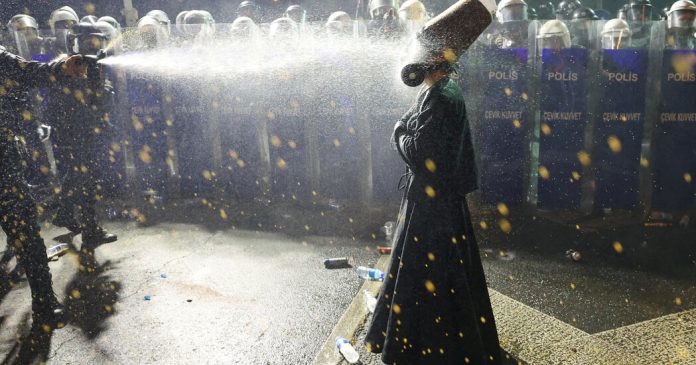
Turkey has been plunged into a political crisis after the authorities arrested Ekrem Imamoglu, the mayor of Istanbul and the top rival of President Recep Tayyip Erdogan, on accusations of corruption and supporting terrorism.
The biggest protests in more than a decade have erupted across the country, with Mr. Imamoglu ousted from his position and jailed hours before Turkey’s main opposition party designated him its candidate in the next presidential election.
Mr. Imamoglu has denied the charges, calling them politically motivated. Many people have accused the government of using the courts to sideline a perceived political threat to Mr. Erdogan, who has led Turkey since 2003, and have called for his release.
Who is Ekrem Imamoglu?
Mr. Imamoglu became the mayor of Istanbul, Turkey’s largest city and economic engine, in 2019, after defeating a candidate backed by Mr. Erdogan. He was re-elected twice, and some polls suggest that he could beat Mr. Erdogan in a head-to-head race for the presidency.
On March 19, scores of police officers arrested Mr. Imamoglu at his home after state prosecutors accused him of corruption in municipal business and supporting terrorism. Four days later, the government removed him from office and jailed him pending trial on the corruption charges.
That same day, Turkey’s main opposition party, the Republican People’s Party, or C.H.P., held a primary to choose Mr. Imamoglu as its candidate in the next presidential election. Millions of party members from across the country voted, and nonparty members cast symbolic ballots to voice their support for him.
Mr. Imamoglu has vowed to fight the government. But his detention is not the only hurdle he faces in seeking the presidency. The day before his arrest, his university annulled his diploma, which could preclude him from a presidential bid. He faces an array of other court cases, too, including some that could see him temporarily barred from politics. He has called them politically motivated, too, and is contesting them in court.
What is the government saying?
State prosecutors accused Mr. Imamoglu of leading a criminal organization and overseeing bribery, bid rigging and other financial misdeeds at City Hall. They also accused him of supporting terrorism through his political coordination with a pro-Kurdish group during last year’s municipal elections, a claim that is still under investigation.
Government officials say that the accusations are not politically motivated and have called on Turks to have faith in the courts and wait for the legal process to conclude. The government has also issued protest bans in major cities, limited access to social media sites and flooded pro-government news channels with leaks aimed at indicating Mr. Imamoglu’s guilt.
Security forces have used water cannons and tear gas to disperse the protests. Interior Minister Ali Yerlikaya has said that more than 1,100 people have been detained in relation to the protests following Mr. Imamoglu’s arrest and that more than 100 police officers were injured in clashes with demonstrators.
“Some circles in recent days are abusing the right to demonstrate, attempting to disrupt public order and attack our police officers as they fan street events,” Mr. Yerlikaya said in a post on X. “Such actions aim to disrupt the peace and safety of our people.”
What could this mean for Turkey’s future?
The moves against Mr. Imamoglu are the latest examples of what Mr. Erdogan’s critics call his increasingly authoritarian tactics. In his more than two decades in power, Mr. Erdogan has gathered state power in his hands while extending his influence over the news media and the judiciary.
Mr. Erdogan’s second term expires in 2028. The Constitution limits presidents to two full terms, but he could legally run again if Parliament called for early elections and cut short his second mandate.
If Mr. Imamoglu, 54, can escape his legal troubles, that would put him in a head-to-head race with Mr. Erdogan, 71. The president has not said whether he will run, but he has no clear successor and many people expect him to do so.
Turkey’s stock market and the value of its currency have dropped substantially since Mr. Imamoglu’s arrest, although they have since regained some of their losses. Some investors, however, could avoid the country out of fears about the rule-of-law and the possibility of more instability.
Some European leaders have criticized Mr. Imamoglu’s arrest as anti-democratic, but senior American officials have said little about it.
Recent global events may have left Mr. Erdogan in a good position. The Trump administration has expressed few concerns for how American partners govern their countries. And fear that the United States will withdraw support for Ukraine in its war with Russia has led European countries to seek greater defense ties with Turkey that they may not want to risk jeopardizing.
Safak Timur contributed reporting.
China Releases Mintz Employees After 2-Year Detention
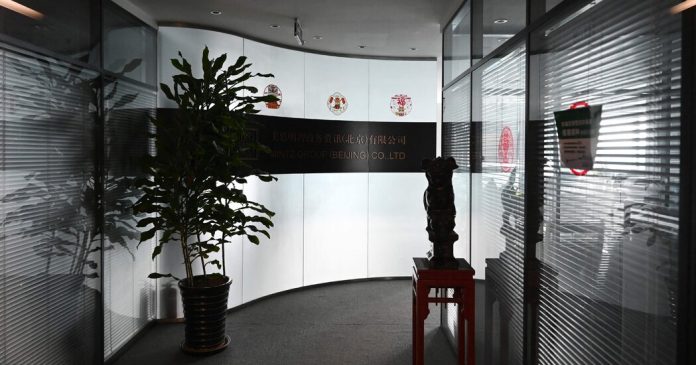
China has released five employees of an American corporate investigations firm, the Mintz Group, two years after they were detained as part of a crackdown by Beijing on foreign business consultancies.
“We understand that the Mintz Group Beijing employees who were detained, all Chinese nationals, have now all been released,” the firm said in a statement on Tuesday.
“We are grateful to the Chinese authorities that our former colleagues can now be home with their families,” the company said.
The employees’ release comes as China is trying to revive overseas investment to help revive its sluggish economy. Dozens of foreign executives, including Tim Cook of Apple and Cristiano Amon, the chief executive of Qualcomm, are visiting Beijing this week to attend a development forum. Foreign investment that slowed to a crawl during Covid has not recovered in the past couple years, as weak sales and overall demand in the Chinese economy have made it less attractive.
Several dozen chief executives and other leaders of global companies were expected to meet with China’s top leader, Xi Jinping, on Friday at the Great Hall of the People in Beijing, according to a person with knowledge of the planning who spoke on the condition of anonymity because he was not authorized to comment. The gathering would be the third time in 17 months that Mr. Xi has met with the leaders of multinational companies, including in San Francisco in late 2023, after a summit with President Joseph R. Biden Jr. outside the city.
The business forum was also attended by Senator Steve Daines of Montana, who said in an interview with The New York Times that he was trying to lay the groundwork for a meeting between President Trump and Mr. Xi.
The Mintz employees, who have not been identified, were detained during a raid of the firm’s Beijing office in March 2023. Later that year, China fined the company about $1.5 million for engaging in “foreign-related statistical investigation activities without obtaining approval,” according to Chinese state media.
Mintz, which is based in New York and has offices around the world, specializes in due diligence work — background checks, asset tracing, and fraud and corruption investigations — for client firms before they make investment decisions.
That kind of work became the target of Mr. Xi’s government, which appears to view due diligence into Chinese supply chains and Chinese corporate activity as a threat to national security and the ruling Communist Party’s grip on power.
A month after Mintz’s office was raided, Chinese authorities visited the Shanghai offices of the U.S. management consulting firm Bain & Company and questioned its employees.
The crackdown on foreign consultancies was also viewed as a response to the Biden administration’s introduction of export controls on advanced U.S. technology, such as semiconductors, to China.
Berry Wang contributed reporting from Hong Kong.

What Makes Sydney’s Pondi Beach Different? It’s 50 Miles Inland.

Kristine Carroll plopped herself down in the only shade on the beach — a triangle cast by the makeshift lifeguard station — and slathered sunscreen all over her freckled skin.
Squinting at the scorching midday sun, she glanced over at her 8-year-old daughter, Zoe, who had already plunged into the blue-green water without hesitation. “She’s a water baby,” Ms. Carroll said.
The Pacific Ocean, which gives Sydney, Australia, its iconic coastline and some of the world’s most enviable beaches, was almost 50 miles away. A pod of pelicans cruised past and coots waded nearby, with not a sea gull in sight. A sign cheekily warned of wave heights of 2 millimeters — less than a tenth of an inch.
This is Pondi Beach.
No, not Bondi, the glistening backdrop of reality television, the stuff of backpackers’ daydreams and ground zero of the Australian church of surf and sand — but Pondi, as locals have taken to calling humble, man-made Penrith Beach.
Created on one stretch of a lagoon at a former quarry at the foot of the Blue Mountains that mark the Sydney area’s western edge, Pondi, pronounced Pond-eye, isn’t exactly postcard-worthy like the eponymous Bondi Beach. But it has become a welcome haven for those who live an hour or more inland from the coast and pay hefty tolls to get there.
Like many cities, the fringes of Sydney’s urban sprawl are made up of working-class families, newly arrived immigrants and those pushed out further and further from downtown by rising housing prices. In Penrith and nearby areas, that also means living with temperatures that can be 30 degrees Fahrenheit higher than near the coast, a disparity exacerbated by climate change. In 2020, Penrith was briefly the hottest place on earth, when the mercury topped 120 degrees.
The beach opened for a second season in December and so far has cost the state government about $2.7 million. At just over half a mile long, it is as long as Bondi Beach.
On a recent Sunday, when a heat warning was in effect with highs of 95 degrees, children gleefully splashed about at Pondi with snorkels or pool floats in the shape of crocodiles and unicorns. Some families tossed about a rugby ball, while others cooked up a feast of prawns, sausages and a whole roast chicken. A couple of girls lay out on their stomachs for a tan.
Ms. Carroll, 46, a lifelong Penrith resident who works as an education coordinator in a nearby prison, has never had air conditioning at home. The previous night, she said, she drove around in her car just for the air conditioning, because it was too hot in her house.
Having a beach close to her home for her family to cool off, rather than having to spend a full day trekking out to the coast — paying steep prices for tolls, parking and food — has been a major help, particularly in a cost-of-living crisis she said has stretched her finances. By her accounting, that day’s outing would only cost her the gas for a 12-minute drive and a 50-cent McDonald’s ice cream for her daughter on their way home.
“A lot of people turn up their noses at it, but, mate, it’s free. They think it’s the bogan knockoff of Bondi Beach,” she said, using derogatory Australian slang for an uncouth person, historically associated with Sydney’s western suburbs.
Zoe said she had been to “actual Bondi” on a recent weekend for a cousin’s swim meet. She liked it but said the saltiness of the ocean water left her with red splotches on her skin.
“I like how soft the sand is. In Bondi, the sand was too hot,” she said, burrowing her toes into the pale Pondi sand.
After playing in the water, Elhadi Dahia and his three children — ages 6, 4 and 1 ½ — had walked up a grassy slope to two food trucks. The older two polished off hot dogs and a potato snack, and began pleading for ice cream. The youngest was in a swim diaper with the words “Fish are friends” on it.
A native of Darfur in landlocked western Sudan, Mr. Dahia said he only knows how to “donkey swim,” having grown up swimming in rivers that flooded after rain. He said that he arrived in Australia more than a decade ago as a refugee and that he has enrolled his children in swimming lessons for a true Australian upbringing.
They were late for swim class that day and decided instead to go to Pondi, which his neighbor had been raving about for weeks. Mr. Dahia, 38, said he was pleasantly surprised and said he’d probably be back before long.
Diana Harvey said she was skeptical of Penrith Beach before she decided to check it out on a whim on a recent weekday afternoon.
She needed a break from her duties as a full-time caregiver for her autistic adult son, which keeps her at home most days, and hadn’t been to a beach all summer — a travesty for many Australians who consider swimming a birthright.
“I was basically brought up in the water,” said Ms. Harvey, 52, recalling that her family would spend three hours driving to and from a beach in the summers growing up. “We are all water people here.”
She had popped by Pondi in the waning days of summer thinking she would take a quick, 20-minute dip but ended up swimming for two hours, the Blue Mountains majestically stretching beyond and an expansive azure sky reflecting in the serene waters.
Some residents have wondered if a beach so far inland would essentially be a glorified swamp, and there have been brief closures over water quality concerns. Pondi’s opening week in 2023 was marred by tragedy when a man who floated on a paddle board with his young children beyond the swimming area drowned.
Still, more than 200,000 people visited the beach in its first season, according to the state government.
On a recent weekend morning, Barbara Dunn’s family was first in line before the gates for the beach opened at 10 a.m. Her 6-year-old daughter Rhythm was sticking her head out of their car’s back window in excitement.
“Where we’re from in New Zealand, we’d call this a lake,” Ms. Dunn, 45, said. “It does the job. You get wet, right?”
Rhythm bounded through the sand with her plastic pail filled with tools for building sand castles. For the next six hours, as the hot sun peaked overhead then began heading for the mountains, as the crowds filled in then thinned out, she tirelessly swam, played in the sand, rolled around in the river grass.
“She won’t want to go home,” Ms. Dunn said with a sigh.
Bird Flu Found in Sheep in U.K., a World First

Bird flu has infected a sheep in Britain in what the government on Monday described as the first case of its kind reported anywhere in the world.
While avian influenza had already been detected in cattle and other mammals, including in the United States, the infection of a sheep will increase concern over the potential impact of the disease’s spread.
In a statement, Britain’s government said that avian origin flu (or H5N1) had been found in a ewe during what it called “routine surveillance” of livestock in Yorkshire in the north of England, where cases had been confirmed in captive birds.
“All affected birds and the infected ewe were humanely culled to mitigate the risk of further disease spread,” the statement from the Department for Environment, Food and Rural Affairs said. “Further official testing of the remaining flock of sheep at the premises, including the lambs of the affected ewe, were negative for the presence of avian influenza virus.”
Britain’s chief veterinary officer, Christine Middlemiss, said that strict biosecurity measures had been put in place to prevent the further spread of disease but urged owners of animals to “ensure scrupulous cleanliness is in place,” and to report any signs of infection to the authorities.
Transmission of bird flu to humans is relatively rare, although one case was reported in January in England’s West Midlands in a person who was said to have been in proximity to sick birds on a farm. In the United States, the Centers for Disease Control and Prevention said on Friday that there have been 70 confirmed human cases since 2024.
The virus is spread through contact with infected birds or other species, including through touching their droppings and bedding, although people can also catch the virus by killing or preparing infected poultry for cooking.
Avian flu has been detected in cattle, in the United States, with the Centers for Disease Control reporting 41 cases and 989 dairy herds affected as of Friday.
Other animals, including cats, foxes and pigs, have also been known to contract the virus, though the addition of sheep to that list will add to the concern.
Phil Stocker, chief executive of the National Sheep Association, which represents British sheep farmers, said that the case did not pose a threat to food safety but raised questions about farming different kinds of animals in the same location. “In this instance sheep and poultry have mixed on the same farm, resulting in the transmission of avian influenza,” he said in a statement.
Meera Chand, emerging infection lead at the U.K.’s health security agency, said that while “globally, we continue to see that mammals can be infected with avian influenza,” the “current evidence suggests that the avian influenza viruses we’re seeing circulating around the world do not spread easily to people — and the risk of avian flu to the general public remains very low.”
Tuesday Briefing: Trump Threatens New Tariffs

Trump targets Venezuela with new tariffs
President Trump said yesterday that countries that bought oil or gas from Venezuela would be forced to pay a tariff of 25 percent on their exports to the U.S., starting April 2. He claimed that Venezuela had “purposefully and deceitfully” sent criminals and murderers into the U.S.
Later in the day, Trump said that he “may give a lot of countries breaks” on the tariffs, but did not specify which ones. His administration gave Chevron, the second largest U.S. oil company, another two months to produce oil in Venezuela and sell it to the U.S.
Trump also celebrated Hyundai Motor, a South Korean conglomerate, at the White House for its announcement of a $21 billion investment in the U.S. The move may help South Korea avoid tariffs. The U.S. is set to enforce reciprocal tariffs on April 2 that will match the taxes that countries impose on American exports.
Far-reaching effects: Japanese automakers, initially optimistic about some of Trump’s policies, are reckoning with potentially devastating U.S. taxes on foreign-made cars.
Hegseth accidentally sent secret war plans to a journalist
Defense Secretary Pete Hegseth disclosed war plans in an encrypted Signal chat group that included a journalist hours before U.S. troops attacked the Houthi militia in Yemen, the White House said yesterday. The admission came after the journalist, Jeffrey Goldberg, the editor in chief of The Atlantic, wrote in an article that he was mistakenly added to the chat by Michael Waltz, the national security adviser.
Details: On March 15, Hegseth posted the “operational details of forthcoming strikes on Yemen, including information about targets, weapons the U.S. would be deploying, and attack sequencing,” according to Goldberg. The National Security Council spokesman said the message thread appeared to be authentic.
Context: The exchange took place outside the official channels that would normally be used for classified and highly sensitive war planning. But Hegseth, the journalist wrote, declared to the group that they were “currently clean on OPSEC,” the military acronym for operational security.
More on Trump
Turkey is in turmoil. Here’s what we know.
The biggest protests in more than a decade have erupted across Turkey, and more than 1,100 people have been detained, officials said. On Sunday, the authorities jailed and removed from power Ekrem Imamoglu, the mayor of Istanbul and the top rival of President Recep Tayyip Erdogan. Imamoglu was accused of corruption and supporting terrorism.
The government issued protest bans in major cities, limited access to social media sites and flooded pro-government news channels with leaks aimed at indicating Imamoglu’s guilt.
Background: Imamoglu was jailed hours before Turkey’s main opposition party named him as its candidate in the next presidential election. Many people called for his release and accused the government of sidelining a perceived political threat to Erdogan.
What’s next: If Imamoglu can escape his legal troubles, he could be in a head-to-head race with Erdogan, whose term expires in 2028. Some polls suggest that Imamoglu could win.
MORE TOP NEWS
Max Park is a longtime speedcubing world-record holder, relying on a method of turns that was developed in 1982. Park’s best official solving time is 3.13 seconds, and he completes a cube in some 60 moves. It takes beginners 100.
“It’s like playing chess at the speed of Ping-Pong,” his dad said. See here how he does it.
Lives lived: Dag Solstad, a novelist who won the Norwegian Critics Prize for Literature three times, died at 83.
CONVERSATION STARTERS
ARTS AND IDEAS
British classics get a glow-up
It’s hard to describe classic English dishes without the stereotype that they’re all bland, beige and soggy. While other cultural foods have long been the prize of London’s dining scene, traditional British meals are finally improving, too.
So what’s cooking? There’s been an uptick in social media attention because of a perverse fascination with British grimness — think starkly lit images of baked beans. But the quality has also been elevated, in part because a new generation of chefs are opening their own restaurants and offering fresh takes on the familiar. There’s still a lot of beige, though.
As one chef put it, while British food is gentle and simply made, “simple is not easy.”
RECOMMENDATIONS
That’s it for today. See you tomorrow. — Emmett
We welcome your feedback. Send us your suggestions at [email protected].
U.N. to Pull International Workers From Gaza Amid Israeli Strikes
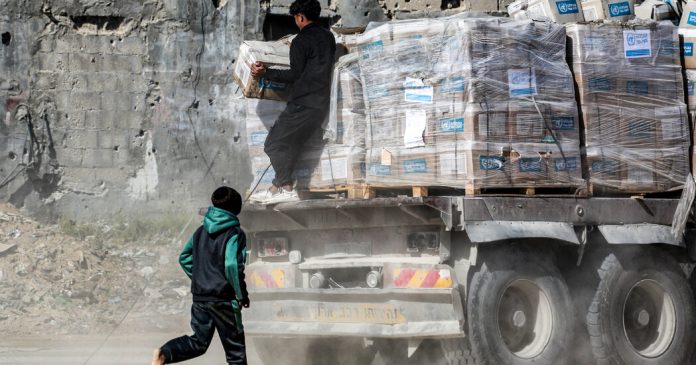
The United Nations announced on Monday that it would reduce its presence in Gaza by withdrawing about one-third of its international workers there, following repeated strikes of its facilities by Israel.
Secretary General António Guterres said in a statement that the decision to reduce the organization’s footprint in Gaza was “difficult” at a time when humanitarian needs were soaring and as a resumption of Israeli attacks were killing hundreds of Palestinians, including women and children.
The drawdown announced Monday would be the first time since the start of the Israeli-Hamas war in 2023 that the United Nations has reduced its work force in Gaza, but it will retain a presence there.
“The U.N. is not leaving Gaza. The organization remains committed to continuing to provide aid that civilians depend on for their survival and protection,” Mr. Guterres said in the statement.
At least 280 U.N. staff members have been killed in Gaza since the start of the war, the organization’s largest loss of life in any conflict in its history, Mr. Guterres has said.
Stéphane Dujarric, the U.N. spokesman, said that about 30 percent of the organization’s 100 or so international staff members from different agencies would be leaving Gaza over the next week and that likely more would depart in the coming weeks.
Local Palestinian staff members would remain in Gaza to carry out humanitarian work.
On March 19, an Israeli tank shell hit a U.N. compound located in the Deir al Balah neighborhood of Gaza, Mr. Dujarric said. The attack killed a U.N. staff member from Bulgaria and injured six others.
“The point is that the Israelis knew exactly where this U.N. facility was, and it was hit by a shell from one of their tanks,” Mr. Dujarric said. He said the United Nations wanted an independent investigation and called on all warring parties to respect international laws protecting U.N. premises and humanitarian workers.
“An initial investigation into this incident found no connection to the I.D.F.,” said Jonathan Harounoff, Israel’s U.N. spokesman. He added: “Our only targets are Hamas terrorists whose raison d’être is to kill and kidnap Israelis, to use Gazans as human shields and to use U.N. facilities as launching pads and weapon depots.”
The United Nations has alleged that Israel has targeted its compounds, convoys and workers on multiple occasions in Gaza.
Israel has blocked all humanitarian aid into Gaza since March 2, and with the border crossings closed, no food, medicine, fuel or clean water has entered the strip where two million people rely on essential aid for weeks.
Israel said that it had blocked aid and resumed airstrikes, shattering a fragile cease-fire agreement with Hamas, because the militant group, which led the Oct. 7, 2023, assault on Israel that started the war, had refused to release the remaining hostages it had seized. Of the 59 remaining hostages in Gaza, fewer than half are believed to be alive.
Mr. Dujarric said that Israeli strikes had also targeted ambulances and medical workers who were trying to save survivors of airstrikes.
How Trump is using popular political issues to test the system of checks and balances

President Trump is banking on the public caring more about the politically popular things he is trying to do than how he is going about doing them in his fights with the judicial branch.
Is Russia an Adversary or a Future Partner? Trump’s Aides May Have to Decide.
When the nation’s intelligence chiefs go before Congress on Tuesday to provide their first public “Worldwide Threat Assessment” of President Trump’s second term, they’ll face an extraordinary choice.
Do they stick with their long-running conclusion about President Vladimir V. Putin of Russia, that his goal is to crush the Ukrainian government and “undermine the United States and the West?”
Or do they cast Mr. Putin in the terms Mr. Trump and his top negotiator with Russia are describing him with these days: as a trustworthy future business partner who simply wants to end a nasty war, get control of parts of Ukraine that are rightly his and resume a regular relationship with the United States?
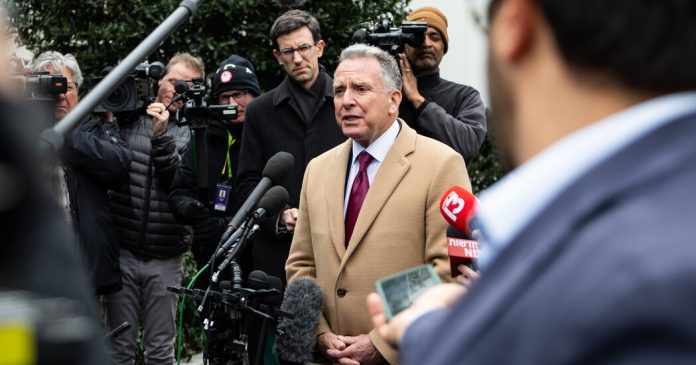
The vexing choice has become all the more stark in recent days since Steve Witkoff, one of Mr. Trump’s oldest friends from the real estate world and his chosen envoy to the Mideast and Russia, has begun picking up many of Mr. Putin’s favorite talking points.
Mr. Witkoff wrote off European fears that Russia could violate whatever cease-fire is agreed upon and a peacekeeping force must be assembled to deter Moscow. In an interview with Tucker Carlson, the pro-MAGA podcaster, Mr. Witkoff said the peacekeeping idea was “a combination of a posture and a pose” by America’s closest NATO allies.
It is a view, he said, that was born of a “sort of notion of we’ve all got to be like Winston Churchill, the Russians are going to march across Europe.” He continued: “I think that’s preposterous.”
Just over three years after Russian troops poured into Kyiv and tried to take out the government, Mr. Witkoff argued that Mr. Putin doesn’t really want to take over all of Ukraine.
“Why would they want to absorb Ukraine?” he asked Mr. Carlson. “For what purpose, exactly? They don’t need to absorb Ukraine.” All Russia seeks, he argues, is “stability there.”
“I thought he was straight up with me,” Mr. Witkoff said of Mr. Putin, a striking characterization of a longtime U.S. adversary, and master of deception, who repeatedly told the world he had no intention of invading Ukraine.
Of all the head-spinning reversals in Washington these days, perhaps it is the Trump administration’s view of Russia and its seeming willingness to believe Mr. Putin that leave allies, intelligence officials and diplomats most disoriented.
Until Mr. Trump took office, it was the consensus view of the United States and its allies that they had been hopelessly naïve about Russia’s true ambitions for far too long — that they had failed to listen carefully to Mr. Putin when he first argued, in 2007, that there were parts of Russia that needed to be restored to the motherland. Then he invaded Georgia, annexed Crimea and sent military — out of uniform — to conduct a guerrilla war in the Donbas.
Still, sanctions were slow to be applied, and Europe was far too slow to rearm — a point Mr. Trump himself makes when he presses the Europeans for more funds to defend themselves.
Now, Mr. Trump refuses to acknowledge the obvious, that Russia invaded Ukraine. He has been openly contradicted by several European leaders, who say that even if the United States plans to seek a normalization of relations with Russia, they do not. “I don’t trust Putin,” the British prime minister, Keir Starmer, told The New York Times last week. “I’m sure Putin would try to insist that Ukraine should be defenseless after a deal because that gives him what he wants, which is the opportunity to go in again.”
But for the American intelligence agencies, whose views are supposed to be rooted in a rigorous analysis of covertly collected and open-source analysis, there is no indication so far that any of their views about Mr. Putin and his ambitions have changed. So it will be up to the new director of national intelligence, Tulsi Gabbard, and the new C.I.A. director, John Ratcliffe, to walk the fine line of describing Russia as a current adversary and future partner.
Mr. Witkoff headed down that road in his conversation with Mr. Carlson. “Share sea lanes, maybe send LNG gas into Europe together, maybe collaborate on A.I. together,” he said, after imagining a negotiated cease-fire in which Russia gets to hold the lands it now occupies and gets assurances that Ukraine will never join NATO. “Who doesn’t want to see a world like that?”
Senator Mark Warner of Virginia, the ranking Democrat on the chamber’s Intelligence Committee, said comments by Mr. Witkoff and others in the Trump administration are deeply disorienting to American spies.
“If you grew up in the intelligence community knowing all the awful things Vladimir Putin had done and all of a sudden you have a change in posture where you completely take Russia’s side, how do you make sense of that?” Mr. Warner said.
Mr. Warner said the document that the intelligence community will unveil on Tuesday, its annual threat assessment, is very traditional and in keeping with previous versions of it. But what Mr. Trump’s intelligence leaders will say in testimony is not as clear. So far, Mr. Warner said, the administration’s comments on Ukraine have reflected anything but the traditional view of the threat from Russia.
The shifting American policy on Russia, Mr. Warner said, threatens intelligence partnerships. While America collects far more intelligence than other countries, he said, the combined contributions of key allies are substantial. And if their concerns about American policy and its faithful analysis of intelligence grow, they will share less.
Officials of several allies, while declining to speak on the record, pointed to several of Mr. Witkoff’s statements with alarm, saying they closely reflected Russian talking points. He endorsed Russian “referendums” in four key Ukrainian provinces that were widely viewed as rigged, with voters threatened with torture and deportation if they cast their ballot the wrong way. But Mr. Witkoff spoke as if they were legitimate elections.
“There have been referendums where the overwhelming majority of the people have indicated that they want to be under Russian rule,” he said. Shortly afterward, Oleksandr Merezhko, the chairman of the Foreign Affairs Committee in the Ukrainian Parliament, said on Monday that Mr. Witkoff should be removed from his position.
“These are simply disgraceful, shocking statements,” Mr. Merezhko told Ukrainian media. “He is relaying Russian propaganda. And I have a question: Who is he? Is he Trump’s envoy, or maybe he’s Putin’s envoy?”
President Volodymyr Zelensky of Ukraine was more circumspect in an interview with Time magazine released on Monday. He said he believed “Russia has managed to influence some people on the White House team through information.” Earlier, he had talked about the “web of disinformation” surrounding Mr. Trump, saying it contributed to their famously poor relationship.
He noted that Mr. Trump had repeated Mr. Putin’s claim that retreating Ukrainian forces in western Russia had been encircled.
“That was a lie,” Mr. Zelensky said.
Constant Méheut contributed reporting from Kyiv.