Thursday, November 12, 2026
Home Blog Page 92

Consider This from NPR : NPR

0

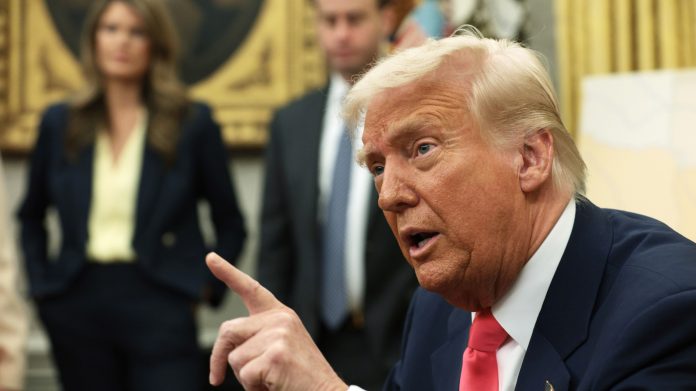
President Donald Trump speaks after signing executive orders on March 6. One order terminated security clearances of those who work at the law firm Perkins Coie.

Alex Wong/Getty Images


hide caption

toggle caption

Alex Wong/Getty Images


President Donald Trump speaks after signing executive orders on March 6. One order terminated security clearances of those who work at the law firm Perkins Coie.

Alex Wong/Getty Images

For weeks, President Trump has been issuing executive orders and memos that levy or threaten sanctions on major law firms.

The moves suspend security clearances, cancel government contracts, bar employees from federal buildings — and other actions that threaten their ability to represent their clients.

While Trump complains the law firms employed “very dishonest people,” legal experts say Trump is retaliating against firms who have represented his political opponents or, in one case, rehired an attorney who had left his position to help prosecute a case against Trump.

We hear from Rachel Cohen, who publicly threatened to resign from her law firm in protest.

For sponsor-free episodes of Consider This, sign up for Consider This+ via Apple Podcasts or at plus.npr.org.

Email us at [email protected].

This episode was produced by Mia Venkat and Connor Donevan, with reporting from NPR justice correspondent Ryan Lucas. It was edited by Patrick Jarenwattananon. Our executive producer is Sami Yenigun.

Hamdan Ballal, Palestinian Director of ‘No Other Land,’ Is Attacked in West Bank, Witnesses Say

0

A Palestinian director of the Oscar-winning documentary “No Other Land” was beaten bloody near his home by Israeli settlers and detained by the Israeli authorities in the occupied West Bank on Monday evening, witnesses said.

The director, Hamdan Ballal, was set upon in Susya, his home village, by at least 20 masked people, mostly teenagers armed with rocks, sticks and knives, according to Joseph Kaplan Weinger, 26, who said he had come upon the attack after it began. Mr. Weinger is part of a volunteer initiative that provides protection in areas vulnerable to settler violence.

It was not clear what prompted the attack, but Mr. Weinger, who is also a doctoral student in sociology at the University of California in Los Angeles, said the group had descended on Susya, which is south of Hebron, and assaulted West Bank residents as they were breaking the fast during the holy Muslim month of Ramadan. Some mockingly shouted holiday blessings as they did so, he said.

Mr. Weinger said that he began honking the car horn in an attempt to alert nearby Israeli soldiers to the attack, but that the Israeli forces prevented him and two companions from reaching Mr. Ballal’s home.

“Soldiers just stood around,” he said. “Later, when we got there, we saw his blood on the ground.”

Mr. Ballal, 37, was one of three Palestinians detained, according to witnesses and the Israeli military. Leah Zemel, a lawyer representing the detainees, said that she had been informed that they were being held in a military center for medical treatment ahead of questioning, but that she did not know the reason for their detention.

The Israeli military said in a statement that “several terrorists” had hurled rocks at Israeli citizens, damaging their vehicles near Susya and prompting a “violent confrontation” that involved “mutual rock hurling between Palestinians and Israelis.” The military said that when its forces and the police arrived, “terrorists” threw rocks at them.

Three Palestinians suspected of hurling rocks, as well as an Israeli civilian, were detained “for further questioning by the Israel Police,” the statement said. An Israeli was injured and was transported to receive medical treatment, it said.

The assault on Mr. Ballal came as the Israeli military has been conducting intense raids in the West Bank, in what it says is an effort to crack down on militant groups. Since January, the operation, focused on the northern West Bank, has forced more than 40,000 Palestinians to flee their homes— the biggest displacement of civilians in the territory since the Arab-Israeli war of 1967, historians say.

Mr. Ballal was among four directors — the others were Basel Adra, Rachel Szor and Yuval Abraham — in a Palestinian-Israeli collective that picked up the Academy Award for best documentary this month. The film documents the demolition of West Bank residents’ homes in or near the village of Masafer Yatta, where Mr. Adra is from, by Israeli forces claiming the area for a live-fire military training ground.

The documentary captured the destruction between 2019 and 2023 and in archival footage. It was released last year amid Israeli expansion of West Bank settlements, which have been encouraged by the far-right government of Prime Minister Benjamin Netanyahu. With the expansion has come a documented rise in Jewish settler violence against Palestinians, according to the United Nations agency for humanitarian coordination, which tracks violent episodes in the area.

Wafa, the Palestinian Authority’s official news agency, reported that settlers had stormed Masafer Yatta hours before the directors won their Oscar.

Susya has also been in a protracted legal battle with the Israeli government over plans for its destruction and moves to remove residents in an area that Israel has deemed an archaeological site.

Mr. Weinger, who has spent the past several months in the South Hebron Hills, said that during Ramadan, attacks in the area have become increasingly frequent. “Nearly every day, there’s something,” he said.

Mr. Adra, the other Palestinian director of the film, said on social media that he arrived in Susya shortly after the violence broke out Monday evening to see masked assailants hurling stones. Israeli soldiers then arrived, but rather than arresting the attackers, he said, they pointed their rifles at the Palestinians and began to head in their direction.

Mr. Adra said he scattered with others from the scene, and later saw soldiers taking Mr. Ballal away.

Chase Carter, a spokesman for the Center for Jewish Nonviolence, which connects Jewish activists with Palestinians in the West Bank for documentation and human rights work, said that five Jewish American activists who went to the scene to document the attack were assaulted by settlers. The settlers used rocks to smash the car with the activists inside, he said.

On social media, Mr. Adra recalled that it was only a few weeks ago that he, Mr. Ballal, and the Israeli creators of the film were being feted at the Oscars.

“But we always knew we’d have to return to this reality as, unfortunately, the world isn’t helping to end the occupation,” he said.

Alissa Wilkinson, Aaron Boxerman and Natan Odenheimer contributed reporting.

USPS Postmaster General Louis DeJoy steps down : NPR

0

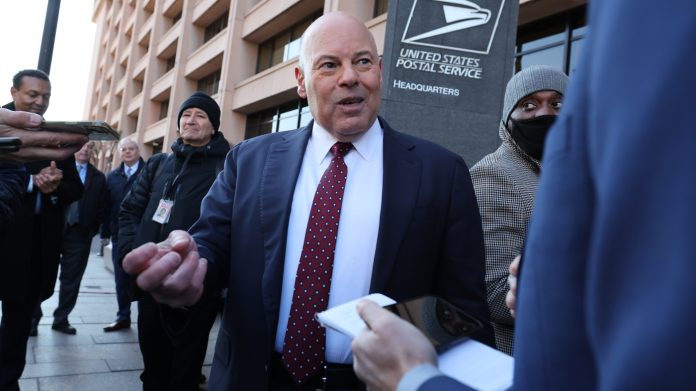
Louis DeJoy, the outgoing U.S. Postmaster General, speaks to reporters on December 20, 2022 in Washington, DC. On Monday, he announced that he is stepping down.

Kevin Dietsch/Getty Images/Getty Images North America


hide caption

toggle caption

Kevin Dietsch/Getty Images/Getty Images North America

U.S. Postmaster General Louis DeJoy is stepping down, the head of the country’s mail service confirmed in a statement on Monday.

Deputy Postmaster General Doug Tulino is set to head USPS until the Postal Service’s governing board names a successor.

“I believe strongly that the organization is well positioned and capable of carrying forward and fully implementing the many strategies and initiatives that comprise our transformation and modernization,” DeJoy said in the statement released Monday evening that referred to his “intention to retire.”

Last month, he asked the USPS Board of Governors in a letter to start a search for a new postmaster general.

DeJoy’s exit comes after he agreed earlier this month to allow the DOGE team of President Trump’s billionaire adviser Elon Musk to help find “further efficiencies” at USPS.

Edited by Padmananda Rama

Supreme Court Will Not Hear Appeal in ‘Juliana’ Climate Case

0

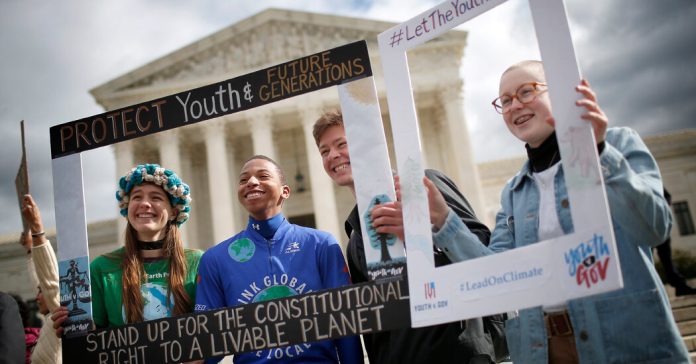
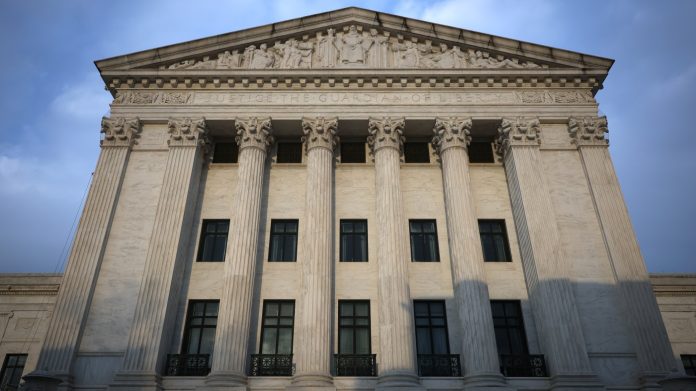
The Supreme Court on Monday declined to hear an appeal in a landmark climate case brought by 21 young people against the federal government, ending its 10-year journey through the courts.

But the case provided a blueprint for numerous other climate-related lawsuits that have had greater success.

Juliana v. United States argued that the government had violated the constitutional rights of the plaintiffs with policies that encouraged the use of fossil fuels. But it was dismissed by the United States Court of Appeals for the Ninth Circuit, where the judges ruled that courts were not the right venue to address climate change.

“Rather, the plaintiffs’ impressive case for redress must be presented to the political branches of government,” Judge Andrew D. Hurwitz wrote in the 2020 opinion.

Our Children’s Trust, the Eugene, Ore., nonprofit law firm that represents the plaintiffs, made its final legal gambit in the case last year, when it asked the Supreme Court to vacate the appeals-court ruling and allow Juliana to proceed to trial in a lower court. That petition was denied on Monday.

Some observers had also considered it risky to ask the Supreme Court to consider the appeal, out of concern that a conservative court might use the case to jettison longstanding environmental protections.

The plaintiff the case is named for, Kelsey Cascadia Rose Juliana, now 29 and a teacher in Oregon, is the daughter of environmentalists and a longtime climate activist herself. The story of how she came to participate in the lawsuit was chronicled in the documentary “Youth v. Gov.”

The legal framework of Juliana has since been replicated in numerous lawsuits and legal actions across the country. And last year, Our Children’s Trust, which has filed many of the cases, scored two notable wins.

The group reached a settlement in Navahine v. Hawaii Department of Transportation in which the state agreed to cut emissions of carbon dioxide, the main greenhouse gas warming the planet, from its transportation system within 20 years. And it won Held v. Montana, in which a judge ruled that the state must consider climate change when approving fossil fuel projects. An appeals court upheld that decision in December.

The plaintiff that case is named for, Rikki Held, 23, grew up on a cattle ranch in Montana where she saw the effects of climate change firsthand, which led to her decision to participate in the lawsuit. She is now a science educator in Kenya through the Peace Corps.

On Monday, she said that the Juliana case had paved the way for her. “Juliana, through the unwavering dedication of its plaintiffs and legal team, has left an indelible mark on the landscape of climate litigation,” she said.

Julia Olson, the founder of Our Children’s Trust, had called on the Biden administration to discuss a settlement in the Juliana case, pointing to expressions of support from lawmakers and academics. She said on Monday that Juliana had “ignited a legal movement.”

But lawyers for the Justice Department had maintained that the court was not the right setting to address climate change, because a judge could not order or enforce any “workable remedy” to the problem.

And some experts had raised concerns about the organization’s strategy at the Supreme Court, noting the risk that the court’s conservative supermajority might take the Juliana case as a way to reconsider legal precedents that undergird environmental protections.

“Be careful what you ask for from this court,” said Patrick Parenteau, an expert on environmental law at Vermont Law and Graduate School, in an interview last year. “If you want an answer to this question, you probably will not like the answer you’re going to get.”

But he added that he still applauded the efforts of the young people and their lawyers.

Ms. Olson said environmentalists should not shy away from the courts. “If we don’t show up and we don’t bring claims forward, and we don’t shine light on injustice, then other forces will always prevail,” she said.

Supreme Court confronts another challenge to the Voting Rights Act : NPR

0

The Supreme Court heard arguments in a case Monday involving Louisiana’s congressional redistricting after the 2020 Census.

Win McNamee/Getty Images


hide caption

toggle caption

Win McNamee/Getty Images

Race and politics were front and center at the U.S. Supreme Court on Monday as the justices took up a voting rights case involving Louisiana’s congressional redistricting after the 2020 Census. The case is nearly identical to a case the Supreme Court ruled on two years ago from Alabama, though the outcome could make it more difficult for minorities to prevail in redistricting cases.

Louisiana’s population is roughly 30% Black, but after the 2020 Census, the state legislature drew new congressional district lines that provided for only one majority-Black district in a state that has six congressional seats. That’s the same thing Alabama did after the Census, only to be slapped down by the Supreme Court two years ago when a narrow court majority ruled that the state had illegally diluted the Black vote in violation of the Voting Rights Act.

There is one difference between the Alabama and Louisiana cases: Alabama didn’t create a second majority-Black district until ordered to do so by the Supreme Court. In Louisiana, the state legislature, after losing before multiple courts, saw the handwriting on the wall and drew a new map that provided for a second majority-Black district. But that new district was challenged by a group of Louisiana citizens identifying themselves as “non-African American” voters. They lost in the lower courts and appealed to the Supreme Court, which heard arguments in the case Monday.

State Solicitor General Benjamin Aguiñaga told the justices that Louisiana’s legislature, faced with the prospect of federal judges drawing new district lines for congressional seats, bit the bullet and drew the new map with a second majority-minority district.

Aguiñaga noted that the alternative map would have put key Republicans in jeopardy, including House Speaker Mike Johnson and House Majority Leader Steve Scalise.

“It’s an election year. We’re talking about the speaker of the House. No rational state gambles with those high-stakes seats in that situation,” Aguiñaga said.

Chief Justice John Roberts, who wrote the court’s opinion in the Alabama case requiring a second majority-Black district, seemed skeptical about the Louisiana map because it created less compact districts than were drawn in Alabama.

“You think the drawing of this district was not predominantly based on race?” he asked, adding, “It’s a snake that runs from one end of the state to the other … I mean, how is that compact?”

Lawyer Stuart Naifeh, representing the NAACP Legal Defense & Educational Fund, replied that the original map proposed by civil rights groups was indeed more compact, but that the groups ultimately agreed to the legislature’s compromise map, which protected incumbents.

Supposing, asked Justice Amy Coney Barrett, there was no incumbency justification here from the legislature. “What if they … didn’t talk about politics, just said, ‘We’re doing this because of race. We don’t like that other map; race, race, race.'” Would such racial motivations, she asked, be harder to justify than the political reasons given by the state?

Finally, Edward Greim, representing the “non-Black” challengers, faced a pragmatic question from Justice Elena Kagan.

“What was Louisiana supposed to do?” she asked, noting that courts explicitly give states in Louisiana’s position “breathing room” so that they may decide how best to draw their congressional maps. She added that “this was one state that decided on this choice — that you don’t agree with — but it was well, well, well within the parameters of a good-faith reasonable choice.”

Although all six of the court’s conservatives expressed serious doubts about the state legislature’s map on Monday, the fact is that just two years ago the same six sounded equally skeptical about the Alabama redistricting map that the justices subsequently upheld as required by the Voting Rights Act.

Bottom line: reading the tea leaves in the Louisiana case is a fool’s errand.

Why Driving in Singapore Is Like ‘Wearing a Rolex’

0

Andre Lee bought a used Kia Forte to boost his career as an insurance agent in Singapore. In his mind, he saw himself zipping across town in his black coupe, impressing potential clients.

“It’s the same as being dressed in formal wear with leather shoes, or wearing a Rolex,” Mr. Lee, 33, said of the two-door car he bought in 2020.

Mr. Lee paid $24,000 for the 2010 model, about five times what the car would have been listed for in the United States. Why the markup?

Singapore, an island city-state that is smaller than New York City, charges drivers thousands of dollars just for the right to buy a vehicle. The price of the permits, which were introduced in 1990 to limit pollution and congestion, rises with a car’s value.

The price Mr. Lee paid for his car, including the permit, was on the cheaper side. Some drivers pay as much $84,000 for the 10-year document, known as a certificate of entitlement.

“I know of people who treat their vehicles better than their family because it costs more to maintain a car than a family sometimes,” Mr. Lee said. (His own family lent him money for the Kia.)

There is little reason for many Singaporeans to own a car. Most residents rely on an expanding and affordable public transportation system that stretches across the island. Even long journeys cost less than 2.50 Singapore dollars, or about $2, and ride-hailing platforms such as Grab are plentiful.

Still, twice a month, aspiring car-owners and dealers bid for a fixed number of permits determined by the Singaporean authorities.

The country’s decades-long campaign to limit car ownership has worked: There are about 11 passenger vehicles per 100 people there, well below an estimated 82 cars and trucks in the United States and 67 in Italy.

Singapore is not the first to tax cars as part of efforts to tackle pollution and traffic. In 1989, Mexico City started regulating how many cars circulate daily. London and Stockholm later introduced congestion pricing. New York City followed this year, becoming the first in the United States to do so.

But none of those cities charge drivers as much to own a car.

The most expensive permit in Singapore rose about 18 percent to more than $84,000 in March from a year earlier. But rising costs don’t appear to have deterred sales. The government raised $4.86 billion from permit sales in the 2024 fiscal year, almost 40 percent more than it had estimated.

For the wealthiest residents of Singapore, which is home to a rising number of billionaires, shelling out tens of thousands of dollars for a car permit is not a big deal.

Su-Sanne Ching, who runs an import-export business, bought a Mercedes-Benz sedan so she could drive herself and her parents around. The permit alone cost her $60,000, raising the overall price to about $150,000. (A similar model in the United States would have run her $48,450.)

“I am paying the price for convenience,” she said.

But for the middle class, especially those who have children, the rising cost of the permit forces a difficult choice.

Joy Fang and her husband bought a used Hyundai Avante in 2022 for $58,000, including the permit, to ferry their two children to school and day care. The price of the car — nearly twice the pre-permit price of a new model of that sedan — makes her pause.

“It’s definitely not worth it when you weigh the cost against how often we actually use it,” she said. Each month the couple pays about $1,400, or more than 10 percent of their household budget, for the car, the permit, and other expenses like road taxes, fuel and parking. To offset the cost, they cut back on eating out and traveling.

But the thought of juggling a stroller, two children and assorted bags on public transportation makes her blanch.

“Honestly, I feel like we’re caught in a bind,” she said.

Confronted with the alternative of becoming more like Jakarta or Bangkok, other Southeast Asian cities that are regularly choked with traffic, Singaporeans prefer quieter roads, said Chua Beng Huat, a professor of sociology at the National University of Singapore.

“We’re not sitting in traffic for two or three hours just to get to work,” he said. Having an efficient public transport system also makes it easier for Singaporeans to not use a car, and he takes it himself when he needs to go downtown.

But he still has a BYD SUV that he uses to take his grandchildren around town.

For other car owners, the math sometimes gets too hard to justify. Mr. Lee, the insurance agent, sold his Kia three years after he bought it. The costs of maintenance, parking and fuel were piling up, and he wasn’t convinced that it had translated to more business.

These days, Mr. Lee mostly takes public transport. If he needs to meet a client, he borrows his father’s Nissan Qashqai.

“I had other priorities, and didn’t see the car being top of the list,” he said.

Judges press Trump lawyers on rushed deportations under wartime law : NPR

0

In this handout photo provided by the Salvadoran government, members of the Salvadorian army stand guard at CECOT on March 16, 2025 in Tecoluca, El Salvador. The Trump administration deported alleged members of Tren de Aragua gang and others to El Salvador.

Handout/Salvadoran government via Getty Images


hide caption

toggle caption

Handout/Salvadoran government via Getty Images

The Trump administration received pointed questions from a judge over how it’s implementing a rarely-used wartime law to deport Venezuelans suspected of being Tren de Aragua gang members.

A president last invoked the Alien Enemies Act after the attack on Pearl Harbor, designating Japanese, German and Italian nationals as “alien enemies” during World War II.

“Nazis got better treatment under the Alien Enemies Act than what has happened here,” D.C. Circuit Court of Appeals Judge Patricia Millett said during a hearing at the court on Monday. “And they had hearing boards before they were removed.”

“People weren’t given notice, they weren’t told where they were going,” she said about the removal of Venezuelans and others to El Salvador earlier this month.

Lawyers with the Justice Department are asking the appeals court in Washington to overturn a temporary restraining order blocking deportations under the act put in place by district court Judge James Boasberg. A ruling to lift the temporary pause on deportations, or keep it in place, is likely to prompt an appeal to the U.S. Supreme Court.

The fight over the rarely used wartime power has become central to Trump’s immigration crackdown agenda and his efforts to stretch the power of the executive branch.

The panel of three judges did not deliver a decision from the bench but could do so in the coming days.

Judge Millett appeared sympathetic to the arguments of immigrants rights groups who sought to block immediate deportations, but it is unclear which way Judge Karen Henderson, a George W. Bush appointee, was leaning.

According to court documents, if the judge lifts the pause, some 258 people would likely be placed in removal proceedings under the Alien Enemies Act for being alleged members of Tren de Aragua.

DOJ says pause was “enormous intrusion” on president’s power

Justice Department lawyers argued that Boasberg’s order to pause removals under the act is an “unprecedented and enormous intrusion” on the president’s power and that this type of “second-guessing” could potentially hurt the United States’ current and future deals with other countries. The U.S. has negotiated with El Salvador and other countries to take in deportees.

Drew Ensign, the government attorney leading the case, received pointed questions about how it could work for people detained or even removed under the Alien Enemies Act to bring up individual petitions to contest allegations they are members of the Tren de Aragua, a Venezuelan gang.

“The problem here is that they are challenging implementation of the proclamation in a way that never gave anyone a chance to say, ‘I’m not covered,” Millett, an appointee of former President Barack Obama, said. She said prior cases clearly show the government needs to give people that due process.

Due process “can’t be an unlawful intrusion of the president’s powers. The president has to comply with the constitution and laws like everybody else,” she said.

Judge Justin Walker, who was appointed by Trump in 2020, was sympathetic to the government’s argument that those who are currently detained under the Alien Enemies Act should contest their arrests through a habeas petition, which is how someone can legally argue they are being unlawfully detained.

Walker suggested that the plaintiffs, represented by the American Civil Liberties Union and Democracy Forward, should have filed in Texas as opposed to in D.C. The five Venezuelan plaintiffs that first filed the lawsuit are held in Texas, even though their lawyers argued that they now are also representing hundreds of people potentially subject to the act nationwide.

Still, Ensign said that should the judges side with the government and lift the pause on deportations, the government would not have a limitation and not be required to provide notice for those deported under the Alien Enemies Act.

Lower DC court keeps pause on deportations in place

Earlier in the day, Boasberg issued an order to keep in place his 14-day pause on the administration’s ability to deport anyone under the act.

Boasberg denied the government’s attempt to vacate his temporary restraining order, noting that immigrant rights groups were likely to win the argument in court that the men deported to El Salvador should have gotten individualized hearings to determine whether the act applied to them.

“Because the named Plaintiffs dispute that they are members of Tren de Aragua, they may not be deported until a court has been able to decide the merits of their challenge,” Boasberg wrote in his order. “Nor may any members of the provisionally certified class be removed until they have been given the opportunity to challenge their designations as well.”

Boasberg said the pause on the flights does not prevent the government from making arrests, or even deporting those it suspects of being members of Tren de Aragua.

He gave the immigrant rights groups until Wednesday to file a preliminary injunction, which could pave the way for an even longer court-ordered pause on the use of the wartime powers.

Boasberg also direct Trump’s cabinet secretaries to decide by Tuesday whether they were going to invoke a privilege that would allow them to not disclose information about the deportation flights.

Boasberg and the DOJ went back and forth over whether the administration ignored the judge’s order to not use the act to send 137 Venezuelans to El Salvador on March 15.

Why Does Trump Want Greenland? Here’s What to Know.

0

President Trump’s plans to send representatives to Greenland this week have angered political leaders on the island territory, who see the group’s visit as an aggressive escalation of his threats to seize the area, by force if necessary.

Mr. Trump has made no secret of his designs on Greenland, repeating his threats to acquire the territory through a financial transaction or military force several times since his return to the Oval Office. To date, the response of Greenland’s leaders has been polite but firmly opposed, stating it was not for sale.

But this week’s visits from Usha Vance, the second lady, and Mike Waltz, the national security adviser, have elicited a more agitated response. Prime Minister Mute Bourup Egede told Sermitsiaq, a local newspaper, that their expected arrival, little more than two weeks after Greenland held parliamentary elections, is “highly aggressive,” and “the only purpose is to demonstrate power over us.”

He also said he feared that the visit would drum up fervor in the United States for a takeover of Greenland, “and the pressure will increase after the visit.”

So why is Mr. Trump so determined to have Greenland? Here’s a window into his thinking.

Most of Greenland lies within the Arctic Circle, a region that the world’s powers are vying for over for its untapped natural resources and its proximity to emerging shipping corridors that would accelerate global trade. Already, melting Arctic ice has transformed the region that was once largely unnavigable into an area of competitive commerce, as more ships traverse the Arctic Circle and countries with land in the region scramble to lay claim to as much of the seabed as possible.

Routes between Asia and Europe, or Asia and the United States, are about 40 percent shorter through the Arctic than either the Suez or Panama Canals, according to the U.S. Naval Institute. That makes the question of who controls the seas there critical for both financial and security purposes, especially given the claimants also happen to be rival geopolitical superpowers.

Only five countries can claim to have an extended continental shelf into the Arctic: Canada, Russia, Norway, Denmark via Greenland, and the United States via Alaska. Acquiring Greenland would give the United States a significantly bigger claim in the Arctic.

“We need Greenland for national security and even international security,” Mr. Trump said in March during an address to Congress, adding the territory was “very, very important for military security.”

The United States has had troops in Greenland since World War II, and keeps a small missile defense base there called Pituffik Space Base — formerly Thule Air Base, before Mr. Trump redesignated it during his first administration. It is possible that base could become part of the “Golden Dome” missile defense system, modeled after Israel’s Iron Dome system, that Mr. Trump has said he wants to build to protect the entirety of the United States from potential threats from adversaries, especially China. In an executive order, Mr. Trump gave Pete Hegseth, the secretary of defense, until March 28 to produce the plans for that missile defense shield.

But there are market-based threats Mr. Trump wants to protect against as well. Russia and China are already cooperating on Arctic shipping routes, and with Russia’s extensive presence in the region — it has the largest area of Arctic coastline — that partnership threatens to remain the dominant economic force in the area.

According to the U.S. Geological Survey, the Arctic holds 13 percent of undiscovered gas resources and 30 percent of undiscovered natural gas, most of it offshore. Controlling Greenland would give the United States an expanded claim to those seabed resources.

But Greenland also uniquely boasts huge stores of rare earth minerals that are vital to the production of batteries, cellphones, electric vehicles and other technology — and the Trump administration has been looking globally to augment its rare earth mineral holdings.

Rare earth minerals have been a key part of an agreement that the United States has been trying to strike with Ukraine. Greenland’s stores of cobalt, nickel, copper, lithium, zirconium and other minerals have proven challenging to mine, but there is another incentive for the United States to seek to control that market: China.

Currently, China dominates the world’s raw mineral market, and has already attempted to make inroads in Greenland. Acquiring the territory would allow Mr. Trump to check Beijing’s efforts to exploit minerals there and expand America’s holdings.

Part of the reason it has been difficult to exploit Greenland’s resources to date is that it is so darn cold. But with climate change, melting ice is creating new opportunities for resource exploitation. In the last 30 years, about 11,000 square miles of ice sheet have melted, an area about the size of Maryland.

Denmark has also recognized the potential of Greenland’s resources to be vital in the global transition to greener forms of energy. For the local population, the potential for an economic boom from mining is seen as helpful in its bid for independence, which a majority of the population wants.

But the development of the industry has been slow. Greenland has taken steps to limit the potential for environmentally destructive mining practices through laws, including a ban on uranium mining in 2021. But those could be overturned if the United States acquires the territory.

U.S. Lifts Millions in Bounties on Senior Taliban Officials

0

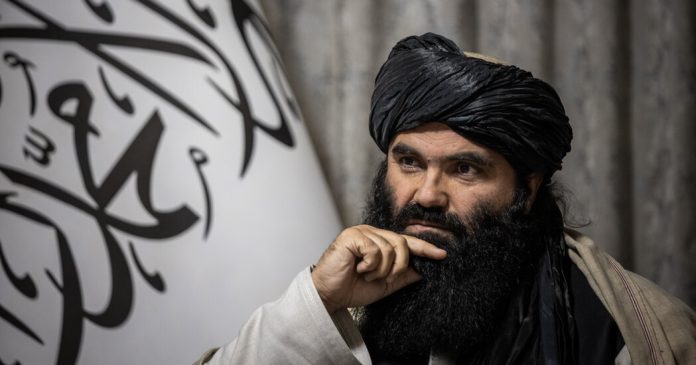
The United States has lifted multimillion-dollar bounties on three senior Taliban officials, according to Afghan authorities and a senior American official, a significant shift by the Trump administration toward some of the most blood-soaked jihadists from the U.S.-led war in Afghanistan.

The move comes days after a U.S. hostage envoy, Adam Boehler, made the first visit by a high-ranking American diplomat to Kabul, the Afghan capital, since the Taliban seized power in 2021. His talks with Taliban representatives led to the release of an American citizen who had been detained in Afghanistan for more than two years.

Many Taliban officials saw the meeting in Kabul and the subsequent lifting of the bounties as a major victory for a government that was almost completely shut out by the United States during the Biden administration. The steps also put fresh momentum behind less hard-line Taliban voices who have been engaged in an internal power struggle, pushing for their government to moderate its policies to gain wider acceptance on the world stage.

Mr. Haqqani, his brother Abdul Azizi Haqqani and a cousin, Yahya Haqqani, no longer appear on the State Department’s Rewards for Justice website. The bounty was removed on Monday from the F.B.I.’s wanted poster for Sirajuddin Haqqani.

A spokesman for the Taliban’s Ministry of Interior Affairs, Abdul Mateen Qani, said that “a deal with the U.S. was finalized” to lift the bounties, after the issue was discussed multiple times with American officials.

“This is a major achievement for the Islamic Emirate,” he added, referring to the Taliban government.

The American official who confirmed the bounty removals spoke on the condition of anonymity to discuss sensitive diplomacy. The Trump administration, including in a January social media post by Secretary of State Marco Rubio, has made clear that it could reimpose or increase bounties on Taliban leaders if additional Americans held in Afghanistan are not released.

The meeting on Thursday in Kabul between Trump administration and Taliban officials followed initially tense indirect interactions by the two sides. In January, President Trump demanded that the Taliban return $7 billion in American military hardware left in Afghanistan after the U.S. withdrawal. He threatened to cut all financial aid to the country if it was not returned.

The Taliban authorities rejected the notion, noting that the equipment had been crucial in keeping the Islamic State affiliate in the region at bay, according to two Afghan officials with knowledge of the matter.

Since the Taliban seized power, the United States has led the charge in isolating their government, which has imposed the most draconian restrictions on women in the world. Biden administration officials stressed that the United States would not ease any sanctions until those restrictions were lifted.

But as the Taliban, led by an ultraconservative cleric, Sheikh Haibatullah Akhundzada, made clear that they would not bow to outside pressure, the United States became an outlier in its firm approach.

While no country officially recognizes the Taliban as the lawful authorities in Afghanistan, more countries in the region and in Europe have appeared to accept the limits of their influence and engage on issues on which they can find common ground.

“The Taliban has developed a proclivity to do transactional diplomacy, quid pro quo deals,” said Ibraheem Bahiss, an International Crisis Group consultant. The lifting of the U.S. bounties showed that the release of the American held in Afghanistan “was somehow reciprocated with some good will or that a transactional deal had been struck.”

It is also a notable change in American policy toward Sirajuddin Haqqani, an ambitious political operator who embraced suicide attacks like few other Taliban leaders and was responsible for the bloodiest attacks during the U.S.-led war.

In 2011, Mr. Haqqani’s men launched a 19-hour-long assault on the U.S. Embassy in Kabul. In 2017, his network was behind a truck bombing that killed more than 150 people, mostly civilians.

Over the past three years, Mr. Haqqani has sought to remake his image and engage with the West through back channels. He appears to be trying to win foreign backing that could help him as he tries to negotiate with Sheikh Haibatullah over the Taliban’s most controversial policies, including the restrictions on women.

In January, the chief prosecutor of the International Criminal Court requested arrest warrants for Sheikh Haibatullah and the country’s chief justice for their “unprecedented” persecution of women and girls.

“This is a victory for the engagement camp within the Taliban,” Mr. Bahiss said of the lifting of the bounties. More moderate figures “can go back to hard-liners and say this is the kind of reciprocity we can get for the compromises we are advocating for.”

Adam Goldman and Safiullah Padshah contributed reporting.

Democrats in Trump-won districts call on party to rebrand : NPR

0

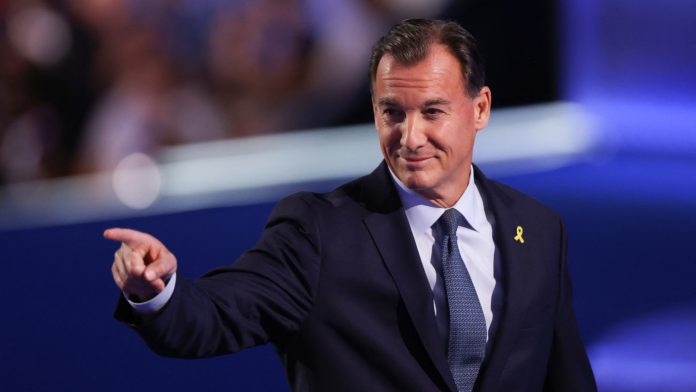
New York Rep. Tom Suozzi, seen here at the Democratic National Convention on August 21, 2024, says Democrats’ strategy to take back the House next year can’t only be fueled by opposition to President Trump. (Photo by CHARLY TRIBALLEAU / AFP) (Photo by CHARLY TRIBALLEAU/AFP via Getty Images)

CHARLY TRIBALLEAU/AFP via Getty Images/AFP


hide caption

toggle caption

CHARLY TRIBALLEAU/AFP via Getty Images/AFP

Progressive stars Sen. Bernie Sanders and Rep. Alexandria Ocasio-Cortez drew large crowds in recent days as they made stops in Nevada, Arizona, and Colorado as part of a “fighting oligarchy” tour to rally supporters unsettled by the actions of the Trump administration.

The tour is part of Democrats’ response to constituents demanding they be more aggressive as the opposition party. At town halls across the country, Democrats acknowledged their limitations and pointed ahead to the midterms as their chance to become a bulwark against GOP control.

But Democrats’ path to retaking the House of Representatives likely runs through districts that President Trump won.

Only thirteen House Democrats won in districts that also went for Trump, and for many in that cohort, talking about being the resistance party isn’t enough.

“It can’t just be why we’re against Trump and what’s wrong with Trump,” said Rep. Tom Suozzi, D-NY.

Suozzi and other Democrats who represent districts won by Trump told NPR if the party wants to take back the House, it needs to do more than fight back — it needs a new strategy.

‘The Democratic brand has been damaged’

Suozzi won in a district that went for former President Joe Biden in 2020 and swung to Trump four years later. He replaced former GOP Rep. George Santos in a special election after Santos was expelled by Congress.

He said Democrats have a damaged brand.

“When you ask people, what do the Republicans stand for? They say, ‘well, Make American Great Again, they want to cut the size of government, they want to give tax cuts,'” Suozzi said. “And what do the Democrats stand for? I think people are kind of scratching their heads a little bit – they believe in choice and LGBT rights – which I believe in those things too – but I don’t know you can build a whole party around that.”

Suozzi said Democrats need to lay out a compelling thesis with specifics about how they’ll improve the quality of people’s lives, pointing to policies like increasing the minimum wage.

“We need to do more things that show we are in favor of creating jobs that pay good wages to people that are willing to work hard,” he said. “That is part of the historic Democratic brand and we’ve just lost that.”

He ascribes that loss partly to the party being hyper-focused on identity issues and amplifying far-left voices.

“We have been too intimidated by political correctness to speak out and say, I don’t think that transgender women should be playing in competitive women’s sports. We have to say that,” he said. “95 percent [of Democrats] don’t believe in any of the far-left agenda that we’ve been painted with.”

Suozzi himself won on an issue that traditionally puts Democrats on the defense – immigration.

“I said, we have to secure the border,” he said. “The consultants come to me and they say, well, Tom, you know, that’s a Republican issue. I don’t know if you should be talking – I said, no, this is what people in my district are talking about. We can’t ignore what people are talking about.”

In the new Congress, dozens of House Democrats – including most in Trump-won districts, joined their GOP colleagues in supporting a bill that would make it easier for federal immigration officials to detain and deport those without legal status who are charged with crimes.

Ohio Rep. Marcy Kaptur, seen at the U.S. Capitol in 2022, says the Democratic party has to focus on expanding its coalition and (Photo by Anna Moneymaker/Getty Images)

Ohio Rep. Marcy Kaptur, seen at the U.S. Capitol in 2022, says the Democratic party has to focus on expanding its coalition and reaching out to people who voted for President Trump in November. (Photo by Anna Moneymaker/Getty Images)

Anna Moneymaker/Getty Images/Getty Images North America


hide caption

toggle caption

Anna Moneymaker/Getty Images/Getty Images North America

It’s still the economy, stupid. 

Rep. Marcy Kaptur, D-Ohio, the longest-serving woman in Congress, won one of the closest races in the last election. She said her party needs to expand its coalition and bring people who voted for Trump into the fold.

“They heard President Trump say, ‘Make America Great Again.’ That was something they want to do, and they know where they live isn’t. They’ve seen factories close,” Kaptur said in an interview. “We need to keep our eyes laser beam focused on how do we expand opportunity.”

Kaptur said while Democrats are good at defending programs like Medicaid to the public, they fall short in sharing plans to grow the economy.

“I have different mottos I live by, and one of them is: economics is not destiny, but it is 85% of it,” she said. “Democrats better shape up and put together a plan for progress starting in the places that have fallen behind where people are voting for change simply because the economy is not working for them.”

Fellow Democratic Rep. Gabe Vasquez of New Mexico agrees. He represents a majority Hispanic district where Trump has made inroads.

He said there isn’t a “special formula” of winning a battleground district other than taking time to understand the concerns of constituents – which may be different than national issues du jour.

“I take cues from my own family – I come from a working class family and I pay attention to what they’re saying,” he said. “When we talk about what’s important to them, it’s always economic issues. That’s the family conversation I have at my house and I think the Democratic caucus should reflect those conversations.”

Colorado Rep. Jason Crow, seen here at a rally in support of U.S. Agency for International Development in February, is tasked with recruiting Democrats to run for the House next cycle. (Photo by Chip Somodevilla/Getty Images)

Colorado Rep. Jason Crow, seen here at a rally in support of U.S. Agency for the Development in February, is tasked with recruiting Democrats to run for the House next cycle. (Photo by Chip Somodevilla/Getty Images)

Chip Somodevilla/Getty Images/Getty Images North America


hide caption

toggle caption

Chip Somodevilla/Getty Images/Getty Images North America

Searching for the next batch of Democrats to win critical seats

One of the people tasked with finding a new crop of Democratic candidates to win in key races is Rep. Jason Crow, D-Colo., who was recently tapped to be a recruitment co-chair for the Democratic Congressional Campaign Committee.

“It’s a relatively narrow battlefield,” he said. “Our bench needs to be reinvigorated and we need to look in different places. People want folks who have built businesses, served the country in uniform, maybe served as a sheriff’s deputy, a nurse, who have actually done things and understand what it’s like to maybe not know where your rent or mortgage money is going to come from for next month.”

He’s already had success in this arena. He flipped his seat in 2018 and helped recruit Democratic candidates with backgrounds in the military and national security to run last cycle for local, state and national office. He said two-thirds of his endorsed candidates won their races.

“One of the biggest lessons should be that we have an issue with how we’re perceived in vast swaths of America, rural America, working class America,” he said of Democrats, adding it’s critical the party reintroduce itself to those parts of the country.

The fact that the next time the public votes for Congress there won’t be a presidential candidate on the ticket brings some benefits to Democrats. Although constituents on the ground are clamoring for a central figurehead to lead the Democratic party, that comes with its own challenges – particularly when Democrats in key districts need to appeal to people who voted for Trump.

“I grew up in a conservative, working- class family. A lot of my family support President Trump,” Crow said. “So I view all of this through that lens. And what I know is that no slogan, no branding, no topline messaging are going to get us out of this.”