Thursday, November 12, 2026
Home Blog Page 94

To Him, Americans Were Always Heroes. He’s Not So Sure About Today’s.

0

For eight decades, Henri Mignon has viewed Americans as heroes. They twice liberated his tiny Belgian hometown, Houffalize, from German occupation — the second time, he said, when he was 8 years old, mere hours after shrapnel from shelling had killed his father.

The image of U.S. troops handing out gum to local children is a memory he has carried with him ever since. And he has dedicated more than 30 years to retelling the story of the war as a guide to tourists who flock to this corner of the Belgium-Luxembourg border, eager to learn about the last major German offensive on the Western Front.

But this month Mr. Mignon, 88, said he felt uncomfortable as he anticipated his Saturday morning Battle of the Bulge tour in Bastogne, just south of Houffalize.

It was not long after the disastrous meeting between President Volodymyr Zelensky of Ukraine and President Trump in the Oval Office, and it came as Mr. Trump was presenting a conciliatory tone toward Vladimir V. Putin, Russia’s leader.

Usually Mr. Mignon portrays Americans as heroes and talks about the strong bonds between this part of the world and the United States. This time, he said, he didn’t know exactly what to think about the relationship.

“I feel it is changing,” he admitted in the days leading up to the tour.

Mr. Mignon has taken issue with American foreign policy before — during the Vietnam War, at times over the Middle East. Yet current events had pushed him and his fellow guides to a new level of distress, he said. Like many Europeans, they had felt their long-held admiration for the United States shudder.

Some guides, he said, had considered halting tours for American groups altogether. Mr. Mignon never contemplated that, but he did fret over exactly what he would say as he shuttled students and teachers from North Carolina around Bastogne. Would he again emphasize the closeness of the relationship between Europeans and Americans? How would he do that when modern America, from his vantage in Belgium, was looking far less heroic?

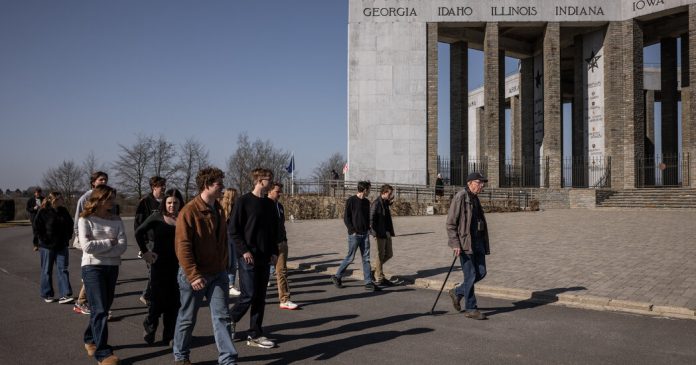
The sun was high and the March sky a gleaming blue as Mr. Mignon, sprightly, white-haired and wearing a Yankees cap, waited for the students to gather in Bastogne’s town square. The flags of Belgium, the European Union and the United States flapped gently behind him as they arrived, toting bags of Belgian chocolate.

Mr. Mignon began with a joke about his name, which means “little and cute” in French. He then launched into his tour, explaining how the Germans had occupied Bastogne for much of the war. It was liberated by the Americans in September 1944. But then, that December, German forces recaptured the town, which was again freed by Americans during the Battle of the Bulge.

The book and television show “Band of Brothers” center in part on the events in Bastogne, and once the students had boarded their tour bus, Mr. Mignon had the driver whisk them past real-life locations related to scenes from the show. He told them the true stories of Easy Company, the battalion on which the book and series focuses.

He explained to the students that Bastogne remains a very “American town,” one where the bell tower plays the opening notes of “The Star Spangled Banner” every hour.

After the students had filed off the bus and into an underground crypt dedicated to the war dead — below a memorial bearing the names of American states — Mr. Mignon described to them “his war.”

He recalled the day he was abruptly dismissal from school with a promise that he would be allowed to come back soon. It would be more than a year.

He described the Germans boarders who filled his house from basement to attic, growing progressively less kind as the war dragged on. He told how, on the final day of the second occupation, American soldiers had whisked him away in a Jeep from his burning house, ignited in the crossfire when they retook the town.

Mr. Mignon said that his family had “lost everything,” in the war, and that Americans had helped set them back on their feet.

After the war, Mr. Mignon finished school, studied military history in Brussels, and ultimately became an officer in the Belgian Army before retiring to this tiny town in Francophone Belgium, where he became a guide.

During the tour, Mr. Mignon spoke in the practiced manner of someone who has recited a grim story hundreds of times, maybe thousands. He did not offer any commentary on Mr. Trump or about how starkly America’s military involvement in Europe 80 years ago contrasts with the stance it is increasingly taking. He said he had decided that the tour was about celebrating the veterans of the past, not the United States of the present.

The Americans themselves avoided talking about politics during their trip, which had started in France and would continue on to Germany. “My responsibility as a government teacher is to teach how the government works and is supposed to work,” Laura Krizan, a teacher leading the trip, explained. “I’d rather them graduate and not know how I vote.”

And the Europeans they had encountered had been “shy” about broaching current events, said Thomas Boyreau-Suzémont, who had helped organize and shepherd the tour through various World War II sites across Europe — even if politics is perpetually top of mind these days.

“We never thought that this alliance would be in danger,” Mr. Boyreau-Suzémont said, of the European-U.S. connection. “People are shocked,” he added.

Mr. Mignon’s matter-of-factness slipped at the final stop of the tour, a tranquil pine forest that conceals foxholes once used by the Easy Company.

There, he used his cane to point out the divots in the earth that American soldiers dug to shelter themselves from shells and ammunition as they spent freezing winter days and nights attempting to defend Bastogne and push back German forces. He explained that the trees overhead were new growth, that they had not been present to “witness” the fighting that once transpired here.

The students, who had been listening politely, turned rapt as he told the stories in his heavily-accented English; the foxholes seemed to resonate with them more than the rest of the tour. And when Mr. Boyreau-Suzémont suggested it was time to leave, Mr. Mignon objected vociferously. The group had yet to see the most important and best-preserved foxholes.

“Je cours,” he insisted. I’ll run.

The group ended up touring those foxholes.

But as someone so deeply invested in the past, Mr. Mignon could not completely dispel of the present. On the bus ride back, with just minutes left, his resolve to not talk about modern events slipped.

He was describing May 8, when Bastogne celebrates Victory in Europe Day, with ceremonies held in honor of its American saviors. The day falls on May 9 in Russia, because of the time zone difference. He mused about what it would be like this year.

“Maybe your president will be present in Moscow then,” he quipped, to utter silence on the bus. “With his friends Putin, Xi Jinping and Kim Jong.”
Trump Did What Castros Couldn’t: Take Radio Martí Off the Air

0

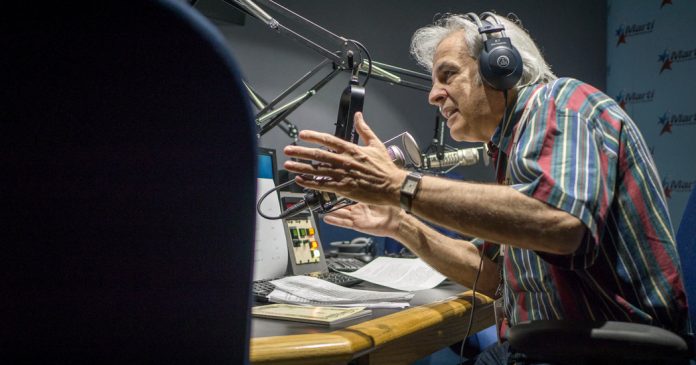
Journalists from Radio Martí, the U.S. federally-funded news outlet aimed at communist Cuba, were in the middle of interviewing a Cuban activist in Miami on a recent Saturday when bleak looks suddenly came over their faces.

The 40-year-old news agency, designed to send uncensored news in Spanish into Cuba, had just been ordered closed by the Trump administration, the crew learned in an email. The profile of the activist — Ramón Saúl Sánchez, known for leading protest flotillas to Cuba — was scrapped.

“They were very confused,” Mr. Sánchez said. “They said, ‘We think we’ve been terminated. We need to leave.’”

President Trump did in a flash what the Castro brothers in Cuba couldn’t do in four decades: he took a news station that had long drawn the communist regime’s fury off the air.

Radio Martí became the latest in dozens of programs and agencies in the U.S. government to fall to the massive cost-cutting carried out by Mr. Trump and his adviser, Elon Musk.

The broadcaster had for years been dogged by a reputation as an outdated relic of the Cold War, a bloated boondoggle where politically influential people found jobs for their relatives.

It spent tens of millions of dollars a year producing what critics called one-sided, right-wing screeds against the Cuban government, and was repeatedly mired in journalistic and corruption scandals that were the focus of Congressional reports.

Its television station, TV Martí, was so thoroughly blocked on the island that it was called “No See TV.”

But in recent years, a leaner operation with a crop of fresh recruits under new management was making serious inroads on social media platforms, like Facebook and YouTube, the agency’s data shows.

Following budget cuts by the first Trump administration that trimmed its staff and funding by about 40 percent, veteran journalists and filmmakers were hired to revamp the newsroom for the digital age.

With short video clips posted online, Radio Martí was attracting millions of readers and viewers a year, the network’s data shows, just as Cuba underwent the largest mass migration in its history, suffered days long power outages and an economic crisis unlike anything seen in decades.

But the question remains: With Cuba cracking down on dissent and jailing its citizens for critical Facebook posts, and with the nation facing its most difficult period in 66 years under communism, has Radio Martí put out its last broadcast?

“The website was blocked in Cuba. The TV signal was blocked, the radio signal is blocked,” said Abel Fernández, the outlet’s digital and social media director who lost his job last week. “But the people are reaching the content on social media. What we are doing is important, and it matters to people.”

Mario Díaz-Balart, one of the three Cuban American members of Congress, told Telemundo that he would work with Mr. Trump to restore Martí.

Asked whether Secretary of State Marco Rubio, who is Cuban American, supported the broadcaster, the State Department said the president was elected to make tough decisions, and “the situation remains complex and fluid.”

As a U.S. senator from Florida, Mr. Rubio was among a bipartisan group of lawmakers who signed a 2022 letter demanding a “through justification” for planned layoffs.

The White House declined interview requests with Kari Lake, who is overseeing the dismantling of the U.S. Agency for Global Media, which includes Radio Martí.

Mauricio Claver-Carone, President Trump’s adviser on Latin America, said he believed some semblance of Radio Martí would be saved.

“I think you can appreciate the historic importance of something and the role it plays while recognizing it needs to be updated toward the world we live in — it’s not the 80s anymore or the 90s or even early 2000s,” he said. “We can look at this as the great Martí reset.”

Ronald Reagan created Radio Martí in 1983, at the height of the Cold War, at the urging of a prominent Cuban American exile leader, Jorge Mas Canosa. It was meant to penetrate censorship on the island, where media is tightly controlled by the government and independent journalists generally wind up in prison or in exile.

It went on the air in 1985, and later expanded to include television. But as recently as 2019, an internal audit commissioned by the U.S. Agency for Global Media said it produced “bad journalism” and “ineffective propaganda.”

The audit came months after a widely criticized piece calling billionaire philanthropist George Soros “a nonbelieving Jew of flexible morals” led to the firing of several journalists. Another top official was caught falsely claiming more than $35,000 in expenses.

The Castro brothers detested Radio Martí’s programming, and former President Raúl Castro famously demanded it be taken off the air. “The United States maintains programs that are harmful to Cuban sovereignty, such as projects to promote changes in our political, economic and social order,” he said in 2015, after President Obama normalized relations between the two nations.

As the internet became widely available in Cuba, critics wondered whether Martí was even necessary.

But Martí had a distinction that set it apart from the other pro-democracy stations like Voice of America and Radio Free Europe that were also silenced last week: the dictatorship it targets is still in power.

“Radio Martí was designed for a different time in the 1980s in Reagan’s battle against the Soviet Union and communism, but the fact is that Cuba never transitioned, and now we live in a digital world,” said Ted Henken, a Baruch College professor who studies Cuba’s media landscape. “Martí has had to reinvent itself three or four times.”

After several shake-ups and scandals, Mr. Henken said the operation, which he recently visited, appears to be leaner and more professional. It scrapped the TV station and although its annual budget was set at $25 million, it was spending $17 million, according to several employees who were not authorized to speak publicly.

In the past two years, audiences started to surge. According to Tubular Labs, a video analytics firm, with six months left in the fiscal year, Martí has already doubled its viewership with 14 million views on YouTube so far this fiscal year, and another 84 million on Facebook, where it has more than 1 million followers. About 80 percent of their audience is in Cuba, editors said.

Mario J. Pentón, a Cuban journalist who moved to the United States a decade ago and began working at Martí a year ago, was told his contract would end this month. He said he was proud of the work the outlet did, particularly in informing the public of approaching hurricanes during times of massive power outages that limited even the Cuban government’s ability to issue storm warnings.

Martí has won eight Emmy awards.

“I think it has a future, because I think the mission is more important than ever,” Mr. Pentón said. “Cuba is going through its worst crisis, and in the middle of this crisis, this information blackout debacle only benefits the regime.”

Martí’s top news editors said they were not authorized to speak publicly about the Trump administration’s cuts.

Ms. Lake, a former television journalist whom Mr. Trump chose as a special adviser to the United States Agency for Global Media, last week called the agency rotten to the core. On X, she suggested that employees check their emails.

Shortly afterward, employees received emails saying they were on paid administrative leave until further notice, then they were locked out of their email accounts. New employees who were on probation had already received termination notices, and journalists who were on contract were also let go.

Although she provided no examples, Ms. Lake said in a news release that she found “massive national security violations, including spies and terrorist sympathizers and/or supporters infiltrating the agency.”

She added that “waste, fraud, and abuse run rampant in this agency and American taxpayers shouldn’t have to fund it.

Mariya Abdulkaf contributed reporting.

Takeaways From Our Money Laundering Investigation

0

We live in a scammer’s world.

We get texts from unknown numbers with an odd tone of familiarity. We have been promised breathtaking profits in ads on social media. We have encountered characters on dating apps who seemed too good to be true.

It’s not just us, of course. Most people have heard stories or know someone — a relative, colleague, neighbor — who fell for a ruse and lost money, perhaps even their life savings.

But as our phones blew up with spam calls, we asked a different question. The scammers make billions of dollars every year. How do they turn this illicit cash into seemingly legitimate income? In other words, how do they wash it clean?

So we followed the money.

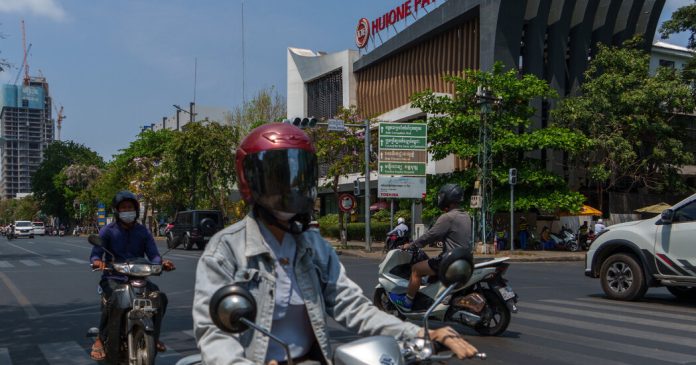
Our search took us from Hong Kong, where we are both based, to Cambodia. In the coastal city of Sihanoukville, we witnessed the enduring and notorious carnival of scams, operated from barbed-wire compounds or the upper floors of unfinished buildings. We met with scammers and their launderers at Chinese restaurants that line the beach.

It took us a while to persuade insiders to speak to us but, in the end, about a half-dozen of them led us into their labyrinthine world. They showed us channels on the social media app Telegram where they conduct their trade. They taught us their jargon.

And most important, they gave us a cache of documents, a kind of money-laundering handbook, that describes their methods in detail.

The trail eventually led us to a Cambodian company called Huione Group, an established financial firm with numerous affiliates. Huione did not respond to our questions.

Some of its affiliates, we found, have created the architecture needed to launder money. And profit at every step.

One of Huione’s affiliate companies hosts an online bazaar where scammers and other criminals can find money launderers. The precise size of this marketplace is impossible to measure, but the analytics firm Elliptic has linked it to $26.8 billion in cryptocurrency transactions since 2021.

The bazaar is made up of thousands of chat groups on Telegram where anonymous users advertise money laundering and other services. It makes money by charging for ads on public groups and from maintenance fees for the private ones.

One channel called “Demand and Supply” had more than 400,000 users and received hundreds of messages every day. After we sent questions to Huione Group and others in late February, Telegram said it had removed the channel. But another one quickly sprung up to replace it and had 250,000 members within a week.

The bazaar denies any criminal association or any link to Huione Group. But it told customers on Telegram that Huione Group is one of its “strategic partners and shareholders.”

Once the scammers find money launderers, the conversations move to private groups where deals are hammered out.

Another arm of the company, Huione International Pay, offers bespoke money laundering services, according to internal documents and two people familiar with its operations.

This company serves as what it is known as a matchmaker — connecting criminals with people who control bank accounts or virtual wallets where the illicit money ends up. The matchmaker takes a cut, say 15 percent to launder money in the United States, and gives some of that to the account owners, known as money mules.

Huione International Pay did not answer our questions.

One interesting feature of this world, we found, was the “guarantee.”

The online bazaar will, for a small fee, hold deposits in escrow to guarantee the transactions between criminals and money launderers. Why? Because scammers steal from each other. The deposits enforce honor among thieves.

Most of the transactions are denominated in the cryptocurrency Tether.

Once the matchmaker brokers a deal and a deposit is made, the money mules send over their bank account information. The criminal passes those numbers to the scam victim, who deposits money that will almost certainly never be seen again.

Most of these accounts are only open for a matter of weeks. Importantly, the accounts have no direct link to the scammers themselves.

That means, even if law enforcement agents or banks discover the accounts, they cannot easily trace the money to the criminals. Mules might get arrested. Scammers are harder to catch.

The mule quickly transfers the money from one account to another. Often, that first hop is out of the country. Sometimes, the money is broken into smaller chunks to avoid suspicion.

In one case we reviewed, money defrauded from victims jumped from the United States to the Bahamas. From there, it was used to buy the cryptocurrency Tether.

Finally, the mule takes a cut for services rendered, and sends the rest to the matchmaker. In the end, the criminal gets the bulk of the loot.

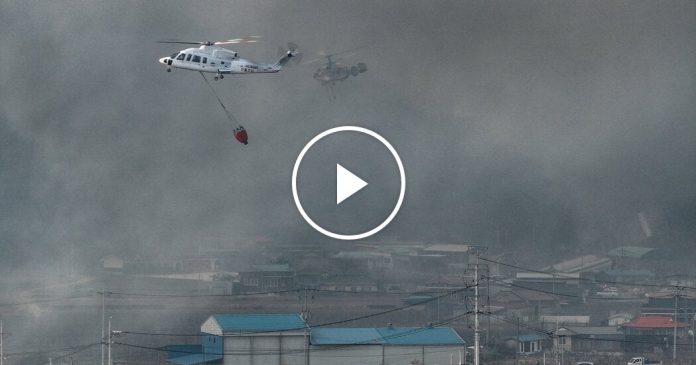
Wildfires Burn Across South Korea’s Southeast

0

Thousands of firefighters battled dozens of forest fires over the weekend.

Monday Briefing – The New York Times

0

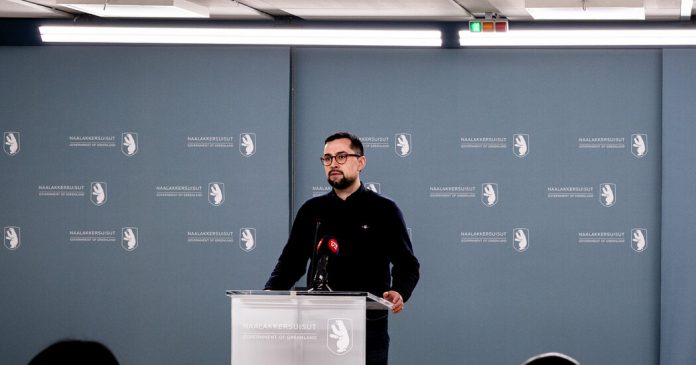
Relations between Greenland and the U.S. deteriorated further yesterday as Mute Egede, the island’s prime minister, erupted over what he called a “highly aggressive” delegation of senior officials that the Trump administration plans to send there this week.

Greenlanders’ effort to be diplomatic just “bounces off Donald Trump and his administration in their mission to own and control Greenland,” Egede said. He singled out the involvement of Michael Waltz, the national security adviser, saying his presence would serve only “to demonstrate power over us.” Usha Vance, the second lady, is also set to go to Greenland.

President Trump has vowed to make Greenland part of the U.S. “one way or the other,” and its people have become increasingly wary of his intentions. Until now, most Greenlandic officials have walked a fine line, trying to assert their sovereignty without antagonizing Trump.

Response: The Trump administration has presented the visit as friendly, saying in a statement that Vance would travel with one of her children and attend a national dog sled race.

Israeli forces were expanding their offensive in the Gaza Strip’s north and south, taking control of more territory and issuing evacuation orders for people who’d only recently returned home. Israel’s military said it had carried out airstrikes against Hamas targets and infrastructure.

The Palestinian Civil Defense in Gaza warned of “imminent danger threatening the lives” of tens of thousands in the city of Rafah. The death toll in Gaza since the war began has now surpassed 50,000, the local health ministry said, including 39 people killed in Israeli bombardments over the past day.

Political turmoil: Israel’s cabinet passed a no-confidence motion against the country’s attorney general, beginning the process of dismissing her. She said the government of Prime Minister Benjamin Netanyahu, who has accused her of undermining him, sought to put itself “above the law.”

Ukrainian officials met with U.S. envoys yesterday in Saudi Arabia to discuss the possibility of a limited cease-fire in the war with Russia. Russian and U.S. representatives are scheduled to hold talks there today. Here’s what to know.

The talks, in Riyadh, were expected to focus on ironing out the details of a temporary halt to strikes on energy infrastructure, which both sides agreed to last week, and on security for shipping in the Black Sea. A Ukrainian official said the Kyiv delegation might hold additional discussions with U.S. officials today.

What’s next: The path to a truce has been shaky, with both sides ready to continue fighting. Moscow continues to insist on maximalist positions; it has sought to assert territorial control and ensure that Ukraine never joins NATO. Kyiv has refused Russia’s demands and accused its president, Vladimir Putin, of stalling for time.

Attacks continue: At least three people were killed in a large Russian drone attack on Kyiv, officials said. In recent months, Russia has intensified strikes on the capital.

Lives lived: Max Frankel, who fled Nazi Germany as a boy, became a Pulitzer Prize-winning correspondent for The Times and led the paper as its executive editor, died at 94.

Bad toasts have become a popular comic trope for a reason: Who among us can’t remember cringing at misplaced anecdotes or dismally wrongheaded performances from boozy bridesmaids and graceless groomsmen?

My colleague Jason Zinoman, a critic at large for The Times, makes the case for more — not fewer — of these howlers. “The reality about bad toasts is that most of them are not disasters, just merely forgettable,” he writes. “And the best ones are a little messy.” Ideally, according to Jason, you make the target squirm — but not too much.

Read more tips for a successful toast.

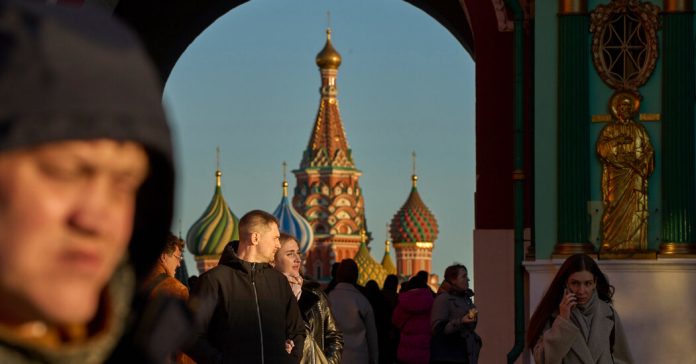
Putin’s Aims in Trump Talks on Ukraine

0

President Trump says he is focused on stopping the “death march” in Ukraine “as soon as possible.”

But for President Vladimir V. Putin of Russia, cease-fire talks with Mr. Trump are a means to much broader ends.

Russian and American officials are set to meet in Saudi Arabia on Monday to deepen their negotiations about technical details of a partial cease-fire to halt attacks on energy facilities and on ships in the Black Sea. While Ukraine says it’s ready for a full truce, Mr. Putin has made it clear that he will seek a wide range of concessions first.

The upshot: The Kremlin appears determined to squeeze as many benefits as possible from Mr. Trump’s desire for a Ukraine peace deal, even as it slow-walks the negotiations. Viewed from Moscow, better ties with Washington are an economic and geopolitical boon — one that may be achieved even as Russian missiles continue pounding Ukraine.

Interviews last week with senior Russian foreign-policy figures at a security conference in New Delhi suggested that the Kremlin saw negotiations over Ukraine and over U.S.-Russia ties as running on two separate tracks. Mr. Putin continues to seek a far-reaching victory in Ukraine but is humoring Mr. Trump’s cease-fire push to seize the benefits of a thaw with Washington.

Vyacheslav Nikonov, a deputy chairman of the foreign affairs committee of the lower house of the Russian Parliament, said that Mr. Trump and Mr. Putin were developing a “bilateral agenda” that was “not connected to Ukraine.”

“Ukraine is running its course,” Mr. Nikonov said in an interview on the sidelines of the New Delhi conference, called the Raisina Dialogue. “The offensive is ongoing,” Mr. Nikonov added. “But I think that for Putin, relations with America are more important than the question of Ukraine specifically.”

Engaging with Mr. Trump, Moscow’s thinking seems to go, could unlock economic benefits as basic as spare parts for Russia’s Boeing jets and geopolitical gains as broad as a reduction in NATO’s presence in Europe. What’s less clear is whether Mr. Trump will use those hopes as leverage to get a better deal for Ukraine, and whether he will at some point lose patience with Mr. Putin.

“Mr. Trump likes quick deals,” said Aleksandr A. Dynkin, an international affairs specialist who advises the Russian Foreign Ministry. “If he sees that there are big difficulties, he may be disappointed and cast this problem aside.”

As a result, Mr. Putin seems to be pulling out all the stops to hold Mr. Trump’s interest.

Meeting in Moscow with the White House envoy Steve Witkoff this month, Mr. Putin handed over a “beautiful portrait of President Trump” commissioned from a Russian artist, Mr. Witkoff said in an interview released on Saturday.

“It was such a gracious moment,” Mr. Witkoff told the former Fox News host Tucker Carlson.

On Ukraine, Mr. Putin has shown no sign of budging from his far-reaching goals — a guarantee that Ukraine will never join NATO, a rollback of the Western alliance in Central and Eastern Europe, limits on Ukraine’s military, and some level of influence over Ukraine’s domestic politics.

Feodor Voitolovsky, director of the Institute of World Economy and International Relations in Moscow, said that Russia would seek a “road map” to a broader deal before agreeing to any cease-fire.

He also said that Russia could accept a United Nations peacekeeping force in Ukraine as long as it did not include troops from NATO countries.

“For Russia, the long-term perspective is more valuable than a tactical cease-fire,” said Mr. Voitolovsky, who serves on advisory boards at the Russian Foreign Ministry and Security Council. “We can emerge with a model that will allow Russia and the United States, and Russia and NATO, to coexist without interfering in each other’s spheres of interests,” he added.

To achieve such a deal, Russia is appealing to Mr. Trump’s business-minded focus. Mr. Voitolovsky contended that broad agreement over Ukraine was a prerequisite for U.S.-Russian cooperation, and that Mr. Trump, “as a businessman,” understood that Russian assets were currently undervalued.

Mr. Dynkin, the Russian international affairs specialist, said that the Kremlin could remove the United States from its list of “unfriendly countries” — a classification that restricts American companies’ ability to do business in Russia.

He said that Moscow was particularly interested in negotiations over the aviation sector, given the challenges that Russian airlines face in servicing their American-made jets. The United States could allow the export of airplane spare parts and reinstate direct flights to Moscow, he said; Russia could let American airlines fly over Siberia, a right that Russia withdrew in 2022.

Anastasia Likhacheva, dean of international affairs at the Higher School of Economics in Moscow, said it was unlikely that Mr. Trump would deliver quick and far-reaching sanctions relief.

But she said a thaw in relations with the United States could lead to reduced enforcement of sanctions and make it easier for Russian companies to operate globally by sending a signal that Russia was no longer a problematic partner.

“Such a detox,” she said, “could be useful and will expand our menu of possibilities.”

Migrants Deported to Panama by Trump Find Themselves Stranded and in Limbo

0

When the first buses of newly freed migrants arrived this month in Panama City from a detention camp at the edge of a jungle, three people were visibly ill. One needed H.I.V. treatment, a lawyer said, another had run out of insulin and a third was suffering from seizures.

Confusion, chaos and fear reigned. “What am I going to do?” one migrant wondered aloud. “Where am I going to go?”

These are questions being asked by dozens of migrants deported to Panama last month by the Trump administration, part of the president’s sweeping efforts to expel millions of people from the United States.

At first, Panamanian officials had locked the group of about 300 people in a hotel. Then, those who did not accept repatriation to their home countries were sent to a guarded camp at the edge of a jungle. Finally, after a lawsuit and an outcry from human rights groups, the Panamanian authorities released the deportees, busing them back to Panama City.

Now, the remaining migrants — from Iran, Afghanistan, Cameroon, Ethiopia, Uzbekistan and elsewhere — are free but stranded in a country that doesn’t want them, many sleeping in a school gymnasium made available by an aid group, with no real sense of what to do next.

Interviews with 25 of the deportees offered a revealing look at who is being pushed out of the United States by the Trump administration, and what happens once they arrive in Central America.

The region has emerged as a key cog in the deportation machinery President Trump is trying to kick into high gear.

But Washington’s decision to send migrants from around the world to Central America has also raised legal questions, tested governments seemingly unprepared to receive migrants and left people marooned in nations where they have no support networks or long-term legal status.

Most of the migrants in Panama said that when they arrived in the United States they told officials they were fearful of returning to their countries, but were never given an opportunity to formally ask for asylum.

A spokeswoman for the Department of Homeland Security, Tricia McLaughlin, said in an email that the migrants had been “properly removed” from the United States. She added that “not a single one of these aliens asserted fear of returning to their home country at any point during processing or custody.”

“The U.S. government coordinated for the welfare of these aliens to also be managed by humanitarian groups in Panama,” she said.

Since taking office, Mr. Trump has sent hundreds of migrants from around the world to Panama, Costa Rica and El Salvador, though it is unclear if the U.S. government plans to continue doing so.

“Whether there will be more planes from the United States or not, I honestly don’t know,” Panama’s president, Raúl Mulino, said this month. “I’m not very inclined to do it, because they leave us with the problem.”

Those now stranded in Panama include Hedayatullah Zazai, 34, a man who said he had served as an officer in the Afghan Army, working alongside U.S. Special Forces and American consultants. After the Taliban took over, he fled to Pakistan, he said, then Iran, then flew to Brazil and trekked through South and Central America to get to the U.S. border.

The deportees also include Iranian Christians who said they were under threat at home, and several Afghan women from the Hazara ethnic minority who say they face persecution under the Taliban.

Another deportee is Simegnat, 37, an Amhara woman traveling alone from Ethiopia who said she had been targeted by her government because her ethnicity led the authorities to suspect her of working with a rebel group. She said she fled after her home was set on fire, her father and brother were killed and the police told her she would be next.

“I was not a person who wanted to flee my country,” she said. “I owned a restaurant and I had a good life.”

“We are humans, but we have nowhere to live,” she said of the Amhara people.

She and several of the other migrants, fearing for the safety of relatives back home, asked not to be identified by their full names.

Most of the migrants described crossing the Mexico-U.S. border early this year, being held for about two weeks in detention, then shackled by U.S. officials and put on a plane to an unknown destination. Some said they had been told they were headed from California to Texas; most said they were never given an opportunity to ask formally for asylum.

One 19-year-old woman from Afghanistan said U.S. officials had permitted her parents and five younger siblings to cross the border into the United States. As the only sibling over 18, she was separated from them, detained and flown to Panama, she said.

Some said they owed hundreds or thousands of dollars to people who helped them fund their journeys.

“If I go back to Ethiopia without their money,” Simegnat said, “they would kill me.”

Panama has given the deportees 30-day permits that allow them to stay in the country for the time being and has given them the option of extending their stay to 90 days.

While Panama has an asylum program, migrants have received mixed messages about the likelihood of receiving long-term legal protections in the country, they said.

Another option is for individuals to find another country that will take them. But that would require a case-by-case legal effort, said Silvia Serna, a lawyer who is part of the team that filed a lawsuit that called Panama’s detention of the migrants at the hotel and border camp illegal.

Ms. Serna said she had been interviewing the migrants to see what assistance her team could offer but cautioned that it might be very hard for people to find welcoming countries.

In interviews, three of the Iranian deportees said they planned to turn around and head back to the United States and were already negotiating with a smuggler. A fourth had already left for the U.S. border.

One is Negin, 24, who identified herself as a gay woman from Iran, where openly gay people face government persecution. “At least if I’m lingering idly,” she said, “I’ll be inside an American detention camp and on American soil.”

The smuggler quoted one woman a price of $5,000 to get her across the U.S.-Mexico border in Tijuana, and $8,000 to secure her a visa and put her on a plane to Canada.

For now, most of the group is staying at a school gymnasium-turned-shelter outside Panama City run by two Christian charities. The migrants sleep on thin mattresses and eat meals from plastic foam containers. A group of them went door to door at various embassies this past week asking for help but said they had been rejected at every one.

Elías Cornejo, who works with one of the aid groups, Fe y Alegría, was unsparing in his criticism of the new U.S. administration.

“We think that the policies of the Trump administration are part of a machine that grinds the migrant like meat,” he said. “And that obviously is a serious problem of inhumanity.”

A smaller group of deportees, mostly families with children, has been staying at a hotel in Panama City paid for by UNICEF. Among them is a married couple, Mohammad and Mona, who are Christian converts from Iran. One night, as their 8-year-old son broke down, both parents leaned over him, stroking his face.

“He doesn’t go to school, and life has become repetitive for him,” Mohammad said.

The couple had considered re-entering the United States illegally, they said, and eventually decided they could not put their child through more suffering. They are holding out hope that a lawyer on Ms. Serna’s team can persuade the Trump administration to grant them entry as persecuted Christians.

If that doesn’t work, Mohammad said, he was considering staying in Panama and was already looking for work.

Not far from the hotel recently, Artemis Ghasemzadeh, 27, another Iranian Christian, entered a white-walled church and knelt in a pew. Ms. Ghasemzadeh became something of a leader of the group after she posted a video online from detention at the Panama City hotel, pleading with the world for help.

She said that a priest had offered the migrants group housing north of Panama City, where they would be welcome to stay as long as they were in the country. The houses have kitchens, and they would have no curfew, she added. She was mulling over the offer.

“I don’t know what will happen next,” Ms. Ghasemzadeh said. “I don’t know my next step. At the moment, we are in God’s hands.”

Reporting was contributed by Alex E. Hernández from Panama City, Ruhullah Khapalwak from Vancouver, British Columbia, and a New York Times reporter from Addis Ababa, Ethiopia.

South Korea​n Court ​Reinstates Impeached Prime Minister

0

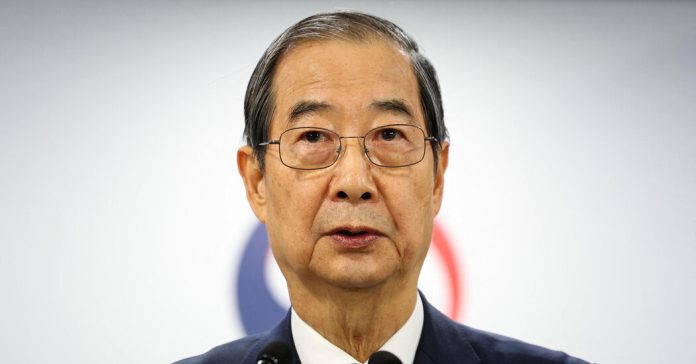
Prime Minister Han Duck-soo of South Korea was restored to office as acting president​ on Monday, after the country’s Constitutional Court overturned his impeachment by the National Assembly.

Mr. Han had served as South Korea’s acting president after ​the Assembly impeached President Yoon Suk Yeol on Dec. 14​, suspending Mr. Yoon from office in connection with his failed attempt to place his country under martial law. Mr. Han had served as acting president for fewer than two weeks when the Assembly impeached him as well on Dec. 27, adding to the political uncertainty in South Korea, a key ally of the United States in Asia.

The Constitutional Court has yet to announce when it will rule on whether to oust or reinstall Mr. Yoon — a far more consequential decision South Koreans have been awaiting for weeks with growing anxiety. If Mr. Yoon is removed, South Korea will elect a new president within 60 days. If he is reinstated, he will return to office to face a country more fractured than ever over his presidency.

In South Korea, the Constitutional Court has a final say on whether officials impeached by the Assembly should be formally removed or reinstalled. Its ruling took effect immediately and cannot be appealed.

Since Mr. Han’s impeachment, Finance Minister Choi Sang-mok, the official next in line in the government hierarchy, has been doubling as acting president.

When it impeached Mr. Han, the Assembly accused him of collaborating in Mr. Yoon’s illegal declaration of martial law. It also said that Mr. Han broke his constitutional duties when he refused to appoint three Constitutional Court justices selected by Parliament. Mr. Han denied the accusations.

U.K. Launches Investigation into Heathrow Airport Blackout

0

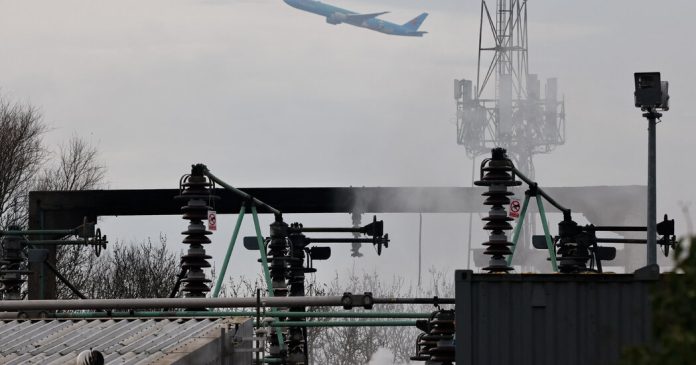
The British government has ordered an urgent investigation into how a fire at an electricity substation left Heathrow Airport in London in darkness on Friday, crippling one of the world’s busiest airports.

“We are determined to properly understand what happened and what lessons need to be learned,” Britain’s energy secretary, Ed Miliband, said in a statement late on Saturday.

Friday’s closure disrupted more than 1,000 flights, leaving planes and aviation crews out of position and stranding passengers — some of whom may not reach their destinations for a few more days.

The fire, which the authorities believe was likely accidental, raised questions about the resilience of Britain’s key infrastructure and whether the country has invested enough to maintain it. But some experts said the blackout was probably unavoidable given the scale of the blaze at the substation.

Britain’s government has faced pressure for years to maintain and modernize the country’s transportation infrastructure, like roads and trains. But the country faces severe financial pressures, with public services like health care underfunded. Any demands for additional major infrastructure spending would create political headaches for the prime minister, Keir Starmer, while he also tries to increase military spending amid flatlining economic growth.

Within hours of the airport going dark, engineering experts were questioning whether Heathrow was supported by infrastructure befitting a major world hub.

Martin Kuball, a professor of physics at the University of Bristol, wrote in an online post that the fire was a warning sign about the nation’s electrical systems.

“Unfortunately, there is no resilience built into the National Grid,” Mr. Kuball, a Royal Academy of Engineering chair in emerging technologies, wrote at the Science Media Center. “In part, this is because we still rely on old technology in substations that use copper windings to distribute power rather than new technology, so-called solid state transformers.”

The fire struck one of three substations that convert and distribute electricity to Heathrow. “We have other substations, but to switch them in takes time,” Heathrow’s chief executive officer, Thomas Woldbye, told the BBC.

That version of events was disputed on Sunday by John Pettigrew, chief executive of the National Grid, who told The Financial Times that the airport could have fallen back onto the other substations. He added it was a “question for Heathrow” as to why it took the action it did. “Losing a substation is a unique event — but there were two others available,” he said.

The airport has diesel generators and batteries to power critical safety systems like runway lights. But airport officials have said that those emergency backups could not power the entire airport.

So the airport effectively went dark, and some experts said that any airport would have faced the same outcome given similar circumstances.

Simon Gallagher, the managing director at U.K. Networks Services, which advises clients on the resilience of their electricity networks, said that most airports do not have the backup capacity to run their entire operations after being disconnected from the grid.

He said that would require at least 20 diesel generators, each the size of a 40-foot shipping container and producing a megawatt of electricity. That setup would provide power for about six hours before needing to be refueled, he said.

A 2023 report by the U.S. Government Accountability Office found that 24 American airports had experienced 321 unplanned outages longer than five minutes from 2015 to 2022.

A power outage in 2017 disrupted operations at Hartsfield-Jackson Atlanta International Airport, the world’s busiest airport, causing the cancellation of more than 1,000 flights. A 2023 outage caused by an electrical panel failure shut down a terminal at Kennedy International Airport for a day.

The British authorities said they expected preliminary results from the investigation in six weeks.

Heathrow said it would operate a full schedule of more than 1,300 flights on Sunday as airlines tried to clear the backlog that has disrupted travel for tens of thousands of people. On Saturday, more than 250,000 passengers passed through the airport “with punctual departures,” the airport said.

In a statement, the transport secretary, Heidi Alexander, said that Heathrow “uses the energy of a small city, so it’s imperative we identify how this power failure happened and learn from this to ensure a vital piece of national infrastructure remains strong.”

Sudan’s Military Sweeps Across Capital, Hoping to Turn the War

0

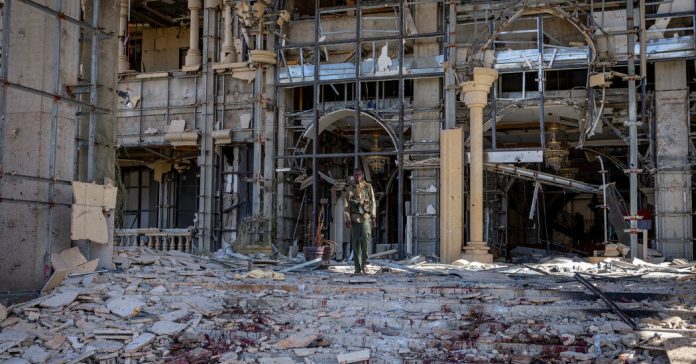
At the battle-scarred presidential palace in the heart of Sudan’s shattered capital, soldiers gathered under a chandelier on Sunday afternoon, rifles and rocket launchers slung over their shoulders, listening to their orders.

Then they trooped out, down a red carpet that once welcomed foreign dignitaries, and into the deserted center of the city on a mission to flush out the last pockets of resistance from the paramilitary fighters with whom they have been clashing for two years.

Since Sudan’s military captured the presidential palace on Friday, in a fierce battle that left hundreds dead, it has taken control of most of central Khartoum, marking a momentous change of fortunes that is likely to change the course of Sudan’s ruinous civil war.

By Sunday, the military had seized the Central Bank, the headquarters of the national intelligence service and the towering Corinthia Hotel along the Nile.

Journalists from The New York Times were the first from a Western outlet to cross the Nile, into central Khartoum, or to visit the palace, since the war erupted in April 2023. What we saw there made clear how decisively the events of recent days have shifted the direction of the war, but offered little hope that it will end soon.

“We will never leave our country to the mercenaries,” saidMohamed Ibrahim, a special forces officer, referring to the R.S.F. — the paramilitary force that Sudan’s army once nurtured, but is now its rival for supreme control.

As our vehicle raced down a deserted street along the Nile that until a few days ago had been controlled by the R.S.F., the scale of the damage in one of Africa’s biggest cities was starkly evident.

Trees lining the road had been stripped bare by explosions. A mosque was peppered with gunfire. Towering ministries and office blocks, some built with money from Sudan’s vast reserves of oil and gold, were burned to a shell.

The military headquarters, where a group of senior generals were trapped for the first 18 months of the war, had been shredded by bombs.

Khartoum University, once a hub of political debate, had been looted.

And an area where tens of thousands of young Sudanese mounted a popular uprising in 2019 that ousted the country’s autocratic leader, President Omar Hassan al-Bashir, was deserted. All that remain of those hopeful times was a handful of faded, bullet-pocked murals.

Instead, some of those pro-democracy protesters have picked up guns to fight in the war; they were assembled in the ruins of the presidential palace on Sunday.

The Chinese-built presidential palace, only a few years ago shared by the country’s warring military leaders, had been reduced to a battered husk. Dust and debris covered ministerial suites and state rooms. Ceilings had collapsed. Gaping holes looked out over the Nile.

On the grounds of an older palace next door, erected a century ago by British colonists, soldiers napped under the charred arches of a bombed-out building.

The war started as a feud between rival generals, but quickly enveloped the entire country, bringing suffering on an epic scale. The conflict has forced 12 million people from their homes, killed tens of thousands, and set off the world’s worst famine in decades, the United Nations says.

Foreign powers like the United Arab Emirates and Russia fuel the fight by supplying weapons to either side, and many worry it could spiral into a regional conflict by drawing in fragile neighboring countries like South Sudan or Chad.

American efforts to broker peace in Sudan last year failed. It is unclear if President Trump will take any interest, although supporters say the country’s vast mineral resources could draw his attention.

Piles of bloodstained rubble on the palace steps testified to the ferocity of the battle on Friday. As the military closed in, the R.S.F. leader, Lt. Gen. Mohamed Hamdan, issued a video message imploring his troops to stand their ground. When the final assault began, at least 500 paramilitary fighters were still inside, several officers said.

But when they tried to flee, they ran into deadly ambushes. A video filmed half a mile from the palace, and verified by The Times, showed dozens of bodies scattered along a street, beside incinerated or bullet-pocked vehicles.

“This is the season for hunting mice,” declared the officer who took the video, dating it to Saturday.

R.S.F. fighters stationed on Tuti Island, at the confluence of the Blue Nile and White Nile Rivers, tried to flee on boats, soldiers said. It was unclear how many escaped.

Without offering details, a Sudanese military spokesman said that “hundreds” of paramilitary fighters had been killed. But dozens of the military’s forces also died, soldiers said privately, in R.S.F. drone attacks and in other fighting.

Alan Boswell, director of the Horn of Africa project at the International Crisis Group, said it was “just a matter of time” before Sudan’s military took the entire city, forcing the R.S.F. to retreat to its stronghold in the western region of Darfur.

“Quite a fall from where they were for the first year and a half of the war, when they held most of Khartoum,” Mr. Boswell said.

Few believe the war is nearing an end, though. Both the R.S.F. and the Sudanese military are backed by powerful foreign powers that have poured weapons into Sudan over the past two years. Sudan’s deputy leader, Malik Agar, recently estimated that there are now 36 million small arms in the country, which had a prewar population of 48 million.

International efforts to broker a negotiated end to the conflict have collapsed, and the country’s military chief, Gen. Abdel Fattah al-Burhan, recently said he preferred to fight, not talk.

.

On the steps of the palace, a fresh bloodstain marked the spot where an R.S.F. drone-fired missile had killed four employees from Sudanese state TV, and two military officers on Friday morning. As we visited on Sunday, another drone hovered overhead, prompting soldiers to jog between buildings. They urged us to follow quickly.

Col. Algoney Ali Eseil, a commander leading a group of pro-democracy protesters turned fighters, said the R.S.F. drones were being flown from bases in Darfur and Chad, where they were operated by the United Arab Emirates, the R.S.F.’s main foreign sponsor. Colonel Eseil offered no evidence to support those claims, but The Times reported last year that the Emirates was operating Chinese-made Wing Loong 2 drones from an airstrip in Chad that is within striking range of Khartoum.

Sudan’s military has also relied heavily on drones and other foreign help. Last year it acquired Iranian drones that helped it capture ground in Khartoum. Also last year it acquired eight Turkish-made Bayraktar TB2 drones, which American officials say are especially prized in African conflicts, according to documents obtained by The Times. The documents were first reported by The Washington Post.

With the city center cleared out, the battle for Khartoum has now moved to the international airport, a mile and a half from the palace. Satellite images show that its runways are pocked with shellfire and littered with the remains of passenger airliners destroyed after fighting broke out in 2023.

As the city switches from R.S.F. to military control, human rights officials are concerned that civilians accused of collaborating with the rebels may face reprisals. In January, the army was accused of brutal assaults on suspected R.S.F. sympathizers after recapturing the city of Wad Madani. Volunteers with the Emergency Response Rooms, which runs hundreds of soup kitchens across Khartoum, said they feared they could also be targeted.

If the army succeeds in Khartoum, the focus of the war will likely shift to to Darfur, where R.S.F. fighters are laying a punishing siege on the famine-stricken city of El Fasher, the only city in Darfur that it does not control. On Friday, they seized the town of Al Malha, about 130 miles north of El Fasher. Residents of the city said the occupying fighters were preventing them from leaving, amid reports of arrests and killings.

Abdalrahman Altayeb contributed reporting from Khartoum, and Ronen Bergman from Tel Aviv.