Thursday, November 12, 2026
Home Blog Page 95

Venezuela to resume accepting U.S. repatriation flights : NPR

0

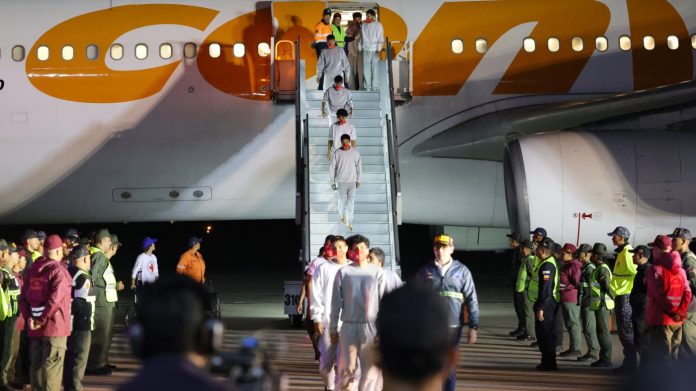
Venezuelan migrants deported by the U.S. disembark from a plane at Simon Bolivar International Airport in La Guaira, Venezuela on Feb. 20.

Javier Campos/Getty Images


hide caption

toggle caption

Javier Campos/Getty Images

Venezuela has announced that it will resume accepting flights of its citizens who are deported by U.S. immigration authorities.

Jorge Rodríguez, the president of Venezuela’s National Assembly, said on Saturday in a post on social media that the repatriation flights would begin again as early as Sunday. “Migration is not a crime,” he added.

Rodríguez, who has been negotiating with U.S. officials on immigration issues, said Venezuelan authorities “will not rest” until they secure the return of any citizens who require it.

The White House did not immediately reply to NPR’s request for comment on Sunday.

In his statement, Rodríguez also alluded to the deportation of some Venezuelans to El Salvador earlier in March, when President Trump invoked the 1798 Alien Enemies Act in order to target alleged members of a violent Venezuelan prison gang.

A total of 238 Venezuelans were deported in that operation, which remains under scrutiny by a federal judge who had attempted to block the deportation flights and continues to seek information from the Trump administration about why they went ahead. Of the 238, the Trump administration said 137 people were deported under the Alien Enemies Act and 101 were deported under regular immigration proceedings.

Venezuela’s President Nicolás Maduro has called for the return of the Venezuelan migrants sent by the U.S. to El Salvador, where President Nayib Bukele said they were transferred to a mega-prison known as CECOT.

Families of some of the Venezuelans who were deported disputed the government’s claims that the men had gang connections.

Maduro has said the Venezuelan migrants were kidnapped.

Venezuela stopped accepting repatriation flights from the U.S. on March 8. It came after Trump announced that the U.S. would cancel the Biden-era permit that allowed California-based Chevron to extract and export oil from Venezuela, a major source of revenue for the country.

But last week Secretary of State Marco Rubio warned that the Trump administration would impose “new, severe, and escalating sanctions” on the country unless it began accepting migrants again.

Carrie Kahn contributed reporting from Rio de Janeiro.
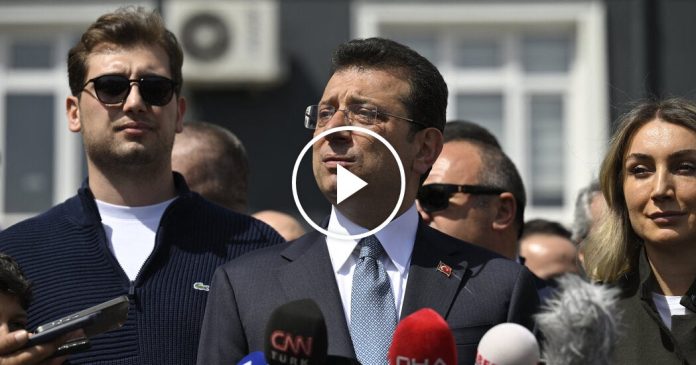
Turkey Protests Continue After Jailing of Erdogan Rival

0

The mayor of Istanbul, Ekrem Imamoglu, was jailed pending his trial on corruption charges and removed from office on Sunday. Mr. Imamoglu and his party deny the accusations.

Did the unitary executive theory pave the way for President Trump’s second term? : NPR

0


Did the unitary executive theory pave the way for President Trump’s second term?

  • Download

Monday Briefing: U.S.-Ukraine Talks – The New York Times

0

Ukrainian officials met with U.S. envoys yesterday in Saudi Arabia to discuss a possible limited cease-fire in the war with Russia. Russian and U.S. representatives are scheduled to speak today. Here’s what to know.

The talks, held in Riyadh, were expected to focus on the temporary halt by both sides of strikes on energy infrastructure, and on safety for shipping in the Black Sea. A Ukrainian official said the Kyiv delegation might hold additional discussions with U.S. officials today.

Steve Witkoff, President Trump’s personal envoy to President Vladimir Putin of Russia, has said that the ultimate goal of the talks is a 30-day full cease-fire that would potentially allow time for negotiations toward a permanent truce.

What’s next: The path to a truce has been shaky, with both sides ready to continue fighting. Moscow continues to insist on maximalist positions, including territorial control and ensuring that Ukraine never joins NATO. Kyiv has said that it will not concede to the Kremlin’s demands, and has accused Putin of stalling for time.

Attacks continue: At least three people were killed during a large Russian drone attack on Kyiv, officials said yesterday. In recent months, Russia has intensified strikes on the capital.


Israeli forces yesterday were expanding their Gaza offensive into the north and south of the enclave, issuing evacuation orders for people who had only just returned home. Israel’s military said that it had carried out airstrikes against Hamas targets and infrastructure.

Gaza’s Health Ministry said that 39 people were killed in Israeli bombardments over the past day. Hamas announced that Israel had killed a senior member of its political bureau, Salah al-Bardawil. The Palestinian Civil Defense in Gaza warned of “imminent danger threatening the lives” of more than 50,000 people in the southern city of Rafah.

Political turmoil: The Israeli cabinet yesterday passed a no-confidence motion against the country’s attorney general, beginning the process of dismissing her. In a letter, the attorney general said that Prime Minister Benjamin Netanyahu’s government sought to put itself “above the law.”

Ramadan among ruins: After months of death, destruction and deprivation, many in Gaza met to celebrate this time of fasting and prayer. Here are photos of how they have navigated this year’s holiday, with heartbreak.


Prime Minister Keir Starmer of Britain has turned from a methodical human rights lawyer and politician into something akin to a wartime leader. In conversations with our London bureau chief, Starmer spoke about how the tectonic shifts in America’s dynamics with Europe and Russia needed to be a “galvanizing moment.”

The prime minister also discussed Russia’s leader, Britain’s unshakable relationship with the U.S. and the urgent need to think about security and defense. Read the interview here.


Imagine you’re running an online scam. You need to move stolen cash — a lot of it. Luckily for you, there is a global network of matchmakers waiting to connect you with mules who can move the money around and launderers who can clean it.

My colleagues followed a trail of stolen wealth which led, surprisingly, to an established financial conglomerate in Cambodia called Huione Group. Here’s how these criminals make money vanish.

Lives lived: Max Frankel, who fled Nazi Germany and later became a Pulitzer Prize-winning correspondent for The Times and then its executive editor, died at 94.

Mayhem, a Norwegian black metal band, released the genre’s defining album in 1994. During those early years, coverage of the band was overshadowed by lurid tabloid headlines about murder and church burnings. But in the decades since, Mayhem has shown startling artistic longevity and influence. This year, they’re touring for their 40th anniversary.

The tour explores Mayhem’s full arc: grim and occult, but also with a twisted catharsis.

“We’re not dealing with love songs or the countryside,” one member, Necrobutcher, said. “We are dealing with the dark, aggressive, bad. But there is tragedy and sadness as well, which is also beautiful.”


That’s it for today. See you tomorrow. — Emmett

We welcome your feedback. Send us your suggestions at [email protected].

Pope Makes First Public Appearance Since Falling Ill

0

new video loaded: Pope Makes First Public Appearance Since Falling Ill

transcript

transcript

Pope Makes First Public Appearance Since Falling Ill

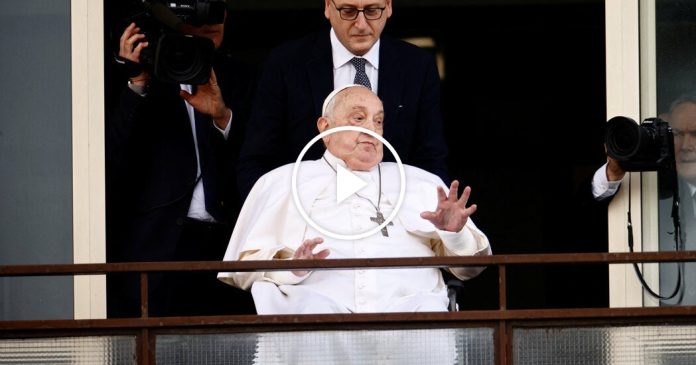
Pope Francis made his first public appearance in Rome after being admitted to a hospital in mid-February with an acute respiratory insufficiency. Francis will continue recovery at the Vatican guesthouse where he lives.

“Well people thought it was the end, but this is — it has really brought joy to my heart to see the Pope go through all this. He’s a real good fighter.”

Recent episodes in Pope Francis

The Foreman-Ali Rumble That Changed Their Careers, and Congo

0

The African nation of Zaire was elated. Its president, Mobutu Sese Seko, had struck a deal in 1974 for the country to host potentially the biggest boxing contest in history: Muhammad Ali, a legend seemingly on the decline, versus George Foreman, a ferocious, rising heavyweight world champion.

Mr. Mobutu, a brutal autocrat, saw a chance to introduce Zaire, now known as the Democratic Republic of Congo, to the world as a stable nation of 22 million people on the path to becoming a developed powerhouse.

Then, early in the promotion of the fight, Mr. Ali, who turned bravado into an art, delivered a threat to journalists who doubted him. In Zaire, “we’re going to put you in a pot and cook you,” he said, according to Gene Kilroy, his business manager.

A short time later, Mr. Kilroy said, they got a call from one of Mr. Mobutu’s aides.

“We’re trying to promote tourism, not kill it,” Mr. Kilroy recalled the aide saying, pushing back on the trope of cannibalism in Africa.

Mr. Ali’s provocations, however, helped transform the fight into a global spectacle that had implications far beyond boxing, one that reshaped the career and life of Mr. Foreman, who died on Friday at 76.

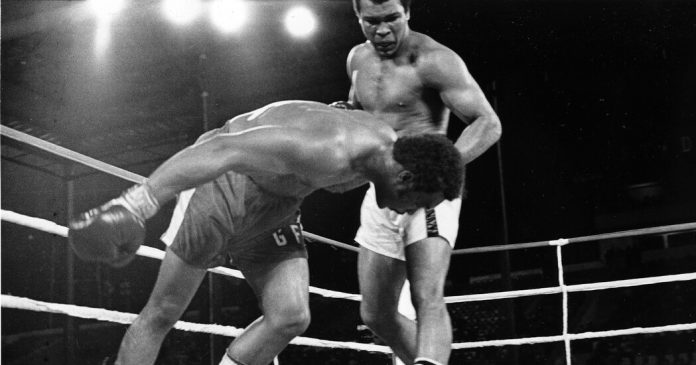
Mr. Ali won with a stunning knockout in the eighth round, after employing the “rope-a-dope” strategy of leaning on the ropes while Mr. Foreman exhausted himself with flailing punches.

Mr. Foreman, who had been undefeated, was humbled, Mr. Kilroy said. His mean streak faded, and he became friendlier, which Mr. Kilroy said may have helped him develop the gregarious persona that allowed him to become a grilling magnate.

Mr. Ali and Mr. Foreman developed a close friendship in the years after the fight, Mr. Kilroy said.

Known as the Rumble in the Jungle (an early slogan, “From Slave Ship to Championship,” was quickly discarded), the event helped to demystify Africa for some Americans. It elevated the shared cultural bonds between African Americans and Africans. It put Zaire on the map, and united the country of more than 200 ethnic groups — yet failed to deliver the economic prosperity that Mr. Mobutu had promised.

“He was obsessed to be recognized in the world as a world leader,” Kikaya Bin Karubi, a Congolese politician and academic, said of Mr. Mobutu.

After Congo fell into years of violence following its independence from Belgium in 1960 — violence that Mr. Mobutu helped perpetuate, first by carrying out a coup and then through his brutal and deadly repression — Mr. Mobutu was determined to recast the war-torn image of the country, Dr. Kikaya said. The Ali-Foreman fight was a big part of that mission.

The president expected everyone to get on board with the nation-building project, said Dr. Kikaya, who recalled watching Mr. Ali’s upset victory on a big screen at a soccer field near his home in eastern Congo.

In the buildup to the fight, citizens were taught songs in school with lyrics praising Mr. Mobutu and Zaire’s natural riches, recalled Dr. Kikaya, who was 20 at the time. The government printed promotional clothing with images of the fighters and Mr. Mobutu and distributed them free of charge, he said. .

“We were all proud to be Congolese,” Dr. Kikaya said.

The 38,000-seat national stadium was expanded to hold more than 100,000 people. All told, the government invested $12 million in the fight, and fell short of breaking even by $4 million, according to an article in The New York Times from that time.

Around the same time, Mr. Mobutu was enacting a program that required many businesses to be owned by locals. That forced many foreign nationals to give up their businesses and hand them over to people without the experience to run them, Dr. Kikaya said.

That, he believes, contributed to the economy’s downfall in the following years. Congo is among the world’s poorest countries, according to the World Bank, racked by inequality and a decades-long civil war that has killed millions.

But Dr. Kikaya said he saw a positive impact of the fight for Zaire about a decade later when he went to study in the United States.

“Whenever I would say that I’m from Zaire, people of a certain generation, the first thing they would ask me, ‘Oh the Rumble in the Jungle!’” he said.

The promoters of the fight also staged a three-day music festival several weeks before the fight that attracted top artists of African descent from around the world, including James Brown, B.B. King and Miriam Makeba. That helped burnish the event as not just a fight, but also a cultural spectacle.

But, of course, it was Mr. Ali who generated unmatched hype.

When they landed in Zaire several months ahead of the fight, Mr. Kilroy, the business manager, said that Mr. Ali asked him, “Who don’t they like here?”

“I guess white people,” Mr. Kilroy said he responded.

“No, I can’t say that,” Mr. Ali told him. “Who else?”

“The Belgians,” Mr. Kilroy said.

So when he addressed the throngs of Congolese greeting him when he arrived, Mr. Ali told them, “George Foreman’s a Belgian,” Mr. Kilroy recalled.

Then, he said, everyone started what became the defining chant of the whole event: “Ali, bomaye!” or, “Ali, kill him!”

Mark Carney Calls Snap Elections in Canada Amid Trump Threats

0

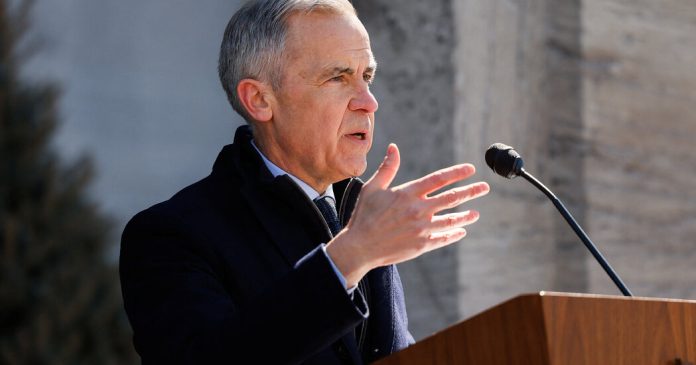
Prime Minister Mark Carney of Canada called on Sunday for a federal election to take place on April 28, cementing on the calendar another major event as the country experiences one of its most tumultuous and unpredictable periods.

President Trump has imposed painful tariffs on Canada and said more are coming, while also threatening its sovereignty, turning on America’s closest ally and trading partner and upending decades of close cooperation in every sphere.

“We are facing the most significant crisis of our lifetimes because of President Trump’s unjustified trade actions and his threats to our sovereignty,” Mr. Carney said, speaking to the news media in Ottawa.

“President Trump claims that Canada isn’t a real country. He wants to break us so America can own us,” he added. “We will not let that happen. We’re over the shock of the betrayal, but we should never forget the lessons.”

Mr. Carney, 60, a political novice with a long career in central banking and finance, was only elected leader of Canada’s Liberal Party on March 9, and was sworn in as prime minister on March 14. He replaced Justin Trudeau, who had led the Liberals for 13 years and the country for nearly a decade, but had grown deeply unpopular.

Mr. Carney had been widely expected to call for a quick election. He does not have a seat in Canada’s parliament, and the Liberals do not command a majority, meaning that their government was likely to fall in a vote of no-confidence as early as Monday had he not called for the election.

The Liberals’ main opponents are the Conservatives, led by Pierre Poilievre.

Mr. Trump’s aggressive stance toward Canada has been a boon for the Liberals and Mr. Carney. Before Mr. Trump took office, the Conservatives had been ahead by double digits in polls and a victory for Mr. Poilievre seemed a foregone conclusion.

But voters have grown concerned that Mr. Poilievre is too ideologically similar to Mr. Trump to stand up to him, and many are drawn to Mr. Carney’s economics experience and long career on the international stage.

Polls show that Mr. Carney and the Liberals have eliminated a 25-percentage-point lead held by the Conservatives, and the two enter the election period neck-and-neck.

Speaking just before Mr. Carney called the election on Sunday morning, Mr. Poilievre tried to distance himself from the perception that he’s aligned with Mr. Trump.

“What we need to do is put Canada first for a change,” Mr. Poilievre said, echoing his campaign’s core slogan. “When I say I want to cut taxes, unleash our resources, bring back jobs, that’s bad news for President Trump.”

Mr. Carney and the Liberals will square off against the Conservatives and Mr. Poilievre, 45, a career politician who made his name as an aggressive orator unafraid to adopt some of Mr. Trump’s style.

Mr. Poilievre is a mainstream conservative, who has long supported deregulation, tax cuts and an abandonment of Trudeau-era environmental policies in order to enable Canada to ratchet up the exploitation of its vast natural resources, predominantly oil and gas.

Mr. Poilievre has also waded into culture war topics and borrowed language from Mr. Trump: He attacks practices and politicians as “woke,” has called for the defunding of the Canadian national broadcaster and has said he believes there are only two genders.

He has also said he wants to make Canada the world’s cryptocurrency capital, showing the same affinity for the alternative financial asset as Mr. Trump.

Mr. Carney, by contrast, has been in the public eye for decades but not in a political capacity. He was governor of the Bank of Canada during the global financial crisis of 2008, and the Bank of England during Brexit.

Since then he has been working in senior roles in the private sector and has, in recent years, become a prominent advocate for sustainable investment, taking on a role as a United Nations special envoy on climate action and finance.

In the few short days that he has been in office, Mr. Carney has come across as fluent in economics and comfortable on the global stage, but less accustomed to the close scrutiny of his personal affairs, which is not unusual for people running for high public office.

He’s shown himself to be more centrist than his predecessor, Mr. Trudeau. On Sunday, as he announced the snap elections, Mr. Carney also pledged tax cuts for the lowest income bracket. In the past few days he has adopted some of Mr. Poilievre’s more centrist positions, including scrapping a household- and small- business tax on carbon emissions and canceling a planned tax hike on capital gains.

The third party in the House of Commons, the Bloc Quebecois, is led by Yves-François Blanchet and is dedicated to Quebec nationalism.

Canada’s fourth-largest party, the New Democratic Party, led by Jagmeet Singh, is to the left of the Liberals. The N.D.P. offered support for the Liberal minority government in the House of Commons until September, and was able to get some of its core social policies approved in exchange, but polls suggest its support is weakening.

Canada has a first-past-the-post electoral system, which means that candidates who get the most votes in their district win, regardless of whether they secure a majority. Voters elect local members of the House of Commons, not individual party leaders as they would in a presidential system. Parties select their leaders, who then can become prime minister.

The country is divided into 343 electoral districts, known in Canada as ridings, each one corresponding to a seat in the House of Commons.

To form a majority government, a party needs to win 172 seats. If the party with the most seats has fewer than 172, it can still form a minority government, but would need the support of another party to pass legislation.

In the run-up to the election, Mr. Carney will remain prime minister and will technically continue to lead the country together with his cabinet. But they will be in “caretaker” mode and, under Canada’s conventions, can only focus on necessary business, such as dealing with routine or urgent matters. They cannot make new major or controversial decisions.

The parties and their leaders will hit the campaign trail immediately. For Mr. Carney, this will be a critical time since he is not an experienced campaigner, unlike Mr. Poilievre, who is seasoned in retail politics.

Both men will travel the vast country to try to secure support. Mr. Carney’s campaign will be open to journalists paying their own way to travel with him on the trail.

Mr. Poilievre’s campaign said it would not allow the news media to join him on trips, stressing that its decision was for logistical reasons and that news coverage was welcomed.

Israel Expands Gaza Offensive and Issues Fresh Evacuation Orders

0

Israeli forces were expanding their offensive in Gaza on Sunday, taking control of more territory and issuing new evacuation orders for residents who had only recently returned to their homes.

The Israeli military renewed its offensive in Gaza this past week after talks to extend a fragile, temporary cease-fire that went into effect in mid-January reached an impasse. On Sunday, it said that those operations had moved into additional areas in the north and south of the enclave.

Israel said that its troops had begun operating in Beit Hanoun, in northern Gaza, to expand a buffer zone. The military also said that it had carried out more airstrikes against Hamas targets and infrastructure and that it was allowing people to evacuate.

The military also separately issued an evacuation order for the Tal al-Sultan neighborhood of the southern city of Rafah, telling residents to leave on foot along a specific route and barring the movement of vehicles.

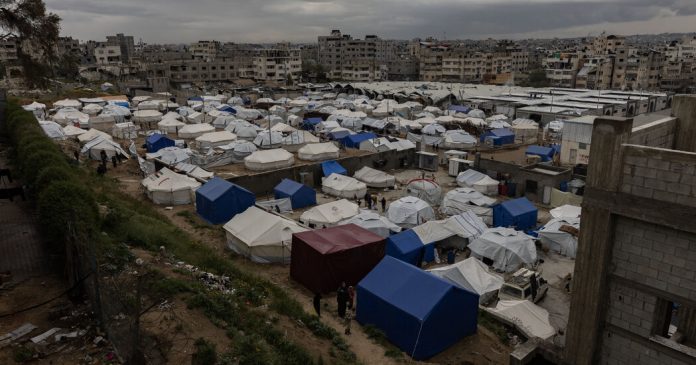
The Rafah municipality said in a statement that thousands of families were being forced to flee on foot under bombardment during the holy Muslim fasting month of Ramadan. That left them homeless amid a severe shortage of basic necessities and tents because of the Israeli government’s closure of the crossings into Gaza, the municipality noted.

“I am hearing lots of gunfire and bombing,” Riham Abu Marzouq, 22, said in a phone call on Sunday afternoon while fleeing her home in Rafah with nine relatives. “We are now walking,” she added, panting and struggling to catch her breath.

Amid the escalation in fighting and evacuation orders, Gaza’s health ministry said on Sunday that the death toll in the enclave since the war started had surpassed 50,000 people — including 39 people killed in Israeli bombardments over the past day. The ministry’s figures do not distinguish between civilians and combatants.

Hamas announced that Israel had killed a senior member of its political bureau, Salah al-Bardawil, overnight. The group said that Mr. al-Bardawil, one of the militant group’s prominent spokesmen, had been killed along with his wife in a strike on their tent in Al-Mawasi, an area in southern Gaza that the Israeli military had designated as a humanitarian zone and to which it directed residents of Tal al-Sultan on Sunday.

After noon on Sunday, the military said that its troops had completely encircled Tal al-Sultan, had eliminated several fighters and had raided a site that it said had been used over the past few months as a Hamas command and control center.

Neither claim could be independently verified.

The Palestinian Civil Defense in Gaza warned on Sunday of “imminent danger threatening the lives” of more than 50,000 people in Rafah.

“The situation in Rafah is very difficult,” said Huthayfah Lafi, a resident of the southern city who lives near Tal al-Sultan. He said he had decided not to evacuate the area on Sunday “until the situation becomes more clear” because “we have nowhere else to go.”

And the Palestinian Red Crescent said that it had lost contact with four of its ambulances that it said were trapped in Rafah and had crew members wounded by Israeli gunfire. The Israeli military said that it was looking into the reports but did not immediately provide any further comment.

Mohammed Abu Taha, 42, said his sister Sanaa and her family had been able to return to their home in Rafah only in the past few weeks. Around dawn on Sunday “they were surprised by Israeli tanks advancing toward them,” he said, relaying what his sister had told him over the phone while fleeing on foot to the city of Khan Younis, where he has been sheltering.

“They were only allowed to carry a small bag,” said Mr. Abu Taha.

The Israeli government has said that the renewed offensive — along with blocking the entry of all goods and humanitarian aid into Gaza — is aimed at increasing pressure on Hamas to release hostages still held in the enclave and at destroying the group’s military and governing capabilities.

The hostages were taken to Gaza during the Hamas-led attack on southern Israel on Oct. 7, 2023, which ignited the war. Hamas has so far refused to release significant numbers of hostages unless Israel promises to end the war permanently. Israel has conditioned ending the war on Hamas’s agreeing to give up its arms and power in Gaza.

The resumption of the military campaign in Gaza has not found the same national consensus among Israelis as the war did in the immediate aftermath of the October 2023 assault. Instead, it has increased concerns about the fates of the hostages, up to 24 of whom are believed to still be alive, and it has left many Israelis questioning what could be achieved militarily that was not achieved in the first 15 months of fighting.

Reporting was contributed by Myra Noveck Abu Bakr Bashir, Bilal Shbair and Iyad Abuheweila.

Russian Drone Attack Kills 3 in Kyiv Ahead of Cease-Fire Talks

0

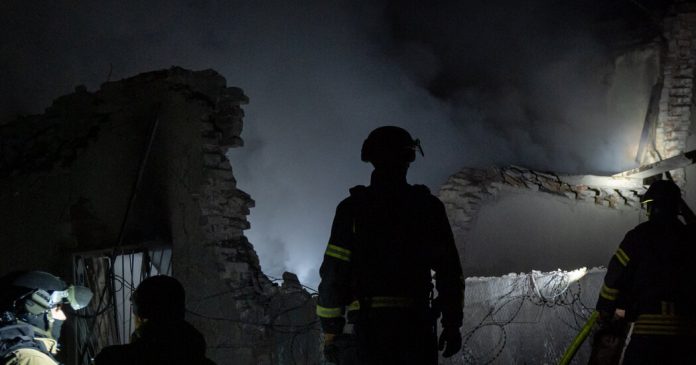
At least three people were killed during a large Russian drone attack on Ukraine’s capital overnight, local officials said on Sunday, hours before U.S.-mediated talks to discuss a partial cease-fire began in Saudi Arabia.

Multiple explosions shook the capital, Kyiv, overnight as air defense units fired at incoming drones. The Ukrainian Air Force said that Russia had launched nearly 150 drones across the country, and that it had shot down approximately 100. The assertion could not be independently verified.

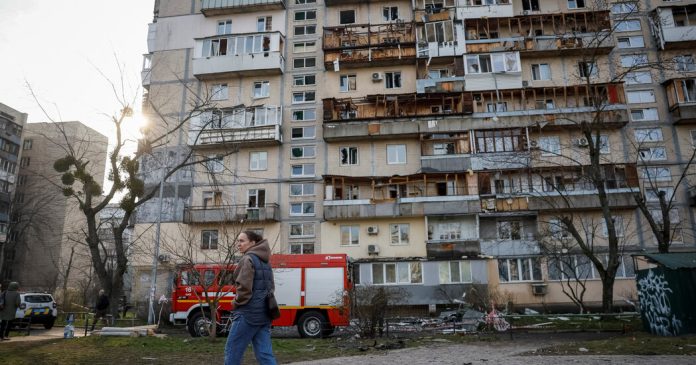
On Sunday morning, the local authorities in Kyiv said that some drones and debris from others that were shot down had fallen on several buildings in the city, sparking fires. Vitali Klitschko, the mayor of Kyiv, said that three people were killed: a father and his 5-year-old daughter, as well as an 80-year-old woman. At least 10 people were injured.

The toll was unusually high for Kyiv, which is one of Ukraine’s best defended cities. In recent months, Russia has intensified attacks on the capital, aiming to overwhelm its air defenses with waves of drones. Once a rarity, the buzz of attack drones flying over buildings can now be heard frequently in the center of the city, home to the presidential palace and Parliament.

The overnight attack on Kyiv came a day after officials said a mother, a father and their 17-year-old daughter had been killed in a Russian drone attack in Zaporizhzhia, in southern Ukraine.

“Russia is not stopping the fire, Putin wants to keep killing civilians, it must be stopped,” Andrii Yermak, the Ukrainian president’s chief of staff, wrote Sunday morning on social media.

The talks in Saudi Arabia will focus on halting attacks on energy facilities, such as power plants and substations, as well as ensuring shipping safety in the Black Sea.

U.S. representatives will mediate between the two sides, who are not expected to meet directly. “The agenda includes proposals to protect energy facilities and critical infrastructure,” Rustem Umerov, the Ukrainian defense minister leading his country’s delegation, said late Sunday afternoon in announcing that the meeting with U.S. mediators had begun. It will be followed by Russia-U.S. talks on Monday.

A Ukrainian official, speaking on condition of anonymity to discuss a sensitive matter, said the Ukrainian delegation might hold additional discussions with U.S. officials on Monday, depending on progress.

Unlike previous cease-fire discussions, which involved top government officials from all sides, this new round will focus on the technical aspects of implementing the partial truce and will primarily involve diplomats and advisers. President Volodymyr Zelensky of Ukraine said his country had prepared a list of infrastructure objects that could be covered by the cease-fire.

Strikes on energy facilities have been central to each side’s efforts to weaken the other throughout the war. Russia has pounded Ukraine’s power grid, aiming to make life unbearable for civilians and hinder the country’s war effort, while Ukraine has struck Russian oil facilities to try to choke off revenues fueling Moscow’s military operations.

Both nations rely on the Black Sea for commodity exports. In mid-2022, they brokered a deal allowing Ukraine to ship grain, only for Russia to withdraw a year later. Since then, fighting over control of the sea has persisted. Ukraine has managed to drive Russian warships out of its waters and establish a secure shipping corridor to global markets.

With No-Confidence Vote, Israeli Cabinet Moves to Fire Attorney General

0

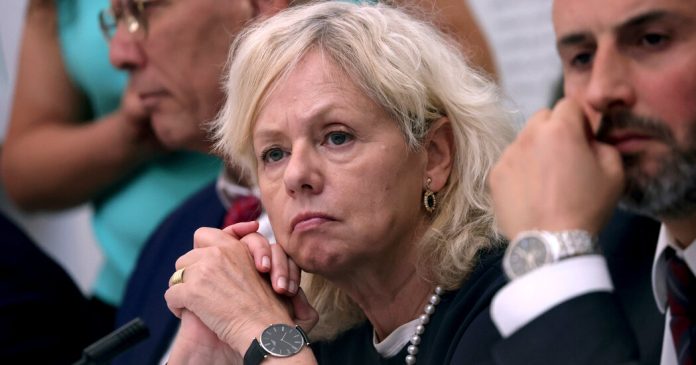
The Israeli cabinet passed a no-confidence motion on Sunday against the country’s attorney general to begin the process of dismissing her. Critics of Prime Minister Benjamin Netanyahu called the move part of his effort to curb the independence of the judiciary and purge officials he considers disloyal.

Mr. Netanyahu and his allies have accused the attorney general, Gali Baharav-Miara, of undermining them. The no-confidence vote against her, as well as the cabinet’s approval days before of the firing of Israel’s domestic intelligence chief, has rekindled street protests reminiscent of the upheaval over government plans to overhaul the judiciary before the war with Hamas began in 2023.

In a letter addressed to the cabinet on Sunday, Ms. Baharav-Miara said the no-confidence motion was not part of the formal process that would be legally required for her removal. She added that Mr. Netanyahu’s government sought to put itself “above the law, to act without checks and balances, even at the most sensitive of times,” referring among other things to the war in Gaza.

Legal experts say firing Ms. Baharav-Miara is likely to be a weekslong process because of longstanding checks meant to protect her role’s independence. Her dismissal would first have to be considered by a special appointments committee that is currently lacking some members and cannot convene until the vacancies are filled.

The intelligence official Mr. Netanyahu moved against, Ronen Bar, sent a stinging letter to the government calling the process to fire him illegal and saying that the prime minister’s motives were “fundamentally flawed.”

The country’s Supreme Court has frozen Mr. Bar’s dismissal pending a hearing.

Mr. Netanyahu says he is strengthening Israeli democracy by curbing what he describes as overreach by unelected officials and giving more power to the elected government. But his opponents see the moves as part of a concerted effort by the prime minister to remove checks on his power and to eject those he views as personally disloyal.

Ms. Baharav-Miara, 65, was appointed as attorney general in 2022, during a brief period when Mr. Netanyahu did not lead Israel’s government. Since Mr. Netanyahu’s return to power later that year, the two have repeatedly clashed over policy, including the judicial overhaul.

In Israel, the attorney general is empowered to issue decisions that are legally binding on the government, including informing officials that policies they want to enact are against the law. This makes Ms. Baharav-Miara’s position one of the few checks on executive power in Israel, a country without a formal constitution.

Ms. Baharav-Miara also oversees the justice system, which is prosecuting Mr. Netanyahu over accusations of corruption in three separate cases. The prime minister has been giving testimony in his yearslong trial, in which he denies wrongdoing.

“This is the gravest conflict of interest imaginable,” said Amir Fuchs, a legal expert at the Israel Democracy Institute, a nonpartisan research group in Jerusalem. “It cannot be the case that a government led by a defendant can fire his prosecutor.”

Mr. Netanyahu’s critics have noted that a new attorney general could suspend or even cancel his corruption trial.

Last week, the Israeli government under Mr. Netanyahu’s direction fired Mr. Bar, the head of the Shin Bet, Israel’s domestic intelligence agency. Mr. Netanyahu said that Mr. Bar had lost his trust through unspecified disagreements; Mr. Bar then asserted that his loyalty was to the Israeli public.

Under Mr. Bar’s direction, the Shin Bet has been investigating potential Qatari interference in Israeli decision-making, including inside Mr. Netanyahu’s own office. In removing him, Mr. Netanyahu was motivated by a “severe conflict of interest,” Mr. Bar wrote in the letter to the government, which was distributed by his office.

Despite the Israeli cabinet’s decision on Sunday, Mr. Netanyahu and his allies cannot dismiss Ms. Baharav-Miara as quickly as they did Mr. Bar. Instead, they will most likely need to follow an elaborate process involving a separate committee and multiple hearings, and the matter is expected to ultimately wind up in the courts.